



Candomblé and Umbanda Glossary
Did you hear a word in the gira or at the festa de santo and didn't understand? Here is what it means, in a few lines, with a link to go deeper.
No terms found. Try another spelling, or ask us on WhatsApp.
A
- Abará
-
Cake made from the same black-eyed pea dough as acarajé, but steamed inside a banana leaf instead of fried. It is food for Iansã (Oya).
Candomblé - Abebé
-
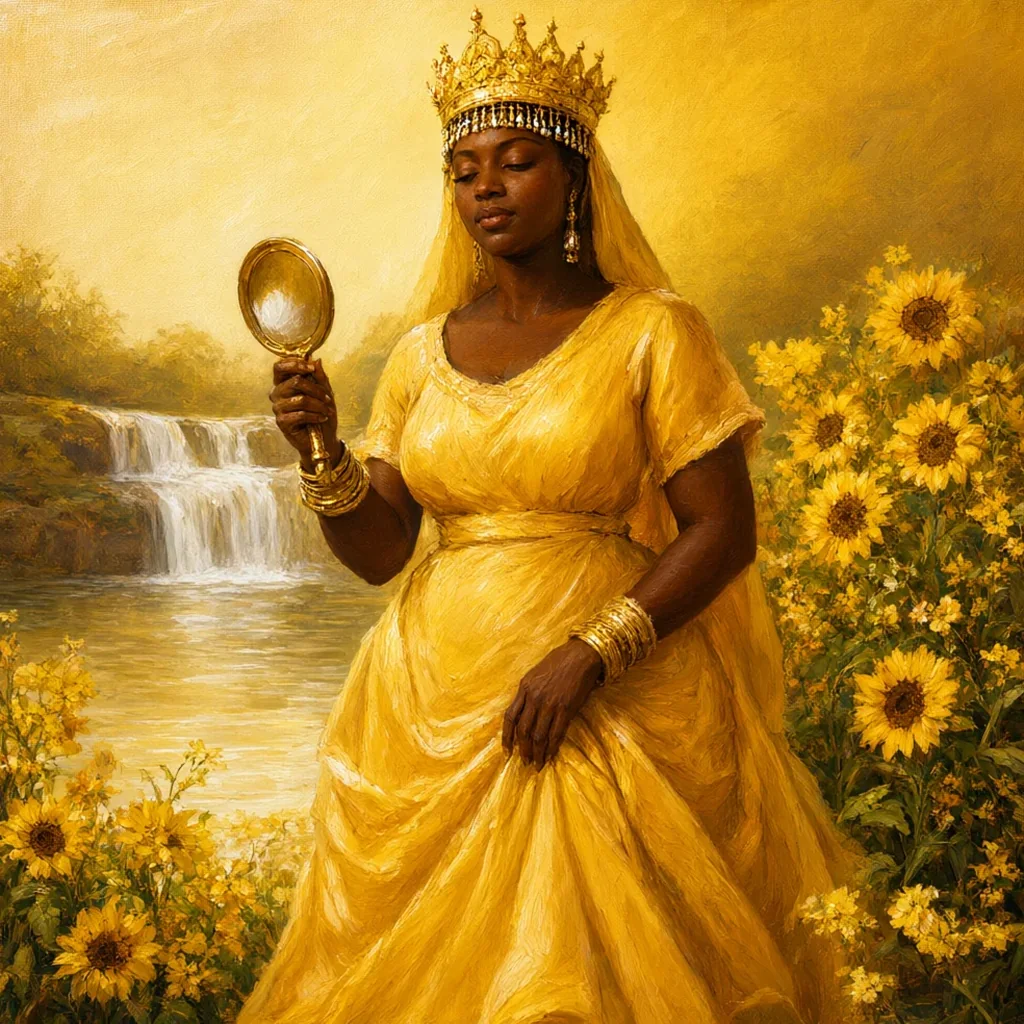
Ritual fan in the shape of a mirror, golden metal for Oxum (Oshun) and silver for Iemanjá (Yemoja). In the dance, the iabá looks at herself in it: it is the symbol of beauty, of sacred vanity, and of the water that reflects.
Candomblé - Abiã Also: Ndumbi
-
Someone who already attends the terreiro and has started the journey, sometimes with a washed bead necklace (fio de contas) and bori, but has not yet been initiated. It is the first step of the Candomblé hierarchy.
Candomblé - Abiku
-
Child spirit that is born and returns early to Orum, leaving the family in mourning. In tradition, Iroko is the guardian of the abikus.
Candomblé - Abô Also: Omieró, Àgbo
-
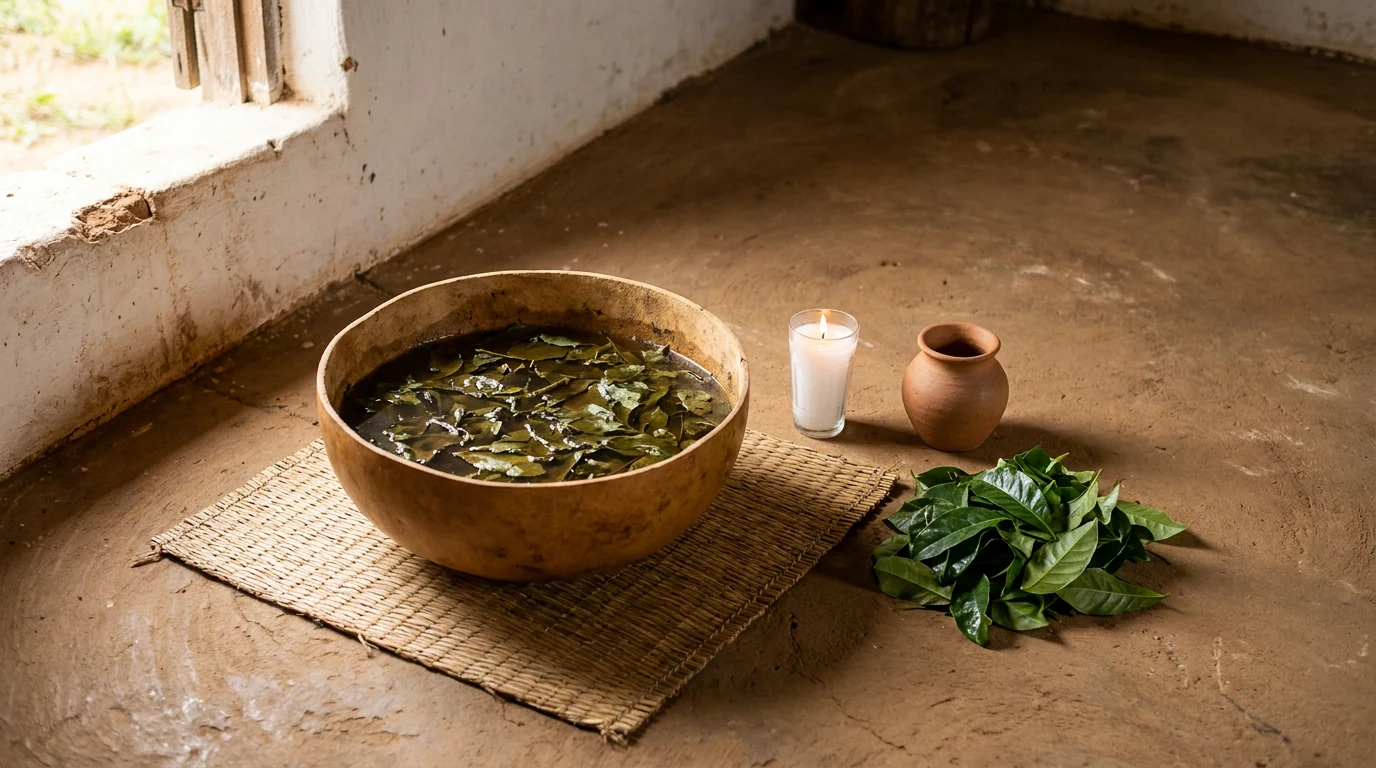
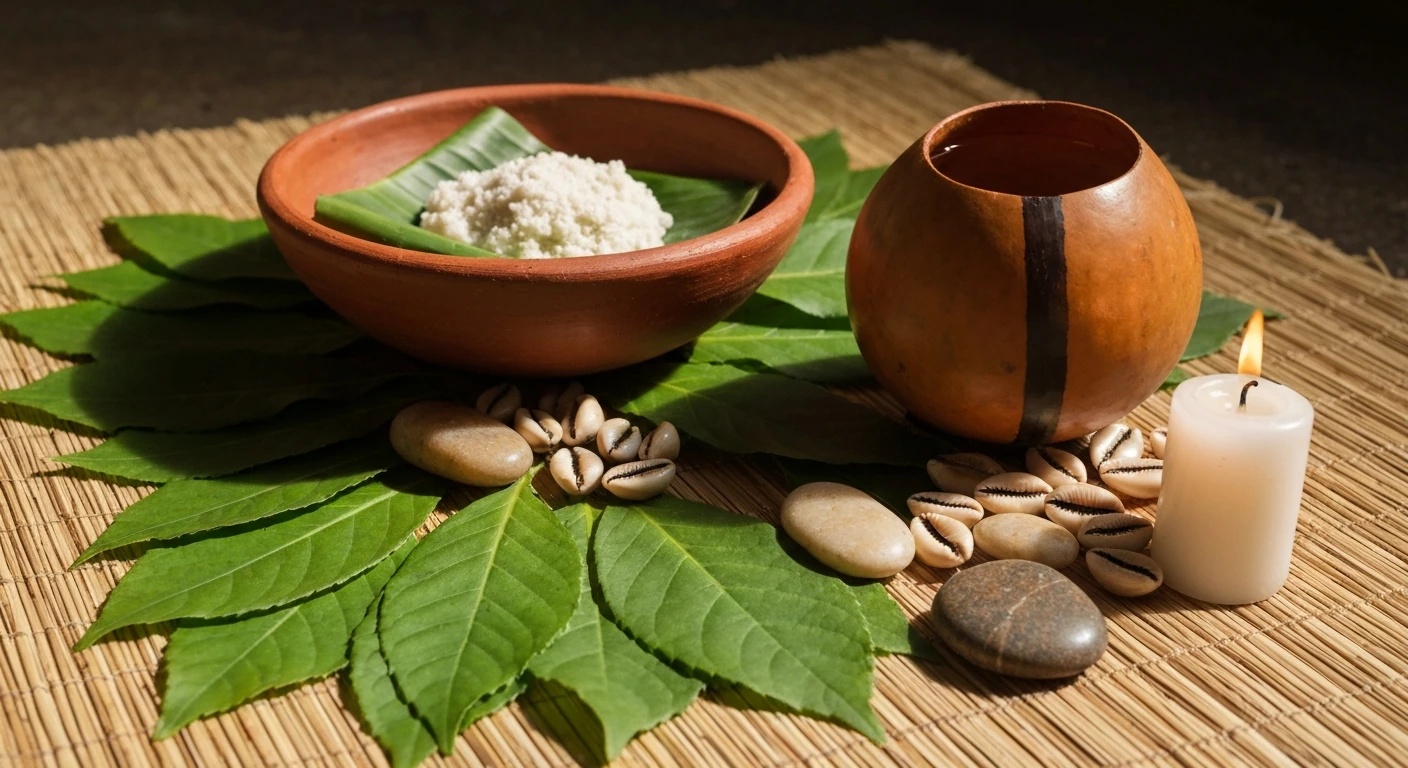
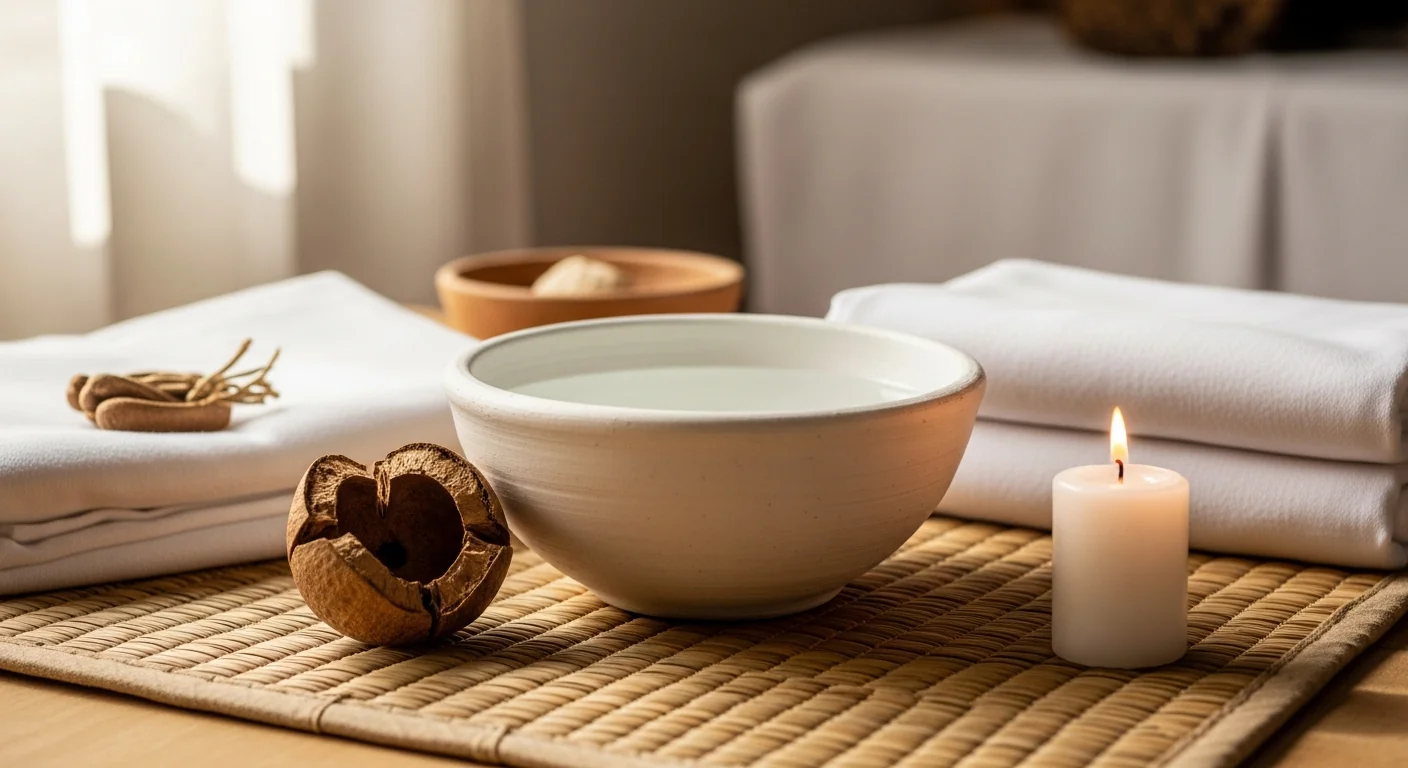
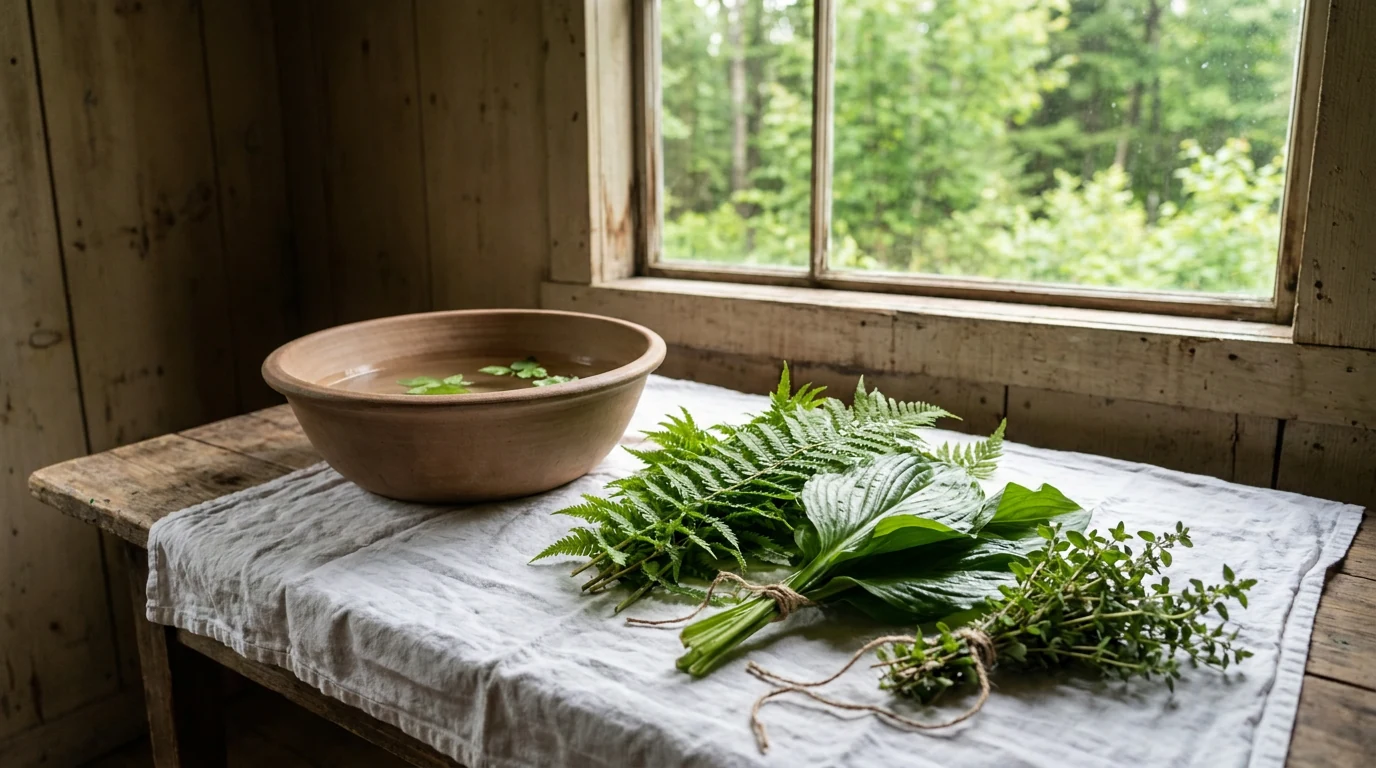
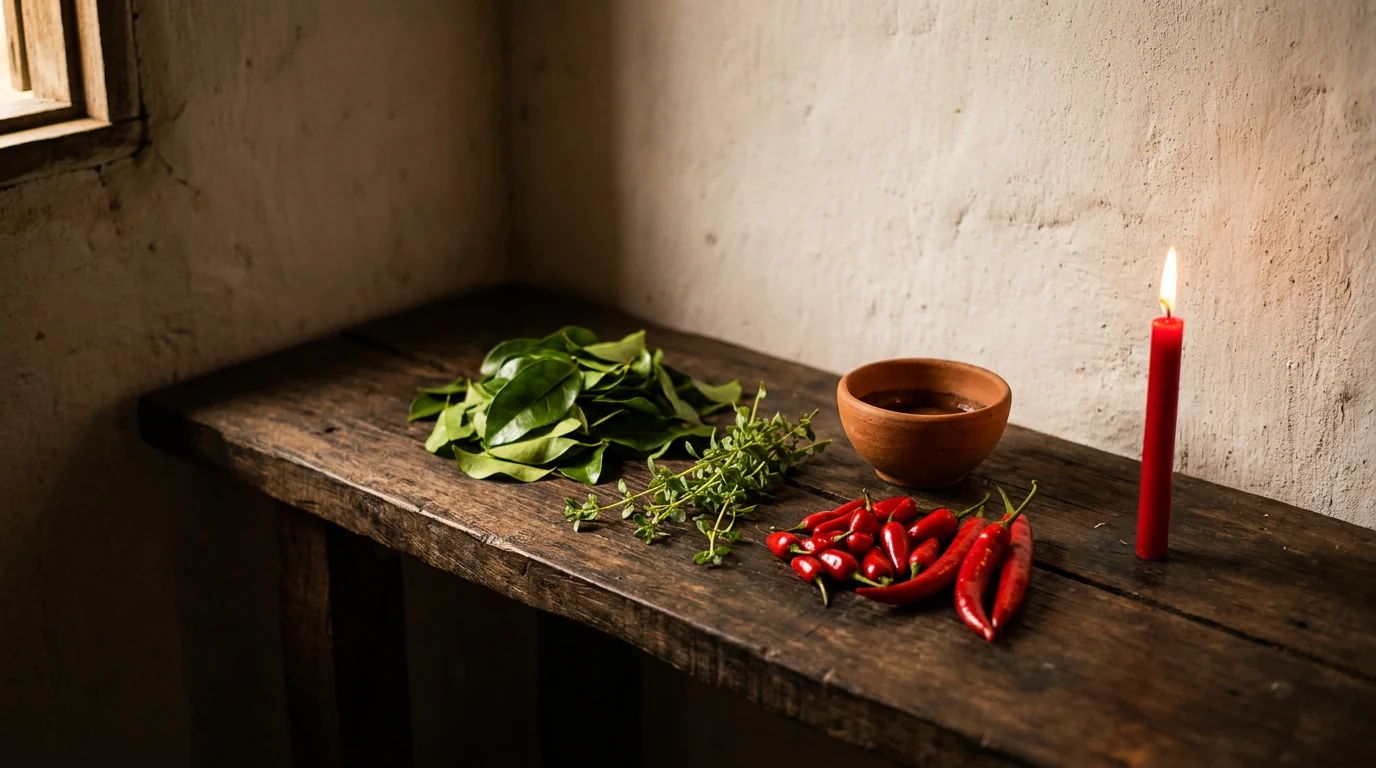
Water of sacred leaves macerated cold, stored and used in baths, consecrated foundations, and obrigações. It is prepared by the priest, with the correct leaves for each orixá (orisha). In Batuque, the water of leaves is called omieró.
Candomblé - Aborô Also: Oboró
-
Name given to male orixás, just as iabá is the name for the females.
Candomblé - Acaçá Also: Èkó, Ecô
-
Cake of cooked white corn rolled while still hot in a banana leaf. The dough, called èkó, accompanies offerings to various orixás, and acaçá is the favorite food of Oxalá (Obatala).
CandombléUmbanda - Acarajé Also: Acará
-
Fradinho bean cake fried in dendê, food of Iansã and also of Xangô (Shango). Before being street food in Bahia, it is an offering, called acará in the ritual.
Candomblé - Adarrum
-
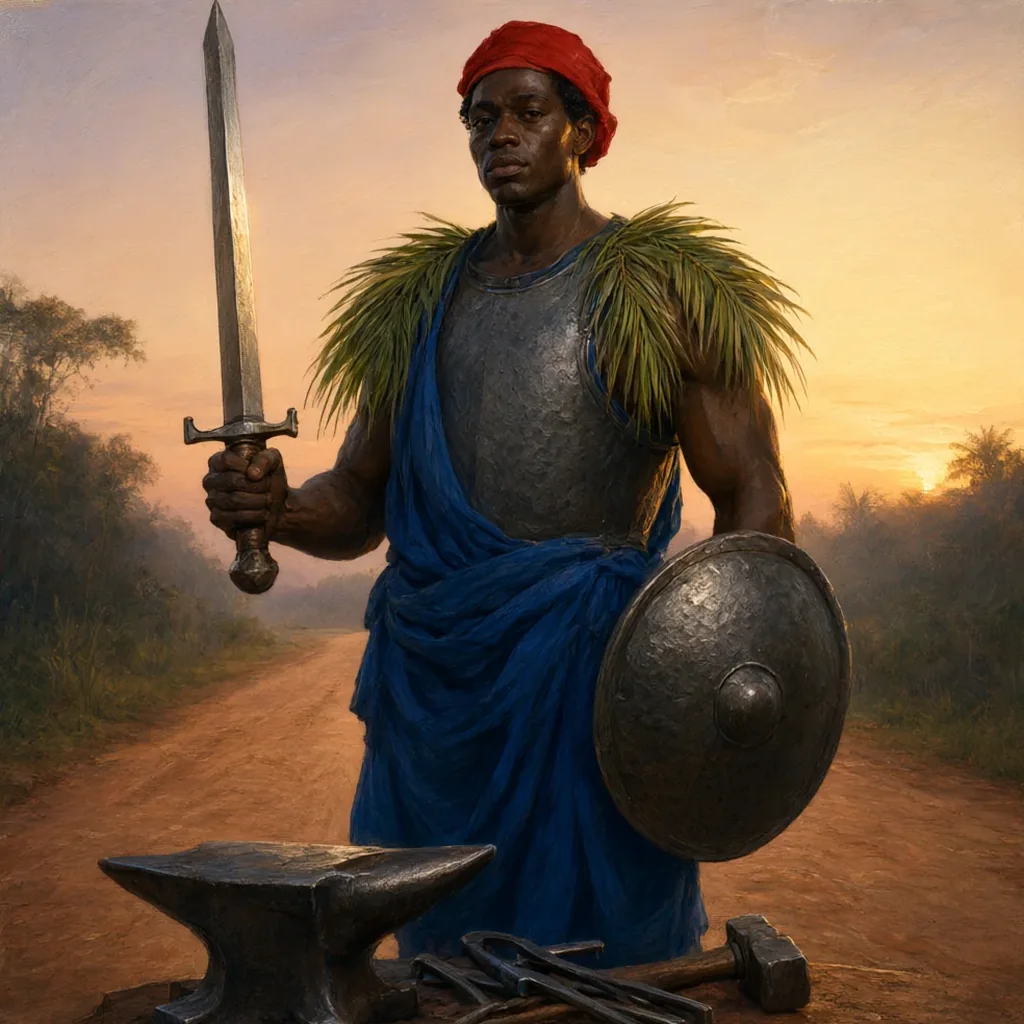
Atabaque drumming that, depending on the house, functions as a general call of the orixás or as the toque of Ogum (Ogun).
Candomblé - Adê Also: Chorão
-
Crown of the iabás, often with a fringe of beads, the chorão, which covers the face of the incorporated orixá and suggests tears. Oxum, Iemanjá and Iansã appear with adê in the festivities.
Candomblé - Adjá
-
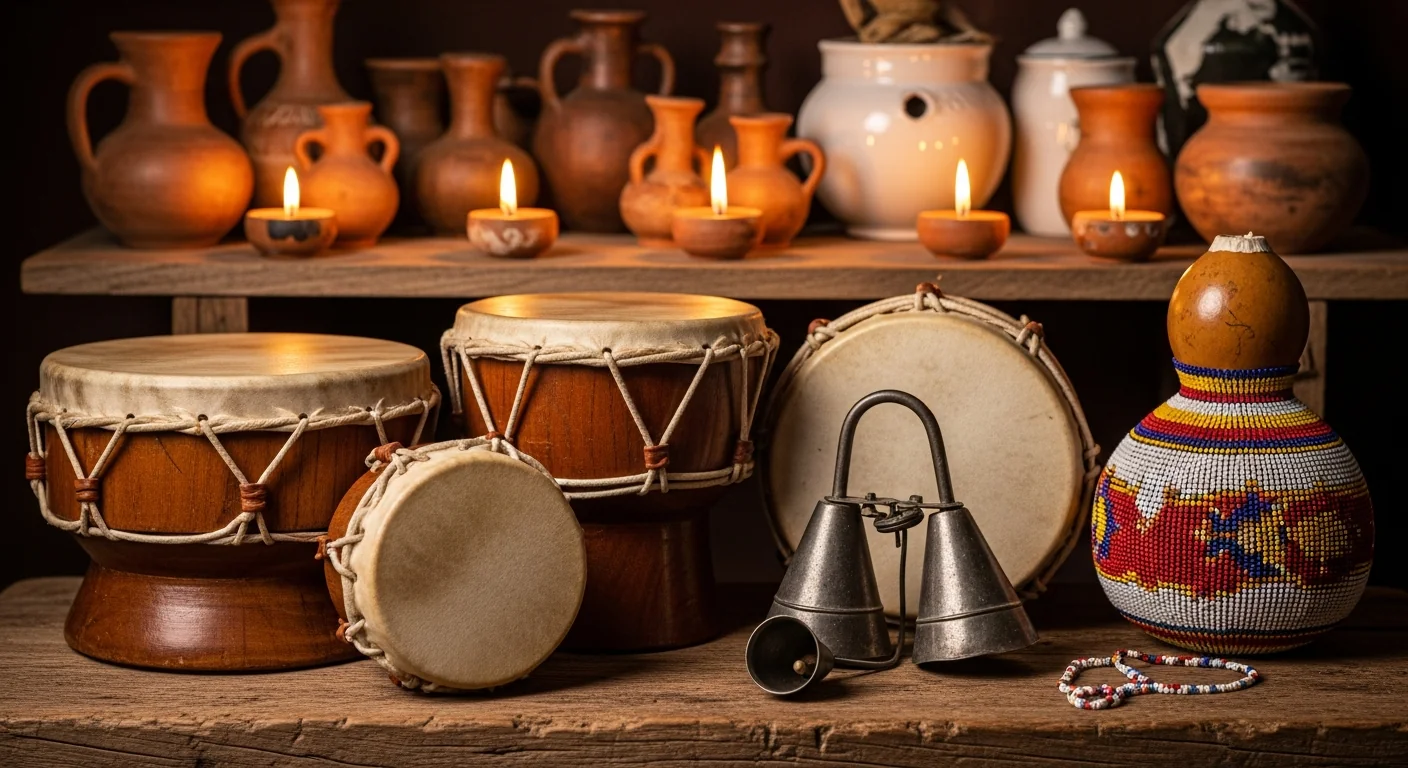
Metal bell with one or more bells, played by the mãe de santo or by the ekedi. The sound calls the orixá, conducts the trance, and marks moments of the ritual.
Candomblé - Adorei as almas
-
Greeting to the pretos-velhos, heard in most Umbanda terreiros when they arrive at the gira.
Umbanda - Agê
-
Gourd shaker, a gourd covered by a bead net. It accompanies the drum in batuque festivals.
Batuque - Agô Also: Àgò
-
Permission, in iorubá. It is what is said when knocking on the door of a sacred room, when passing between elders, or when asking permission to speak.
Candomblé - Agogô
-
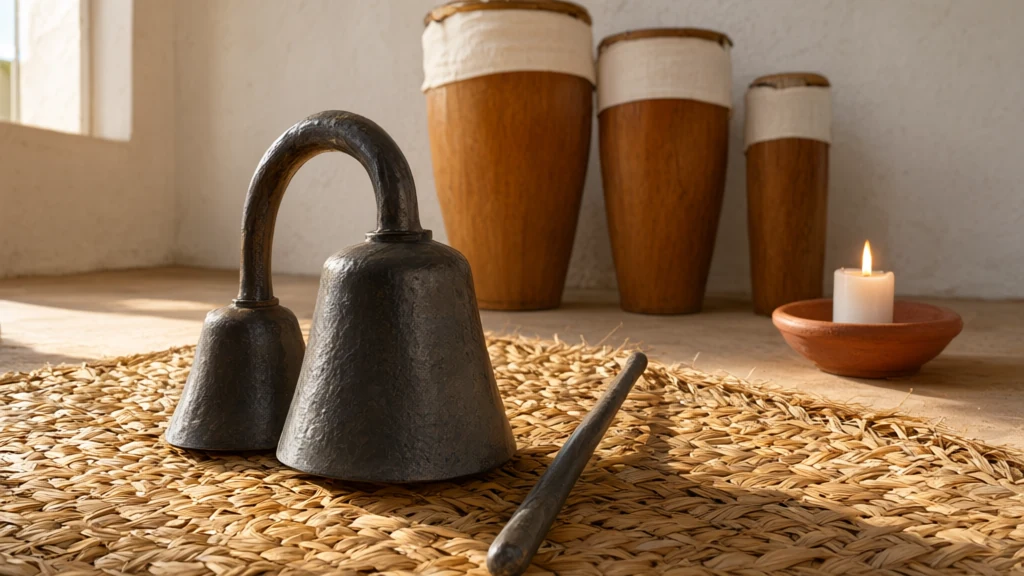
Iron instrument with two bells, played with a stick. It provides the tempo marking that guides the atabaques in the toque.
CandombléUmbanda - Águas de Oxalá
-
Rite that opens the calendar of ketu and nagô candomblé houses. The children seek water at a fountain, in silence and dressed in white, to wash the assentamentos of Oxalá.
Candomblé - Aguidavi Also: Oguidavi, Agidavi
-
The wooden sticks with which the atabaques are struck in ketu and jeje. In angola, the drums are played with the hands.
Candomblé - Aiê Also: Aye
-
The material world, where people live. It pairs with Orum, the spiritual world; Exu (Eshu) is who travels between the two.
Candomblé - Ajeum
-
The food and the act of eating together in the terreiro. After the party, the ajeum served to everyone shares the axé of the foods offered to the orixás.
Candomblé - Akorô Also: Àkòró
-
The headband of Ogum. According to the itãs, Ogum could not wear a crown, only this head ornament.
Candomblé - Alá
-
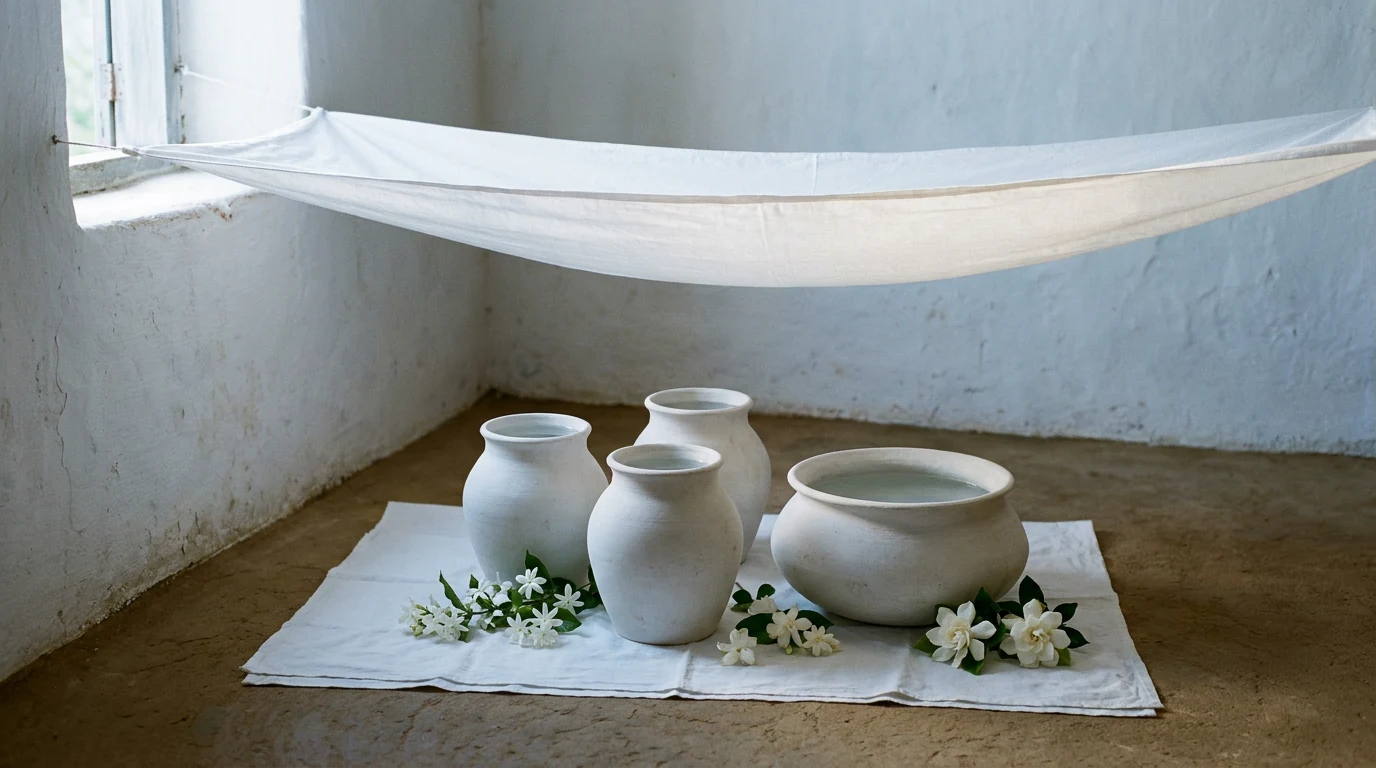
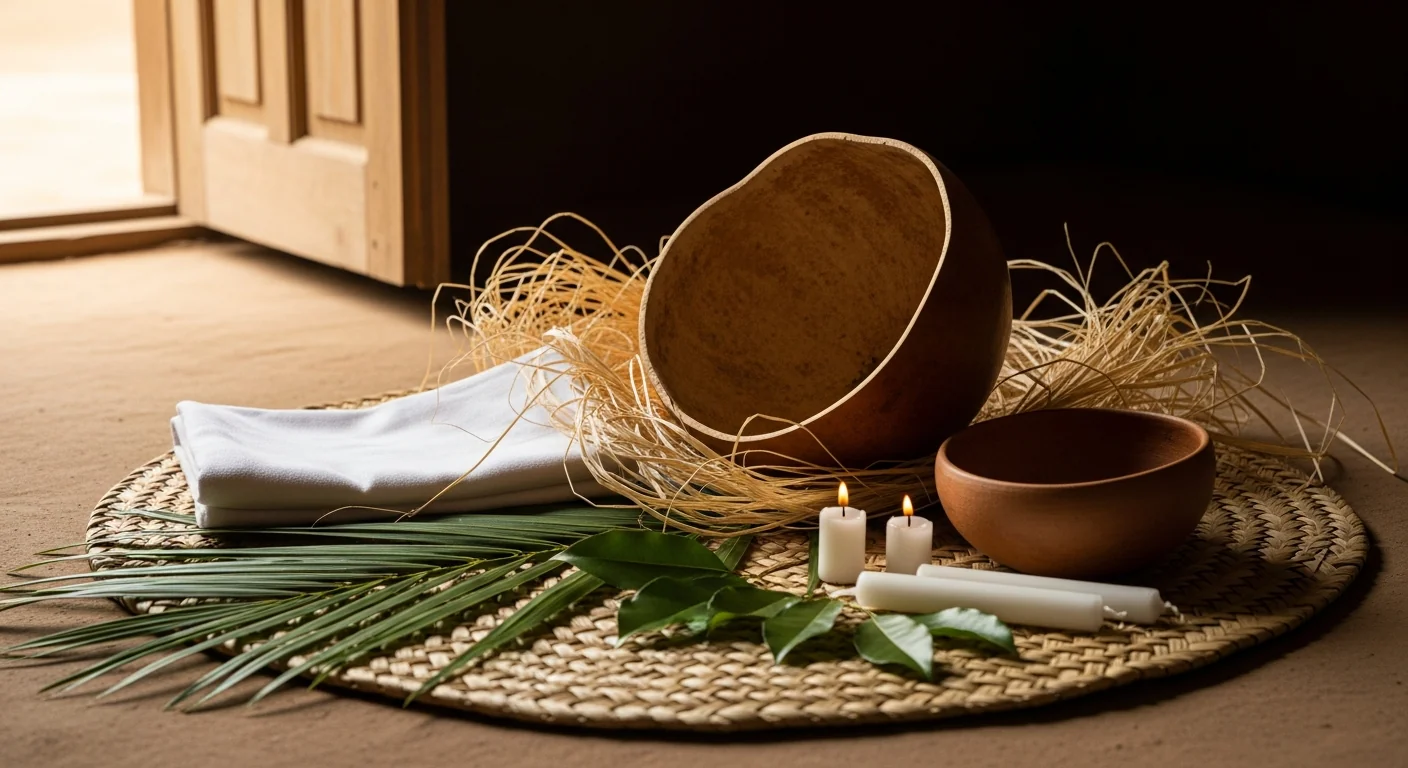
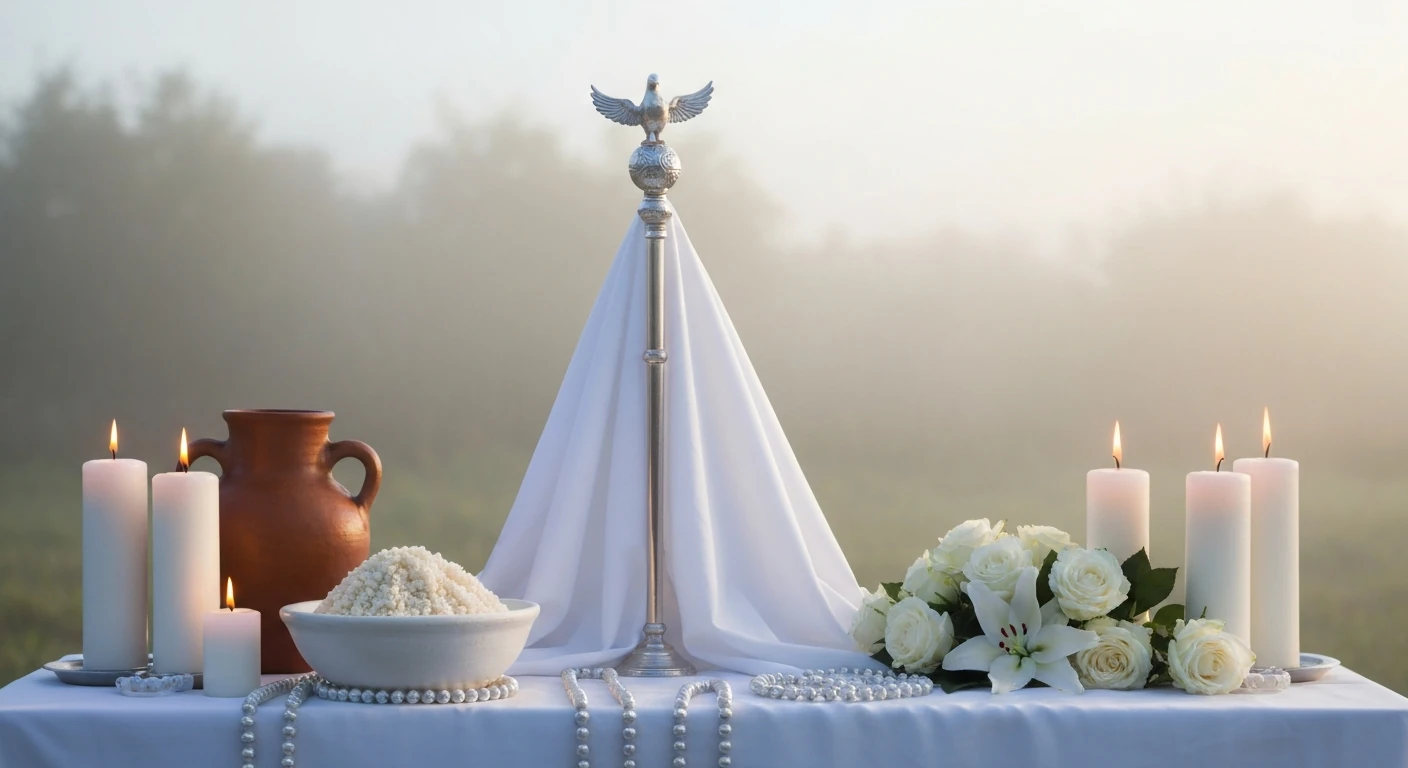
The great white cloth of Oxalá, spread over the orixá during the festivals. It cannot be stained, like nothing that belongs to him.
Candomblé - Alabê
-
Ogã responsible for the atabaques and the chants. He leads the toque, leads the chants, and knows the rhythm of each orixá.
CandombléBatuque - Aláfia
-
The best response from the obi game: all segments fall open, and the reading is of harmony and full acceptance.
Candomblé - Alguidar Also: Oberó
-
Large clay bowl used to serve offerings, prepare comidas de santo, and compose assentamentos.
Afro-Brazilian - Alujá
-
The toque and dance of Xangô, fast and full of strength. It holds a place of honor in the festivals of Candomblé and Batuque.
CandombléBatuque - Alupô Also: Lalupô
-
Greeting to Bará in the gaúcho batuque: "Alupô, Bará!". It is with her that the terreiro reveres the orixá who opens all roads.
Batuque - Amaci
-
Herbal bath of macerated herbs poured over the head of the medium in Umbanda, to firm the connection with the orixá and the guias. It is the Umbandist parallel of the abô and the bori.
Umbanda - Amalá
-
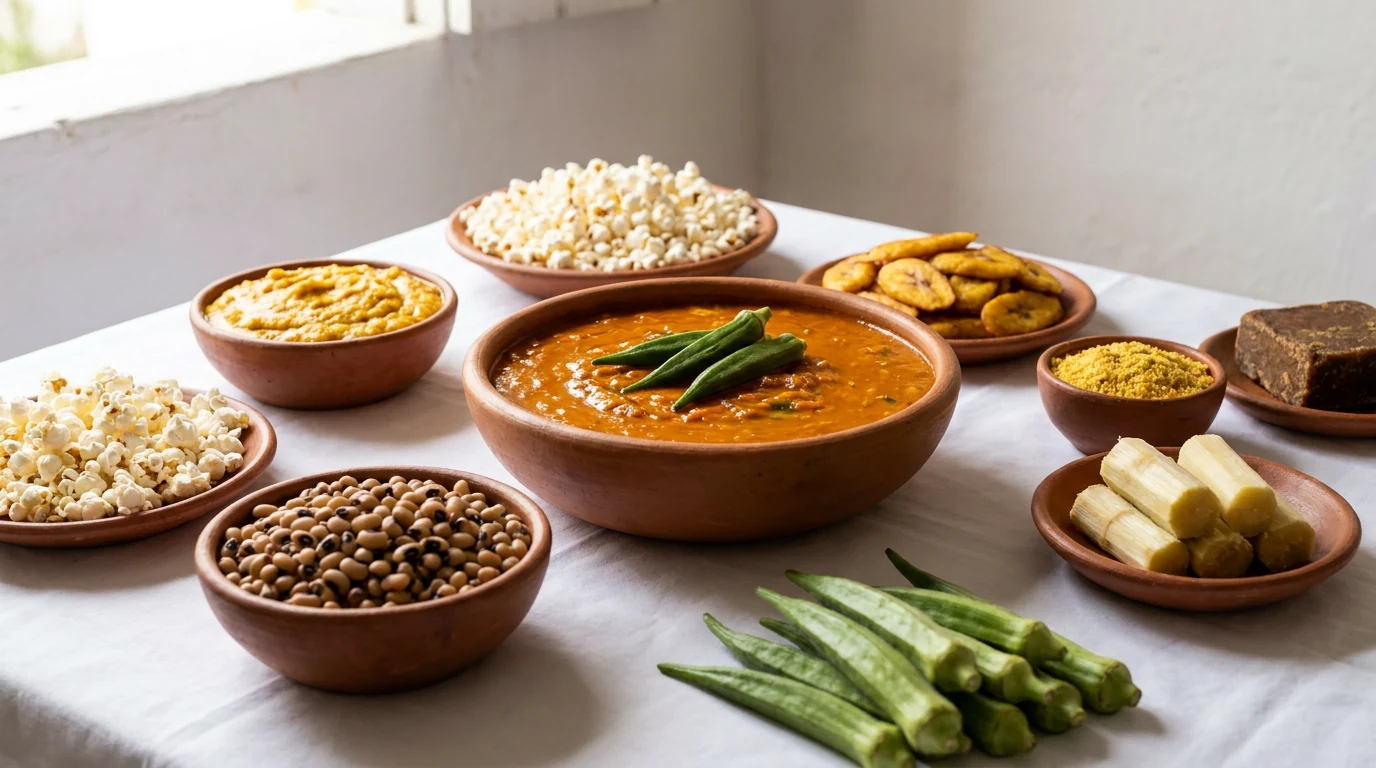
Xangô food made with okra, served in a wooden gamela. In many houses, the amalá is offered on Wednesdays, the day of the orixá.
CandombléUmbanda - Aparelho
-
Another name for the medium in Umbanda: the body that receives the spirit guide is his aparelho.
Umbanda - Aprontamento Also: Apronte
-
In batuque, the rite that officially and definitively establishes the bond between the person and their orixá. Whoever goes through it is called pronto. In quimbanda, aprontado is someone who has the preparation to direct and to consecrate.
BatuqueQuimbanda - Arroboboi
-
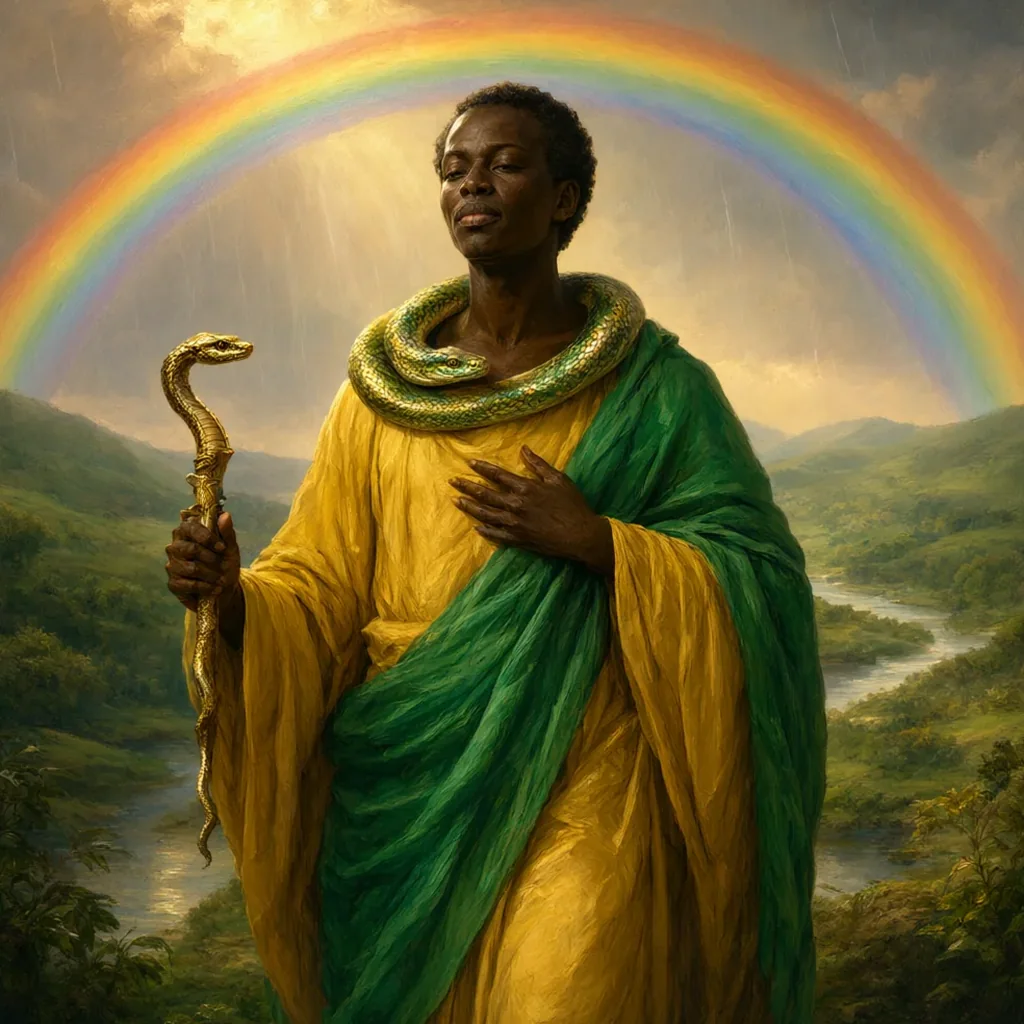
Greeting to Oxumaré (Oshumare), the orixá of the rainbow, of the cycle and of renewal.
Candomblé - Aruanda
-
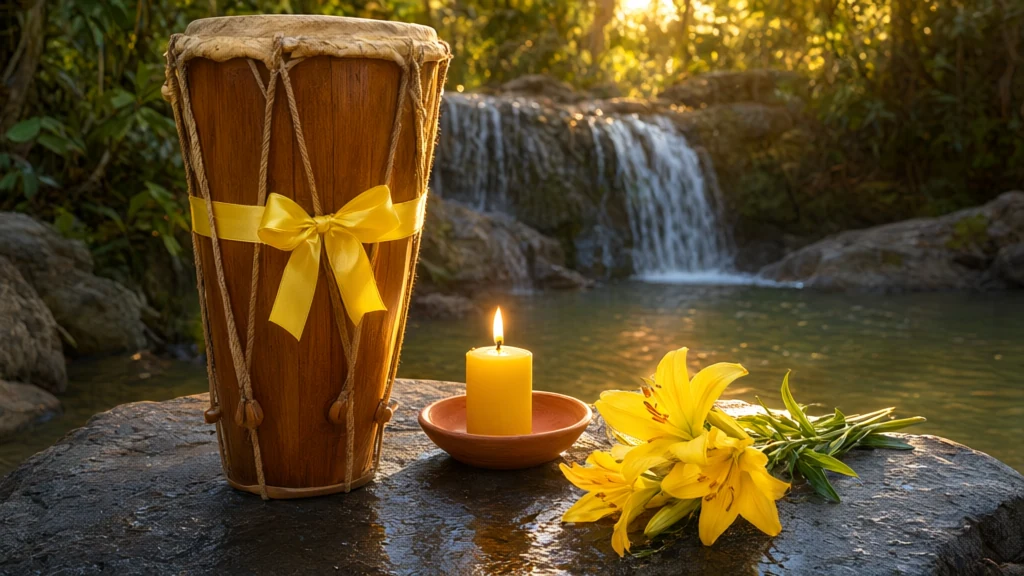
Sacred and mythical place from where the spirits of umbanda come to perform charity, especially the pretos-velhos. It is not an African nation nor a place on the map.
Umbanda - Assentamento Also: Ibá, Igbá
-
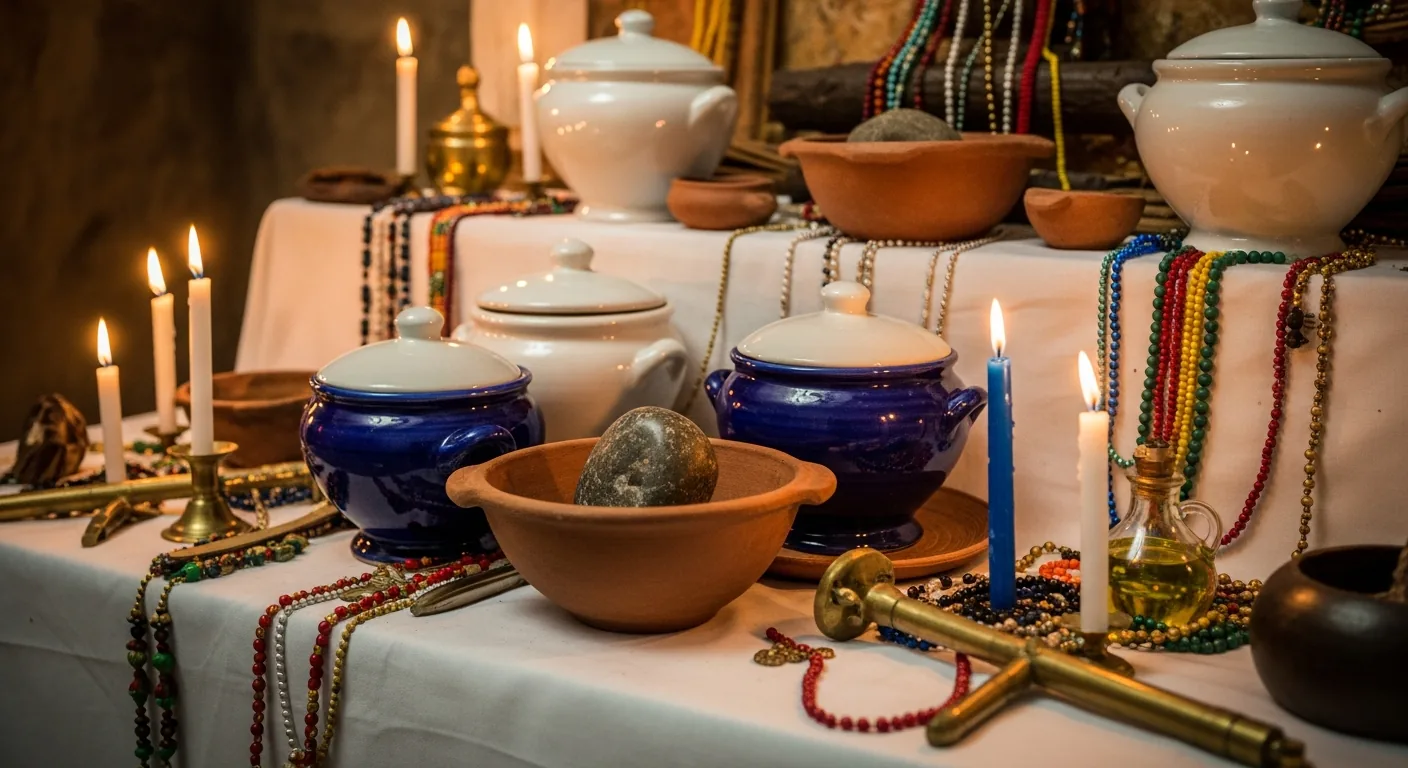
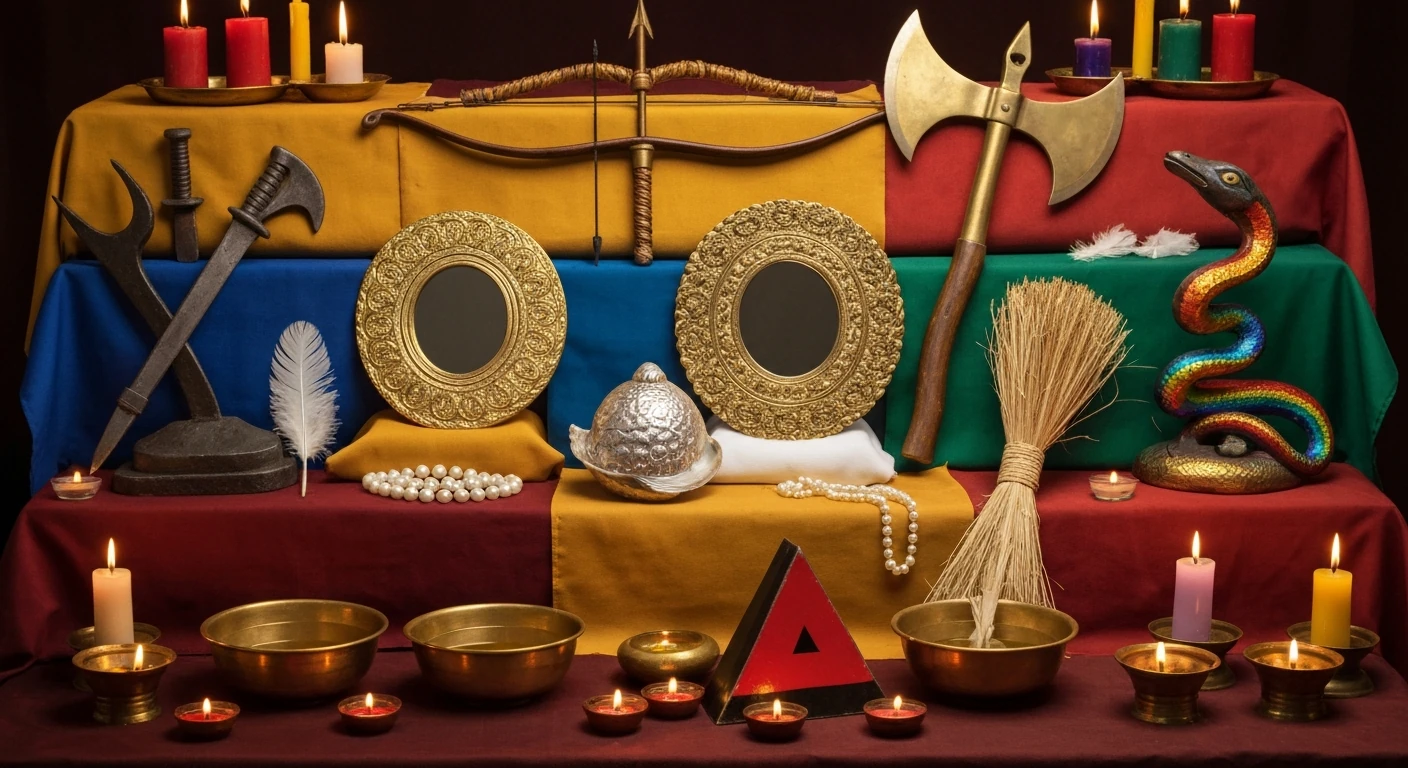
The set of consecrated objects where the force of an orixá or a spirit stays fixed: container, otá, tools, and elements of each divinity. It is assembled by the priest and receives periodic obligations.
CandombléUmbandaQuimbanda - Assistência
-
The audience of the gira: the people who go to the terreiro to receive a spiritual pass and consult the spirits, without being part of the medium chain.
Umbanda - Atabaque Also: Rum, Rumpi, Lé, Ilú, Ngoma
-
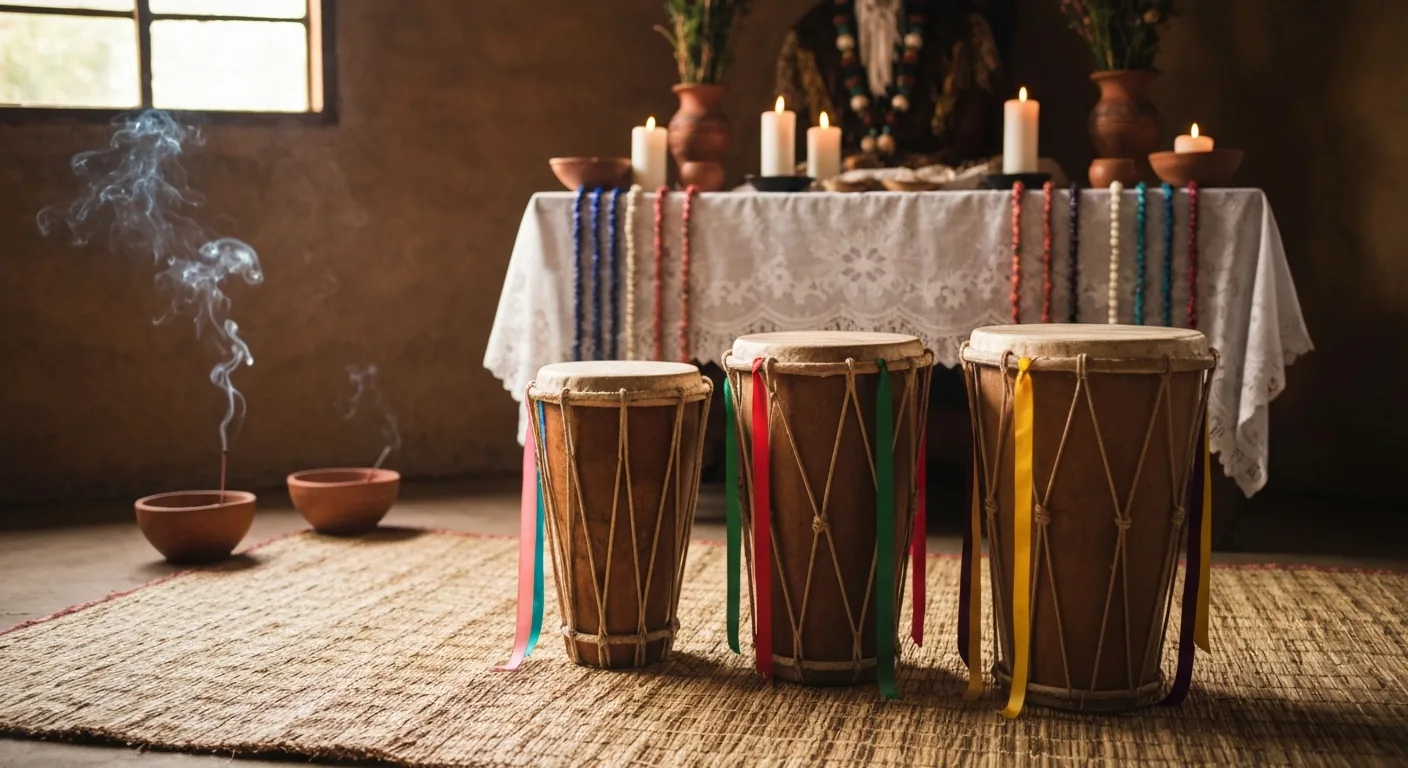
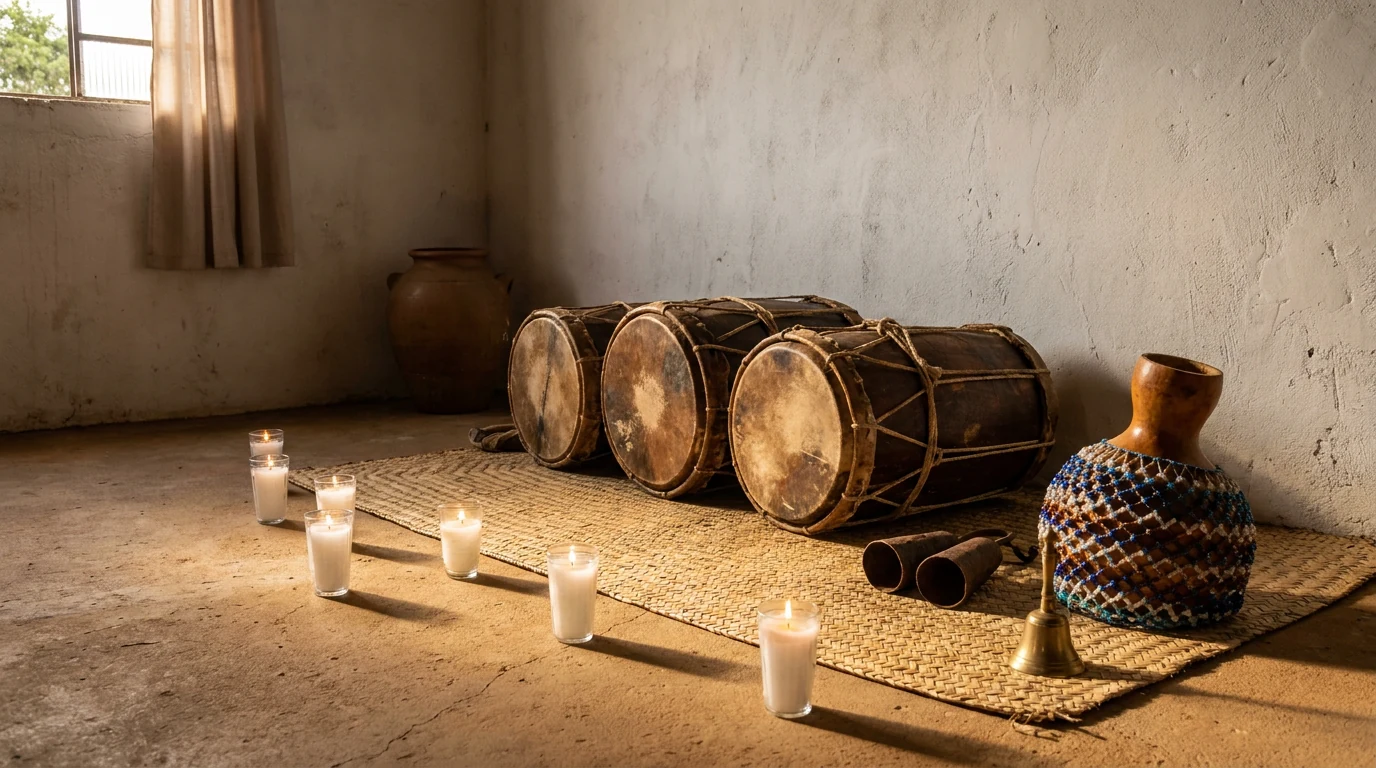
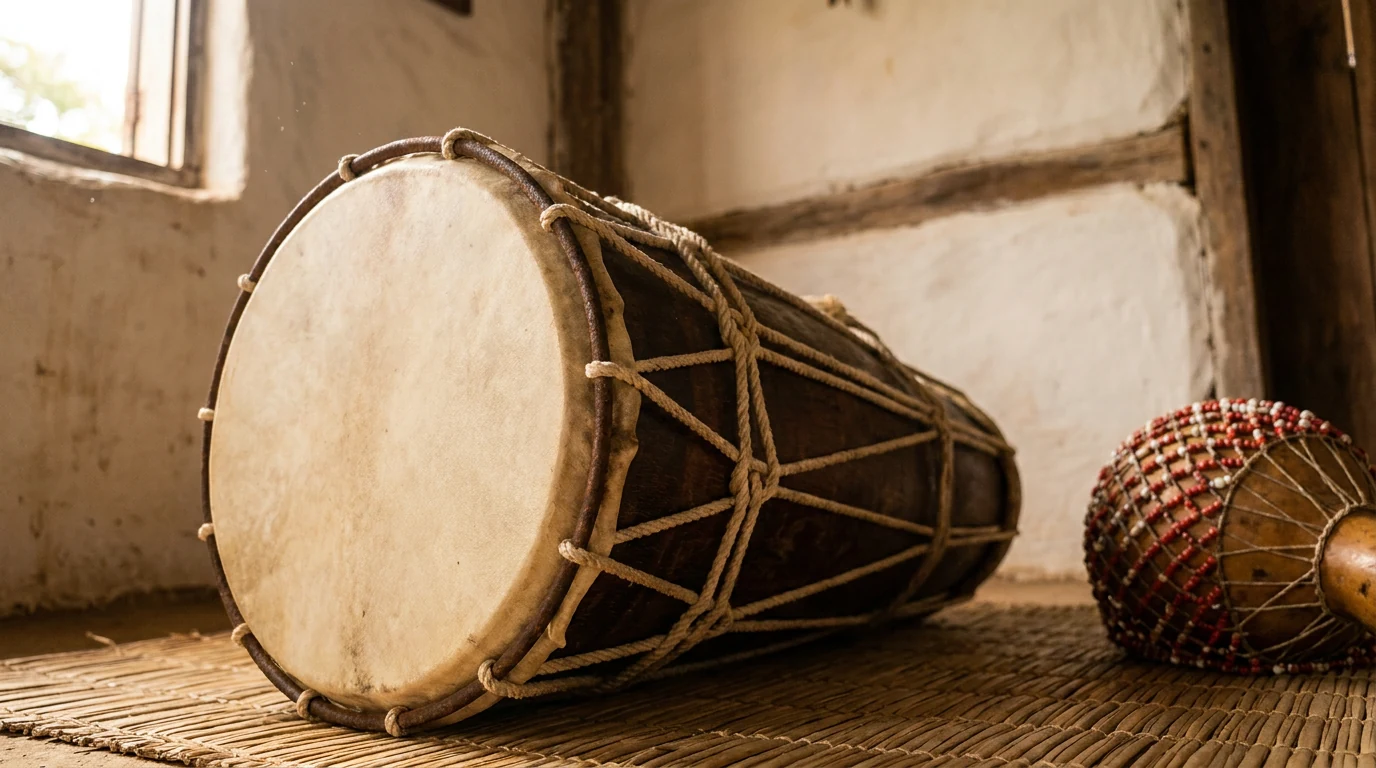
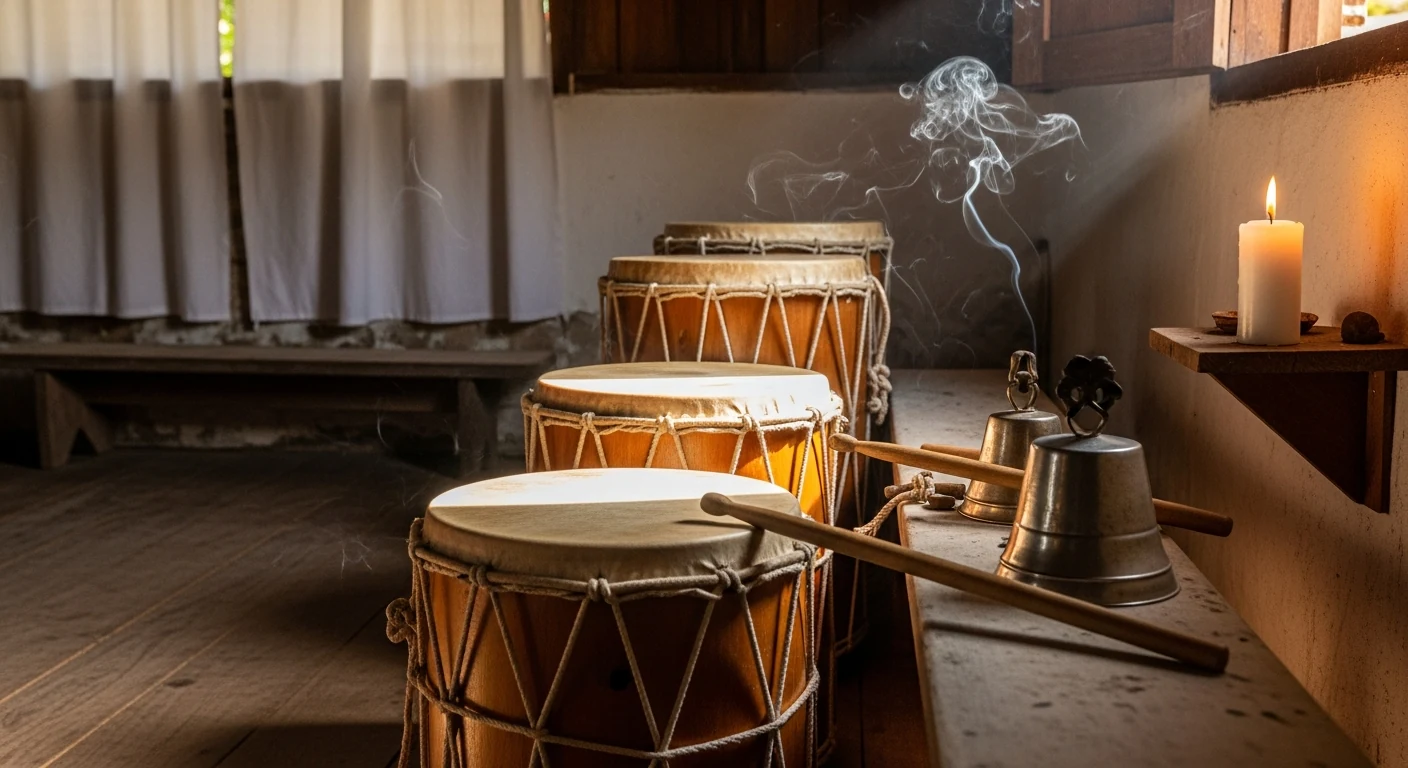
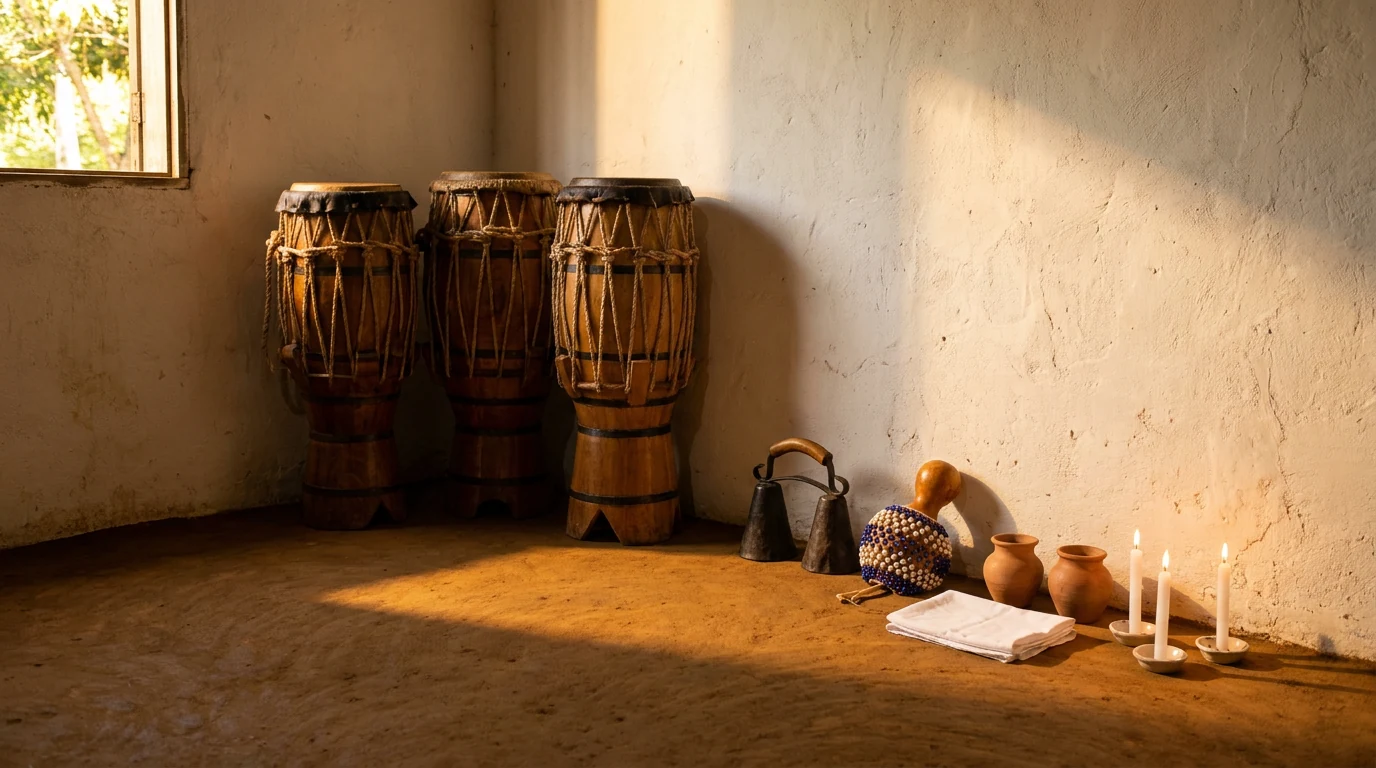
Sacred drums of the terreiro. In Ketu Candomblé there are three, called collectively ilú: the rum, larger and with a deep sound, the rumpi, medium, and the lé, smaller. In the Angola nation, the drums are the ngomas. They are consecrated and played only by ogãs.
CandombléUmbanda - Ataré
-
The pimenta-da-costa, a stinging African seed that the priest chews along with the obi and the orobô in some rites.
Candomblé - Atori
-
Ritual wooden rod used in the Waters Festival of Oxalá. With it, the Oxalás touch the two shoulders of the participants.
Candomblé - Atotô
-
Greeting to Omolu (Omulu) and Obaluaê, the orixá of the earth, of disease, and of healing. It asks for silence and respect before him.
CandombléUmbanda - Axé Also: Nguzu, Ngunzo
-
The vital force that circulates between orixás, people, leaves, foods, and sacred objects. It also means the house of the orixás (casa de santo) and, as a greeting, "so be it". In Angola Candomblé, the same force is called nguzu.
Afro-Brazilian - Axé de faca e búzio Also: Axé de obé, Axé de ofá
-
The two axés that complete the highest degree of the batuque: the axé de obé, the knife, and the axé de ofá, the cowrie shells. Those who receive them can open a house and initiate children.
Batuque - Axé de mão Also: Axé de tambor
-
Batuque rite that consecrates at the same time the drum and the one who will play it. It is performed by the house, within the fundamento.
Batuque - Axero
-
In Batuque, the state in which the filho de santo remains when the orixá says goodbye: child-like behavior, mixed speech. It has a parallel with the erê of Candomblé.
Batuque - Axexê Also: Sirrum, Mukundu, Aressum
-
Funeral rite of Candomblé, performed when an initiate dies. It undoes the person's ties with the orixá and with the house and sends the spirit forward. The name changes with the nation: axexê in ketu, sirrum in jeje, mukundu in angola and aressum in batuque.
Candomblé - Axó Also: Axô
-
The religious clothing, white or colored, used with bead necklaces and head cloths. In the worship of eguns, axó is also the embroidered clothing that covers the ancestor.
BatuqueCandomblé - Axogum
-
Ogã responsible for the ritual sacrifices of the house. It is a position of trust, given to those who have the foundation for it.
Candomblé - Axoxô
-
Cooked red corn, food of Ogum, offered alongside yam and black beans.
Candomblé














B
- Babá Egungun Also: Egungun
-
The illustrious male ancestor, prepared by specific rites to return and speak with the community. It is worshiped in separate houses, the Ilê Egum, led by priests who are not the pais de santo of the Candomblé of orixá.
Candomblé - Babalaô
-
Priest of Ifá, the oracle of Orunmilá (Orunmila). Consults the odus with the opelê or the ikin shells. It is not the same as babalorixá.
Candomblé - Babalorixá Also: Pai de santo, Tata de inquice
-
Pai de santo: the priest who leads a terreiro, initiates children, and cares for the orixás of the house. The feminine form is ialorixá.
Candomblé - Baiano Also: Baianos
-
Line of spirits from Umbanda who present themselves as people from the Northeast, cheerful and talkative. They are known for the ritual work of undoing, which undoes spells and breaks demands.
Umbanda - White flag
-
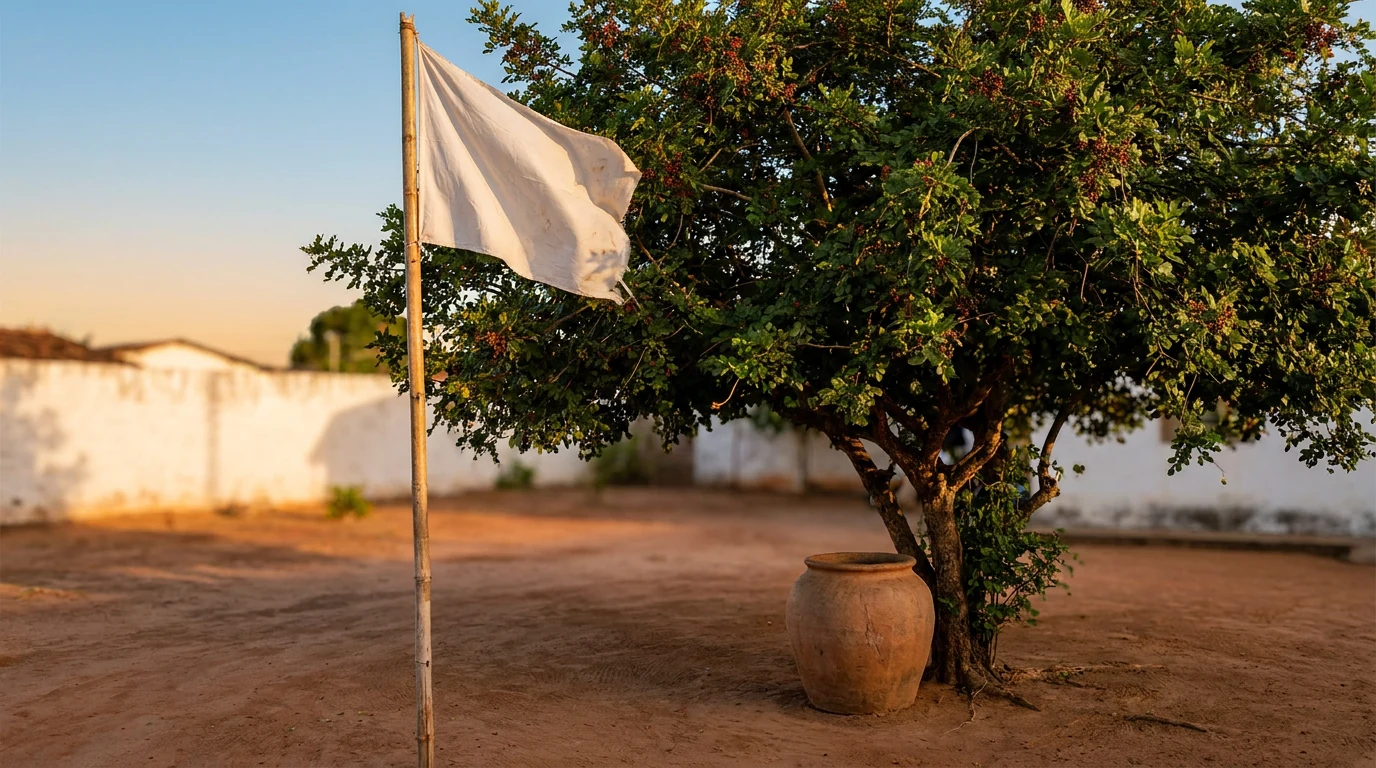
The flag hoisted in the houses of Candomblé de Angola, symbol of Tempo, the inquice who lives at the top of the mast.
Candomblé - Bará
-
In the gaúcho batuque, the orixá of the paths, who corresponds to Exu in Candomblé. He is always the first to be served, and the Bará of the Porto Alegre Public Market is one of his most well-known settlements.
Batuque - Bara (Personal Exu)
-
In Nagô Candomblé, the individual Exu that every initiate receives along with the consecrated foundation (assentamento) of the head orixá. Do not confuse with Bará, the orixá of Batuque.
Candomblé - Barco Also: Dofono, Dofonitinho
-
The group of people initiated together. Within the barco, the order follows the sequence of the head shaving (raspagem): the first is the dofono, the second is the dofonitinho, and so on.
Candomblé - Barracão
-
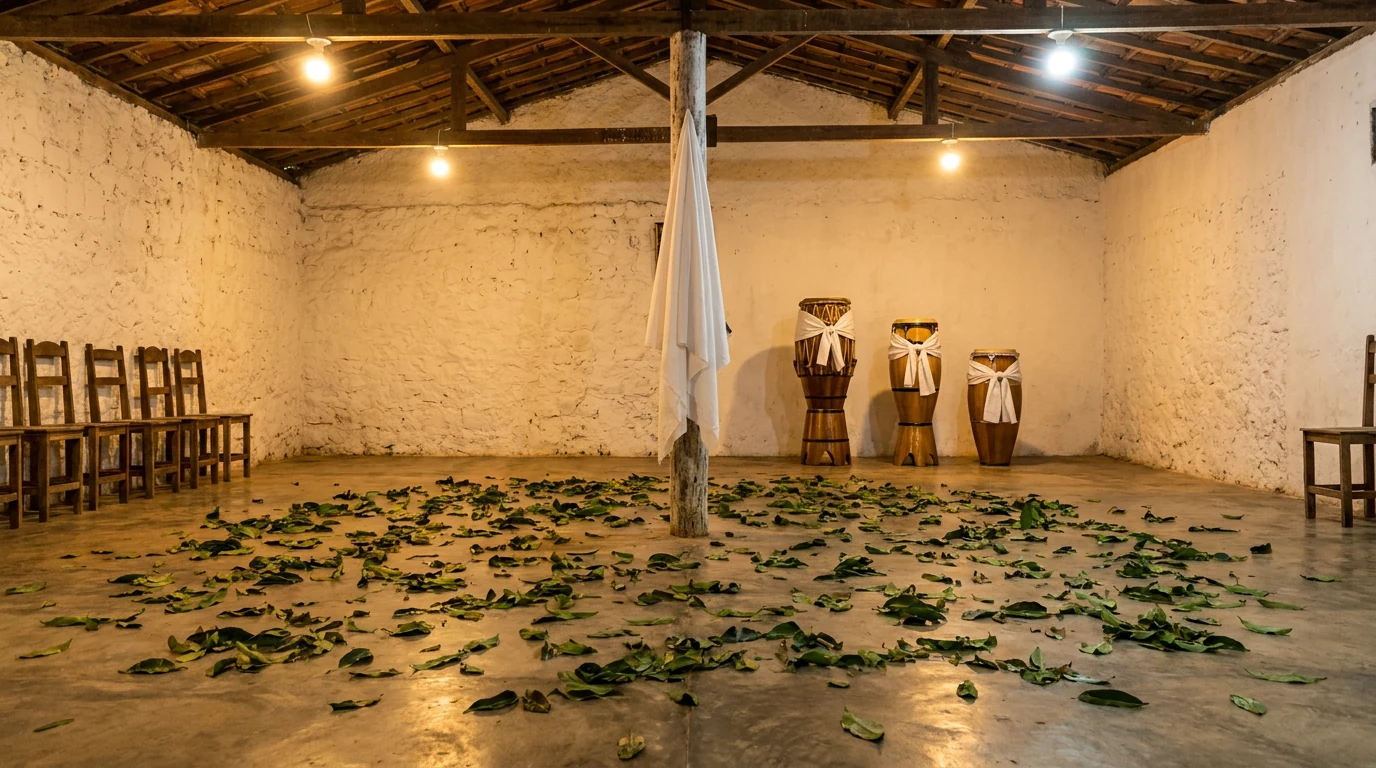
The hall where the public Candomblé parties take place, with the atabaques and the circle space. It is there that the orixás dance before the guests.
Candomblé - Bater cabeça
-
Touching the head to the ground before the congá, the assentamento, or the priest, in reverence. In Umbanda, it is the gesture that every medium makes before starting the ritual work.
UmbandaCandombléBatuque - Baptism in Umbanda
-
Rite that consecrates the person, or the child, to the house and to the guides. It usually involves water, herbs, godparents, and the blessing of an orixá or a caboclo.
Umbanda - Boiadeiro Also: Boiadeiros
-
Line of spirits of cowboys and muleteers from the sertão, connected to the land and hard work. "They drive the herd": they lead away heavy energies, like someone guiding the flock.
Umbanda - Bori
-
Rite of "giving food to the head": it strengthens the Ori, the spiritual head of the person. It can be done by those who are not initiated and usually comes before the initiation.
Candomblé - Brajá
-
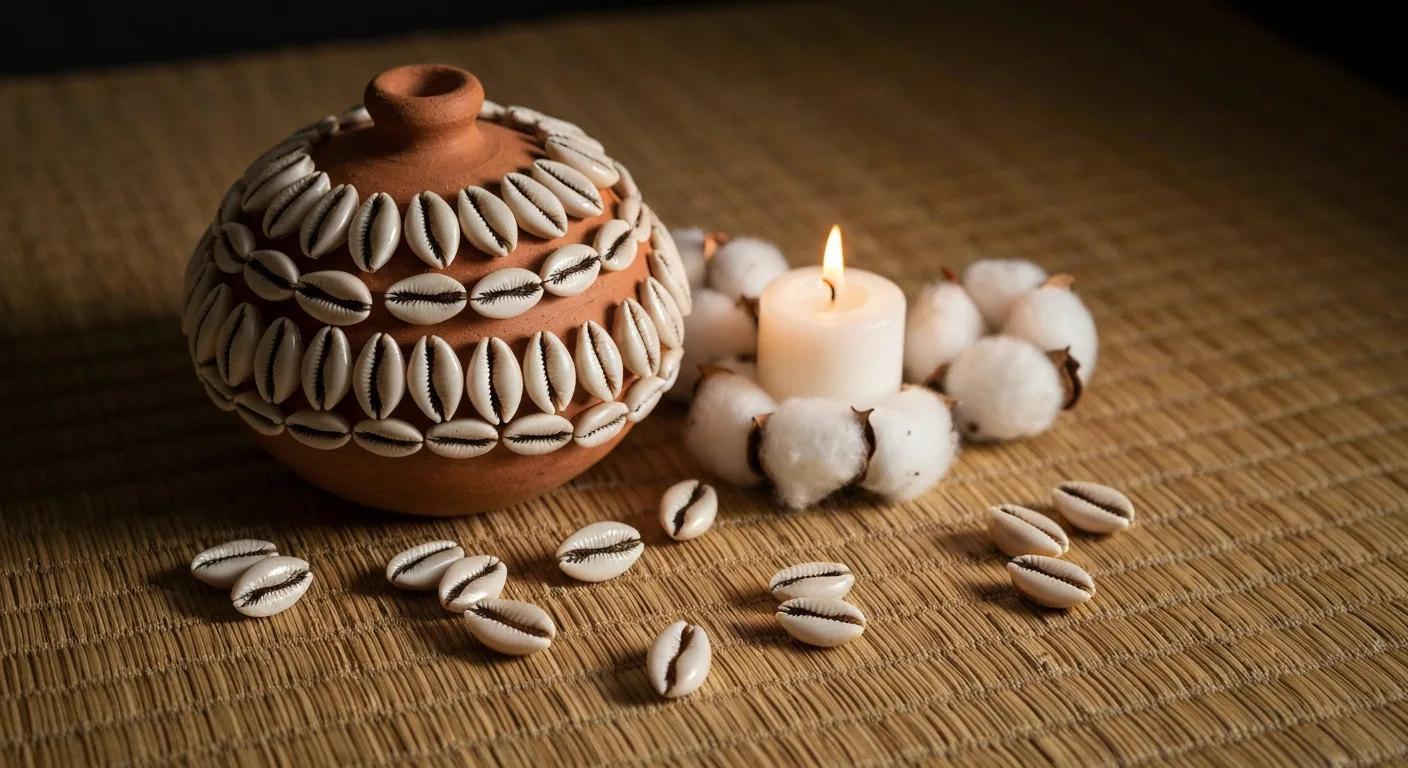
Necklace of open cowrie shells, braided into one another. Few orixás wear them, and Exu is among them.
Candomblé





C
- Cabeça lavada
-
In batuque, those who have passed through the head washing: they are connected to the house, attend and serve, but are not yet initiated.
Batuque - Caboclo
-
Spirit of a Brazilian indigenous person who works in Umbanda, linked to the forests and, in general, to Oxóssi (Oshosi). They arrive with a strong shout, give a spiritual pass, prescribe herbs, and offer advice. They are also worshipped in the Candomblé de caboclo.
UmbandaCandomblé - Cafua
-
In Quimbanda, the internal and closed room where the house's chief exus live. The name comes from the Kimbundu kafua, grave or cave. It is not the tronqueira, which is at the entrance.
Quimbanda - Calunga Also: Kalunga
-
Word of Bantu origin for the border between the living and the dead. Calunga grande is the sea; calunga pequena is the cemetery, where Omolu and the exus das almas work.
UmbandaQuimbanda - Cambone Also: Cambono
-
Medium who assists the incorporated spirits during the gira: lights candles and cigars, translates messages, notes what was requested, and takes care of the seeker.
Umbanda - Carrego
-
Spiritual weight or burden. In the axexê, it is the bundle with the broken bead necklaces and the clothes of the deceased, dispatched at the end of the rite. In old Bahia, it was said that a person "has a carrego of Exu" instead of "is a child of Exu".
Candomblé - Caruru Also: Omalé de Ibeji
-
Dish of finely chopped okra with dried shrimp, peanuts, cashews, and dendê. It is the food of Ibeji and gives its name to the feast of Cosme and Damião, served first to the children.
CandombléUmbanda - Romani spirit Also: Romani spirits, Romani people
-
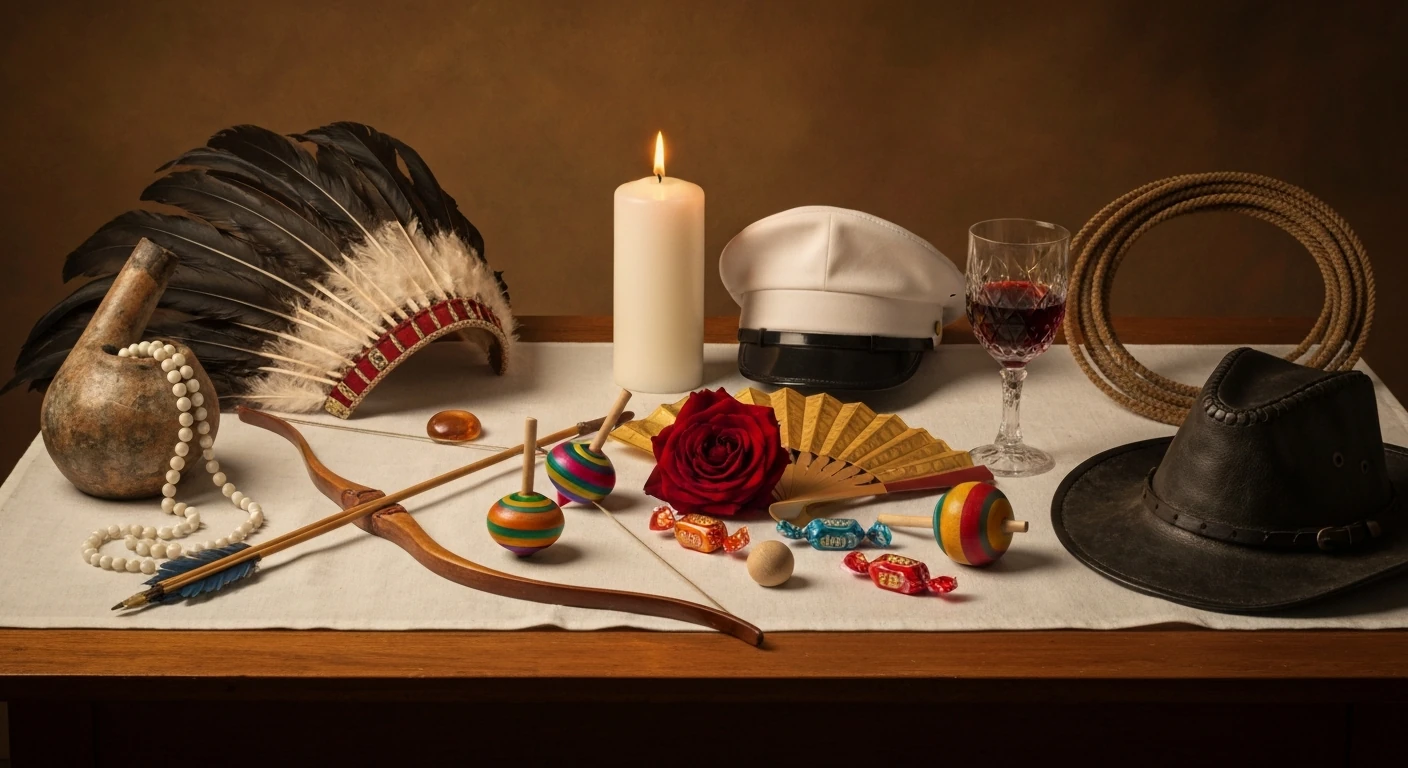
Line of spirits of the Romani people, linked to the Eastern Line. They work with bonfire, a full table, cards, and joy, in their own celebration. In some houses, they are treated as the Exu line.
UmbandaQuimbanda - Dry food
-
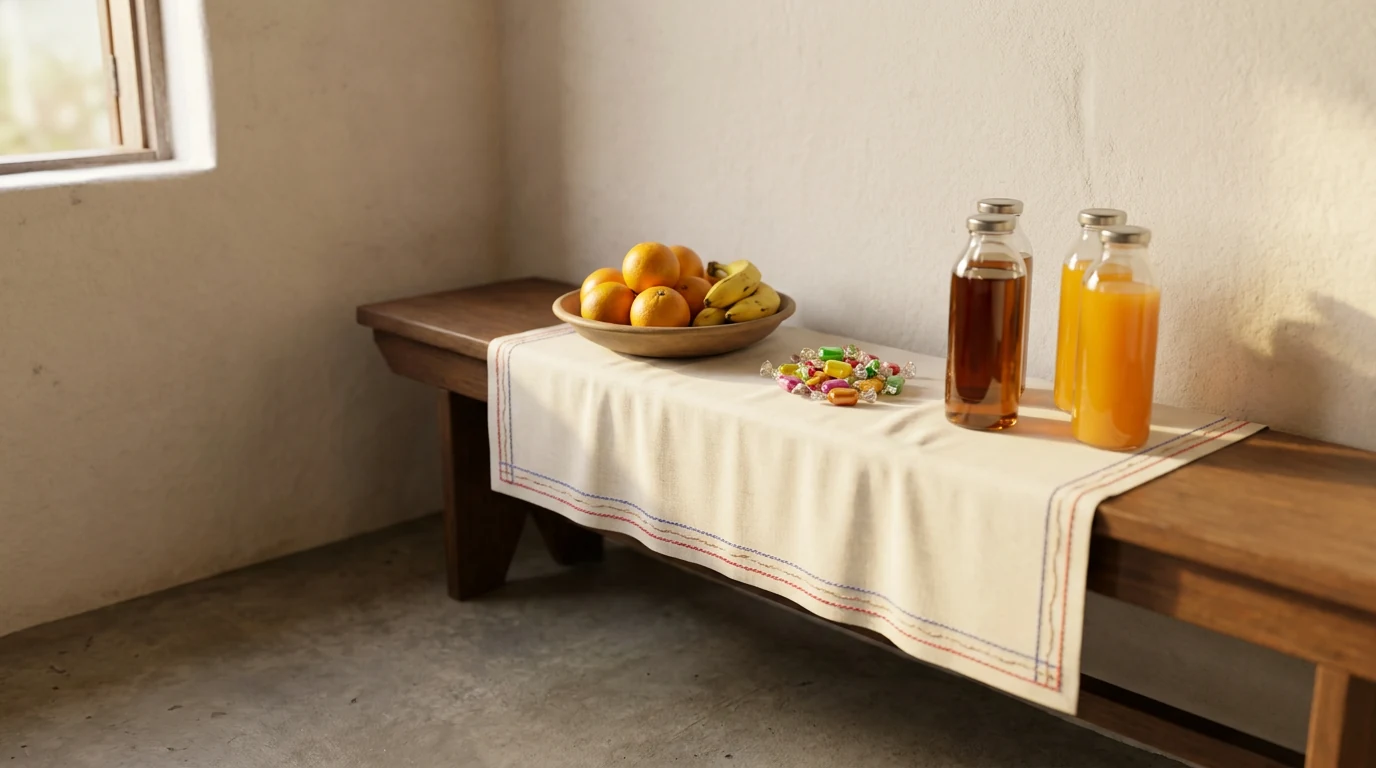
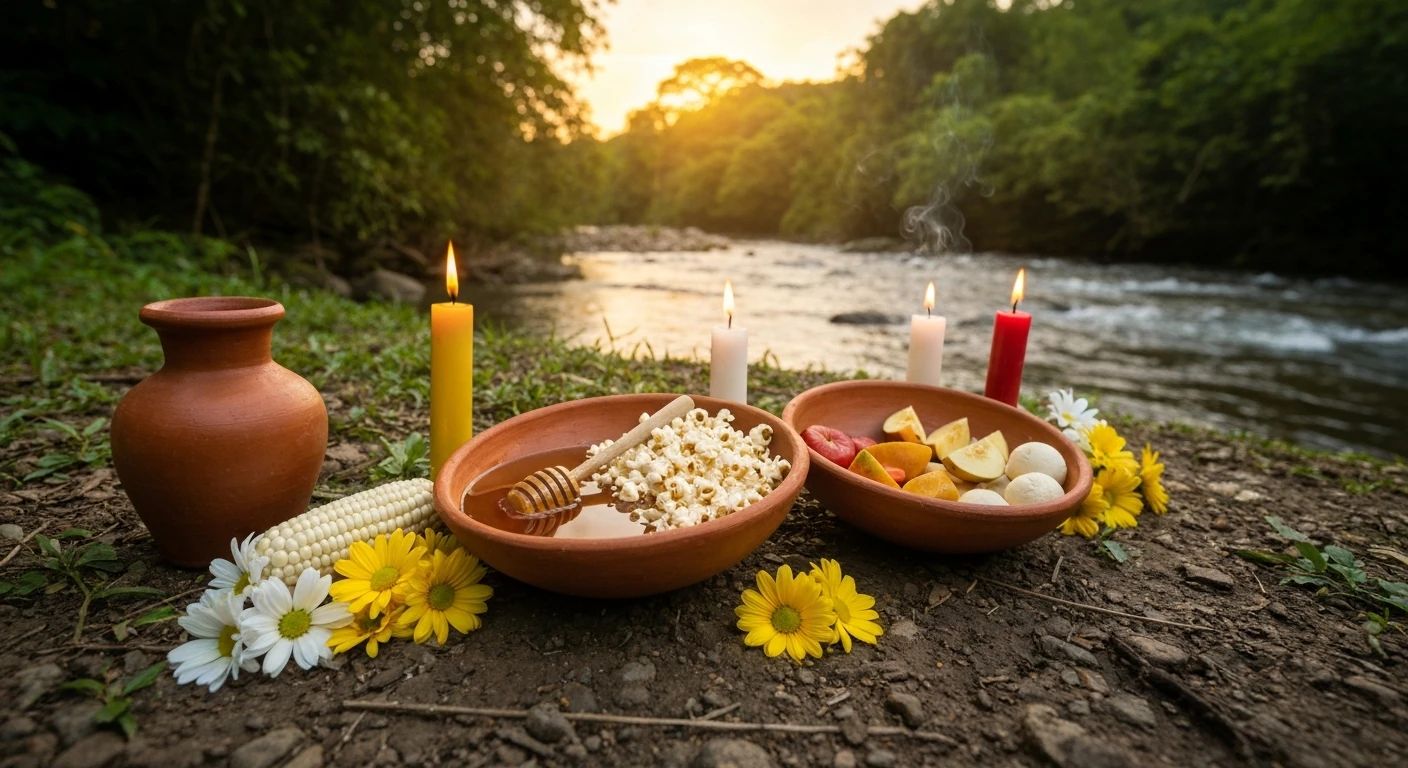
Offering without sacrifice: grains, flours, tubers, fruits, sweets, and drinks. It is the food that the filho de santo takes to the terreiro or delivers at the assentamento.
CandombléBatuque - Compadre
-
Affectionate treatment that Umbanda uses for the Exus, like speaking with a trusted relative.
Umbanda - Congá Also: Gongá
-
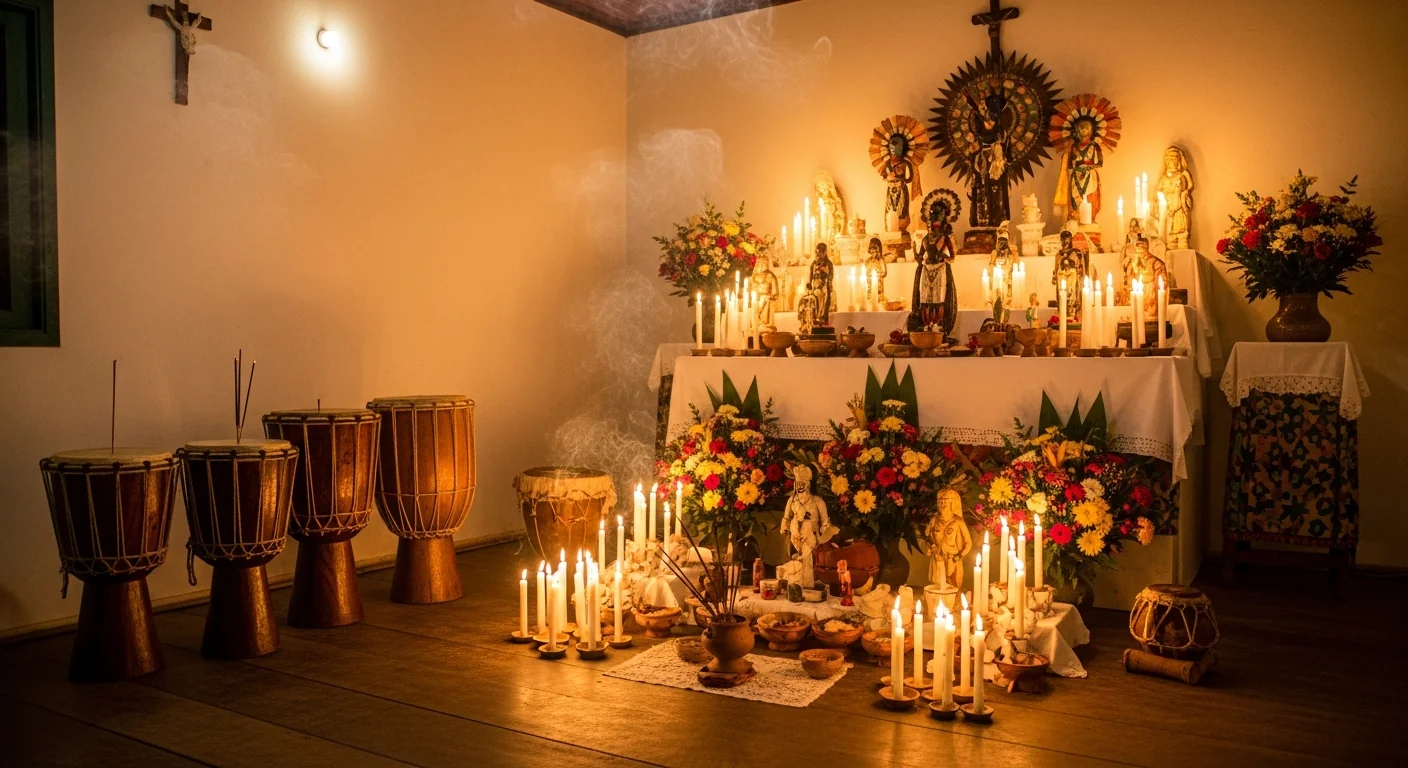
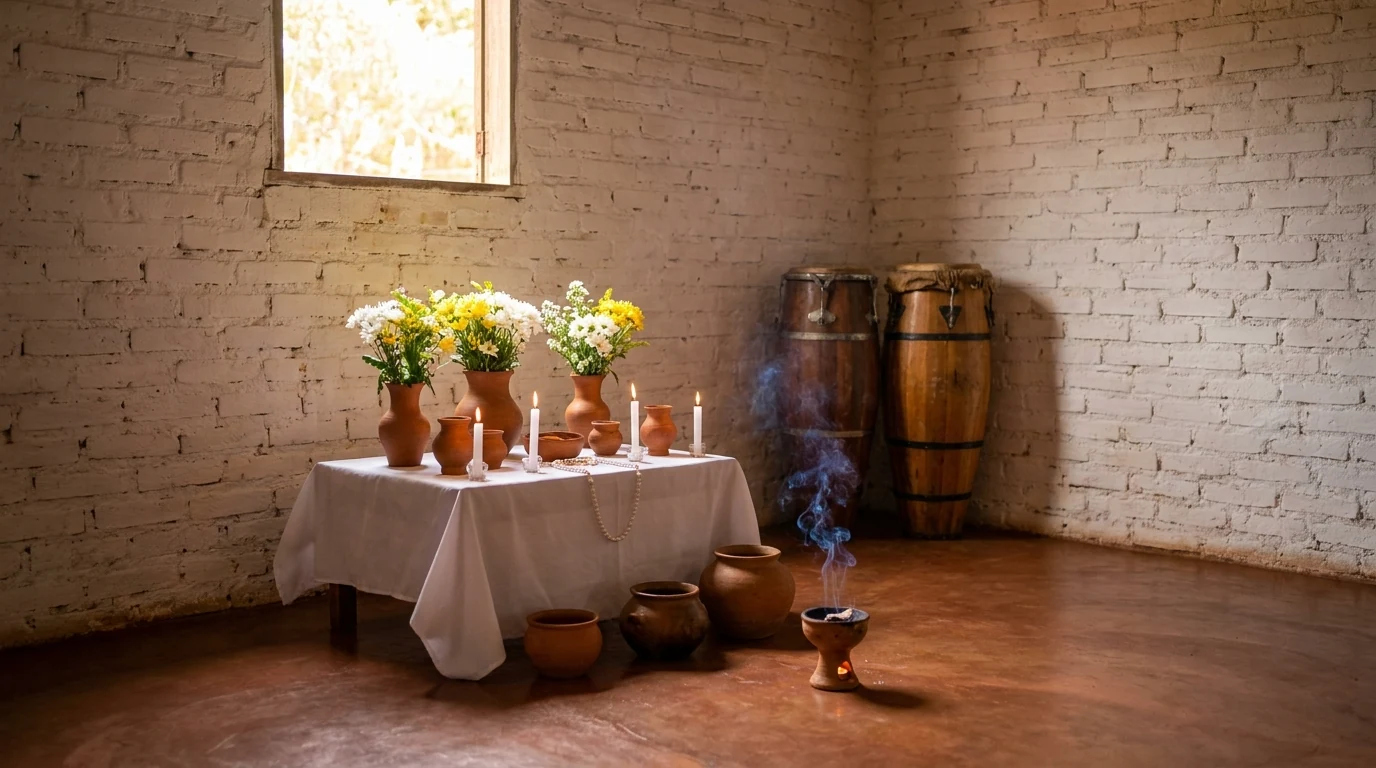
The altar of the umbanda terreiro, with the images of the orixás and the spirit guides, candles, flowers, and points of firmeza. It concentrates the spiritual force of the house.
Umbanda - Contra-egun
-
Braided coastal straw tied to the arm of the initiate, which protects against the approach of eguns, the spirits of the dead, in delicate phases such as the postpartum period.
Candomblé - To cross Also: Crossing, Crossed
-
Consecrating by marking in a cross. The leader crosses the medium with pemba during the baptism, crosses and firms the bead necklace to link it to the orixá, and at the end of the gira the ponto riscado is crossed with a drink. A crossed spirit is the one that works between the right and the left.
UmbandaBatuque - Cross of Souls (Cruzeiro das Almas)
-
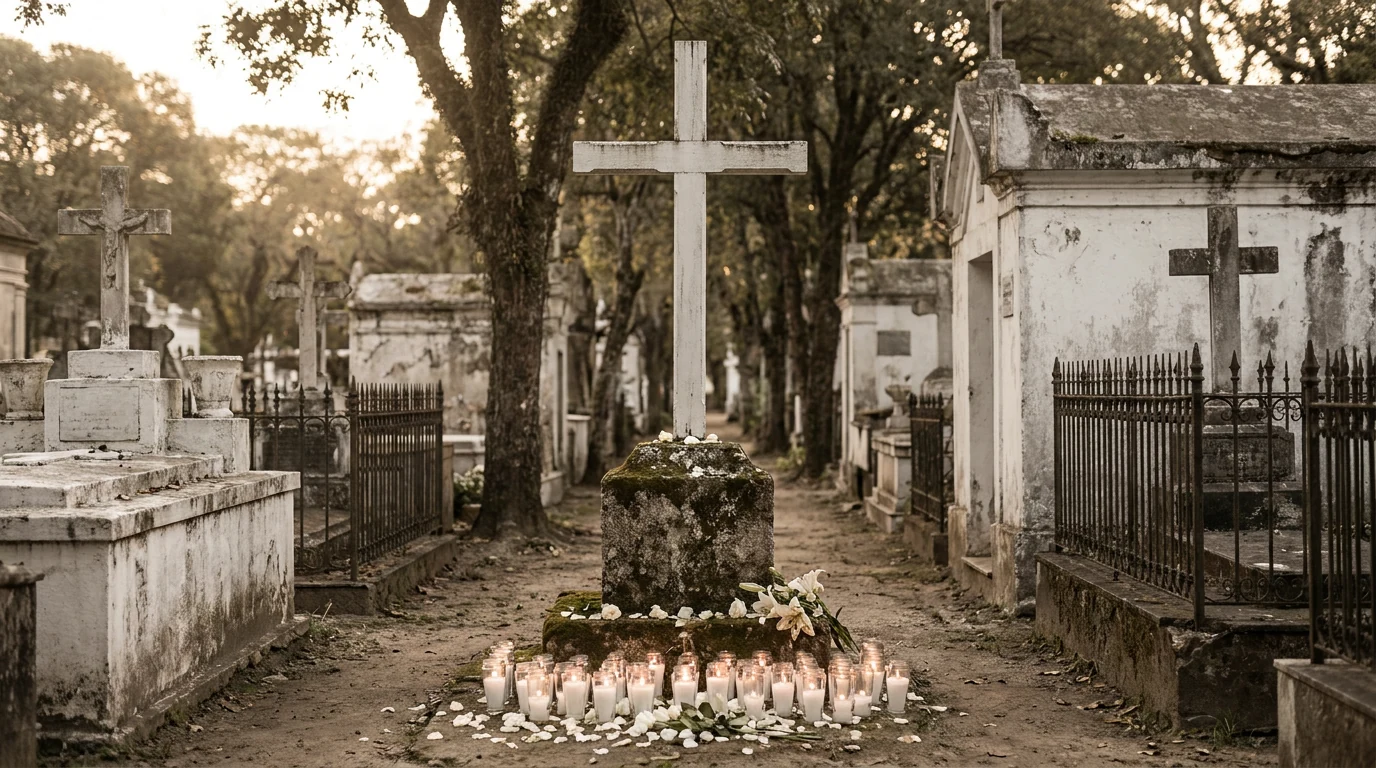
The cross that stays in the cemetery, or is settled in the terreiro, where candles are lit and requests are made to the souls and to the pretos-velhos and exus who work with them.
UmbandaQuimbanda - Curimba
-
The set of ogãs, atabaques, and sung pontos that sustains the Umbanda gira. The curimbeiro leads the pontos that call and dismiss the spirits.
Umbanda






D
- Smoke cleansing Also: Kufumala
-
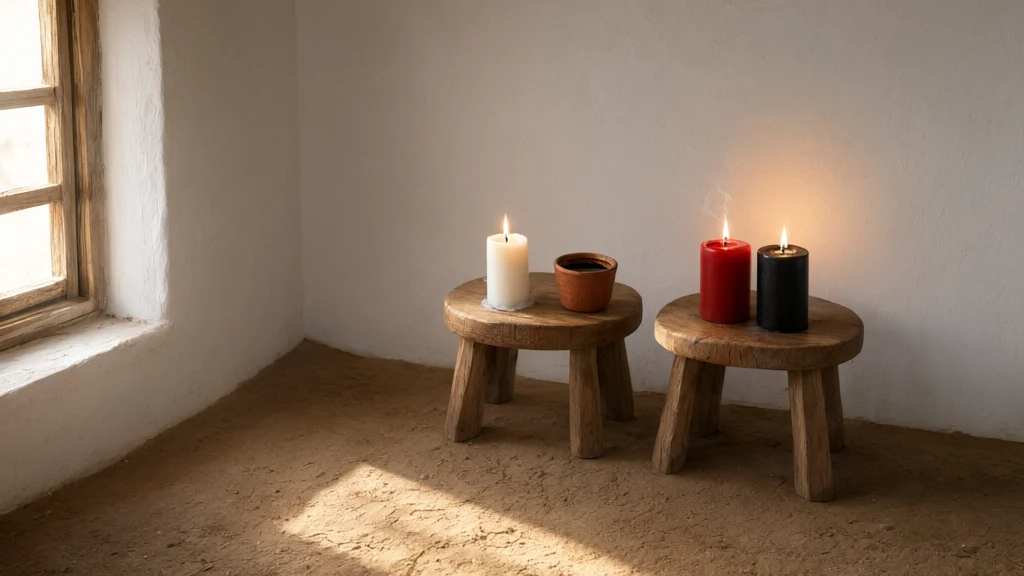
Burning of dry herbs and resins over embers to cleanse people and environments. It opens the Umbanda gira and is done at home for spiritual cleansing (descarrego) and protection.
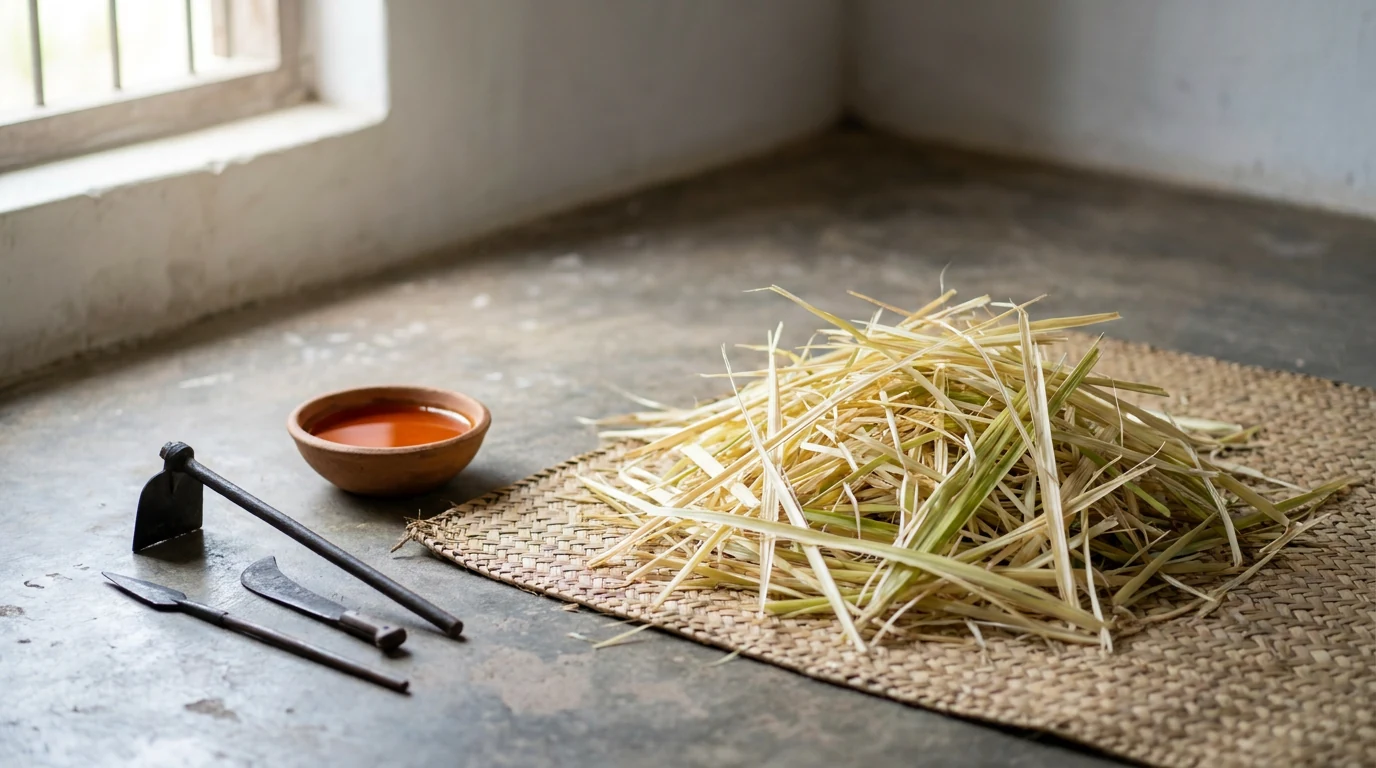
Afro-Brazilian - Deká Also: Decá, Cuia
-
The set that the initiate receives in the seven-year obrigação, when they pass to ebómi. It authorizes the person, if it is the will of the orixá, to open their own house and initiate children.
Candomblé - Demanda
-
Spiritual ritual work done against someone, or the spiritual conflict that it provokes. "To win the demanda" is to undo this attack, and that is where the name of the vence-demanda herb comes from.
UmbandaQuimbanda - Dendê Also: Epô
-
Palm oil, called epô in terreiros. It goes into the food of Exu, Ogum, Iansã and other fire orixás. Oxalá does not take dendê.
CandombléUmbanda - Descarrego
-
Spiritual cleansing that removes heavy energies from the person or the house. It can be a herbal bath, coarse salt, smoke cleansing (defumação) or a spiritual pass from a spirit.
UmbandaAfro-Brazilian - Mediumship development
-
The period in which the medium learns, in the giras specifically for this, to receive and give passage to their spirit guides with safety, under the guidance of the pai or mãe de santo.
Umbanda - Desincretização
-
Movement by part of the people of the orixás that separates the orixá from the Catholic saint, to affirm the distinct identity of Afro-Brazilian religions.
Afro-Brazilian - Desmanche
-
Spiritual ritual work that undoes a spell, cuts magic, and breaks a demanda made against someone. It is a specialty of the baianos and the left line.
UmbandaQuimbanda - Despacho
-
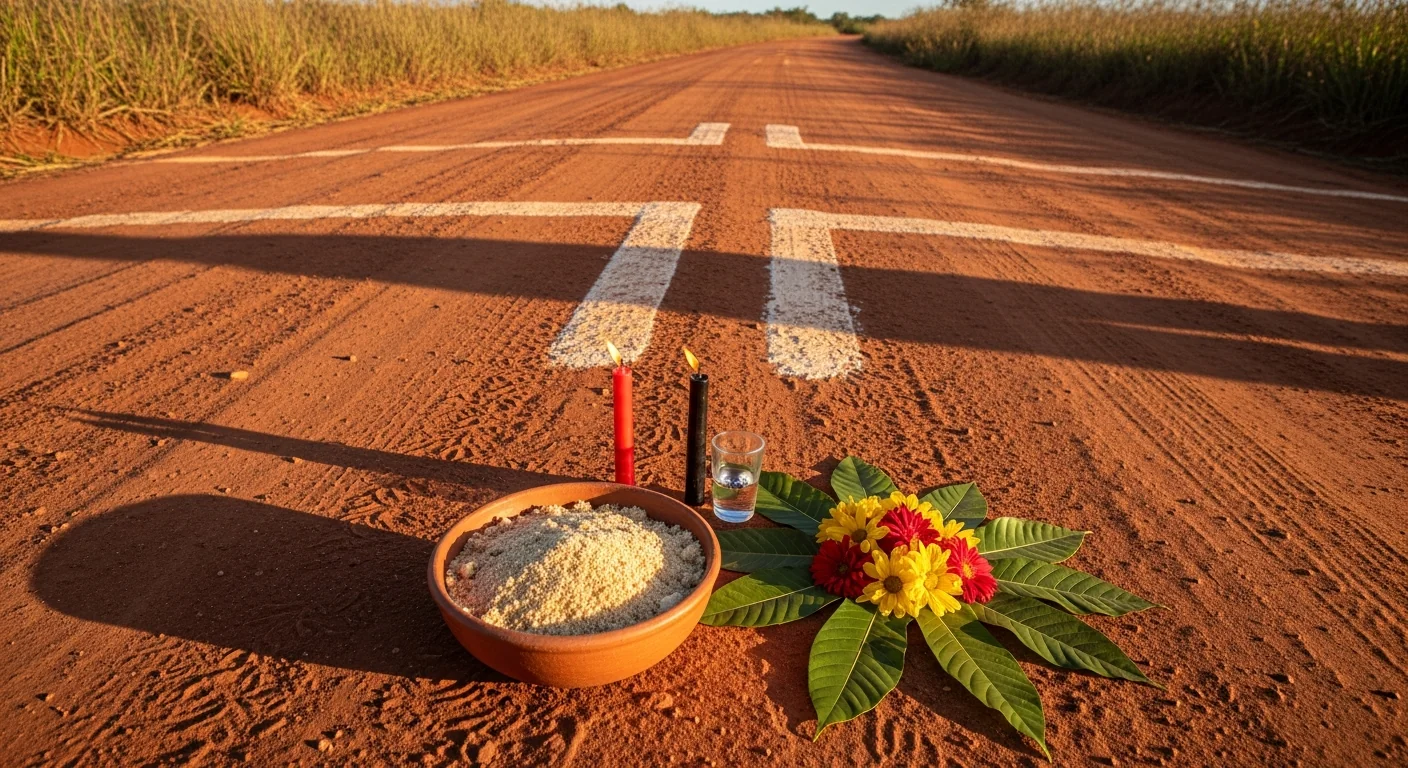
Offering that is delivered and left in the place the spirit asks: crossroads, forest, cemetery, river. It is the opposite of the assentamento, which stays in the house, lives, and feeds.
UmbandaQuimbandaCandomblé - Dijina
-
The name of an initiate in the Angola Candomblé. It corresponds to the orunkó of the Ketu and is announced upon the initiate's departure.
Candomblé - Dikenga
-
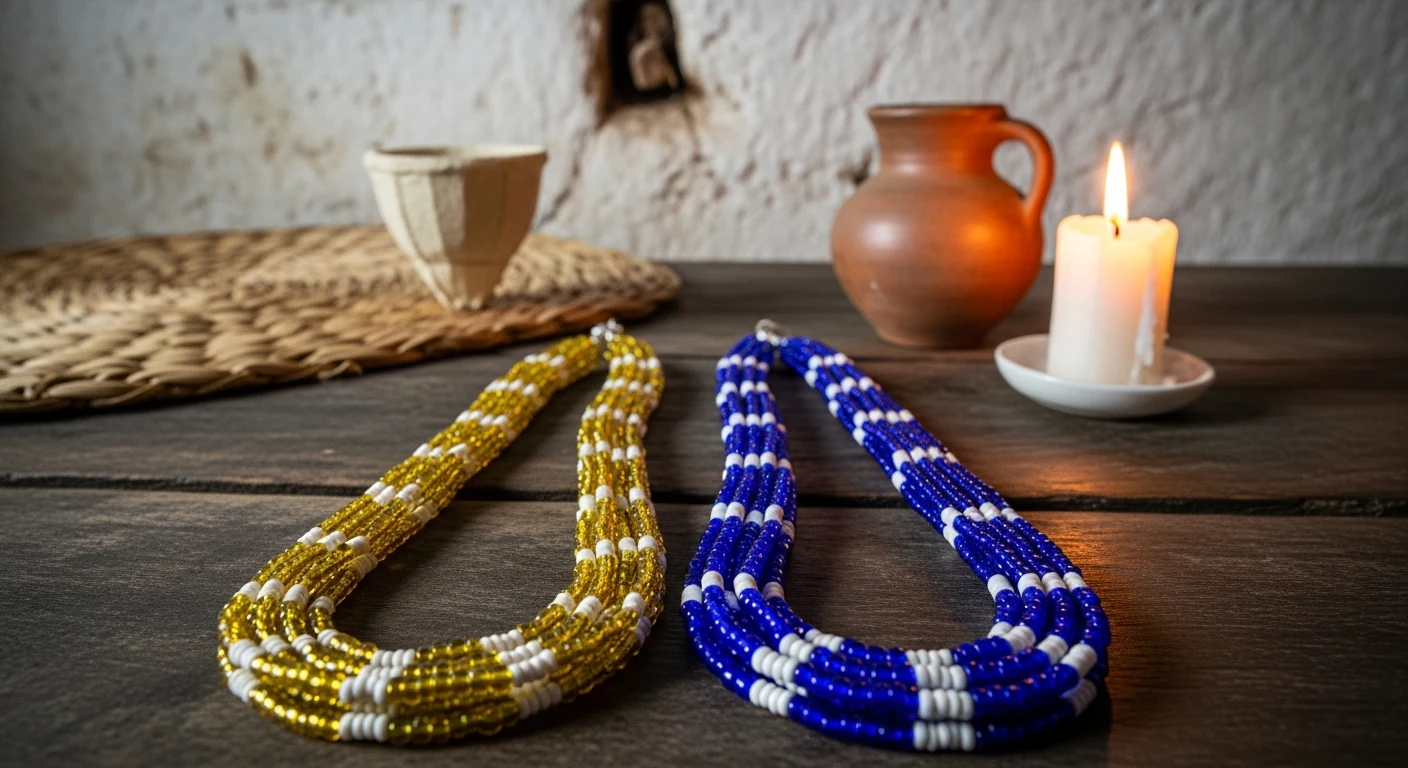
The cross of the Bakongo people that marks the four moments of the sun and the cycle of life. The middle line is the calunga, the border between the world of the living and that of the ancestors.
CandombléAfro-Brazilian - Dilogum Also: Delogum
-
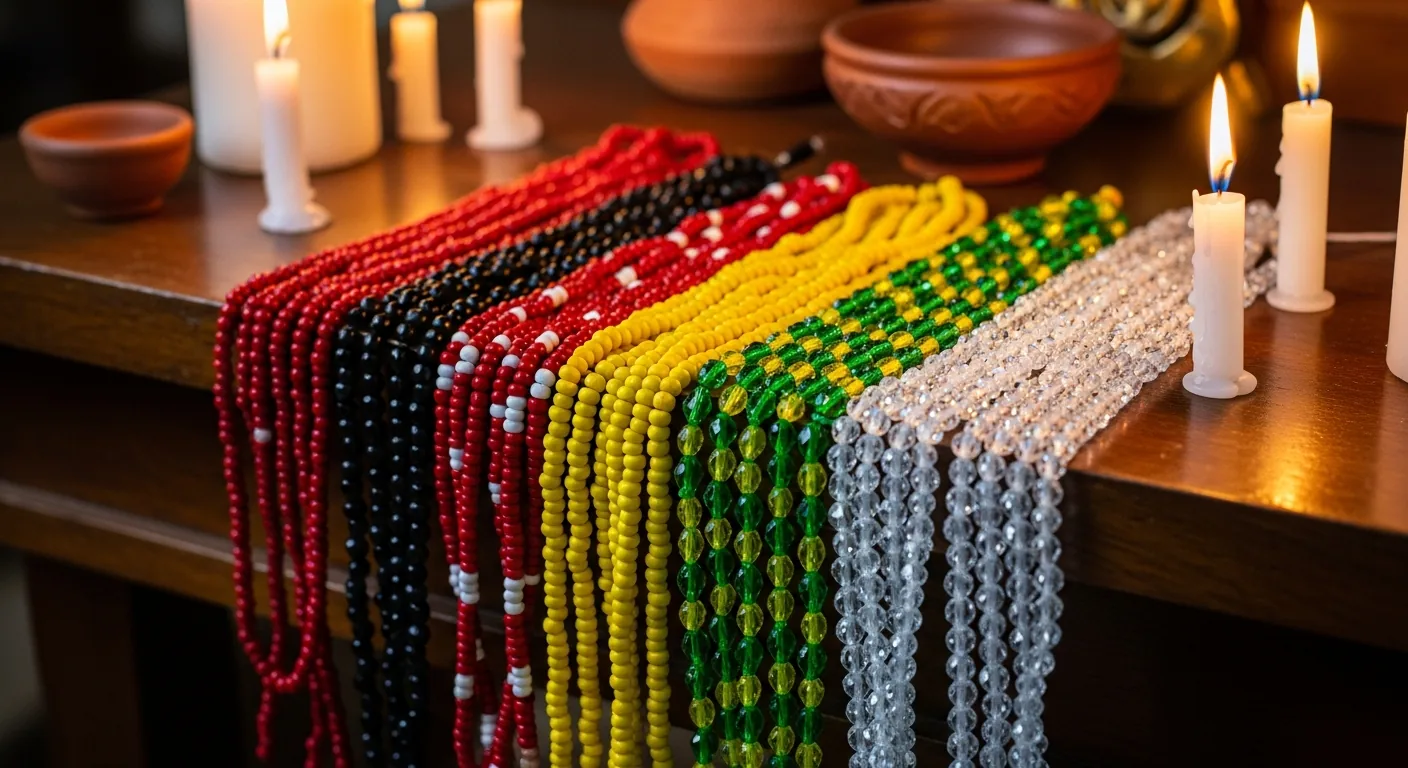
The thick bead necklace of the iaô, made of several bead threads together. The number of threads varies with the nation, and in the feitura the iaô uses one of the head orixá and another of the accompanying orixá.
Candomblé - Dobale Also: Dobalé, Iká
-
A greeting in which the filho de santo lies on the ground before the orixá, the atabaque, or the zelador, as a sign of respect. The form of the gesture varies according to the head orixá.
Candomblé





E
- Ebó
-
An offering or ritual work with a specific objective: to cleanse, open a path, to ask, or to give thanks. The elements are defined by the oracle or by the priest, and not by a ready-made recipe.
CandombléUmbanda - Ebó Also: Canjica de Oxalá
-
Cooked white corn canjica, without seasoning, food of Oxalá. Do not confuse with ebó, the offering or ritual work.
Candomblé - Ebômi Also: Egbomi
-
An initiate who completed the seven-year obrigação and became an "older brother" in the house. They gain rights and responsibilities that the iaô does not yet have.
Candomblé - Edun ará
-
The lightning stone of Xangô, which stays in his assentamento. The itãs tell that the lightning of Iansã falls like stones from the sky.
Candomblé - Efun
-
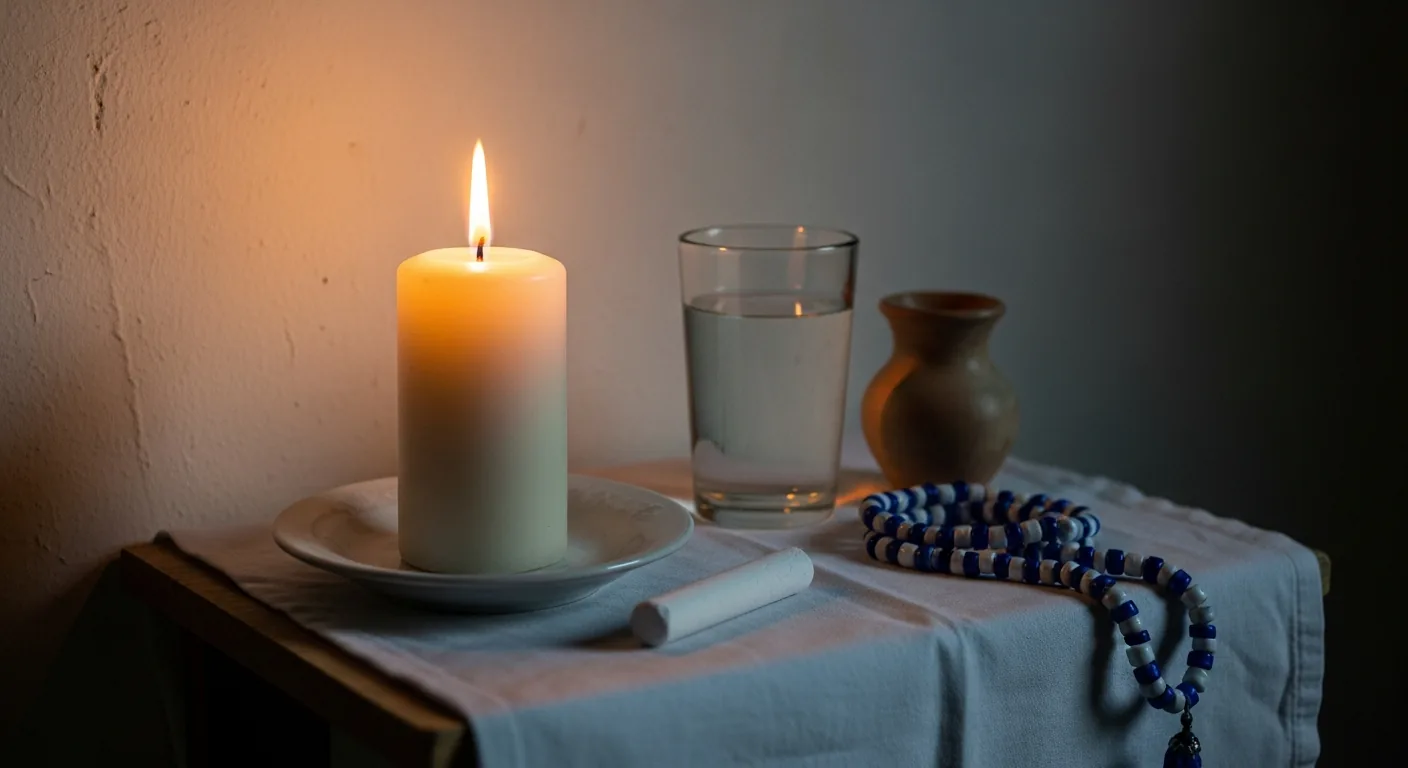
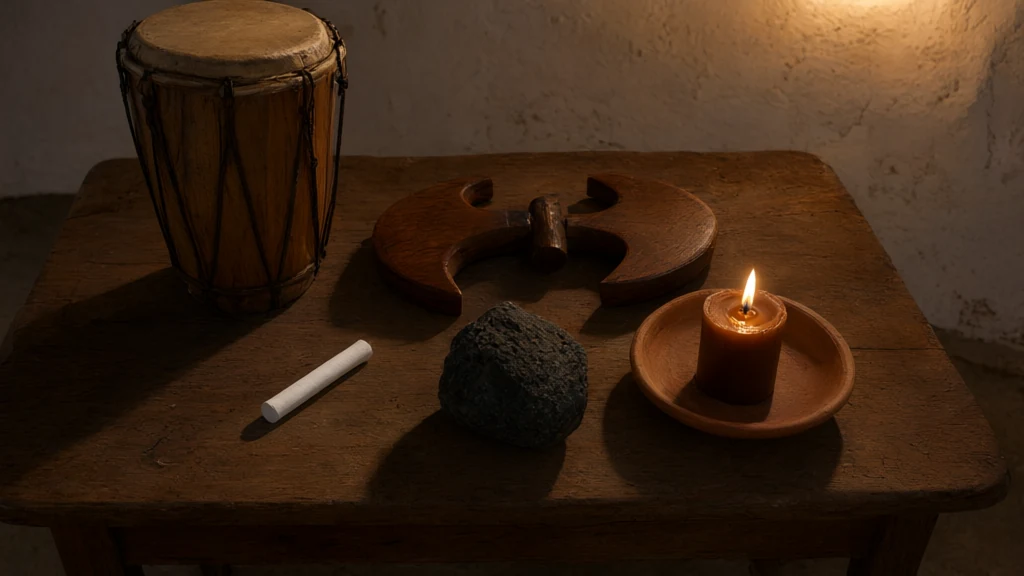
Sacred white chalk used to paint the iaô during the feitura, in dots and stripes that vary from orixá to orixá.
Candomblé - Egum Also: Egun, Eguns, Nvumbi
-
Spirit of a person who died. In Candomblé, the eguns have their own worship and care, separate from the worship of the orixás.
CandombléUmbanda - Ekedi Also: Equede, Makota
-
Female role of someone who does not enter a trance. The ekedi cares for the incorporated orixás, dresses them, wipes their faces, accompanies the dance, and is treated as a mother by the children of the house.
Candomblé - Ekodidé
-
The red feather of the red-fronted macaw, fastened to the forehead of the initiate. Linked to speech, it gives name to the exit in which the iaô announces their name of santo.
Candomblé - Eledá Also: head orixá, Owner of the head, Front orixá
-
The orixá owner of the person's head, the main one of their spiritual life. It is revealed by the cowrie-shell divination performed by a priest, and not by test or date of birth.
Candomblé - Emi
-
The vital breath, in Yoruba. When a person dies, the emi returns to the beginning of life, and the body returns to the earth.
Candomblé - Encantado
-
Spirit that, according to tradition, did not die: it became enchanted and began to live in forests, rivers, or in the sea. The encantados are central in Tambor de Mina, in Jurema, and in terecô.
Afro-Brazilian - Crossroads
-
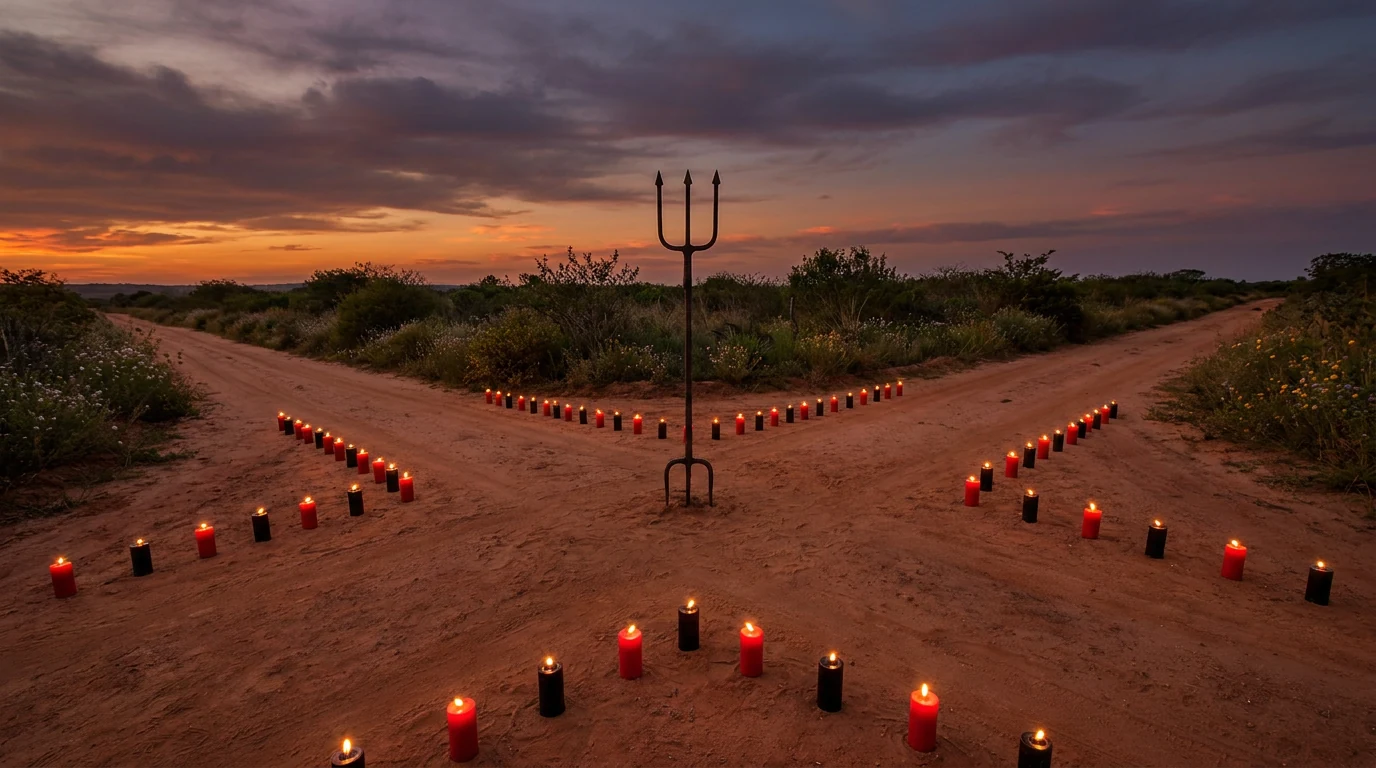
The crossroads, dwelling of Exu and a place of passage and choice. In Quimbanda, the cross-shaped crossroads, with four points, is called male and linked to the exus; the T-shaped one, where one street ends in another, is the female, of the pombagiras.
Afro-Brazilian - Spirit Also: Spirit guide
-
Spirit that works incorporated in mediums: caboclos, pretos-velhos, erês, baianos, exus, pombagiras and others. Different from the orixá, the spirit speaks, advises and attends to seekers.
UmbandaQuimbanda - Epa Babá
-
Greeting to Oxalá: "hail the father", the greatest ancestor. It is said in the xirê when the white orixá is called, at the end of the circle.
Candomblé - Eparrei Also: Epaiêio
-
Greeting to Iansã. Tradition says that, when lightning strikes in a storm, one shouts "eparrei, Oiá!". In the gaúcho batuque, the form is Epaiêio.
CandombléUmbandaBatuque - Erê Also: Ibejada, Children
-
In umbanda, a child spirit that works with joy, sweets and games. In candomblé, it is the child state that the initiate passes through between the trance of the orixá and consciousness.
UmbandaCandomblé - Eruexim Also: Iruexim
-
Flyswatter made of horse tail, a tool of Iansã. With it, the orixá of the winds commands the eguns.
Candomblé - Hot herb and cold herb
-
Classification of leaves by strength. Hot herb (arruda, guiné) cleans heavily and does not go on the head without guidance; cold herb (alecrim, boldo) calms and balances.
UmbandaCandomblé - Left and right Also: Left line, Left gira
-
Division of work in Umbanda. The right gathers caboclos, pretos-velhos and erês; the left, exus and pombagiras, who cut demands and protect. It is not a moral scale: left does not mean evil.
UmbandaQuimbanda - Ewé Also: Leaves of santo, Insaba, Nsaba
-
The sacred leaves, in Yoruba. The maxim "kosi ewé, kosi orixá" says it all: without leaf there is no orixá. In the angola, the leaves are called insabas.
Candomblé - Ewé ô Also: Ewê ewê
-
Greeting to Ossaim (Osanyin), the owner of the leaves: "oh, the leaves!". It is also the cry of the orixá when his gourd of leaves falls and breaks.
Candomblé - Exu (orixá and spirit)
-
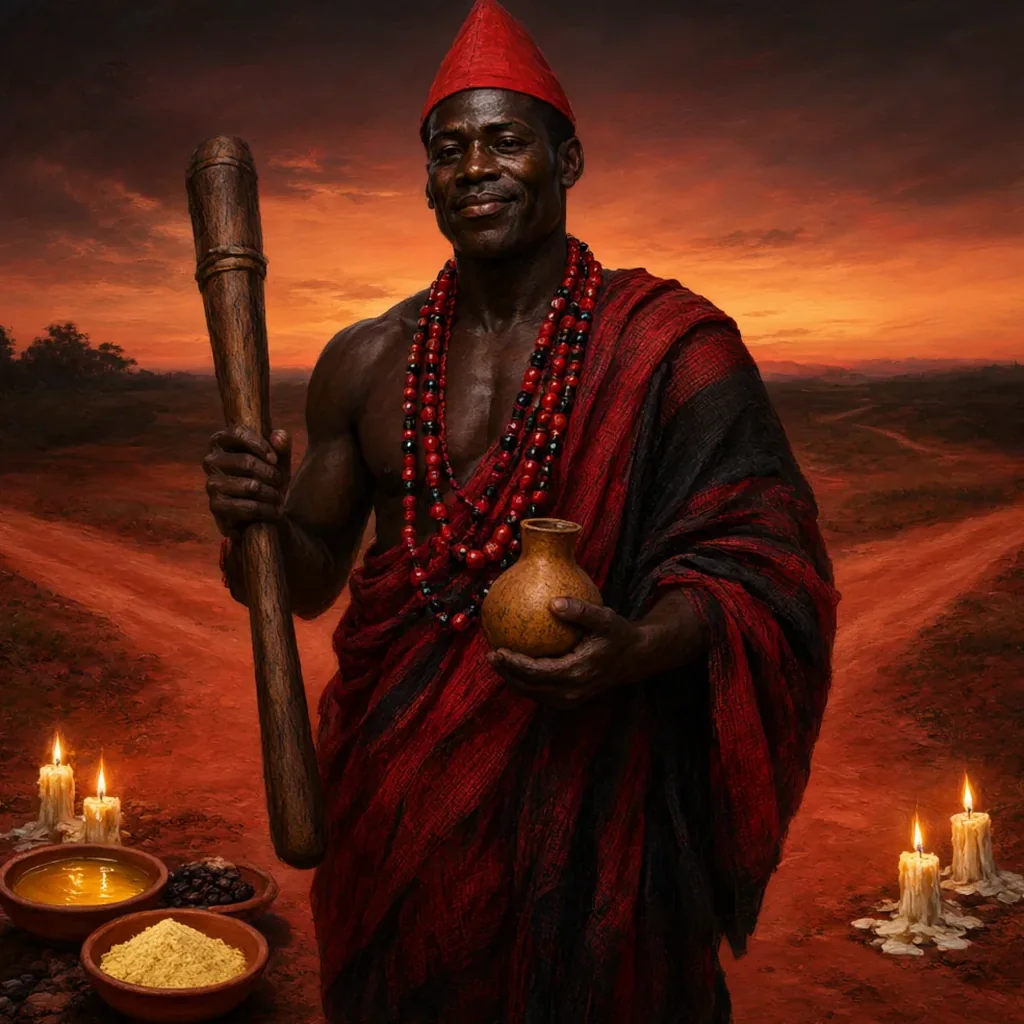
In Candomblé, Exu is an orixá: the messenger, owner of the paths and the first to be greeted. In Umbanda and in Quimbanda, exus are also guardian spirits, such as Tranca-Ruas, Marabô and Caveira, who work incorporated.
CandombléUmbandaQuimbanda - Exu de guarda Also: Exu de frente
-
The exu who leads the protection of a specific person, the guardian of whoever works in the gira.
UmbandaQuimbanda - Exu de lei Also: Exu batizado
-
Exu who works under an oath to fulfill the Law and does not fulfill any request to harm anyone. It is the most common type in terreiros, unlike quiumba.
Umbanda






F
- Falange
-
Group of spirits that work under the same name within a line. That is why there are many Caboclos Sete Flechas and many Marias Padilhas in different houses.
Umbanda - Farofa de dendê Also: Farofa amarela
-
Manioc flour mixed with dendê oil. A simple ritual food, linked to Exu and the opening of the ritual work.
Afro-Brazilian - Feitura Also: To be initiated, Initiation
-
The complete initiation in Candomblé, with seclusion in the roncó, head shaving, consecrated foundation of the orixá and the public appearance of the new iaô.
Candomblé - Ferramenta Also: Insígnia
-
Ritual object that gives shape to the function of an orixá: Ogum's sword, Xangô's oxê, Oxum's abebé. The piece that stays in the assentamento is the tool; the one the orixá carries in their hand when dancing is usually called an insignia.
Candomblé - Filá Also: Azê
-
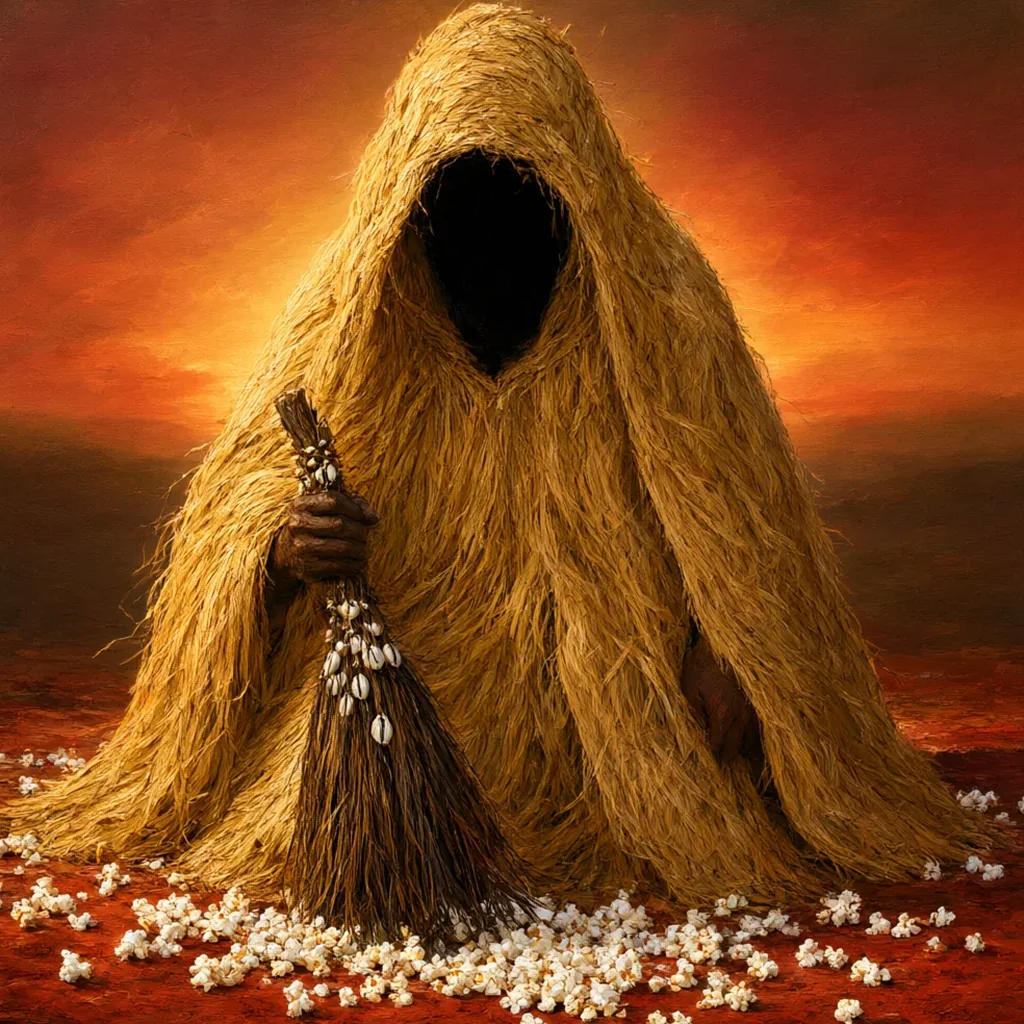
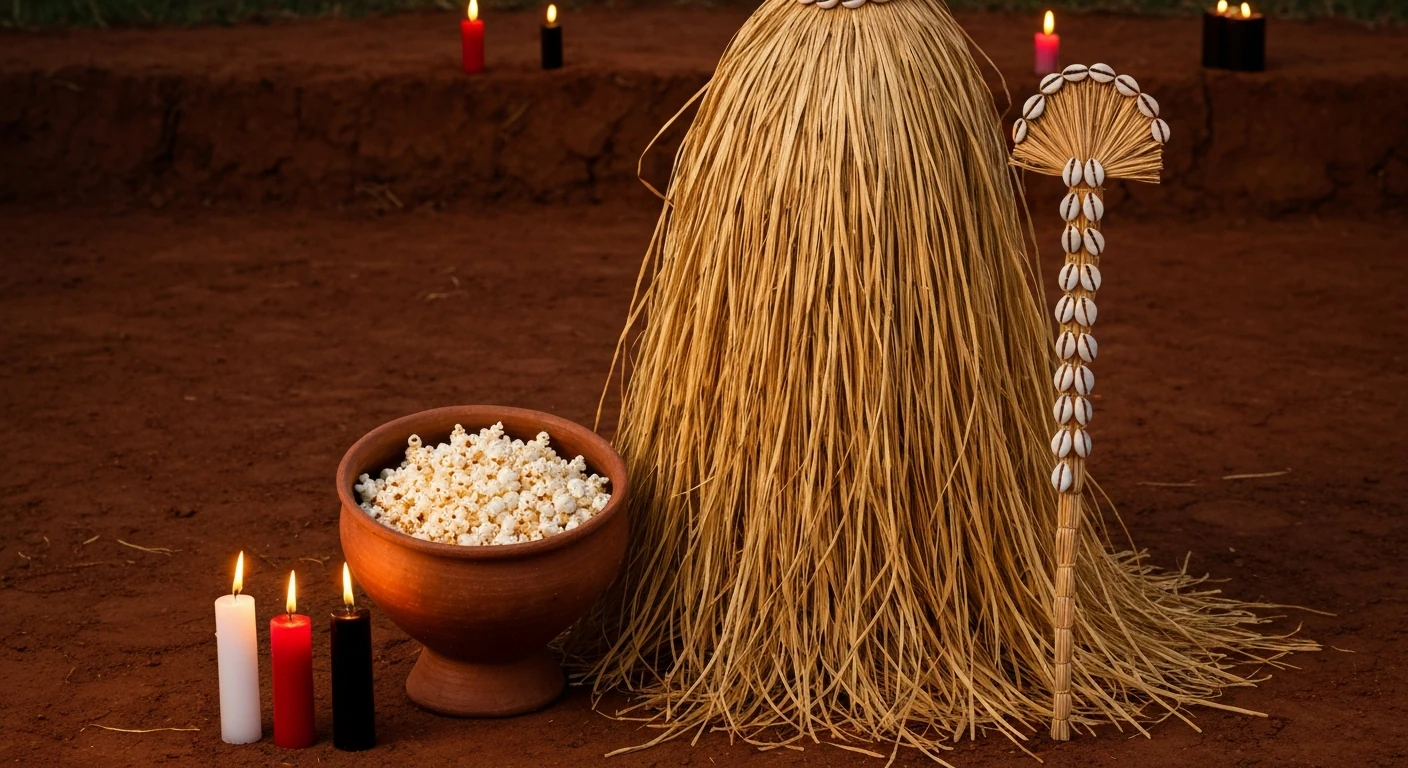
The straw hood from the coast that covers the face and much of the body of Omolu and Obaluaê, hiding the mysteries of the orixá. In Batuque, the hood is called azê.
CandombléBatuque - Fio de contas Also: Guia, Bead necklace, Ilequê, Ilekê
-
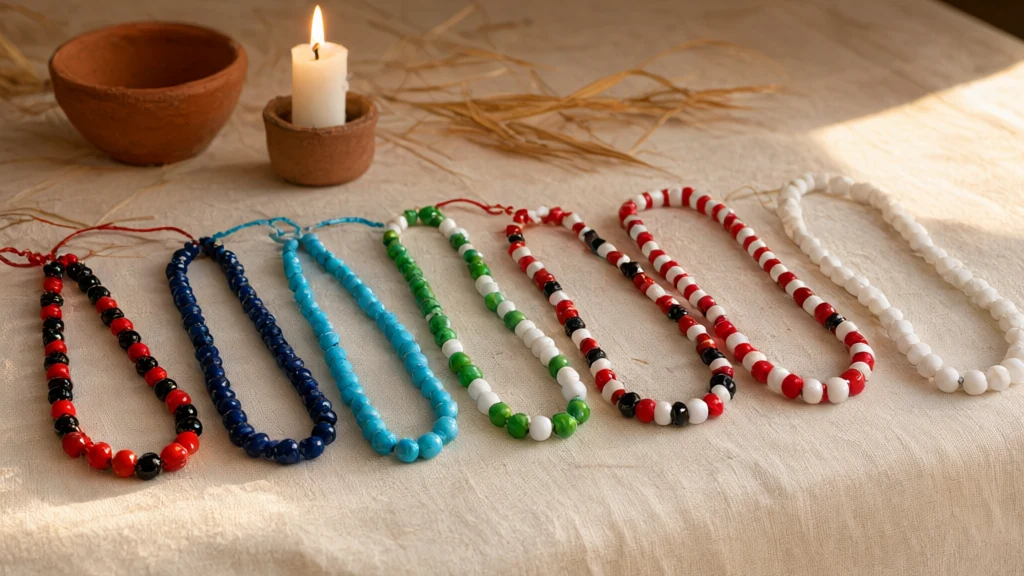
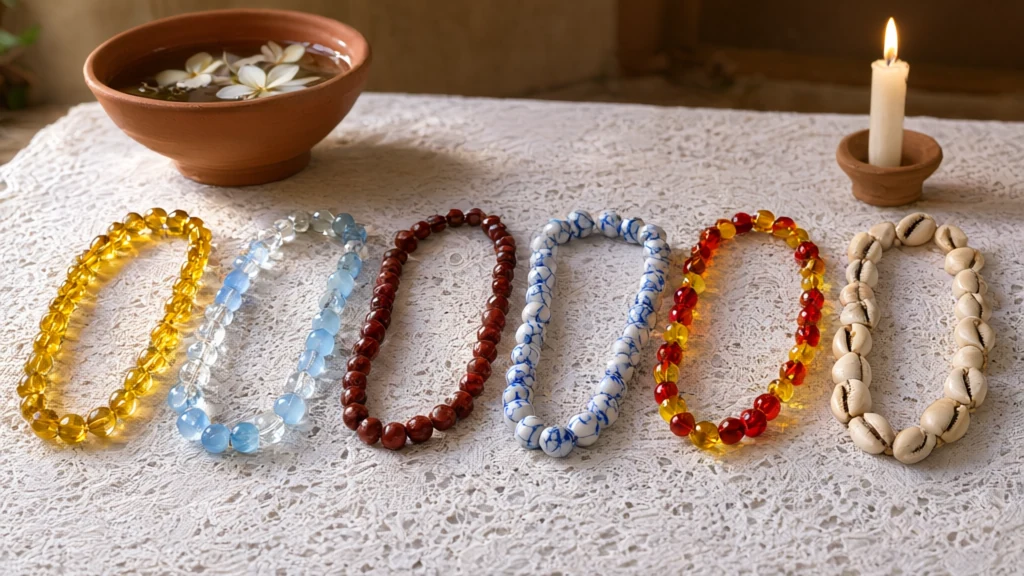
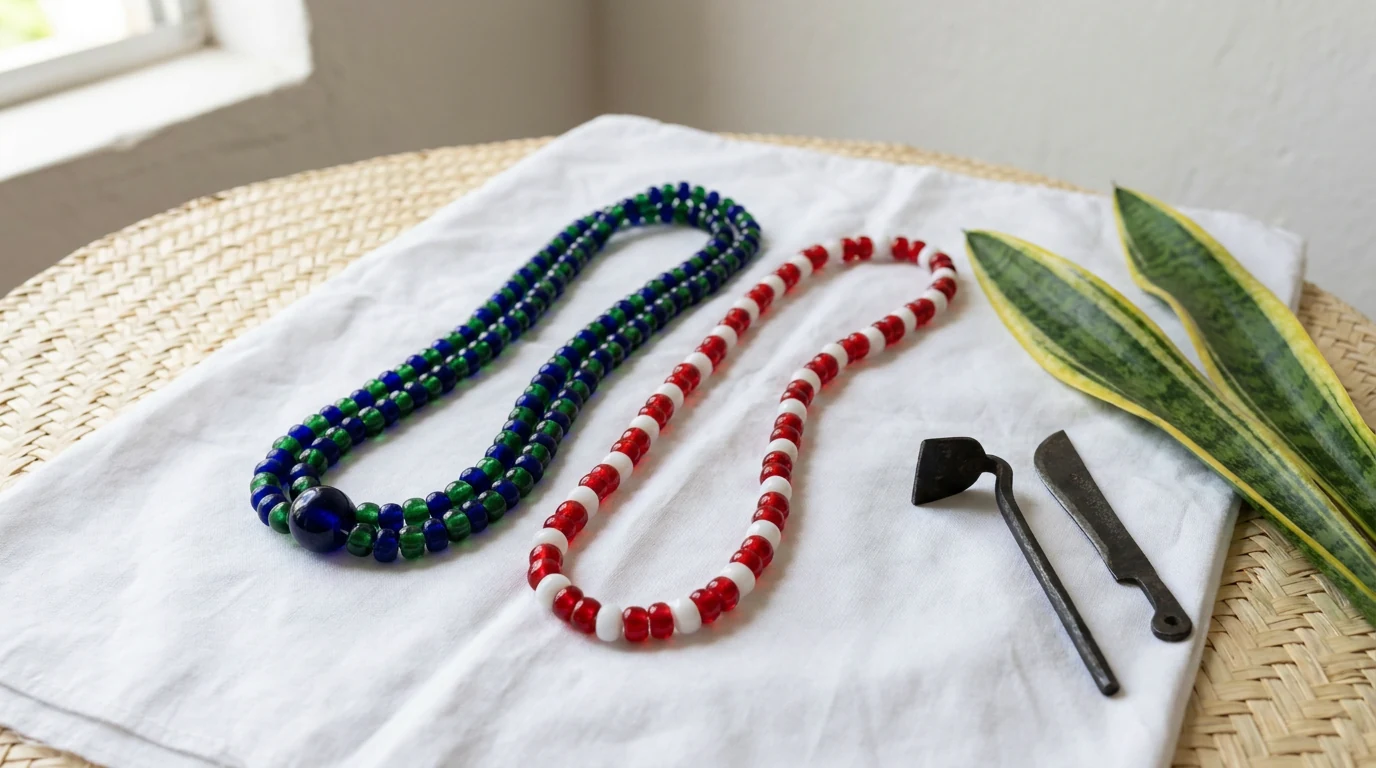
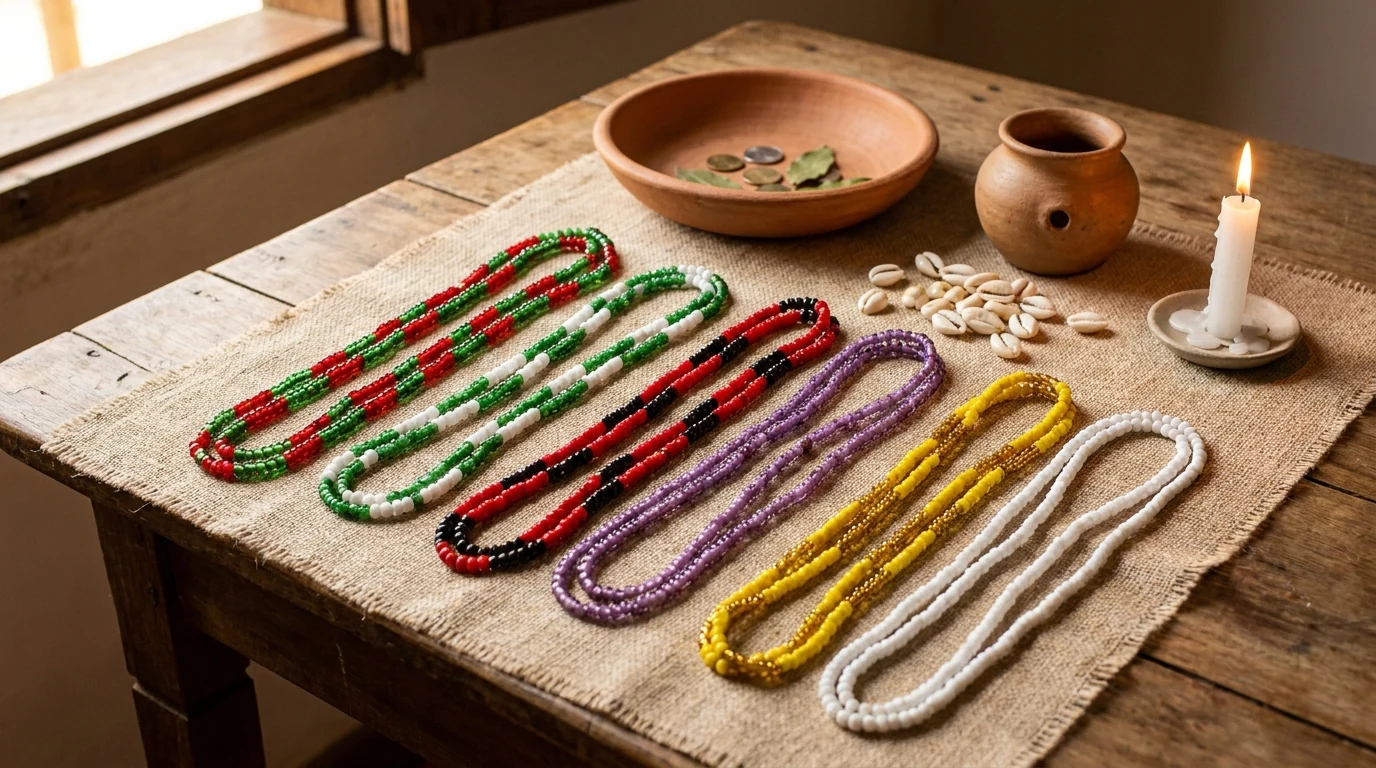
Bead necklace in the colors of the orixá or the spirit, washed and consecrated. It protects and identifies to whom the person belongs. In Umbanda it is more commonly called guia.
CandombléUmbandaBatuque - Firmeza Also: To set
-
Power point prepared with a candle, water, herbs, or ponto riscado to sustain the connection with a guide or protect a place. To set a candle for the Guardian Angel is the simplest firmeza.
UmbandaQuimbanda - Foundation
-
The ritual knowledge that sustains a practice: why it is done, how, and with what. Many foundations are passed down only by word of mouth, inside the house, to those who have the rank to receive them.
Afro-Brazilian - Funfun
-
The white orixás, such as Oxalá and Oduduwa. Airá, the aspect of Xangô linked to Oxalá, also stays among them.
Candomblé

G
- Getruá Also: Geduê
-
Greeting to the cattle herders. The houses translate it as "hail the one who has the strong arm".
Umbanda - Gira
-
The Umbanda session: smoke cleansing (defumação), opening, sung chants (ponto cantado), spirit incorporation of the spirits, and public service. Each gira is usually of one line, such as a gira of caboclo or of preto-velho.
UmbandaQuimbanda - Open gira and closed gira
-
The open gira receives assistance: anyone can enter and be attended. The closed gira is only for the house's chain, without the public, for study, development, or internal ritual work.
Umbanda
H
- Hora grande
-
At midnight, especially from Friday to Saturday, when the exus and pombagiras manifest and work.
UmbandaQuimbanda

I
- Iabá Also: Aiabá
-
Name given to the female orixás, the queens: Oxum, Iemanjá, Iansã, Nanã (Nana Buruku), Obá (Oba), and Ewá (Yewa).
Candomblé - Iabassê Also: Iyá Basé
-
The cook of the axé, responsible for the food of santo: from the offerings to the orixás to the festive dishes, with the prayers and the quizilas of each one.
Candomblé - Ialorixá Also: Mãe de santo, Iyalorixá, Mametu de inquice
-
Mãe de santo: the priestess who directs the terreiro, initiates the children, and responds for the orixás of the house.
Candomblé - Iaô Also: Muzenza, Vodunsi
-
Initiate who enters an orixá trance, in the first seven years after the feitura. The word means, in origin, "wife" of the orixá, and applies to men and women. In the Angola nation the initiate is the muzenza; in Jeje, the vodunsi.
Candomblé - Ibiri
-
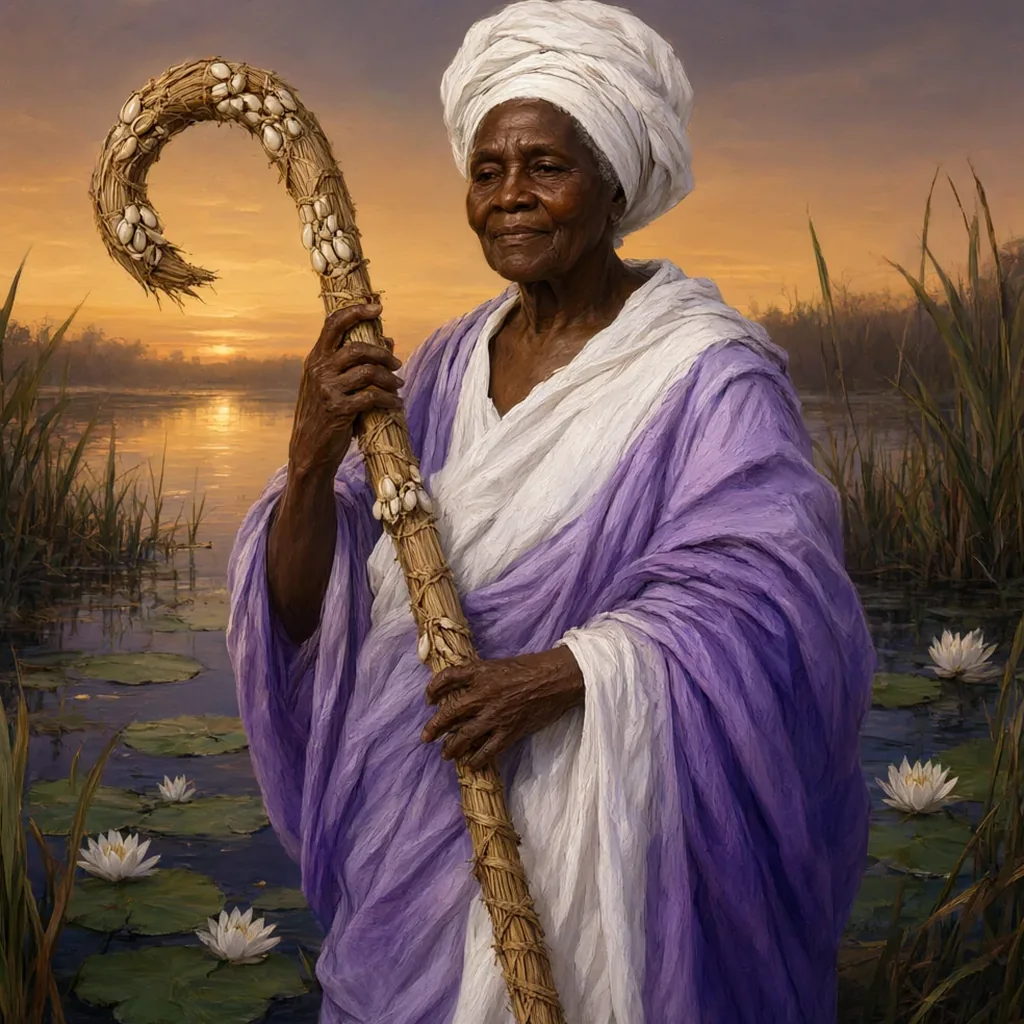
A bundle of palm ribs decorated with cowrie shells and beads, a tool of Nanã. The orixá cradles it like one cradles a child.
Candomblé - Ifá
-
The oracle of Orunmilá, the orixá of wisdom and destiny. It is consulted by the babalaô with the opelê or the ikins, and speaks through the odus.
Candomblé - Igbá ori
-
The head consecrated foundation (assentamento), which in some Ketu houses accompanies the bori and guards the strength of the person's Ori.
Candomblé - Igbalé Also: Balê, Balé room
-
The place of worship for the eguns, the ancestors, separated from the orixás and generally in the back of the terreiro. In Batuque, all ritual work begins at the balê. Xangô is the orixá who does not enter there.
BatuqueCandomblé - Ilá
-
The unique cry of each orixá, which he gives upon arriving in the body of the initiate. Through the ilá, those of the house recognize which orixá has arrived.
Candomblé - Ilê Also: Ilê axé
-
House, in Yoruba. Many terreiros carry the word in their name, such as Ilê Axé, "house of axé".
CandombléBatuque - Incorporação Also: Transe, Virar no santo
-
When an orixá or a spirit manifests in the body of the medium or the initiate. In Umbanda the spirit speaks and provides counsel; in Candomblé the orixá dances and does not provide counsel.
UmbandaCandomblé - Inquice Also: Nkisi, Nkise
-
The deities of the Angola Candomblé, of Bantu origin, such as Aluvaiá, Nkosi and Kitembo. They have parallels with the orixás, but their own names, chants (cantigas) and foundations.
Candomblé - Ipeté Also: Ipetê, Apetê
-
Yam mashed with dendê, onion, ginger, and dried shrimp, food of Oxum. In Batuque, the apetê is made of potatoes with dendê.
CandombléBatuque - Itã Also: Itan
-
The sacred narratives of the orixás, linked to the odus of Ifá. The itãs explain why each orixá has their colors, foods and quizilas.
Candomblé - Ixan
-
Ritual staff of the ojé, the priest of the eguns. Struck on the ground with words and gestures, it calls and commands the ancestor.
Candomblé - Ixé Also: Cumeeira, Central post
-
The wooden column in the center of the barracão, where the house's foundations are buried. The xirê and the padê revolve around it.
Candomblé - Iyalodê Also: Ialodê
-
Title of the most important woman in the Yoruba city, the political and diplomatic voice. It is one of the titles of Oxum and also a female position in the worship of the eguns.
Candomblé - Iyami Also: Iyami Oxorongá, Iyá mi
-
The ancestral mothers of the Yoruba tradition, powerful and feared, worshipped in reserved societies such as the Gueledé. They are revered in the padê.
Candomblé






J
- Jogo de búzios Also: Merindilogun
-
Oracle made with sixteen búzios (cowrie shells) by a prepared priest. It reveals the head orixá, indicates ebós and answers questions through the odus that fall.
CandombléBatuque
K
- Kaô Kabecilê Also: Kaô Kabiesilé, Kawó Kabiyesile
-
Greeting to Xangô: "hail the king", in reference to the royalty of the orixá of justice.
CandombléUmbanda - Kelê Also: Quelê
-
A necklace worn close to the neck that the iaô uses during the period of seclusion after the feitura. It shows that the person is newly initiated and under precept.
Candomblé - Kolofé
-
Request for blessing in Nagô root houses, with a meaning close to "may everything be well".
Candomblé
L
- Laguidibá Also: Lagidiba
-
Necklace of black discs, made of horn or coconut, of the Jeje family orixás: Omolu, Oxumaré, Ewá and Nanã.
Candomblé - Laroyê Also: Laroiê
-
Greeting to Exu, something like "hail the messenger". The traditional response is "Exu é mojubá", I respect you.
CandombléUmbandaQuimbanda - Washing of the beads Also: Washing of the bead necklaces
-
Rite that consecrates the bead necklace (fio de contas), bathing it in leaf water. In Candomblé, the initiate receives the first bead necklaces this way, generally one of Oxalá and another of their orixá.
CandombléUmbandaBatuque - Lavagem do Bonfim
-
Festival in Salvador where the baianas wash the stairs of the Church of Senhor do Bonfim, syncretized with Oxalá. It falls on Thursday before the second Sunday after Epiphany.
Afro-Brazilian - Levantação
-
The closing of obrigações in the batuque: the dishes and the offerings that stayed set in the orixá room for a fixed time are lifted.
Batuque - Line Also: Irradiation, Vibration
-
A grouping of spirits that work with the same vibration, generally governed by an orixá. The so-called the Seven Lines of Umbanda vary from author to author.
Umbanda - Crossed line
-
A Gaúcho house that worships orixás of batuque, caboclos of umbanda, and exus of quimbanda, in separate sessions.
BatuqueUmbandaQuimbanda - Linha do Oriente
-
Umbanda line that gathers spirits from Eastern peoples, such as Romani, Hindus, and Arabs, linked to healing and wisdom.
Umbanda



M
- Malandro Also: Malandros
-
Line of spirits with the style of the Rio de Janeiro malandro from the beginning of the 20th century, wearing a white suit and hat. Zé Pelintra is the most well known.
Umbanda - Maleime Also: Malembe, Maleme
-
Word of request for mercy in the sung chants and chants, spoken along with the name of the orixá before asking that he look over the children.
UmbandaCandomblé - Mandinga Also: Mandinga bag
-
In colonial Brazil, a cloth pouch with prayers, pedra d'ara, and African, European, and indigenous elements, carried on the body for protection. It is an ancestor of the patuá.
Afro-Brazilian - Marafo Also: Otí
-
Aguardente, cachaça: the drink of firmeza for many exus. In the padê of Candomblé, aguardente is called otí.
UmbandaQuimbanda - Marinheiro Also: Marinheiros, Marujo
-
Line of spirits who lived from the sea: marujos, fishermen, navigators. They arrive swaying like those on the deck and work with cleansing and descarrego.
Umbanda - Mariô Also: Mariwô
-
New leaf of the dendezeiro shredded into a fringe, hung on the door of the terreiro as a sacred curtain that protects the house. It is linked to Ogum.
Candomblé - Medium
-
A person who has the capacity to perceive spirits or to allow them passage. In Umbanda, the medium of incorporation receives the spirit guides during the gira.
UmbandaAfro-Brazilian - Mesa cigana
-
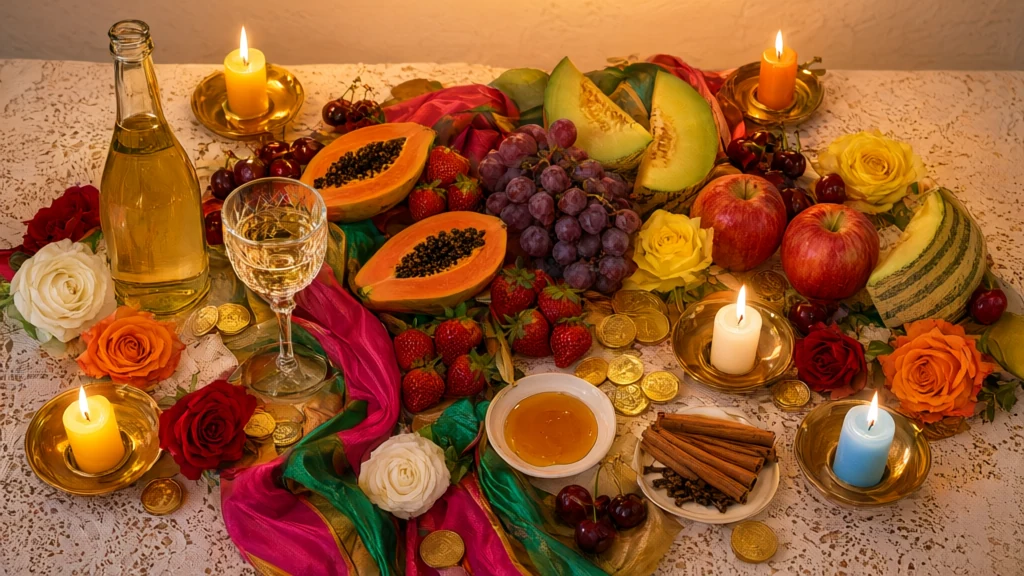
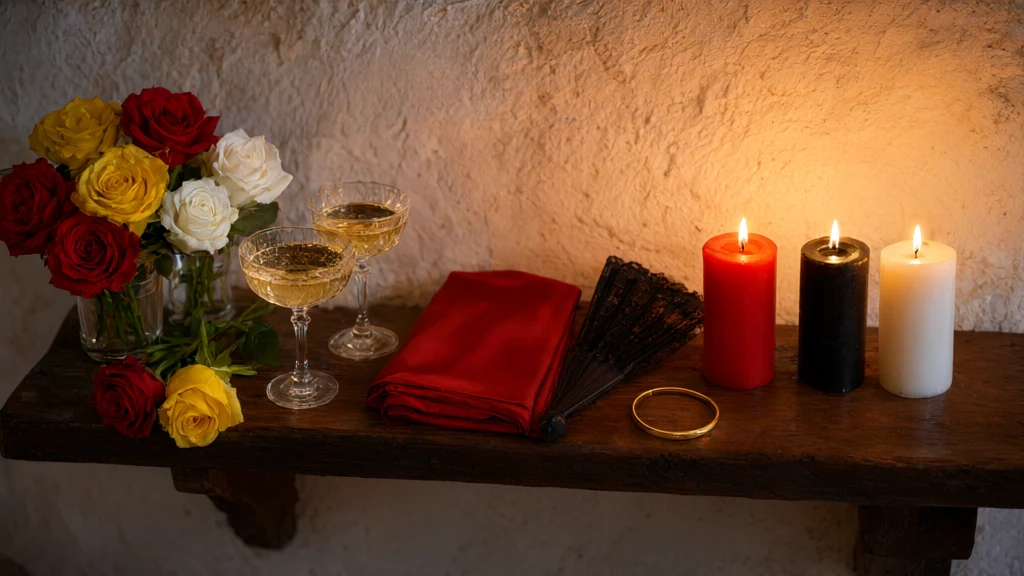
The abundant table set at the festival of the Romani people: fruits, liqueurs, wine, clove and cinnamon, coins, roses and candles.
Umbanda - Mesa de Ibeji Also: Mesa das crianças
-
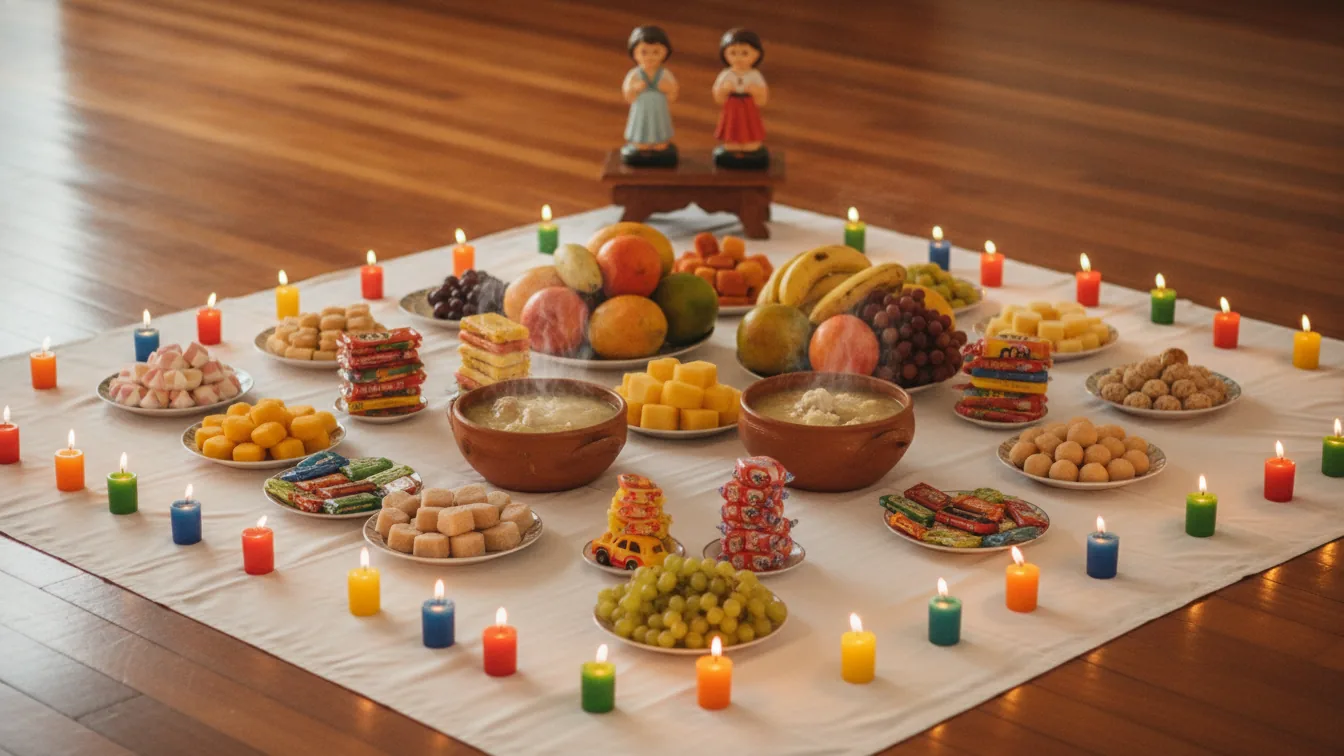
A towel spread on the floor, abundant with food and sweets, served only to the children, in tribute to the sacred twins.
BatuqueUmbandaCandomblé - Mironga
-
Secret, mystery. In the sung chants, it also names the hidden spell: "the small axe of Xangô cuts mironga".
Umbanda - Mojubá
-
A greeting of respect, "my respects", very often said to Exu: "Exu mojubá". It also opens prayers that ask permission from the elders and the ancestors.
CandombléUmbandaQuimbanda - Motumbá Also: Mutumbá
-
The most heard request for blessing in the houses of nagô root, said to the eldest, who responds by blessing.
Candomblé - Mukuiu Also: Makuiu, Mucuiu
-
The request for blessing of the candomblé of Angola. In its full form, "Maku iú Nzambi": may Nzambi, the supreme God, bless you.
Candomblé



N
- Nação Also: Lado
-
The ritual lineage of a house, inherited from an African people: ketu (Yoruba), jeje (Fon) and angola (Banto) in Candomblé; oió, ijexá, jeje and cabinda in Batuque.
CandombléBatuque - Nganga
-
In the Bantu tradition, the ritual specialist who activates the nkisi, the receptacles of force, to heal, protect, and bring justice.
Candomblé
O
- Obé
-
The sacred knife. In batuque, Ogum is the owner of the obé, and receiving the axé of obé is one of the highest steps of initiation.
CandombléBatuque - Obi Also: Kézu
-
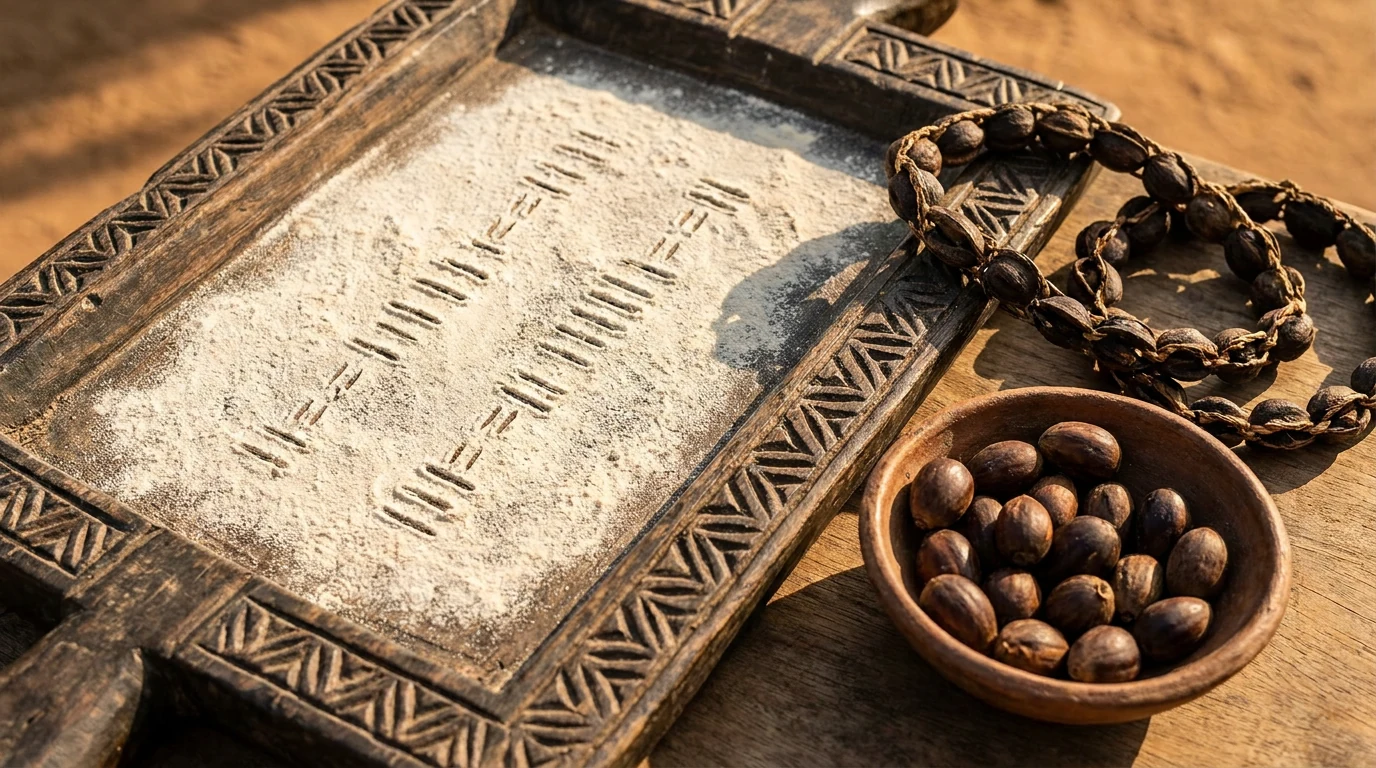
Kola nut, a sacred fruit used in offerings, in bori and as a simple oracle: the thrown segments answer yes or no.
Candomblé - Obrigação
-
Periodic ritual to renew the bonds with the orixá, with offerings and recolhimento. In Candomblé, the best known are those of one, three, seven, fourteen, and twenty one years of feitura.
CandombléBatuqueUmbanda - Ocupar-se do orixá
-
The way batuque says that the orixá took the filho de santo, instead of speaking of incorporating. By the secret of the orixá, the filho should not know that they were occupied.
Batuque - Odoyá Also: Odoiá, Omi Odô
-
Greeting to Iemanjá. Comes from Odô Iyá, "mother of the river", which in popular speech became "mother of the waters". In batuque, the most used greeting is Omi Odô.
CandombléUmbandaBatuque - Odu
-
Each of the signs of the Ifá oracle and the cowrie-shell divination. There are sixteen main ones, which combined reach 256, and each one carries its itãs, advice, and prohibitions.
Candomblé - Ofá
-
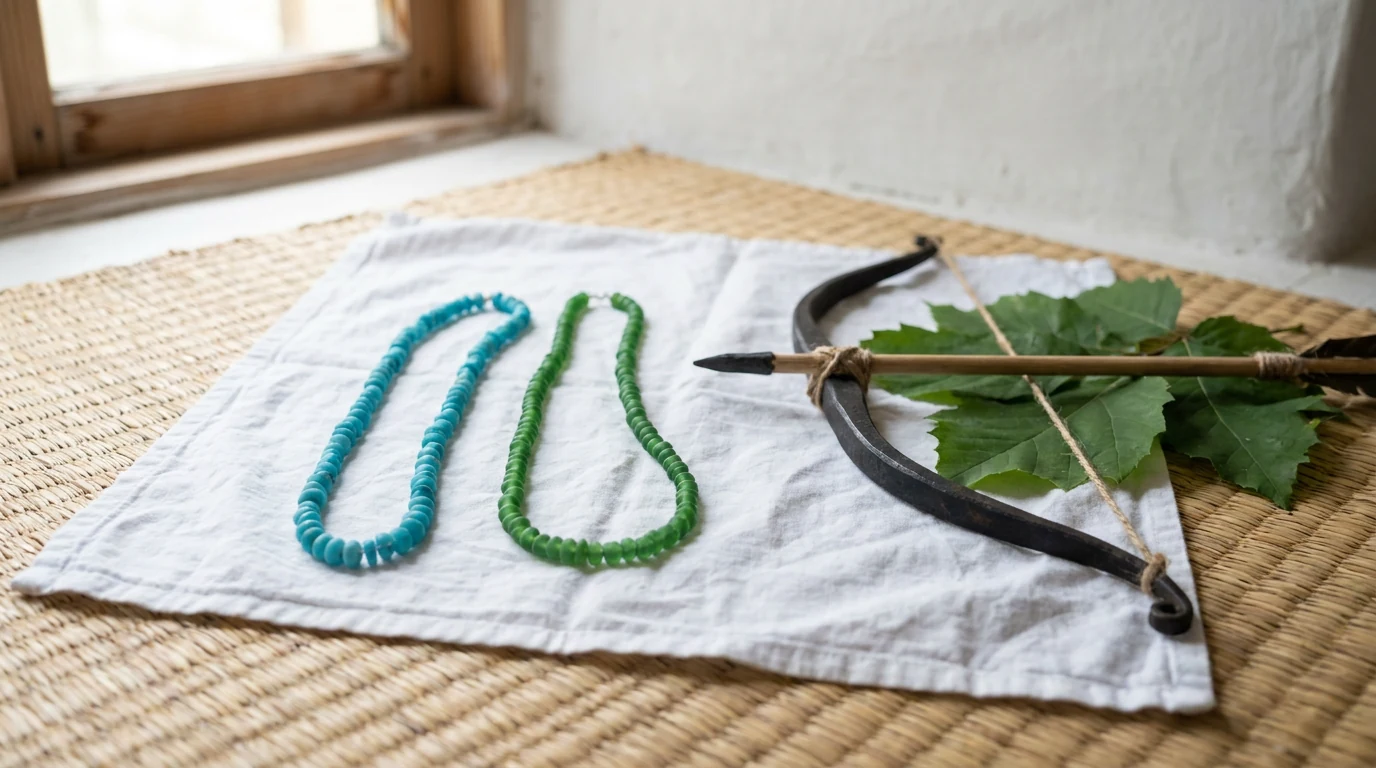
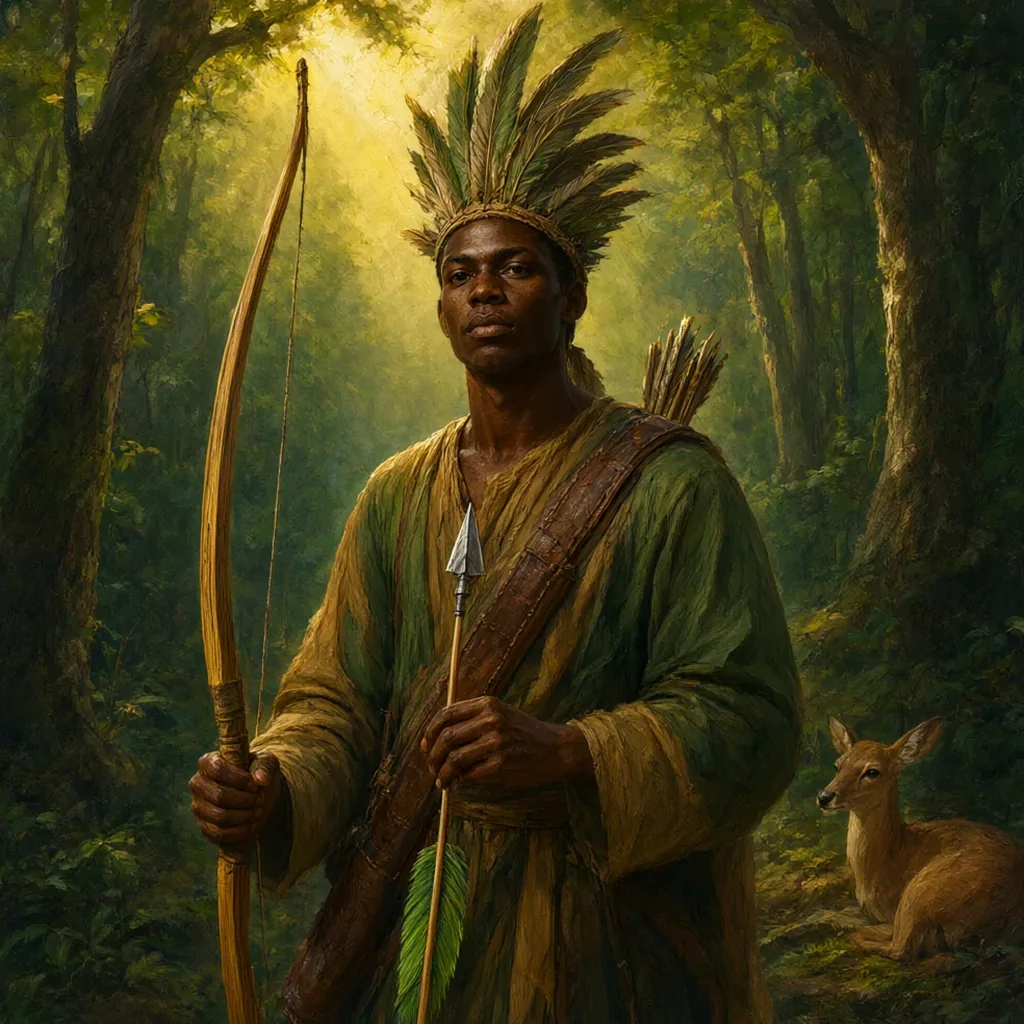
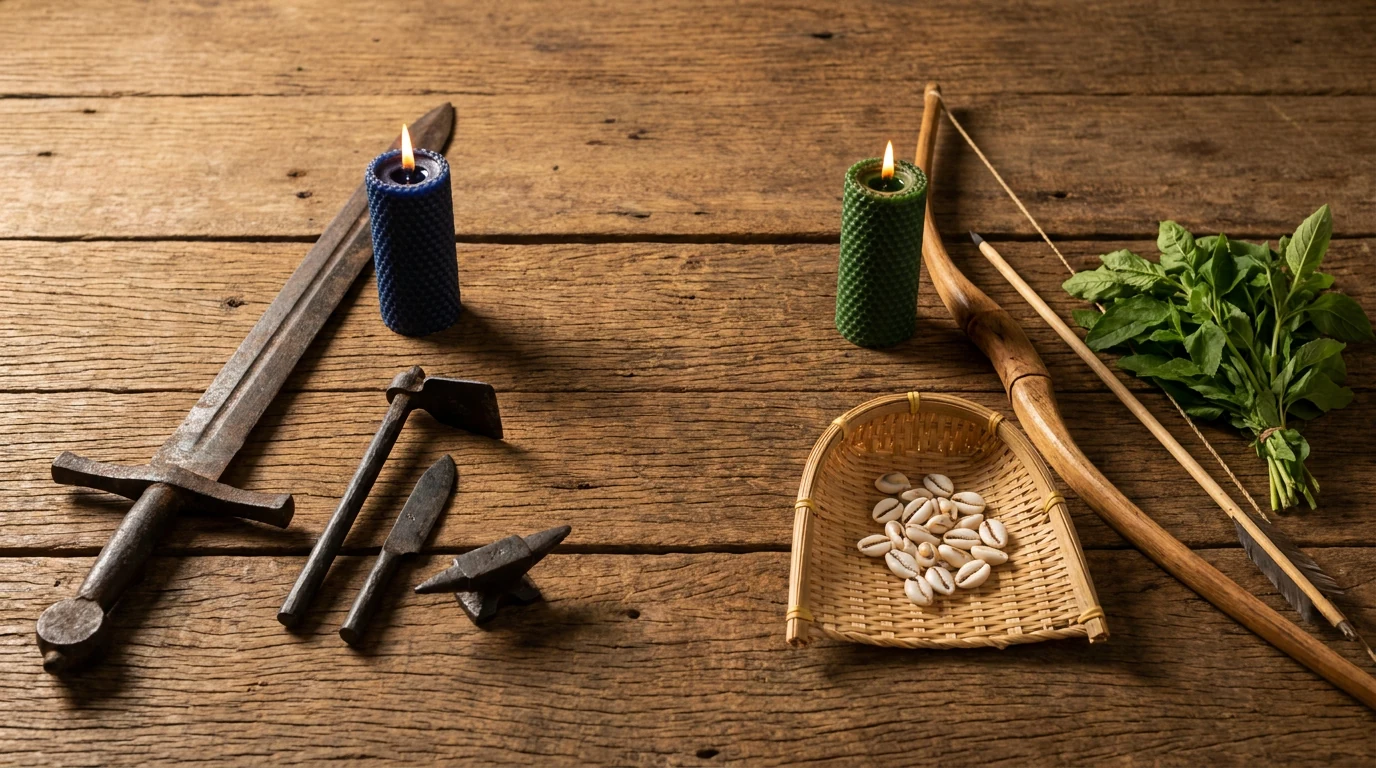
The bow and arrow of Oxóssi, the hunter of a single arrow. Symbol of focus, abundance, and precision.
Candomblé - Offering Also: Gift, Arriada
-
Food, drink, flowers, candles or objects delivered to an orixá or a spirit, to give thanks or to ask. Each divinity has its elements and its place of delivery.
Afro-Brazilian - Ofó
-
The chants and words of enchantment of the leaves. Without the right ofó, the houses say, the leaf does not work.
Candomblé - Ogã
-
Male role of those who do not enter a trance. The ogã plays, sings, sacrifices, or protects the house, according to the function they received, and is treated as a father by the children of santo.
CandombléUmbanda - Ogó
-
The staff of Exu, decorated with gourds, a symbol of his strength and fertility.
Candomblé - Ogunhê Also: Patacori
-
Greeting to Ogum, the lord of iron and war. In the Batuque one also hears "Patacori Ogum", with the meaning of crowned head.
CandombléUmbandaBatuque - Ojá
-
The head cloth tied in a twist, which covers and protects the head of those who are de santo. It also decorates atabaques and sacred trees.
Candomblé - Ojé
-
The priest of the cult to the eguns, initiated with the complete rites. Above him are the alagbá, head of an egum terreiro, and the alapini, supreme priest of the cult in Brazil.
Candomblé - Okê Arô Also: Okê, Okê Caboclo, Okebambo
-
Greeting to Oxóssi, the hunter's cry. In Umbanda it became "Okê Caboclo", the greeting of the caboclos.
CandombléUmbandaBatuque - Olodumare Also: Olorum (Olodumare), Olofin
-
The supreme being of the Yoruba tradition, creator of everything, who does not receive direct worship. The orixás are the forces that bridge the gap between Olodumare and people.
Candomblé - Olubajé
-
The banquet of Omolu, a festival where foods served on castor bean leaves are shared among everyone to ask for health.
Candomblé - Omolocum
-
Food of Oxum: cowpeas with shrimp, dendê, and boiled eggs.
Candomblé - Omolokô
-
A branch of Umbanda organized by Tancredo da Silva Pinto in Rio de Janeiro, which assumed the Bantu root and approached the Candomblé of Angola.
Umbanda - Opaxorô
-
White metal staff of Oxalufã, the old Oxalá. It represents the connection between heaven and earth and the wisdom of those who walk slowly.
Candomblé - Opelê Also: Ikin, Opon
-
Chain with half-shells that the babalaô throws to read the odus of Ifá. One also consults the ikins, sacred shells, over the opon, the Ifá board.
Candomblé - Optchá
-
The most heard greeting in the giras of the Romani people. It even has an academic study, but no open research explains the origin of the word.
Umbanda - Ora yê yê ô Also: Ora iê iê ô, Ori Iê Ieô
-
Greeting to Oxum, the benevolent mother of the fresh waters: the gesture of someone seeking comfort in the mother who calms the heart.
CandombléUmbandaBatuque - Ori Also: Mutuê
-
The spiritual head of each person, which guards their destiny. Before any orixá, it is the Ori that needs to be strong, and that is why the bori exists.
Candomblé - Oriki
-
Verses of praise that tell the deeds and names of an orixá or of a person. Sung or recited, it is a form of greeting and reverence.
Candomblé - Orixá
-
Divinity of the Yoruba tradition linked to a force of nature and a field of life: Ogum to iron and war, Oxum to fresh waters and love, Xangô to justice and fire.
Afro-Brazilian - Orixá de junto Also: Juntó, Adjuntó, Adjunto
-
The person's second orixá, who accompanies and completes the orixá of the front, the owner of the head. In Batuque, adjuntó also names orixás worshipped together.
BatuqueCandomblé - Orixá de rua Also: Orixá I'odê
-
The orixás from outside, who live in the paths and the forests: Exu, Ogum, Oxóssi and Ossaim.
Candomblé - Ruling orixá of the year Also: Ruler of the year, Lyrics of the year
-
The orixá that each house discovers in the turning game, to rule the year that begins. Each terreiro draws its own, and that is why the lists on the internet do not match each other.
Afro-Brazilian - New and old orixás
-
Division of the Batuque by spiritual age. The new ones go from Bará to Obá; the old ones are Oxum, Iemanjá and Oxalá. The order decides the sequence of the prayers.
Batuque - Orobô
-
Hot and bitter seed, linked to fire and lightning, and therefore to Xangô. It is not from the same plant as the obi.
Candomblé - Orum Also: Orun
-
The spiritual world, home of the orixás and the ancestors. It forms a pair with Aiê, the world of people.
Candomblé - Orunkó Also: Name of saint
-
The name of saint received in the Candomblé ketu initiation, announced aloud by the orixá upon the iaô's departure.
Candomblé - Ossé
-
The periodic cleaning and renewal of the consecrated foundations (assentamentos), generally weekly: washing, changing the water, lighting a candle and offering dry food.
Candomblé - Otá Also: Ocutá
-
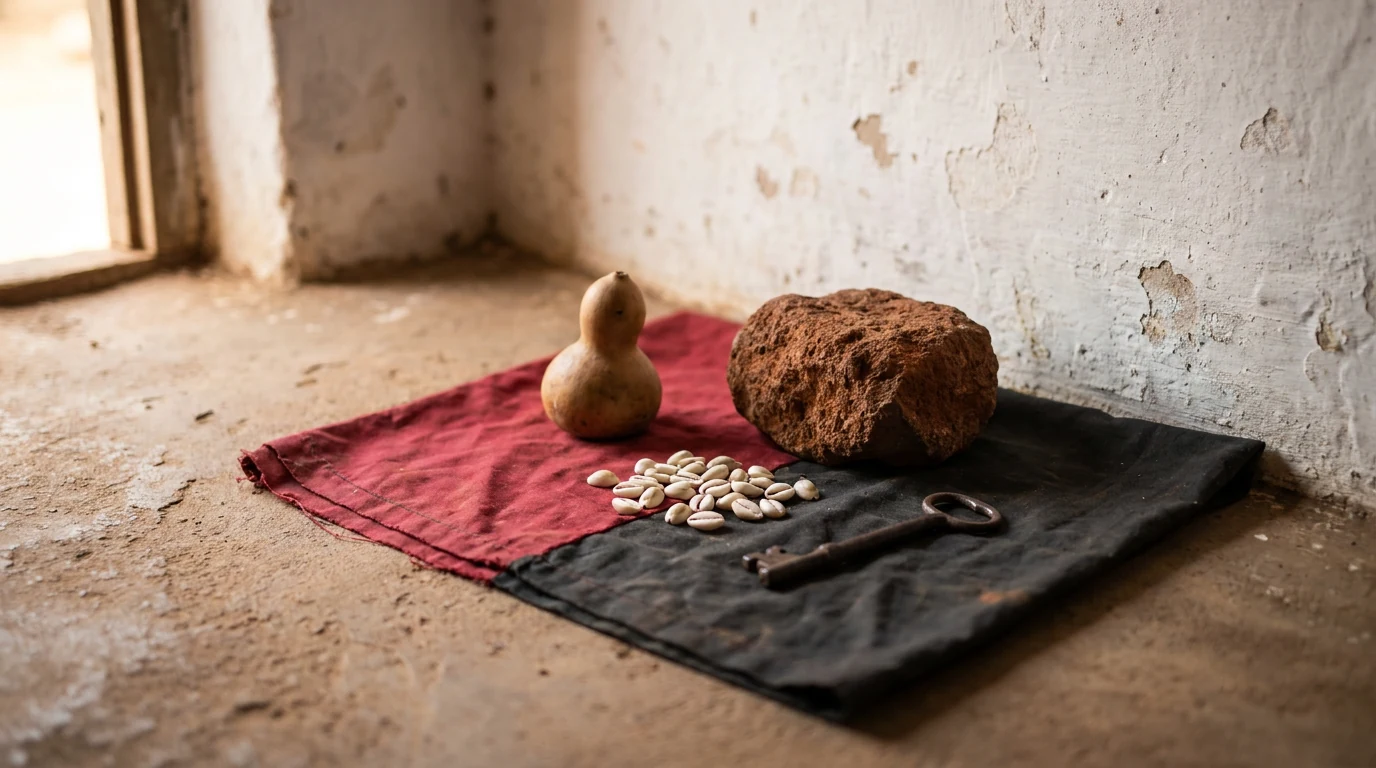
Consecrated stone that stays in the consecrated foundation (assentamento) and receives the force of the orixá. It is chosen with foundation and fed during the obligations.
Candomblé - Oxê
-
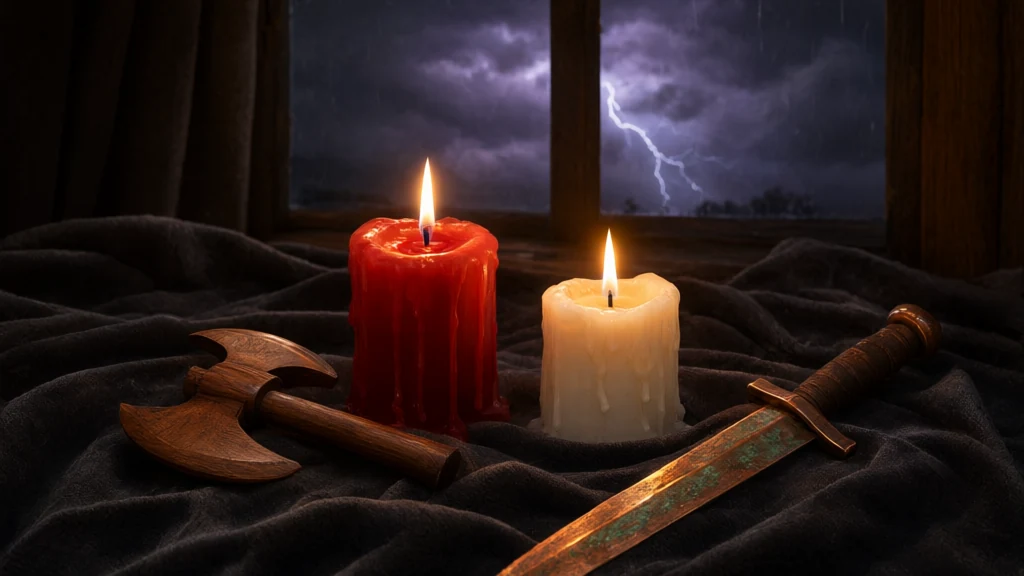
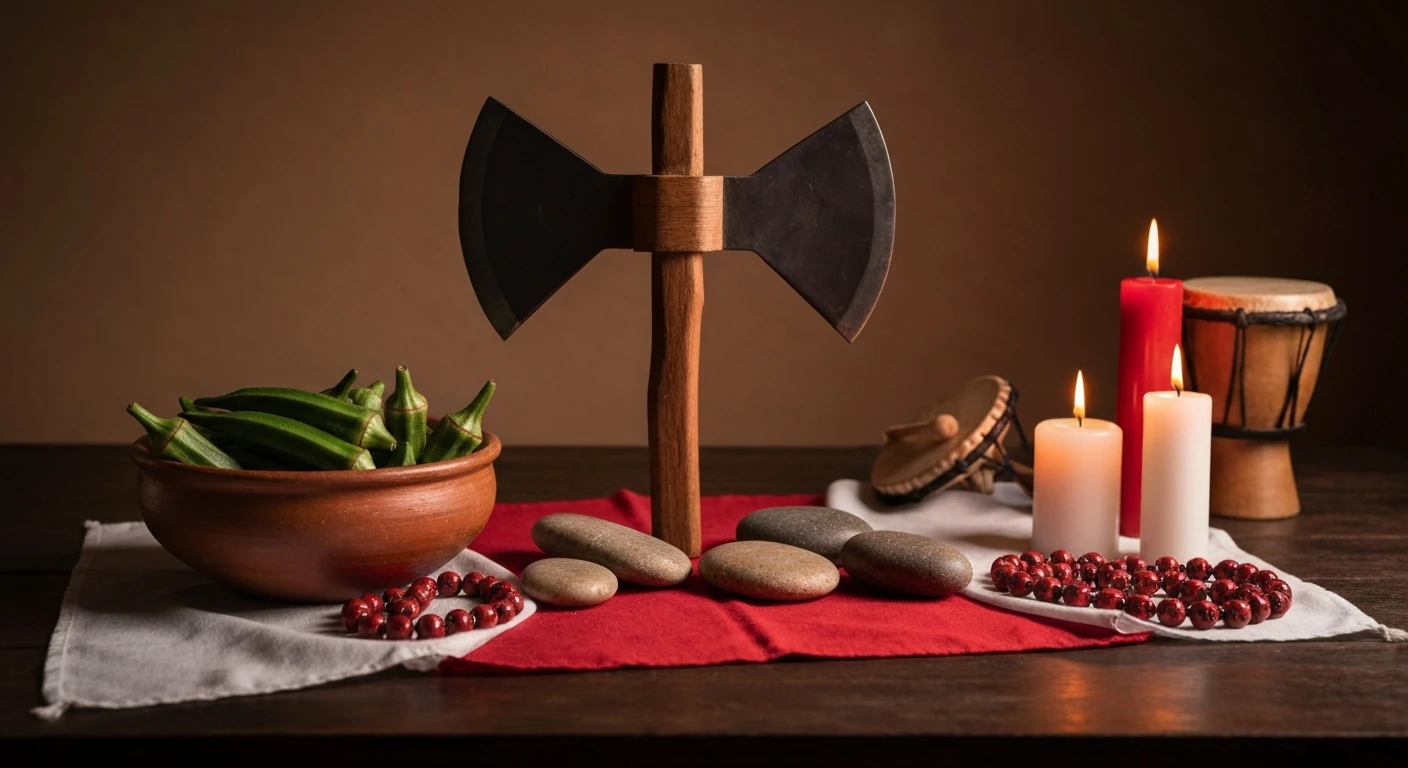
Xangô's double-bladed axe, the symbol of justice that cuts on both sides.
Candomblé






P
- Padê Also: Ipadê
-
Offering to Exu made at the beginning of the ceremony, generally with farofa, so that he carries the messages to the orixás and keeps the celebration in peace.
CandombléUmbanda - Pai pequeno and mãe pequena Also: Babakekerê, Iyakekerê
-
The second in the hierarchy of the terreiro, who assists the pai or mãe de santo and replaces them when necessary.
CandombléUmbanda - Palha da costa
-
Vegetal fiber brought from Africa, with which the contra-egun, the xaxará and the clothing of Omolu and Obaluaê are braided. Different from the pano da costa, which is woven.
Candomblé - Paliteiro de Ogum
-
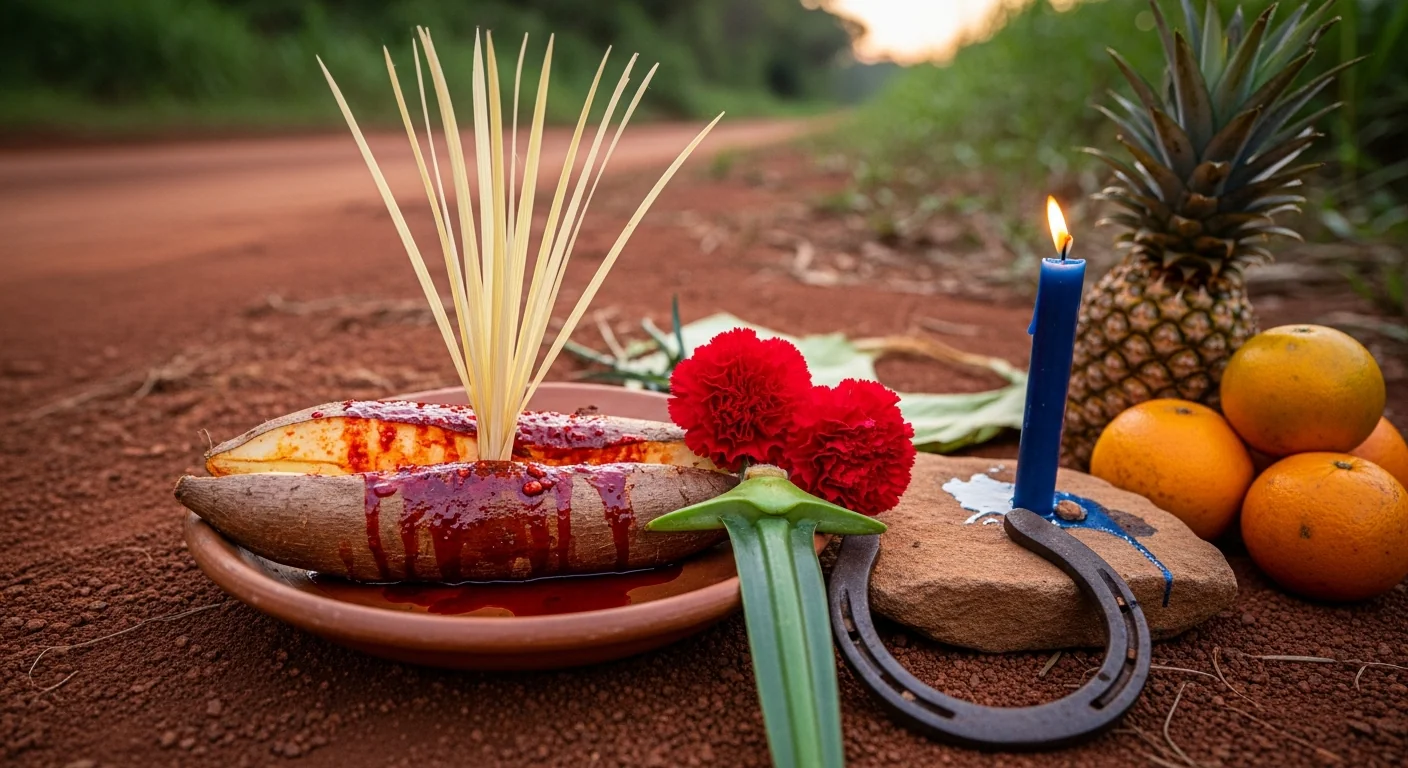
Offering to Ogum made with yam roasted in dendê and skewered on mariô sticks, the most traditional way to assemble the gift at home.
UmbandaCandomblé - Pano da costa Also: Alaká, Pano de alaká
-
Rectangular fabric that the women of santo tie around their chest or waist. The way it is tied shows the initiation level of the wearer.
Candomblé - Paó
-
Sequence of rhythmic claps used to greet the orixá or ask for permission, especially during the recolhimento, when the initiate cannot speak.
Candomblé - Passe
-
Energy transmission through the hands, performed by the spirit incorporated in Umbanda or by the passista medium in the spiritist center, to cleanse and rebalance.
UmbandaAfro-Brazilian - Passeio
-
Rite that closes the cycle of obrigação in the Batuque. The priest takes the children to the river, to the church, to the public market, and to the houses of the religious family, to bater cabeça and give thanks.
Batuque - Patuá
-
A cloth pouch with herbs, seeds, or prayers, prepared with intention and carried close to the body as protection.
UmbandaAfro-Brazilian - Peji Also: Quarto de santo
-
The altar or the room where the settlements of the orixás are kept in Candomblé. Only those with permission may enter.
Candomblé - Pejigã
-
The ogã who watches over the peji, the room where the consecrated foundations (assentamentos) of the orixás are kept.
Candomblé - Pemba
-
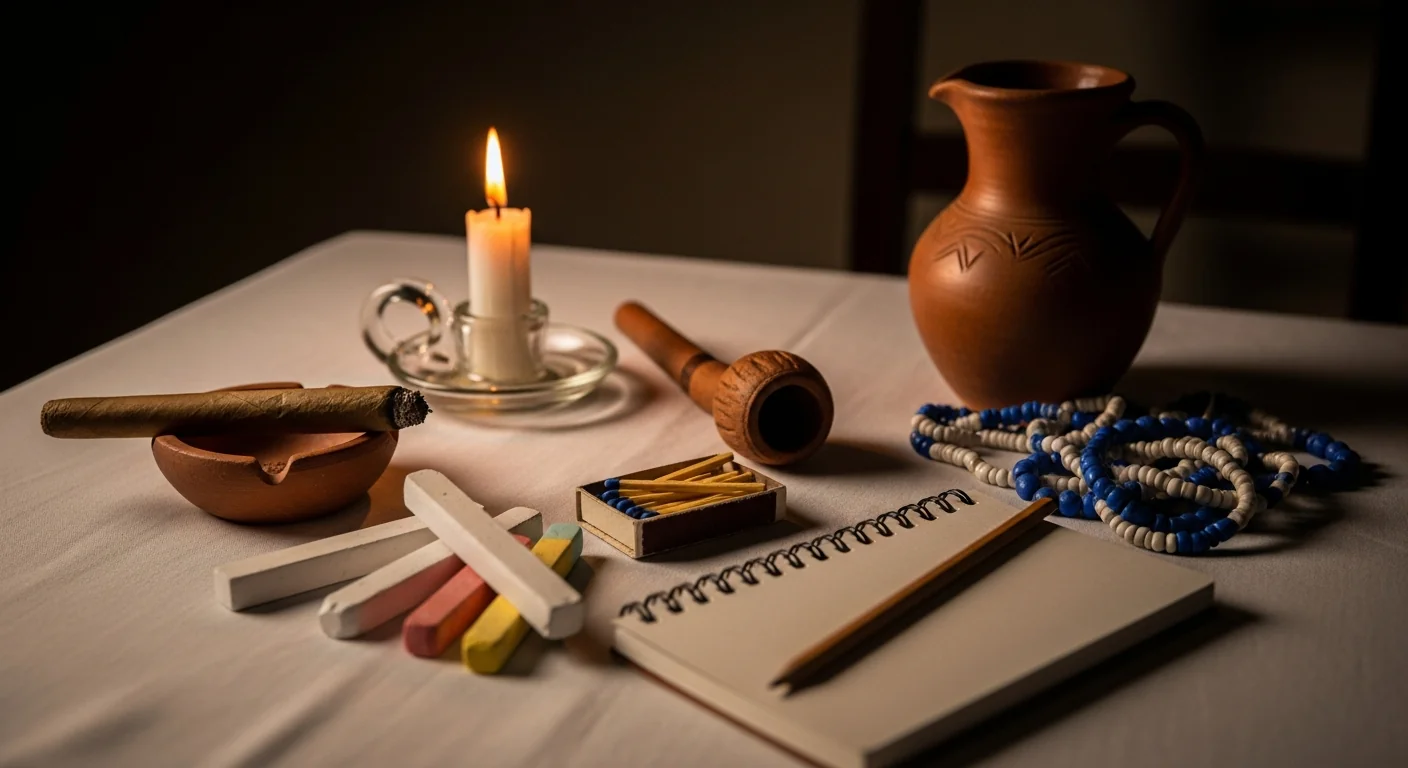
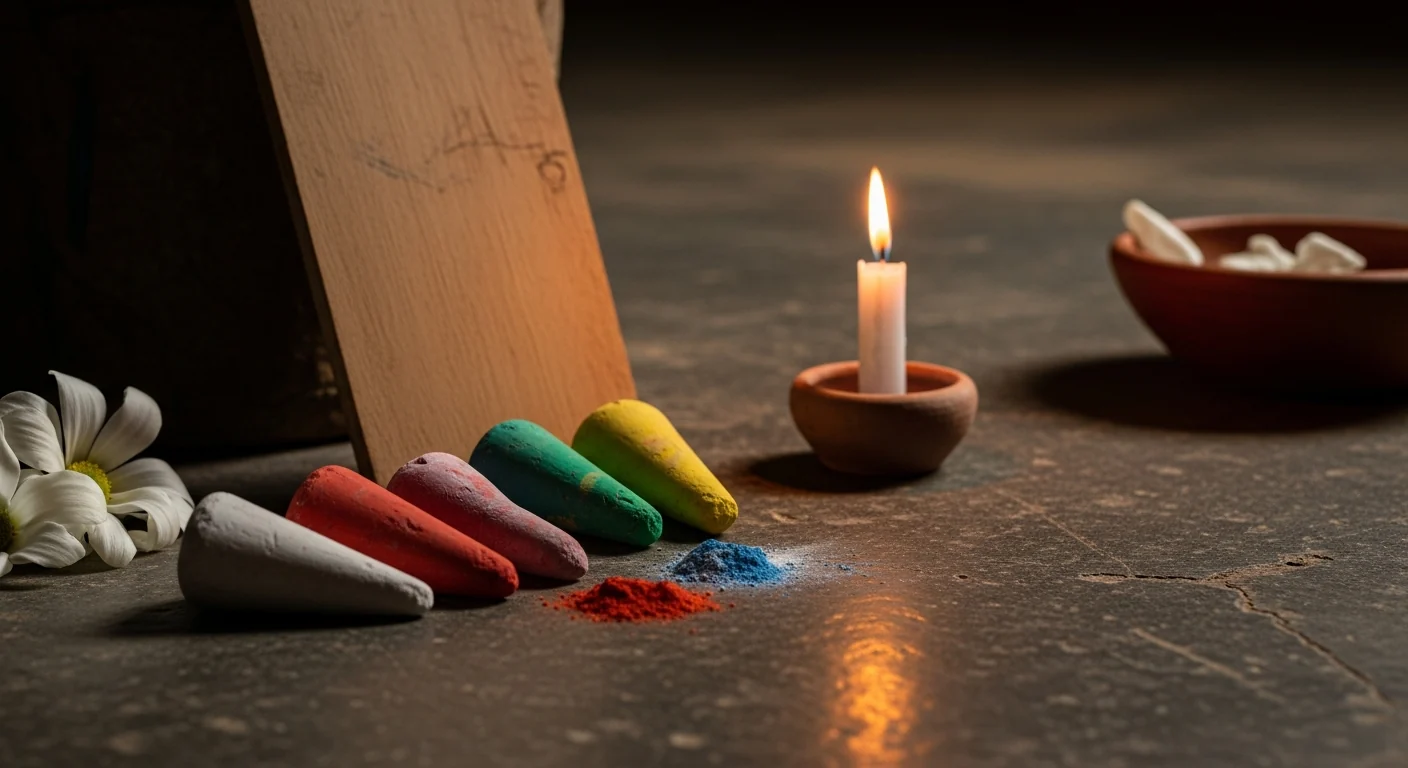
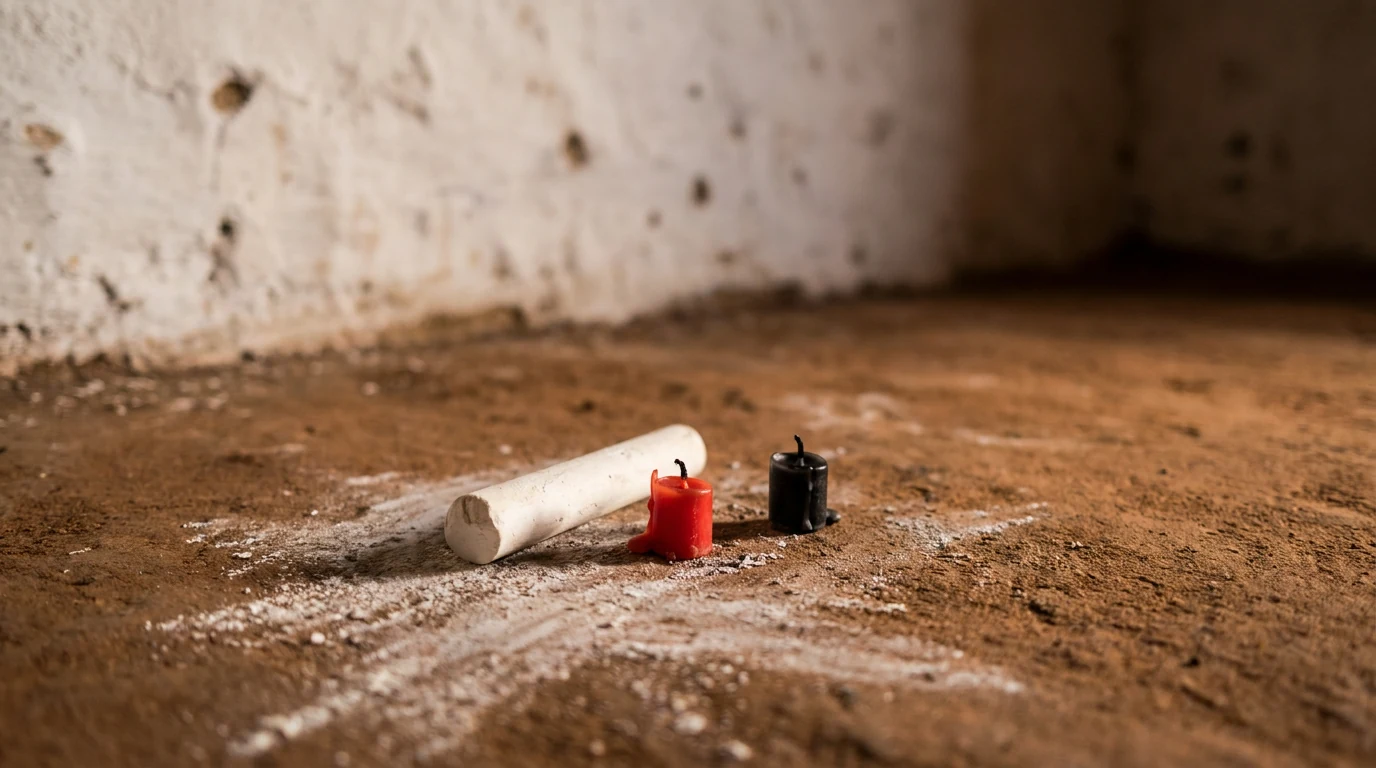
Cone shaped chalk, in various colors, used by the spirits to draw pontos on the ground. When grated, it is also used in baths and firming rituals.
UmbandaQuimbanda - Pipoca de Obaluaê Also: Doburu, Masangu, Flores de Bará
-
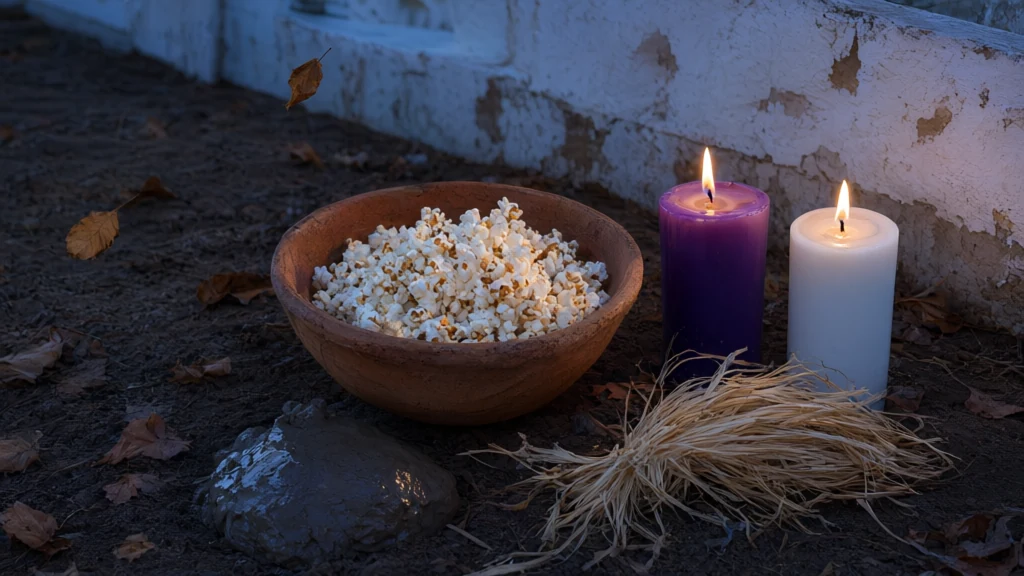
The food of Omolu and Obaluaê, popped in the sand or in dendê, called doburu. Passed over the body, it protects against diseases. In the angola it is masangu; in the Batuque, the popcorn are the flores de Bará.
CandombléUmbandaBatuque - Pombagira Also: Pomba gira, Pombajira, Pambu Njila
-
Female spirit of the left line, pair of Exu. Works with love, self-esteem, paths and protection, such as Maria Padilha, Sete Saias and Cigana.
UmbandaQuimbanda - Sung chant
-
Umbanda chant that calls, greets, and bids farewell to the spirits and firms the vibration of the gira. There is the opening chant, which asks permission; the calling chant, which invites the line to descend; the firmness chant, which sustains the ritual work; and the rising chant, which bids farewell to the spirits.
UmbandaQuimbanda - Ponto de força
-
The place in nature where the force of an orixá dwells and where the house delivers the offering: the forest of Oxóssi, the waterfall of Oxum, the sea of Iemanjá, the quarry of Xangô.
Umbanda - Ponto riscado
-
Drawing made with pemba that identifies the spirit and firms its strength in the place: arrows for caboclo, tridents for Exu, crosses for preto-velho.
UmbandaQuimbanda - Povo de rua Also: Povo da rua
-
The exus and the pombagiras, spirits of the streets, of the crossroads, and of the calunga.
UmbandaQuimbanda - Preceito Also: Resguardo, Ficar de preceito
-
Period of care before or after a ritual: no alcohol, no meat, no sex, light clothing. The most common in Umbanda is 24 hours before the gira.
UmbandaCandomblé - Preto-velho
-
Spirit of an enslaved African who works in Umbanda with patience, humility, and healing. He smokes a pipe, blesses with arruda, and speaks slowly, seated on a stump.
Umbanda - Ready
-
In the batuque, those who completed the initiation. The next step, ready with a knife and cowrie shell, authorizes the person to open a house and to initiate others.
Batuque







Q
- Qualidade Also: Passagem, Caminho
-
Each of the paths of the same orixá, with their own temperament, colors, and foundation: Oxaguiã, the young one, does not behave like Oxalufã, the old one. In the batuque, the same idea is called passagem.
CandombléBatuque - Quartinha
-
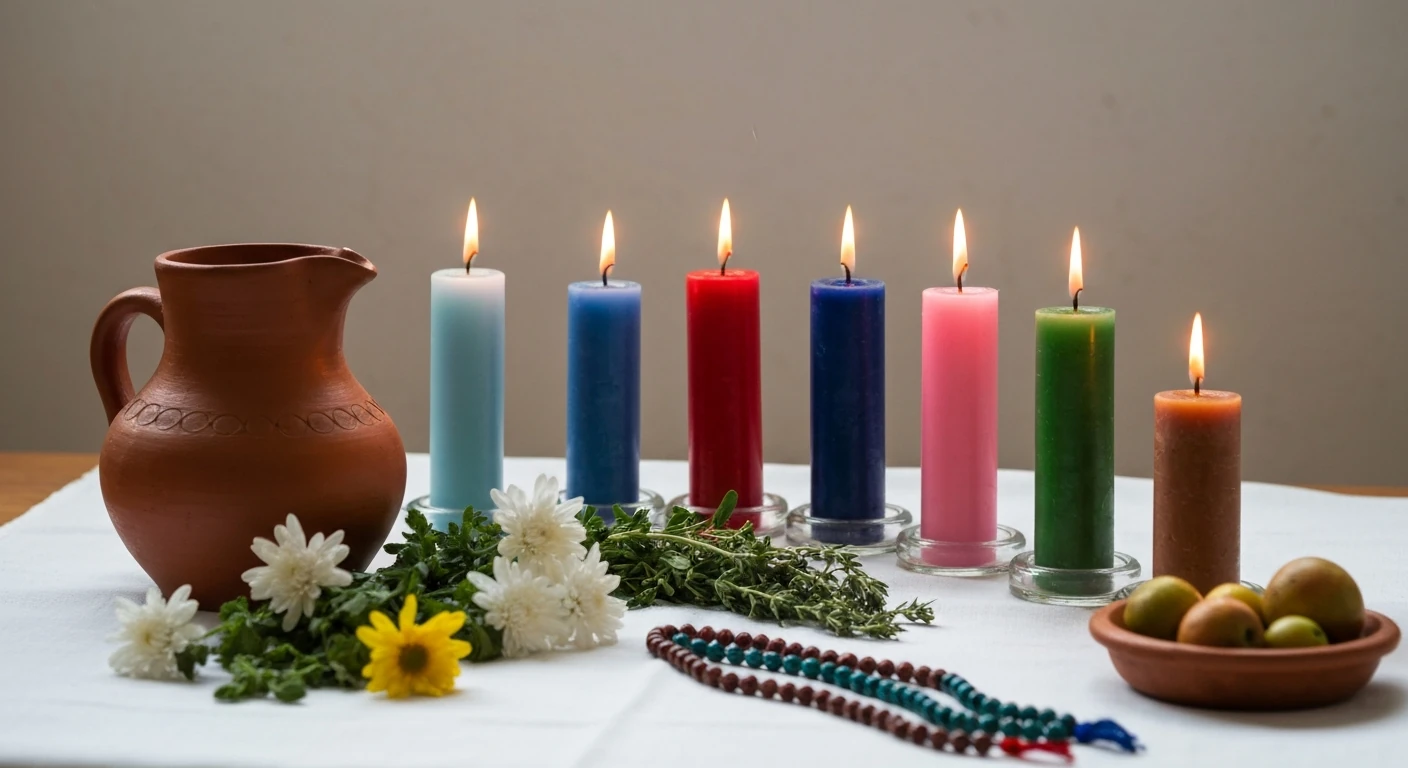
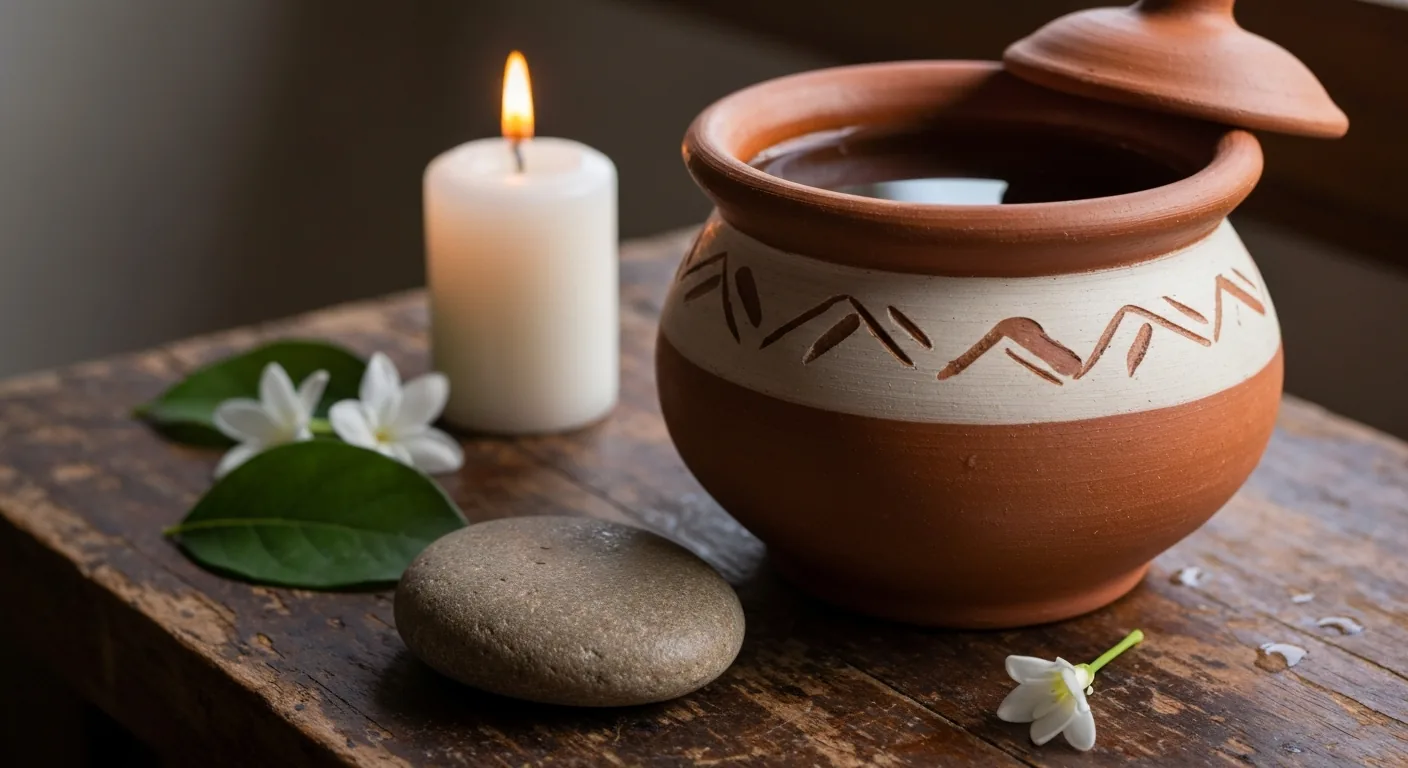
Small clay or ceramic jar with water, which stays next to the consecrated foundation (assentamento) or the altar. The water needs to be changed and must never run out.
CandombléUmbanda - Quimbanda
-
Cult dedicated to exus and pombagiras, with their own kingdoms, peoples, and foundations. It is not the "bad side" of Umbanda: it is another tradition, with another organization.
Quimbanda - Quiumba Also: Kiumba
-
Spirit without commitment to the Law, who takes advantage of carelessness to disturb mediums and the people who come for consultation. It is not an exu: it is precisely what the terreiro filters.
UmbandaQuimbanda - Quizila Also: Euó, Ewó
-
A ritual prohibition that the filho de santo keeps because of their orixá: foods, colors, or attitudes they cannot have. In common Portuguese, the word became a synonym for antipathy.
Candomblé



R
- Reino
-
Each of the seven great divisions of quimbanda, such as Encruzilhadas, Cruzeiro, Matas, Calunga, Almas, Lira, and Praia, where the peoples of Exu are organized.
Quimbanda - Rodante
-
Who enters a trance and receives the orixá. Ogãs and ekedis are not rodantes.
Candomblé - Roncó Also: Camarinha
-
Seclusion room where the initiate spends the days of the initiation or the obrigação, away from the world. In umbanda, the equivalent place is usually called camarinha.
CandombléUmbanda - Roupa de ração
-
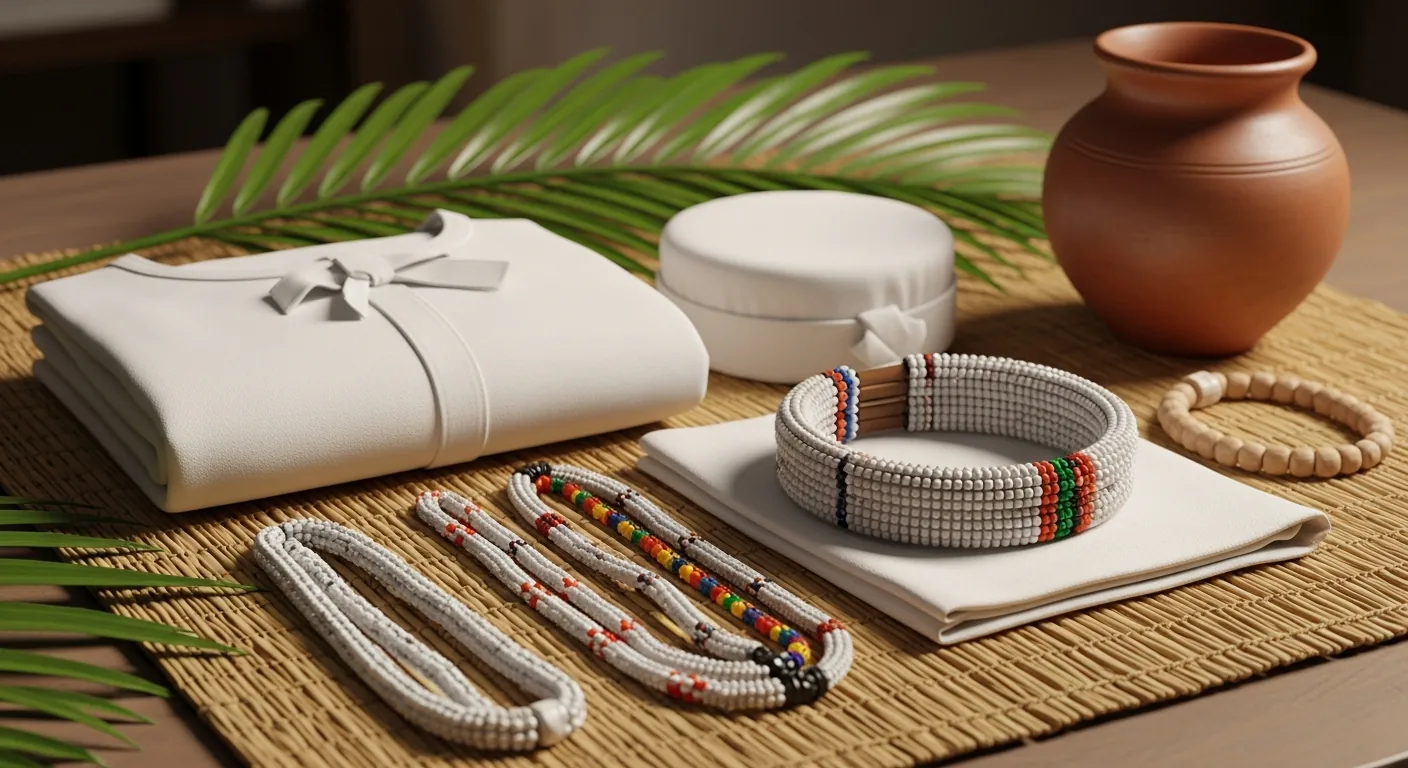
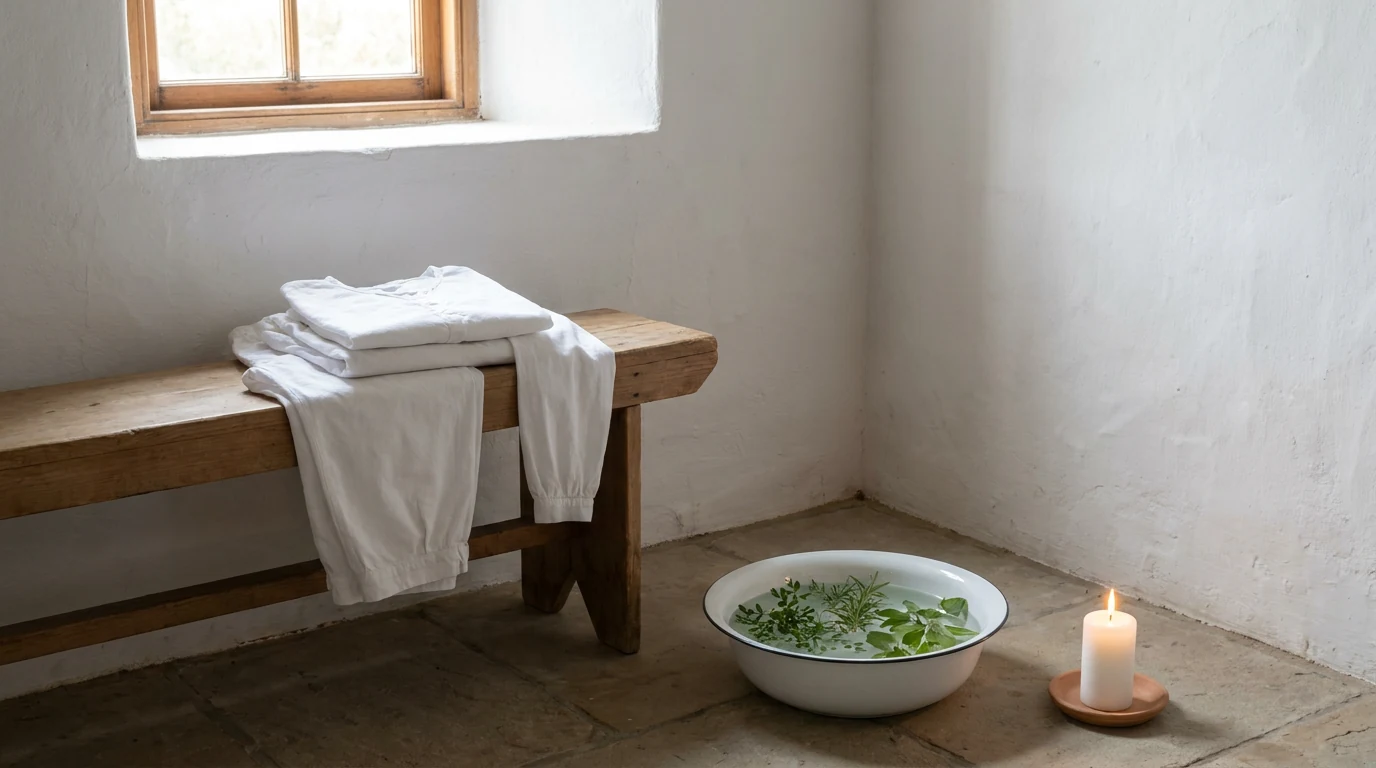
The simple white clothing of the daily life of the terreiro, used on days of obrigação and in the ritual work of the house, different from the festive clothing.
Candomblé
S
- Sacudimento Also: Bate-folha
-
Strong spiritual cleansing, in which leaves, grains, or other elements are passed over the person's body or the house to remove what is heavy. The central technique is the bate-folha: the handful of herbs beaten on the body in stages.
CandombléUmbanda - Saída de iaô
-
The festival that ends the seclusion of the initiation and presents the new initiate to the community. In the last saída, the orixá says the initiate's sacred name out loud.
Candomblé - Sakidila
-
Obrigado, gratitude, in the Candomblé de Angola. One of the most used words in the coexistence of the house.
Candomblé - Saluba Also: Salubá
-
Greeting to Nanã, the elder of the still waters and the primordial mud.
CandombléUmbanda - Saravá
-
The Umbanda greeting, which applies to everyone: salve. It is not from Ketu Candomblé, and swapping the two is the most common slip of those arriving from a gira.
Umbanda - Greeting
-
The phrase with which each orixá or spirit is greeted: Laroyê for Exu, Ogunhê for Ogum, Okê Arô for Oxóssi, Kaô Kabecilê for Xangô, Ora Iê Iê Ô for Oxum.
Afro-Brazilian - Syncretism
-
The association between orixás and Catholic saints, such as Ogum and Saint George or Iansã and Saint Barbara. It was born during the time of slavery and today is accepted by some houses and rejected by others.
Afro-Brazilian - Suspenso
-
Who was chosen by the orixá, during the festival, to be an ogã or ekedi of the house. The confirmation in the position comes later.
Candomblé

T
- Tamboreiro
-
In the Batuque, the one who plays the drum and leads the prayers. They conduct the ritual from beginning to end and are trained over years within the house.
Batuque - Tempo de santo
-
The age of initiation, which counts more than the age of birth. In Batuque, it starts counting at the bori; in Candomblé, at the feitura.
BatuqueCandomblé - Terreiro Also: House of the orixás, Roça, Tenda, Nzo, Inzo
-
The place of worship for Afro-Brazilian religions. It can be called casa, roça, ilê, tenda, or centro, depending on the tradition.
Afro-Brazilian - Toque
-
Each rhythmic pattern of the atabaques, with name, tempo, and destination: there are toques for each orixá, such as the alujá of Xangô and the adarrum.
CandombléBatuque - Trident
-
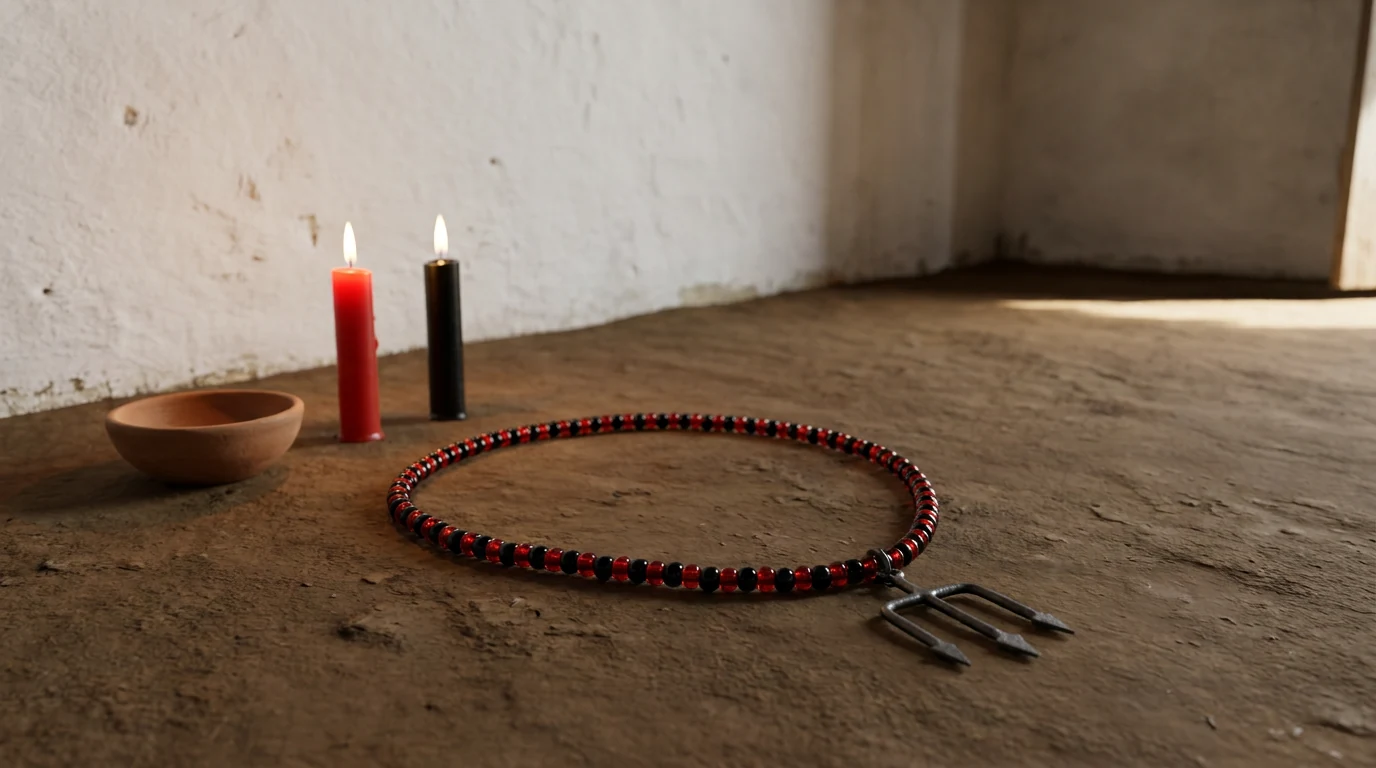
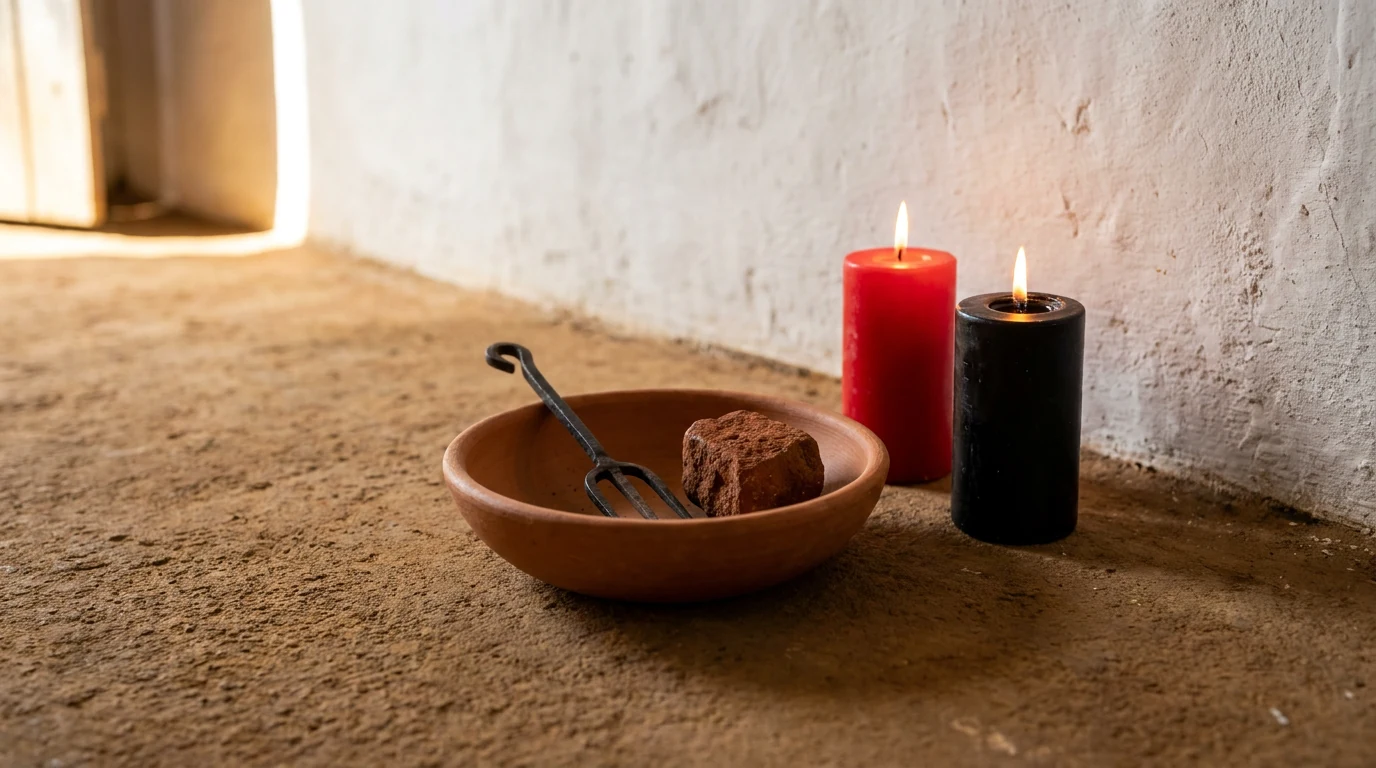
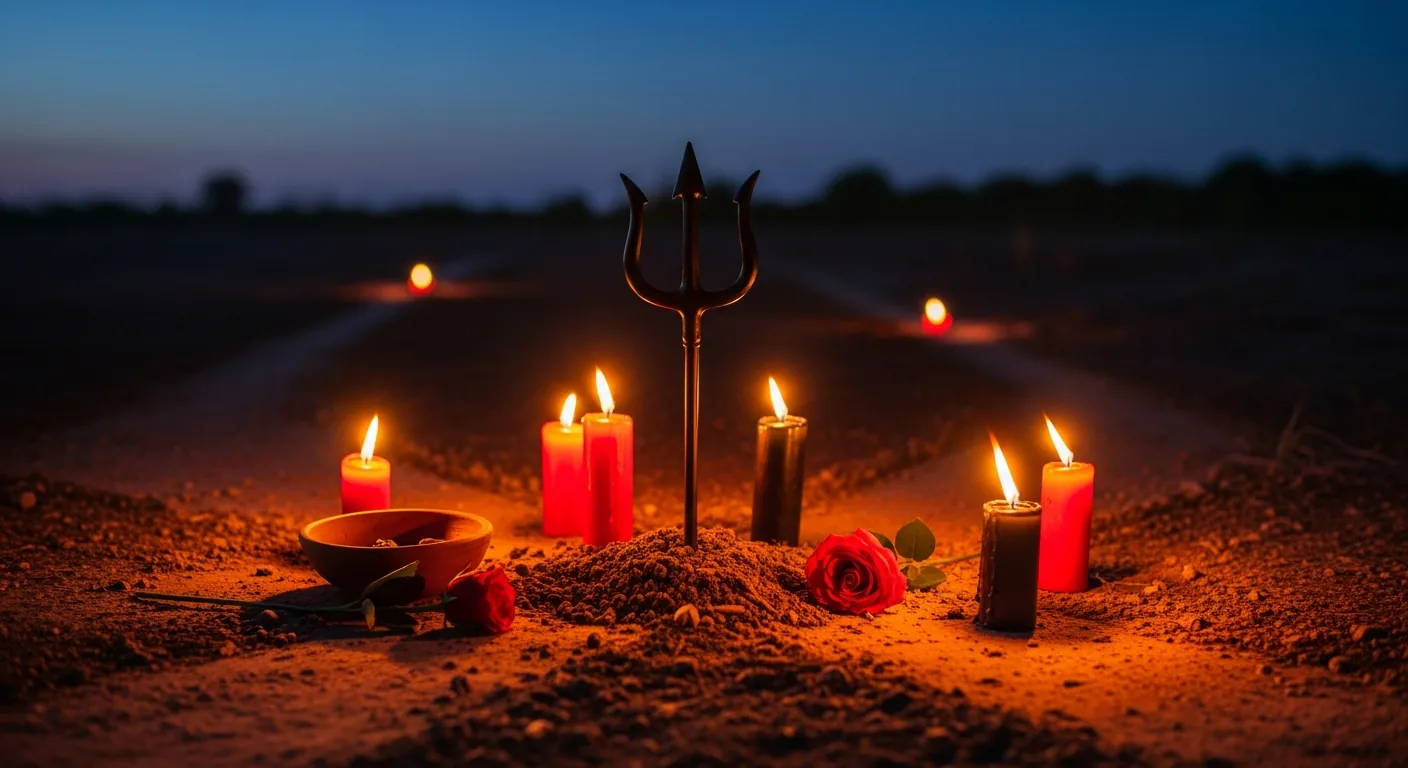
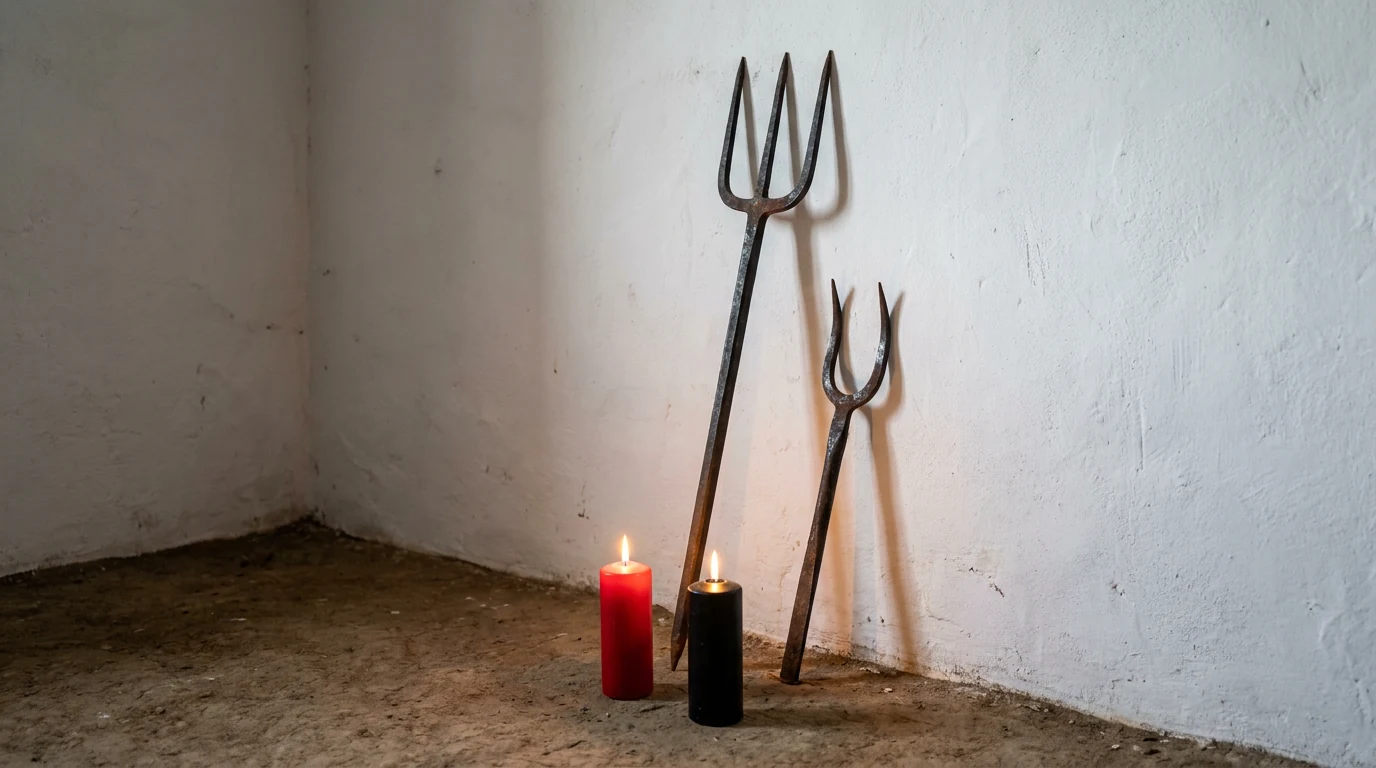
Tool of the spirits of the left: straight for the exus, with curved points for the pombagiras. It is not a tool of the orixá Exu in Candomblé, but it has its own and legitimate use in Quimbanda.
QuimbandaUmbanda - Tronqueira
-
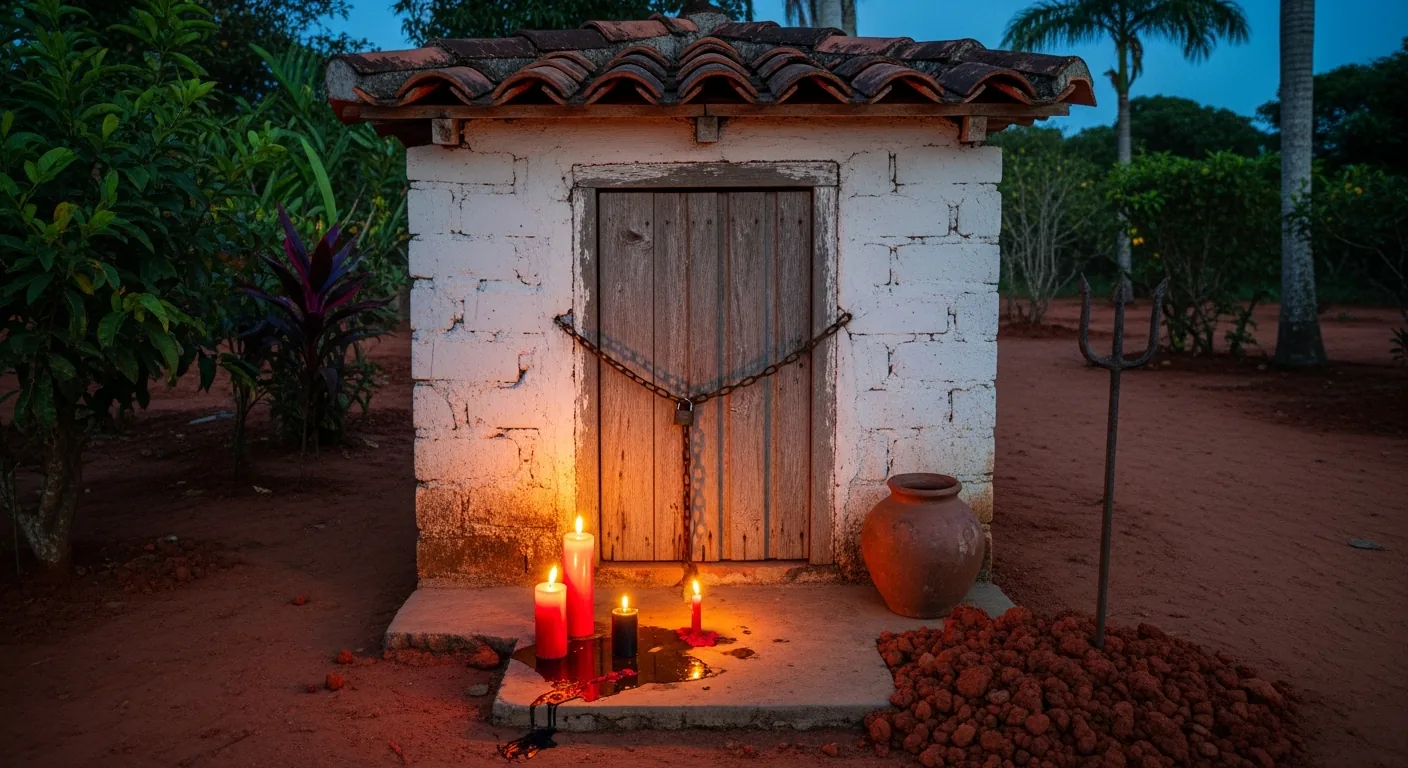
The little house of the exus at the entrance of the terreiro, which guards the door and filters what enters. Only those with permission may touch it.
UmbandaQuimbanda - Tumbandagira
-
With permission, in the Candomblé de Angola. The expected response is "giraê".
Candomblé
U
- Umbanda
-
Brazilian religion that unites orixás, spirit guides, indigenous elements, Catholics, and Spiritists. Its foundation is usually counted from Zélio de Moraes, in 1908.
Umbanda - White Umbanda Also: Umbanda de mesa
-
Branch closest to Kardecism: mediums in white, focus on caboclos and pretos-velhos and little presence of African fundamento.
Umbanda - Umbanda traçada Also: Umbandomblé
-
House where the same priest attends Umbanda and Candomblé, on separate days and liturgies.
UmbandaCandomblé
V
- 7-day candle
-
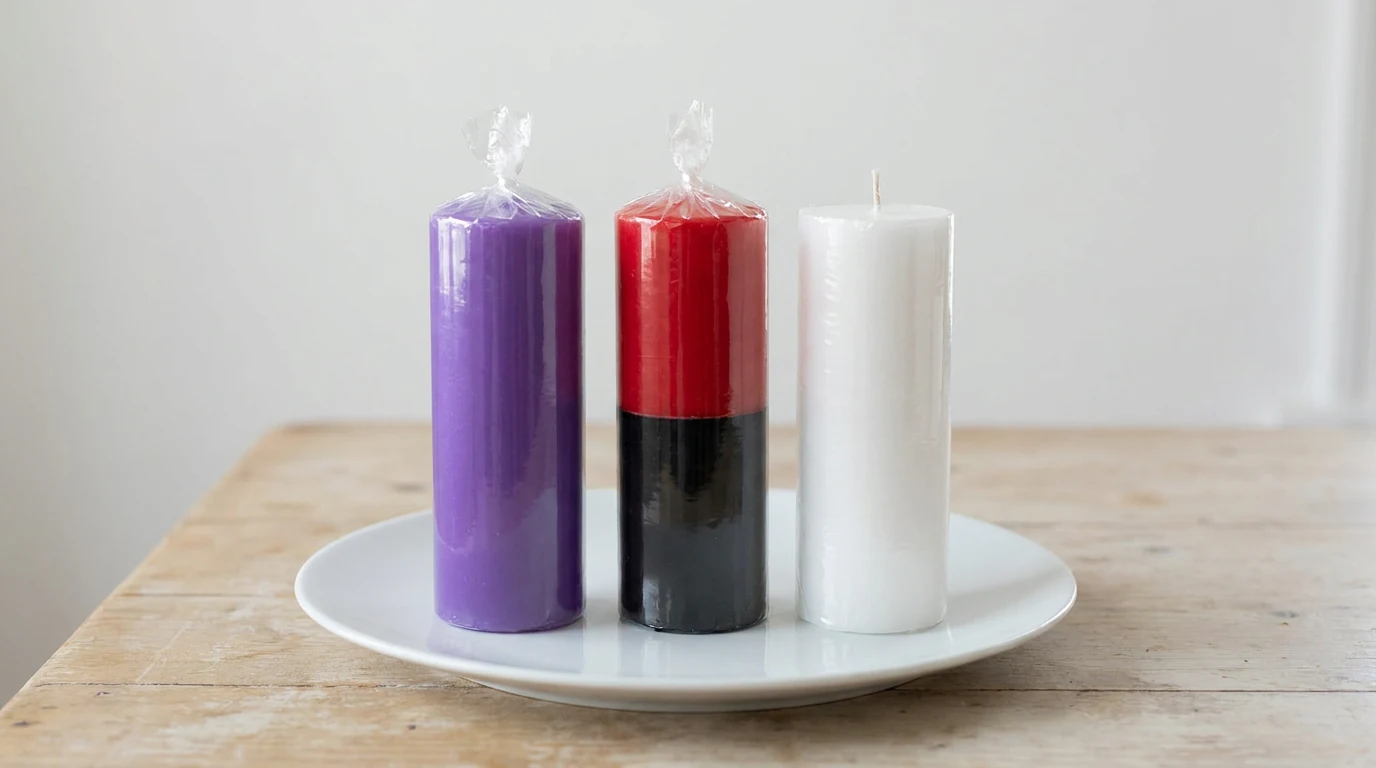
A thick candle, generally inside a glass, that burns for about a week. It is lit to set a request, an orixá, or the Guardian Angel.
Afro-Brazilian - Vodum Also: Vodun, Voduns
-
The deities of Jeje Candomblé, of Fon origin, such as Dan, Sakpatá, and Loko. In Maranhão, they are also worshipped in Tambor de Mina.
Candomblé
X
- Xaxará
-
A bundle of sea grass decorated with búzios, a tool of Omolu and Obaluaê. With it, the orixá sweeps away diseases.
Candomblé - Xetro marrumbaxetro Also: Xeto marrumbaxeto
-
Banto root greeting to the caboclos and boiadeiros, heard in the Candomblé de caboclo and in Umbanda.
CandombléUmbanda - Xirê
-
The dance circle of the Candomblé festival, where songs are sung for each orixá in a fixed order, starting with Exu and ending with Oxalá.
Candomblé

Z
- Zelador de santo Also: Zeladora
-
Another name for the pai or mãe de santo: the one who cares for the orixás of the house and the children.
CandombléUmbanda - Zuela Also: Muimbu
-
The chants of the Candomblé de Angola, the sung prayer that calls the inquices.
Candomblé
Missing a word?
Send the word you heard in the terreiro to the shop's WhatsApp. We will explain it and add it to the glossary.
Ask on WhatsApp