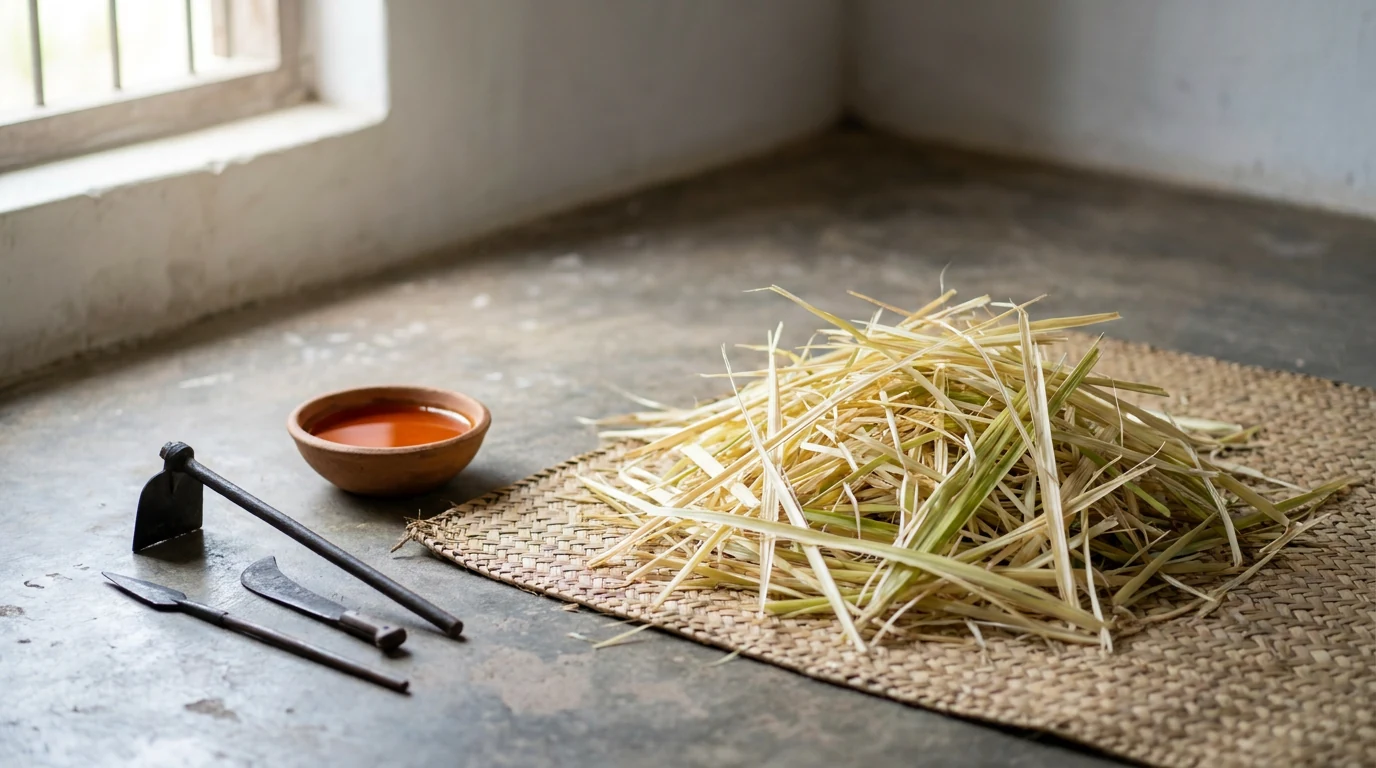
The straw fringe that falls over the door of the terreiro has a name: mariô. It is the new leaf of the dendezeiro shredded into threads, a sacred curtain that protects the house. The mariô de Ogum takes the name of the orixá because it belongs to him: the Nagô tradition treats this palm as the most important representation of Ogum.
Next, what mariô is and why it belongs to Ogum. Then, where it appears in Candomblé and Umbanda. At the end, what to do before hanging one on your front door.
What is mariô
The mariô comes from the dendezeiro, Elaeis guineensis, a palm of African origin that became naturalized in Brazil. In Yoruba, the tree is called ìgi ôpè. The part used is the new leaf, shredded until it becomes a fringe.
Plant: dendezeiro | Part: shredded new leaf | Orixá: Ogum | Where it is located: doors and windows of the terreiro, clothing and assentamento of Ogum
The word appears with various spellings: mariô, mariwô, màrìwò and mariwo. The report by Cleyton Santanna on RioOnWatch explains that the people of santo say "o mariwô", in the masculine, because it is a plant of Ogum.
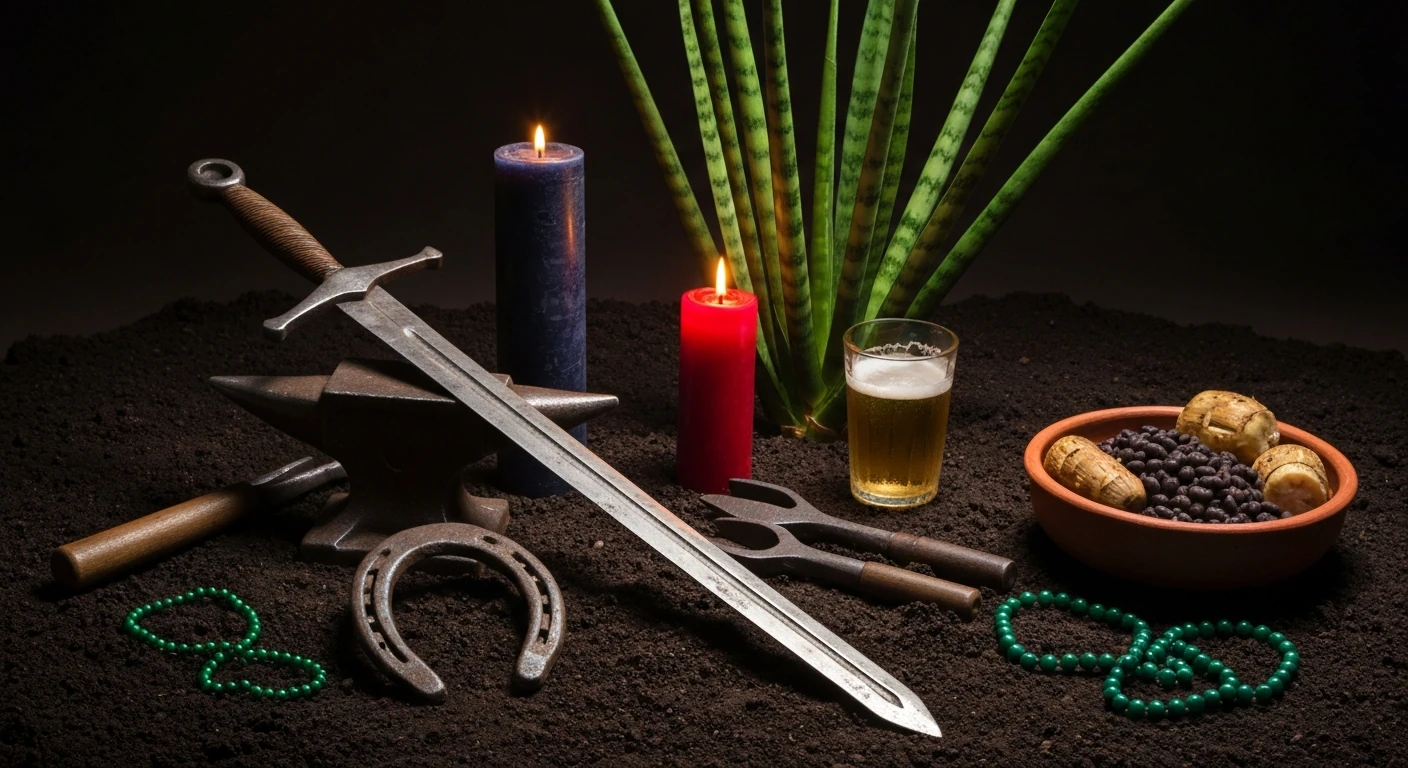
In the sources, the place of the mariô is the door, the clothing and the assentamento. Another leaf of Ogum in our collection is the peregum.
Why mariô belongs to Ogum
The researcher Juana Elbein dos Santos studied the Nagô terreiros of Bahia in the book Os Nàgô e a morte. She recorded the weight of the new dendezeiro palms for the orixá of iron.
constitute the most important representation of Ògún, as important as his iron machete with which he clears the paths
Juana Elbein dos Santos, on the palms of the dendezeiro, in The Nàgô and death
The mariô is also the clothing of Ogum. Elbein records a chant in which the màrìwò clothes Ogum, and a house of Candomblé summarizes the same idea: "Mariwo is the clothing of Ògún".
An itan known in the houses of santo tells how this began. Ogum, ashamed and without clothing, tore a sprout from a dendezeiro and dressed himself in màrìwò. The Ilê Asè Opô Omidewá records that the words of this scene continue to be chanted in the festivals of Ogum. Who the orixá is, you read in who is Ogum.
Mariô on the door and on the window of the terreiro
The most well-known function of the mariô is to protect the house. Researcher Bianca Purcino mapped the plants of two terreiros in southern Bahia for the dissertation she defended at UFSB. One is from the ketu nation, in Itabuna, and the other from the ijexá nation, in Arataca. In both, the dendezeiro serves to make the mariô, the sacred curtains that protect the terreiro.
Purcino's interviewees also link the plant to Omolu (Omulu) and Oxaguiã, in addition to Ogum. This is the record of these researched terreiros, and not a rule for all houses.
In the houses of Candomblé, the mariô remains frayed on the doors and windows. In the report by RioOnWatch, its mission is to not let any evil arrive. The reading matches the place of Ogum: the Diário de Umbanda site describes the orixá as the protector of the entrance doors.
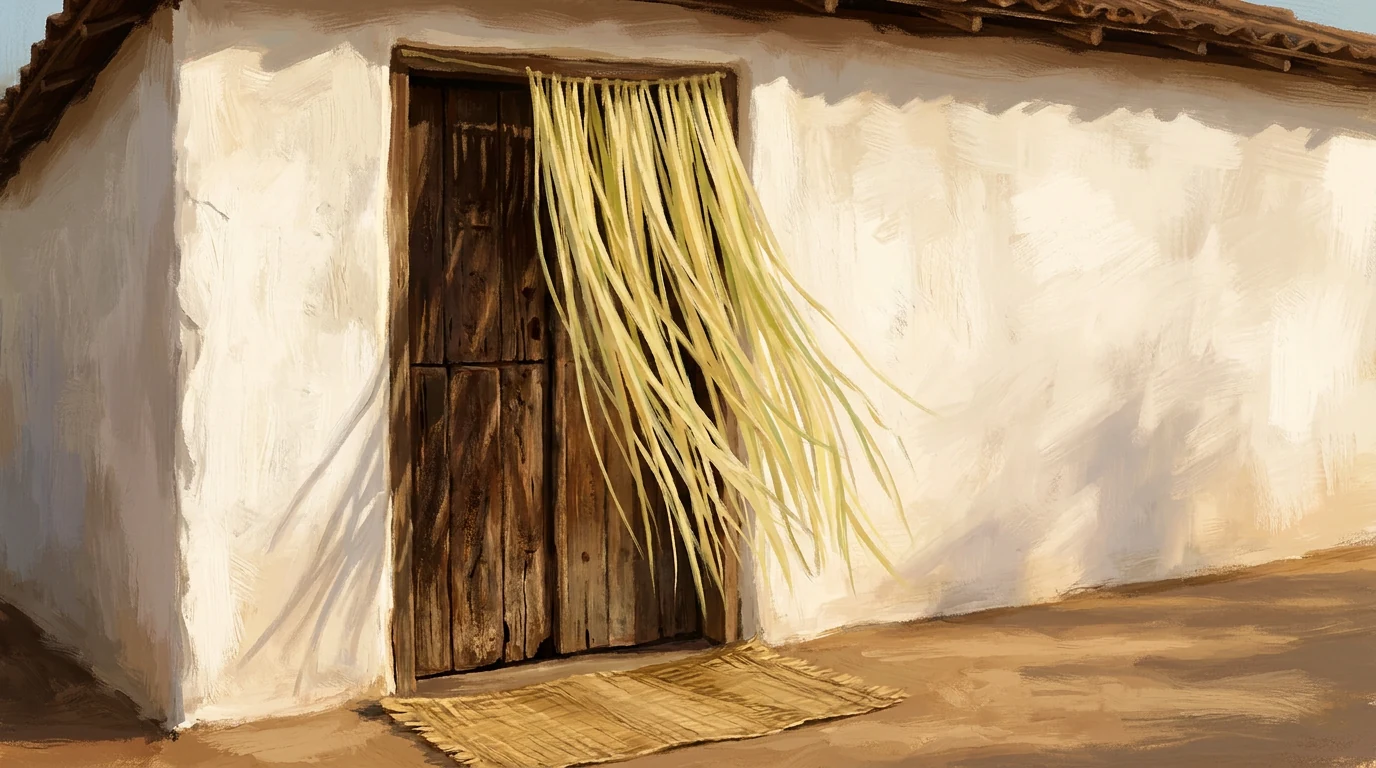
An itan reproduced on Umbanda sites explains the door. Ogum ordered a pilgrim to put frayed dendezeiro leaves on the houses of friends, and in the destruction of the city, only those houses remained standing.
In the clothing, in the consecrated foundation (assentamento), and in the rites of passage
The mariô is consecrated to Ogum, and therefore appears frequently in the consecrated foundations (assentamentos) and in the clothing of the orixá. Whoever sets up the consecrated foundation is the house.
The protection of mariô goes beyond Ogum:
- Axexê nagô: in the funeral rite, a priest ties small strips of màrìwò on the left wrist of the attendees, as recorded by Elbein. The rite is in what is axexê.
- Egungun Cult: “Màriwò” is the symbolic name of the òjè, the priests of this cult, which is distinct from the candomblé of orixá.
- Angola nation: in the Azerin, a funeral rite studied by Azevedo, Ramos and Silva in the Plants magazine, the mariwo stays on the egun table to ward off spirits of bad intentions.
The palm tree touches other orixás through another path. In Reginaldo Prandi's table for the Ketu rite, the xaxará of Obaluaiê (Babalu Aye) is made from fibers of the dendezeiro leaves. The tools of each orixá are in tools of the orixás.
Mariô in umbanda
In umbanda, the sources are from the house, and the use changes. Luiz de Miranda writes on the Conversando sobre a Umbanda blog. According to him, some houses more linked to African traditions put the mariwo on the doors. This happens especially in April, the month they dedicate to Ogum.
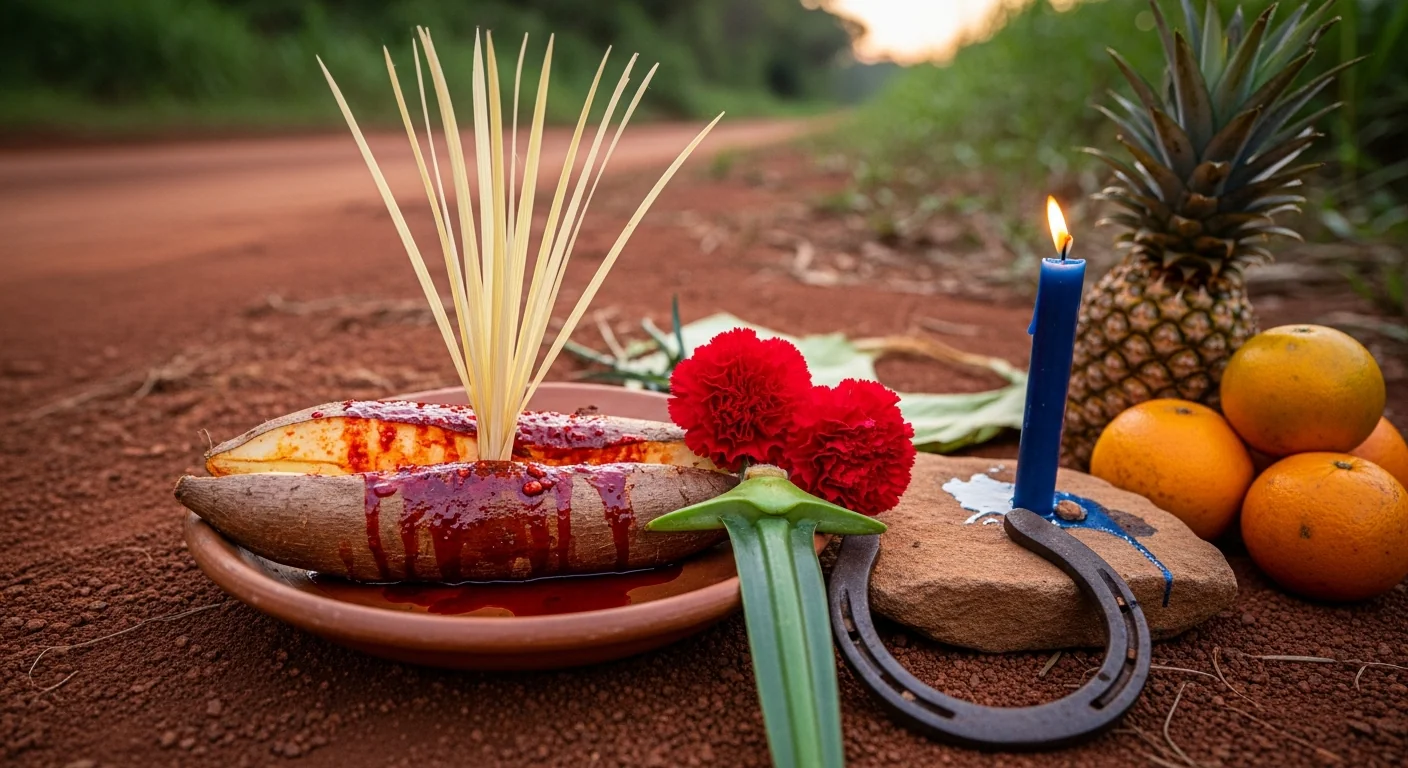
There are houses that use mariô sticks in the Ogum stick holder, as shown in the recipe published by the Diário de Umbanda. The complete delivery is in offering for Ogum.
A study by Santos and Fortuna, from UNEB, in a baiano umbanda terreiro linked the dendê and its leaves to the caboclo. In an umbanda house, the same palm tree can serve another line.
Can I put mariô on my front door?
The sources document the mariô on the door of the terreiro, not a rule for the door of your house. Whoever wants the mariô at home asks the zelador or zeladora de santo first.
The reason is the preparation. The blog Conversando sobre a Umbanda treats the feitura of mariwo as a rite of great responsibility. In the candomblés of ketu, a cantiga says that those who are not initiated do not know the foundation of the mariô. The house knows how to harvest, shred, and consecrate the leaf, and this step by step does not appear in an article.
Tradition records the leaf as protection of a casa de santo, within its rite. Outside of this rite, no one promises an effect.
Frequently asked questions
What does mariô mean?
Mariô is the new leaf of the dendezeiro shredded into fringes, consecrated to Ogum. The word also appears as mariwô, màrìwò and mariwo. The povo de santo says "o mariwô", in the masculine, because it is a plant of Ogum.
Is mariô a plant?
The mariô comes from a plant: the dendezeiro, Elaeis guineensis, an African palm naturalized in Brazil, the same one used for dendê oil. The fringe is made with the new shredded leaf, which the terreiros use as a curtain on doors and windows.
How to make mariô de Ogum?
The preparation of the mariô is a matter for the house. A source of umbanda treats the rite as one of great responsibility, and a cantiga of ketu reminds that the foundation is for the initiated. Ask for guidance from your caretaker of the orixás, who harvests, shreds, and consecrates the leaf according to the rule of the terreiro.
Where to buy mariô and articles of Ogum
At Joia Mística Laroyê you find the material for the firmeza of Ogum in your casa de santo:
- Shredded mariô: check availability via WhatsApp before coming
- Dendê oil for the meals of Ogum
- Seven day candles for Ogum
- Statues and tools of Ogum in iron
- Clay alguidares
Stop by the shop, at Rua Benedito Zingari, 460, Bela Vista, in Extrema-MG, or message on WhatsApp with delivery to all of Brazil.
References
- Bianca Purcino: ethnobotanical profile in Candomblé terreiros in southern Bahia, UFSB, 2022
- Juana Elbein dos Santos: The Nàgô and Death, Vozes
- Azevedo, Ramos and Silva: sacred plants in Azerin, Angola nation, Plants, 2026
- Reginaldo Prandi: attributes of the orixás in Ketu Candomblé, Horizontes Antropológicos, 1995
- Cleyton Santanna: mariwô in Morro da Providência, RioOnWatch, 2022
- Santos and Fortuna: ethnobotany of a baiano Umbanda terreiro, Research, Society and Development, 2023