The patuá is an Afro-Brazilian protection amulet: a small pouch of cloth or leather, consecrated in terreiro, containing herbs, written prayers, and seeds, which a person carries to close the body.
Where it is used: Umbanda and Candomblé | Material: fabric in the color of the orixá or leather | How to carry it: in a pocket, wallet, bag, or around the neck | Main rule: do not open and do not lend
Besides protecting against envy and demanda, the patuá sets intentions of love or prosperity. Its origin lies in the mandinga bags of colonial Brazil and in the amulets that the malês wore on their chests during the uprising of 1835 in Salvador.
What is patuá and what is it for
The patuá is a protection amulet of Afro-Brazilian traditions: a small closed envelope of fabric or leather with herbs, written prayers, seeds, and other consecrated elements, prepared in terreiro to protect whoever carries it. It serves to close the body, that is, to protect against dense energies, envy, and demandas, and also to set intentions of love or prosperity.
In Candomblé, the most well-known form is the one described by Wikipedia: a small piece of fabric in the color of the orixá, sometimes with the name of the orixá embroidered, holding a preparation of herbs and other substances linked to that orixá. The person carries the patuá in a pocket, wallet, or bag to have the protection of their orixá. In the cult of the egunguns, the same type of amulet is called a breve.
The word itself holds history: the most accepted etymology, recorded by Câmara Cascudo in the Dicionário do Folclore Brasileiro, comes from the Tupi patuá: basket, box, wrapper where something of value is kept. There are lexicographers who point out other origins (from the Quimbundo mputu, "wrapping"), but all converge on the essential: patuá is what guards what protects.
The history of the patuá: from colonial mandinga to the malês
The lineage of the patuá crosses Brazil in three acts.
The mandinga bags (18th century)
In colonial Brazil, the bolsas de mandinga circulated: cloth pouches with prayer papers, fragments of pedra d’ara and African, European, and indigenous elements, used to close the body against stabbings, shots, and enemies. They were so widespread that they protected people from all social classes, and so feared that the Inquisition persecuted and prosecuted the "mandingueiros" as sorcerers. The processes of the Holy Office were studied by Brazilian historiography, as shown by the research on the magic medicine of the mandinga bags presented at ANPUH. The name comes from the mandinga people, from Islamized West Africa: as many knew how to read and write in Arabic, they were labeled as sorcerers and "mandinga" became a synonym for spell in Brazilian Portuguese.
The amulets of the malês (1835)
In January 1835, the malês, enslaved and freed Muslim Africans from Salvador, took to the streets in the largest urban slave uprising in the Americas. Close to their chests, they carried amulets: verses from the Quran and prayers written in Arabic, folded and sewn into leather pouches. The historiography of the uprising, conducted by João José Reis in Rebelião escrava no Brasil and on the portal Impressões Rebeldes, da UFF, documents these amulets in detail. It was from the malês that the leather amulet with a prayer inside gained, in the people's mouth, the name it carries to this day: patuá.
The patuá in today's terreiros
Over time, the patuá was welcomed and redefined by Afro-Brazilian religions. In Umbanda, it is prepared and crossed in the terreiro by the pai or mãe-de-santo, set in the energy of a spirit or orixá. In Candomblé of the Ketu and Angola nations, consecrated body adornments, such as bead necklaces and small pouches with elements of the orixá, integrate what the anthropologist Raul Lody called “joias de axé”. They are objects that protect because they underwent ritual preparation, just like the Umbanda bead necklaces (guias).
What goes inside a patuá
The content varies according to the intention and the house, but the classic elements are:
- Herbs: arruda and guiné for protection; basil and leaves of the ruling orixá for other intentions
- Written prayers: a direct heritage from the papers with verses from the malês and colonial mandingas
- Seeds: olho-de-cabra and olho-de-boi, popular amulets recorded by Cascudo
- Cowrie shells (búzios), figas, medals and stones: according to the tradition of the house (fundamento)
- Beads in the color of the orixá: when the patuá is fixed in a specific orixá
All of this is sewn and closed in a fabric or leather pouch, and it is the consecration in the terreiro, with smoke cleansing (defumação), prayers, and herb baths, that transforms the set into a patuá.
Types of patuá: protection, love, and prosperity
| Type | What for | Typical content | Usual colors |
|---|---|---|---|
| Protection | Closing the body, cutting envy and demands | Arruda, guiné, figa, closing prayer | Red and black, or white |
| Love | Affective harmony, self-esteem | Herbs and elements linked to Oxum (Oshun) | Pink, yellow |
| Prosperity | Opening of paths, abundance | Seeds of abundance, coin, prosperity herbs | Yellow, gold, green |
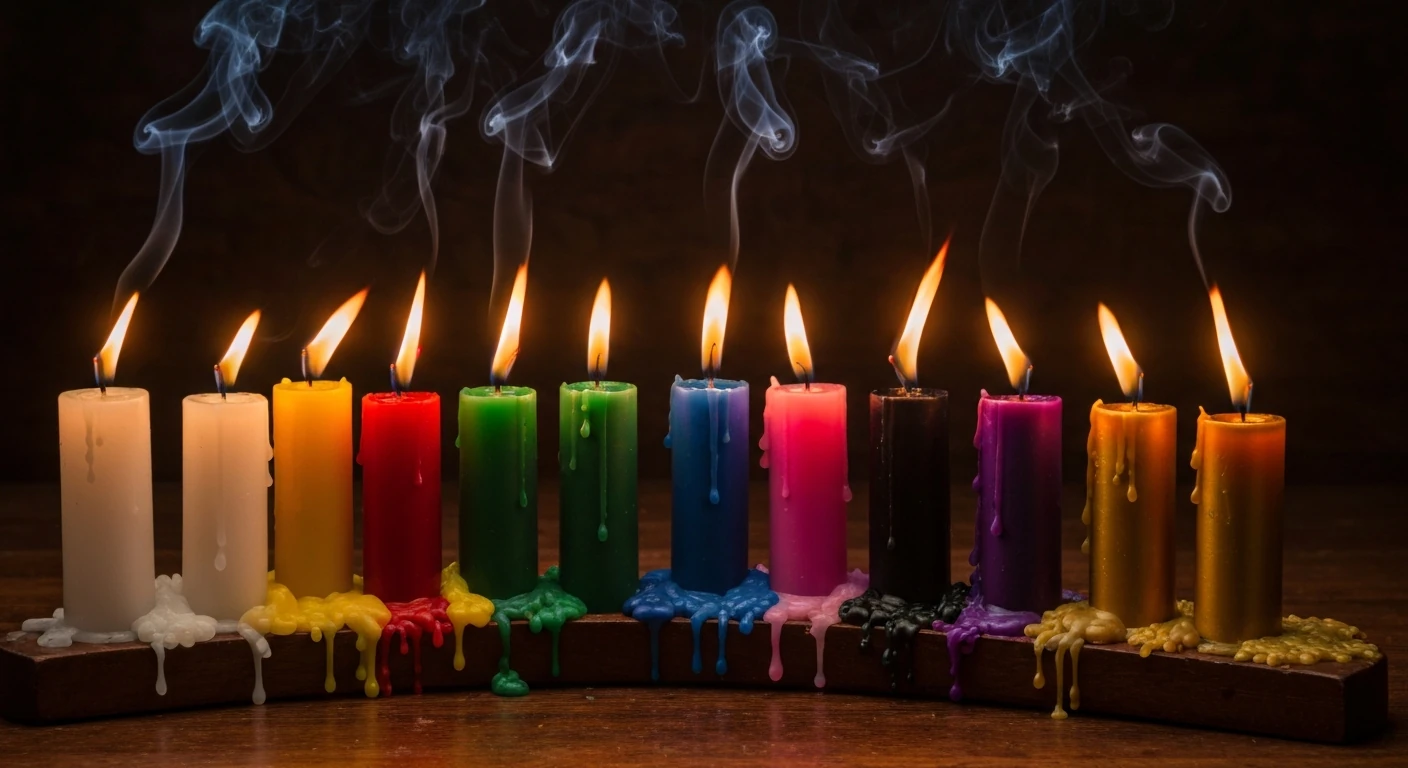
The colors follow the same logic as ritual candles: each intention has its vibration. But attention: correspondences vary by house and terreiro. There is no single recipe, and the patuá made for you takes into account your case and, often, your orixá.
It is also common to have doubts about carrying more than one patuá. Tradition does not forbid it, but the current guidance is common sense: each amulet asks for its clear intention, and those who accumulate protections out of anxiety usually need more of a conversation with the leader than a third pouch. If in doubt, ask whoever consecrated yours: that is what the relationship with the house exists for.
How to use and care for your patuá
The foundation of the patuá is proximity: it works close to the body, as the malês used it close to the chest.
- Carry it with you on your neck, in your pocket, in your wallet, or in your bag.
- Never open the patuá. It is a closed and consecrated object; opening it undoes the preparation.
- It is personal and non-transferable: made for one person, it is not lent out nor should others handle it.
- Renew when needed: after very heavy situations or when it is worn out, take it to the terreiro for a new consecration. The energetic cleansing between renewals can be done with rosemary smoke cleansing (defumação de alecrim) or rue.
- If it tears or is lost, do not dramatize: tradition reads this as a sign that it fulfilled its function, absorbing a demanda. Give thanks and make another.
Tradition tip: upon receiving your patuá, hold it in your hands and firm in thought the intention with which it was made. The patuá protects through the faith that is renewed in it, not by automatic magic. And remember: a protection amulet is spiritual support, never a substitute for medical, legal, or security care in the concrete world.
How to make a patuá: what belongs to the terreiro
Making a true patuá is ritual work of the terreiro. The visible part is simple: a fabric pouch in the color of the orixá or of leather, with herbs, a written prayer, and seeds, sewn and closed. What transforms this into a patuá is the consecration, with prayers, smoke cleansing (defumação), and spiritual strengthening (firmeza), performed by the pai or mãe de santo.
Therefore, this text does not provide a recipe. What goes into each patuá, the prayer, and the way to firm are the foundation of the house and vary from terreiro to terreiro. Whoever wants a patuá made for themselves should speak with the leader of a trusted house, who chooses the elements based on the person's intention and, often, by their orixá.
Let it be said in plain letters: what makes a patuá is the ritual preparation. A pouch assembled at home, without foundation, may even be beautiful, but it is not a patuá. The consecration by the Pai or Mãe-de-santo, with the right herbs, the right prayers, and the axé of the house, is what differentiates the jewel of axé from a decoration.
This distinction is also a gesture of respect toward history: the patuá descends from amulets for which people were persecuted by the Inquisition and punished after the uprising of 1835. Wearing it with awareness is honoring those who kept this tradition alive under the risk of their own lives.
Frequently asked questions about the patuá
What is a patuá and what is it for?
Patuá is a protection amulet from Afro-Brazilian traditions: a closed pouch of fabric or leather with herbs, written prayers, seeds, and elements consecrated in the terreiro. It serves to close the body against dense energies, envy, and demands and, depending on the preparation, to set intentions of love and prosperity.
What to put inside a patuá?
The classic elements are herbs (arruda, guiné, manjericão), written prayers, seeds like goat eye, búzios, figas, and beads in the color of the orixá. The exact content varies according to the intention and the foundation of the house: it is defined by the Pai or Mãe-de-santo who prepares and consecrates the amulet.
What is a protection patuá?
It is the patuá prepared to close the body, the most common type. It usually carries cutting herbs like arruda and guiné, a protection prayer, and a figa, in a fabric or leather pouch. Many are made in the color of the orixá of the person who will use it. The exact composition is defined by the house that consecrates it.
Does a ready-made purchased patuá work?
The ready-made pouch is the support; what tradition recognizes as a patuá is the consecrated amulet. A patuá purchased in a shop can be taken to the terreiro to be crossed and set by the leader. Each house has its own rule on whether or not to accept a patuá that was not assembled there.
How to activate a patuá?
The patuá is "activated" by the consecration in the terreiro: smoke cleansing (defumação), prayers, and firmeza in the energy of a spirit or orixá, performed by the house leader. There is no home activation of a pre-bought patuá without preparation; if yours was not consecrated, seek a trusted terreiro.
How to use the patuá?
On the body: on the neck, in the pocket, in the wallet, or in the bag. It is not opened, not lent, and not allowed to be handled by other people. When worn out or after heavy situations, the consecration is renewed in the terreiro; if it tears or is lost, tradition understands that it fulfilled its function.
What is the difference between patuá and mandinga?
They are direct relatives. The mandinga bag is the colonial amulet of the 18th century, persecuted by the Inquisition; the patuá is its heir, consolidated from the leather amulets of the malês in 1835 and welcomed by the terreiros. Today "mandinga" also became a popular synonym for spell, a legacy of prejudice against the mandinga people, who knew how to write in Arabic.
Does patuá have other meanings?
It does. Besides the amulet, "patuá" is the name of the Portuguese-based Creole language spoken in Macau, and the word is confused with "patoá" and with patauá, the name of a palm tree. In this article, patuá is always the amulet.
Where to buy patuá and protection materials
At Joia Mística Laroyê, you will find:
- Protection, love, and prosperity patuás, assembled with herbs and traditional elements
- Arruda, guiné, and protection herbs, fresh or dry, for baths and smoke cleansings (defumações)
- Figas, cowrie shells (búzios), and seeds, classic elements of the amulet
- Guias (bead necklaces) and bead strands in the colors of your orixá
- Cleansing fumigants for the energetic maintenance of your patuá
Visit our shop in Extrema, Minas Gerais or talk to us via WhatsApp, and we ship all over Brazil. And if you want a patuá consecrated according to tradition, Joice Mística guides you during the service.
References
- ANPUH (Associação Nacional de História): research on the magic medicine of mandinga bags in colonial Brazil
- Wikipedia: Patuá entry, with the meanings of candomblé amulet, brief in the cult of egunguns and the other meanings of the word
- UFF (Universidade Federal Fluminense), Impressões Rebeldes portal: documentation on the 1835 malês revolt in Salvador