The amaci is the sacred washing of the head, one of the most important rituals in a medium's journey. Made with macerated herbs and consecrated water, it sets the person to their head orixá, awakens dormant mediumship, and seals the bond with the house and with the spirituality. It is not a common bath, and it is not done alone.
This guide explains what amaci is, why the head (the ori) is the center of this rite, what it is for, who can conduct it, and how the protection works. It also shows the difference between the amaci of Umbanda and the amasi no ori of Candomblé.
What is amaci
The word amaci comes from "amaciar," to make receptive, as explained by traditional Umbanda terreiros (Terreiro Caboclo Akuan). This is exactly the function of the ritual: to prepare and soften the medium's head so that they receive the energies of their orixá with balance and without suffering. For this reason, amaci is also called head washing or head bath.
Different from a body bath, the amaci focuses on the ori, the top of the head, considered the dwelling of the orixá inside each person. It is there that the energy of the herbs is deposited, with prayer and chant, to set the bond between the child and their divinity.
In Umbanda, the amaci usually marks a moment of passage: the first setting of the medium with the house, the zelador, and the spirit guides. Many houses redo it periodically, often on Good Friday, to replenish energies and renew the commitment. To better understand the gift that the amaci strengthens, it is worth reading about what mediumship is.
Why the head (the ori) is the center of the ritual
In the thought of Afro-Brazilian religions, the head is not just the physical part. The ori is the spiritual center of the person, the point where the orixá connects to them and where mediumship manifests. Caring for the ori is caring for the root of spiritual life.
That is why the head has its own treatment, distinct from the rest of the body. While the body is washed in abô, the bath of the extremities and feet, the head receives the amaci. They are different rites, for different functions. Wetting the head with any herb, without foundation, is not amaci.
Keep this point in mind: amaci is not about cleaning dirt. It is about setting, calming, and aligning the ori to the orixá that governs it. That is why it is conducted with reverence, and not like any ordinary home bath.
Macerated herbs: the difference between amaci and herbal bath
Here is one of the most common confusions. The home herbal bath, that one for spiritual cleansing (descarrego) or for opening paths, is usually made with boiled herbs. Amaci, no.
Amaci is prepared with herbs macerated cold in consecrated water, mine water, rain water, river water, or potable water. The leaves are crushed with the hands, with prayer and chant, until they release their juice. Amaci is not cooked: the heat of the fire would change the nature of the energy. What is extracted is the living force of the leaf.
The herbs used are those of the head orixá of the person, combining cool, calming leaves, and sometimes hot, active leaves, to compose the essence of that orixá. Some examples that appear in the houses:
- Oxalá (Obatala): white basil, lavender, cotton, and other leaves of peace and purification
- Oxum (Oshun): pennyroyal, mint, rosemary, and white rose, for softness and subtlety
- Other orixás: each one has its own leaves, defined by the tradition of the house
These examples are illustrative, not a recipe. The right combination depends on your orixá and is defined by whoever conducts the ritual. To find out which is your regent, see how to know what my orixá is.
What is amaci for
Amaci has a profound spiritual function that goes far beyond cleaning. It serves to:
- Set and reconnect the medium to their head orixá, sealing this bond
- Awaken the mediumship that is still dormant, preparing the person for development
- Appease the ori, bringing peace, balance, and clarity to the head
- Confirm the commitment of the medium to the house, the zelador, and the spirituality
- Restore energies when redone periodically, renewing the protection
It is important to understand that amaci prepares and strengthens, but it is not a magical transaction. No serious ritual promises to solve a specific problem in a guaranteed timeframe. Amaci opens and sets a path of spiritual development, which is built with time, study, and dedication within the house.
Who can perform the amaci
This is the most important point of all: amaci is not done alone.
Only the pai or mãe de santo (the zelador or zeladora of the house), or a spirit of the house incarnated, can wash the head of a medium. This is not bureaucracy or market reservation: it is fundamento. The choice of herbs depends on the person's orixá, the consecration depends on the house's axé, and the rite needs the hand of someone who has spiritual authority to conduct it.
Recipes for "homemade amaci" circulating on the internet ignore all of this and can, at best, turn into a common herbal bath, and at worst, mess with something without the proper preparation. If you wish to perform your amaci, there is only one path: seek a house, a terreiro, a trusted pai or mãe de santo. It is with them that this rite takes place.
The washing of the bead necklaces
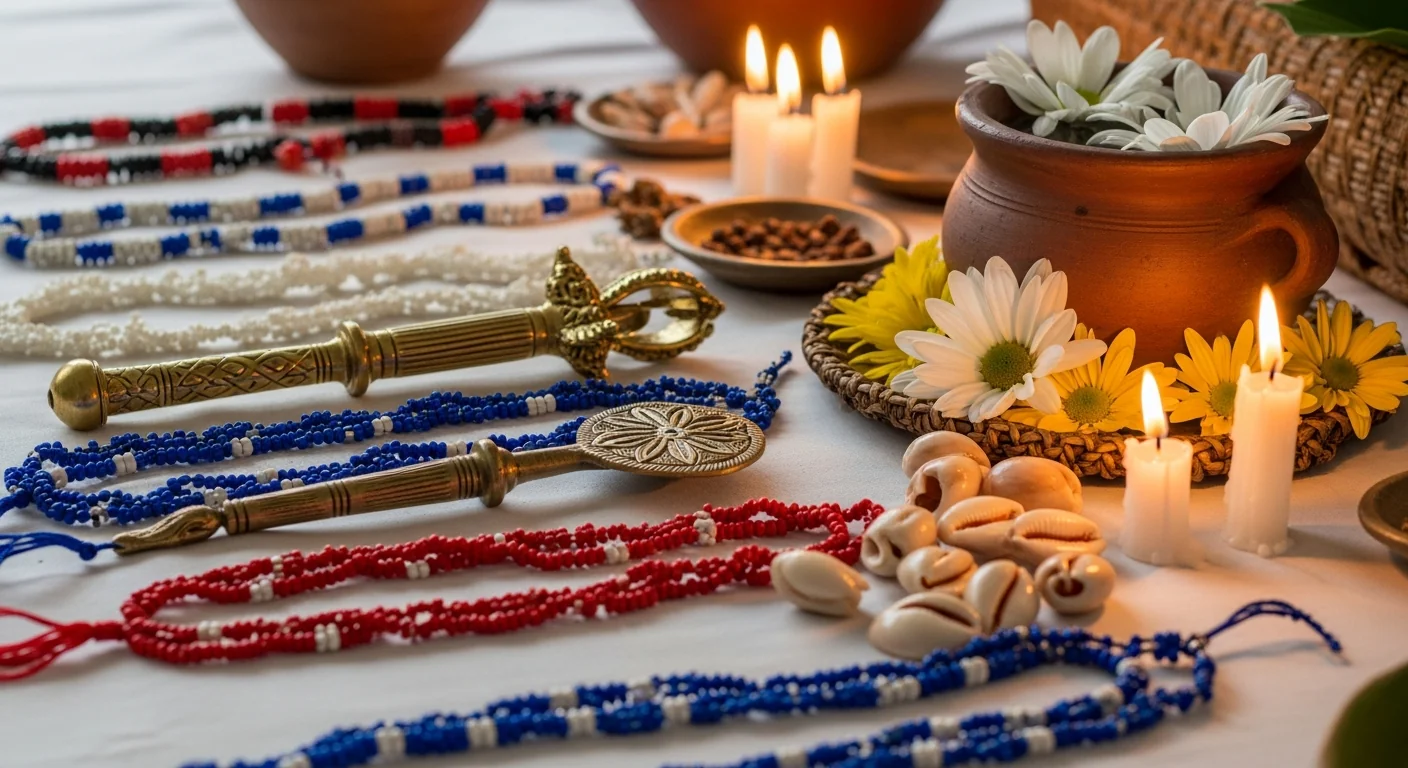
In the same context as the amaci, it is also common to wash the guias, the bead necklaces that the medium uses. Dipped in the herbal preparation, including jureminha, the bead necklaces are consecrated and set along with the head of the child, beginning to carry the same energy.
The bead necklaces are not ornaments: they are instruments of protection and connection with the orixás and spirit guides. Washing them in the amaci is to set this connection. To better understand these bead necklaces, it is worth reading about the bead necklaces of Umbanda.
The resguardo (period of rest and restrictions) after the amaci
After the head is set, comes the resguardo, the period of rest and restrictions so that the energy of the herbs acts on the ori without being dispersed.
The most common standard is not to wet or wash the head for about 24 hours after the amaci. Additionally, many houses instruct:
- Keep the head covered with a white cloth
- Wear light-colored clothes
- Avoid alcoholic beverages, crowds, and arguments
- Retire into silence and prayer whenever possible
Some houses also request a prior resguardo (seclusion), for a few days before the rite, with abstinence and light eating. The details and exact duration vary from terreiro to terreiro, so the one who instructs is always your house. The resguardo is part of the rite, not an optional detail.
Amaci in Umbanda and Candomblé
Although the idea of washing and caring for the head crosses both traditions, amaci has different places in each one.
In Umbanda, amaci is a sacrament of consecration: it links the medium to their orixá and to the house, and is usually redone throughout the journey. It is accessible to both the beginner and the experienced medium.
In Candomblé, one speaks of amasi no ori, which the ketu vocabulary defines as the ceremony of washing the head with sacred herbs, linked to the initiation process and the continuous care of the ori. The herbs and practices vary by nation (ketu, jeje, and angola have their own paths), and some fundamentals are restricted to the initiated. It is worth noting that part of the angola nation worship understands that "amaci" as an Umbandist rite is not part of its liturgy, caring for the ori in other ways. As with any Candomblé theme, the house and the nation define it. This care for what each orixá accepts or refuses connects to the concept of quizila.
Frequently asked questions
What is amaci and what is it for?
Amaci is the sacred washing of the head with macerated herbs and consecrated water. It serves to consecrate the medium to their head orixá, awaken mediumship, appease the ori, and seal the commitment to the house. It is a rite of spiritual strengthening, not a promise of results.
Can I do amaci at home, on my own?
No. Amaci is a fundamento conducted by the pai or mãe de santo, with herbs chosen according to your orixá and consecrated by the axé of the house. Homemade amaci recipes become, at most, a common herbal bath. Anyone who wishes to do amaci should seek a trusted terreiro.
What is the difference between amaci and herbal bath?
The common herbal bath uses boiled herbs and is applied to the body, from the neck down. The amaci uses cold-macerated herbs, is done on the head (the ori), and has the function of setting the medium to the orixá. One is a cleansing; the other is a spiritual setting conducted by a priest.
How long does the amaci resguardo last?
The common standard is not to wet the head for about 24 hours, keeping it covered with a white cloth, wearing light-colored clothes, and avoiding alcohol and agitation. Some houses ask for a prior resguardo (period of restrictions) of a few days. The exact duration varies by terreiro, and the one who guides you is your house.
Does amaci exist in Candomblé?
Yes, in the form of amasi no ori, the washing of the head with sacred herbs linked to initiation and the care of the ori. Practices vary by nation. Part of the Angola cult, however, understands that amaci as an Umbanda ritual is not part of its liturgy, caring for the ori in other ways.
Where to find items for your journey
Joia Mística Laroyê accompanies your faith with respect and provenance. In our shop you will find, with the guidance of your house and your leader:
- Herbs and leaves of the orixás, fresh and dry, for the care your house indicates
- Bead necklaces and beads in the colors of each orixá, to set and protect
- White cloths and clothes for protection and for the days of setting
- Ritual candles in the colors of the orixás
- Statues of the orixás for your altar
Visit our shop in Extrema-MG and we ship to all of Brazil. For guidance on the right products for your journey, talk to us via WhatsApp. And remember: the amaci itself is a ritual conducted in the terreiro, with your pai or mãe de santo.
References
- Terreiro Caboclo Akuan: explanation about the meaning and practice of amaci in an umbanda terreiro
- Candomblé (ketu vocabulary): definition of amasi no ori and its connection with initiation