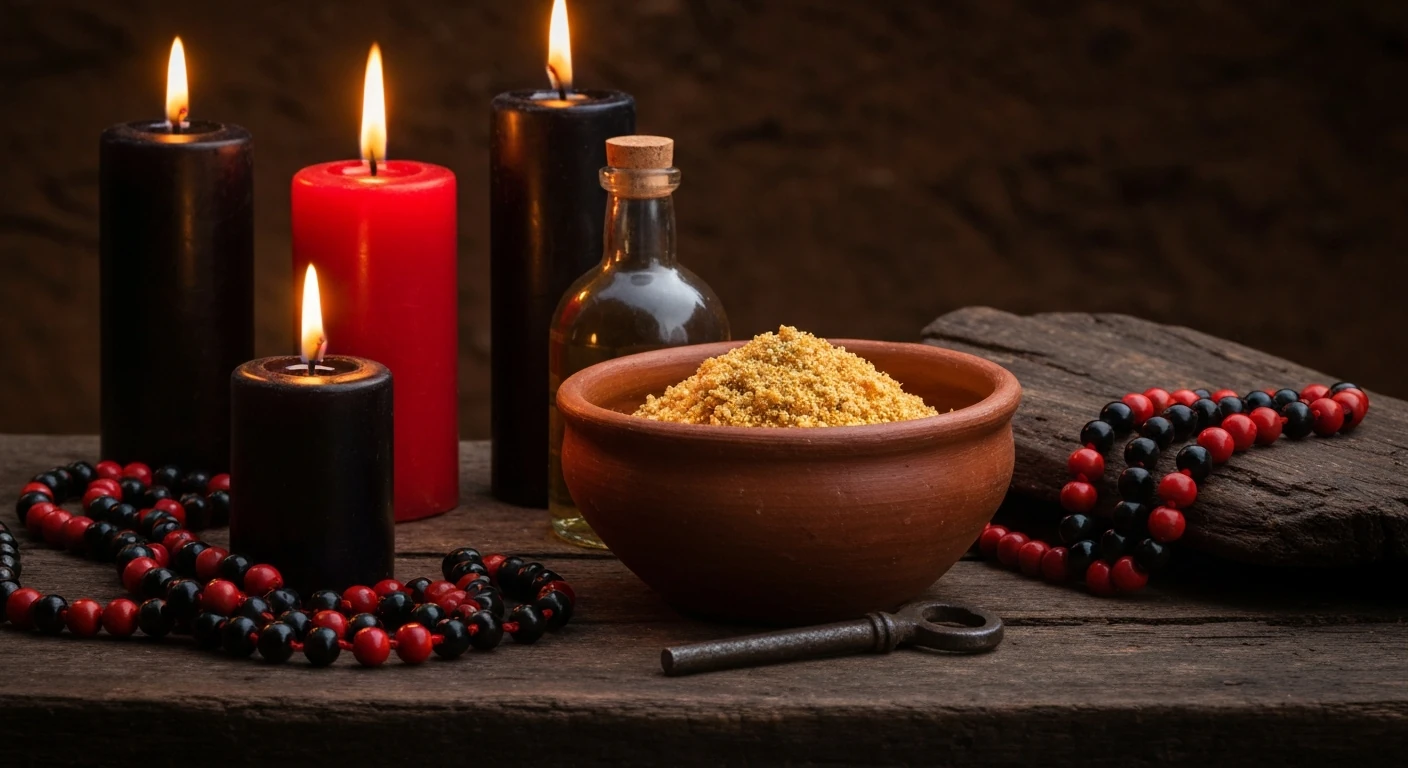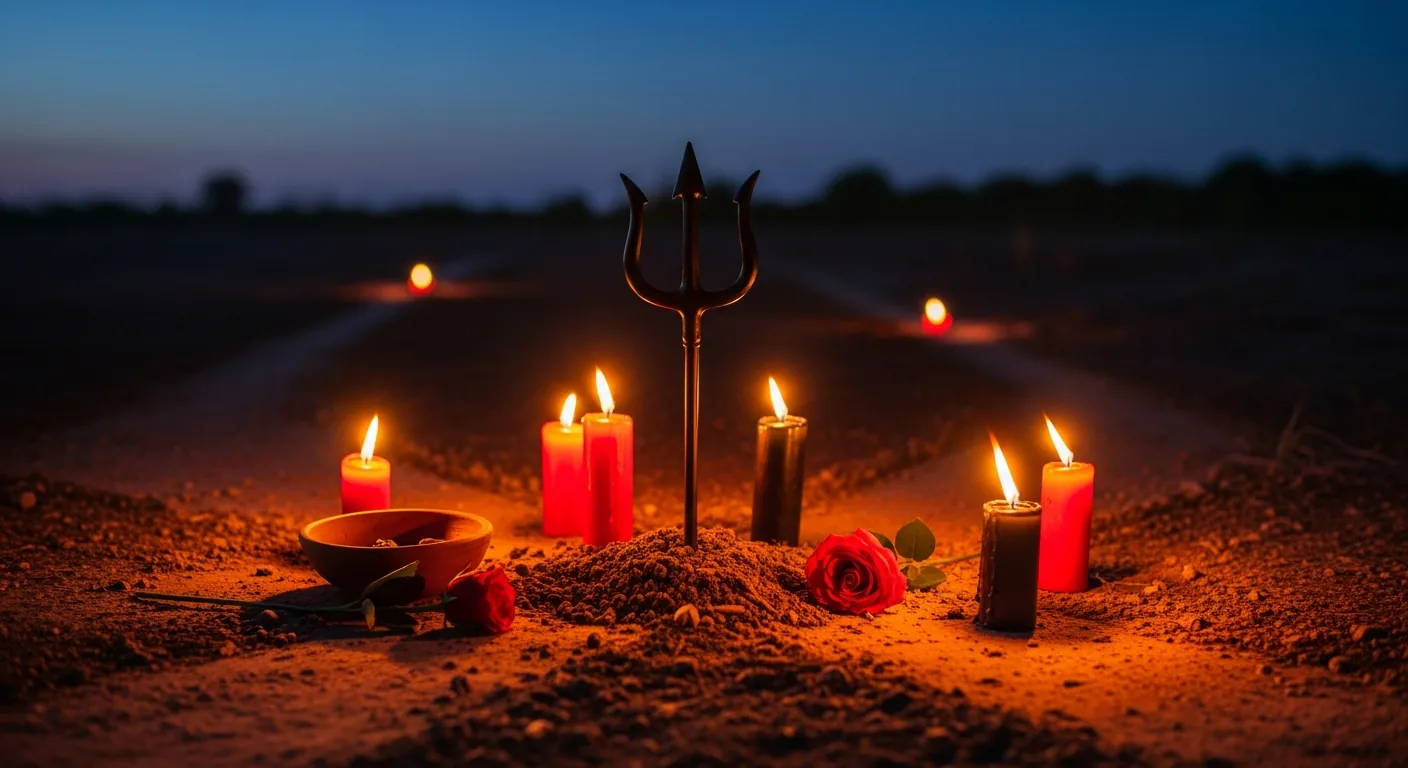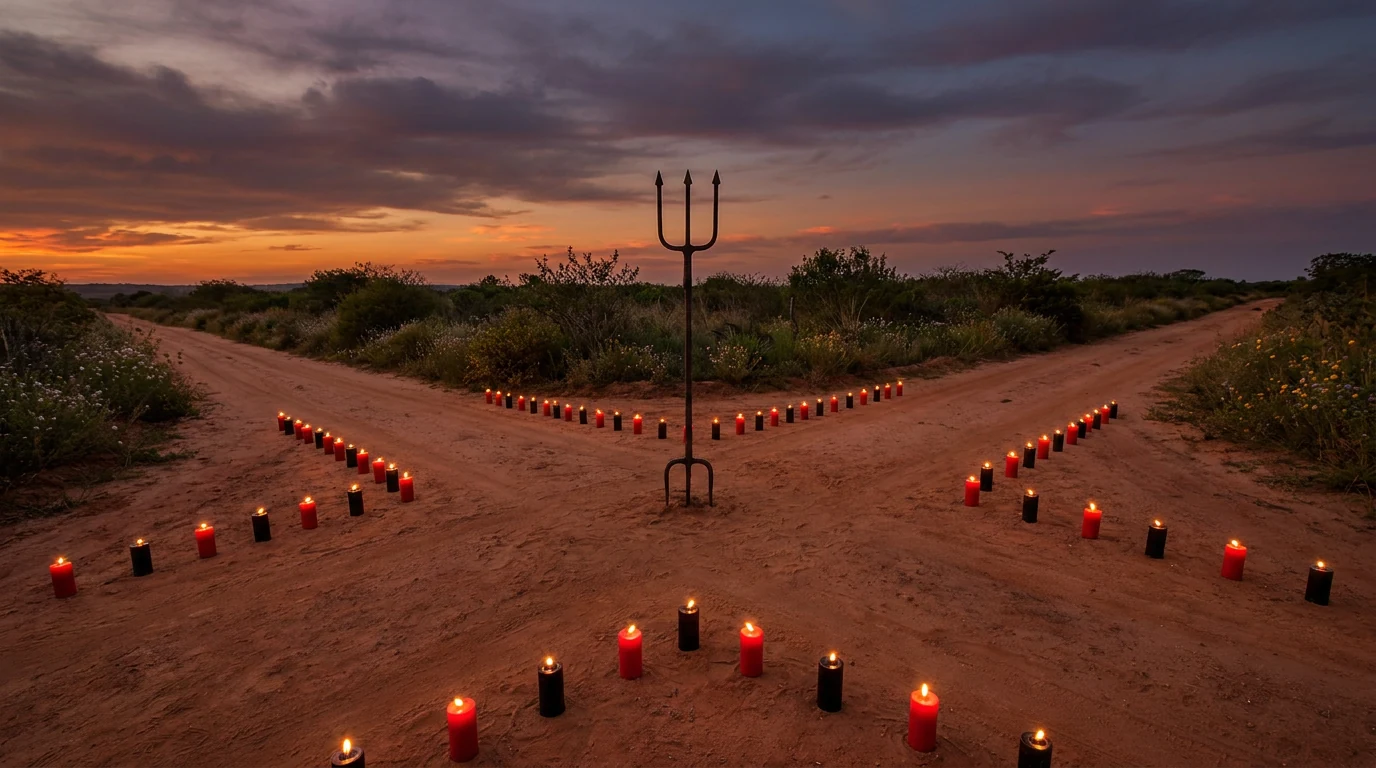
The names of Exu are divided into two groups: those of the orixá, such as Bará, Lonã, and Elegbara, and those of the guardian Exus, such as Tranca Ruas, Marabô, and Caveira. The first come from Candomblé and Batuque; the others, from Umbanda and Quimbanda. In Candomblé, there are fewer than a dozen names; in Umbanda, there are legions of dozens. The difference between the two layers lies in who Exu is.
The names of the orixá Exu
In Candomblé, Exu is the messenger orixá, and his names are qualities of the same orixá.
- Bará: "the owner of the movements of the human body," in Reginaldo Prandi's list. In Rio Grande do Sul, Pelotas established the Day of the Orixá Bará in 2022, on June 13. The Bará of Batuque has an article in Bará, orixá of batuque.
- Lonã, or Olonam: the lord of the paths.
- Odara: the owner of happiness and harmony.
- Elegbara, or Legba: the name of the power of transformation and movement.
- Lalu: name registered by Pierre Verger, which also has a ponto cantado (sung sacred song) in an Umbanda house in Curitiba.
Exus of the crossroads and of the paths
In Umbanda, the exus are understood as spirits of deceased people who work in the left line. Those of the crossroads are the best known.
- Tranca Ruas: is among the seven Exus who command the lines of Quimbanda in Sulivan Barros's research. In a house in Curitiba, there are three paths with their own sung chant (ponto cantado): of the Almas, of Embaé, and of the Encruzilhada.
- Seven Crossroads: in Gaúcha Quimbanda, it is the Exu King of the Seven Crossroads, the “Seu Sete”, who helped create the model of the Exu with a cape and cane starting in the 1960s. In 2018, a terreiro in Viamão (RS) held his festival.
- Marabô: one of the few names of the two layers, an avatar of Exu in Candomblé and a head of line in Quimbanda.
- Tiriri: Verger records him among the names of Exu in Brazil, and Barros places him in command of a line of Quimbanda. In an Ilê de Bocaiuva (MG), his consecrated foundation (assentamento) is at the gate of the house.
- Veludo: his sung chant (ponto cantado) in a house in Curitiba says he came "from Quimbanda" to "save children of Umbanda".
Exus of the souls and of the cemetery
In the Umbandista literature gathered by Prandi, a group of Exus responds to Omulu, the lord of the cemeteries. The surname "das Almas", which several of them carry, has its own article in Exu das Almas.
- Caveira: linked to Omulu in this literature. In a house in São Francisco do Sul (SC), he is the one who guides the healing ritual works.
- Meia-Noite: the name is the “great hour” of Umbanda, when the exus work. It appears next to Caveira in the Omulu group.
- Morcego: the name has been in Umbanda books since at least 1989. In a house in Curitiba, his sung chant (ponto cantado) says that he "spread his wings in Calunga," the cemetery.
- Tata Caveira and Sete Catacumbas: Tata Caveira is the most well known name of the group of Omulu, and both have a sung chant (ponto cantado) in a house in Curitiba.
Exus from other lineages
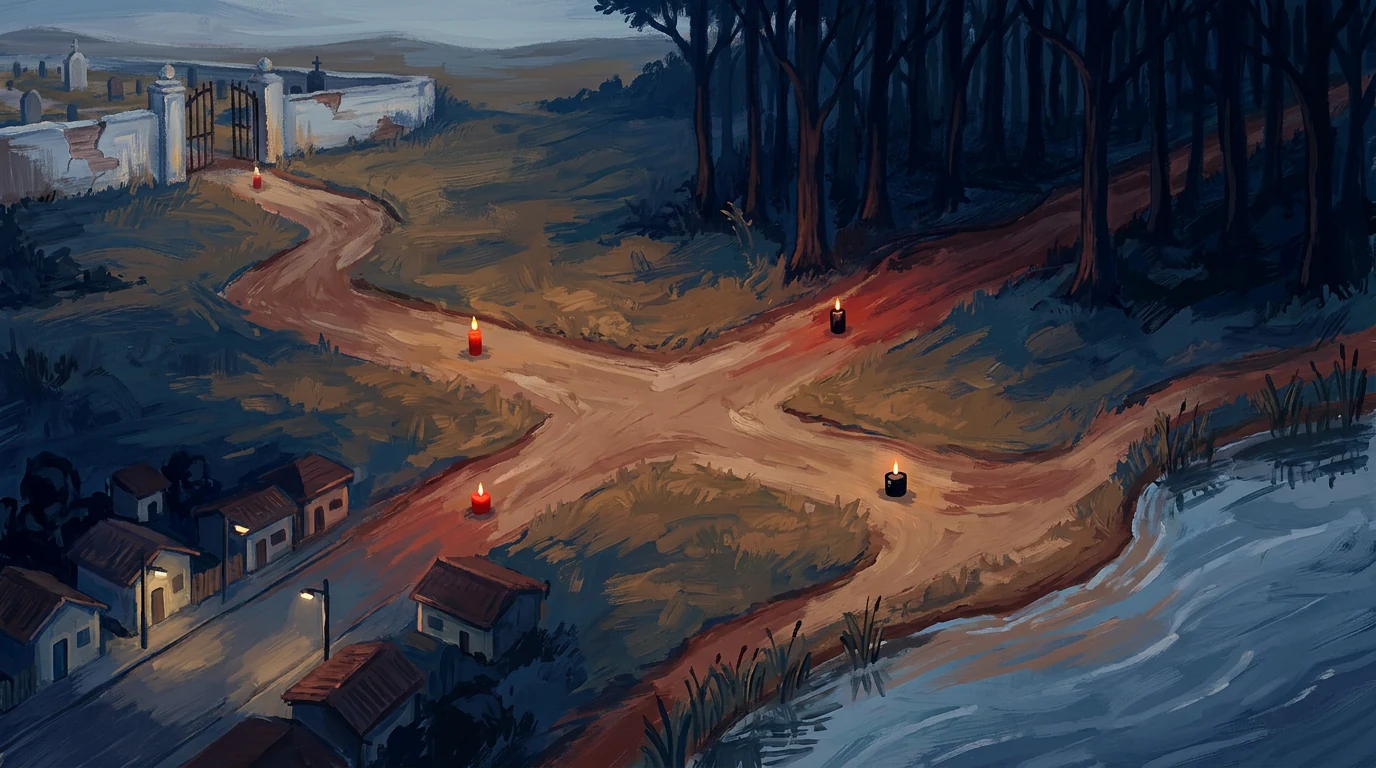
These names do not have, in a strong source, a single line.
- Capa Preta: in a house of Umbanda in Feira de Santana (BA), there is an annual festival in January and he arrives in a black suit, hat, and cane.
- Do Lodo: for the anthropologist Vagner Gonçalves da Silva, many names of Exu speak of intermediate states, "mud, sludge, shadow".
- Do Ouro: recent cult; in one of the houses that worship him, the first recorded manifestation is from 2007.
- Sete Facadas: the record separates this Exu from the Pombagira of the same number.
- Gato Preto: two researches found him in real houses, and in one of them his food was served with that of Pombagira Dama da Noite.
Exu mirins
The left line of Umbanda brings together exus, pombagiras, and exus mirins. In a house studied in Portugal, no mirim spirit defined itself as a child. The profile is in Exu Mirim. Whoever seeks Pimentinha seeks an Exu Mirim, but no open source describes the spirit.
Other names, without record
These names exist in Umbanda books or in house sung chants, but without their own facts in serious sources. Therefore, they remain here as entries:
- Gira Mundo, Mangueira, Brasa and Ventania: names in Umbanda books since at least 1989.
- Pinga Fogo, Pimenta, Pantera Negra, Arranca Toco and Sete da Lira: have a sung chant in a house of Umbanda in Curitiba.
To read the chant of a guardian, see pontos riscados de Exu. For the orixá and his initiates, filhos de Exu, and for the plants linked to him, ervas de Exu.
Why does Exu have so many names
Exu multiplies. For Prandi, every house, street, and city has its guardian, and every person has their own Exu, settled and with a name. Most of the names speak of places of passage, the limit between the living and the dead, or an intermediate state, such as "Encruzilhadas", "Caveira", "Catacumba", and "Lodo".
In Gaúcho Quimbanda, starting from the 1960s, the king Exu emerged, and from there both "King" and "Queen" appear in the names. The list circulating on the internet comes from Umbandista books from 1989 and 1990, which linked each name to a figure from European tradition. It is a record of stigma, and not the identity of the spirits.
Being the movement itself, Exu multiplies to infinity, since every house, every street, every city, every market, etc. has its guardian.
Reginaldo Prandi, Revista USP, 2001
Pombagira is the feminine Exu, with proper names, in who is Pombagira. The structure of Quimbanda by kingdoms is in kingdoms of Quimbanda, and the types of Exu that the houses recognize, in Exu de guarda.
Frequently asked questions
What are the most well-known names of Exu?
Among the guardians, Tranca Ruas, Sete Encruzilhadas, Marabô, Tiriri, and Caveira, which appear in research and in the houses. Among the names of the orixá, Bará, Lonã, and Elegbara. In Umbanda there are dozens, and each house works with its own.
Which orixá does each Exu belong to?
There is no single answer. In Umbandista literature, a group of Exus responds to Omulu. For most of the names, the regency changes from house to house, and the leader is who defines it.
How to know which is my Exu?
Who says the Exu of each person is the house where they develop. The Exu and Pombagira test on the site shows affinity, and does not replace the house.
References
- Reginaldo Prandi: Exu, de mensageiro a diabo, Revista USP, 2001
- Vagner Gonçalves da Silva: Exu do Brasil, Revista de Antropologia, 2012
- Giumbelli and Almeida: The enigma of Quimbanda, Anthropology Journal, 2021
- Carvalho and Bairrão: Umbanda and Quimbanda, USP Psychology, 2019
- Sulivan Charles Barros: Umbanda x Quimbanda, Caminhos, 2007
- Fábio da Silva Gonçalves: food in the terreiros of Bocaiuva, dissertation, UFMG and Unimontes, 2017
- Pablício Barbosa: Exu and a samba in Umbanda in Feira de Santana, dissertation, UFRB, 2022
- Hasselmann, Meira and Bandeira: Umbanda and health heritage, RBHR, 2024
- Beatriz Minghelli: study with the child spirits of Umbanda, PLURA, 2025
- Terreiro de Umbanda Pai Maneco: lyrics of the pontos