The male orixás of Candomblé, called aborôs, are seven in the table by Reginaldo Prandi for the queto nation: Exu, Ogum, Oxóssi, Ossaim, Obaluaiê or Omolu, Xangô and Oxaguiã, the young Oxalá. Three others, Oxumaré, Logunedé and Oxalufã, the old Oxalá, appear in the same table as both male and female.
Each aborô rules a part of the world: iron, hunting, leaves, disease, thunder and creation.
Who are the male orixás: the table of the aborôs
Domain, element, clothing color and day are from queto Candomblé, according to the table by Prandi in the magazine Horizontes Antropológicos. The greetings come from the glossary of the same article.
| Orixá | Dominion | Element | Color | Day | Greeting |
|---|---|---|---|---|---|
| Exu | messenger, guardian of the crossroads and of the entrances of houses | iron ore | red and black | Monday | Laroyê! |
| Ogum | metallurgy, agriculture and war | forged iron | dark blue, green and white | Tuesday | Ogunhê! |
| Oxóssi (Odé) | hunting and abundance of food | forests | turquoise blue and green | Thursday | Okê arô! |
| Ossaim | vegetation and the efficacy of remedies | leaves | green and white | Thursday | to see the pilar |
| Obaluaiê (Omolu) | smallpox, plagues and diseases; healing | earth | red, white and black, with a straw hood | Monday | Atotô! |
| Xangô | thunder, government and justice | thunder and lightning stone | red, brown and white | Wednesday | Kaô kabiesile! |
| Oxaguiã (young Oxalá) | creation of material culture | air | white with a minimum of blue | Friday | Epa Babá! |
| Oxalufã (old Oxalá), M and F | creation of humanity, the breath of life | air | white | Friday | Epa Babá! |
| Oxumaré, M and F | rainbow | rain | yellow, green and black | Saturday | to see the pilar |
| Logunedé, M and F | rivers that run in the forests | rivers and forests | gold and turquoise blue | Thursday | to see the pilar |
The last three lines, in italics, are the orixás marked as "M and F". To hear the greetings, see the orixá greetings.
The table is a starting point. Color, day and food belong to the house: what counts in your terreiro is what your mother or your pai de santo teaches.
What are the male orixás called?
The male orixá is called aborô. The term appears in a recorded speech by Teixeira and cited by researcher Milton Silva dos Santos, in the Horizonte magazine of PUC Minas: "male orixá (aborô)". Clarissa Silva and Glaycianny Lira write oboró, and divide the orixás between men, the oborós, and women, the iabás. Both spellings have a source, and neither of the open sources translates the word.
The same authors warn that the division is only a first approximation: the male orixás "are not necessarily" the portrait of the virile male. In Xangô do Recife, anthropologist Rita Segato recorded another name for them: santos-homem.
Can a woman be a daughter of a male orixá?
Yes. The gender belongs to the orixá, and not to who is their child. Denise Botelho and Hulda Stadtler, in the Revista da ABPN, write that in the terreiros men can go through the trance of the iabás and women can manifest male divinities.
Are Oxumaré, Logunedé and Oxalufã male?
In Prandi's table, the three are "M and F". Oxumaré is marked as androgynous; Logunedé, as masculine and feminine alternately; and Oxalufã, the old Oxalá, as the principle of creation, which unites the two. Researcher Vinícius Castro, from UFPB, tells the myth in which Oxumaré spends half the year as a female and the other half as a male.
Not every house thinks this way. Botelho and Stadtler record that part of the candomblé ketu does not see Oxumaré and Logunedé as masculine and feminine: they carry feminine icons without losing the "masculine condition". The same happens with Oxalufã: in Recife, Segato counts the old Oxalá among the masculine orixás. There is no tie-breaker, and the answer is that of your house.
Odudua, the youngest son of Olorum (Olodumare) in the myth gathered by Prandi, is left out of the table. The discussion about his gender is in feminine orixás, the pair of this article.
The aborôs in the xirê: why do they open the circle
In the xirê, the circle of chants that calls the orixás, Exu is always the first to be honored and Oxalá is always the last, according to Prandi.
Raphael de Jesus, in the magazine Em Sociedade from PUC Minas, observes that "the vast majority of masculine orixás occupy the initial positions". The masculine part of the circle ends in Xangô. The exception is Oxalá, who closes the party and, in his words, "dresses like an iyabá". How the circle works is in what is xirê.
Can one have two masculine orixás in the head?
Yes. Each person has a head orixá and a second, the juntó, and Prandi writes that generally the two are of different genders: if the first is masculine, the second is feminine, and vice-versa.
In Recife, Segato heard that "it is always better" to combine a male and a female orixá. Even so, he met a mãe de santo with three male orixás: the one at the head, the ajuntó, and a third orixá. The house game confirms the pair. How it works is that the second orixá is in can be a child of more than one orixá.
Male orixás in Umbanda
Umbanda worships fewer orixás than Candomblé, and the list changes from terreiro to terreiro. Giulia Esposito and Sênia Bastos, in the magazine Religare from UFPB, tell of nine of the most worshipped orixás. Five are masculine: Oxalá, with Oxaguiã and Oxalufã, Ogum, Xangô, Oxóssi and Obaluaiê.
Exu's place in Umbanda changes from house to house. The complete account, with the day, color, and orixá of each orixá, is in orixás da umbanda.
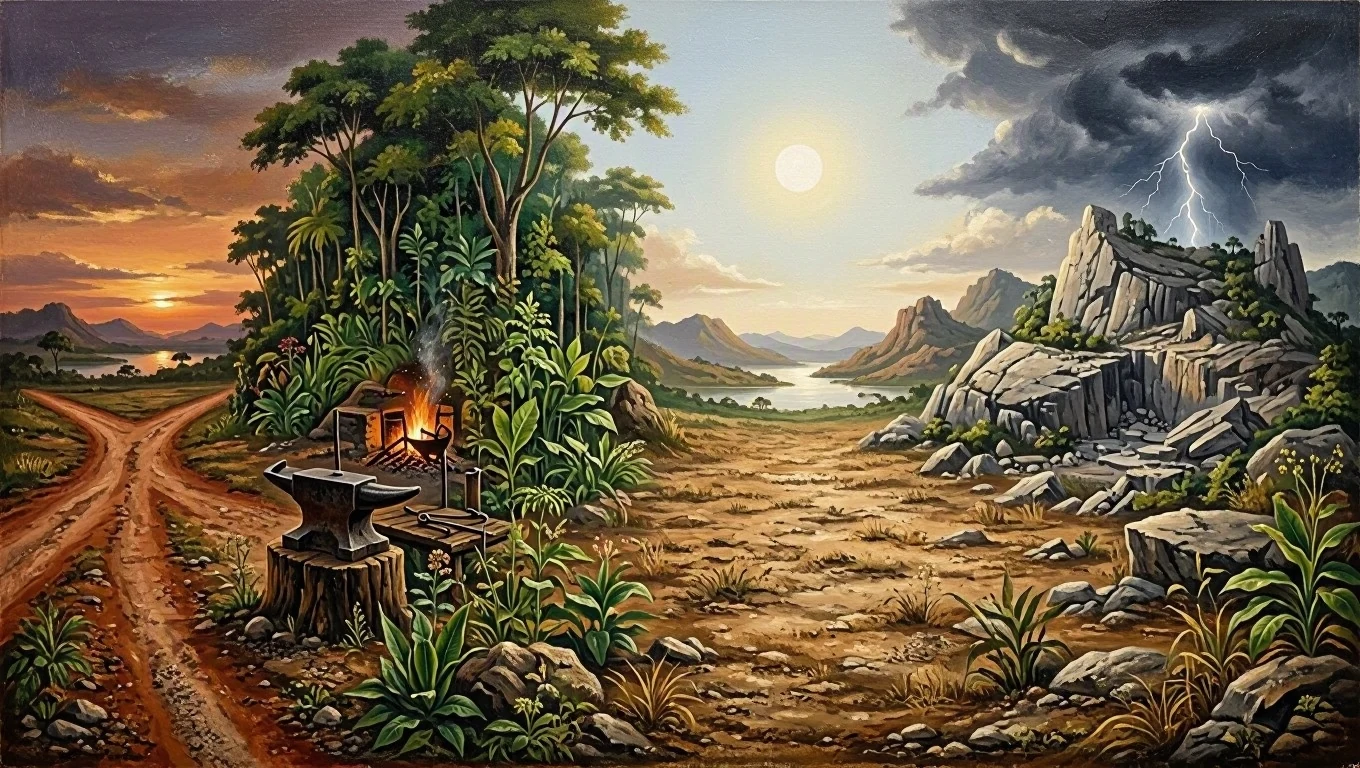
Each male orixá in a few words
Exu is the messenger, guardian of the crossroads and the entrance of houses. In the Prandi table, eat farofa with dendê.
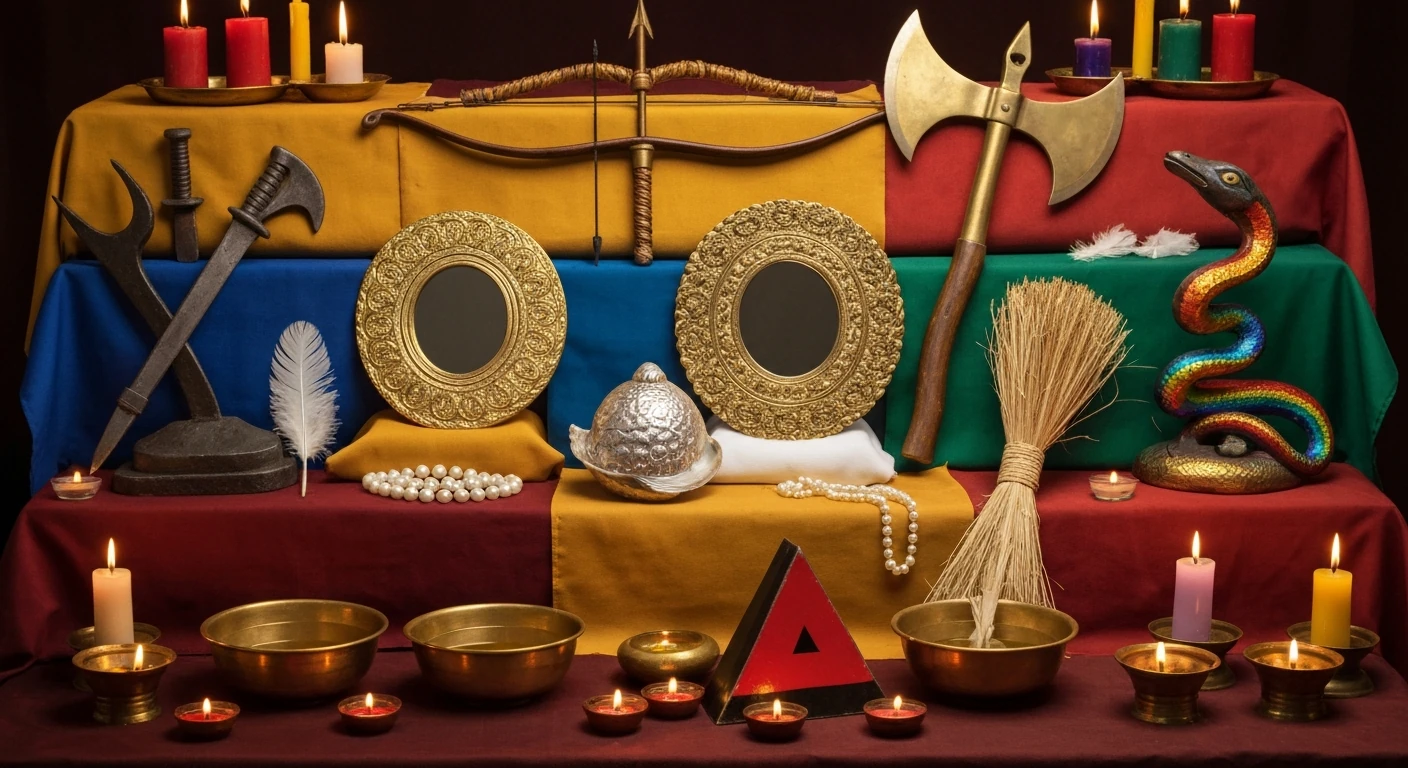
Ogum is the orixá of metallurgy, agriculture, and war. He carries a sword and eats feijoada and roasted yam. The dark blue candle is one of the colors that houses use for him.
Oxóssi, or Odé, is the hunter of the forests and the owner of the abundance of food. He carries the ofá, the bow and arrow of metal, and eats cooked corn with slices of coconut. The green of the table is the color of the green candle.
Ossaim is the orixá of the leaves and the efficacy of medicines.
Obaluaiê or Omolu is the orixá of smallpox, plagues, and the healing of diseases. He wears a straw hood, carries the xaxará, and eats popcorn with coconut slices.
Xangô is the orixá of thunder, government, and justice. He carries the oxé, the double-headed axe, and eats amalá, okra in dendê with dried shrimp. For the home altar, the shop has a plaster statue of Xangô, and the red candle is one of his colors.
Oxalá appears in two forms: the old Oxalufã, tired and hunched, with the opaxorô, the silver staff, and the young Oxaguiã, who dances like a warrior. Both wear white and eat canjica. The forms of Oxalá are in qualities of Oxalá, and the white candle is his.
Outside the table are Iroko, the ketu orixá linked to the gameleira tree, and Tempo, which is an inquice of the candomblé angola, called Kitembo, and not an orixá. Ayrá, linked to Xangô, has its own item in Ayrá orixá.
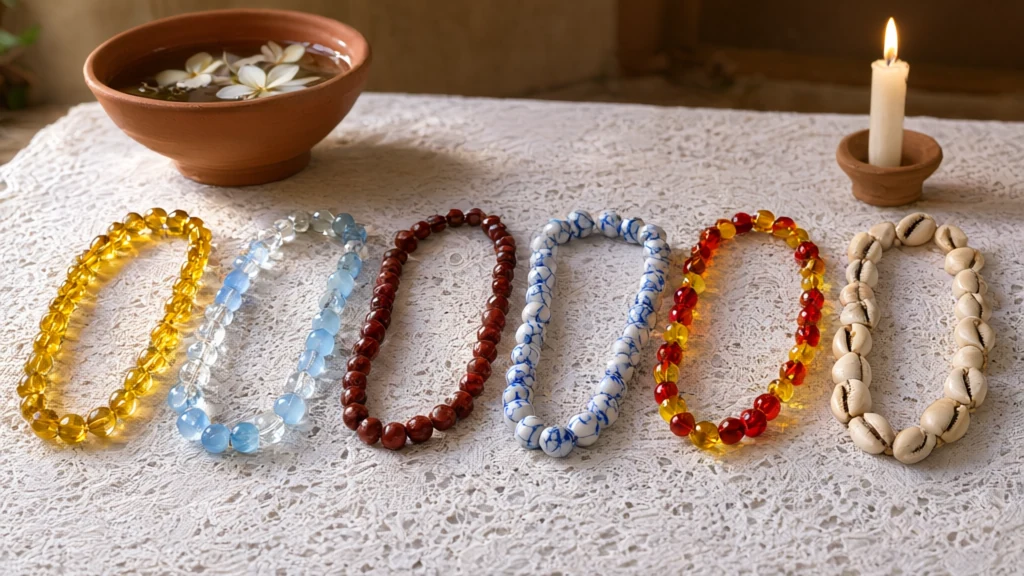
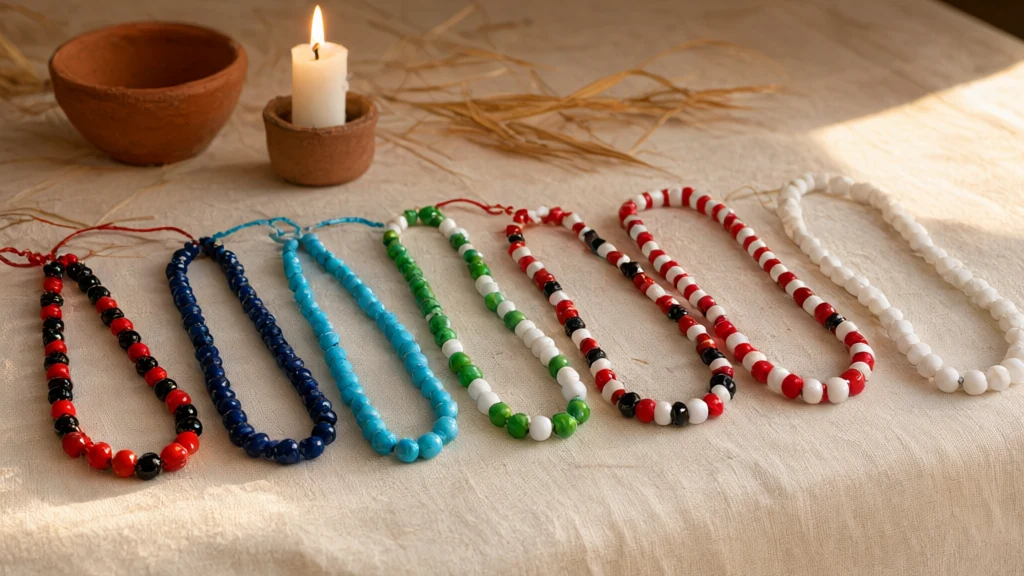
If your house asked for a candle, bead necklace, or statue for an aborô and you want to check the material, Joia Mística Laroyê helps via WhatsApp.
Frequently asked questions
What are the male orixás?
In the candomblé of the ketu nation, the male orixás are Exu, Ogum, Oxóssi, Ossaim, Obaluaiê or Omolu, Xangô and Oxaguiã, according to the Prandi table. Oxumaré, Logunedé and Oxalufã appear in the same table as both male and female.
How many male orixás are there?
Seven only male and three male and female, in the most cited table of the ketu candomblé. The female pair of the count, the iabás, is in female orixás.
What are the male orixás of umbanda?
The most worshipped males in umbanda are Oxalá, Ogum, Xangô, Oxóssi and Obaluaiê, according to Esposito and Bastos. The list changes from terreiro to terreiro, and the place of Exu also.
Is Oxumaré a male orixá?
In the Prandi table, Oxumaré is "M and F", androgynous. Part of the ketu candomblé, according to Botelho and Stadtler, sees in him a male orixá who carries feminine icons.
References
- Reginaldo Prandi: African gods in contemporary Brazil, Horizontes Antropológicos, UFRGS, 1995
- Milton Silva dos Santos: Sex, gender and homosexuality: what does the São Paulo povo-de-santo say?, Horizonte, PUC Minas, 2008
- Clarissa Santos Silva and Glaycianny Pires Alves Lira: Of wind and fire, CONAGES annals, 2016
- Denise Botelho and Hulda Helena Coraciara Stadtler: The orixás perform gender within the rituals, ABPN Magazine, 2012
- Vinícius Vasconcelos Castro: Dan, the rainbow serpent, Diversidade Religiosa, UFPB, 2012
- Rita Laura Segato: Inventing nature: family, sex and gender in Xangô do Recife, Anthropological Yearbook, 1986
- Raphael Felipe da Silva de Jesus: In the sway of the sea, the dance of Iemanjá, Em Sociedade, PUC Minas, 2022
- Giulia Esposito and Sênia Bastos: The importance of the mythology of the orixás for the Umbandist imaginary, Religare, UFPB, 2022
- Reginaldo Prandi: Mythology of the orixás, excerpt of Oxalá, Companhia das Letras, 2001
- Marlon Marcos: Hoje é dia do inquice Tempo, Correio Nagô, 2015