Every January, on the Thursday before the Bonfim Sunday, a staircase in Salvador wakes up covered in scented water. Those who wash are not cleaning stone. Senhor do Bonfim and Oxalá have shared that hill for almost three centuries, and the staircase is the exact place where the two faiths meet.
This article tells how a Christ brought from Portugal in 1745 came to be recognized by the black people as the oldest of the Orixás. It also shows what the Lavagem is, where the ribbon comes from and, mainly, what theology keeps separate despite all the proximity.
Who is the Senhor do Bonfim
First, a correction that changes everything: the Senhor do Bonfim is not a saint. It is Jesus Christ crucified himself, under the invocation of the "good end", that is, the good death on the cross.
The devotion was born in Setúbal, Portugal. It arrived in Bahia through the promise of a sea and war captain, Theodózio Rodrigues de Faria, made during a storm in the ocean. The IPHAN dossier records that he was one of at least two slave traders from Salvador and that there are no elements to doubt his faith. The statue landed in Salvador on Easter Sunday in 1745.
The church's work began that same year, at the top of the Bonfim hill. The interior was finished in 1754 and the towers in 1772. Pope Pius XI elevated the temple to a minor basilica in 1927, and IPHAN listed the complex as a heritage site in 1985.
Keep three details in mind: the hill, the white, and the promise. It is in them that history turns.
Why the Senhor do Bonfim was associated with Oxalá
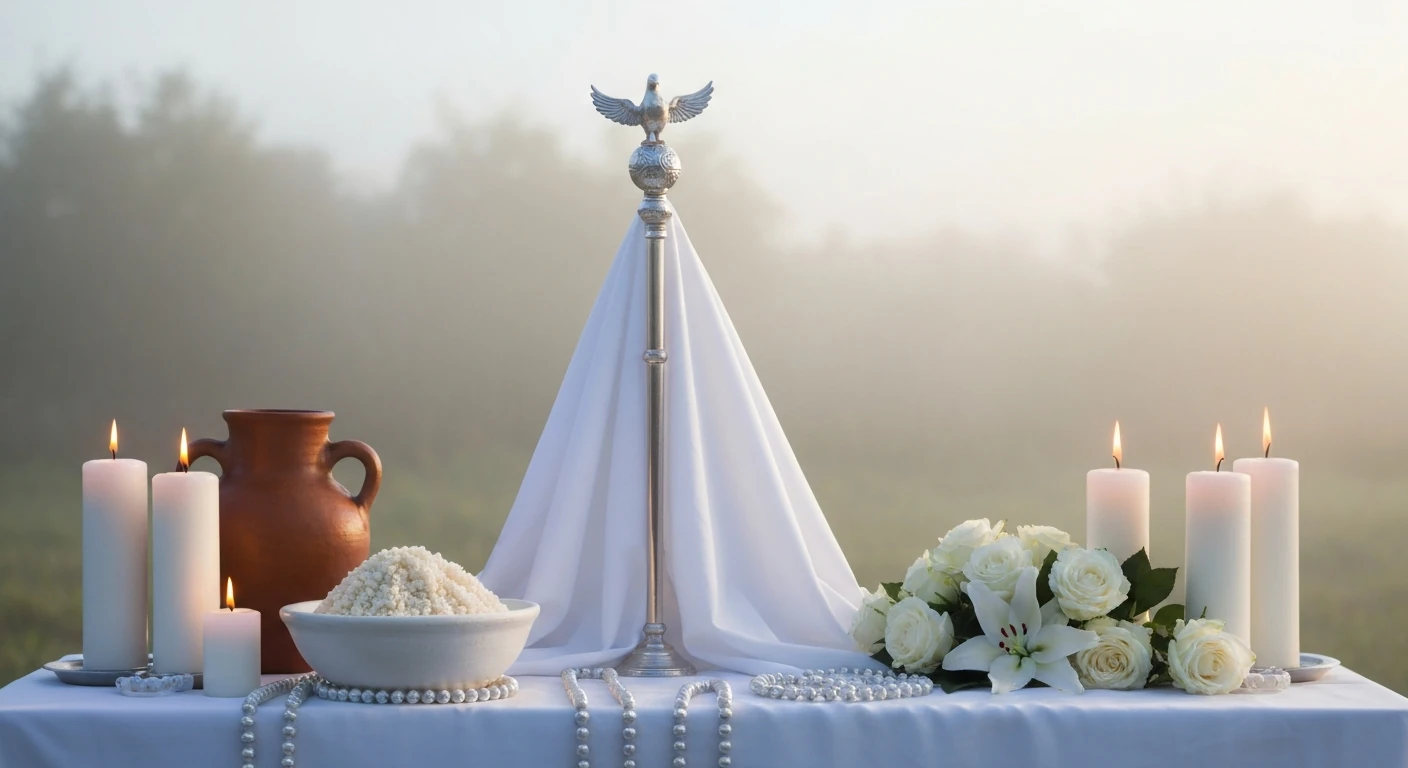
Oxalá (Obatalá, in Yoruba) is the oldest and most respected orixá of the pantheon. Olodumare entrusted him with molding human beings, and therefore he is responsible for creation. His color is white, his day in Bahia is Friday, and his greeting is Epa Babá.
The anthropologist Vilson Caetano, from UFBA, summarizes in three points of contact what enslaved people saw there, as he explained to the iBahia portal:
- Height: both are worshiped in a high place, on the hill and in the high heavens.
- Creation: one is the creator Christ, the other molds humanity.
- Promise: both receive the payment of vows and fulfilled requests.
Add to this the white of the garments and the patience in the face of unjust suffering. In ketu candomblé, Oxalufã (see the qualities of Oxalá) is the elder Oxalá, bent over the opaxorô, who was imprisoned and humiliated in Oyó without fault. Xangô (Shango) rescued him, silenced the entire kingdom, and bathed him three times in pure water before dressing him in new white.
This myth is the origin of the Águas de Oxalá, a ritual performed in absolute silence by traditional ketu houses in Salvador. The similarity with the Passion is evident, and it was that which opened the door.
It is worth noting a difference of nation: in the angola nation one does not worship orixás, but rather inquices. The corresponding energy appears as Lemba, not as Oxalá. Candomblé was never a single block.
The Washing of Bonfim: the rite that washes the saint
The origin of the Washing is difficult to prove through documents, according to the IPHAN dossier. The dossier cites Carlos Ott, for whom it would be "a symbolic act of washing the saint for the festival", and records the custom of descendants of Africans to wash the orixá on the eve of his festival.
IPHAN says that, starting in the early 19th century, a specific date was established for the washing of the temple. Today it falls on the Thursday before the Sunday of Bonfim, which is the second Sunday after January 6: it was 1/16 in 2025 and 1/15 in 2026, and by the rule it will be 1/14 in 2027. The rule "second Thursday of January" is wrong in several years, and the complete calculation is in dia de Oxalá. The procession leaves the Church of Our Lady of the Conception of the Beach around 10:00 AM. From there it climbs to the Sacred Hill on a route that official sources measure between 6.8 and 8 km, according to the Salvador city hall.
At some point, the Church prohibited the washing inside the temple. The baianas adapted: they began to wash the courtyard and the staircase, and it has been that way until today. Regarding the 2025 audience, the counts diverge: the rector of the Basilica spoke of about 2 million people, according to the report by Brasil de Fato, and the Correio wrote "more than 1 million".
Official recognition came on June 5, 2013, when IPHAN registered the Festa do Senhor Bom Jesus do Bonfim in the Book of Celebrations. The agency's record states in plain letters that baianas and filhas de santo wash the staircase. And that this gesture expresses, at the same time, Christian devotion and Candomblé traditions linked to Oxalá.
The IPHAN dossier describes it as part of the largest popular religious manifestation in Bahia.
The Bonfim ribbon and the Friday in white
The ribbon appeared in 1809, in the brotherhood of devotion to Bonfim, with the name "medida do Bonfim". It is 47 cm, the distance from the right arm to the heart of the statue of the main altar.
In the beginning, it was made of silk, worn around the neck as a necklace, with medals and little saints hanging from it. Only later did it migrate to the wrist, where it gained the custom of two turns and three knots, a silent prayer request for each knot. The ribbon falls off on its own when the requests are fulfilled.
The original color is white, the color of Oxalá. The others came later and follow the map of syncretism correspondences, as recorded by the Metro1 portal:
- White: Oxalá, the color of the original ribbon
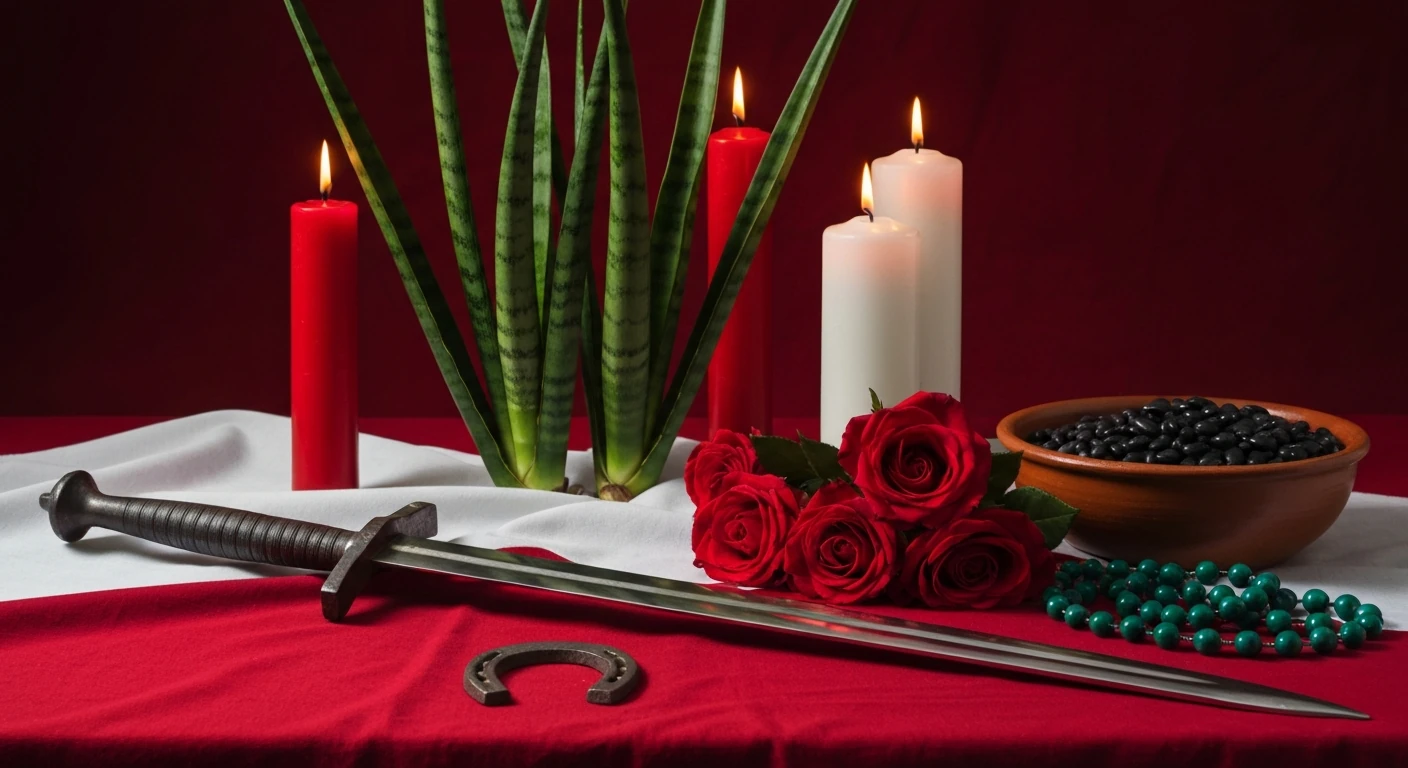
- Red: Iansã (Oya)
- Green: Oxóssi (Oshosi)
In today's stalls, blue and yellow also appear, linked by popular custom to Iemanjá (Yemoja) and Oxum (Oshun).
White also appears on Friday. Prandi and IPHAN designate Friday as the day of Oxalá in Ketu Candomblé, and Verger records that the habit of wearing white on this day extends to all people affiliated with Candomblé. The origin of the custom is a hypothesis, without proof: one explanation speaks of Muslim heritage, and another of free black men from the 18th and 19th centuries. The Basilica itself promotes Gratitude Friday, on the last Friday of the year, with devotees in white. The days and dates of Oxalá are in Oxalá day, and those of each Orixá, in the Orixá calendar.
What separates the saint from the Orixá
Here is the point that almost no text addresses. Proximity is not equality.
In Catholic theology, Christ is God himself incarnate, with historical death and resurrection and the function of saving humanity. In Yoruba cosmology, the one who occupies the place of supreme god is Olodumare, not Oxalá. The Orixá is a creature, tasked with shaping human beings, not the creator of everything.
The plots are also different. Oxalufã suffers an unjust imprisonment and is washed by Xangô. Christ is judged, crucified, and resurrected. The stories rhyme, but they do not tell the same thing. A study published in the journal Memorandum, from UFMG, analyzes exactly how the representations of Oxalá transform in this transit between traditions.
It must be stated clearly: syncretism is not a fusion of beliefs, and the readings vary. Verger records the enormous prestige of Oxalá in Salvador as the only apparent reason for the association. Vilson Caetano points out the similarities in height and creation. Gaia and Scorsolini-Comin read a strategy of cultural resistance and write that there seem to be no relations of Òṣàlá with Jesus Christ or with the Senhor do Bonfim.
Since the 1980s, some houses of santo have defended dessincretization, that is, separating again what history joined out of necessity. It is a legitimate and internal debate, and Joia Mística does not take sides in it. The same movement appears in other pairs of the series, such as Saint George and Ogum and Saint Barbara and Iansã.
Frequently asked questions
Which Orixá is the Senhor do Bonfim?
The Senhor do Bonfim was associated with Oxalá, the Orixá of creation, in the Ketu Candomblé of Bahia. The association does not mean they are the same entity. They are two distinct devotions that began to share the same date, the same hill, and the same white color.
When is the Lavagem do Bonfim?
The Lavagem takes place on the Thursday before the Sunday of Bonfim, the second Sunday after January 6: 1/16 in 2025, 1/15 in 2026 and, by the rule, 1/14 in 2027. Confirm the Basilica's schedule, and see the calculation on Oxalá day. The procession leaves the Igreja da Conceição da Praia around 10am and climbs to the Colina Sagrada, in Alto do Bonfim, in Salvador.
Why is the washing not done inside the church?
The Catholic Church banned the rite inside the temple. The baianas then began to wash the courtyard and the staircase, on the outside, and the practice became established this way. Today, the washed staircase is the most well-known image of the festival.
What is the meaning of the Bonfim ribbon?
The ribbon is the "measure of Bonfim," created in 1809 with 47 cm. Tied on the wrist with three knots, it carries a prayer request for each knot. The white color is that of Oxalá, and the others follow the correspondences of other Orixás.
Can I wear white on Friday if I am not from Candomblé?
You can. Verger records white on Friday among all people affiliated with Candomblé, and an article in the magazine Sacrilegens, from UFJF writes that a visitor in white at a terreiro "does not commit a chromatic faux pas." The Basilica of Bonfim also promotes Fridays of gratitude and protection, with devotees in white.
Where to find Oxalá items
At Joia Mística Laroyê, you find what devotion to the old Orixá requires:
- White seven-day candles: for the Friday firmeza
- Oxalá bead necklaces in milky beads: the traditional white necklace
- Lavender and scented waters: the same ones used in the washings
- Oxalá herbs: rosemary, lavender, and boldo for peace baths
- White cloth and clothing: for the day of the Orixá and for the ritual work of the house
Visit our shop in Extrema, Minas Gerais or buy via WhatsApp with delivery to all of Brazil.
To prepare the Friday ritual bath, also see the guide for rosemary, herb of Oxalá and the complete profile of who is Oxalá.
References
- iBahia: explanation by anthropologist Vilson Caetano about the syncretism between Senhor do Bonfim and Oxalá
- Saltur (Salvador City Hall): official information about the route of the Lavagem do Bonfim
- Brasil de Fato: report on the 2025 Lavagem do Bonfim
- IPHAN: registration record of the Festa do Senhor Bom Jesus do Bonfim in the Book of Celebrations
- Metro1: origin and tradition of the fitinhas do Bonfim
- Memorandum Magazine (UFMG): academic study on the representations of Oxalá in transit between traditions
- IPHAN: dossier of the Festa do Bonfim
- Correio: date of the Bonfim Lavagem, 2026
- A Tarde: Friday of Gratitude