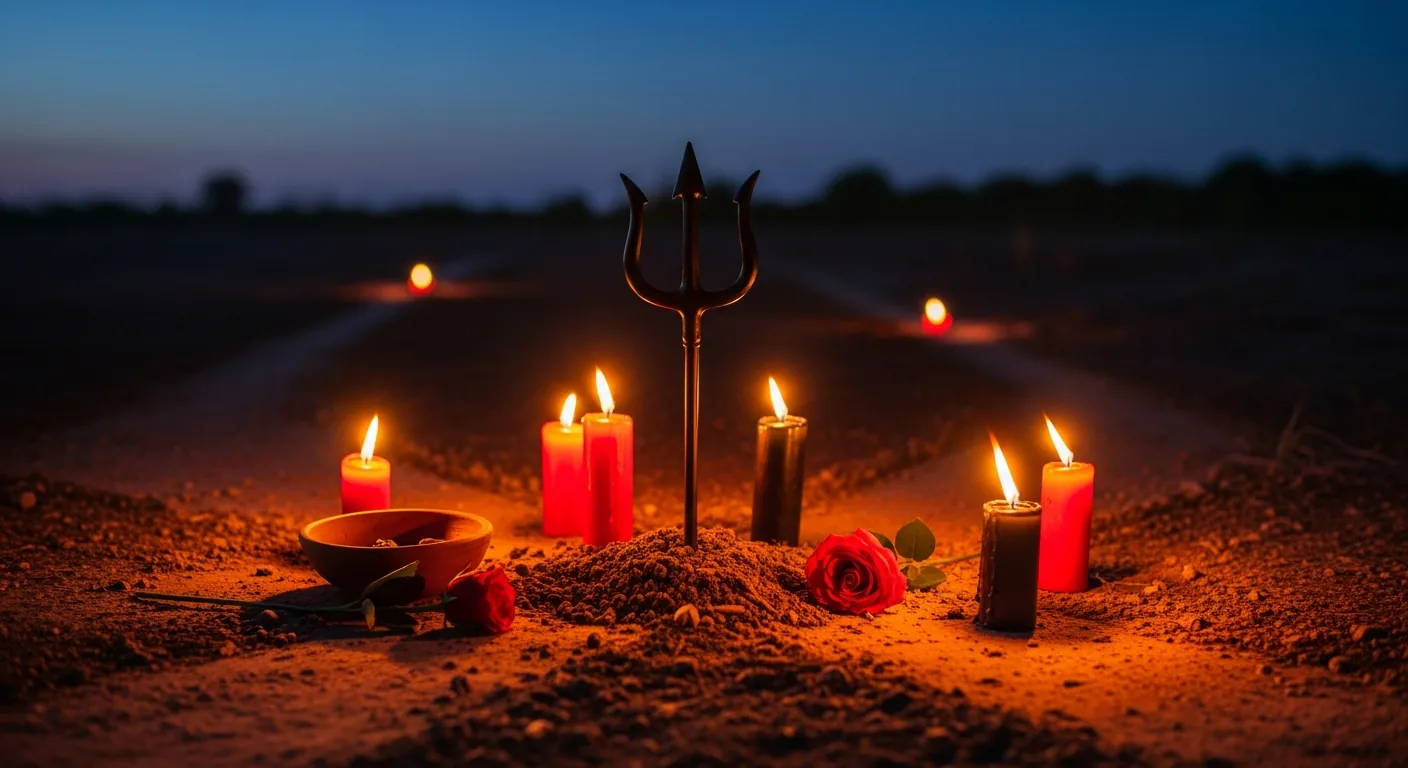
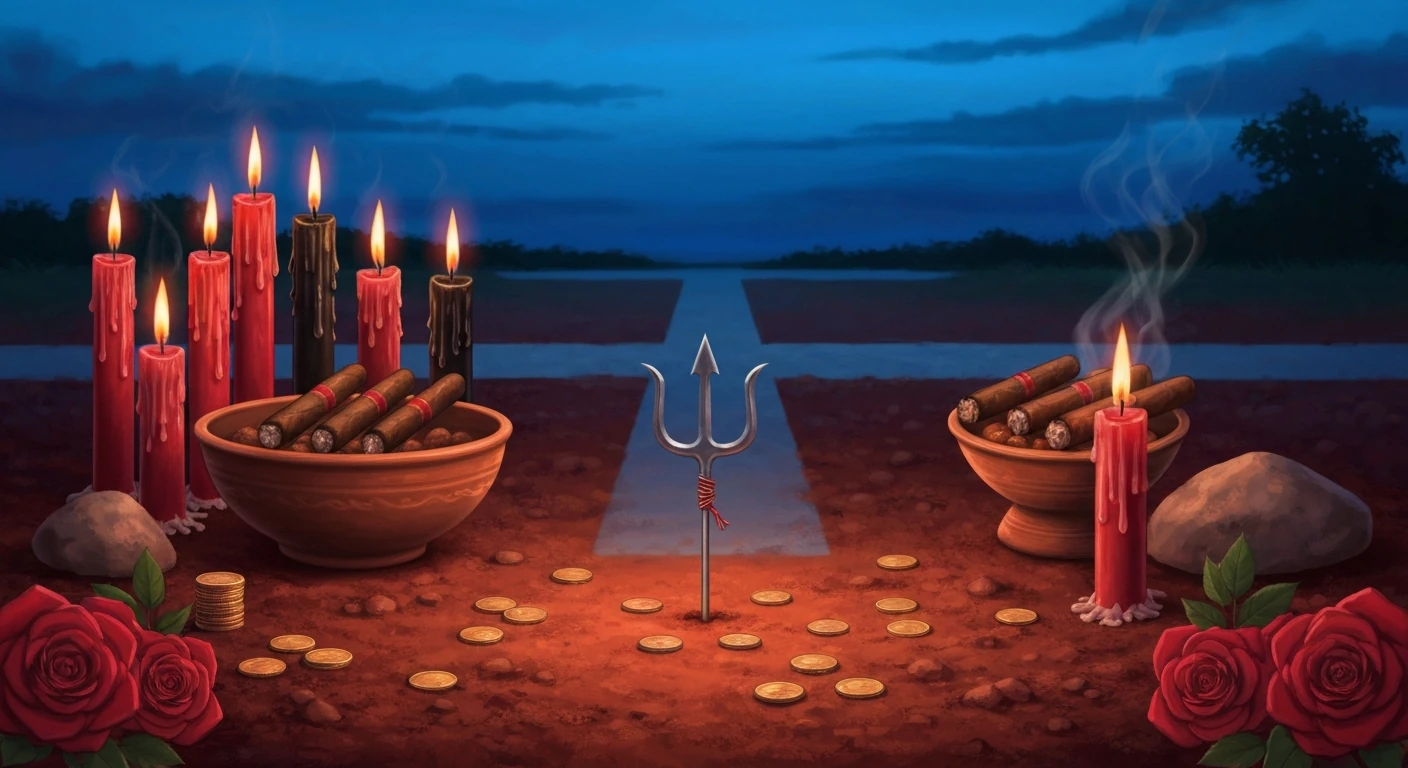
Someone says calunga in a gira and the beginner freezes. Is it the sea or is it the cemetery? The honest answer is: both. Calunga grande is the sea. Calunga pequena is the cemetery. And what unites the two is not a coincidence of name, it is a Bantu idea much older than Brazil.
This guide shows where the word comes from, which also appears written as kalunga. You will see what it meant before crossing the Atlantic and how the two calungas function today in the terreiro.
Calunga is the sea or the cemetery
Both things, and that is the key to the subject. Calunga is not a specific place: it is the border between the world of the living and the world of the dead. This border has two forms in Brazil.
- Calunga grande: the sea, the ocean, the immensity.
- Calunga pequena: the cemetery, the earth that receives the body.
A note of honesty is worth mentioning. In the daily life of the giras, when someone says only "calunga", they are almost always talking about the cemetery. The complete pair is the original and broader meaning. Both statements are true, and those who understand this stop being confused.
The concept crosses quimbanda and Umbanda, but is born outside of both. The root is Bantu, and that is where we need to look first.
The Bantu word behind the two calungas
Calunga is a Bantu word. It circulates in quicongo, in quimbundo and in umbundo, and arrived in Brazil through the enslaved people brought from Central Africa. Quimbundo was the most extensive vehicle.
The writer Martiniano J. Silva gathered this story in a series about the origins and meanings of kalunga, published in Diário da Manhã. Supported by the Novo Dicionário Banto do Brasil by Nei Lopes, he records the two uses that matter here: calunga-grande as sea and ocean, calunga-pequeno as cemetery and death.
The word is rich in meanings. It can mean greatness, immensity, the sea, death, and even God, depending on the context and the language. This breadth is not imprecision. It is the sign that we are facing a concept too large to fit into a single translation.
A caution not to confuse: there are homonyms without direct kinship with the religious use. The Kalunga quilombola communities in Goiás, and the calunga language of Patrocínio in Minas Gerais, share the banto root, but they are something else.
The line that separates the living and the dead
Here the idea becomes clear. In bakongo cosmology, the universe is a circle cut in half by a horizontal line. This line is called kalûnga.
- Above the line is Ku Nseke, the physical world, the plane of the living.
- Below is Ku Mpémba, the spiritual world, the plane of the ancestors.
- The set forms the Dikenga cross, which marks the four moments of the sun and the cycle of life.
The entry about the Kalunga line records the proto-banto root of the term, linked to the idea of putting in order and aligning. And water is the natural image of this line, because it reflects: whoever looks at the surface sees their own world inverted from the other side.
Notice what this changes. There is no heaven and hell in this design, nor reward and punishment. There is movement. To die is to cross the line in one direction. To be reborn is to cross in the opposite direction. Calunga is passage, not end.
When the Atlantic became calunga grande
Many people tell this part backwards, and the order matters. The association between water and the border of the dead already existed in Bakongo cosmology before the transatlantic slave trade. It was not born from slavery.
What slavery did was give this idea a literal and brutal content. Millions of Africans were shipped and crossed the ocean. Many died on the path. For those who stayed on the coast watching the ship disappear, the person taken had crossed the line.
The historian Robert Slenes studied this reading in Na Senzala, uma Flor. The magazine Movimento summarizes the argument in a text about the crossing: kalunga meant dying when the movement moved away from life, and being reborn when the movement came in the opposite direction. There was even the belief that it was possible to return to Africa in life by crossing the kalunga, as long as spiritual purity was maintained.
The point is not that suffering invented the religion. It is the opposite: enslaved people had an entire philosophy and used it to give meaning to what they suffered. This is intellectual resistance, and it should not be read as folklore of pain.
The two calungas side by side
| Aspect | Calunga Grande | Calunga Pequena |
|---|---|---|
| Place | The sea, the ocean | The cemetery |
| Meaning | Immensity, origin and destiny | Passage and transformation |
| Physical landmark | Seashore, surf | Gate, Cross of Souls (Cruzeiro das Almas), tombstone |
| References | Iemanjá and the water people | Obaluaê and Omulu, Ogum (Ogun) Megê, Nanã (Nana Buruku) |
| Who works | Exus and Pombagiras of the Praia realm | Line of Souls: Exu Caveira, Exu Porteira, Pombagira das Almas |
| Use in the gira | Cleansing, delivery, great crossings | Ancestry, cutting of demanda, passage |
In Candomblé de Angola, the same force of the sea appears as Samba Kalunga, with names like Kaitumba, Mikaia and Kaiala. The blog deals with this pantheon in inquices do Candomblé de Angola. Citing the nation here is not pedantry: each nation has its own foundation.
In Quimbanda, the small calunga is the territory of the Line of Souls, and the Kingdom of Calunga appears among the 7 reinos da Quimbanda. It is worth remembering that the distribution changes from house to house. What is here is the most widespread model, not a single rule.
Respect and license in the small calunga
The cemetery is not a scene of horror. It is a place of ancestry and passage, and tradition treats it with the same reverence as any other sacred space. The idea that evil lives there comes from the outside, from the gaze that also tried to transform Exu into a figure of evil. Reginaldo Prandi documented this construction in an article published in Revista USP.
The practice exists, is organized, and is documented. Researcher Barbara Thompson conducted an ethnography of Umbanda rituals at the gates, headstones, and Cross of Souls (Cruzeiro das Almas) of a public cemetery in Vitória, Espírito Santo. It is not an urban legend: it is a practiced religion.
The most cited protocol is to ask for permission upon entering and leaving. The FUCESP writes that "whenever one enters a cemetery, one greets Obaluaê, just as one greets Iansã (Oya)," and in Vitória, Barbara Thompson recorded that "coins can be offered at the gate and directed to Obaluaê." The order of the other guardians, such as Ogum Megê and the Exu of the gate, changes from house to house. How Umbanda treats Omolu in the cemetery is in Omolu in Umbanda. The Cross of Souls (Cruzeiro das Almas), in the center or at the entrance, is where candles are lit for those who have already departed.
That said, a rule that matters more than any instruction: ritual work in calunga is done with a leader and within the foundation of the house. It is not learned through a blog article, and it is not done on one's own. Anyone who wants to understand the subject starts with the crossroads in Quimbanda and with a serious house, never at the cemetery gate.
Frequently asked questions
What is the difference between calunga and a cemetery?
Calunga is not synonymous with cemetery. Calunga is the Bantu concept of the border between the world of the living and the world of the dead. The cemetery is the small calunga, one of the two forms of this border. The other is the sea, called calunga grande. Saying only "calunga" usually indicates the cemetery due to current usage.
Why is the sea called calunga grande?
Because in the Bantu worldview, water is the line that separates the living and the dead, an idea prior to the transatlantic slave trade. With the diaspora, the Atlantic became this line in a literal way for millions of enslaved Africans. The sea, therefore, unites immensity and crossing.
What does calunga mean in Umbanda?
It means the territory of passage for the souls. In the practice of giras, the term names the cemetery most of the time, but the complete meaning also encompasses the sea. Umbanda inherited the word and the concept from the Bantu matrix, sharing this vocabulary with Quimbanda.
Who works in the small calunga?
In the most widespread model, the Linha das Almas: Exu Caveira, Exu Porteira, Exu Sete Cruzeiros, Pombagira das Almas and others. The orixá (orisha) reference is Obaluaê or Omulu, lord of passage, with Ogum Megê in the discipline. The exact composition varies according to the corrente and the fundamento of each casa. Why so many of them carry "das Almas" in the name is in Exu das Almas.
Is calunga a word of African origin?
Yes. It is a Bantu word, present in quicongo, quimbundo, and umbundo, brought to Brazil by enslaved people from Central Africa. The proto-Bantu root links to the idea of aligning and putting in order. From there comes the sense of a dividing line between the two worlds.
Where to find items for your firmeza
At Joia Mística Laroyê, you find what sustains devotion and respect for ancestry:
- White and black candles: for the Cross of Souls and for the firmeza of Exu
- Bead necklaces (guias) and rosaries of Omulu: black and white beads for those who already have fundamento
- Statues and assentamentos: pieces of Iemanjá, Omulu and Exu for the altar
- Herbs and incense: arruda, guiné and rosemary for house cleansing
- Alguidares and clay pottery: for offerings within the fundamento of your house
Visit our shop in Extrema, Minas Gerais or contact us on WhatsApp with delivery to all of Brazil.
To go deeper into the historical part, it is worth reading the entry about the Kalunga line, which brings together the Bakongo cosmogram and the reimagining of the Atlantic after the diaspora.
References
- Diário da Manhã: Kalunga, origins and meanings
- Wikipedia: Kalunga line
- Movimento Magazine: Remembering the crossing
- USP Magazine: Reginaldo Prandi on the construction of Exu as a figure of evil
- UFES: Barbara Thompson, ethnography of rituals in the cemetery
- FUCESP: Obaluaê page