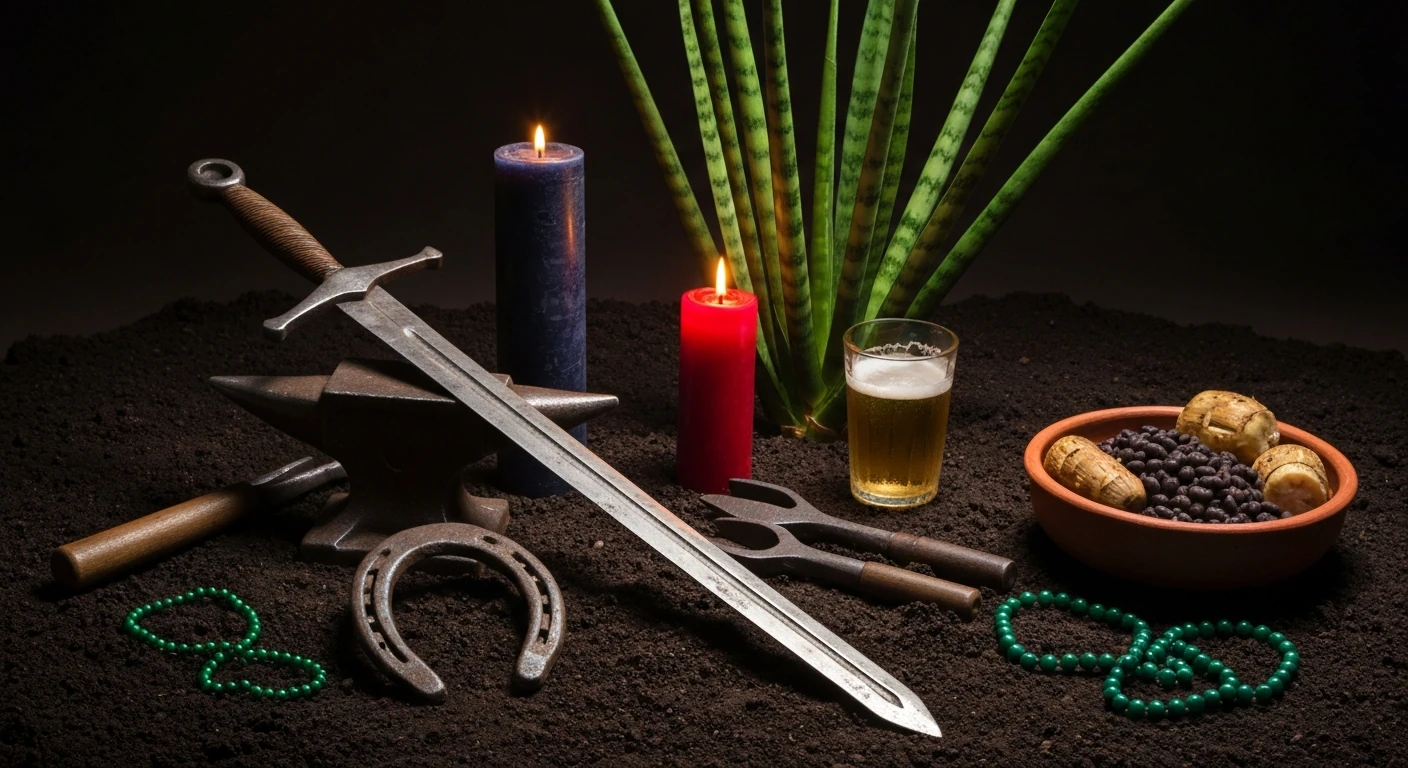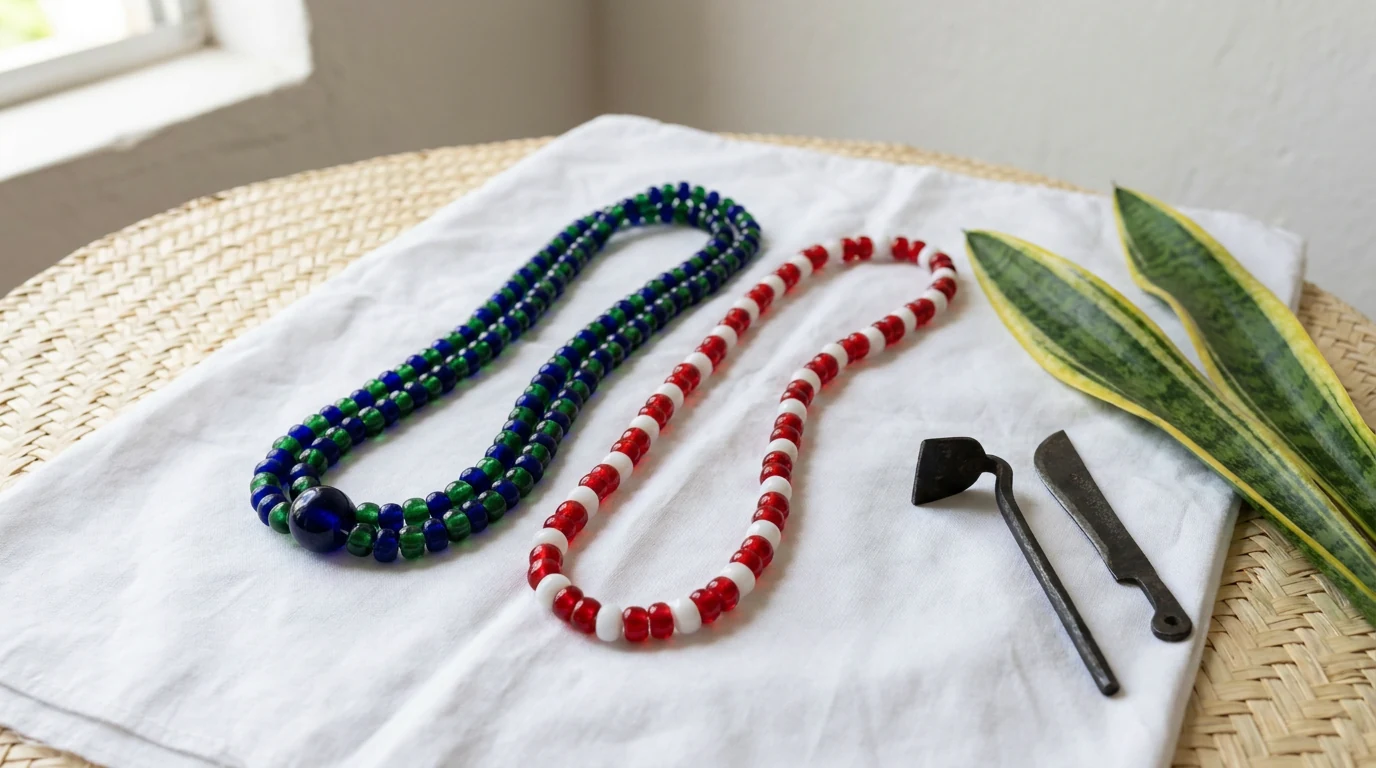
Those who ask what the Ogum bead necklace is for usually carry another doubt along: if they can wear that piece on their neck. The Ogum bead necklace connects the person to the orixá of iron and protects the wearer. For this, the house needs to consecrate the piece.
This guide shows who can wear it, why the color changes from Umbanda to Candomblé, who performs the consecration, and what to do when the thread breaks.
What is the Ogum bead necklace for
The Ogum bead necklace is a bead necklace in the colors of the orixá, with two functions: to connect the person to Ogum and to protect. Manuel do Nascimento Costa, Manuel Papai, is a nagô babalorixá of the Centro de Cultura Pai Adão, in Pernambuco. To Revista Continente, he said that the threads make "a connection between the orixá and matter as an element of protection."
It also identifies. In Candomblé, the initiate receives the first bead necklaces in the washing of the beads, generally one of Oxalá (Obatala) and another of their orixá. After passing through the leaves, the necklace becomes a mark of the person's place in the community, as Guilherme Lemos writes in the Studium magazine, from Unicamp.
There is also the protection bead necklace, used by those seeking protection for the body. In Umbanda, the spirit can give the seeker a thin bead necklace, worn under the clothes.
“If this does not happen, they have only decorative value. The person can even wear it, but it is like a battery that has not been charged.”
Manuel Papai, nagô babalorixá, about the bead necklace without consecration
What applies to any bead necklace is in bead necklace in Umbanda. Who the orixá is, you can find in who is Ogum.
Who can wear the Ogum bead necklace
The answer depends on the tradition, the house, and whether Ogum has already been identified as their orixá.
| Your situation | What the sources record |
|---|---|
| Son of Ogum in Candomblé | The pai de santo or mãe de santo identifies the orixá of the head in the jogo de búzios, and the person receives the consecrated thread in his colors |
| Abiã, still without initiation | Uses only simple threads: a white one of Oxalá and one of his orixá, once already identified |
| Umbanda medium | The bead necklace (guia) is only made with authorization from the leader or the chief spirit guide, who also crosses the piece |
| Is not a son of Ogum, but the house is ruled by him | There are terreiros that give the baptized the bead necklace (guia) of the orixá who rules the house |
| Without a house, wants protection | There are protection bead necklaces (guias), and in the nagô nation even those who only want protection go through the washing |
| Bought the ready-made bead necklace | You can use it, but without consecration the piece counts only as an ornament |
In the xambá nation, the path begins before the shop. The Ilê Axé Oya Megué terreiro, from Olinda, throws the búzios first. Only after that do they order to buy the bead strand in the color of the orixá.
The rule of purchase also changes from house to house. Mãe Valda from Pirapama, of the ketu, does not accept thread bought outside the terreiro. Ivo de Xambá lets the children buy from any material, because what consecrates is the ritual.
If you still do not know who your orixá is, the orixá test helps open the conversation. The fundamental answer comes from the divination (jogo), performed inside a house.
The color: Ogum's bead necklace in umbanda and in Candomblé
The Ogum bead necklace in umbanda is usually red, or red and white. In Ketu candomblé, the beads are dark blue or green. This is what is recorded in the table of attributes that Reginaldo Prandi published in Horizontes Antropológicos for the Ketu rite.
Beads in ketu: dark blue or green | Clothes in ketu: dark blue, green and white | Umbanda: red, or red and white
Why the difference? The Wikipedia entry on Ogum says that the traditional color of the orixá is blue. Red with white became popular through syncretism with Saint George. Saint and orixá remain distinct in their traditions, and the history of this correspondence is in Saint George and Ogum.
Within ketu, the bead count also varies. In Mãe Valda's house, those who are of Ogum and of Oxalá, the Ogumjá, use a bead necklace (guia) with seven white beads and seven blue beads. In umbanda houses, the number of beads is not even fixed.
In the angola nation, the iron inquice is Incoce, also written as Incosse and Roxi Mocumbi in the thesis by Elisabete Barros, from USP. An angola house, that of Pai Mutalengunzo, records the Nkosi thread in a strong, opaque blue. In jeje, the corresponding vodun is called Gu. The color of his thread has no open record.
The color per line of umbanda, such as Beira-Mar and Megê, changes from terreiro to terreiro. Who these lineages are, author by author, is in Ogum na umbanda. The paths of the orixá are in qualidades de Ogum, the color of each orixá in cores dos orixás, and the batuque in Ogum no batuque.
Bought the ready-made bead necklace (guia): who consecrates it
The Ogum bead necklace that leaves the shop is raw material. In Umbanda, whoever closes and crosses the bead necklace is the head of the terreiro: the pai or mãe de santo, or the chief spirit guide of the house. The crossing can be with pemba or with amaci of the orixá's herbs.
In candomblé, each nation has its own rite. In the nagô nation, the first step is the washing with the house's sacred leaves, with Ossaim (Osanyin), the owner of the leaves, in the center. In xambá, after the búzios and the purchase comes the amaci.
This rite is not learned in an article. A candle recipe and blessing to activate the bead necklace alone does not take the place of the house. The one who authorizes and crosses the piece is the leader, inside the terreiro.
Can you sleep, drink, and take a bath with the bead necklace?
Here the houses disagree.
- The Diário de Umbanda, by the priest Danilo Sgrott, says to remove the guia to eat outside of the ritual, drink alcohol, go to the bathroom, and take a bath.
- The medium Douglas Rainho writes that you can eat, drink, sleep, and take a bath with it.
- Ivo de Xambá says that one does not drink while wearing the bead necklaces.
The three sources only agree on one point: the bead necklace (guia) comes off the neck during sexual relations.
If your Ogum bead necklace was made in a house, the house rule applies. Ask the leader.
When the bead necklace breaks
Start with the physical. The Casa de Caridade Gauisa, an umbanda terreiro, advises looking first to see if the break came from the material, the knots, or the thread giving way. A piece worn against the body wears out.
When there is a spiritual reading, it does not need to be one of fear. Art historian Roberto Conduru, from UERJ, reads the broken thread as a beginning. For him, the break "can be the start of a new cycle, a restart, a turning point that calls for a new thread."
In practice, the path is this:
- Stop using the broken piece.
- Gather the beads and do not discard anything before speaking with the house.
- Speak with the leader, who decides whether to remake it with the same beads or assemble a new bead necklace.
- Take the remade piece to pass through the crossing again.
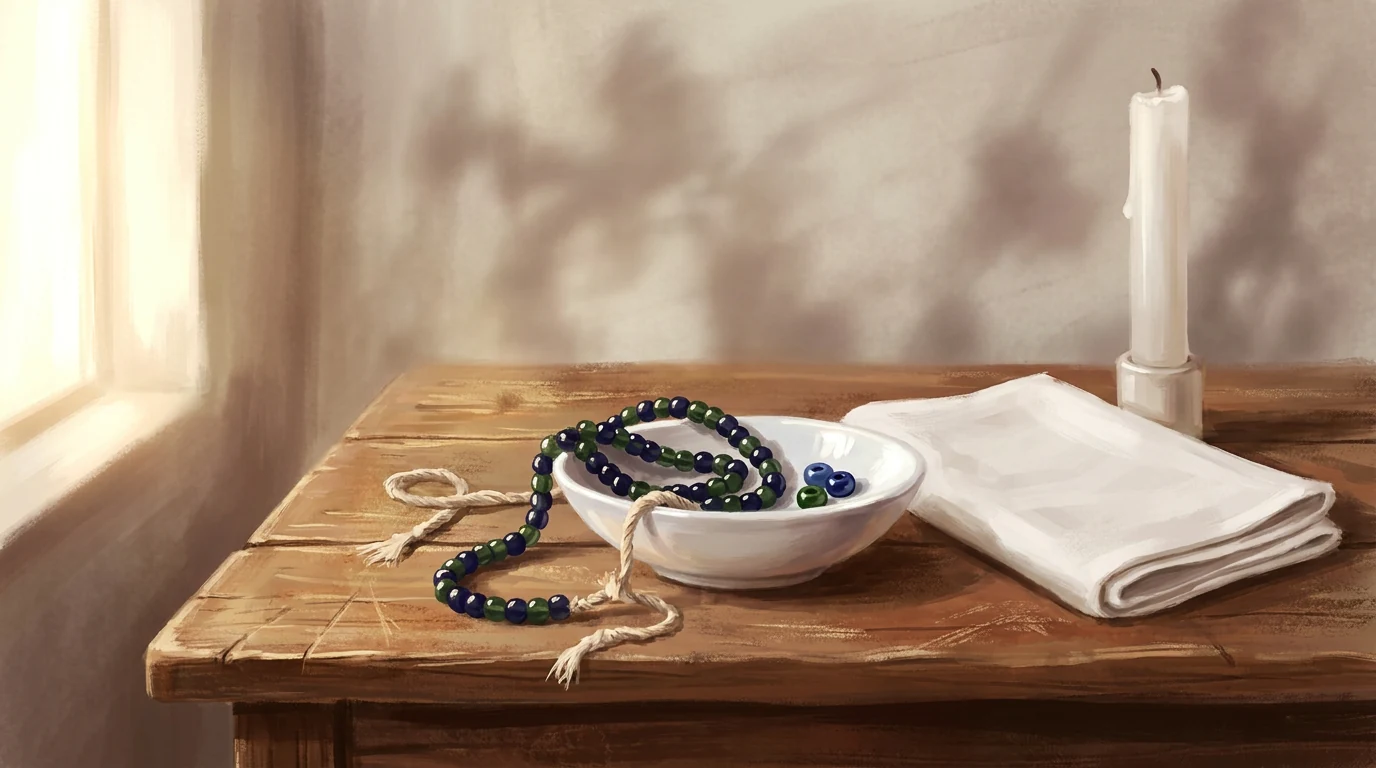
The fate of loose beads changes from house to house. The Casa de Santo Filhos do Axé puts the beads in a soak of water with the orixá's herbs. The CEENC advises running water in a cup, or delivery in a forest or waterfall. Neither of these counts as a rule for your house.
Frequently asked questions
Can the Ogum bead necklace be red?
It can. In umbanda, the Ogum bead necklace is usually red, or red and white, a color that became popular through syncretism with Saint George. In ketu candomblé, the registered beads are dark blue or green. The correct color is the one your house uses.
Can someone who is not a child of Ogum use his bead necklace?
It depends on the house. There are terreiros of umbanda where the baptized person receives the bead necklace (guia) of the orixá who rules the house, without being their child. Protection bead necklaces are also used by those seeking protection. In candomblé, the fio de orixá accompanies the orixá identified in the jogo.
Can I sleep with the bead necklace (guia) of Ogum?
The houses differ. There are umbanda houses that allow sleeping and taking a ritual bath with the bead necklace (guia), and there are houses that order to take it off. The only common point among the sources is to take it off during sexual relations. Follow the custom of the terreiro that consecrated your piece.
Where to buy the bead necklace of Ogum
At Joia Mística Laroyê you find the material for your house to assemble and consecrate the piece:
- Assembled Ogum bead necklaces (guias), in dark blue and green or in red and white, ready for the crossing in your terreiro
- Beads, porcelain beads and firmas individually in the colors of Ogum
- Cordonê, for houses that do not use nylon thread
- Seven-day candles in blue and red for the firmeza of the orixá
- Statues and tools of Ogum in iron, and pots of sword-of-saint-george
Stop by the shop, at Rua Benedito Zingari, 460, Bela Vista, in Extrema-MG, or message on WhatsApp with delivery to all of Brazil.
References
- Reginaldo Prandi: the colors of the beads in Ketu Candomblé, Horizontes Antropológicos, 1995
- Guilherme Lemos and Roberto Conduru: Identity by a thread, Studium, Unicamp, 2002
- Revista Continente: Threads and beads, 2013
- Wikipedia: Ogum entry
- Diário de Umbanda: bead necklace (fio de contas)
- Casa de Caridade Gauisa: bead necklace (fio de contas) in Umbanda