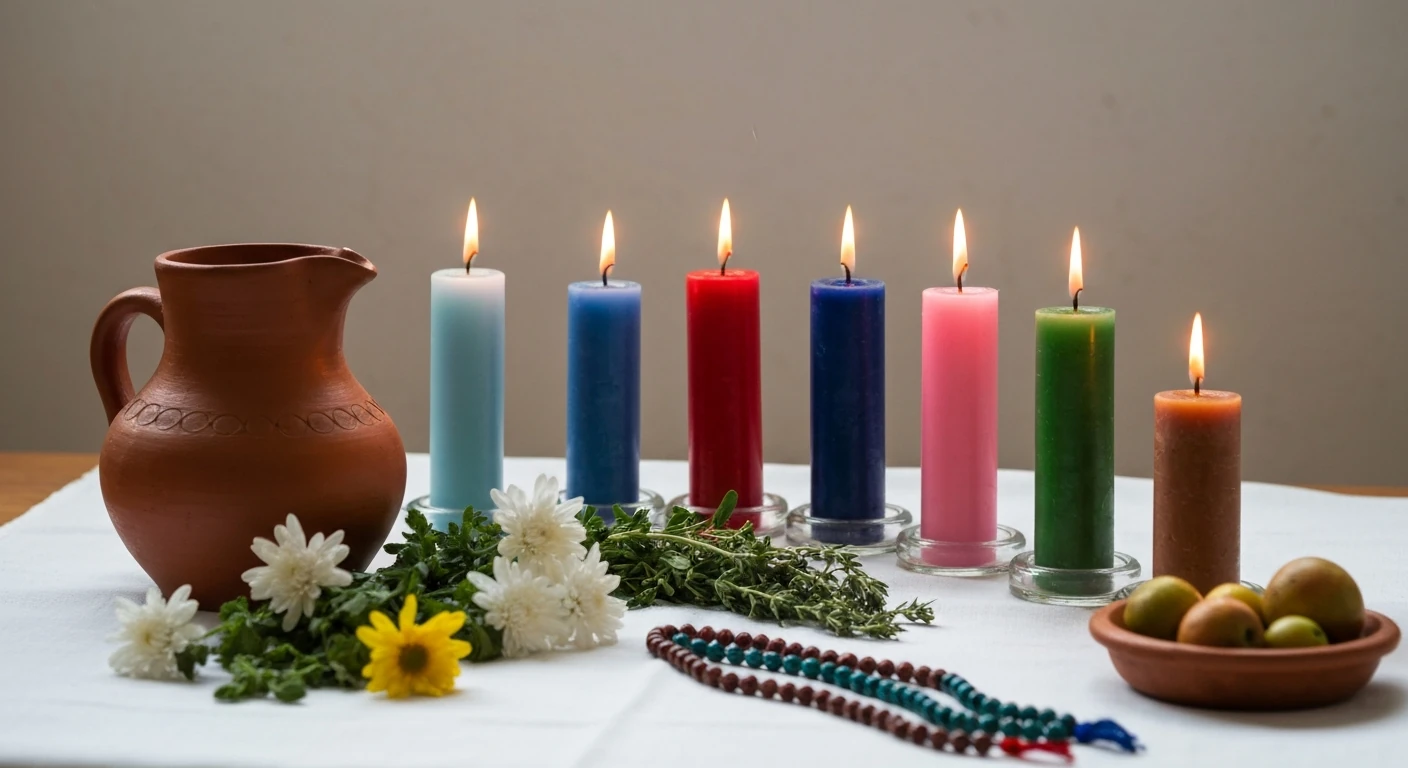
The marinheiros in Umbanda arrive at the gira swaying, like someone stepping on the deck of a ship in the open sea. They bring laughter, a hug, and a joy that seems light, but their ritual work is serious: clearing what weighs heavy and returning balance to those who seek it.
This guide explains who the marinheiros are, which line they belong to, how they present themselves in the terreiro, what they work on, their greeting, day, colors, and how to make an offering with respect.
Who are the marinheiros in Umbanda
The marinheiros are spirits of people who lived from the sea in life: sailors, fishermen, navigators, and port workers. Upon passing away, they followed in spiritual charity within Umbanda, bringing with them the memory of voyages, the tides, and life on the boat.
They form one of the popular phalanges of Umbanda, alongside the baianos and the boiadeiros. They are spirit guides of the simple, frank, and hardworking people. They do not pose as doctors nor speak difficult words. They arrive with the manner of those who have already crossed much sea and learned to read life through experience.
In the spiritual hierarchy of the line, as recorded by Umbanda houses in the Diário de Umbanda, many recognize a chief spirit called Tarimá, who commands the marujada. Each terreiro, however, follows the foundation of its roots, so the way of working changes from house to house.
The water line: Iemanjá and Oxum
The marinheiros belong to the so-called povo d’água, the line ruled by the orixás (orishas) of the waters. The major regency is of Iemanjá, the Queen of the Sea, and the energy of the fresh waters of Oxum also accompanies them. Therefore, they are spirit guides of emotion, intuition, and fluidity, everything that water represents.
This connection with the sea is not an ornament. In the Yoruba worldview, Iemanjá is the lady of the salt waters, a mother who welcomes and who also takes away what is no longer useful. The marinheiro works in this same movement: he receives the weight of the person and throws it to the bottom of the sea, where the tide dissolves.
The water that rocks also cleanses. The marinheiro does not keep the pain of those he attends: he takes it to the bottom, where nothing returns floating.
Knowing the seven lines of Umbanda helps to understand where the marujada fits in. She is not an isolated line, but rather a falange within the great movement of the waters that Iemanjá commands. In 1933, Leal de Souza already called the sailors of the Iemanjá line the "people of the sea". How Umbanda understands the orixá, and why she almost never incorporates, is in Iemanjá in Umbanda.
How the marinheiro presents himself in the gira
Anyone who watches a gira de Umbanda recognizes the marinheiro immediately. The strongest mark is the balanço: the guide walks swaying from side to side, as if the floor of the terreiro were the deck of a boat in rough seas. This swaying is no joke. It is the way the marinheiro brings the memory of the sea to the land.
The atmosphere changes when the marujada descends. The spirits arrive:
- Smiling and lively, with loose laughter.
- Affectionate, giving hugs and firm handshakes.
- Direct in speech, without beating around the bush, with the lingo of the people of the sea.
- Good-humored, using grace to disarm the sadness of those who arrive dejected.
In some houses, the marinheiro asks for a drink or fumo during the ritual work, elements that are part of the representation of the marujo. This varies greatly from terreiro to terreiro, and the house's doctrine moderates this behavior. The center of the ritual work is never consumption, but rather charity.
What the marinheiros work on
Behind the joy, the marujada performs heavy work. The marinheiros are known as spirit guides of spiritual cleansing and undoing. They act mainly in:
- Cleaning and spiritual cleansing: they remove the dense energy that the person carries, in the same sense as a smoke cleansing.
- Emotional balance: they calm anxiety, fear, and anguish, casting this weight into the sea.
- Cutting of spiritual attacks: they undo ritual work done against the person and break spiritual ties.
- Firmeza to turn the tide: they help those whose lives are "stranded" to start sailing again.
Not surprisingly, in many houses, the marinheiro arrives at the end of the cleaning ritual work. It is as if he gives the final push, taking away what the other spirit guides had already loosened. It is worth remembering that Umbanda works with preparation and connection, not with a promise of guaranteed results. The marinheiro opens the path, but the effort of the seeker continues to matter.
Greeting, day, and colors of the marinheiros
Each house has its foundations, but some points repeat in the terreiros of Umbanda. See the line's profile:
Greeting: "Hail the Marujada!" | Ruling orixás: Iemanjá and Oxum | Day: Monday and Friday | Colors: white and navy blue | Element: water (sea) | Symbols: anchor, helm, boat, fishing net
White and navy blue appear in the clothes the marujada wears in the representation: cap, pants, and sailor shirt. The candles lit for the marinheiros usually follow these colors. The greeting "Hail the Marujada!" is the most common in Brazil. In Catimbó, a nearby tradition, one still hears "Trunfê, trunfá, trunfá reá, a costa marujada".
How to make an offering to the marinheiros
The offering is a way to give thanks and to set the connection with the line. The right place is the seashore, on a dry part of the sand, away from where the tide reaches immediately. A simple and respectful way to offer:
- Choose the day of Monday or Friday, at the beginning of the night, with a calm sea.
- Bring a blue or white cloth and spread it over the dry sand.
- Light a white or blue candle and set the intention with respect.
- Offer fruits, a little clear drink (if it is the custom of your house) and white flowers.
- Give thanks and leave without looking back, letting the tide do the rest.
A traditional precaution of the marujada: shells and starfish are not offered. What belongs to the sea returns to the sea. Búzios are the exception accepted in many houses.
Always confirm with the leader of your terreiro. The right offering is the one that respects the foundation of your house, not a fixed recipe from the internet.
Frequently asked questions
Who are the sailors in Umbanda?
They are spirits of people who in life were sailors, fishermen and navigators. In Umbanda, they follow in charity as guides of the water people, linked to Iemanjá. They work on cleansing, spiritual cleansing (descarrego) and emotional balance, and they arrive at the gira with joy, laughter and the typical swing of those who lived at sea.
Which orixá rules the line of the sailors?
The greater regency is of Iemanjá, the Queen of the Sea, and the energy of Oxum, mistress of the fresh waters, also accompanies the line. That is why the marinheiros are spirit guides of emotion and cleansing. Some houses also include other orixás in the regency, always according to the foundation of the terreiro.
Why does the marinheiro work while swaying?
The swaying reproduces the movement of the body inside a boat in a rough sea. It is not drunkenness or a joke: it is the way the spirit guide brings the memory of the sea and the energy of the waters to the terreiro. Each house teaches this swaying in its own way, maintaining respect for the ritual work.
What is the offering for the marinheiros?
The offering is made by the seashore, on dry sand, with a white or blue candle, white flowers, fruits and, in some houses, a clear drink. Tradition asks that no shells or starfish be offered. The ideal is always to confirm with the leader of your house before offering.
Where to buy items to set the marinheiros
At Joia Mística Laroyê, you find what you need to greet the marujada and set your water ritual works:
- White and blue candles: in the colors of the line, to light on the congá or in the offering
- Bead necklaces and prayer beads: in the colors of the marinheiros and of Iemanjá
- Statues of marinheiro and of Iemanjá: to set up and set the point of the line
- Herbs and incense: for the cleansing and the spiritual cleansing (descarrego) that the marujada works
- Flowers and offering items: to take to the seashore with respect
Visit our physical store in Extrema-MG or receive at home with delivery to all of Brazil. If in doubt about what your house needs, talk to us via WhatsApp.
References
- Diário de Umbanda: the marinheiro spirit guides and the chief spirit Tarimá
- Wikipedia: article about Iemanjá, orixá of the salt waters in the Yoruba worldview
- Leal de Souza: The Seven Lines of Umbanda, 1933