The pano da costa is the piece of clothing that speaks the most without saying anything. Those who understand the terreiro look at the height at which it is tied and already know the rank of the woman who wears it. They also know if she is in a ritual function at that moment.
This guide brings together the history of the piece, what it is for, how it is tied at each rank, the difference in relation to the ojá, and the care it requires.
What is the pano da costa
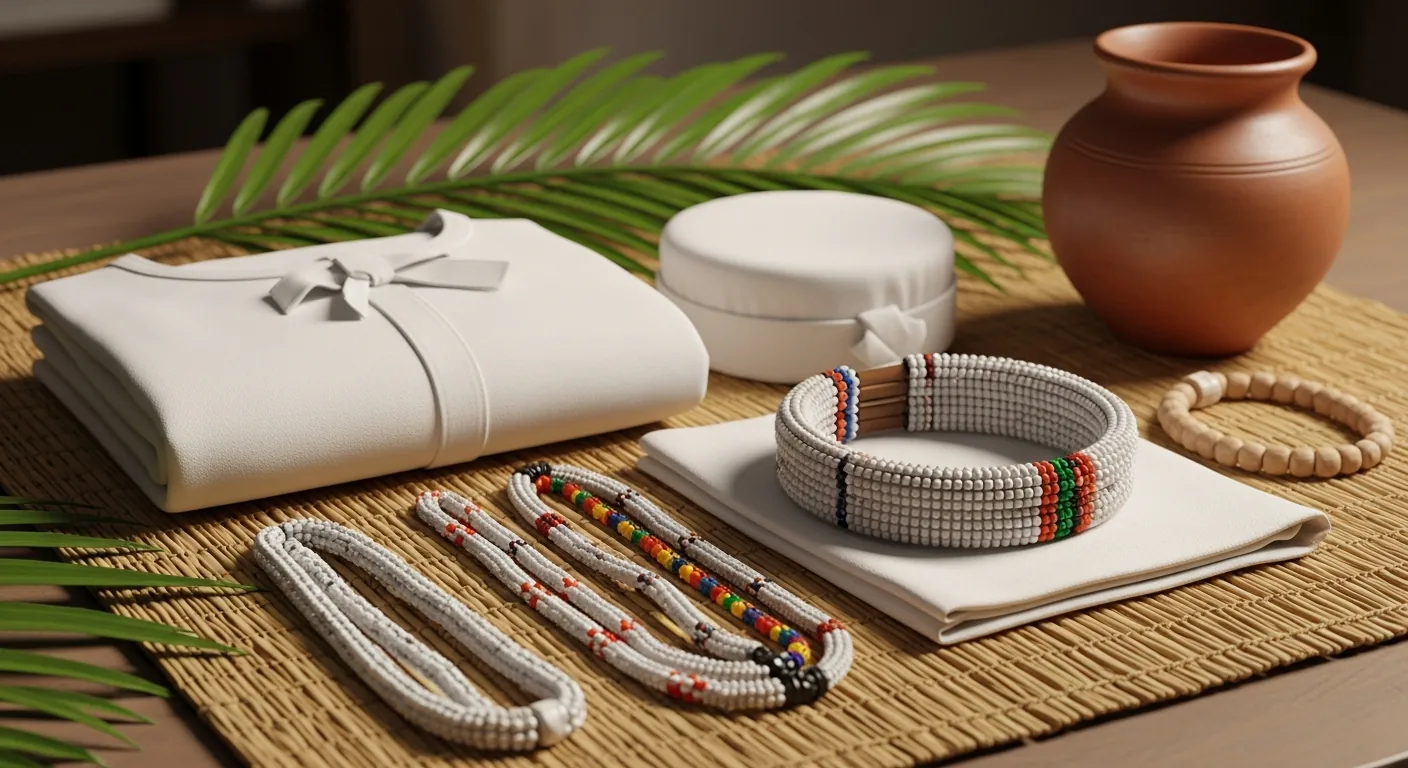
The pano da costa, also written as pano de costa, is a rectangle of fabric of approximately 2 meters in length by 60 centimeters in width. Some houses work with 80 centimeters. It is used over the torso, on the chest, or at the waist, and completes the female clothing of Candomblé.
The African name for the piece is alaká, which also appears as alacá, pano de alaká, and pano de cuia. In tradition, alaká specifically designates the cloth woven on a manual loom, and not the industrial store version.
Piece details: rectangular format | measurement 200 x 60 cm (up to 80 cm in some houses) | white or bicolor pattern, striped or checkered | female use | position on the chest, at the waist, or on the right shoulder.
The traditional construction explains the design. The weaver makes narrow strips on the horizontal loom and sews the strips by hand, one next to the other. From there come the stripes and the geometric squares of the piece. In the manual process, a cloth takes up to 30 days to be ready.
Where does the pano da costa come from
The matrix of the piece is the aso oke, the manual loom fabric of the Yoruba people, whose ancient name is òfì. In Nigeria, Benin, and Togo, it dresses weddings, funerals, and chief title ceremonies. The types have their own names: the etu, of dark indigo with thin white stripes, and the sanyan, of wild silk with cotton in a beige tone.
The Brazilian name preserves the route. "Da costa" refers to the West African coast, from where the fabrics came, with a special destination in the Recôncavo baiano. Enslaved women arrived wrapped in this fabric. Later, rustic looms arriving in the 18th century allowed the fabric to be woven right here.
In the 19th century, the piece already composed the baiana costume in the streets of Salvador and Rio de Janeiro. For researcher Raul Lody, the main function of the fabric is to distinguish the female positioning in Afro-Brazilian communities.
The terreiros preserved the technique when the market abandoned it. The weaving of the alaká survived in old houses in Salvador, among them Ilê Axé Opô Afonjá, Engenho Velho de Brotas, and Terreiro do Gantois. The Casa do Alaká, in Opô Afonjá, keeps the loom alive to this day.
On January 14, 2005, IPHAN registered the Ofício das Baianas de Acarajé in the Book of Knowledge. The recognized costume includes a flared skirt, blouse, pano da costa, turban, and bead necklaces. The proposal came, among others, from Opô Afonjá itself.
Regarding the names, there are two readings that coexist. The majority line derives the piece from the Yoruba aso oke. However, the research of Aline Santiago, from UFRJ, shows that the word alaká has Fon linguistic origin, from the peoples of Benin and Togo. She criticizes "pano da costa" as a generic colonial name, which erased the various ways of producing and naming.
What is the pano da costa for
The piece has two functions, and both weigh equally.
The first is protection. The fabric covers the breasts and the uterus region, which tradition treats with care within the ritual space. It is not modesty in the Christian sense. It is the care for a body in contact with the axé.
The second is position. The cloth identifies the woman even when she is not wearing the complete santo clothing. It says that the person has gone through initiation, and the height of the amarração says which degree she is at.
Cloth on the chest or waist means that the woman is in a religious function in the barracão. Outside of the function, it is thrown over the right shoulder. Those who do not know this commit the oversight without realizing it.
It is worth the comparison with the other signs of position in the house. The bead necklaces say which orixá (orisha) the person is. The pano da costa says where she is on the path, within the structure of positions and hierarchy in Candomblé. The two pieces of information go together in the eyes of those who know how to read them.
How to tie the pano da costa at each degree
Here there is no personal taste, there is precept. In ketu and in nagô, the female ritual clothing changes according to the degree of initiation, and the cloth accompanies this change.
| Degree | Where the cloth stays | Detail |
|---|---|---|
| Abiã | Breast height | White cloth, along with trousers, skirt, and shirt |
| Iaô | Breast height, never at the waist | Comes with ojá, 16 bead necklaces and mokan |
| Ebomi | Waist or chest | Without rolling or twisting; waist especially when wearing a bata |
The iaô is the strictest case. While she has not completed the seven-year obrigação, the cloth stays on the chest, period. Waist in iaô is an error that the house corrects on the spot.
Regarding the abiã, there is real divergence. Some houses wear the white pano da costa abiã from the beginning, and some reserve the piece for those who are already initiated. There is no single answer: the one who answers is your babalorixá or your ialorixá.
And a rule that crosses all degrees: the cloth is not rolled into a rope nor twisted to fasten. It is folded and adjusted.
Pano da costa and ojá are not the same thing
This confusion is the most common of all, and the answer is simple: they are two pieces, of two measurements, for two parts of the body.
| Criteria | Pano da costa | Ojá |
|---|---|---|
| Where it goes | Chest, waist, or right shoulder | Head, wrapped like a turban |
| Measurement | 200 cm x 60 to 80 cm | About 220 cm x 20 to 35 cm |
| Format | Wide rectangle | Narrow strip |
| Function | Cover and mark position | Cover and protect the ori |
The ojá is the thin head strip. It protects the ori, which is the head in a spiritual sense. In ayabá, the torso can have the ends rise to the sides, forming the figures that the house calls ears or butterflies. The pano da costa never goes on the head, and the ojá never replaces the cloth on the torso.
Color, choice, and care with the piece
The color of the cloth follows the symbolic color of the person's orixá, and the subject has its own page in cores dos orixás. What matters here is the selection criteria.
The tradition's recommendation goes to light colors and sober fabrics. Avoid loud colors and printed silk, which draw attention to the clothing. White solves almost everything, and it is mandatory in a large part of the rites.
Care that prolongs the piece:
- Hand wash with neutral soap and cold water, without wringing the fabric.
- Dry in the shade, because strong sun eats the color of the artisanal dyeing.
- Store folded in cloth or a cotton bag, away from moisture.
- Do not use the piece outside of the terreiro for common tasks. Santo clothing has its own place.
- Warm iron on the inside, without a marked crease on the front.
If your house maintains a specific resguardo (ritual restriction) for the roupa de ração, the house's precept overrides any internet list, including this one.
Frequently asked questions
What is the pano da costa for in Candomblé?
It serves two things at the same time. It covers and protects the woman's torso inside the ritual space, especially the breasts and the uterus region, and marks her position in the terreiro community. The height of the amarração communicates the degree of initiation and if she is in function at that moment.
Can a man use pano da costa?
No. The terreiro sources are categorical on this point: the pano da costa is a piece of feminine attire. The man has his own pieces in the roupa de ração, such as the camizu and the pants, and the cloth does not enter that composition to any degree.
What is the right size for the pano da costa?
The most cited standard is 2 meters in length by 60 centimeters in width. Some houses work with 80 centimeters in width, which provides more coverage on the torso. Before buying, ask for the measurement your house adopts, because the difference appears in the amarração.
Can Abiã use pano da costa?
It depends on the house, and that is the honest answer. Part of the terreiros dress the abiã in white pano da costa from the beginning, along with calçolão, skirt, and camizu. Another part reserves the piece for those who are already feito. Ask the leader of your house before buying.
Are pano da costa and alaká the same thing?
In a broad sense, yes: alaká is the name of African origin for the same piece. In practice, many people reserve alaká for the cloth woven on a manual loom. And they use pano da costa for the piece in general, including the industrial version.
Where to buy pano da costa and roupa de santo
At Joia Mística Laroyê, you find the pieces of the roupa de ração with provenance:
- Pano da costa: in white and in bicolor patterns, in the measurements the houses request
- Ojá: headbands, individual or in a set with the cloth
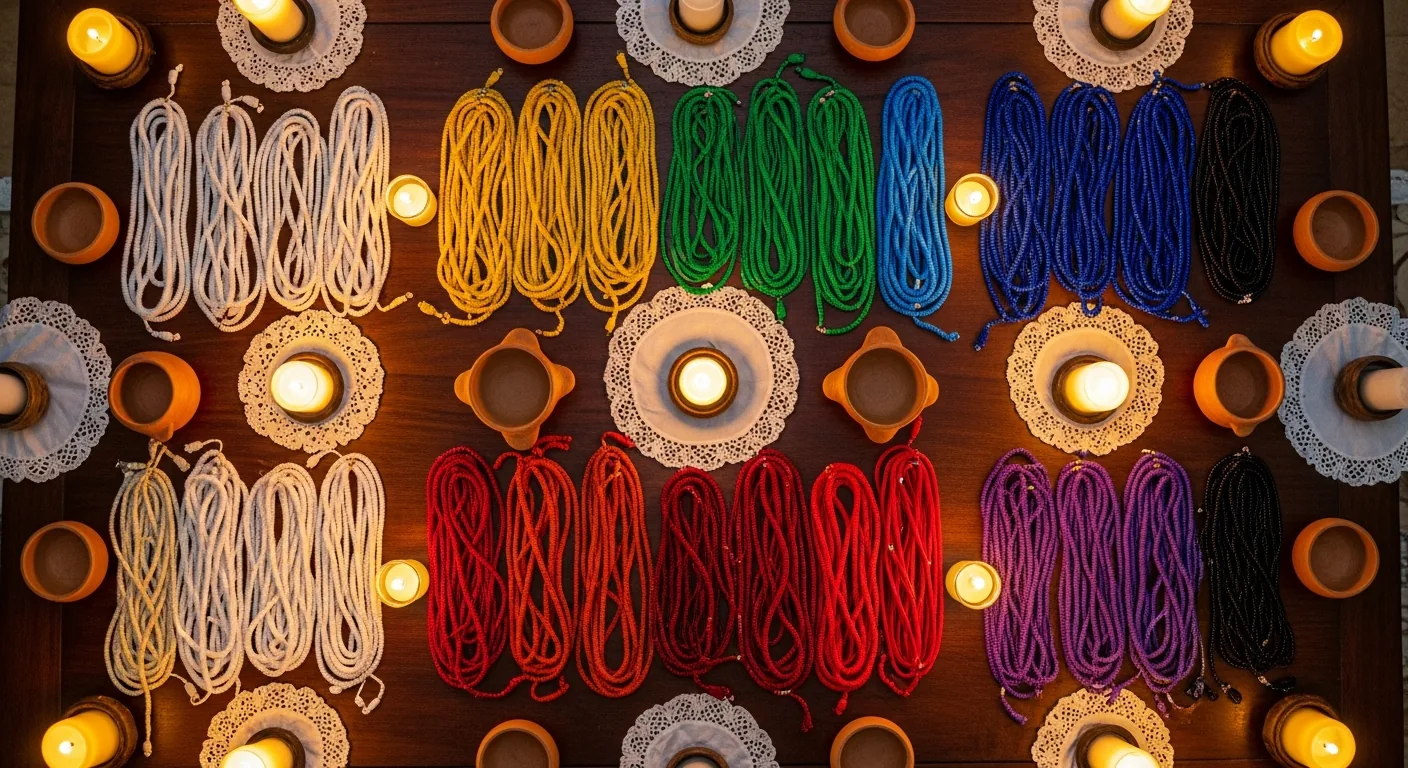
- Fios de conta and mokan: assembled in the colors of each orixá or in loose beads for the house to consecrate
- Fabrics by the meter: cotton and lace for the house seamstress to work
- Clay dishes, pemba and herbs: for the firmeza that your leader instructs
Stop by the shop, at Rua Benedito Zingari, 460, Bela Vista, in Extrema-MG, or message on WhatsApp with delivery to all of Brazil.
One last word. The pano da costa carries two crossings. That of the fabric, which came from Africa and began to be made here. And that of the woman who wears it, who crossed an initiation to have the right to it.
References
- IPHAN: registration of the Ofício das Baianas de Acarajé in the Book of Knowledge, with the attire that includes the pano da costa, January 14, 2005
- UFRJ Connection: research by Aline Santiago on the alaká, the traditional loom and the critique of the pano da costa nomenclature
- Wikipedia: entry about the pano da costa in the 19th century baiana attire, with Raul Lody as a reference
- Wikipedia: entry about the aso oke, the Yoruba manual loom fabric that is the matrix of the piece
- O Candomblé: terreiro text about the size of the piece, the synonyms alaká and pano de cuia, and the tying style by rank