The day of Iemanjá that many people do not know falls on August 15. The most famous date is February 2 in Salvador. But it is in mid-August that the Umbanda of Rio de Janeiro greets the Queen of the Sea, in syncretism with Our Lady of Glory. Understanding this date is also understanding who the Great Mother of the salt waters is.
This guide brings together the complete profile of the orixá (orisha), the explanation of why August 15, the various dates she has throughout Brazil, her colors and greeting, and how to honor her with respect when her feast approaches.
Who is Iemanjá, the Queen of the Sea
Iemanjá is the lady of the salt waters, of the seas and the oceans, revered as the great mother who welcomes and protects. Her name comes from the Yoruba Yèyé omo ejá, which translates as "mother whose children are fish," an image that says everything about her vast and generous motherhood. She is the orixá of the egbá people, from the region between Ifé and Ibadan, in present-day Nigeria, and in Africa she was linked to a river called Yemoja and, later, to the Ogun river.
In Brazil, Iemanjá gained the sea as her home and the title of Queen. The sociologist Reginaldo Prandi, a reference in the study of Afro-Brazilian religions, describes the orixá as the goddess "of the great rivers, of the seas, of the oceans," worshipped in Brazil as "mother of many orixás." The image of the woman in blue garments emerging from the sea crosses terreiros, beaches, and even those who do not follow any religion.
As a mother, she rules motherhood, family, fertility, and emotional balance. But the sea has its two faces, and tradition also recognizes the severe side of the lady of the waters: the iabá who can bring the raw force of the waves to those who disrespect what is sacred. To place her within the set of deities, it is worth reading the overview on what the orixás are.
Technical sheet of Iemanjá
Before entering the date and the offerings, it is worth fixing the elements that identify the orixá. The correspondences below follow what is most consensual among the houses, with regional variations signaled.
- Domains: sea and salt waters, motherhood, family, fertility, emotional balance, and intelligence
- Colors: light blue and white in Umbanda; some houses include crystal, silver, and light green
- Element: salt water, the open sea, the beaches, the shells, and the pearls
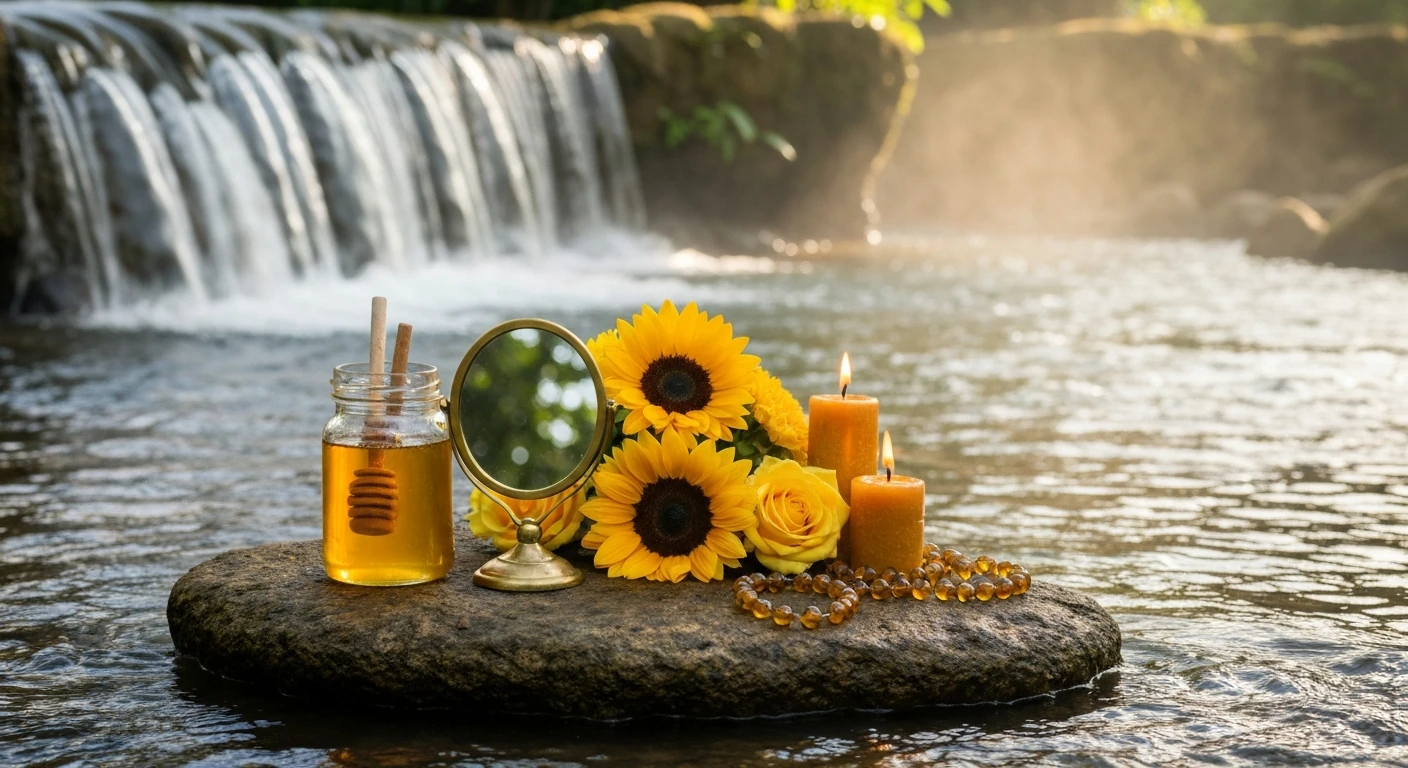
- Symbols: the mirror, the comb, and the fan, linked to the vanity and beauty of the Queen of the Sea
- Day of the week: Saturday
- Greeting: “Odoyá!”, from Odô Iyá, which Verger, Vallado, and FUCESP translate as “mother of the river”; many people say “mother of the waters”
- Offerings: white flowers (roses, palms, and chrysanthemums), perfume, fruits such as melon and watermelon, coconut manjar, delivered by the seaside
- Origin: Yoruba, from the Egbá people of Nigeria
- Syncretism: Our Lady of Glory on August 15, among other Marian invocations depending on the region
Odoyá, my mother! The greeting is the gesture of someone who recognizes themselves as small before the immensity of the sea and seeks comfort in the greatest of mothers. Before Iemanjá, one usually opens their arms to the waves, like a child waiting for a hug.
Regarding the day of the week, Saturday is the most cited for the Queen of the Sea. When it comes to color, blue and white are the strongest consensus, present in the bead necklaces (guias), in the candles, and in the clothes used to honor her. The tables by Reginaldo Prandi give "light blue, white, light green"; the Umbanda house TUCTVC uses a "light blue, white, and silver" bead necklace (guia).
Why is Iemanjá's day August 15?
Who looks for Iemanjá's date in the calendar of Carioca Umbanda finds August 15, and the reason lies in the history of Brazil. During colonization, faced with the prohibition of worshipping the orixás, enslaved Africans associated their deities with Catholic saints to continue revering them under another name. It was a strategy of survival and resistance, not a declaration that orixá and saint would be the same thing.
The Queen of the Sea was associated with Our Lady of Glory, whose feast falls on August 15, the same date on which the Church celebrates the Assumption of Mary. The connection is transparent: just as Mary is the mother who welcomes and intercedes, the lady of the salt waters is the great mother who supports her children. Both carry the archetype of the protective mother, and it was under the mantle of Our Lady that the orixá continued to be worshipped in the Fluminense terreiros.
Therefore, as the middle of August approaches, many Umbanda houses in Rio prepare tributes to the mother of the waters: blue and white candles, flowers, and offerings taken to the sea. This logic of associating each orixá with a saint and a date is the same that organizes the cycle of Afro-Brazilian festivals, as shown in the article about the syncretism of the saints and the orixás.
The various dates of Iemanjá throughout Brazil
A detail that confuses many people is that Iemanjá does not have a single date. The tribute to the Queen of the Sea changes according to the region and tradition, and each city keeps its own festival.
- February 2, Salvador: the largest celebration in the country, on Rio Vermelho beach, with thousands of gifts taken to the sea. It is the date most nationally associated with the orixá.
- August 15, Rio de Janeiro: the date of Rio de Janeiro Umbanda, in syncretism with Our Lady of Glory, the focus of this guide.
- December 8, São Paulo and Umbanda terreiros: the day of Our Lady of the Conception. It is the date of the festival inside the terreiros in the research by Cristiane Barros (UFJF) and in an Umbanda house, the TUCTVC.
- December 31, Southeast beaches: on New Year's Eve, bathers of various beliefs deliver flowers and jump waves asking for blessings from the mother of the waters. What to take is in Iemanjá on New Year.
The Wikipedia entry about the Festa de Iemanjá records these regional dates and the custom of each city. The important point is not to treat any of them as "the true one": all are legitimate, the result of how devotion took root in each place. To follow the celebrations of each deity throughout the year, consult the calendar of the orixás.
Iemanjá in Umbanda and Candomblé
Although she is the same orixá, the Queen of the Sea is not lived in the same way in the two traditions, and confusing them erases what each one has of its own.
In Candomblé, Iemanjá is an iabá worshipped with her assentamento, her foundations and her foods, and she appears in different qualities, each with its own temperament and its own history. Among the nagôs, one of the best known is Ogunté, the warrior linked to Ogum. Treating Candomblé as a single block erases this real diversity of the houses and the nations.
In Umbanda, the orixá acts above all as a vibration or line of ritual work linked to motherhood, to welcoming and to emotional balance. She is the mother to whom one turns in the pains of the heart, in family issues and in requests for protection. The syncretism with Our Lady, more present in Umbanda, completes this portrait of the great mother who welcomes everything. Her line and who descends in the gira are in Iemanjá in Umbanda. The lady of the salt waters still has a very close sister in popular devotion, the owner of the fresh waters: it is worth knowing who is Oxum to understand how the two complement each other.
How to honor Iemanjá
Devotion to the Queen of the Sea is done with gratitude and respect for what is sacred. What follows is a devotional reference, remembering that each house has its own orientations and that foundation offerings are made under the guidance of a pai or mãe de santo.
- Light a light blue or white candle in a clean place, visualizing gratitude and asking for serenity and support from the mother of the waters
- Take white flowers to the sea, such as roses and palms, with thoughts of peace and care for nature, collecting what is not biodegradable
- Greet the orixá with "Odoyá!", with open arms to the waves, like someone speaking to their own mother
- Take care of the beach and the ocean, because honoring Iemanjá is also respecting her home, the sea she rules
Devotion tip: seek the Queen of the Sea to ask for welcoming in moments of sadness, emotional balance, and protection for the family. The mother of the waters works in the vastness and in the calm, and teaches that all pain, like the waves, goes and comes back until it settles.
The conscious choice of candles is part of the reverence. To understand the meaning of each color, see the guide of ritual candles and their meanings.
Frequently asked questions
What is Iemanjá's day?
The date varies depending on the region. In the Umbanda of Rio de Janeiro, Iemanjá's day is August 15, in syncretism with Our Lady of Glory. The largest national festival happens on February 2, in Salvador. Within the terreiros of Umbanda, the festival usually takes place on December 8, and there is also the New Year's Eve.
Why is Iemanjá's day August 15?
Because the orixá was syncretized with Our Lady of Glory, whose Catholic feast falls on August 15, the same date as the Assumption of Mary. During the time of slavery, associating the Queen of the Sea with a saint allowed the worship to stay alive, and the date remained in the tradition of Rio's Umbanda.
What does the greeting Odoyá mean?
“Odoyá!” comes from Odô Iyá, which Pierre Verger, Armando Vallado, and FUCESP translate as “mother of the river”; in popular speech, it became “mother of the waters.” It is the traditional way to greet Iemanjá, a gesture of reverence and a request for blessing directed to the great mother of the sea.
What are Iemanjá's colors?
The colors most associated with the Queen of the Sea are light blue and white, which translate the serenity and depth of the ocean. Some houses include crystal, silver, and light green. These colors appear in the candles, in the bead necklaces (guias), and in the clothes used in her honor.
What is the difference between Iemanjá and Oxum (Oshun)?
Iemanjá is the lady of the salt waters, of the sea and the oceans, linked to broad motherhood and vastness. Oxum rules the fresh waters, the rivers and the waterfalls, linked to love, wealth and fertility. They are different and complementary orixás, both revered as great mothers.
Where to buy items for Iemanjá
At Joia Mística Laroyê, you find everything to honor the Queen of the Sea with respect and devotion:
- Statues of Iemanjá with the blue mantle, for your altar or assentamento
- Blue and white candles, in the colors of the lady of the salt waters
- White flowers and arrangements for offerings by the seaside
- Bead necklaces (guias) and beads in light blue and crystal for devotion
- Perfumes, mirrors and fans linked to the energy of the Great Mother
Visit our shop in Extrema-MG and we ship to all of Brazil. For guidance on the correct use of products and the best way to honor Iemanjá, talk to us via WhatsApp.
References
- Reginaldo Prandi, Horizontes Antropológicos (UFRGS): African gods in contemporary Brazil
- TUCTVC, house of Umbanda: Iemanjá
- Cristiane Amaral de Barros, UFJF: Iemanjá and Pomba-gira, images of the feminine in Umbanda
- Armando Vallado, Le Monde Diplomatique Brasil: Iemanjá, the powerful mother
- Wikipedia: entry about the Festa de Iemanjá and its regional dates