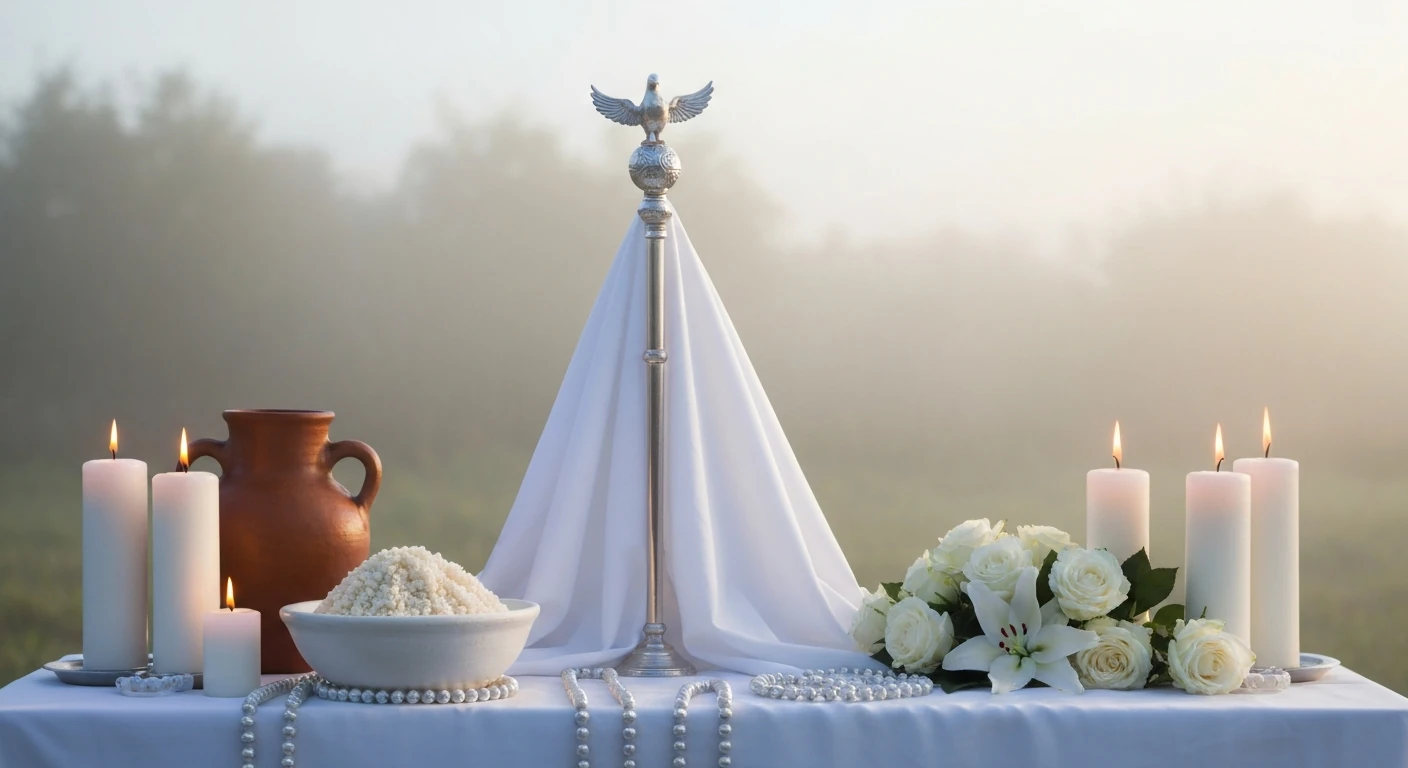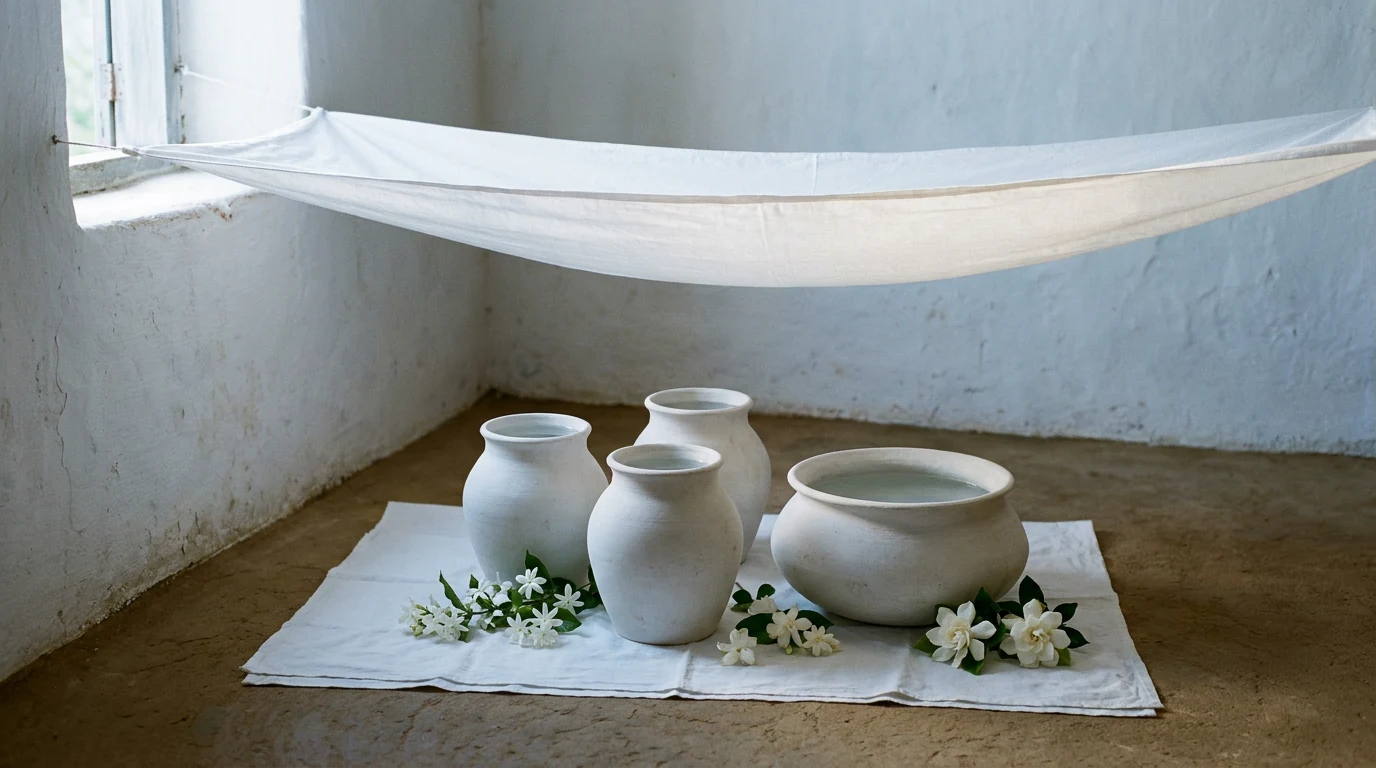
The Águas de Oxalá are the rite that opens the liturgical calendar of the Ketu and Nagô Candomblé houses. The children of axé seek water at a spring, in silence and dressed in white, and with it they bathe the assentamentos of the orixá. The Yoruba name is Àwọn Omi Òṣàlá, and the ceremony recalls the bath of Oxalá upon leaving prison.
The cycle is long. At Ilê Axé Opô Afonjá, a UERJ study followed seventeen days of rituals in September 2007. The date changes from house to house, and this variation was already in the oldest description of the rite.
What happens in the Águas de Oxalá, from Thursday to the third Sunday
The sequence below is that of Opô Afonjá, which serves as a reference because it was observed inside the terreiro. Each house adjusts the calendar to its own tradition.
| Moment | What happens |
|---|---|
| Thursday | The hut of Oxalá, also called the bathing house, is set up, where the orixá stays for seven days. The children of the house perform the bori, all in white. |
| Friday dawn | The procession leaves in silence to the spring, each person with a pot or quartinha on their head. The mãe de santo receives the water and bathes the Oxalás. |
| Saturday, before sunrise | The procession takes the reverse route and brings the orixá back to the room, under a large alá. |
| 1st Sunday | Festival of Oduduwa, with an internal xirê, only for initiates (filhos de santo) and guests. |
| 2nd Sunday | Festival of Oxalufã, with xirê open to the public. |
| 3rd Sunday | Sunday of Oxaguiã, the Day of the Pestle. |
In the description attributed to Mestre Didi, the bori of Thursday became, in many houses, an obi, so that the person could carry the waters. The format of three Sundays preceded by bori and procession was organized by Mãe Aninha, with Martiniano do Bonfim and Agenor Miranda.
The dawn procession: water on the head and silence
This is the heart of the rite. The children of axé leave the terreiro in white, in a line, carrying pots and moringas, with the ialorixá at the front playing the adjá. At Opô Afonjá, they follow behind the ogãs by order of initiatic age, and each one carries their own pot or quartinha over their head.
Silence is a precept, not a recommendation. One description records that only rhythmic clapping is heard during the path. Another, from the same terreiro in 2018, says that the silence is broken only by the sound of the adjá. At Casa de Oxumarê, in Salvador, everyone follows in círio to fill the quartinhas, with feet on the ground and in absolute silence.
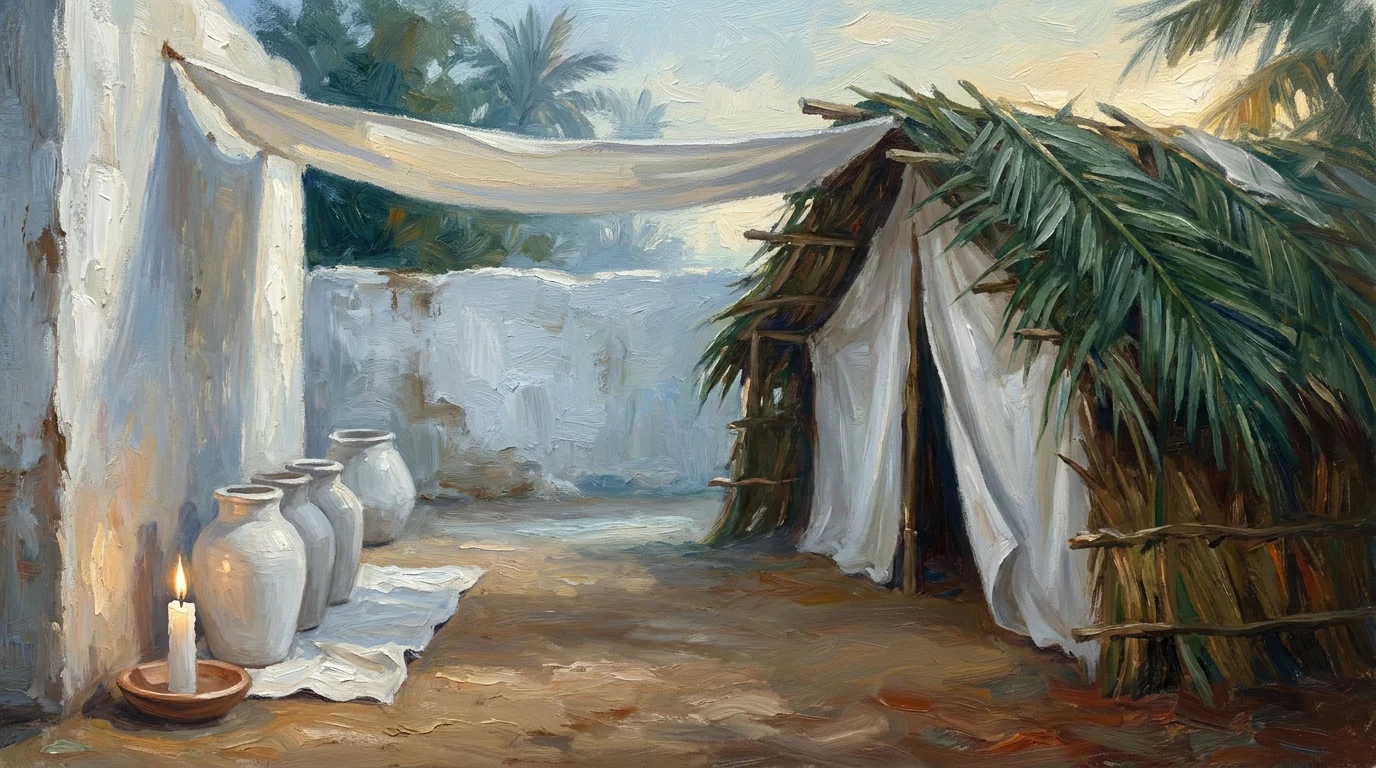
The meaning comes from the itan. Oxalá gets dirty on the path because of Exu (Eshu), is wrongly imprisoned and spends seven years in a dungeon. When the injustice is discovered, Xangô (Shango) orders him to be bathed with pure waters and dressed in white. On that day, the king and the people dressed in white and asked for forgiveness from the great orixá of creation. Xangô also promises that everything will be remembered by the following generations, in silence. The myth has many versions, as almost everything in candomblé.
Why everything turns white and the food is left without salt
Oxalufã and Oxaguiã (see the qualities of Oxalá) are funfun orixás and wear only white. During the cycle, white takes over the terreiro and leaves it: light-colored clothes are used by the faithful and flood the city. The house asks for white, starched, and perfect clothing, and, at Opô Afonjá, the children go to the spring in torço (head wraps) and new white clothes.
Along with white come the restrictions. One does not speak loudly, does not eat salt or dendê, and everyone maintains a reverent silence. In the meals and the assentamentos of Oxalá, dendê oil, wine, salt, and charcoal are forbidden, a prohibition that reaches the initiates for Oxalufã and Oxaguiã. In a house that describes the cycle in sixteen days, the food remains without salt for the entire period. The logic is the same as the Oxalá dish in daily life.
Keep this point in mind: what happens inside the sacred room, after the orixá returns, is not described. It is a foundation kept by the initiates, and academic research stops at this point.
The three Sundays and the Dia do Pilão
Each Sunday celebrates an orixá. At Casa Branca do Engenho Velho, the rite is followed for three consecutive Sundays, with Oduduwa on the first, Oxalufã on the second, and the Festa do Pilão for Oxaguiã on the last. The offering of Oxalufã is the ebô, the canjica.
The third Sunday is the best known. It is called the Day of the Pilão because Oxaguiã's favorite food is pounded yam. The root leaves the kitchen directly for the barracão, in balls of pounded yam. Among devotees, it is said that Oxaguiã himself invented the pilão to prepare the dish. On this day, the Oxalás receive an atori, a ritual wooden staff, and touch the two shoulders of the festival participants.
When it is: the date changes from house to house
There is no single date, and whoever sets one is wrong. The practices and the organization of the festival vary from terreiro to terreiro, as Nina Rodrigues recorded back in 1896. The documented examples:
- Casa Branca do Engenho Velho: the last Friday of August, according to the 2009 institutional text.
- Gantois: a large annual festival at the end of September, in the 1896 description.
- Ilê Axé Opô Afonjá: the early morning of the last Friday of September in 2018, a date repeated in 2023.
- Casa de Oxumarê: the first Thursday of the year.
- Olinda, in Pernambuco: a public street procession, which in 2026 fell on Sunday, January 11.
The Olinda procession is another format, held in the street. It brings together baianas, ogãs, afoxés, cultural groups, and religious leaders. It was designed by the babalorixá Raminho de Oxóssi (Oshosi), Living Heritage of Pernambuco, and ends at Terreiro Roça de Oxum (Oshun) Opará.
The duration also varies: seventeen days in the Opô Afonjá report, sixteen in the house that published the cycle in 2011, and there are houses that shorten everything to just one day. In Verger, the cycle lasts three weeks: the axés leave the pejí until a hut on a Friday, the Águas come the following Friday, a smaller ceremony on Sunday, and the Pilão de Oxaguiã on the third Sunday.
The Águas de Oxalá are not on January 15. What falls in January is the Lavagem do Bonfim, on the Thursday before the Bonfim Sunday, and public processions like those of Olinda and Araras, which a 2017 São Paulo law includes in the state's tourist calendar, without a fixed day. The rule of the Lavagem and the dates per house are in dia de Oxalá.
If you are going to watch the xirê
The xirê of the second Sunday, of Oxalufã, is open to the public. The first, of Oduduwa, is internal. Before going, ask the house if that year's festival is open and at what time it starts. Invitation and time are determined by the house, not the general calendar.
Three simple precautions solve the rest:
- Wear white. Friday is the day of Oxalá. The habit of wearing white on this day reaches all the people of santo, even those of another orixá, as Verger records in the excerpt cited by the newspaper.
- Speak softly and follow the house. Reverent silence applies to visitors as well.
- Do not bring an offering on your own. The one who determines what enters is the leader. To please Oxalá at home, the path is the white plate without salt or dendê.
White quartinha, white cloth, and white candle are the most requested materials during this time, and your house determines what will be used. If the list arrives and you have doubts about an item, Joia Mística, in Extrema, Minas Gerais, checks via WhatsApp.
The greeting is Epa Babá. If you do not yet know which orixá governs your head, start with the discover your orixá test. The divination at the house is what confirms it.
Frequently asked questions
Águas de Oxalá: what does it mean?
The name of the ceremony refers to the bath of Oxalá upon leaving prison, in the itan where he is imprisoned by mistake in the kingdom of Xangô. The water carried in silence to the assentamento repeats this bath and opens the house's liturgical calendar.
When are the Águas de Oxalá?
It depends on the house. Casa Branca appears on the last Friday of August, Opô Afonjá on the last Friday of September, and Casa de Oxumarê begins on the first Thursday of the year. Always ask at the terreiro you frequent.
Do the Águas de Oxalá exist in Umbanda?
The rite documented in the sources is from the Candomblé of the Ketu and Nagô nations, and it also appears in houses of the Nagô-Vodun tradition. Umbanda terreiros that worship orixás have their own dates and formats, defined by each house.
What is the Day of the Pestle?
It is the third Sunday of the cycle, dedicated to Oxaguiã. The name comes from the pounded yam, the favorite food of the orixá, served in balls that come from the kitchen directly to the barracão. On this day, the Oxalás touch the shoulders of those present with the atori.
Can those who are not from Candomblé attend?
Yes, when the house opens the celebration. The xirê of Oxalufã, on the second Sunday, is open to the public, and the Olinda procession takes place in the street. Wear white, confirm with the house beforehand, and follow the instructions of those receiving you.
References
- UERJ: the ritual of the Waters of Oxalá at Axé Opô Afonjá, Pinheiro, 2008
- Sacrilegens (UFJF): the white in the nagô-vodun ceremony, Ferreira Neto and Braga, 2019
- Memorandum (UFMG): the representations of Oxalá in the diaspora, Gaia and Scorsolini-Comin, 2020
- Edusp: Xangô, king of Oió, the itan of the imprisoned orixá, Prandi and Vallado, 2010
- Olinda City Hall: the January 2026 procession
- Bahia Já: the Waters at Ilê Axé Opô Afonjá, Barrêto, 2018
- Geledés: the Casa Branca do Engenho Velho, 2009
- Candomblé: the Waters of Oxalá in sixteen days, D’Osogiyan, 2011