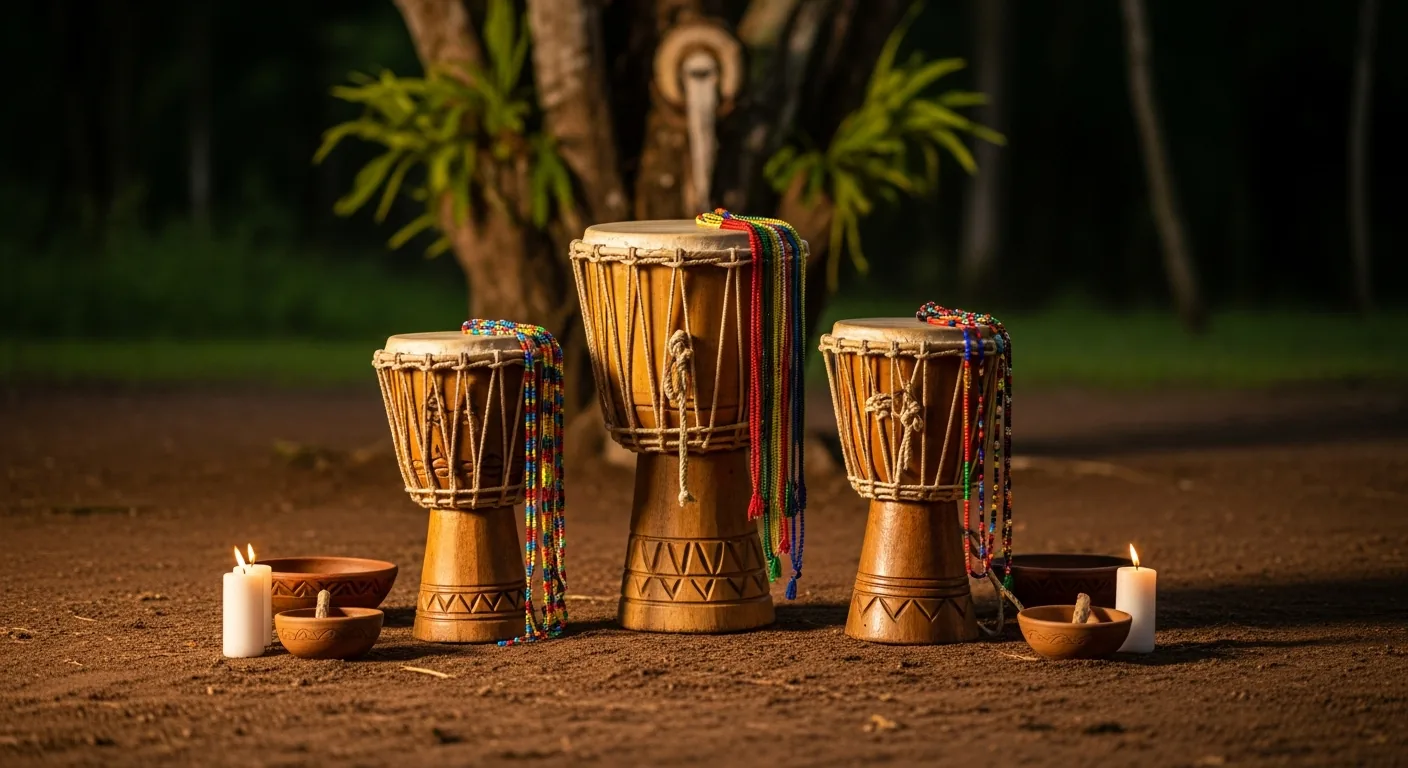
You enter an Angola house for the first time, or you are added to the community group, and words appear that no one explained to you: "Mene Mene", "Toma Kwiza", "muito ngunzo na sua caminhada". The Candomblé de Angola greetings sound like another language because, in part, they are: they come from kimbundu and kikongo, the Bantu languages that survived in the terreiros. This guide carefully translates what each term means and when it is used, so that you understand what is being said and respond with the same respect.
Here the focus is the language of arrival: the greeting, the request for blessing, the gratitude. We do not deal with initiation fundamentals, which belong to the terreiro. The golden rule comes before everything: the final word is always that of your zelador or zeladora de santo.
Why the Angola nation has its own language
Candomblé is not just one religion, but a set of nations, each with its African origin and its liturgical language. The Ketu nation comes from the Yoruba peoples and worships the orixás (orishas) in the Yoruba language. The Angola nation comes from the Bantu peoples, from the regions of present-day Angola and Congo, and worships the inquices (from the term nkisi) in kimbundu and kikongo.
Therefore, those arriving from Umbanda or a Ketu house find other names and a different sound here. "Saravá" and "Motumbá" give way to "Mene Mene" and "Mukuiu". It is not a strange dialect or a curiosity: it is a religious language that slave-owning Brazil tried to erase and that resisted, alive, inside the terreiro. Learning the greetings is entering this memory with respect.
If you want to better understand the difference between the traditions, it is worth reading the overview in what is Candomblé and the comparison in difference between Umbanda and Candomblé.
The arrival greetings: Mene Mene and Toma Kwiza
Mene Mene is the greeting of arrival, the "I greet you" of the Angola nation. It comes from the verb kumeneka, which in kimbundu means to greet, to salute. When someone enters and says "Mene Mene", they are greeting the house, the mother or pai de santo, the cargos, and the brothers, in the order of the hierarchy.
Toma Kwiza is the welcoming of those who arrive. The root kwiza (also written as kuiza) means to come, to arrive. It is the equivalent of "welcome, come, enter". Therefore, when being received in a group or at the roça, it is common to hear "Toma Kwiza" followed by your name: the community is opening the door for you.
Spellings vary from house to house and from root to root, and this is absolutely normal. You will see "Mene Mene", "Menekena", "Mukuiu" and "Makuiu" written in different ways depending on the terreiro. Note how your house writes and speaks, because that is the form that matters for you.
Makuiu: how to ask for and give the blessing
Perhaps the most important gesture for someone arriving is asking for the blessing. In the Angola nation, this is said as Makuiu (or Mukuiu). The full form, "Maku iú Nzambi", carries the meaning of "may Nzambi, the supreme God, bless you". The response of the one who blesses is usually "Mukuiu Nzambi".
In daily life, this request appears in Portuguese as "bença", and follows an order that is pure terreiro etiquette. First, one asks for the blessing from the mother or the father of the house (the mametu or the tata of inquice), then from the cargos of the house, and finally from the brothers and sisters in the faith (irmãos de santo). This is why in the greeting messages you read, in sequence:
Bença mãe, bença cargos, bença irmãos.
It is not just repetition: it is the recognition of the spiritual hierarchy of the house, from the most senior in the santo to the newcomer. Asking for a blessing in the correct order is one of the first ways to show respect.
Ngunzo: the axé of the Angola nation
When someone wishes you "much ngunzo on your journey," they are wishing you much axé. Ngunzo (also written as ngunzu or nguzo) is the Bantu word for vital force, the energy that moves life and sustains the worship. It is the same principle that the Ketu nation calls axé.
The idea of vital force is central in Banto philosophy, studied by researchers from the Associação Brasileira de Antropologia: everything that exists carries ngunzo, and the human being realizes their full life when they make this force circulate in the community. Therefore, the wish of "much ngunzo" is not a catchphrase, but a profound vow that your energy may flourish and contribute to the house.
This ngunzo is moved, above all, by chanting. The chants of the Angola nation, the zuelas or muimbus, are the sung prayers that call and greet the inquices. They have a world of their own, which you can find in our guide as zuelas de Candomblé de Angola and in the section of chants with lyrics and meanings.
Sakidila, Ndandu and Inzo: everyday words
Besides greetings, some words appear all the time in the coexistence of the house. Knowing them helps you follow the conversations without feeling lost. For a broader repertoire, there are community glossaries such as the vocabulário usual Angola-Kongo, always remembering that the spelling varies from house to house.
| Term | What it means | How to use |
|---|---|---|
| Mene Mene | Greeting, "I greet you" (from kumeneka, to greet) | Greeting upon arriving at the house |
| Toma Kwiza | "Welcome, come, arrive" (kwiza, to come) | Welcome those who are entering |
| Makuiu / Mukuiu | Request for blessing (“may Nzambi bless you") | Response: “Mukuiu Nzambi” |
| Ngunzo | Vital force, the axé of the Angola nation | ”Much ngunzo on your journey” |
| Sakidila | Thank you, gratitude | ”Nga sakidila” (I thank you) |
| Ndandu | Hug, relative, irmão de santo (spiritual sibling) | Affectionate treatment in the family of santo |
| Inzo | House, terreiro | ”Inzo Matamba ya Nkosi” (house of Matamba and Nkosi) |
Sakidila is our “thank you”. It comes from kimbundu and appears in phrases like “Nga sakidila”, I thank you. Ndandu is an affectionate treatment, something between “hug” and “relative”, used among the members of the house, who form a true family of santo.
Inzo means house, terreiro. It is the word that gives name to many roças, such as in “Inzo Matamba ya Nkosi”, which translates as the house of Matamba and of Nkosi, the inquices to whom the house is dedicated. Matamba is the inquice that corresponds to Iansã in the Ketu nation, lady of the winds and storms, and Nkosi corresponds to Ogum (Ogun), the warrior of iron.
You will also hear terms linked to the foundation and liturgy, such as sikasambi. These belong to the internal knowledge of the house and sometimes vary greatly from root to root. When such a word arises, the best path is not to look for a ready-made definition on the internet, but rather to ask your zelador simply. In a casa de santo, asking is also a way of learning.
Frequently asked questions
How do you greet in Candomblé de Angola?
Upon arriving, greet the house with "Mene Mene" and ask for the blessing by saying "Makuiu" or "Mukuiu", in the order of the hierarchy: first to the mãe or pai de santo, then to the positions, and finally to the brothers. The response of the one who blesses is "Mukuiu Nzambi". Each house has its variations, so observe and follow the custom of your terreiro.
What does ngunzo mean in Candomblé?
Ngunzo (or ngunzu) is the vital force, the energy that sustains life and worship in the Angola nation. It is the Bantu equivalent to what the Ketu nation calls axé. Wishing "much ngunzo" to someone is wishing that their energy flourishes and circulates in the community, strengthening the person and the house.
In what language is spoken in Candomblé de Angola?
The Angola nation uses words from kimbundu and kikongo, Bantu languages spoken in the regions of present-day Angola and Congo. They coexist with Portuguese in the daily life of the terreiros. Unlike the Ketu nation, which worships the orixás in the Yoruba language, the Angola nation greets the inquices in these Bantu languages.
Is Candomblé de Angola the same as Umbanda?
No. They are distinct traditions. Umbanda is a Brazilian religion that brings together orixás, spirit guides, and entities in giras. Candomblé de Angola is a nation of Candomblé, of Bantu roots, which worships the inquices with its own language, drumming, and liturgy. The two can dialogue, but they have different origins and structures.
Where to find articles and items for the Angola worship
At Joia Mística Laroyê, you find what you need to accompany life in your house of the orixás (casa de santo):
- Ritual candles in the colors of the inquices, to light with faith and respect
- Statues and bead necklaces of the inquices and corresponding orixás
- Herbs for baths and smoke cleansings, separate or in combos
- Beads and threads for devotional use
- Atabaques and instruments to accompany the muimbus
Visit our physical store in Extrema, Minas Gerais and we ship to all of Brazil. For guidance on the correct use of each item, talk to us via WhatsApp.
References
- Brazilian Association of Anthropology: article on Bantu philosophy and the concept of vital force
- Candomblé: usual Angola-Kongo vocabulary, glossary of Bantu terms