Anyone who arrives at a house of ketu quickly discovers that asking for the blessing does not start with the mouth. It starts with the body, which descends, and only then comes the word. To get this order wrong gives away the newcomer before any accent.
This guide shows what to do and what to say, in the sequence in which things happen: the permission at the door, whom to address first, the gesture that fits your orixá, and the speech.
The blessing follows time of initiation, not age
In Candomblé, the count that organizes everything is the initiatic age. The sociologist Reginaldo Prandi summarizes the rule in an article in the Brazilian Journal of Social Sciences: a person's biological age is not the same as their initiatic age, and it is the second that rules inside the house.
In practice, a sixty year old person with two years of feitura asks for the blessing of a thirty year old who already has fifteen. It is not disrespect regarding age, it is another type of kinship. The word ebômi, which names the one who is senior in the santo (in initiation), comes from the Yoruba egbon mi, my eldest.
The cycle has milestones. At seven years of feitura comes the deká, which formalizes seniority. The entire ladder is in positions and hierarchy in Candomblé.
Àgò and paô: the permission before entering
Before greeting someone, one asks permission from the space. Àgò means permission, and it is what is said when knocking on the door of a sacred room.
The paô is the rhythmic clap that accompanies the request. The sequence described in the ethnography is fixed: three claps in one rhythm, seven claps in another, and these ten are repeated three times. The count of three plus seven is a Brazilian formation, because in Africa there was the rhythmic pattern without a closed number.
The paô is not an ornament, it is a gesture of communication linked to Exu (Eshu), and it serves for those who cannot or must not speak at that moment, such as the iaô in obrigação.
A weak palm is not heard, and what is not heard does not arrive. The paô is struck with the whole hand and with firmeza, never with the fingertips.
Dobale or iká: the gesture depends on the orixá, not on sex.
Here lies the error that circulates on almost the entire internet. The choice between the two gestures of prostration is not by the sex of the one greeting, but by the energy of the person's orixá.
The dissertation Igbasilẹ, the gesture of Candomblé ketu, defended at USP in 2023, describes the two movements with choreographic precision. The criterion there is the essence of the orixá: Okurin for the masculine, Àyaba for the feminine.
- Dobale is for those who have an orixá of masculine energy. The hands go to the ground three times, each time further from the trunk. The person ends lying face down, arms behind, and palms facing up.
- Iká is for those who have an orixá of feminine energy. The opening is the same, but the body does not lie face down. It stays on the side, supported on the elbow, touching first the left hip and then the right.
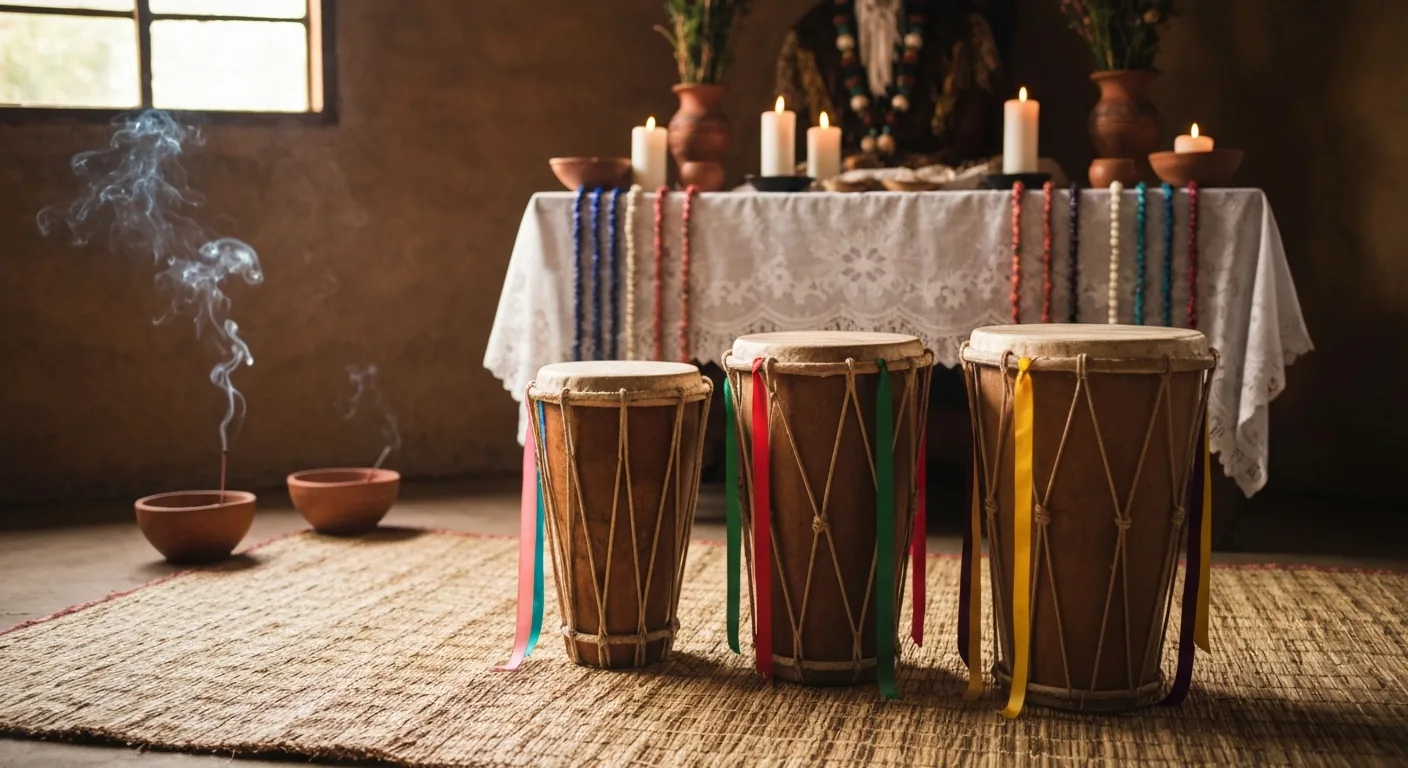
In both cases, the person makes the paô over their own head, unrolls the trunk until they are on their knees, and kisses the hand of the one who blesses. In ceremony, this happens over the mat, and the one who extends and collects the mat must be a person of iabá, because the gesture refers to gestation and to the feitura.
If you still do not know which is yours, the orixá test serves as an entry point, with the usual caveat: the one who confirms it is the búzios reading (jogo).

It is worth stating the obvious, because on the internet it gets lost. This text explains the gesture and does not teach how to perform it. The one who corrects your hand and your height is the zelador of your house, watching you do it.
The words: motumbá, mo júbà and kolofé
The gesture comes first and the speech comes along with it. These are the formulas of the ketu.
Mo júbà accompanies the bowing of the head, and terreiro dictionaries translate it as my respects or I ask for the blessing, I revere. The entry of the Museu Bajubá gathers the readings of Cacciatore, Napoleão, Portugal, and Beniste.
Motumbá, also written as mutumbá, is the most heard request for a blessing in the houses of the nagô root. The response is where the sources diverge: some record motumbá axé, others motumbá Olorum (Olodumare). There is no written consensus, and forcing one side would be inventing a rule.
Kolofé also appears as a request for a blessing, with a meaning close to that everything is well. Part of the sources attribute the formula to the ketu and part to the jeje, in the form kolofé Babá.
Between two people of the same degree, the one who has more time of initiation takes the initiative. They say mo júbà and cross their hands, one over the other, signaling they are the elder in orixá. The exception is when the house belongs to the younger one, and then the owner of the house starts and waits for the veteran to cross their hands.
The golden rule is simple: motumbá and kolofé are living formulas, the response changes from root to root, so ask in your house which one is used there and use the one from there. In the angola nation, the vocabulary is different, as shown in candomblé greetings from Angola.
To whom the blessing is not asked
Almost no one writes this half of the response, and it is the one that avoids embarrassment.
- To those who have less initiation time than you. Seniority is initiatic, so birth age does not count here.
- Ebómi, ekedi and ogã do not perform dobale nor iká before the priest. They bow their heads, say mo júbà and, kneeling, kiss the hands.
- Those who are in preceito or in resguardo stay out of this dynamic while the obrigação lasts.
- An uninitiated visitor does not bow their head to everyone. Observe, greet, and ask, because prostration belongs to those who have an obrigação with that house.
What changes when the person becomes an ebômi is also good to know. The ebômi no longer bows their head to all the orixás praised in the xirê: they bow, extend their hand to the ground, and bring it to the forehead and then to the back of the neck. They bow again in the case of their own orixá, the orixá of the priest, and the orixá of the axé of the house. The circle itself is explained in what is the xirê.
There is still a root record in which children of Oxalá (Obatala) prostrate themselves only for those who initiated them. For the others, they do the kunlé dojudé, kneeling with eyes turned to the ground. It is a specific house practice, from a single source, and not a general rule.
The mistake of those coming from umbanda
Saravá is not from candomblé. The Federation of Umbanda and Candomblé of the State of São Paulo is direct: the term is not part of the liturgical vocabulary of candomblé terreiros, and what is heard in the houses is axé, mucuiu, kolofé, or motumbá.
The difference is not of accent, it is of religious grammar. In the umbanda gira, the blessing circulates between the medium and the spirits that come to work, and the bond is of charity. In the ketu barracão, it circulates in the chain of initiatic seniority, and whoever blesses blesses because they have tempo de santo.
None of this makes umbanda a wrong version of candomblé. They are two religions, with their own liturgies, and many people attend both. Those who take the opposite path also find it strange, as shown in the guide for the first time in umbanda.
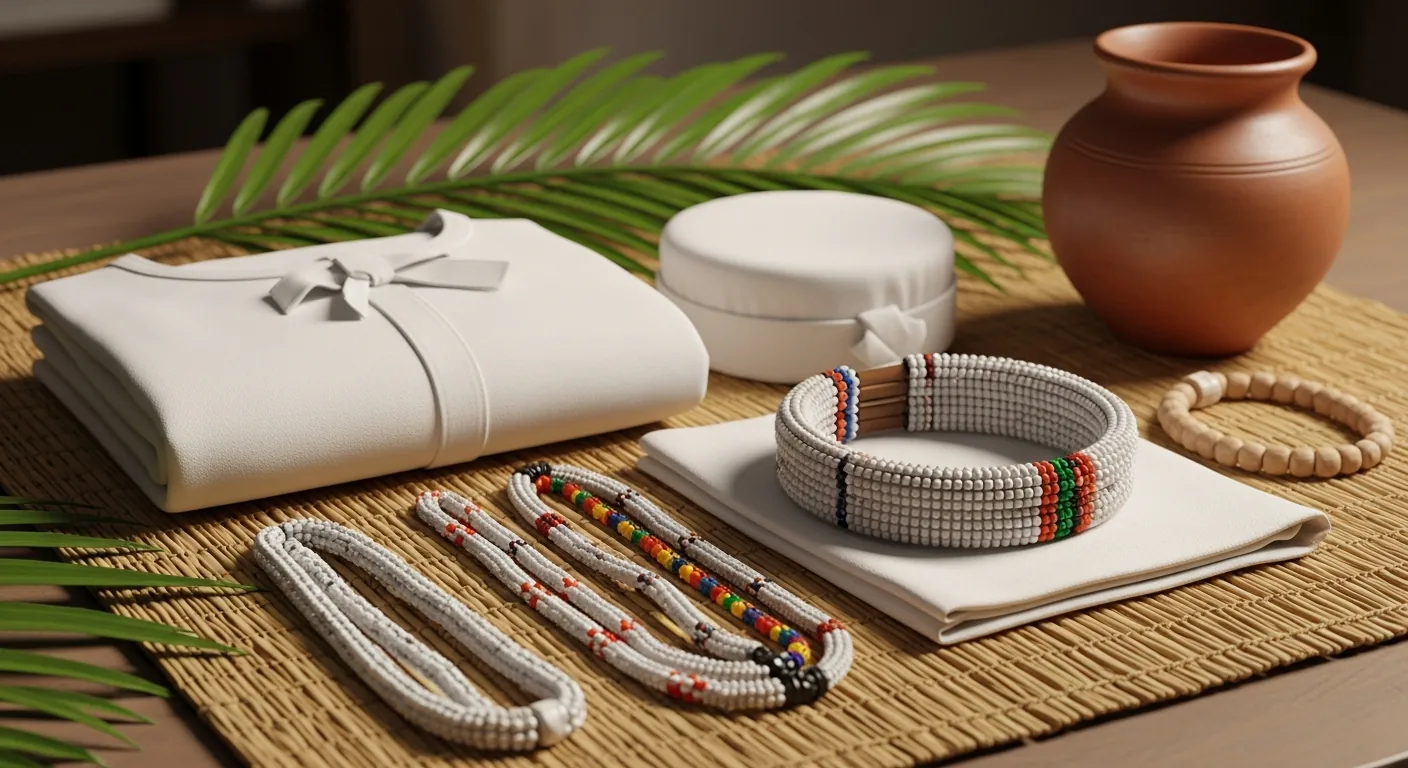
The fio de conta and the pano da costa signal affiliation and position, so reading the clothing is halfway to not making a mistake in speech.
Frequently asked questions
How do you respond to the blessing in ketu candomblé?
It depends on the house's root. For motumbá, two answers circulate, motumbá axé and motumbá Olorum, and there is no written consensus among the sources. For kolofé, kolofé Olorum appears. The safe path is to ask your zelador what the answer used there is and repeat that one.
What does mo júbà mean?
Mo júbà means my respects, or I ask for the blessing, I revere. It is the formula that accompanies the gesture of hitting the head, and it appears in the dictionaries of Cacciatore, Napoleão, Portugal, and Beniste with this meaning. Ebômi, ekedi, and ogã use mo júbà when greeting the priest.
What is the difference between dobale and iká?
The difference is in the energy of the orixá of the person who greets, not in the person's sex. Someone with an orixá of masculine energy does dobale and ends lying face down. Someone with an orixá of feminine energy does iká and stays on their side, supported by the elbow, without laying their chest on the ground.
Is bater cabeça (the ritual prostration) a humiliation?
No. The prostration increases the body's contact with the earth and marks the relationship with the elder of the santo, not the submission of one person to another. Abiã and iaô walk barefoot and sit on the ground for the same reason: the height of the body is part of the learning.
Where to find what the house asks for
At Joia Mística Laroyê you find the material that appears in this scene:
- Straw mat for the dobale and the iká in ceremony
- Bead necklace in the colors of the orixás, loose and in firma
- Pano da costa and ojá in smooth and printed fabrics
- Clay quartinha for consecrated foundation (assentamento) and for water
- White taper candle and seven-day candle
Stop by the shop, at Rua Benedito Zingari, 460, Bela Vista, in Extrema-MG, or message on WhatsApp with delivery to all of Brazil.
Buying the material is the easy part. The right gesture you learn by watching, in the time of your house.
References
- Luiz Fernando da Silva Anastácio: Igbasilẹ, o gesto do candomblé ketu, dissertação que descreve dobale, iká e paô, Social Anthropology, FFLCH-USP, 2023
- Reginaldo Prandi: the article that explains the initiatic age and the origin of ebômi, Brazilian Journal of Social Sciences, 2001
- FUCESP: why saravá does not belong to the vocabulary of candomblé, 2017
- Bajubá Museum: the translations of mo júbà in Cacciatore, Napoleão, Portugal and Beniste
- Candomblé: the text about moforibale, placing the head on the ground