The tamboreiro de batuque is the ritual musician who plays the drums, leads the prayers, and conducts the nation festival. To get there, he spends years learning all the prayers, the time to start and stop the ritual, and the functioning of the house.
What happens in the hall during the toque is already in our guide to the festa de batuque. Here the subject is the craft: how someone is trained, what an alabê is, to whom the drum belongs, and how much is charged.
What the tamboreiro does in the festival
In the festival, the tamboreiro leads the prayers and the attendees respond, all in Yoruba. He is the second authority of the ritual, after the pai or the mãe de santo.
The anthropologist Ana Paula Silveira studied houses in Pelotas and Rio Grande. There, when the orixá occupies the head of the house, the master tamboreiro takes care of the ritual execution of the ceremony. A tamboreira from the Jêje nation of Rio Grande summarizes the responsibility:
“It is he who controls the coming of the orixás and must be attentive to everything that happens there.”
Eneida de Oxalá (Obatala), tamboreira, in the research of Ana Paula Silveira (UFRGS)
The tamboreiro also needs to know the liturgy of each nation. The tamboreira Sherlen de Obá (Oba) explains that it is no use accepting to play Oyó without knowing the order of the prayers or the time to remove the ecó. What to do when "the scale breaks" appeared in all the interviews of a UFRGS research as a responsibility of the tamboreiro, and it is a ritual secret. The scale of Xangô (Shango) has its place in the text about Xangô no batuque.
Tamboreiro or alabê: what changes in the name
Tamboreiro is the old name for the batuque. The term alabê also circulates, and the thesis by Claudio Soares dos Santos records it as a synonym.
Among the drummers themselves, there is no consensus. The drummer Pantiovila de Oxalá understands that they are names for the same function, but sees the alabê as a recent import from Candomblé. Researcher Leo Moraes also notes a controversy: some say the word would mean "beggar" in Yoruba. Moraes does not confirm this translation, and it remains a dispute.
In Candomblé ketu, the name and function follow another logic, explained in Candomblé drums.
How a drummer is formed
Among the elders, there is the idea that "the drummer is born into it." Master Borel, remembered by Luis de Xapanã, used to say that the drum is not taught. Even so, the path exists, and it has known stages.
- Children's play. Children play on cans and sing the axés imitating the adults.
- The agê first. The child starts with the agê, the easiest instrument, and only later moves to the drum.
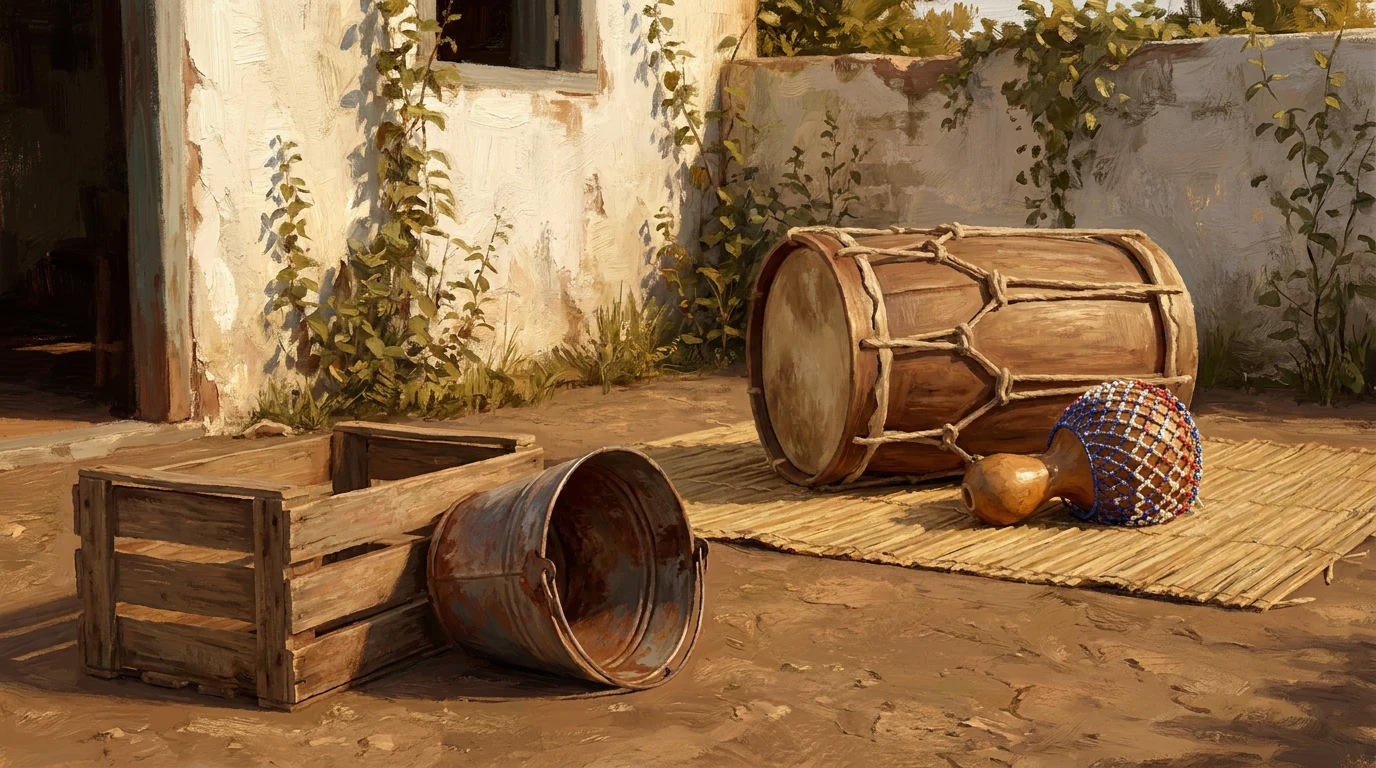
- Training without the sacred drum. In houses in the Vale do Rio Pardo, the apprentice trains on wooden boxes or old buckets before the consecrated drums.
- Apprentice of a master. Around pre-adolescence, the young person accompanies experienced drummers and receives no payment. The repertoire is "learned in the mix," in the heat of the rituals.
- Repertoire in order. First the axés of the orixás, then those of egum and those of the other sides.
The drum schools appeared in the mid-1980s, according to the elders heard by ethnomusicologist Reginaldo Gil Braga, due to a lack of drummers trained in the houses. In them, the student learns the isolated beats and then joins the beat with the response of the axé. The egum repertoire remained outside the schools. In the 2023 research, the drummers agreed that the drum is learned "on stage," going out to play.
Initiation is part of the craft. Seu Ademar do Ogum (Ogun) summarized: "there is no drummer without feitura". The rite that consecrates at the same time the drum and the one who will play it is called axé de mão, or axé de tambor. It is performed by the house, within the fundamento.
The required degree has two readings. Moraes writes that, to lead a ritual, the tamboreiro must be ready and receive the axé de tambor from another tamboreiro. The four tamboreiros he interviewed accept the readiness of head with four-feet as a minimum. The degrees are explained in graus de iniciação no batuque.
The drum belongs to the house
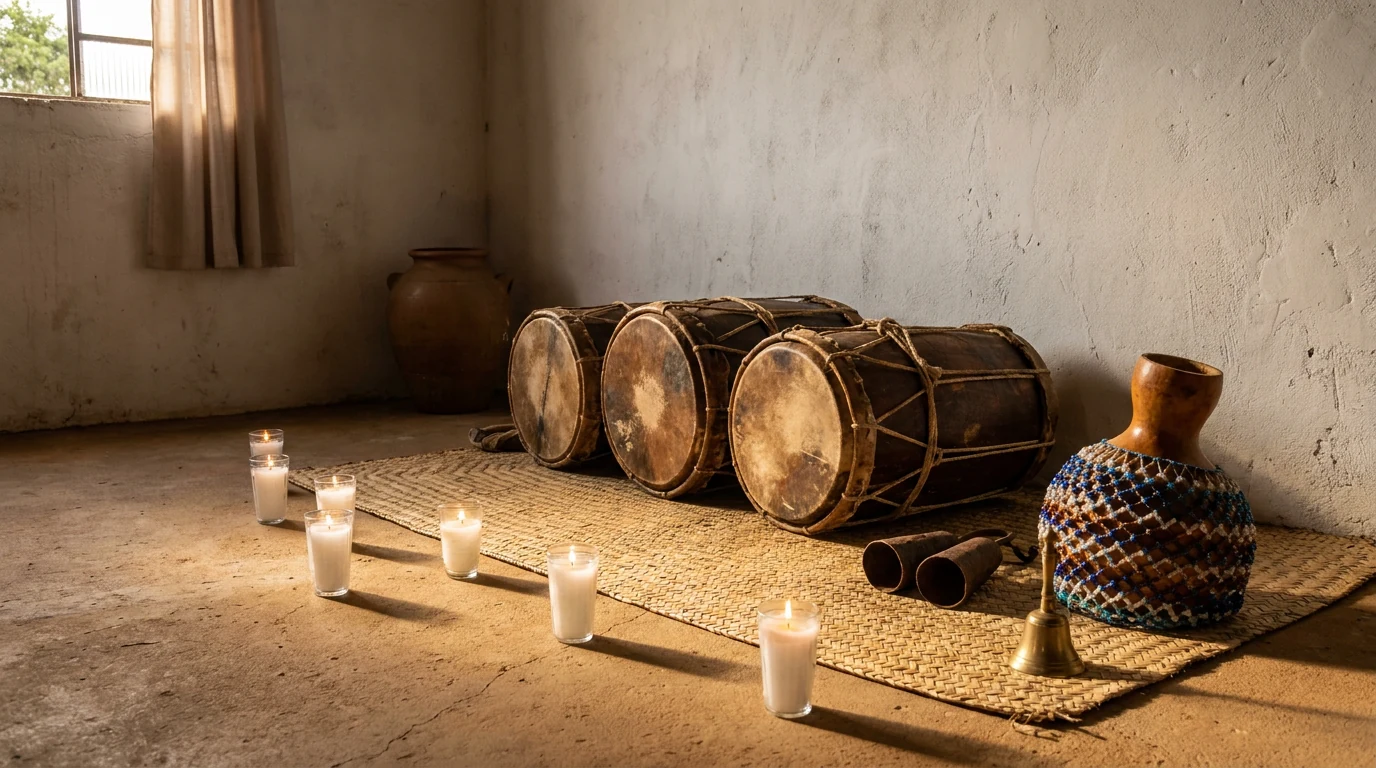
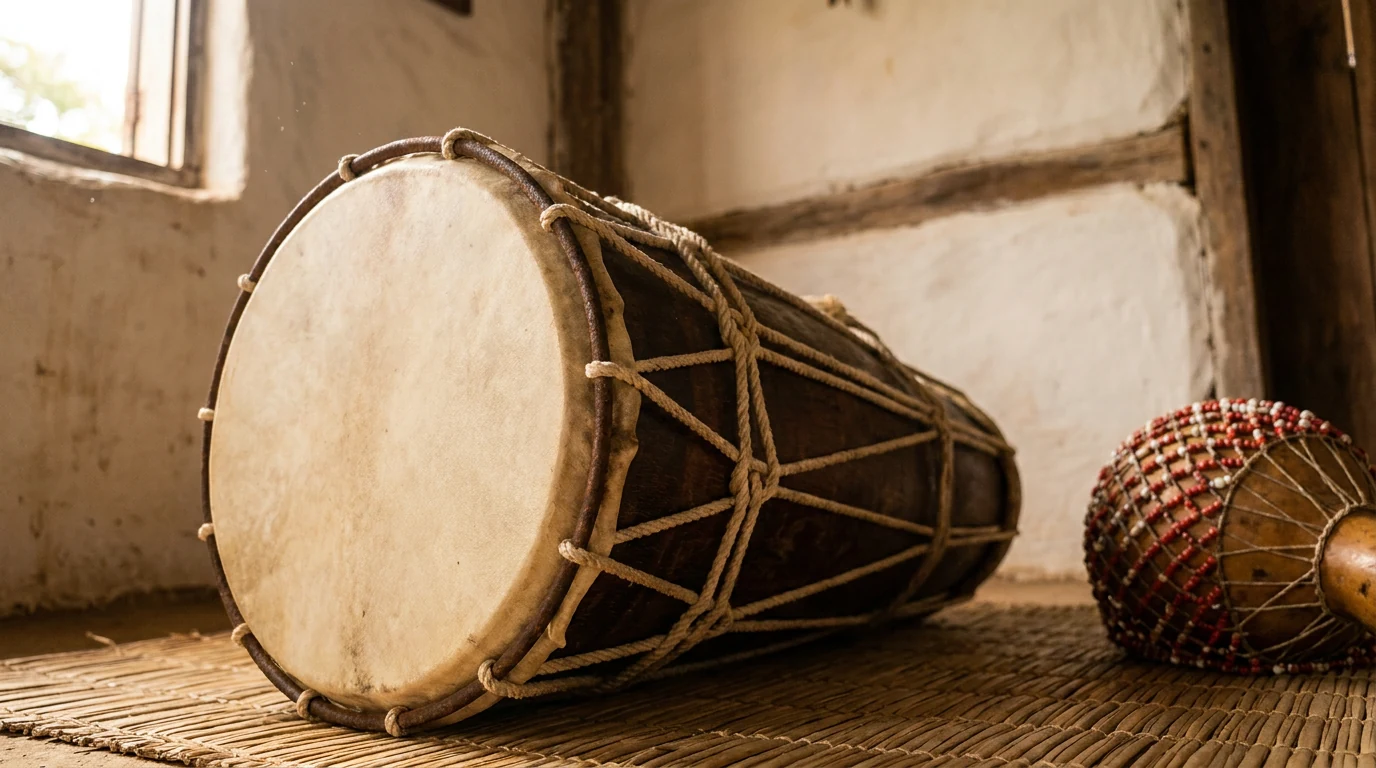
The sacred drum is not the tamboreiro's: it belongs to the house of religion to which it serves. Ilú and inhã have a long tension rope and stay loose, tightened only at the time of playing.
In a Jêje-Ijexá house in Pelotas, loosening the leather indicates the rest of the orixá, and tightening is preparing the orixá to respond in the instrument. A tamboreira from Rio Grande separates the house drum, which does not leave it, from the drum made for playing in the street.
Who owns the drum divides opinions. In Pelotas, Andrea do Bará says that the orixá who owns the drum is the orixá who owns the house. In Porto Alegre, Sherlen de Obá calls Xangô the owner of the drum. Both views coexist.
Cadence, drum rhythms, and what changed
In the Batuque, toque has always been synonymous with celebration. In 1946, the musicologist Luiz Heitor Corrêa de Azevedo recorded 30 records in Porto Alegre, 25 of them of worship music.
Many things have changed since then. Today the Jêje repertoire is played from all sides: after the prayers of each orixá, the corresponding one is taken out in Jêje. An old tamboreiro called the mixture of Cabinda, Jêje-Ijexá, and Oió in the same obrigação "three in one".
The pace also accelerated. The old style is slower. In the 2023 research, the drummers criticized the accelerated beats and told that many times the haste is requested by the very pai de santo who hires them. Antônio Carlos do Xangô told the students that the nation "is rhythm, it is cadence."
How much they charge and the drummer's day
Few houses of batuque have their own drummer, and most hire one. In the past, according to Antônio Carlos do Xangô, the drummer was not even paid. Among them, the difficulty of the craft earned the name "axé de miséria".
In Porto Alegre, three drummers heard in a 2021 thesis told that the party lasts about 7 hours and that they charge between R$ 600 and R$ 1,000 per night. The teams also grew, with two or three drummers and agê players.
A female drummer from Rio Grande summarizes that "playing the drum is not a matter of physical strength, it is a matter of technique". For the drummers heard by Moraes, the prohibition of women on the drum is from Candomblé, and Antônio Carlos learned to play with a woman. On days of menstruation, the female drummers pass the drumming to colleagues.
Porto Alegre celebrates the Municipal Drummer's Day on September 28, by Law No. 12,972, of 2022. In Canoas, the date is November 22.
Frequently asked questions
What is alabê in batuque?
It is another name for the drummer. Some drummers see the term as a recent import from Candomblé and prefer "tamboreiro", the old name of batuque.
Can a woman be a drummer in batuque?
She can. Batuque has female drummers, and the drummers heard by Moraes say that the prohibition of women on the drum is from Candomblé. During menstruation, they usually pass the toque to colleagues.
Is it possible to become a drummer just with a course?
No. Schools provide a foundation, but the drummers say the drum is learned "on stage." And, as Seu Ademar do Ogum said, "there is no drummer without feitura." The initiation is done by the house.
Where to buy for the Batuque
At Joia Mística Laroyê you will find:
- Bead necklaces and threads: in the colors of the orixás.
- Adjá: the metal bell used in the ritual.
- Candles: seven-day and taper, in various colors.
A purchased instrument does not come consecrated: the one who makes the axé is the house. The shop is located in Extrema, Minas Gerais. Call on WhatsApp and we deliver to all of Brazil.
References
- UFRGS: Moraes, the craft of batuque drummers, 2024
- ABEM Magazine: Braga, teaching and learning among nation drummers, 2005
- NER Debates (UFRGS): Braga, the 1946 recording and the drum tradition, 2013
- UFRGS: Silveira, training nation drummers, 2008
- UNISC: Santos, the economic impacts of the batuque festival, 2021
- UNISC: Bitencourt, the drum that educates, 2018
- Porto Alegre City Hall: Law No. 12.972, of 2022
- Canoas City Hall: news about Tamboreiro Day, 2022