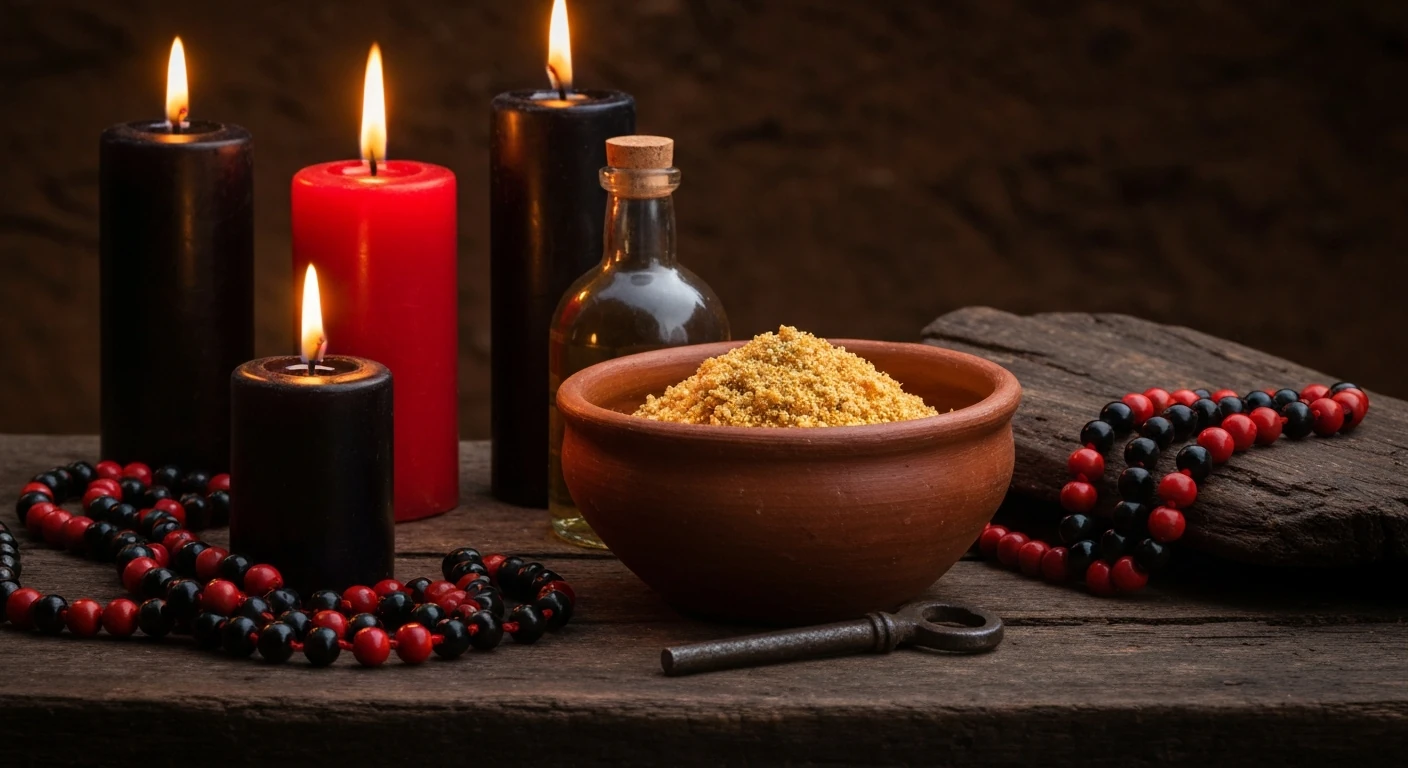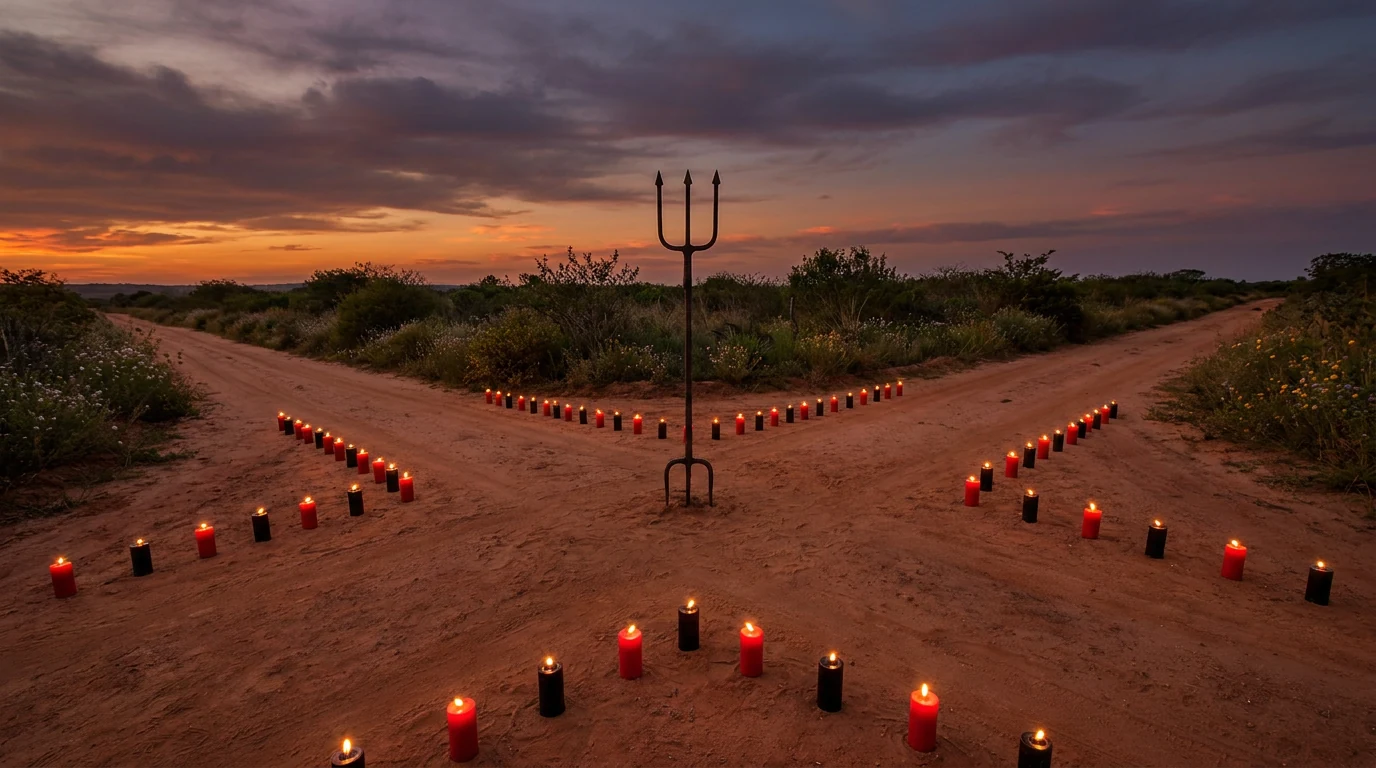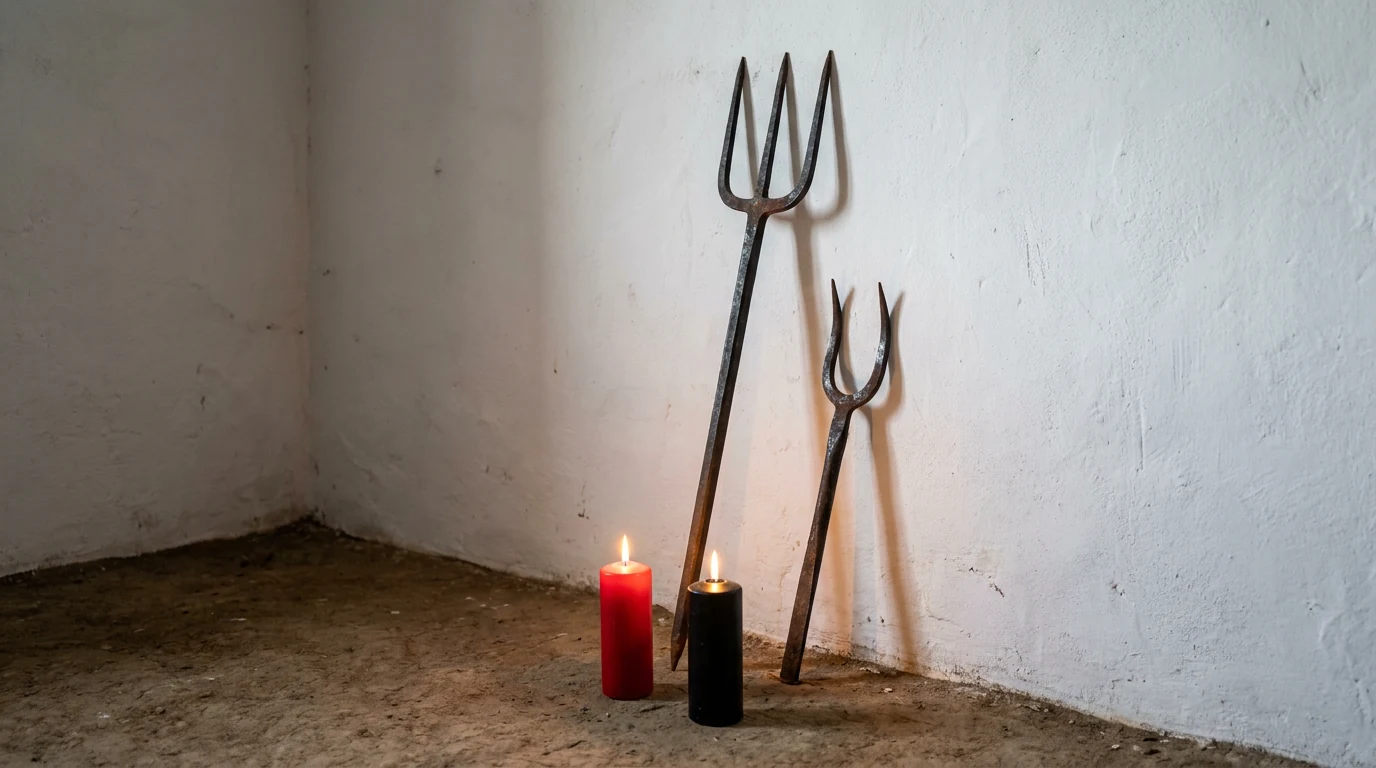
The tridente de Exu is the three-pronged iron fork that represents Exu in the tronqueiras of Umbanda, in the assentamentos of Quimbanda, and in houses of Candomblé. It is the most repeated symbol of the Exus: in a study of 318 riscados points, only two did not have a tridente. Its origin is disputed among researchers.
What is the trident of Exu
The trident of Exu is a tool, a name that terreiros give to the irons of an orixá (orisha) that summarize his attributes. The trident is the tool of Exu, just as the bow and arrow are the tools of Oxóssi (Oshosi). In Candomblé, the sociologist Reginaldo Prandi records as symbols of Exu "a phallic club and iron tridents".
To understand who he belongs to, it is worth separating the orixá Exu from the guardian Exus of Umbanda and Quimbanda, as the article who is Exu explains. The trident appears in both layers, and the guardians who carry it are in names of Exu.
In Umbanda, the tronqueiras have consecrated foundations (assentamentos) set up with the irons that represent the Exus, the garfos de Exu. The garfos became a symbol of Exu in many countries and gather the ideas of meeting, transition, and passage, according to the anthropologist Vagner Gonçalves da Silva.
Where does Exu's trident come from
There is no single answer. The sources record three readings, and they coexist.
The Christian heritage. For Reginaldo Prandi, the iron trident, Neptune's tool in the Greek world and the symbol of the devil in Christianity, became the representation of Exu in Umbanda and Candomblé shops. It is the most cited reading, and it connects with the history of how Exu was confused with the devil, told in the pillar who is Exu.
African horns. Vagner Gonçalves da Silva recalls that, "for many," the staff of Exu is an influence of the diabolic trident. But he shows that there are representations of Exu with horns in West Africa since at least the first half of the 19th century, linked to power and fertility.
The shape of the body. Silva also proposes that the myth of Exu, with the phallus and the vagina at the center, was reworked into the forms of the trident. For the researcher Raul Lody, cited by Lourival Andrade Júnior, the trident replaced the ogó, the staff of Exu, and maintained its verticality.
“The mythical emphasis on the symbology of the phallus and the vagina seems to have been reworked in the forms of the trident and the places of offering.”
Vagner Gonçalves da Silva, Revista de Antropologia, USP, 2012
The number of points also changed over time. In an image published by Édison Carneiro in 1937, the spear of Exu had seven points, the seven paths. Roger Bastide described the iron of Exu ending in seven, fourteen, or twenty-one rods. The forged iron statue, with horns and staff, popularized the form seen today.
Trident of Exu and trident of Pombagira: the difference
The fork of the Pombagira is made to distinguish itself from those of the Exus. Prandi describes the piece of the Pombagira with a rounded shape. Silva describes the three-pointed fork for Exu and the two-pointed fork for Pombagira. The table summarizes the two descriptions.
| Exu | Pombagira | |
|---|---|---|
| Most recorded shape | three-pointed fork, straight | rounded or two-pointed fork |
| Where it appears | tronqueira, assentamento, ponto riscado | along with iron doll, spears and chains |
The shape is not a fixed rule. In an umbanda center studied by Andrade Júnior, the curved fork indicates the Exu who works in the Calunga, the cemetery, and the straight one, the Exu of the crossroads. The author notes that many Exus work in both places. It is the house that interprets each entity's trident. What Pombagira is, and what her assentamento is like, is covered in who is Pombagira and in assentamento of Pombagira.
The trident in the ponto riscado
The ponto riscado is the emblem that the Exu draws to identify himself when he comes to land, especially in Umbanda sessions. The trident is in almost all of them. Lourival Andrade Júnior analyzed 318 ponto riscados of Exu and found the trident in 316. The two that did not have it brought another mark, an arrow and a propeller.
For Andrade Júnior, the three points say that Exu offers "at least three possibilities" of path, and the choice is of who follows. What the other strokes of the ponto riscado say is in ponto riscado in Umbanda.
In the tronqueira, in the consecrated foundation (assentamento) and in Candomblé
The trident is the central piece of the consecrated foundations (assentamentos) of Exu. In Umbanda, it stays in the tronqueiras, the house of Exu at the entrance of the terreiro, described in tronqueira. In a shop at the Feira de São Joaquim, in Salvador, the iron consecrated foundations (assentamentos) in the shape of a trident were those of Exu.
In Candomblé, the shape of the trident gives the pattern of the tools of Exu and shows even to which orixá that Exu serves. In the tool of an Exu of Oxumarê, five tridents are added to the snakes. In that of Ogum (Ogun) Xoroquê, the tridents overlap Ogum's sword. The role of the ogó and the other tools is in tools of the orixás.
The trident is purchased ready, but who consecrates it is the terreiro. To consecrate Exu is the work of the house, with the leader, and what goes inside a consecrated foundation (assentamento) is not taught here.
The iron trident: material, shape, and who makes it
Exu is the orixá of iron. In the blacksmith shop of the orixá, the warrior and hunter orixás, such as Exu, Ogum, and Oxóssi, have iron as raw material; Xangô (Shango) has copper, and Oxalá (Obatala), brass. In Salvador, the blacksmith José Adário dos Santos, Zé Diabo, has made tools for the orixá for over 50 years. The work involves sawing bars, forging, and welding, and in the end, the tool is washed and consecrated to the orixá. Tridents are among the shapes he created, in forged, beaten, and welded iron.
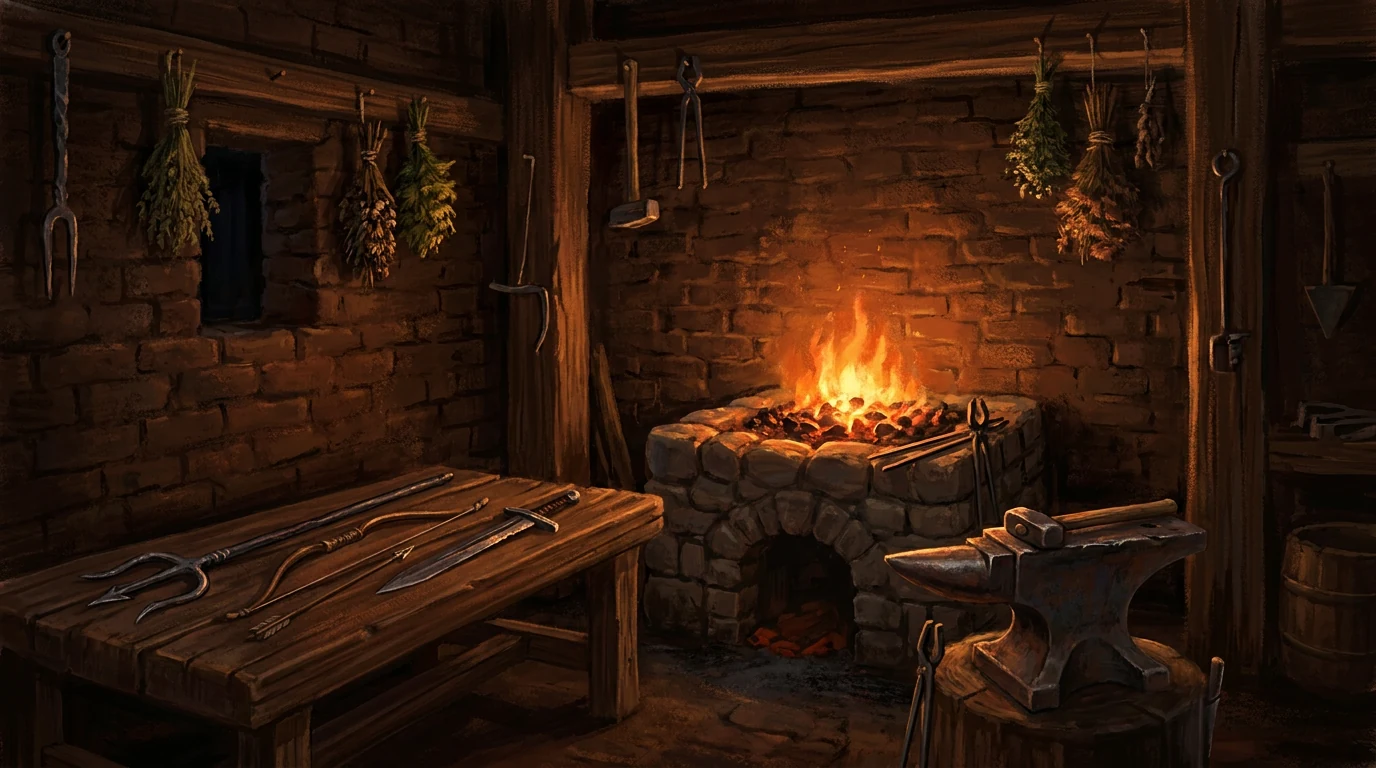
The iron trident in the shop is that very piece, ready for the house to consecrate. Before buying, take the guidance of your house regarding size and shape; via WhatsApp the shop checks the right piece with you.
Frequently asked questions
Why does Exu use a trident?
The sources give three reasons. For Prandi, the trident came from the Christian image of the devil. For Silva, there has been Exu with horns in Africa since the 19th century, and the fork retrieves the symbology of the body that the myth of Exu already had. In the terreiros, it became a symbol of passage and of path.
Is Exu's trident a symbol of the devil?
Not in the tradition of the terreiros. The connection with the devil is a historical reading about the origin of the shape, recorded by Prandi. Researchers also show other origins, African ones. In the terreiros, the fork speaks of meeting, transition, and passage.
Can I have an Exu trident at home?
The iron piece is purchased ready. What makes it a consecrated foundation (assentamento) is the consecration in the terreiro, done by the house. Having a trident without a house is having an object, not a consecrated foundation (assentamento). If you attend a terreiro, ask the leader first.
What does the downward-facing trident mean?
There is no single reading recorded in a serious source. What sources document is the difference between straight and curved forks in a house of Umbanda. The position and shape of the trident in the ponto and in the assentamento are the house's reading: ask your leader.
References
- Reginaldo Prandi: Exu, de mensageiro a diabo, Revista USP, 2001
- Vagner Gonçalves da Silva: Exu do Brasil, tropos de uma identidade afro-brasileira, Revista de Antropologia, 2012
- Reginaldo Prandi: os deuses africanos no Brasil contemporâneo, Horizontes Antropológicos, 1995
- Reginaldo Prandi: Pombagira and the Unconfessed Faces of Brazil, 1996
- Lourival Andrade Júnior: pontos riscados e nominações, Exu em discussão, Mouseion, 2015
- Luciana de Castro Nunes Novaes: a morte visível e a vida invisível, dissertation, UFS, 2013
- Lucas Marques: na oficina do Zé Diabo, a ferramentaria de orixás na Bahia, ABA Publicações, 2017
- MAM São Paulo: José Adário dos Santos na mostra Mil Graus