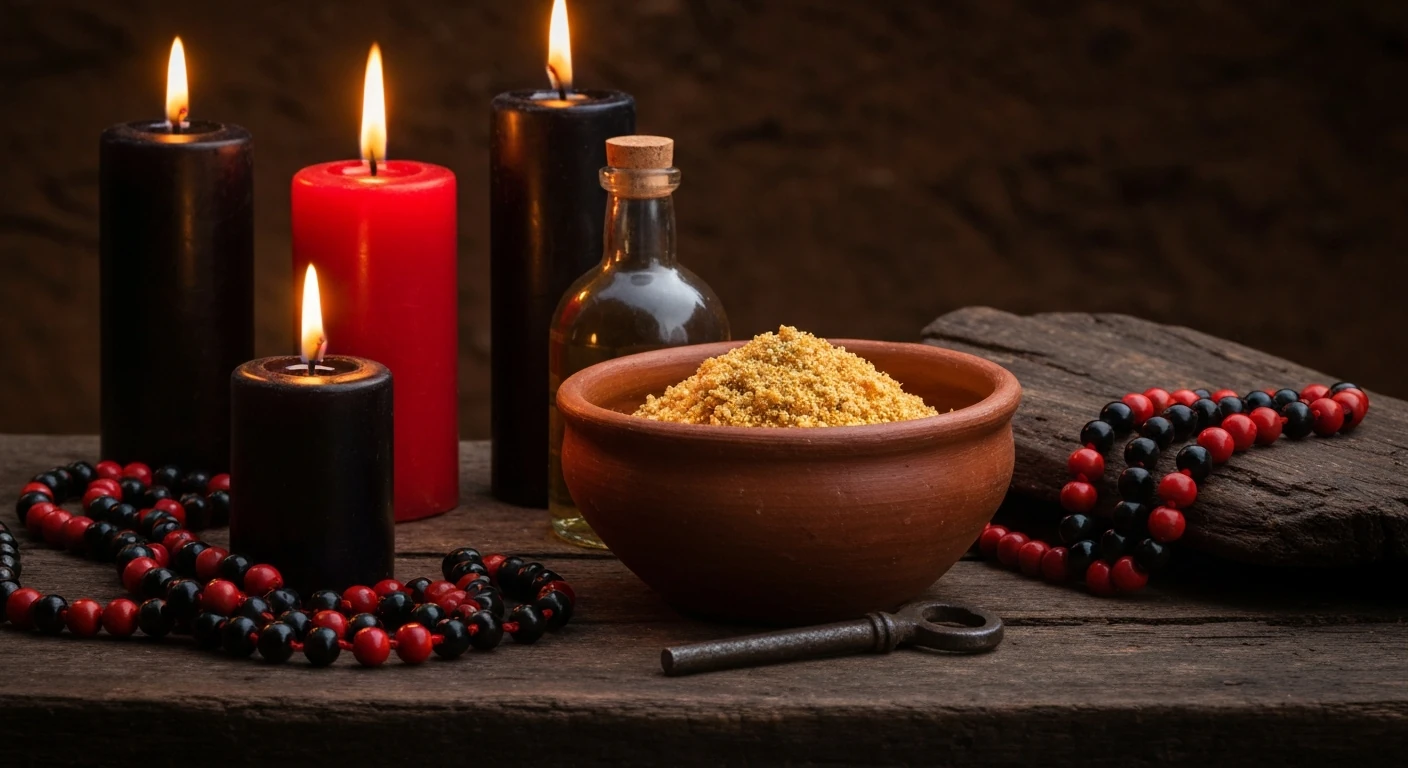
The farofa de dendê is one of the most well-known and most misunderstood offerings of Afro-Brazilian religions. Made of flour mixed with dendê oil, it is the heart of the padê de Exu, the greeting that opens the paths and welcomes the first orixá (orisha) to eat in any house of the orixás (casa de santo).
This guide explains what farofa de dendê is, why it is linked to Exu, for whom it is intended in each tradition, and how to offer it with respect, away from sensationalism and magical promises.
What is farofa de dendê
The farofa de dendê is a ritual food simple in appearance and dense in meaning: flour (of cassava, and in some houses corn) mashed with dendê oil, the epo pupa, the red palm oil that is the foundation of so many Afro-Brazilian offerings. From this mixture come the popular names farofa amarela or farofa vermelha, depending on the proportion and the house.
More than a dish, farofa de dendê is the central element of the padê, the opening offering dedicated to Exu. It is he who is received first, so that the paths may open and the other orixás can be welcomed. Without this initial gesture, in the logic of the terreiro, nothing starts well.
The dendê oil is not a detail. It carries axé, gives color and warmth to the offering, and marks the food as food of the orixá. That is why dry farofa, without dendê, does not fulfill the same role: the red oil is part of the foundation.
Padê: why Exu eats first
The word padê (or ipadê) comes from the Yoruba ipàdé, which means "meeting" or "encounter." The name describes exactly the function of the rite: to gather, to direct, to put into motion. According to the record about the ipadê of Exu, it is the ceremony that precedes the great festivals in Candomblé, the moment when Exu is fed and sent out so that he may work in favor of the house.
Exu is the messenger between Orum, the plane of the Orixás, and Aiyê, the world of the living. He is the lord of the paths and the crossroads, the one who brings and takes away axé. Offering him this padê is recognizing this role: asking for passage, asking for the doors to open before any other request.
To understand: the padê is not payment nor a bargain. It is a greeting and a direction. Exu is fed to honor his function of opening paths, not to "buy" a result.
Those who wish to know more about this Orixá so surrounded by myths can read Who is Exu, where the figure of the messenger appears free from the stigma that colonial Christianity imposed on him.
To whom it is offered: Exu, Bará and the guardians
Here it is necessary to differentiate the traditions, because this offering crosses several and each has its own logic.
In Candomblé, especially in the ketu nation (of Yoruba root), the farofa is part of the ritual padê conducted in the terreiro, always under the foundation of a pai or mãe de santo. Exu is the first force greeted in the xirê, the circle of chants and dances that calls the Orixás.
In the Batuque of Rio Grande do Sul, the same opening energy goes by the name of Bará. He is the owner of the gates and the paths, and receives similar offerings within the Gaucho liturgy. To situate this figure in the southern tradition, it is worth reading Who is Bará, the Orixá of batuque.
In Umbanda and Quimbanda, farofa de dendê appears as an offering to the Exus and guardians who work in the gira, delivered at the tronqueira of the house or at the crossroads. Here, Exus are not Orixás, but spirits that act under the regency of the Orixá Exu, a distinction that Umbanda makes a point of preserving.
A common confusion should be cleared up: the farofa de dendê that appears in the olubajé, the banquet of Omolu (Omulu), belongs to another context and another Orixá. If the theme interests you, see Olubajé, the healing banquet of Omolu. Similar food, different purpose.
Ingredients and variations of farofa de dendê
The base is simple, but the composition varies according to the intention, the house, and the nation. Think of the following list as a reference, never as a closed formula.
Spirit: Exu (Bará in batuque) | Base: cassava flour and dendê oil | Day: Monday in Umbanda | Location: tronqueira or crossroads | Greeting: Laroyê Exu!
The complements change the meaning of the offering:
- Pure farofa de dendê: the most direct, linked to strength and the opening of paths.
- With honey: a sweeter offering, when the intention is to appease or give thanks.
- With aguardente or marafo: to set, present in many houses of Umbanda and Quimbanda.
- With water: in some traditions, to calm and settle the strength.
Elements such as pipoca, cigar, candle (red and black are the colors most associated with Exu) and, depending on the house, coins or pemba usually accompany the offering. Each terreiro has its own way, and the right way is always that of your house of the orixás.
Farofa as ritual food is recorded in different contexts of Afro-Brazilian religions, which shows how this simple food gained a prominent place in offerings.
How and where to offer farofa de dendê
What we describe here is the devotional offering, the offering made with respect. The fundamentals of assentamento and initiation belong to the terreiro and the guidance of a babalorixá or ialorixá, and do not belong in a public text.
In Umbanda, farofa de dendê is usually offered on Monday, a day traditionally linked to Exu, delivered at the tronqueira of the house or at a crossroads, a meeting point of paths that is the symbolic territory of the Orixá. In Candomblé, the padê follows the liturgical calendar of the house and precedes the ceremonies.
The preparation requires calm and intention. Many offer in silence or singing to the spirit, with the thought turned toward the request for passage and protection. It is common to light a candle nearby and greet with the traditional Laroyê Exu!.
Devotion tip: prepare the farofa with cleanliness and concentration, mixing the flour with the dendê with your hands, without haste. The intention is as important as the ingredient. After it is delivered, give thanks and follow your path without looking back, a gesture that many houses recommend.
To choose the right candles at the time of the offering, the guide Ritual candles: colors and meanings helps to understand what each color represents. And if you want to understand the larger logic behind these gestures, what is ebó explains the concept of offering and ritual exchange that sustains the padê.
Despacho is not a spell: undoing prejudice
Few words carry as much stigma as despacho. In popular use, it became a synonym for "spell for evil." In its origin, the meaning is different and much simpler: to despachar is to send, to place the offering on the path so that Exu takes it and does his part of opening the doors.
The farofa de dendê left at a crossroads is not a threat to anyone. It is a religious offering, a gesture of faith from someone who follows a legitimate tradition. Did you find one on the street? Respect simply asks that you do not step on it, do not kick it, and do not touch it. Just keep moving forward. Disrespecting another person's offering is what would be a fault.
It is worth stating clearly: Exu is not the devil. This association was born from the Christian demonization of Afro-Brazilian religions, a historical prejudice that still causes real violence against terreiros. Exu is the Orixá of movement, communication, and paths, and the padê is one of the oldest ways to honor him.
No offering, finally, guarantees a result. The padê strengthens the bond, expresses devotion, and asks for passage. What it does not do is function as an infallible formula, and distrusting those who promise that is the beginning of well-cared-for faith.
Frequently asked questions
What is the padê de Exu and what is it for?
The padê is the opening offering dedicated to Exu, having farofa de dendê as the central element. It serves to greet and send the Orixá of paths, so that he opens the doors before any ritual work or celebration. It is a gesture of devotion and respect, never a bargain for a guaranteed result.
Farofa de dendê is for which spirit?
It is offered to Exu, the orixá messenger of the paths and the crossroads. In the batuque of Rio Grande do Sul, the same energy goes by the name of Bará. In umbanda and quimbanda, the farofa also pleases the Exus and guardians who work in the gira, delivered at the tronqueira or at the crossroads.
How is the farofa de dendê made?
The base is cassava flour mixed with dendê oil, kneaded with the hands, with cleanliness and intention. Depending on the house and the purpose, it may contain honey, aguardente, popcorn, or other elements. The devotional preparation is accessible, but the terreiro fundamentals belong to the pai or mãe de santo.
Is an offering of farofa at the crossroads a spell?
It is a religious offering of a legitimate tradition, not a spell for evil. The term "despacho" means sending the offering, not harming someone. In the face of a farofa at the crossroads, respect simply asks that you do not step on it or touch it, and continue on your path.
What is the best day to offer the farofa de dendê?
In umbanda, Monday is traditionally linked to Exu and is widely used for this offering. In candomblé, the padê follows the house calendar and precedes the ceremonies. As with everything in the tradition, the correct day and form vary by terreiro: always confirm at your house of the orixás (casa de santo).
Where to buy items for the offering to Exu
At Joia Mística Laroyê, you find everything to prepare your offering with respect and foundation:
- Dendê oil and flour for the preparation of the farofa
- Red and black candles, in the colors most linked to Exu
- Cigars, pemba, and popcorn to compose the offering
- Alguidares and clay vessels in the right sizes for delivery
- Statues and ritual bead necklaces (guias) of Exu for your point or tronqueira
Visit our shop in Extrema, Minas Gerais or receive it at home, with delivery to all of Brazil. For guidance on the correct use of the products, talk to us via WhatsApp.
References
- Wikipedia: Ipadê de Exu, the opening ceremony in Candomblé
- Wikipedia: Farofa as ritual food in Afro-Brazilian religions