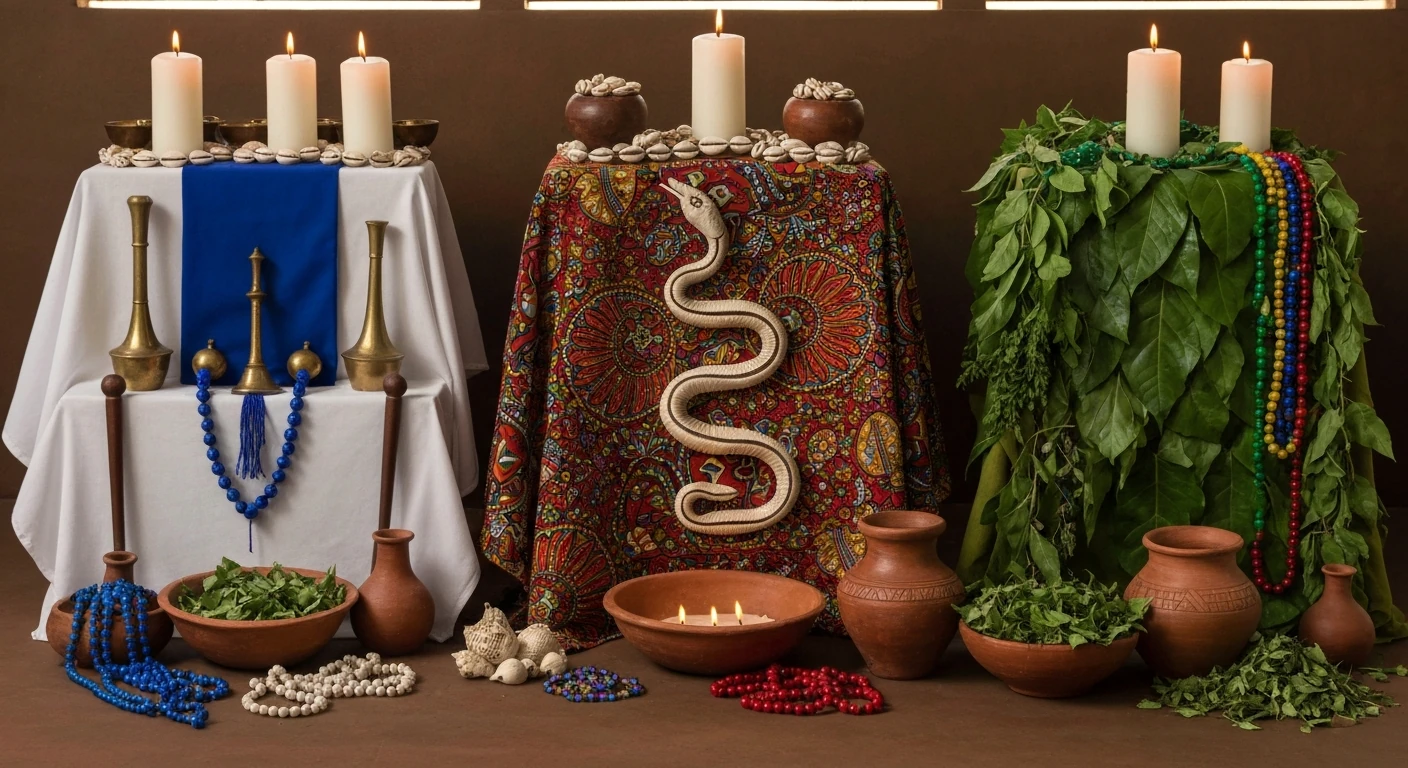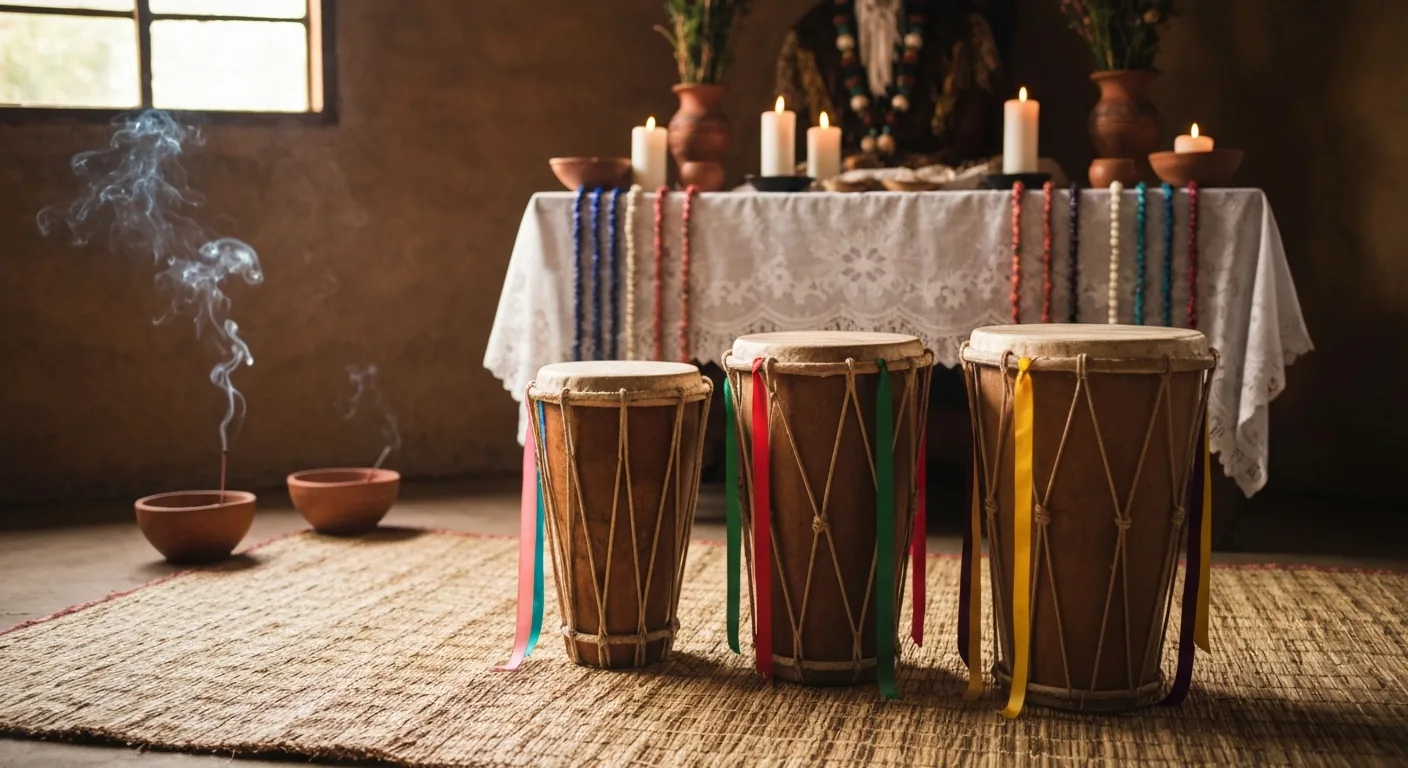
You enter a house of the orixás (casa de santo) for the first time and quickly notice that there is an order: one asks for a blessing from the other, some dress the orixás, others play the atabaque, and one person commands everything from the height of an ancient respect. Understanding the positions in Candomblé is understanding this living order, which is not bureaucracy or a power ranking, but the division of responsibilities that keeps the axé of the house circulating.
This guide explains who is who in the terreiro: who is starting, who has already been initiated, who enters a trance, and who sustains the house without entering trance. The golden rule comes before everything: each root has its variations, and the final word is always that of your zelador or zeladora de santo.
In Candomblé, the hierarchy is of seniority, not of age
The first thing to understand is that the hierarchy of Candomblé does not follow the person's civil age. It follows the initiation time, that is, how long each person has been made in the santo. A twenty-year-old youth initiated a decade ago is older in santo than a sixty-year-old man who was initiated last year. This is the heart of the structure: respect is given to those who have more time of obrigação fulfilled.
Before any position, there is the abiã. Abiã is everyone who has already connected to the house and attends the ritual work, but has not yet gone through initiation. They participate, learn, help with tasks, and observe, without yet having performed any obligations to the orixá. It is the starting point for everyone, the step for those who are getting to know the religion from the inside. To understand the ground where all this happens, it is worth reading first what is Candomblé.
When a group of abiãs is initiated together, what is called a barco is formed. Inside the barco, the order of seniority is defined by the sequence in which each head is shaved during the feitura. The first receives the title of dofono, the second of dofonitinho, and so on. This order accompanies the person for the rest of their religious life. For an encyclopedic overview of the entire scale, it is worth checking the entry for hierarquia do candomblé na Wikipédia.
Iaô: the initiate who was reborn in the orixá
When the abiã goes through the initiation, the so-called feitura de santo, they become an iaô. The word comes from the Yoruba Ìyàwó and carries the meaning of "wife" of the orixá, one who joins the secret. The feitura is lived as a rebirth. The initiate is kept in the roncó (the seclusion room) for a period that usually revolves around twenty-one days, has their head shaved, and receives the orunkó, the initiation name by which they will be called in the community.
The iaô is a rodante, that is, they enter a trance and embody the orixá owner of their head. This strengthening of the head, the ori, is the same principle that appears in the bori ritual. From the feitura onwards, the iaô fulfills a sequence of obrigações, generally upon completing one, three, five, and seven years, each one confirming the commitment to the orixá.
Being iaô is being the youngest in the house in terms of obrigação, even being an adult. During this time, obedience and learning go hand in hand: the iaô listens a lot, asks with humility, and follows what the house teaches.
During the first years, the iaô follows a series of precepts and safeguards that vary from house to house. These internal foundations belong to the root and the zelador, and are not explained on the internet.
Ebômi: the eldest in the santo
Upon completing the seven-year obrigação, the iaô becomes ebômi (also written as egbomi or ebome). The word means, in simple translation, "my older brother" or "my older sister." It is a milestone: the ebômi stops being the youngest of the santo and becomes a reference for the younger ones.
Once this obrigação is fulfilled, paths of responsibility open. The ebômi may receive the decá, the set that authorizes them, if that is their mission and the will of their orixá, to one day open their own house and initiate children. Not every ebômi will follow this path, and that is normal: many remain as pillars of the house where they were made, sustaining the axé from within.
Ialorixá and babalorixá: the leadership of the house
At the top of the structure is the ialorixá (mãe de santo) or the babalorixá (pai de santo). It is who leads the terreiro, initiates the new children, cares for the assentamentos, and is responsible, materially and spiritually, for everything that happens in the house. Authority does not come from imposition, but rather from years of dedication, knowledge of fundamento, and earned trust.
Just below comes the iakekerê (mãe-pequena) or the babakekerê (pai-pequeno), the second authority of the house. It is the right hand of the zelador, who replaces them when necessary and helps conduct the ritual work and the training of the younger ones. All this leadership sustains and makes circulate the axé, the vital force that keeps the house alive.
Ogã and ekedi: those who sustain the house without entering a trance
Not everyone in Candomblé goes into trance, and that diminishes no one. There are two positions of honor, confirmed by the orixá themselves, whose occupants do not enter a trance: the ogã and the ekedi. They are chosen and "suspended" by the santo, and their function is essential for the festa to happen.
- Ogã: a confirmed man who does not incorporate. He sustains the house in various ways: plays the atabaques (when he is the alabê, the chief of the drums), ensures order, provides resources, and represents the house outside of it. It is a position of trust and prestige, not a mere drummer.
- Ekedi (ajoiê): a confirmed woman who does not incorporate. She cares for the orixás when they manifest in the rodantes: she dresses the orixá, wipes the sweat, supports, guides, and dances with them. For this care, she is called "mother" by the orixás themselves.
To be confirmed as ogã or ekedi is a choice of the orixá, and whoever receives this calling carries a great responsibility: without someone to play, dress, and organize, the roda simply does not turn.
Positions of trust: axogun, iabassê, alabê, and pejigã
In addition to the seniority scale, there are specialized functions, the positions of trust, entrusted to people of responsibility within the house. Each one takes care of a part of the ritual machinery:
- Axogun: responsible for the immolation, the sacrifices that ground the obligations. It is an ogã position, of great foundation.
- Iabassê: the cook of the axé, who prepares the food of the orixá, from the offerings to the orixás to the dishes for the festivals.
- Alabê: the chief of the drumming ogãs, who commands the atabaques (rum, rumpi, and lé) and conducts the toques of each orixá.
- Iatebexê: who "pulls" the chants and conducts the singing during the xirê, the roda of the festivals.
- Pejigã: the caretaker of the peji, the altar or room where the assentamentos (consecrated foundations) of the orixás are kept.
The names and attributions of these positions change according to the nation and the root of the house. What does not change is the principle: each function exists to serve the orixá and the community.
The same positions in each nation: Ketu, Angola, and Jeje
Candomblé is not a single religion, but rather a set of nations, each with its African origin and its liturgical language. The positions exist in all of them, but the names change. Treating Candomblé as a single block would only erase this diversity, so it is worth knowing the main equivalencies. For the complete overview, see the nations of Candomblé.
| Function | Ketu (Yoruba) | Angola (banto) | Jeje (Fon) |
|---|---|---|---|
| Initiate who circles | Iaô | Muzenza | Vodunsi |
| House leadership | Ialorixá / babalorixá | Mameto / tata de inquice | Doné / doté |
| Confirmed man who does not go into trance | Ogã | Kambondo | Ogã |
| Confirmed woman who does not enter trance | Ekedi | Makota | Ekedi |
| Worshiped deity | Orixá | Inquice | Vodum |
In the Ketu nation, of Yoruba root, the orixás are worshiped. In the Angola nation, of Bantu root, the inquices are worshiped, and the initiate is the muzenza. In the Jeje nation, of Fon root, the voduns are worshiped, and the initiate is the vodunsi. Anyone who wants to feel in practice how the language changes from one house to another can see the greetings of Candomblé de Angola.
It is worth remembering: the structure of Candomblé is distinct from Umbanda, which has its own organization. And, within Candomblé itself, periods of obrigação, spellings, and assignments vary from root to root. This guide serves as a general map, but the map of your house is drawn by your zelador.
Frequently asked questions
What does an ogã do in Candomblé?
The ogã is a man confirmed by the orixá who does not enter trance. His function is to sustain the house: play the atabaques (when he is alabê), oversee the order of the rituals, provide resources, and represent the terreiro. It is a position of honor and trust, not just that of a drummer. Positions such as axogun, responsible for sacrifices, are also of ogã.
What is the difference between ekedi and ogã?
Both are positions of trust who do not enter transe, but they are divided by function and gender. The ekedi is a woman and takes care of the manifested orixás: she dresses, supports, and dances with the orixá. The ogã is a man and sustains the house outside of transe: he plays, organizes, and provides. Both are chosen and confirmed by the orixá themselves.
What does iaô mean?
Iaô comes from the Yoruba Ìyàwó and designates the person already initiated in Candomblé who enters a trance with their orixá, but has not yet completed the seven years of obrigação. The term carries the meaning of "wife" of the orixá, who joins the secret. During this period, the iaô fulfills safeguards and obligations that vary according to the house.
When does the iaô become ebômi?
The iaô becomes ebômi upon fulfilling the obligation of seven years of initiation. From then on, they are recognized as an "older brother or sister" in the faith and can, if it is their mission and the will of the orixá, receive the decá and one day open their own house. Some terreiros also mark obligations of one, three, and five years along this path.
What is an abiã?
Abiã is the person who has already connected to the house of the orixás and attends the ritual work, but has not yet undergone initiation. They learn, help with tasks, and observe, without having performed any obligations to the orixá. It is the first step of religious life in Candomblé, from where everyone starts before eventually becoming iaôs.
Where to find items for the life of santo
At Joia Mística Laroyê, you find what you need to accompany life in your terreiro, regardless of how long you have been initiated:
- Roupa de ração (everyday ritual clothing) and white clothing: for days of obrigação and festival
- Beads and bead strings: in the colors of the orixás, for devotional use
- Ritual candles: to light with faith in the assentamentos and on the dates of the orixás
- Herbs for baths and fumigations: separated or in combos
- Atabaques and instruments: to accompany the house beats
Visit our physical store in Extrema, Minas Gerais and we ship to all of Brazil. For guidance on the correct use of each item, talk to us via WhatsApp.
References
- Wikipedia: entry about the hierarchy of Candomblé
- Wikipedia: entry about the iaô, the initiate who enters a trance