Exu is not the devil. This is the most urgent answer for those who ask who is Exu and also the most denied by centuries of prejudice. Exu is the orixá of communication and movement, the messenger between the spiritual world and the material world, the first to eat and the first to be greeted in any terreiro. Without him, nothing begins.
This guide presents Exu in depth: the Yoruba origin, the complete technical sheet, and the history of how the messenger orixá was transformed into a "devil" by the colonial gaze. It also brings the difference between the Exu orixá of Candomblé and the guardian exus of Umbanda, which are not the same thing.
Who is Exu, the messenger orixá
Exu is the Yoruba orixá of communication, movement, and paths. He is the messenger between Orum (the spiritual plane) and Aiyê (the material plane): every offering, prayer, or prayer request first passes through him. That is why he is the first to be greeted and to receive an offering in any Candomblé ritual.
In Yoruba Africa, Exu is also called Elegbara, "the lord of power," and Bará, the name by which he is worshipped to this day in the batuque of Rio Grande do Sul. His symbol is the ogó, the ritual staff he carries in his hand, and his readings, with the laterite, the cowrie shells (búzios), and the key, are in symbols of Exu. As we explained in our guide about the orixás, each orixá governs forces of nature and human life; Exu's domain is everything that moves: the word, the road, the door, the border, the exchange.
The myths compiled by Reginaldo Prandi in Mitologia dos Orixás show a shrewd, dynamic Exu, capable of turning any situation upside down. It is his famous itan in which he collects all the stories of the world. Pierre Verger described him as vain and irascible, but also generous with those who treat him with respect. That is why tradition calls him “the most human of the orixás”: neither totally good, nor totally evil, like every person who walks.
Technical sheet of Exu
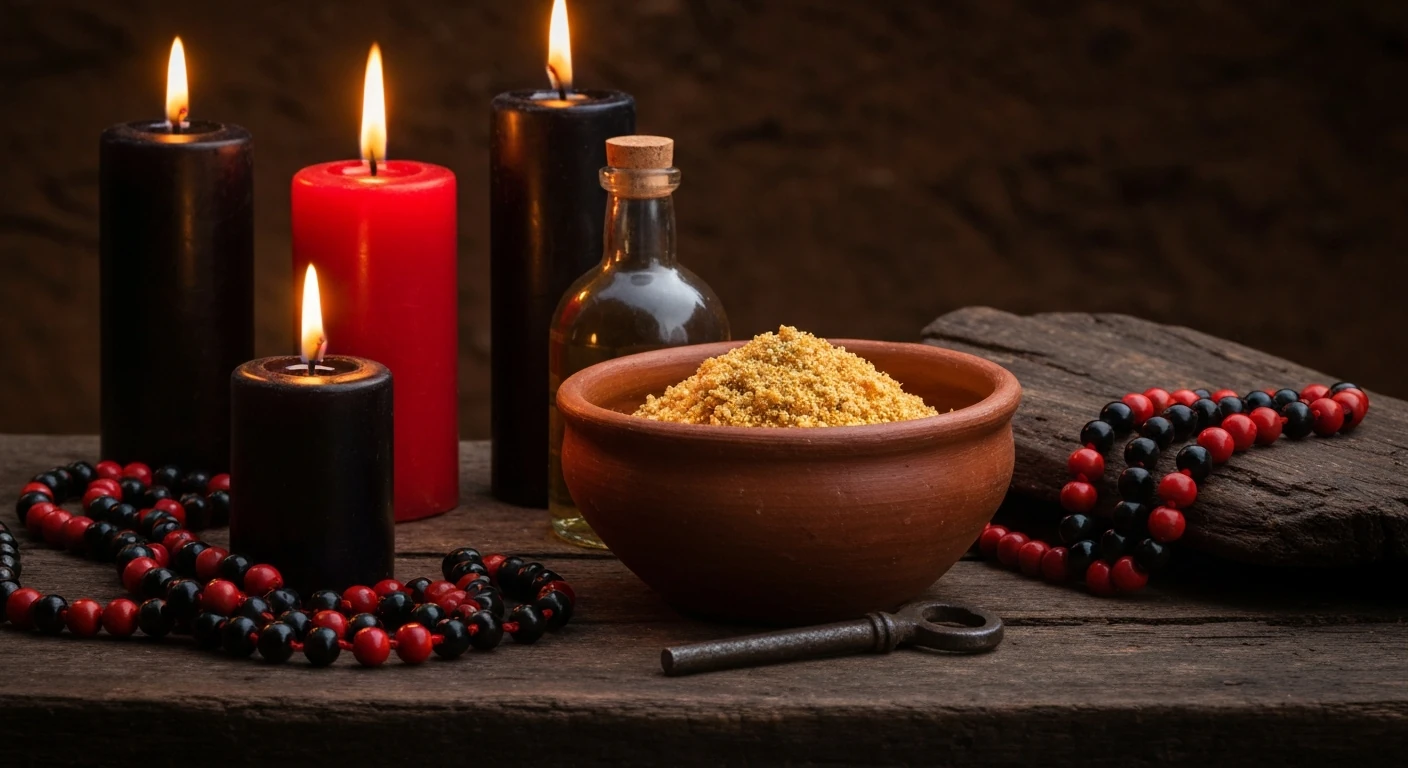
Colors: Red and black | Day: Monday | Element: Fire and movement | Domains: Crossroads, paths, doors, communication | Symbol: Ogó, the staff | Ritual offering: Padê (farofa de dendê) | Greeting: Laroyê Exu!
Names and paths: Exu (from the Yoruba Èṣù), Elegbá/Elegbara, Bará (batuque), Exu Odara, Exu Alaketu, Exu Lonan (owner of the paths), Yangi (a primordial laterite, red stone that is his first consecrated foundation (assentamento)).
The bead necklace in these colors, with the variations of each house, is in Exu's guia, and what the consecrated foundation (assentamento) is, who makes it, and why it stays at the door is in Exu's assentamento.
Syncretism: In the South of Brazil and in Rio, Bará was associated with Saint Anthony, celebrated on June 13, the day of Exu, one of the bridges we explain in the article about june saints and orixás. Important: the association with the “devil” made by missionaries is not syncretism: it is historical demonization, as shown in the next section.
In the Candomblé of the ketu nation, no xirê begins without Exu receiving the padê. It is he who opens the communication between the house and the Orum: a liturgical function, not a “pact” of any nature.
The myths of Exu: the owner of stories
Yoruba oral literature keeps itans, myths that say more about Exu than any technical sheet. Two of them are unavoidable.
The story collector
Tradition, recorded by Prandi, tells that Exu was tasked by Olodumare to collect all the stories of the world: the events of the earth and the sky, of men and of orixás. Exu saw everything, heard everything, and delivered everything to the system of destiny. That is why he is the orixá who knows the paths of each one: nothing happens that Exu does not know, no prayer request reaches Orum without passing through his hands.
The two-colored cap
The itan most cited about Exu is also the most current. Two friends swore that nothing could separate them. Exu, wanting to show the danger of absolute certainty, passed between the two wearing a cap red on one side and black on the other. One friend swore to have seen a man with a red cap; the other, with a black cap. The discussion turned into a fight, and the fight broke the friendship, until Exu revealed the trick.
The teaching is direct: no one sees the whole truth from where they are. Exu is the orixá who dismantles certainties, forces one to look from the other side, and punishes the arrogance of those who think they see everything. In a time of absolute opinions, the myth of the two-colored cap continues to be one of the wisest lessons of Afro-Brazilian tradition.
From messenger to "devil": how prejudice was born
When European missionaries encountered the worship of Exu, they had to fit it into a cosmology that only knew two poles: absolute good and absolute evil. The orixá of the street, of the body, of movement and of the word, guardian of everything that the Christian morality of the time repressed, was pushed into the wrong pole. As Reginaldo Prandi documents in the academic article “Exu, from messenger to the devil” (Revista USP, 2001), the identification of Exu with the “devil” was a colonial and missionary construction, and not a foundation of the religion.
Prandi shows the date when the swap appears in writing: in 1857, the Baptist missionary Thomas Bowen recorded that “in the Yoruba language the devil is called Exu.” The most lasting result was the translation. In the Yoruba version of the Bible, the word “Exu” began to be used for the devil, as recorded by the anthropologist Vagner Gonçalves da Silva. The Nigerian linguist Kọ́lá Túbọ̀sún says it was Bishop Àjàyí Crowther, with the team that translated the Bible, who chose Èṣù to translate Satan.
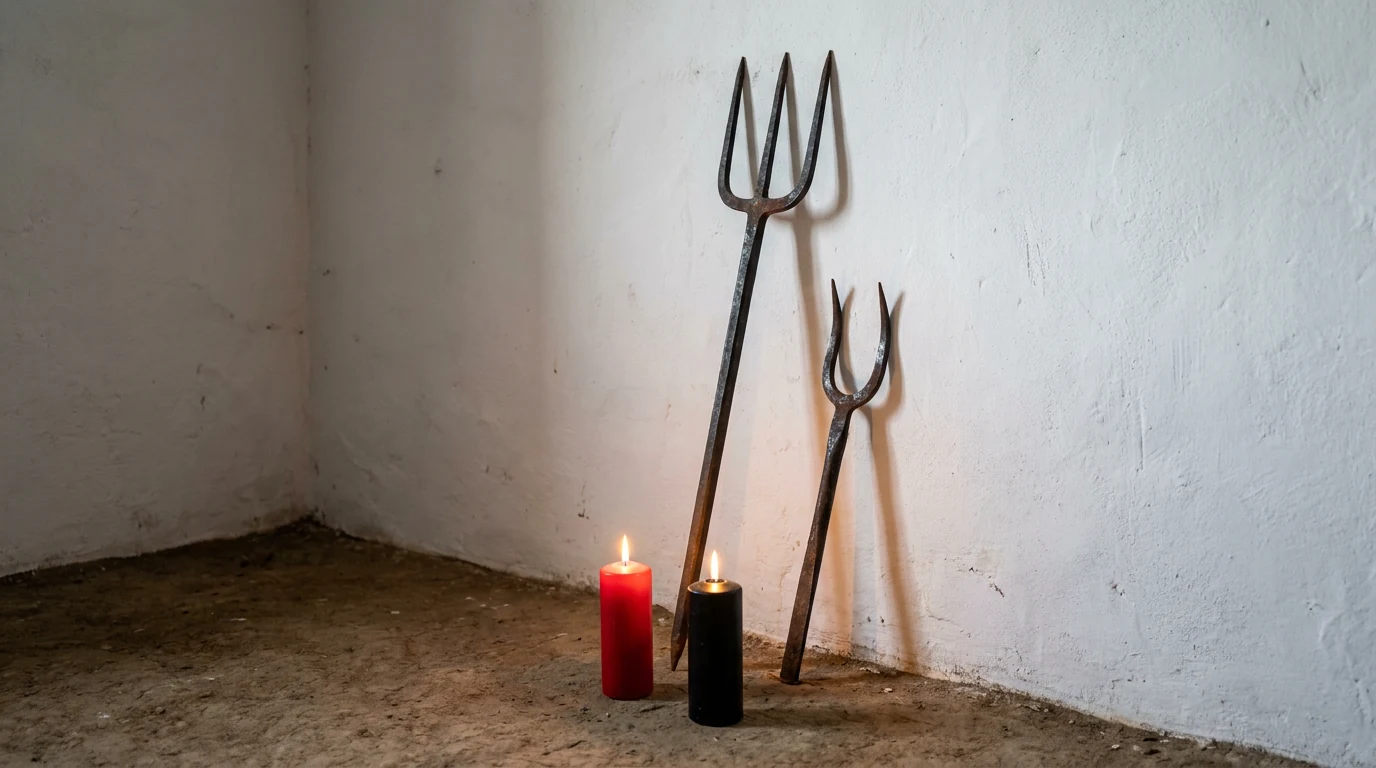
The same reading explains the trident, which today is in almost every ponto riscado of Exu; its disputed origins are in the trident of Exu.
The Yoruba cosmology does not have a “devil”. There is no entity that personifies absolute evil in the traditional thought of the orixás. Exu punishes and rewards, opens and closes, exactly like life. Recent research, such as the work released by the Federal University of Goiás on the representations of Exu, shows how this colonial distortion continues to feed religious intolerance against terreiros to this day.
Naming this process is part of undoing it: when someone asks "Is Exu evil?", the question is already born from the colonial imaginary, and not from tradition. The tradition's answer is different: Exu is the principle of movement, and without movement there is no life, no axé circulating, no path open.
Exu orixá and guardian exu: the difference that matters
Here lies the most common confusion, even among practitioners in training. The Exu orixá of Candomblé and the guardian exus of Umbanda share the name and the greeting, but they are distinct spiritual realities. Just as umbanda and candomblé are different traditions, their "Exus" are too.
| Exu orixá (candomblé) | Exu guardião (umbanda) | |
|---|---|---|
| What is it | Divinity of the Yoruba pantheon (orixá) | Spirit of a person who lived, in evolution (entidade) |
| Origin | Africa: worship of Èṣù/Elegbara | Brazil: Umbandist cosmology |
| Function | Messenger between Orum and Aiyê; first to receive offering | Guardian of the terreiro, of the medium and of the paths; breaker of demands |
| How it manifests | Orixá worship: assentamento, padê, xirê | Spirit incorporation in the giras; provides consultation and guidance |
| Examples of names | Exu Odara, Elegbara, Bará, Lonan | Tranca-Ruas, Sete Encruzilhadas, Caveira, Pombagiras |
| Greeting | Laroyê Exu! | Laroyê Exu! (shared) |
Mixing the two planes is the number one error of shallow internet content. The Exu orixá does not incorporate by giving a consultation in the gira; the guardian exus are not African deities. Each tradition has its foundation and both deserve the name spoken with respect.
The guardians have names that speak of the place where they work, such as the crossroads, the cemetery, and the mud, and the list, one by one, is in Exu names. How the house recognizes the Exu who accompanies each medium is in Exu de guarda. Who is a child of Exu in Candomblé, and what is just a stereotype, is in filhos de Exu.
The guardian exus of Umbanda
In Umbanda, the exus are spirits of people who lived, souls in a process of evolution through charity, who work in the so-called left line. They work under the direction of the Orixás and the Law of the house, like the other spirit guides of Umbanda: they protect the terreiro, the medium, and the consultees, undo demands, and take care of the paths.
“Left” does not mean evil. In Umbanda, left designates a field of action: protection, justice, breaking of demands, work on the borders. The guardian exus are defined by the tradition itself as workers of light who act where other lines do not reach.
Some consecrated names of these lineages:
- Exu Tranca-Ruas: lord of the paths and the crossroads, linked to the vibration of Ogum (Ogun); one of the most worshipped guardians in Brazil.
- Exu Sete Encruzilhadas: linked to the choices and directions of life; it is also the name of the exu associated with the founding narrative of Umbanda.
- Exu Caveira and João Caveira: line of the souls, who works in the kalunga pequena (the cemetery), under the vibration of Obaluaê, with the transmutation of energies.
- Pombagira: the feminine counterpart of the line, with Maria Padilha, Sete Saias and so many others. A spirit of defense, dignity and undoing of illusions, and not the unfair stereotype that society has pinned on her.
- Exu Gato Preto: registered by researchers in houses of Umbanda and Quimbanda in São Paulo, Minas Gerais and Paraná.
All the names, with who each one is, are in names of Exu.
In Quimbanda, Exu and Pombagira occupy the center of the worship, with their own foundations and hierarchy: it is the so-called "povo da rua", as we explain in the article about what is quimbanda. The anthropologists Emerson Giumbelli and Leonardo Almeida, who studied Gaúcha quimbanda, remind us that "specific does not mean autonomous": the worship relies on principles of Umbanda and Batuque. It is not "umbanda of evil". The kingdoms are in kingdoms of quimbanda, and what separates the two is in difference between umbanda and quimbanda.
What to offer to Exu
In Ketu Candomblé, the liturgical offering of Exu is the padê, from the Yoruba ipadé, "meeting": a farofa of dendê oil, sometimes accompanied by water, honey, or cachaça, served before any ceremony so that Exu opens communication and the paths. Dendê, in fact, is a constant presence in everything that touches Exu: the color of fire, heat, movement.
Outside the terreiro context, those who wish to honor Exu usually resort to simple and respectful gestures:
- Red and black candles, lit on Monday; the colors of the ritual candles follow the vibration of each orixá
- Bead necklaces (guias) in red and black, washed and cared for with axé
- Hot herbs linked to his vibration, such as arruda and guiné, used in baths and protection fumigations. The map of what research links to Exu, house by house, is in Exu herbs
- The greeting, spoken with faith, when passing a crossroads or starting a ritual work: Laroyê Exu!
Ritual offerings (ebós, settled padês, crossroads ritual works) are the foundation of the terreiro. Each house has its precept, and what is delivered, where, and how, is the guidance of a babalorixá, ialorixá, or leader. If you feel the call of Exu, the safest path is to seek a serious house and ask. Exu respects those who respect him.
What to take and where to deliver, in general terms, is in offering for Exu.
Frequently asked questions about Exu
Is Exu evil?
No. Exu is the orixá of communication, movement, and paths, the messenger between the spiritual and material worlds. The association with "evil" is a historical distortion created during the colonial period, when missionaries forcibly fitted Yoruba cosmology into Christian duality. The tradition does not have this reading.
What does "Laroyê Exu" mean?
It is the greeting for Exu, coming from Yoruba, with an approximate translation of "hail the messenger!", an exclamation of reverence and joy. It is said when greeting him in rituals, when passing through crossroads, and when starting spiritual ritual work, both in Candomblé and in Umbanda and Quimbanda.
What is the day and what are the colors of Exu?
The day of Exu is Monday, when candles are lit and requests for opening paths are renewed. His colors are red and black present in the candles, in the bead necklaces, and in the ritual garments linked to him in all Afro-Brazilian traditions.
What is the difference between the Exu of Candomblé and that of Umbanda?
The Exu of Candomblé is an orixá: a Yoruba divinity, a messenger between Orum and Aiyê. The exus of Umbanda are spirits: spirits of people who lived and today work as guardians in the giras, such as Tranca-Ruas and Sete Encruzilhadas. Same name, same greeting: different natures.
What does Exu like to receive?
In Ketu Candomblé, the liturgical offering is the padê: farofa with dendê oil, served before every ceremony. Elements such as cachaça, honey, cigars, and red and black candles appear in the different traditions. Ritual offerings, however, follow the precept of each house: seek the guidance of a leader.
Where to buy products to honor Exu
At Joia Mística Laroyê, you find items prepared with respect to the fundamento:
- Red and black candles for Monday and requests for opening paths
- Bead necklaces and strands of beads in the colors of Exu, red and black, in different finishes
- Statues of Exu and Pombagira in plaster and resin, in various sizes
- Arruda, guiné and hot herbs, fresh or dry, for protection baths and fumigations
- Ready-made defumadores (smoke-cleansing incense): traditional blends for cleansing and firmeza of the environment
Visit our shop in Extrema-MG or talk to us via WhatsApp and we ship all over Brazil. Every Monday is the day to set your request for open paths.
Laroyê Exu!
References
- Reginaldo Prandi: “Exu, from messenger to the devil”, USP Magazine, 2001
- Federal University of Goiás: The representations of Exu, from orixá to egum, UFG Journal
- Vagner Gonçalves da Silva: Exu do Brasil, Revista de Antropologia, 2012
- Emerson Giumbelli and Leonardo Almeida: The enigma of Quimbanda, Anthropology Magazine, 2021
- Kọ́lá Túbọ̀sún: Èṣù is not the Devil, YorubaName, 2016 (archived copy)