The bead necklace is the piece that most disappears from the explanation when someone starts in Umbanda. The necklace appears on everyone's neck in the terreiro, and almost no one tells the beginner what it is, why that color, and what happens if it breaks.
It is worth clearing up a naming confusion right away. Guia is also the name of the spirits that work in the gira, a theme addressed in who are the spirit guides of umbanda. Here the conversation is about the object: the ritual bead necklace.
What is the bead necklace
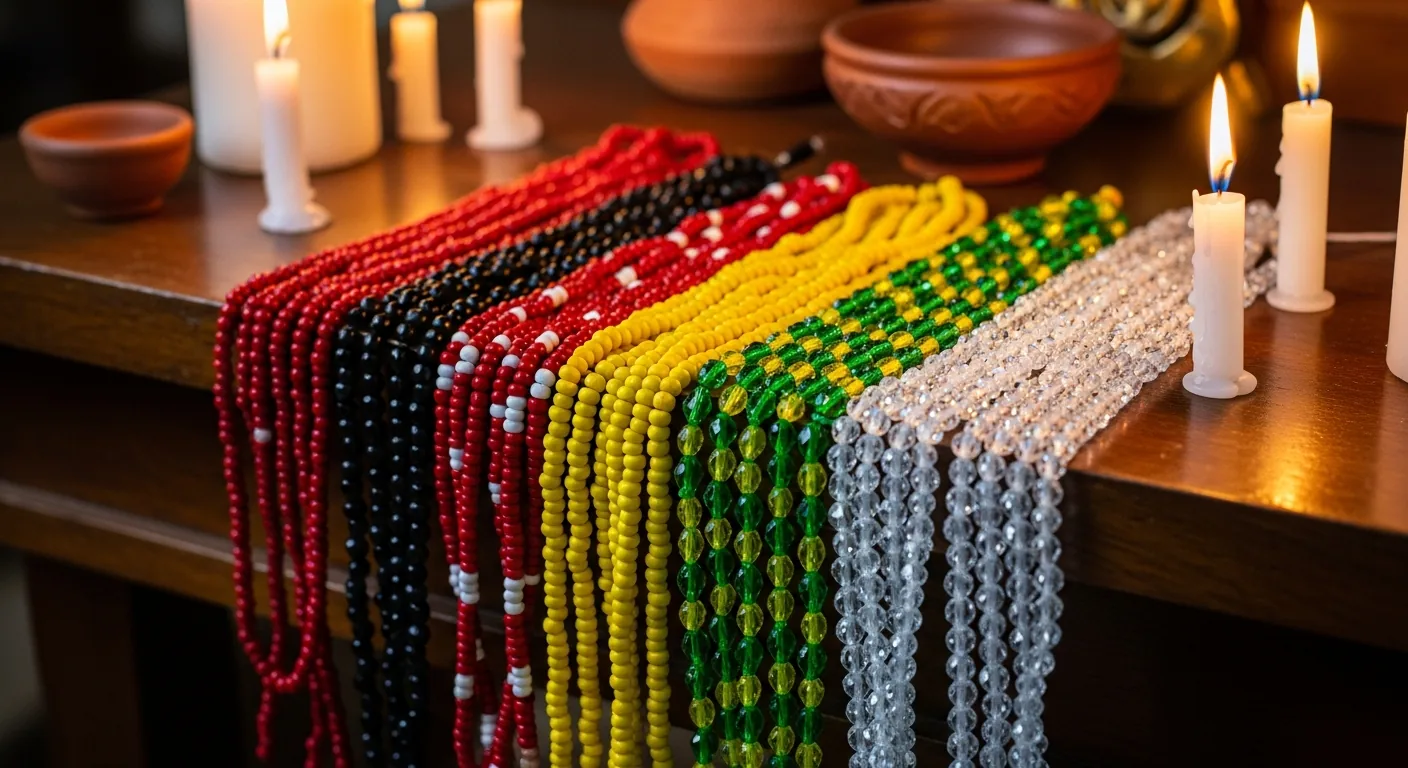
The guia is a ritual bead necklace used in Afro-Brazilian religions. The same object receives several names: bead necklace (fio de contas), cordão de santo, colar de santo, brajá. In Candomblé it is called ilequê, from the Yoruba ilèkè.
It fulfills three functions at the same time.
- Connection: link between the person and the orixá or the spirit to which they are linked
- Protection: a condenser that absorbs charge before it reaches the person
- Identification: shows the line, the house, and the point of the path of the wearer
The Nagô pai de santo Manuel do Nascimento Costa summarizes the piece as a connection between the orixá and matter, with a protective function.
The bead necklace (guia) is not a luck amulet. It is a ritual work tool and a mark of connection, and the effect depends on the foundation of the house, not on the piece itself.
Materials, cord, and firma
The material changes according to the house, the nation, and the spirit for which the piece is intended.
| Material | Most common use |
|---|---|
| Glass bead | Base of most bead necklaces, in all colors |
| Ceramic and porcelain | Orixá bead necklaces, matte finish, older houses |
| Faceted crystal | Iemanjá (Yemoja), Oxalá (Obatala), and spirit guides of light |
| Seed | Our Lady's Tear in the pretos-velhos, red tento with a black tip in the exus |
| Coconut, cowrie shell, and steel | Guardians and protection bead necklaces |
| Coral, ivory and metal | Pieces of fundamento and seniority |
The thread that sews everything matters as much as the beads. Tradition calls for cordonê, and several nagô houses refuse synthetic nylon, under the argument that the material needs to absorb the axé during the ritual.
The firma is the largest bead, or the pierced stone, that closes or marks the piece. It functions as a point of strength, through which energy enters and leaves. There are necklaces with a firma and necklaces without one, and the choice belongs to the leader.
The colors: why there is no single table
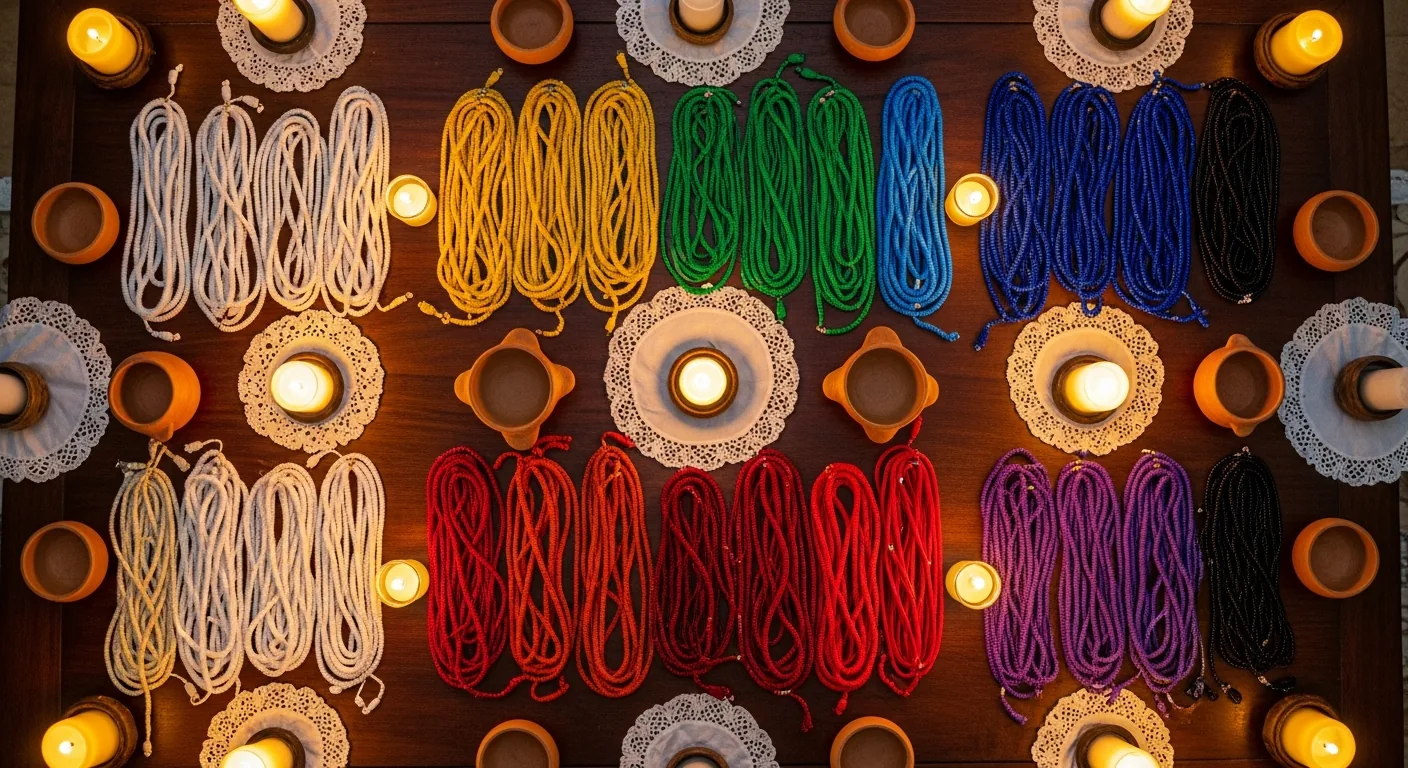
Here is the point that almost no site assumes. In Umbanda, the color of the bead necklace (guia) is not standardized. Two logics circulate at the same time and contradict each other in several points. Before looking at any table, keep the rule: the final word belongs to the leader of your house.
Logic A: the color of the line, from the system of the seven lines of traditional Umbanda.
| Line | Color |
|---|---|
| Oxalá | Milky white |
| Iemanjá | Light blue |
| Ogum | Red |
| Oxóssi (Oshosi) | Green |
| Xangô | Brown |
| Yorimá (pretos-velhos) | Pink |
| Yori (children) | Yellow |
Logic B: the color of the orixá, inherited from Candomblé and common in umbanda omolokô houses and in shops. The correspondences below come mainly from nagô, ketu, and xambá houses.
| Orixá | Color |
|---|---|
| Exu | Black and red (xambá houses use white and black) |
| Ogum | Green or navy blue |
| Oxóssi | Turquoise |
| Obaluaê | White striped with black and brown |
| Xangô | Red alternating with white |
| Iansã (Oya) | Coral or brown |
| Oxum (Oshun) | Golden or amber |
| Iemanjá | Translucent white or crystal |
| Oxalá | Milky white |
Compare the two and the conflict stands out. Ogum is red in the first and green or navy blue in the second. Oxóssi swaps green for turquoise blue. Xangô moves from brown to red and white. Yellow belongs to Yori in one logic and to Oxum in the other.
None of this is anyone's mistake. They are two systems of different origins coexisting in a religion that never had a central body for standardization.
For the color of each orixá in depth, see colors of the orixás. The logic of the seven lines is detailed in the 7 lines of umbanda.
How the bead necklace (guia) is consecrated
The necklace purchased at the shop is raw material. It becomes a guia (consecrated bead necklace) after the rite, conducted inside the house by the leader or by the incorporated spirit.
The most common sequence in Umbanda follows these steps:
- Request or indication: the bead necklace (guia) is born from the guidance of the spirit or the leader, and not from personal choice
- Assembly: beads in the color, sequence, and number that the house determines, with the firma in place
- Washing: herbal bath, smoke cleansing (defumação), and spring water, to remove the charge of handling
- Amaci: the piece rests in the amaci with the herbs of the orixá, in many houses for about three days
- Illumination: candles lit on the congá during the rest
- Crossing: the leader or the spirit crosses the bead necklace, sometimes with pemba
- Delivery: only then does the piece begin to be used
The amaci is the most direct link between the bead necklace (guia) and the orixá of the person who will use it, and it has its own explanation in what is amaci.
Over time, the bead necklace (guia) requires maintenance. Discharging in running water, rain, or the sea is a common practice, as is re-energizing with smoke cleansing (defumação) or a new amaci. The calendar and the method are defined by the house. Regarding setting the piece in the right spot, see firmeza in umbanda.
Care for the bead necklace (guia) in daily life
Customs vary, and what follows is the most widespread standard.
- Do not lend your bead necklace (guia). It is linked to the axé and the path of a single person
- Take it off for sleep, for the ritual bath, and in intimate moments. There are exceptions, such as steel bead necklaces (guias) under the pillow
- Keep it in a clean and reserved place, away from friction and weight
- Do not invent the color or number of beads. That answer comes from the leader
- A ready-made bead necklace (guia) is not consecrated. It only fulfills its function after the ritual
Anyone can use a simple protection bead necklace with respect. A necklace of a specific line or of fundamento is something else: that one requires consecration performed by the house.
When the bead necklace breaks
This is the question that arrives most often, and it usually comes with fear.
Start with the most likely. The bead necklace is a handcrafted piece, the thread suffers from friction, humidity, and weight, and it breaks from wear like any necklace. Not every break carries spiritual meaning.
When there is a spiritual reading, the most common tradition understands that the piece absorbed a charge and fulfilled its role. No one serious will say, via a blog post, that someone performed a ritual work against you.
The procedure applies in any scenario: stop using it until it is remade and consecrated again. The fate of the loose beads changes by house. Some reuse the material, others return it to nature. Ask your leader.
Umbanda ritual bead necklace, ilequê and batuque bead necklace
The object is similar in the three traditions, but the meaning changes.
In Umbanda, the ritual bead necklace accompanies the line of ritual work, and the medium usually has several, one for each line.
In Candomblé, the bead necklace enters the initiation rite itself and marks rank. There is the simple abiã bead necklace, the multiple bead necklaces of the iaô and the crystal or coral pieces of the ebomi.
In the Gaucho Batuque, the ritual bead necklace is washed in the omieró and crossed, and the colors follow the specific pantheon of the tradition. This section has a dedicated article in bead necklaces in batuque.
Frequently asked questions
What are the colors of the 7-line ritual bead necklace?
In the seven-line system, the most cited pattern is white for Oxalá, light blue for Iemanjá, red for Ogum and green for Oxóssi. The ritual bead necklace is completed by the brown of Xangô, the pink of Yorimá and the yellow of Yori. The order and tones vary according to the house.
What does it mean when the ritual bead necklace breaks?
Most of the time it means wear of the thread, since the piece is handmade and suffers friction. When there is a spiritual reading, the tradition understands that the ritual bead necklace absorbed a charge. In any case, stop using it and seek your house to remake and consecrate.
Can I use an Umbanda ritual bead necklace without being from the terreiro?
A simple protection ritual bead necklace can be used by anyone, with respect. Ritual bead necklaces of a specific line, of fundamento or of a spirit require consecration and guidance from the house. Buying the ready-made necklace does not replace the rite performed by the leader.
Can I sleep with the Umbanda ritual bead necklace?
The majority custom is to remove the guia for sleeping, for a ritual bath, and during intimate moments, preserving the piece and the bond. There are known exceptions, such as steel guias kept under the pillow by the indication of a spirit. Follow the guidance of your house.
What is the purpose of the Umbanda bead necklace?
It connects the person to the orixá or the spirit, protects the wearer by functioning as a charge condenser, and identifies the line and the point of the path. For the medium, it is a tool for ritual work in the gira, and not a decorative piece.
Where to buy beads, firmas, and bead necklaces (guias)
At Joia Mística Laroyê, you find the material for your house to assemble and consecrate the piece:
- Beads and porcelain beads: individual, in all colors of line and of orixá
- Firmas and pierced stones: to mark and close the bead necklace
- Cordonê: the traditional thread, without synthetic nylon
- Assembled bead necklaces (guias): ready for the washing and the crossing in your terreiro
- Herbs for amaci and smoke cleansing: for the stage conducted by the leader
It is worth repeating: the piece leaves here as raw material and becomes a consecrated bead necklace (guia) after the rite in the house. Visit our shop at Rua Benedito Zingari, 460, Bela Vista, in Extrema-MG, or call on WhatsApp with delivery to all of Brazil.
References
- Wikipedia: entry Fio de contas, with names, materials, and types by degree of initiation
- Continente Magazine: report on threads and beads, symbols of faith and protection, with fathers and mothers of santo from nagô, xambá, and ketu houses
- Xapuri Magazine: the colors of the bead necklaces of each orixá, with the caveat of variation by nation
- Wikipedia: Umbanda entry, with the ritual objects and the variation of lines between terreiros
- Reginaldo Prandi: official page of the professor emeritus of sociology at USP, a reference in the study of Afro-Brazilian religions