In a house of the gaúcha nation, hearing that someone is pronto and someone else is pronto com faca e búzio might seem like a vocabulary detail, but it is not. The degrees of initiation in Batuque say who can do what inside the ilê, and this difference organizes the entire religious life.
This guide climbs the stairs step by step, from cabeça lavada to pronto com axés, and shows what each degree authorizes in practice. The focus here is the person and their status, not the calendar of rites, which remains in obrigação no batuque.
The ladder of degrees, at a glance
The Batuque do Rio Grande do Sul organizes its children of santo in a sequence that terreiro sources describe in a similar way. Below is the summary that the rest of the article details.
| Degree | What happens | What authorizes |
|---|---|---|
| Cabeça lavada | Washing of the head with omieró, the water of the orixá (orisha) leaves | Attending and serving the house. Not yet initiated |
| Oribibó | Head reinforcement with white dove, common in children | Strengthening, without change of position |
| Bird Bori | Feeding the head with birds of the frente and junto orixás (the main orixá and the paired orixá) | Formal entry into the hierarchy. Starts counting the years of initiation (tempo de santo) |
| Four-legged Bori | Higher degree of bori, with a four-legged animal | Access to restricted rites of the house |
| Ready | Preparation: consecrated foundation (assentamento) of all orixás, from Bará to Oxalá (Obatala) | Fully initiated, but without knife and without cowrie shells |
| Ready with axés | Receives the axé of obé (knife) and the axé of ofá (cowrie shells) | Throwing cowrie shells, leading obrigação, sacrificing, and opening one's own house |
Three observations before going into details. The ladder measures tempo de santo, not age. It varies from house to house. And no one climbs by their own will: the one who determines the moment is the leader, based on the game.
Washed head and oribibó: before the ladder
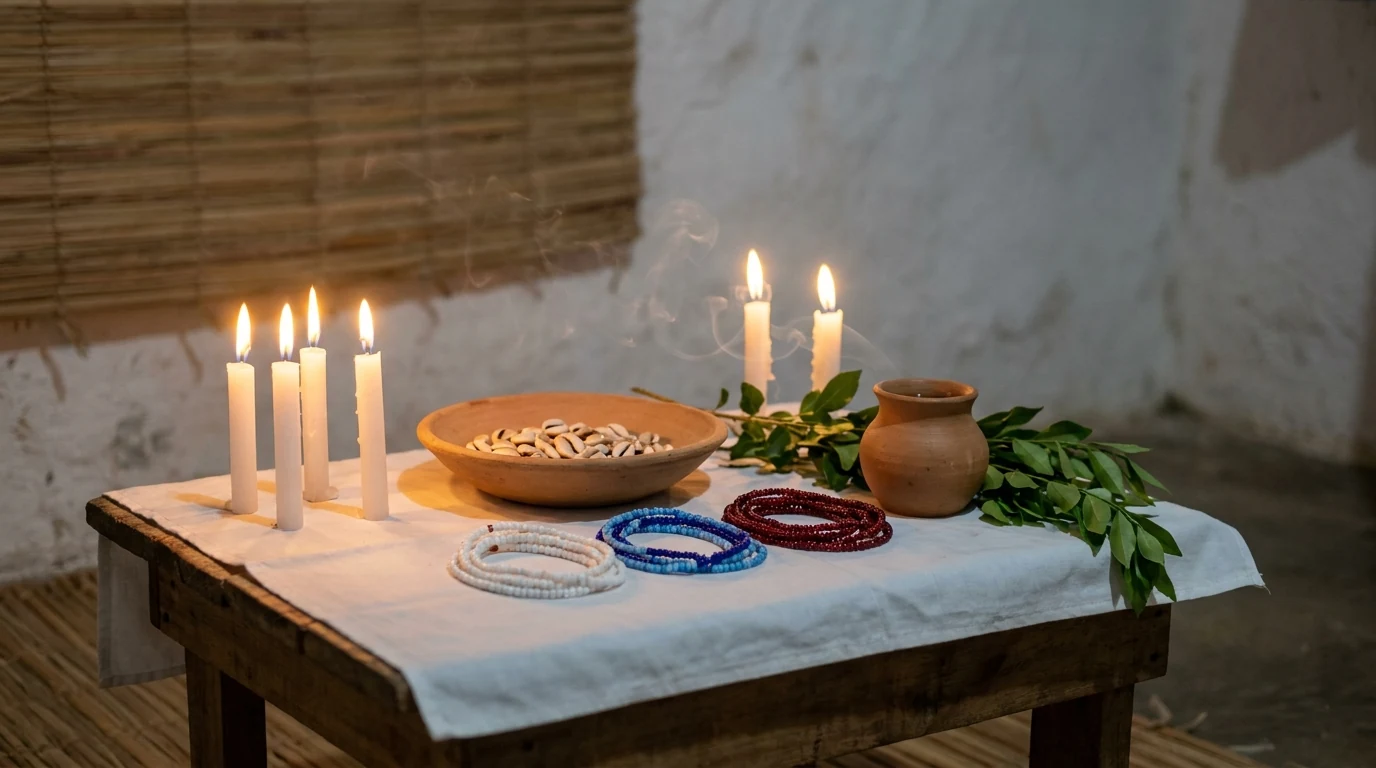
The first precept for someone arriving at a house of Batuque is the head washing. The babalorixá or the ialorixá crushes the leaves of the person's orixá and washes the ori with that water, called omieró. You also find the spellings omiero, mieró, and omiaxé, which change depending on the house.
Whoever has gone through the washing is cabeça lavada. The term describes someone linked to the house, who frequents and serves, but who is not yet initiated. It is a beginning of a bond, not a position. The same leaves from the omieró usually bathe the bead necklaces that the person begins to wear.
The oribibó is a head reinforcement made with white dove, often in children of the house. It covers and protects the ori, but it does not change anyone's place in the hierarchy. Cabeça lavada and oribibó stay below the borizados on the scale, and the laypeople stay outside of it.
None of this is done at home, on one's own. The head washing, the bori, and the preparation happen inside the ilê, conducted by the leader, with leaf, tempo, and fundamento that belong to that house. There is no homemade version of initiation.
Borí: the first real obrigação
The borí is the rite that feeds the head. In the Batuque it appears in two degrees. The borí de aves uses birds in the colors of the orixá de frente and the orixá de junto of the person. Therefore, the pair of orixás needs to be defined in the game before everything.
This is where the person formally enters the hierarchy. From the borí, the tempo de santo begins to count, the clock that truly matters in the house. Someone with eight years of borí is more senior (mais velho de santo) than someone with four. This remains true even if the second person is much older in age and has attended the house for a longer time.
The borí de quatro pés is the highest degree, made with a four-legged animal, and the terreiro sources treat it as initiation of the head proper. It opens access to restricted rites that the house reserves for those who have already reached this level. The ritual sacrifice, which here scales along with the degree, is a religious practice protected by law in Brazil. For the reader who arrived through the ketu side, it is worth comparing with what is borí in Candomblé.
Pronto: the preparation that gives the degree its name
Pronto is the one who has passed through the aprontamento, and the name of the degree comes exactly from there. The anthropologist Norton Corrêa, who studied batuque gaúcho for two decades, defines the aprontamento as the official and definitive establishment of the bond between the person and their orixá.
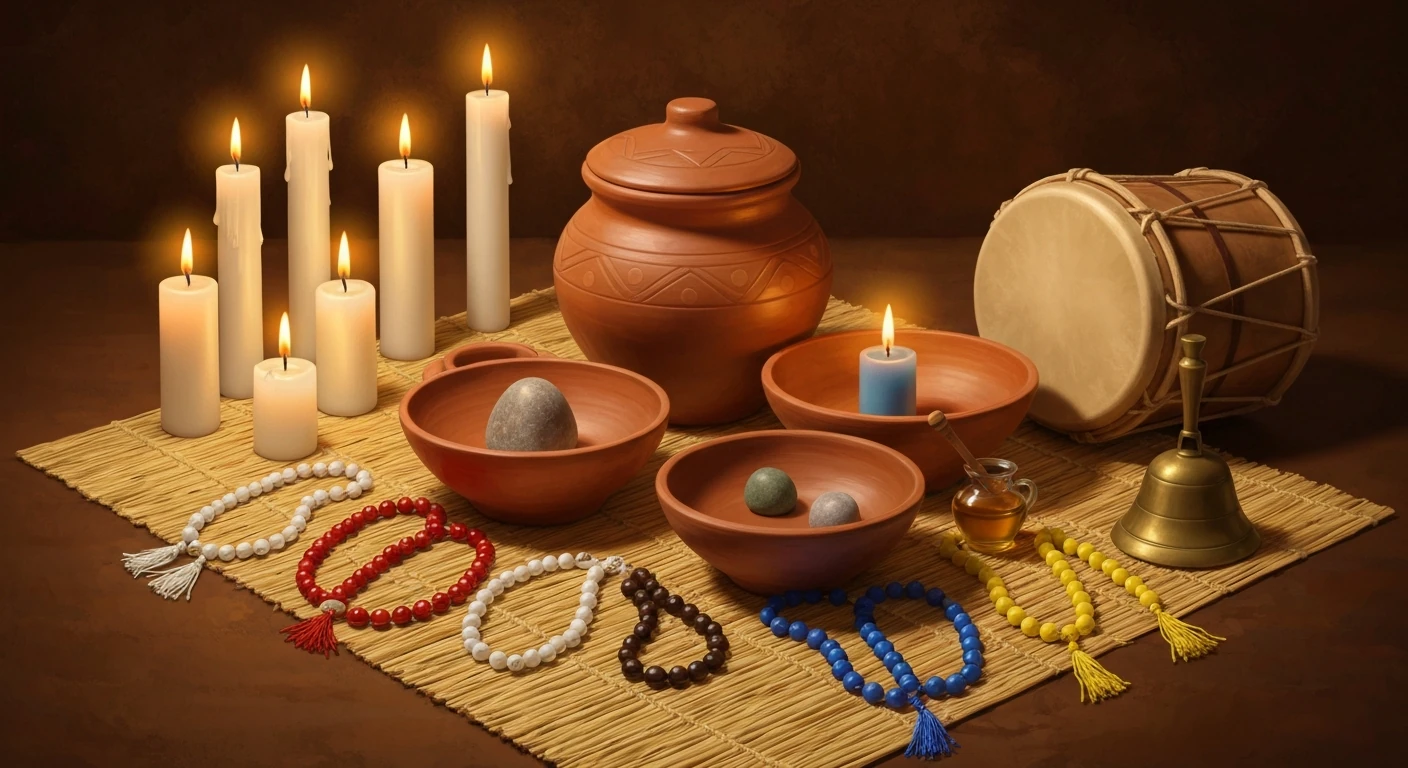
In practice, the aprontamento settles all of the person's orixás, from Bará to Oxalá, with acutá (also called otá), dishes, and tools. Bará opens and always accompanies, and for this reason, heads the sequence.
The point that usually causes confusion is this: the pronto is fully initiated, but does not yet have a knife or cowrie shells. They have completed the initiation, have their assentamentos, and are responsible for them. What they do not do is conduct obrigação for another person, immolate, or throw cowrie shells for a seeker. These functions depend on the next step.
Pronto with axés: knife, cowrie shell, and open house
The last step arrives with the delivery of the axés. There are two: the axé de obé, the knife, and the axé de ofá, the cowrie shells. Some houses write axé de ifá instead of ofá. Whoever receives both becomes pronto com axés, also called pronto com faca e búzio.
This degree authorizes what no other authorizes:
- Throwing cowrie shells for consultants and for the children of the house
- Conducting obligations of other people
- Immolating in the rites that require this function
- Opening one's own house, as a babalorixá or ialorixá
The delivery does not follow an automatic calendar. The traditional formulation, recorded in the Batuque entry on Wikipedia, is that one does not become a true sacerdote of orixás with less than seven years of feitura. But seven years is the floor, not the trigger: the axés come when the leader recognizes development and merit, and this reading passes through the game.
A master's thesis from UFRGS about orality in gaúcho batuque helps to understand why it works this way. Religious authority in a house of nação is sustained by public recognition and by speech legitimized by the community, not by a certificate. Degree, there, is something that the house recognizes.
Why the ladder changes from house to house
Batuque is organized into nations: Oió (or Oyó), Jeje, Ijexá, Cabinda and Nagô. The anthropologist Ari Pedro Oro, in an article about afro-gaúcho religions published in Estudos Afro-Asiáticos, records that Ijexá predominates today, while Oió and Nagô are practically extinct. He also collects the argument from Corrêa that the nations function today more as markers of religious origin than as separate liturgies.
The consequence is direct: the name and number of steps change. One house may call something one way while the neighbor calls it another, and there are foundations that exist in one nation and not in another. The ladder of this article is the pattern that repeats in the sources, not a regulation.
There is also a structural difference regarding Candomblé. Batuque does not have the fixed barracão positions that Ketu organizes, such as ekedi, ogã, and egbomi, a theme treated in positions and hierarchy in Candomblé. In Batuque, each babalorixá or ialorixá has full autonomy in their ilê, and what exists is initiatory degree, not a functional post.
Frequently asked questions
What does it mean to be pronto in Batuque?
Pronto is someone who has gone through the aprontamento, the rite that settles all the person's orixás, from Bará to Oxalá. They are fully initiated and are responsible for their own assentamentos. But they have not yet received the knife or cowrie shells, so they do not conduct the obrigação of others nor do they cast for consultants.
What does cabeça lavada mean in Batuque?
Cabeça lavada is someone who has gone through the head washing with the omieró, the water of the leaves of their orixá, performed by the house leader. It is the first precept for those who arrive. The person becomes linked to the ilê and can serve, but they are not yet counted as initiated in the hierarchy.
What is the difference between borí and being pronto?
The borí feeds the head and marks the formal entry into the hierarchy, when the time of santo begins to run. The aprontamento comes later and settles all the person's orixás. In summary, the borí takes care of the ori, and the aprontamento firms the bond with the entire personal pantheon.
How many years does it take to become pronto in Batuque?
There is no fixed deadline. Tradition cites seven years of feitura as a minimum for the priesthood, and not as a marked date. The time depends on the jogo (the divination), the development recognized by the leader, and the foundation of the house. Some trajectories take much longer than that.
What is axé de faca and búzio?
They are the two axés delivered at the highest rank. The axé de obé is the knife, linked to the immolation in the rites that require this function. The axé de ofá are the búzios, which authorize casting the cowrie shells for clients. With both, the person can conduct obrigação and open their own house.
Where to buy liturgical items for the batuque
At Joia Mística Laroyê, you find material for the house of nation and for the path of the filho de santo:
- Bead strands and bead necklaces: in the colors of the orixás of the batuque, to wash and firm
- Pottery, gamelas, and alguidares: clay and porcelain pieces for assentamento and offering
- Herbs for ritual bath and for the preparation of leaves: fresh and dry, by orixá
- Ritual candles: in the colors of each orixá, in various sizes
- Smoke-cleansing blends and incense: for cleaning the environment before the ritual work
Visit our shop in Extrema, Minas Gerais or contact us on WhatsApp with delivery to all of Brazil.
References
- Oro, Ari Pedro: article about Afro-Brazilian religions in Rio Grande do Sul, with the framework of the nations of the batuque, Afro-Asian Studies, via SciELO
- Lume Repository, UFRGS: dissertation on orality and religious authority in the Gaucho batuque
- Wikipedia: Batuque entry (religion), with the nations and the formulation of the seven years of initiation