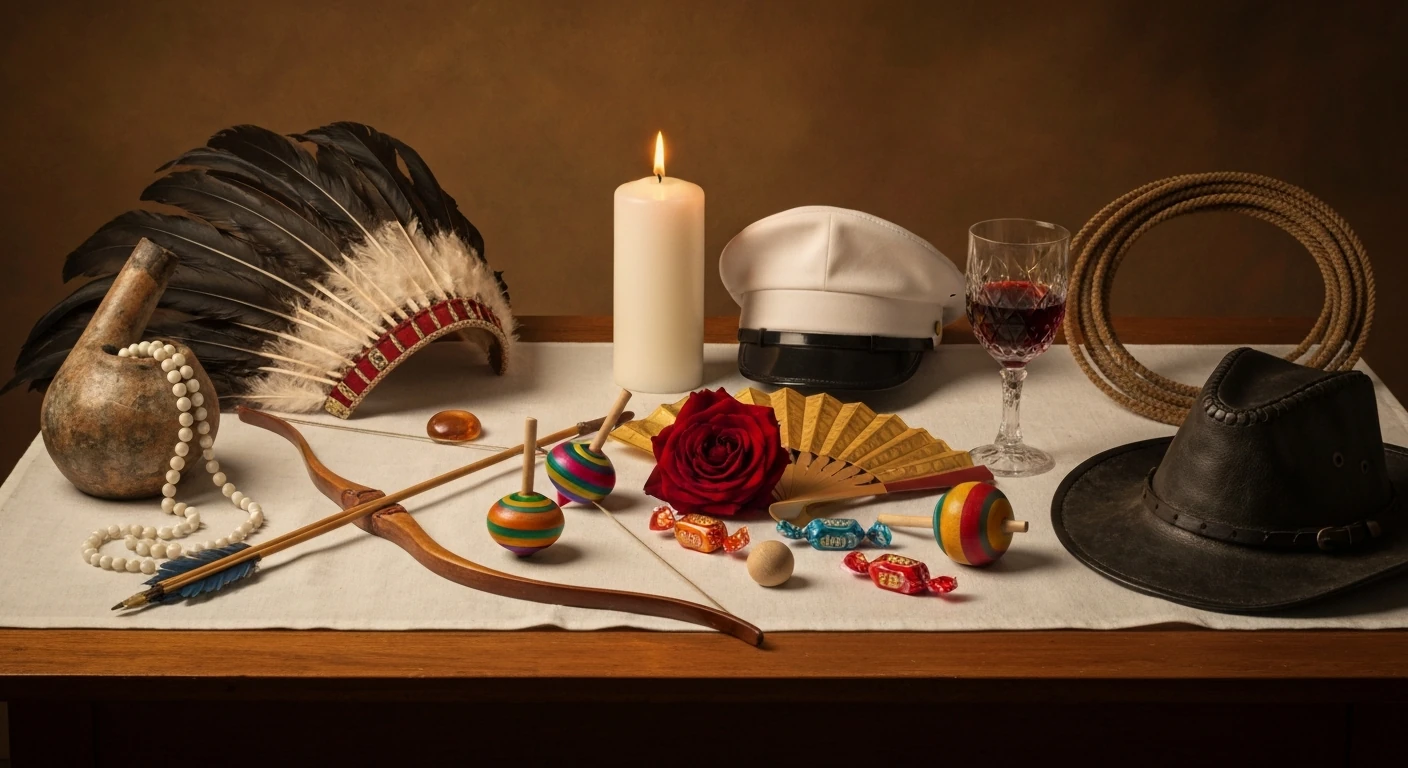
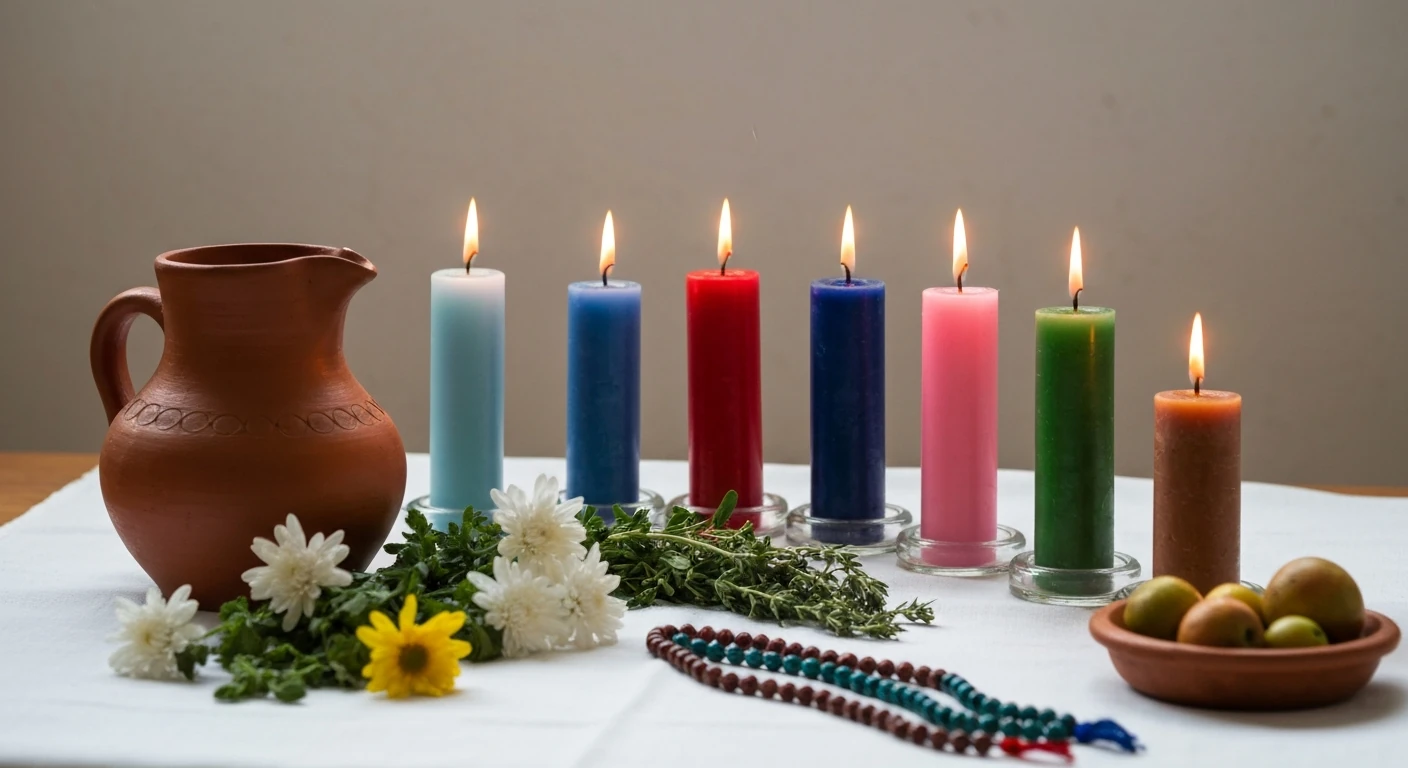
The Boiadeiros are spirits of Umbanda who arrive at the gira dressed as cowboys and peões from the sertão and work to drive away demands, like someone driving a herd of cattle.
The greeting is Getruá, Boiadeiro!. They share a kinship with the caboclos and were born in the line of Oxóssi, but they are not confused with the caboclos or the orixás (orishas), and each house defines the regency of its Boiadeiro.
Who are the Boiadeiros
The Boiadeiros are spirits of Umbanda who present themselves with the attire of the cowboys, peões, and tropeiros of the Brazilian sertão. They are spirits who lived dealing with cattle, the land, and the hardships of the countryside, and who return to work in charity. They bring the courage, freedom, and firmness of those who crossed the caatinga and the cerrado on the back of a horse.
The energy of the Boiadeiro is serious and rustic, but never cold. He is the strong arm, the spirit who faces heavy demands without backing down, and at the same time preserves the simplicity and loyalty of the man of the countryside. An academic study from the State University of Rio Grande do Norte describes them as guardians of the ancestral knowledge of the caatinga, preserving the memory of the medicine of the sertão and the sertanejo life.
Like every spirit guide, the Boiadeiro is an entity that has already incarnated, and not an orixá. He belongs to Umbanda and has no equivalent in Candomblé, something important to keep in mind so as not to mix the two traditions.
Greeting: “Getruá, Boiadeiro!” Terreiro sources translate the expression as “hail the one who has the strong arm.” You also hear “Geduê” and “Xetro Marrumbaxêtro,” depending on the house.
From which line do the Boiadeiros come
Here, honesty is required, because houses diverge and this is proper to Umbanda. The Boiadeiros guard a strong kinship with the caboclos, and tradition records that the falange emerged within the line of Oxóssi, the lord of the forests and hunting. The field and the forest touch, and the cowboy is the cousin of the hunter.
But the vibration of the Boiadeiro is not tied to a single point. Many houses link him to Ogum, through the fight and the demanda, while others associate him with Iansã and Tempo, for the force that directs spirits, or with Oxalá (Obatala), whom various traditions call the "King of the Boiadeiros." There are also those who add Xangô (Shango) to this picture, for justice.
The most correct way is to understand these connections as a spectrum of vibrations, and not as a single and closed affiliation. Who defines the regency of each Boiadeiro is the foundation of each terreiro. To situate all of this in the larger whole, it is worth knowing the sete linhas da umbanda.
Boiadeiro, caboclo and baiano: the differences
It is common to confuse the Boiadeiros with other lines of spirit guides, so it is worth separating them. The caboclo brings the ancestry of the indigenous peoples, the forest, the herbs, and the hunt. The baiano carries the clever malandragem and the swing of the urban and coastal Northeast. The Boiadeiro, however, is the man of the deep sertão, of the cattle, and of the open field.
The three share the firmeza and the direct ritual work, but each speaks of a different Brazil. The Boiadeiro is the people of the labor with cattle, the one who knows the pasture, the lasso, and the berrante. Recognizing this difference is respecting the cultural diversity that Umbanda welcomes in its giras.
How the Boiadeiros work in the gira
Anyone who has seen a Boiadeiro gira recognizes the scene: the dance of fast steps, imitating the cowboy who runs and lassos the cattle, the shouts and the sound of the berrante echoing in the barracão. Their arrival changes the rhythm of the house. See what they usually do:
- Unraveling of demanda: they are known for great authority to undo spells and heavy ritual work.
- Tocar a boiada: they push away and redirect obsessing spirits and dense energies, like someone driving cattle away.
- Descarrego and cleansing: they cleanse the magnetic field of the person and the environment with firmeza.
- Opening of paths: they help unlock life in work, in health, and in the protection of the family.
- Direct advice: they guide with the simple frankness and no-nonsense attitude of the country man.
The expression "tocar a boiada" summarizes their specialty well. Just as the cowboy leads the herd along the right path, the Boiadeiro leads away the energies and spirits that hinder the seeker's life.
The day, the colors, and the offerings
Like every Umbanda line, the Boiadeiros' profile varies from house to house. Even so, some traits repeat and help recognize the spirit:
Colors: the brown of leather and the green of the earth are the most cited, with variations by house | Drink: wine and aguardente | Symbols: the lasso, the whip, the berrante, and the horseshoe
The day dedicated to them also changes according to the terreiro, with Tuesday and Thursday among the most remembered. The offerings are usually delivered in fields, pastures, and open places, the natural environment of the Boiadeiro. They include fruits such as pineapple, orange, and grape, and dishes from the tropeiro kitchen, such as arroz carreteiro, shredded carne-seca, and ribs.
An offering is not guaranteed magic or a promise to solve your life within a deadline. It is a gesture of faith, respect, and firmeza, always guided by the spirit and the leader of the house. No serious guide promises a certain result.
The names of the Boiadeiros
Just like the other lines, the Boiadeiros form a large people, organized into falanges, and the "surname" usually indicates the origin or the mark of each one. Among the most remembered names in terreiros are Boiadeiro da Jurema, João Boiadeiro, Zé Mineiro, Boiadeiro Chapéu de Couro, Boiadeiro do Chapadão, and Carreiro.
Each house receives and settles its Boiadeiros in its own way, and this list is only an example, never a closed catalog. What matters is not memorizing names, but recognizing the vibration of the people of the sertão and respecting how each terreiro works with its spirit guides. To understand the set of Umbanda spirit guides, it is also worth knowing the other lines of the house.
Frequently asked questions
Who are the Boiadeiros in Umbanda?
The Boiadeiros are Umbanda spirit guides who present themselves as cowboys and peões of the sertão. They are spirits who lived dealing with cattle and the land and return to work in charity, with strength and simplicity. They are spirits, not orixás, and share a kinship with the line of the caboclos.
To which line or orixá do the Boiadeiros belong?
There is no single regency. Tradition links the emergence of the falange to the line of Oxóssi, but many houses also associate the Boiadeiros with Ogum, Iansã, and Tempo, or with Oxalá, called the King of the Boiadeiros. It is best to see this as a range of vibrations, defined by the fundamento of each terreiro.
What is the greeting of the Boiadeiro?
The most registered greeting is "Getruá, Boiadeiro!", translated by terreiro sources as "hail the one who has the strong arm". There are variants like "Geduê" and "Xetro Marrumbaxêtro", which change depending on the house. It is an oral tradition greeting, with various spellings.
What is the difference between Boiadeiro and caboclo?
The caboclo brings the ancestry of indigenous peoples, linked to the forest, herbs, and hunting. The Boiadeiro is the man of the backlands and cattle, linked to the open field, the lasso, and the horn. Both are firm and hardworking, but they represent different cultures within Umbanda.
What do the Boiadeiros work in the gira?
The Boiadeiros are known for undoing demands and spells, warding off obsessing spirits, and clearing dense energies, in what tradition calls "tocar a boiada". They also open paths, protect, and give direct advice. They have a reputation for great authority over backward spirits.
Where to find items for the Boiadeiros
At Joia Mística Laroyê, you find what you need to consecrate your devotion to the people of the backlands with respect to the fundamento:
- Candles in the colors of the line: brown, green, and others according to your house
- Boiadeiro statues: with leather hats and lassos, for your spirit guide's point
- Bead necklaces (guias) and firmas: in the colors of the Boiadeiros, for those who have a connection with the line
- Cigars and offering items: used in traditional devotion
- Herbs and incense: for baths and spiritual cleansing (descarrego)
Visit our physical store in Extrema, Minas Gerais and we ship to all of Brazil. For guidance on the correct use of each item and how to consecrate your devotion with responsibility, talk to us via WhatsApp.
References
- University of the State of Rio Grande do Norte: academic study on caboclos, boiadeiros, and vaqueiros as guardians of the knowledge of the caatinga
- Wikipedia: entry on Boiadeiro in Umbanda