



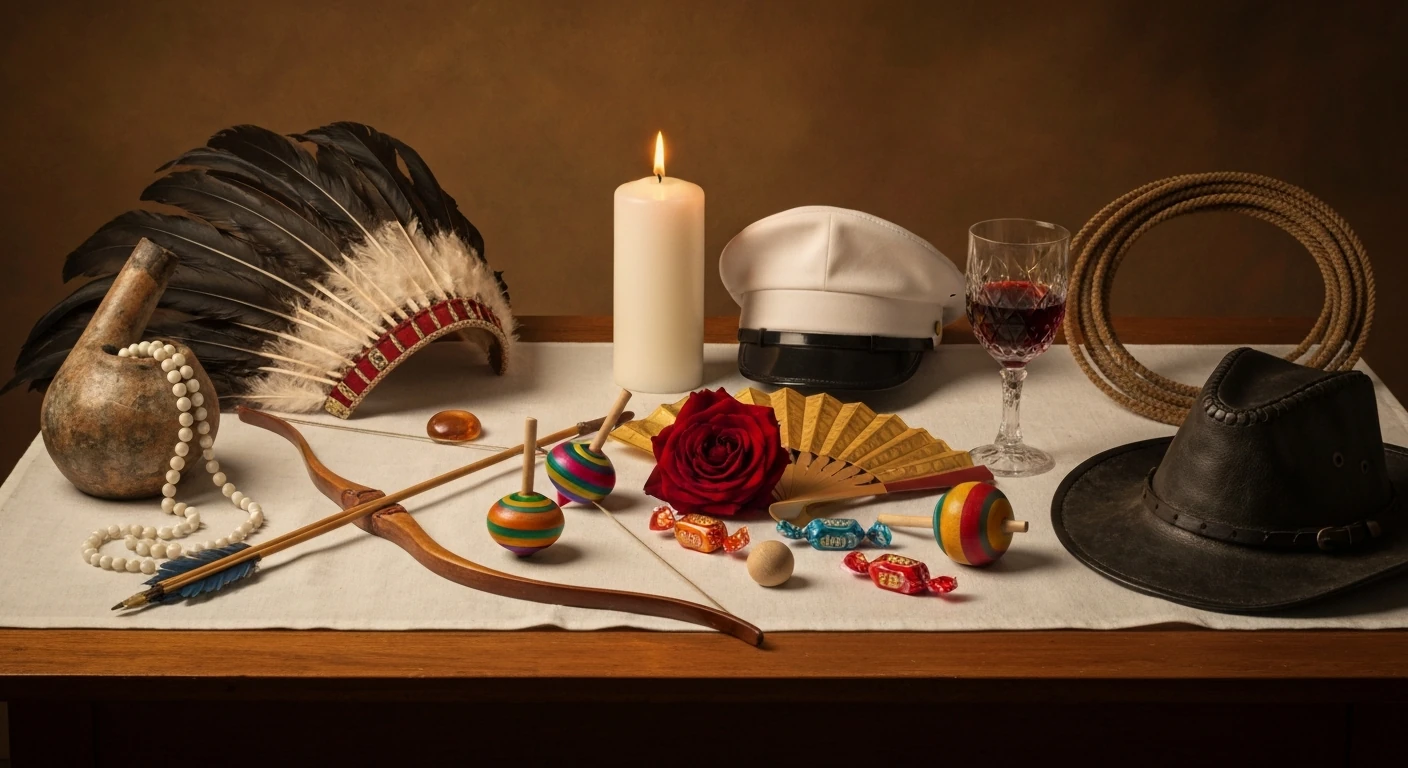
In Umbanda, guias are spirits of humans who once lived on Earth and, after their passing, continue their spiritual evolution serving as messengers, protectors, and healers. Unlike the Orixás who are forces of nature, the guias are spirits who were once people like us.
Each spirit guide belongs to a falange (spiritual line or group), led by an Orixá. They manifest in the terreiros during the giras, incorporating into mediums to give consultations, perform cleansings, and guide those seeking help.
The main falanges of spirit guides
Caboclos The strength of the forests
The Caboclos are spirits of Brazilian indigenous people, warriors, hunters, and healers who lived in harmony with nature. They bring strength, courage, and knowledge of herbs and the forests.
Characteristics:
- Strong, direct, and warrior energy
- They work with herbs, fumigations, and healing pontos (sacred chants)
- They announce their arrival with shouts and whistles
- Common names: Caboclo Tupinambá, Caboclo das 7 Encruzilhadas, Caboclo Ventania
Regency: Ogum and Oxóssi (mainly)
Pretos-Velhos The ancestral wisdom
The Pretos-Velhos are spirits of enslaved Africans who, despite the suffering they lived through, reached a very high level of spiritual evolution. They are the spiritual grandfathers and grandmothers of Umbanda.
Characteristics:
- Loving, patient, and deeply wise energy
- They speak in a simple and welcoming way
- They work with straw tobacco, coffee, and herbs
- Specialists in healings, counseling, and blessings
- Common names: Pai João, Vovó Maria Conga, Tia Anastácia, Pai Joaquim
Regency: Oxalá and Omolu (Omulu)/Obaluaê
Exus and Pombagiras The guardians of the crossroads
Exus and Pombagiras are spirits that work at the crossroads at the transition points between worlds. They are guardians, messengers, and spiritual workers of great power.
Important: in Umbanda, Exu is not the devil. This mistaken syncretism comes from religious persecution. Exu is a worker of the light who acts in the shadows clearing paths, breaking demands, and protecting his children.
Exus:
- Masculine, associated with crossroads and cemeteries
- They work with opening paths, protection, and spiritual justice
- Common names: Exu Tranca-Rua, Exu 7 Encruzilhadas, Exu Marabô
Pombagiras:
- Feminine, intense energy, linked to love and seduction
- They work with issues of love, relationships, and female empowerment
- Common names: Pombagira Rosa Caveira, Pombagira Maria Padilha, Pombagira das 7 Saias
Regency: Exu (Orixá)
Children (Ibejadas) The sacred innocence
The Children or Ibejadas are spirits of children who work with joy, innocence, and lightness. They may seem simple, but they are highly evolved and chose the child form to teach about the purity of the heart.
Characteristics:
- Joyful, playful, and light energy
- They work with healings linked to childhood, protection of children, and opening paths
- They arrive with games, candies, and laughter
Regency: Ibeji (twin orixás), related to Oxum
Boiadeiros The energy of the earth
Boiadeiros are spirits of Brazilian muleteers and cowboys, linked to the earth, manual labor, and animals. They bring practical, firm, and hardworking energy.
Characteristics:
- Earth energy, strong and direct
- They speak about work, determination, and practical paths
- They arrive with the shouts of a cattle herd and thumping on the ground
Regency: Oxóssi and Ogum
Marinheiros The energy of the waters
Marinheiros are spirits of navigators, fishermen, and men of the sea. They bring movement, adventure, and the energy of the waters in constant transformation.
Regency: Iemanjá and Oxum
The spirit guide who descends and the bead necklace that is worn
The word guia carries two meanings in Umbanda, and both are correct.
The spirit guide (guia entidade) is the spirit that incorporates into the medium: the caboclo, the preto-velho, the Exu, the pombagira, the child. This article deals with them.
The guia de pescoço is the consecrated bead necklace, used by the medium and by those who were crossed in the house. The beads follow the colors of the line to which they belong, and the necklace is washed with herbs, fumigated, and collected when it breaks. The context resolves which is which: the guia that descends is an entity, the guia that is worn is a necklace.
This ambiguity is not a lack of linguistic care. It comes from the very path that Umbanda traveled to organize itself. The researcher Eufrazia Cristina Menezes Santos, in O Preto Velho na Umbanda, shows how the worship of the preto-velho became institutionalized carrying the Bantu religious heritage and gained, in the Umbandista field, the status of Brazilian ancestor. Word and practice came together, from more than one matrix.
And the very birth date of the religion has this layer. The historian José Henrique Motta de Oliveira examined the scene of 1908, with the Caboclo das Sete Encruzilhadas, in a discussion about the founding myth of Umbanda. It functions as an origin account, with symbolic value for those who practice, more than as a founding record.
How to prepare for a consultation with the spirit guides
- Cleaning ritual bath before going to the terreiro use protection herbs such as rosemary and rue
- Wear white or light-colored clothes when visiting a terreiro for the first time
- Go with respect and an open mind without judgments or rigid expectations
- Listen attentively to what the spirit guide says: the guidance may be simple but profound
Frequently asked questions
What is the difference between a spirit guide and an orixá in Umbanda?
The orixá is the force of nature. The spirit guide (guia) is the spirit of someone who lived on Earth and returned to work: caboclo, preto-velho, exu, pombagira, child, boiadeiro, marinheiro. Each falange of spirit guides walks under the regency of an orixá, and it is the spirit guide who incorporates into the medium during the gira.
What are the falanges of spirit guides in Umbanda?
The best known are caboclos, ruled by Ogum and Oxóssi; pretos-velhos, by Oxalá and Obaluaê; exus and pombagiras, by the orixá Exu; children or ibejadas, by Ibeji; boiadeiros, by Oxóssi and Ogum; and marinheiros, by Iemanjá and Oxum. Each house organizes its lines in its own way, so the list changes from terreiro to terreiro.
Is Exu the devil?
No. This confusion comes from religious persecution and the Christian view of African worship. In Umbanda, Exu is a worker who acts where things are heavy: clears the path, breaks a demanda, guards the house and the child. Guardian, not enemy.
How do I prepare to consult with a spirit guide?
Take a ritual bath before leaving, with a protection herb like rosemary or arruda. Wear white or light-colored clothes if it is your first visit. Arrive without demanding an immediate answer and listen until the end, because the guidance usually comes simply and you only understand its weight later.
Items to work with the spirit guides
At Joia Mística Laroyê, you will find:
- Statues of Caboclos, Pretos-Velhos, Exus and Pombagiras
- Bead necklaces and chains for each spirit
- Gira clothes for mediums and filhos de santo
- Cigars and pipes for Pretos-Velhos and Caboclos
- Specific candles for each falange
Talk to us via WhatsApp or visit us in Extrema, Minas Gerais.

