The Batuque festival is the public part of the religion, the day when the house opens its doors and the community enters. The rest of the cycle, which runs all year long, happens behind closed doors.
This guide shows what happens in the hall, from the adjá that opens until the market taken home. And what is done, and what is not done, if you were invited.
What the festival is, and what is left out of it
The word batuque names three things at the same time: the drum beat, the festival, and the entire religion. That is why the people of santo say "I am going to a batuque on Saturday" without needing to explain anything else. The houses also call the public ceremony a toque.
What you see at the festival is a piece of a larger cycle. Reginaldo Gil Braga organized this cycle into fixed and mobile ceremonies. Among the mobile ones are the serão, the festival, the levantação da festa, the fish, the walk, and the termination. The serão is closed, only for initiates.
The researcher Leo Moraes, from UFRGS, records the internal speech that summarizes this better than any definition: batuque is the entire process that runs all year, and the festival is just the visible part of the iceberg. If you still do not know what the religion is, start with what is Batuque.
The house inside: hall, peji, and pagodô
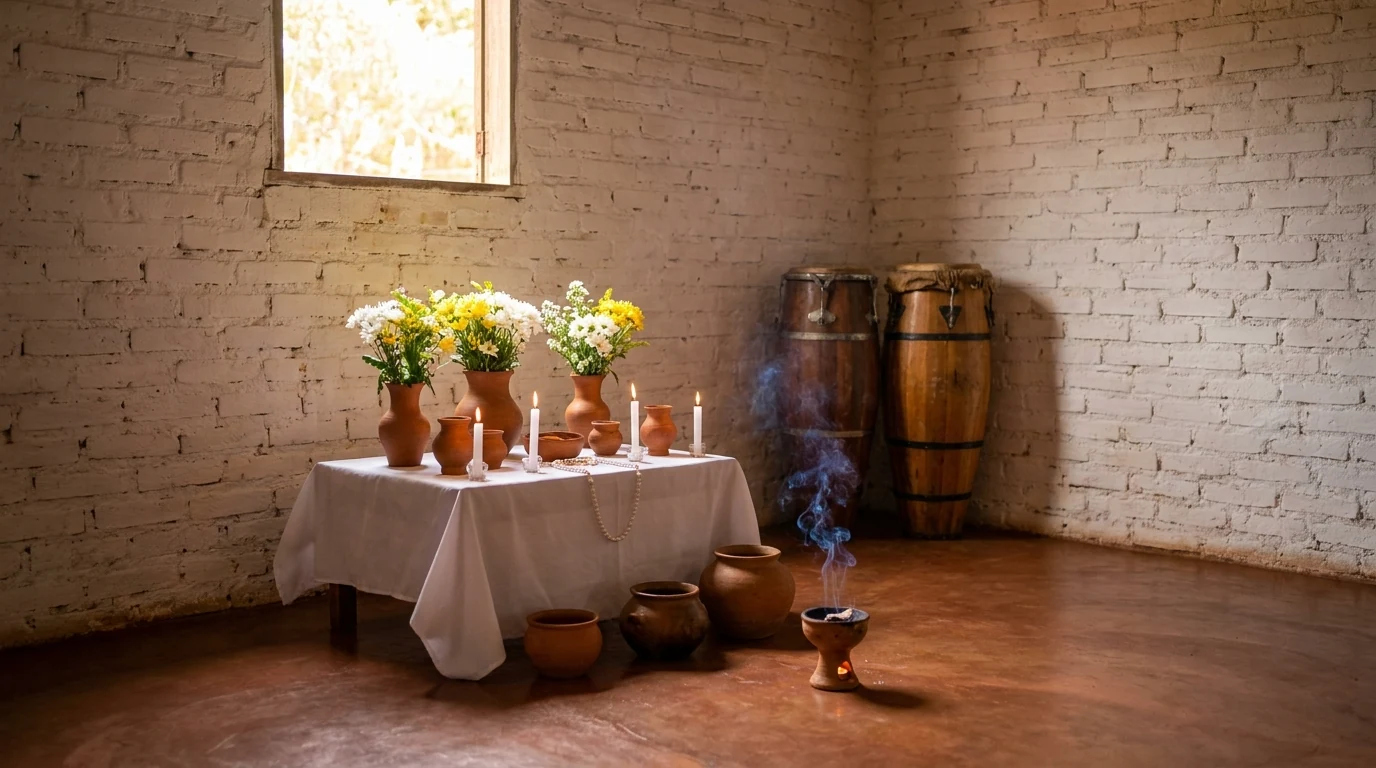
The gaúcho terreiro is almost always a living house, with a separate room for the orixá.
- Hall: the large piece where the festival happens. The door faces the street, in reference to Bará, to whom permission is asked first.
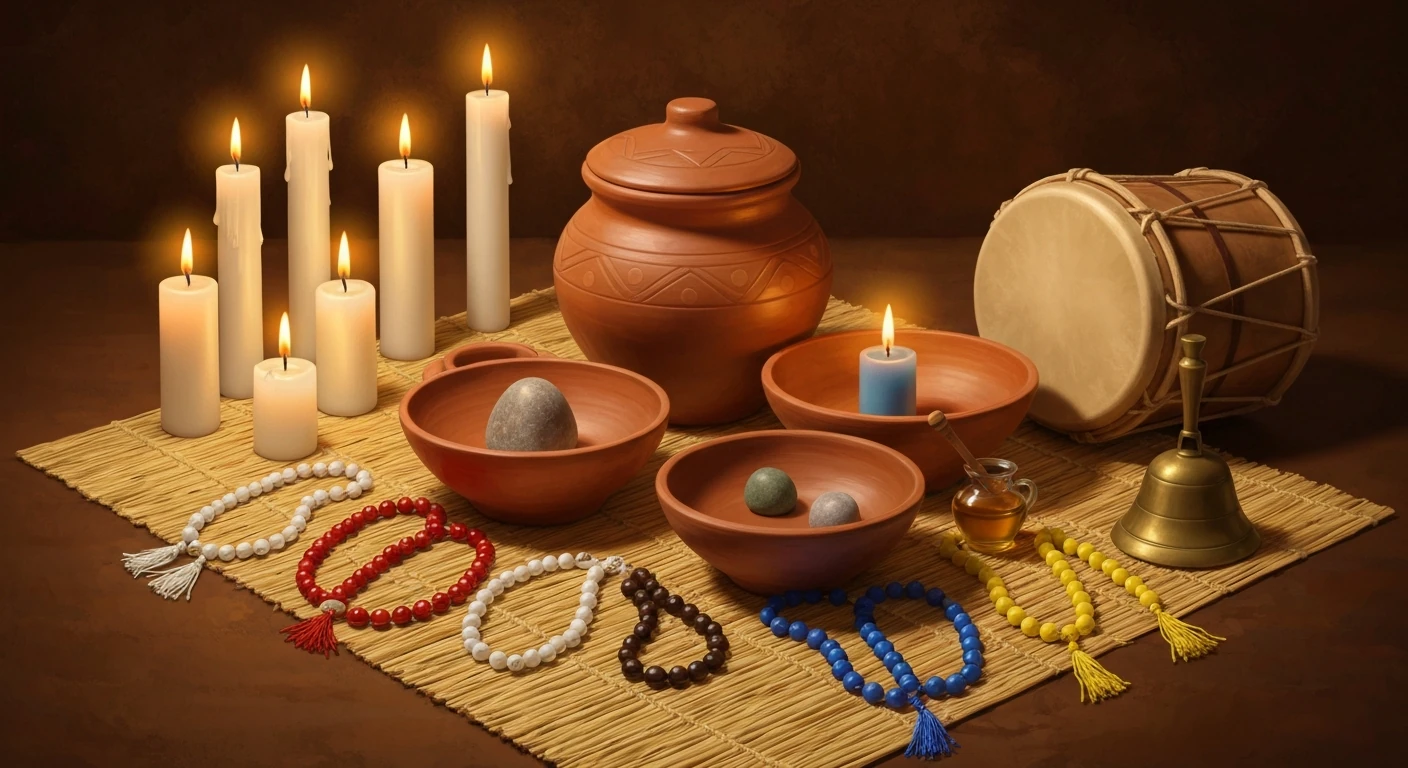
- Peji or orixá room: an adjacent room with the assentamentos, the foods, and the offerings. It is there that the orixás actually live. See what the peji is.
- Pagodô: the elevated bleachers in a corner, the ritual place of the drummers. The name is specific to batuque.
- Casinha do Lodê: at the front of the property, it guards the assentamentos of Bará Lodê and Ogum (Ogun) Avagã.
- Igbalé: in the back, for egum rituals, accessed only on specific occasions.
A simpler house improvises: remove the furniture from the living room on the day and transform the room into a hall. A good party does not depend on a large hall.
The calling and the circle of prayers, from Bará to Oxalá
The party begins with the chamada. The leader kneels in front of the santo room and rings the adjá, calling all the orixás from Bará to Oxalá with each one's greeting. The adjá is the bell of invocation, aladjé in some nations, and must ring from the beginning to the end of the ritual.
Once the calling is finished, the leader authorizes the drummer and the toque begins. In many houses this is around midnight, and the party goes until six in the morning. It is a heritage of the time when the ritual could only take place after work.
The chants are called rezas or axés, and the drum beats are called pancadas. Those in the circle dance accompanying the orixá who is being sung.
The order changes according to the nation. Adalberto Ojuobá Pernambuco records that in the Oyó nation the male orixás were called first and then the females. See the twelve orixás of batuque and the nations.
A vocabulary note that almost every page gets wrong: xirê is a word from ketu candomblé, not from batuque. In the Gaúcho sources, the terms are chamada, roda de rezas, axés, erís, and pancadas. Compare in what xirê is and in the differences between batuque and candomblé.
Inside the prayers of Xangô (Shango), the balança, also called kasun, the most sacred dance of the batuque, may enter. Only those who are ready participate, holding hands, and it is not photographed or filmed.
The drum and who leads it
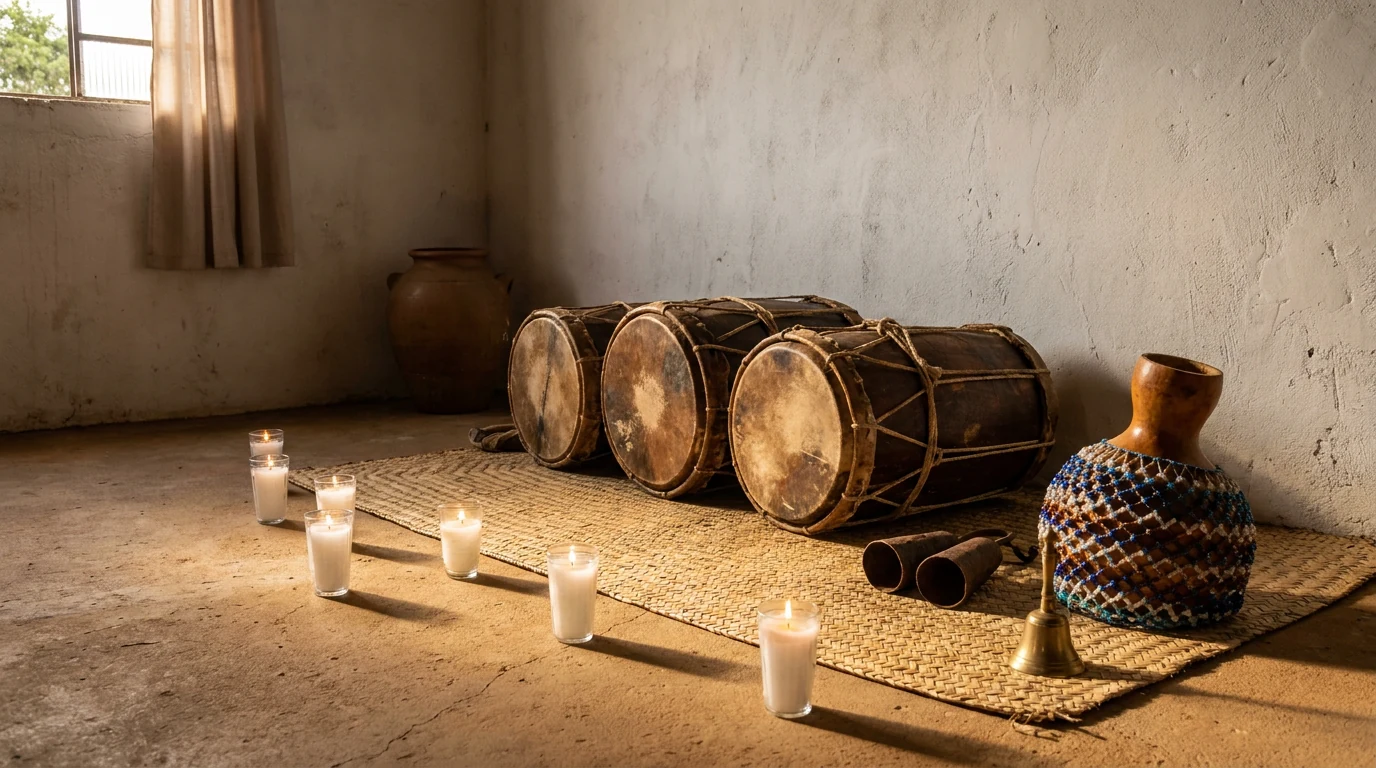
The orchestra has four instruments. The ilú is the cylindrical drum, with skin on both ends and struck on only one. The inhã is conical and rare today. The agê is the gourd rattle covered in beads, and the agogô is made of iron. In the houses ethnographed in Pelotas and Rio Grande, there were three drums, plus the agogô and two agês. They are not the same atabaques do candomblé.
The drums are treated as deities, and only those who have undergone initiation can handle them. They always remain lying down and loose: keeping them upright signifies the mourning of a religious leader.
Do not touch the drum, not even to see it up close. It is the most delicate object in the hall.
Who leads is the tamboreiro de nação, the second authority of the ritual after the pai or mãe de santo. There is a saying that, during the festival, the pai de santo hands over the house to the tamboreiro. There are female tamboreiras: Ana Paula Silveira ethnographed three and records that the restrictions are of a human order, not of the sacred.
What to do, and what not to do, if you were invited
The rule that never fails is to ask whoever invited you. What follows has a source, and each item states where it comes from.
- Invitation. The festival is open-door, and a visitor is a recognized category: external public, or people from another house, who come through your leader. Open-door refers to the hall, not the entire house.
- Clothing. Moraes records that, to step into the hall, one is barefoot and in ritual clothing. The source does not separate filho de santo from visitor, so ask at the door if you should remove your shoes. In the Batuque, it is not customary to wear paramenta: women in skirt and bata, men in wide bombacha and kaftã, with their bead necklaces (guias). See the Batuque clothing and the pano da costa.
- Photo and video. Only with authorization requested beforehand. In a house in Rio Grande, the license given to a researcher was to film until the first filho de santo became occupied, and then to photograph only the musicians. The balance is never recorded.
- Menstruation. The research records an impediment to serve the orixá, play the drum, or participate in an obrigação in the orixá room (quarto de santo). It is not the same as being prohibited from watching the party.
- Exit of the ecó. In many houses, when the ecó leaves, the circle stops and the audience turns toward the wall. You do not need to memorize: when the time comes, the house will notify you.
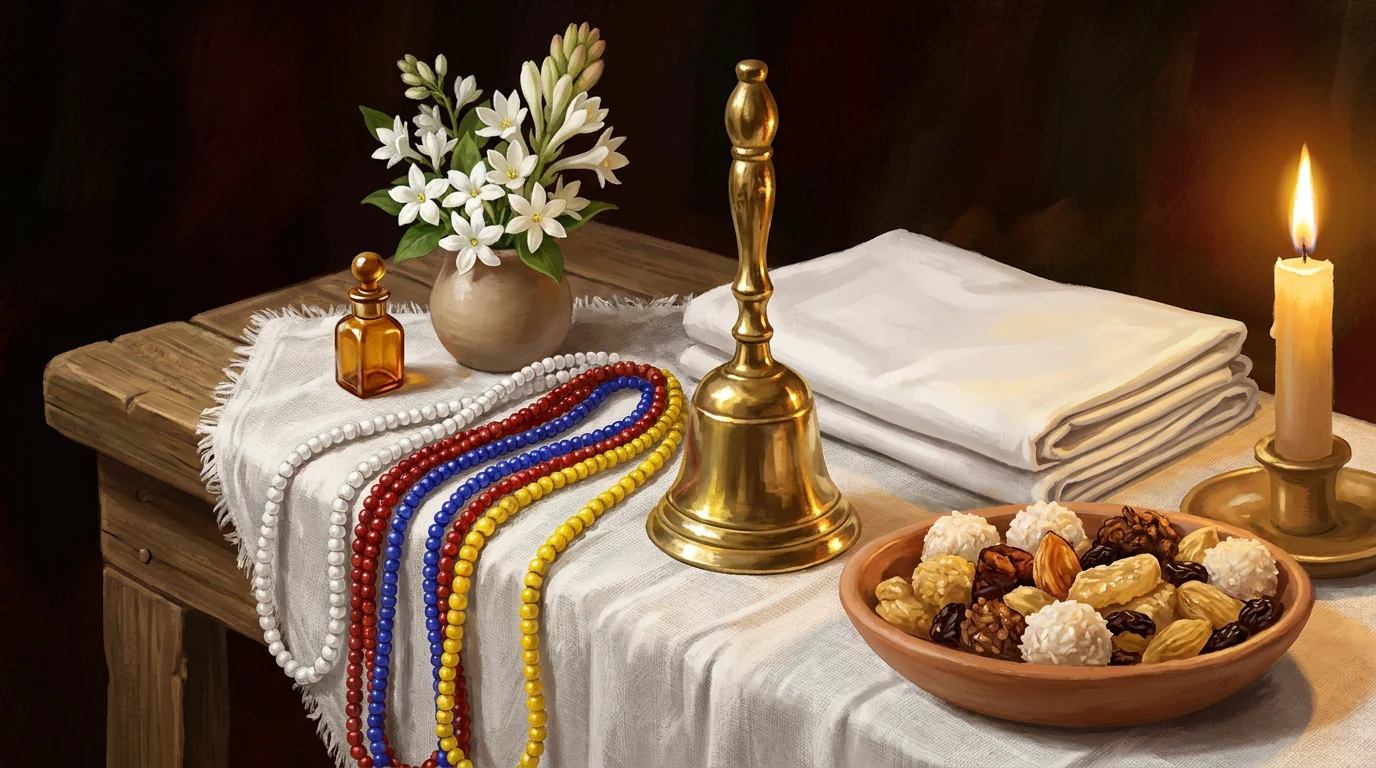
- Gift. A guest usually brings something for the orixá of the leader. Flowers, perfume, sweets, and household utensils are the most common.
The secret of Orixá: the fault that no one commits on purpose
In the Batuque, there is the secret of Orixá. Marcus Vinicius Nunes describes the prohibition of saying anything about the manifestation that occurred, and it reaches the medium (cavalo de santo), the religious family, and any ritual assistant.
In practice: the visitor who arrives at the end of the party and says "wow, you received beautifully today" commits the most serious fault of that hall without having any idea. It is not commented on, not asked, not told afterward.
The correct vocabulary comes along. In batuque, one does not say incorporate, turn, or roll. One says ocupar-se do Orixá, and the intermediate state after the manifestation is called axero. Nunes records that observance is rigid in some houses and more relaxed in others.
The mercado: the food taken home
At the end of the party, the trays are distributed. Each person takes home what is called mercado, and the speech recorded by Moraes explains the meaning: it is the expansion of the house's axé, which radiates through the city.
Before that, the food circulates right there, in a communal banquet with the religious family. The amalá, made with beef breast, mustard leaf, cassava flour, onion, colorau, and salt, is served on feast days, and those who prepare it are already initiated. See the comidas de santo of batuque.
Leaving with full hands is part of the rite.
Frequently asked questions
Who can go to a batuque party?
The party is the open-door part of the rite, and it receives an external audience. Those from another house usually go through their leader. Open doors applies to the hall, not to the entire house of the pai or mãe de santo. In practice, go by someone's invitation.
What is the difference between a batuque party and xirê?
Xirê is the name of the order of chants in ketu candomblé. In gaúcho batuque, sources speak of chamada, roda de rezas, axés, and pancadas. The term appears applied to batuque by loan. The order exists in both, the name is what changes.
Can you film or take photos at a batuque party?
Only with prior authorization. In a researched house, the license allowed filming until the first filho de santo was taken by the orixá (se ocupar), and after that, only photographing the musicians. Xangô's scale is not photographed or filmed under any circumstances.
What is the mercado in batuque?
It is the food tray that each person takes home at the end of the party. The research records the meaning: the expansion of the house's axé, which radiates through the city. Taking the market is part of the rite.
Where to buy the material for the Batuque
At Joia Mística Laroyê you find what the house and the guest need:
- Ritual clothing and axó: skirt, bata, wide bombacha, kaftã, and white cloth
- Bead strings and bead necklaces (guias) in the colors of each orixá
- Taper candles and seven-day candles
- Quartinhas and clay alguidares
- Flowers, perfumes, and sweets for the axé of the gifts
Stop by the shop, at Rua Benedito Zingari, 460, Bela Vista, in Extrema-MG, or message on WhatsApp with delivery to all of Brazil.
References
- Leo Francisco Siqueira de Moraes: the Batuque of Porto Alegre as cultural heritage, UFRGS, 2020
- Ana Paula Lima Silveira: Women's Batuque, preparing nation tamboreiras, UFRGS, 2008
- Marcus Vinicius de Souza Nunes: the secret of Orixá in the afro-sul Batuque, Revista Calundu, UnB, 2020
- Adalberto Ojuobá Pernambuco: African religions in Rio Grande do Sul, Debates do NER, UFRGS, 2019
- Rodrigo Heck, babalorixá de Cabinda: the Batuque festival described step by step, 2015