Those who live with a terreiro hear the tempo all the time. "So and so is in their first year." "He took the deká." "She is still an iaô." Behind these phrases exists a calendar, and it organizes the entire life of someone who was made in the santo.
The obrigações in Candomblé are the rites that mark this calendar. This article explains what changes at each milestone, from the first year up to the seventh, and what it means to receive the deká. It also shows why the count is never just a matter of years on a clock.
What is an obrigação in Candomblé
Obrigação is the rite performed after the feitura to renew and strengthen the bond between the initiate and their divinity. The anthropologist Miriam Rabelo, in an article published in the magazine Mana, defines these rites as the maintenance of a relationship that requires continuous care.
Notice the word: maintenance. It is not a test, it is not an exam, and it is not a completed stage. It is care that is repeated.
Each obrigação repeats, on a smaller scale, the structure of the feitura. There is a period of recolhimento, there are offerings, and there is a public party at the end. The duration changes and the details change, which are the foundation of each house.
The obrigação is not magic. It does not solve a problem on its own, it does not guarantee evolution, and it does not open a path alone. It keeps a relationship alive.
What happens inside the roncó belongs to those inside it. This text explains the meaning of each milestone, never the procedure.
Where the count begins
The clock begins at the feitura, not the first time the person stepped into the terreiro.
Before that exists the abiã, who frequents the house, helps, learns, and has not yet been initiated. The abiã does not have a cycle of obrigações. They can perform bori and other rites, but the official count has not started.
With the feitura, the person becomes an iaô in the ketu nation. Everything is counted from this day: one year, three years, seven years.
From this comes a concept that confuses many outsiders. In Candomblé, seniority is not biological age. A 25 year old person initiated ten years ago is older in the religion than a 60 year old person initiated two years ago. A study published in Psicologia & Sociedade describes exactly this: initiatic time is distinct from chronological time.
It is worth clearing up another common confusion. Dofono, dofona, fomo and the other names of this type are not degrees of time. They indicate the order of exit within the same boat of iaôs, that is, who had their head shaved first in that batch.
The milestones of the cycle: one, three and seven years
| Milestone | Liturgical name in ketu | What characterizes |
|---|---|---|
| 1 year | Odu kini | Ends the strictest protection of the iaô. Bori and dry food. Renewal of vows |
| 3 years | Odu keta | Second renewal, with bori, dry foods and a four-legged animal linked to the divinity |
| 5 years | No standardized name in ketu | Exists in many houses and nations, but not in all |
| 7 years | Odu ejé | O deká. The iaô becomes an ebomi. Religious majority |
The first year is the most felt in daily life. The iaô's period of seclusion imposes white clothing, dietary restrictions, social and behavioral restrictions. The one-year obligation loosens part of that and returns autonomy to the person.
The third year deepens the bond and is usually more elaborate than the first. The seventh changes level and deserves its own section.
Regarding the fifth year, there is a real divergence between sources. Part of the academic literature cites the cycle as one, three, five, and seven. Another part cites one, three, and seven. In the angola houses, the fifth year has its own name and is a rule. The common skeleton is one, three, and seven: the five exists in many houses, but it is not universal.
O deká: what changes when the iaô becomes an ebomi
At seven years comes the obligation that the community calls deká. It is the rite that ends the iaô period and inaugurates the condition of ebomi, a Yoruba word that means "my elder".
The deká is also a material set. In ketu, as recorded by the portal O Candomblé, the initiate receives a tray with the instruments of the office, with emphasis on búzios and a razor. In angola, they receive a basket with búzios, pemba, razors, and scissors, which they will need to initiate other people.
What these instruments authorize is the central point. Whoever takes the deká can lead their own house, attend consultants, throw búzios, perform ebó, and initiate new filhos de santo. They stop being cared for and start caring.
Two important caveats, because almost every confusion stems from here.
The first: completing seven years and receiving the deká are not the same thing. A person can become ebomi and not receive the deká, either because the game did not indicate it, or because they will not open a house. In candomblé angola, there is even a figure for this, the Tatetu Ndenge or the Mametu Ndenge, who receives a function and remains in the house of origin.
The second: deká is not a diploma. There is legitimate tension between those who read the seven years as a grant of the priesthood and those who remember that training continues after that. Seniority and rank are distinct things, and the subject appears in more detail in the article about ranks and hierarchy in candomblé.
Ketu, jeje, and angola: same cycles, proper names
Speaking of "candomblé" without mentioning the nation erases real differences. The ketu, jeje, and angola nations share the logic of the cycle, and name each stage in their own way.
| Ketu | Jeje | Angola | |
|---|---|---|---|
| Divinity | Orixá | Vodum | Inquice |
| Initiated in cycle | Iaô | Vodunsi | Muzenza |
| Those who completed 7 years | Ebomi | Etemi | Tata Nkisi or Mametu Nkisi |
| 7 year obrigação | Odu ejé, the deká | Specific nomenclature per house | Nguecè Kassambá Muvu |
| Leadership | Ialorixá, babalorixá | Doné, doté | Mametu, Tata |
The spellings in Kimbundu vary greatly from house to house, and you will find Nguecè, Nguêce, and Nguece in the sources. None of them is the only correct form.
Why this clock is not automatic
Seven years on the calendar do not turn anyone into an ebomi. It is necessary to have fulfilled the previous obligations, to have the determination of the house and of the divination, and to have accumulated true coexistence.
Many people delay an obrigação due to health issues, money, or by determination of the game itself. This does not put the person in default with the divinity. Chronological time is only one of the factors, and the one who gives the final word is the zelador.
The material dimension exists and there is no point in pretending it does not. Rabelo records that the obrigações demand work, time, and money, and that the house network usually shares this weight, with those who have more helping those who have less. The cost accompanies the rite. It does not buy the rite.
Finally, a detail that almost no text on the subject mentions: the cycle does not end at seven years. Academic literature records obligations of 14 and 21 years, and in the angola houses the larger rites continue to repeat every seven. The end of the line only arrives with the axexê, the rite that undoes what the initiation tied.
Frequently asked questions
What does "tirar o deká" mean?
It means fulfilling the seven-year obrigação and receiving the instruments of the office, such as búzios and a razor in ketu. Whoever takes the deká is authorized to lead their own house, attend clients, and initiate other people. It is a rite of responsibility, not a certificate or a career title.
How long does the person stay as an iaô?
Seven years, counted from the feitura. During this period, they fulfill the obligations of one and three years, and in many houses also the five-year one. Upon completing the cycle, they become an ebomi in the ketu nation, etemi in the jeje, and Tata or Mametu Nkisi in the angola.
Is it possible to complete seven years and not receive a cargo?
Yes, and this is more common than it seems. Seniority and cargo are distinct things. A person can become an ebomi without receiving the deká, either because the game did not indicate it, or because they do not intend to open a house. In candomblé angola, there is a specific function for those who remain in the house of origin.
Is there a five year obrigação in Candomblé?
In many houses yes, and in Candomblé angola it has its own name. But it is not universal. Part of the academic sources describe the cycle as one, three, five and seven, and another part as one, three and seven. Who defines it is the fundamento of your house.
Do the obrigações end at seven years?
No. Academic research records obrigações of 14 and 21 years, and in the angola houses the rites continue to be renewed. The deká ends the condition of iaô and opens another phase of commitments, generally larger, because now the person also responds for others.
Where to buy liturgical items
At Joia Mística Laroyê, you find the items that the houses usually ask for:
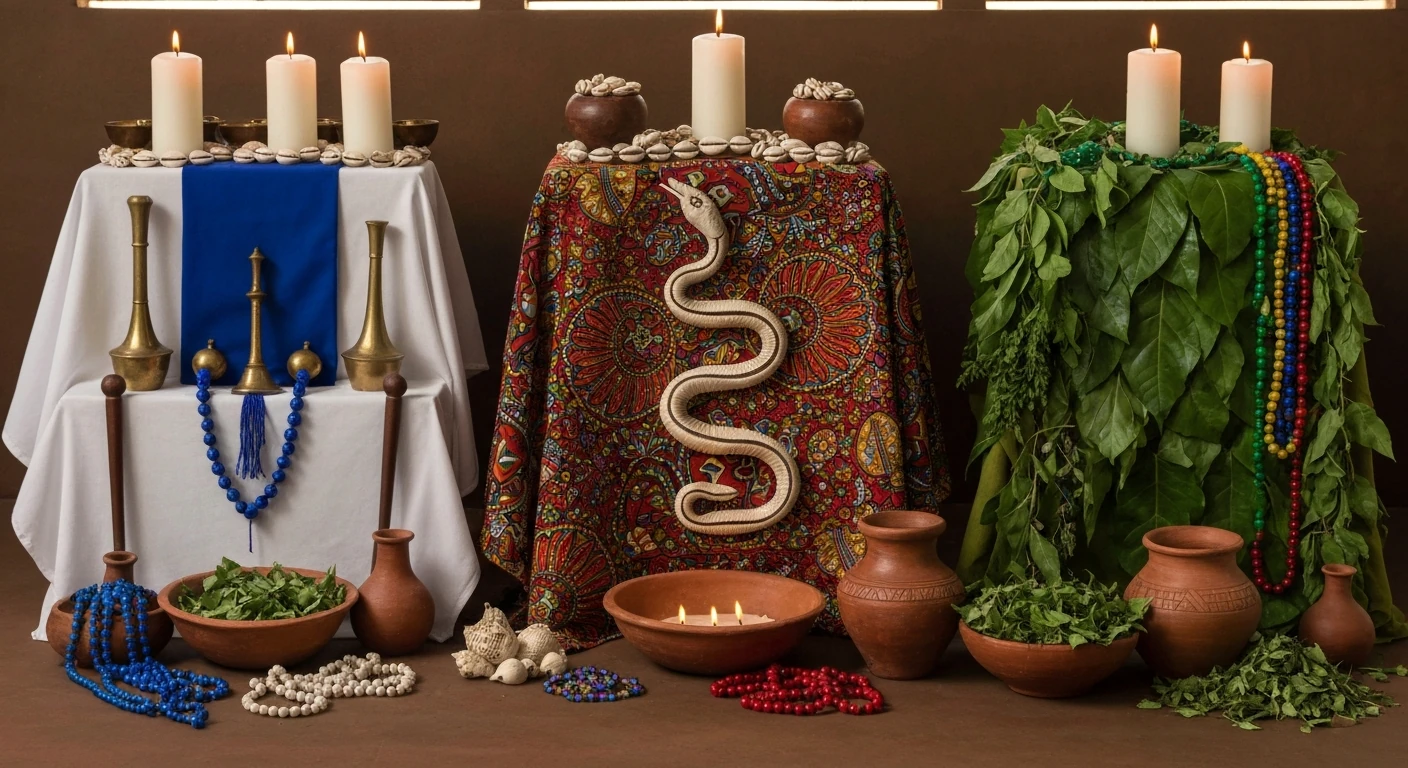
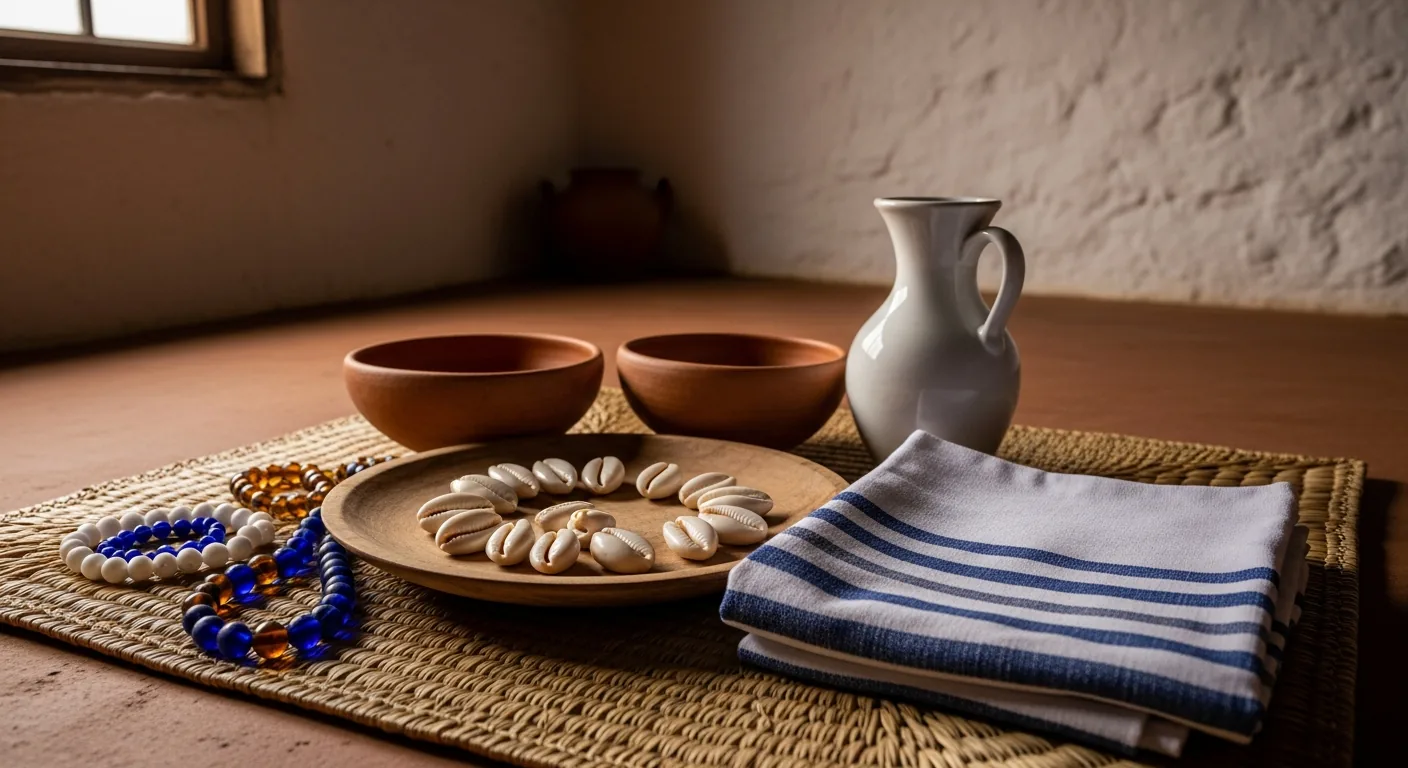
- Beads and bead necklaces: in the colors of the divinities, to assemble according to the house orientation
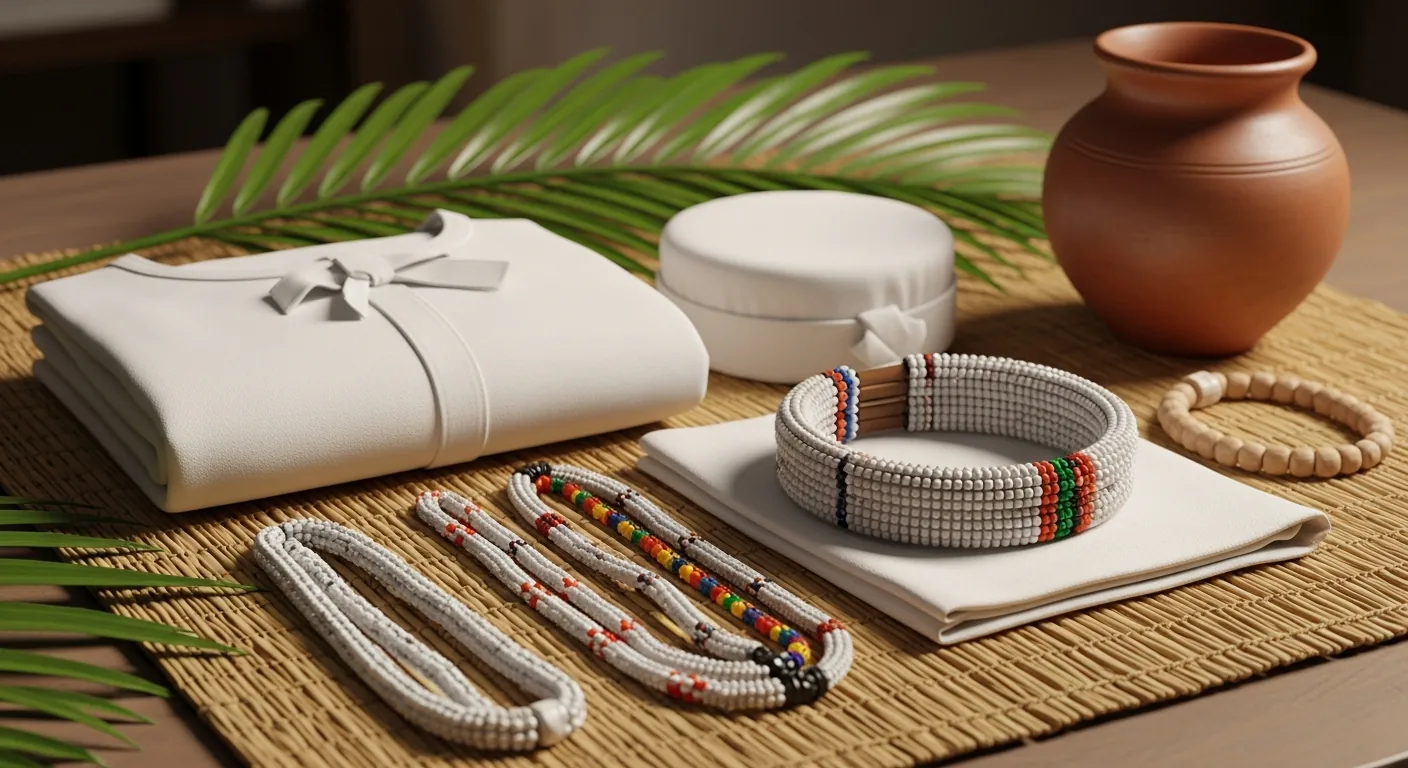
- Pano da costa and white clothing: fabrics, camizu and cloths for use of preceito
- Pottery and clay alguidares: for dry foods and offerings
- Candles and herbs: the basic of any devotional preparation and ritual bath
- Mats and guard bags: to accommodate and transport what is yours
Visit our shop in Extrema, Minas Gerais or call on WhatsApp with delivery to all of Brazil. The list of what you need is given by your zelador, and we help to complete what is missing.
References
- Miriam Rabelo, Mana magazine: article about ritual obligations in Candomblé
- Psychology & Society: research on the initiatory Tempo in Candomblé
- O Candomblé (portal): article about obligations and the deká