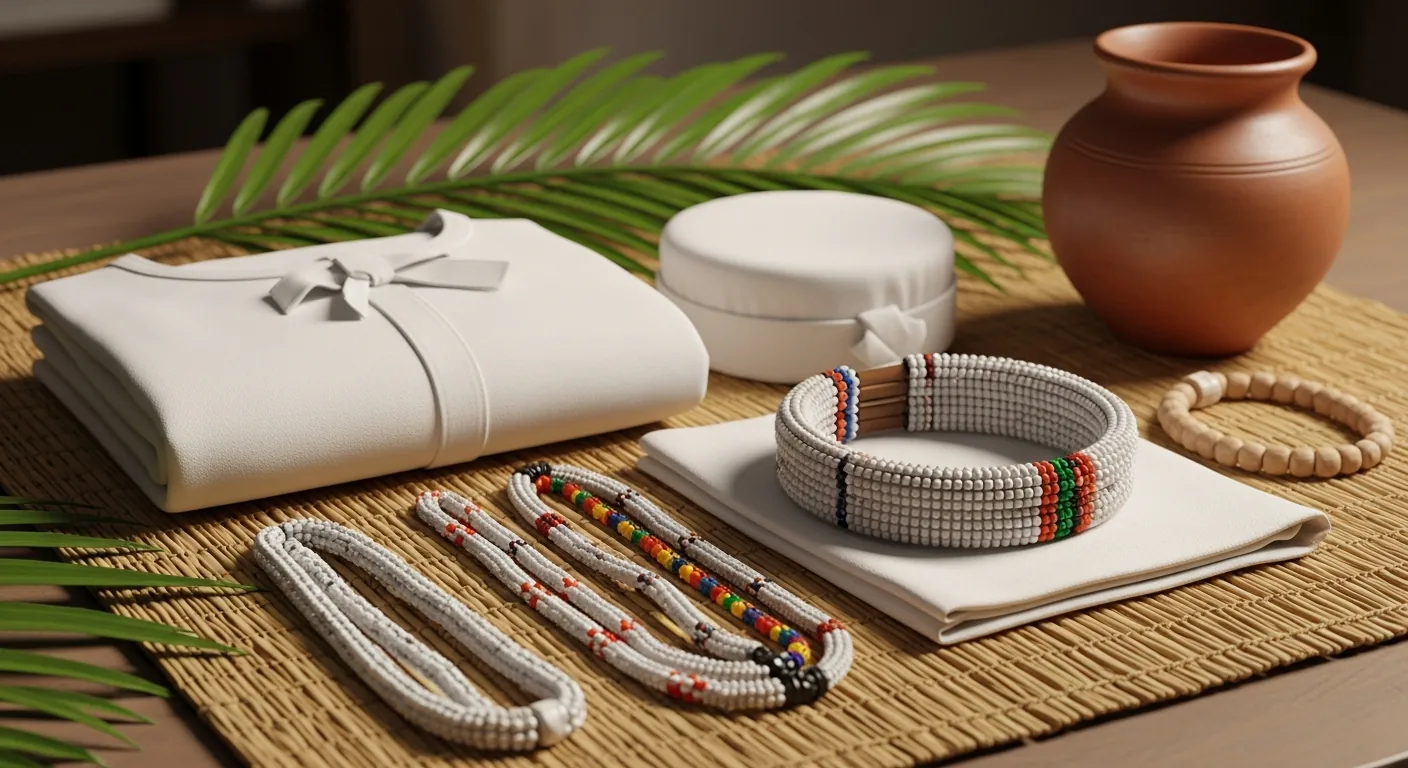
In Candomblé, few words carry as much weight as iaô. It names the person who has just been born to the orixá: the newly initiated child, consecrated to an orixá, who still fulfills the long path of learning within the house.
Understanding what it means to be iaô is understanding the heart of Candomblé: the initiation, the hierarchy, and the idea that one is reborn when they are initiated. This guide explains the meaning of the word, the journey from abiã to ebomi, and what happens (and what is not told) during the feitura. A warning from the start: the ritual foundations are secrets revealed only to the initiated, and this text respects that limit.
What it means to be iaô
The word iaô (also written as iyawó or ìyàwó) comes from Yoruba and designated, in African society, the youngest wife of the family, the newly arrived bride. In the terreiro, the meaning is transposed: the iaô is the "bride of the orixá," the one who gives themselves to the saint and to the hierarchy of the house in a relationship of commitment and devotion. Many zeladores also translate the expression as "wife of the secret," a reading widespread in the terreiros.
Being iaô, in practice, means having passed through the initiation called feitura de santo and being within the seven-year cycle that separates the newly initiated from the next rank. It is a condition of learning and modesty. The iaô is not yet an elder in the house; they are a child in the saint, even if they are already an adult in civil life.
This idea of a new beginning is central. In Candomblé, initiation is lived as a kind of rebirth: the person receives a new initiatory name (the orukó), new precepts, and a new way of being in the world, now formally linked to their orixá.
Abiã, iaô and ebomi: the hierarchy of Candomblé
To understand the iaô, it is necessary to place it within the hierarchy of Candomblé. There are three great stages in the life of a filho de santo:
- Abiã: those who attend the house but have not yet been initiated. The abiã may have already undergone preliminary rites, such as the washing of the beads or the bori, but they have not yet been initiated (made the santo).
- Iaô: those who have already been initiated and live the seven-year cycle, fulfilling obligations and learning the precepts of the house.
- Ebomi (egbomi): those who completed the seven years and the corresponding obrigação. It is the "older brother" of the house, with autonomy and religious seniority.
There is a phrase that summarizes this path well and circulates in many terreiros: every ebomi was once iaô, but not every iaô is ebomi. In other words, no one skips stages. The time of iaô is the time to mature in the santo, and it is not shortened by one's own will.
This organization connects with the broader positions and hierarchy of the terreiro, which include the pai or mãe de santo (babalorixá/ialorixá) and various specific functions.
The initiation: feitura de santo and camarinha
The passage from abiã to iaô happens during the initiation, also called feitura de santo. It is the most important and most reserved rite of Candomblé, and here the golden rule applies: we describe the meaning, never the foundation.
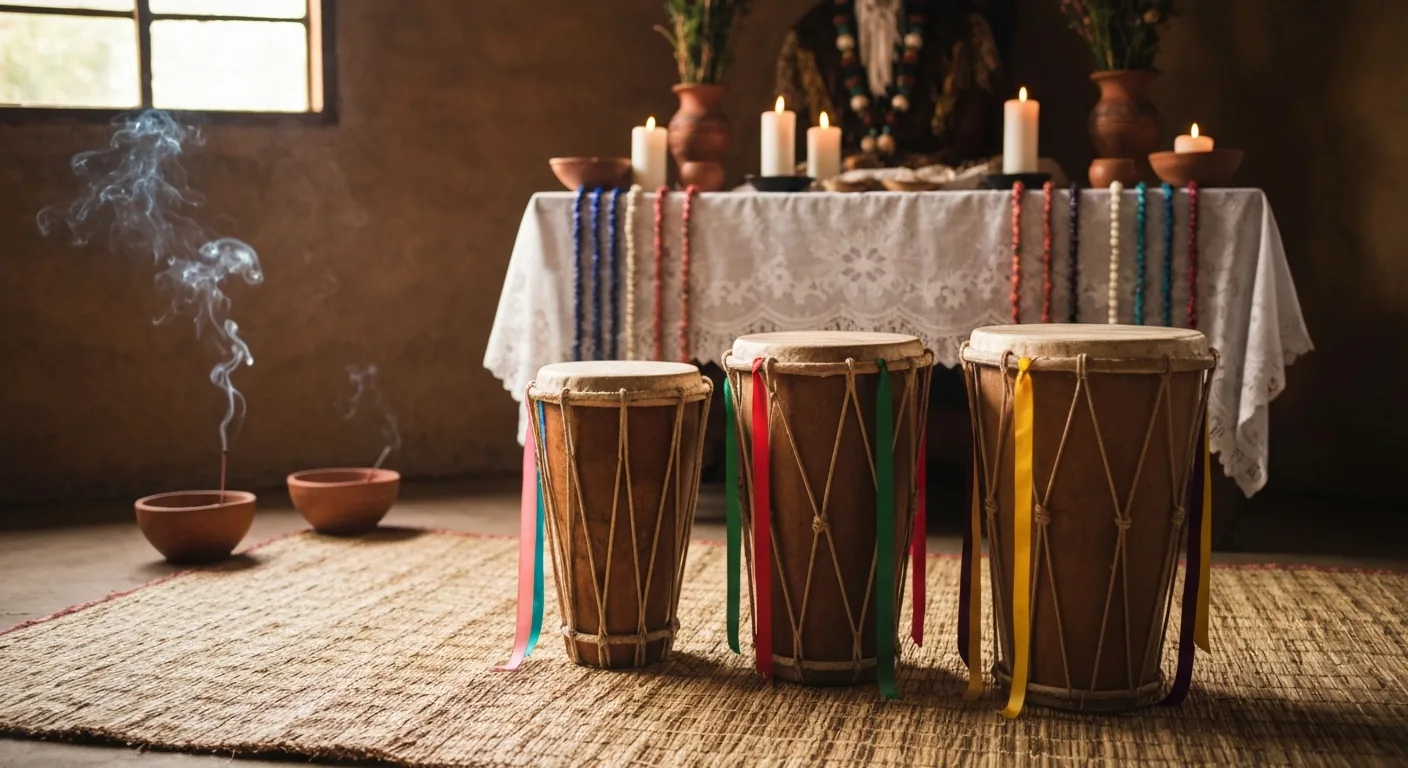
The most visible point for those observing from the outside is the recolhimento, performed in the camarinha (or roncó), the sacred room of the house. During this period, the initiate withdraws from common life, work, family, and routine to dedicate themselves entirely to spiritual learning: prayers, chants, the precepts, and the relationship with the orixá. In the Ketu tradition, this recolhimento usually lasts about 21 days, but the exact time varies from house to house and from nation to nation.
To be initiated is to die to one life and be born into another. That is why the iaô leaves the camarinha like someone arriving at the world anew: with a new name, a new gaze, and a commitment that will last a lifetime.
What happens inside the camarinha, the herbs, the chants of foundation, the assentamentos are secrets. Not out of whim, but because secrecy is part of the very strength of the rite. An educational article like this shows the door; those who enter are the initiated, guided by their zelador.
The quelê and the resguardo of the iaô
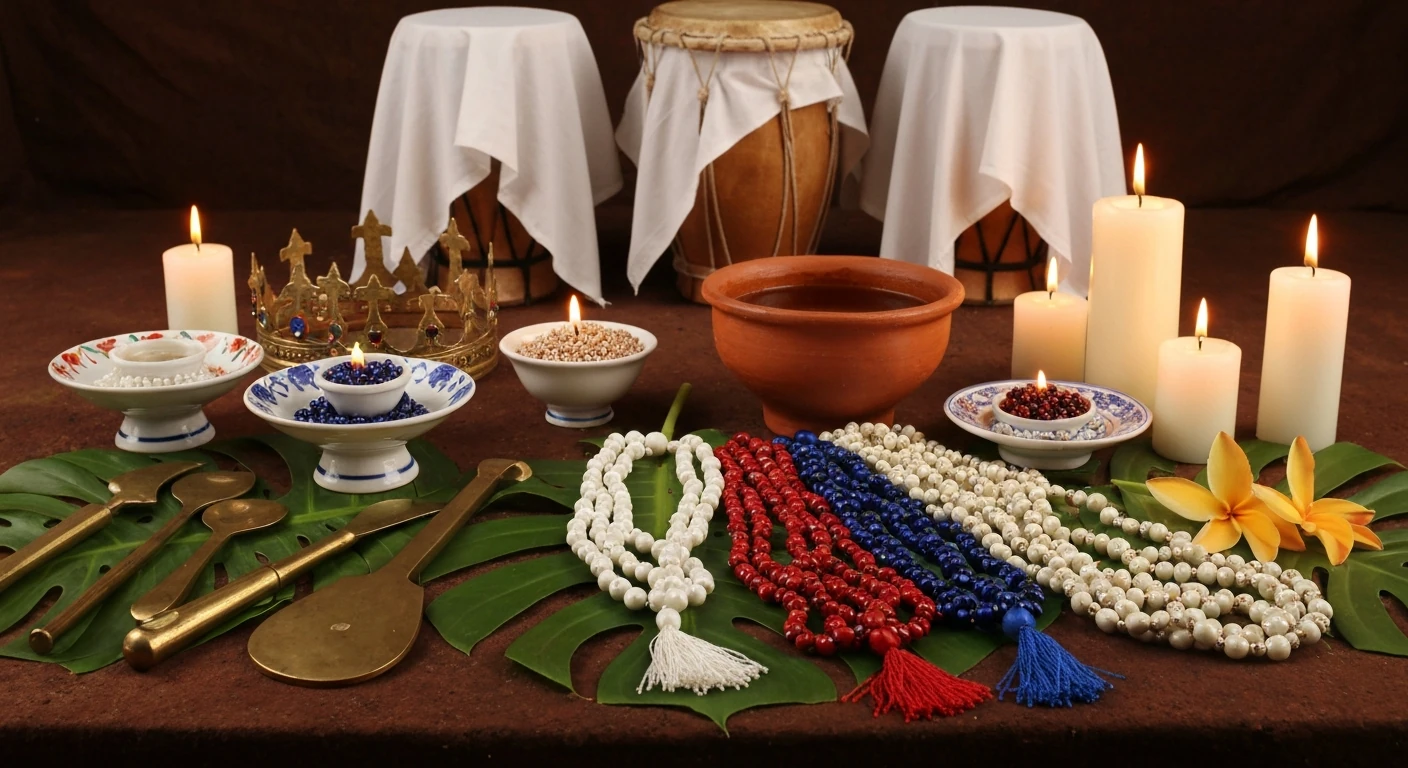
Upon leaving the camarinha, the iaô brings visible signs of their new condition. The best known is the quelê (or kelê): a bead necklace worn firmly around the neck, a mark of the commitment assumed with the orixá and with the house. It accompanies the iaô during the initial period and is treated with respect and care.
Then comes the resguardo, a time of modesty that extends for months after the initiation (frequently cited as around three months, also variable). During this period, the iaô is expected to:
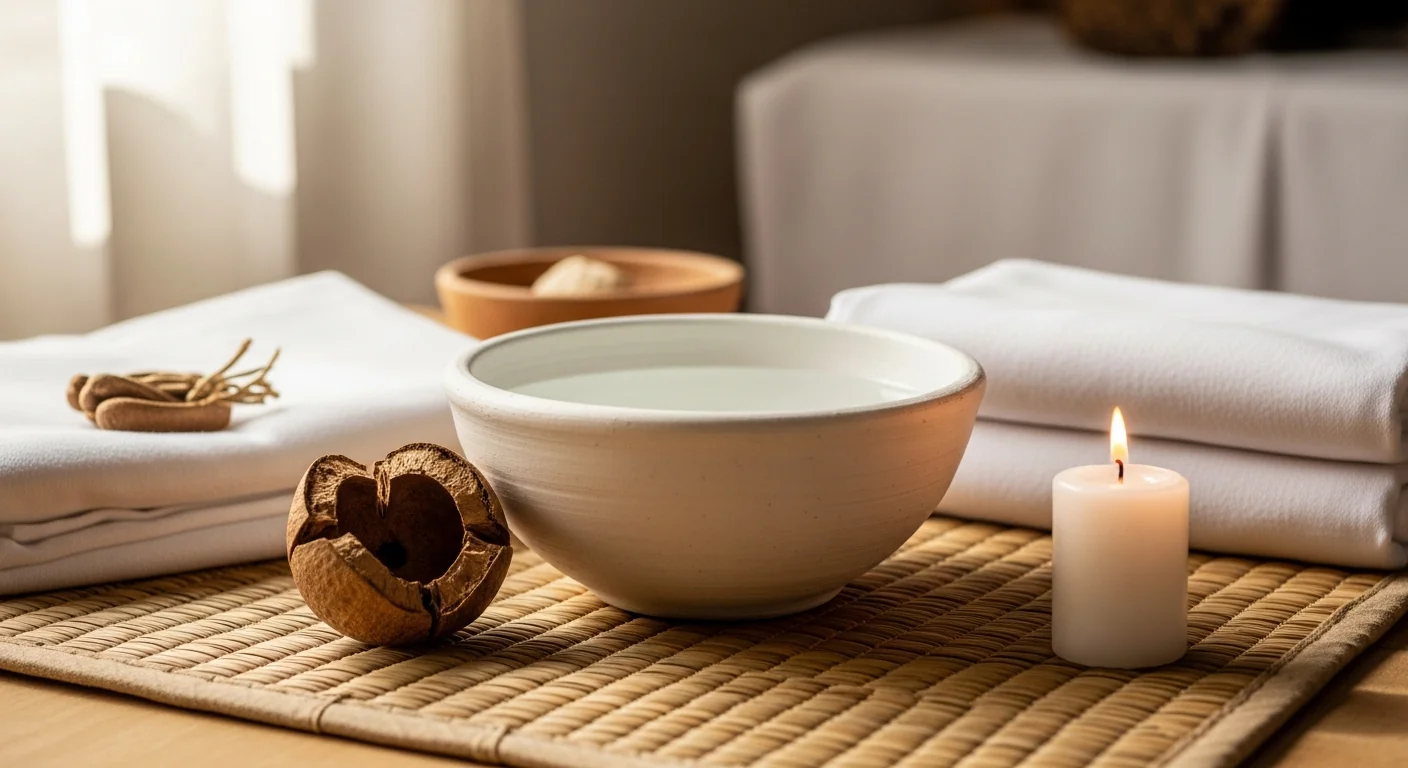
- Dress in white, the color of peace and ritual purity.
- Follow dietary restrictions and behavioral guidelines defined by the house and by their orixá.
- Respect the elders, the ebomis, and the pai or mãe de santo and avoid exposing their condition in public.
None of this is a punishment. It is care: a newly opened field needs protection to set itself, just as one guards someone who has undergone childbirth or surgery. The quizilas the precepts and prohibitions linked to each orixá gain special weight in this phase.
The obligations of 1, 3, and 7 years
The time of iaô is marked by obrigações: ritual ceremonies that renew and deepen the bond with the orixá at defined moments. The most cited occur at 1, 3, and 7 years of initiation.
The seven-year obligation is the most decisive. Known in some traditions as deká or oyê, it ends the iaô cycle and elevates the person to the condition of ebomi. In many houses, it is at this moment that the new elder receives symbols of seniority and begins to be able to assume responsibilities that were previously forbidden to them.
It is important to curb any haste: fulfilling obligations is not a race for status. Each milestone has its own meaning and depends on the calendar and the foundations of the house. The assentamento de santo and the continuous relationship with the orixá are what sustain this journey.
Iaô in the different nations of Candomblé
Not every Candomblé uses the word iaô in the same way. The nations Ketu, Jeje, and Angola have their own vocabularies and precepts.
In Ketu/Nagô and Jeje, the term iaô is the most common. In the Candomblé of Angola, the initiate is usually called muzenza, a word of Bantu origin that occupies a place equivalent to that of iaô. The stages, the times, and the names change according to the tradition, and even within the same nation, each house keeps its particularities.
Therefore, the guidance applies to everything you have read here: use this guide to understand and respect, not as a manual. Whoever knows the exact path of your initiation is your pai or your mãe de santo.
Frequently asked questions
What does the word iaô mean?
Iaô comes from the Yoruba ìyàwó, which designated the youngest wife of the family. In Candomblé, the meaning is transposed to "bride of the orixá": the newly initiated filho de santo, delivered to their orixá and the hierarchy of the house. Many terreiros also translate the word as "wife of the secret".
What is the difference between abiã, iaô, and ebomi?
Abiã is someone who frequents the house but has not yet been initiated. Iaô is someone who has already undergone the feitura de santo and lives the seven-year cycle. Ebomi is someone who completed this cycle and became an elder. Every ebomi was once iaô, but not every iaô is yet ebomi.
How long does a person stay iaô?
In general, seven years. This is the period that separates the feitura de santo from the seven-year obrigação, which ends the condition of iaô and elevates the person to ebomi. The times may vary according to the nation and the foundations of each casa de santo.
What is the quelê in Candomblé?
The quelê (or kelê) is a bead necklace worn firmly around the neck of the iaô starting from the initiation. It symbolizes the commitment assumed with the orixá and with the house, and accompanies the newly initiated during the initial and protection period.
What is muzenza in Angola Candomblé?
Muzenza is the name given to the initiate in the Angola nation Candomblé, equivalent to the iaô of the Ketu and Jeje nations. The word has Bantu origin. As in all traditions, the names, times, and precepts vary between nations and between houses.
Where to buy items for initiation and obligations
At Joia Mística Laroyê, you find what life in the santo demands, with respect and axé:
- Beads and firmas (fastenings) for bead necklaces and for the quelê, in the colors of each orixá
- Ração clothes and white cloths for the protection of the iaô
- Alguidares, quartinhas, and clay pottery for settlements and obligations
- Candles and dendê oil for the house practices
- Herbs and soaps for cleansing for spiritual preparation
Visit our physical store in Extrema, Minas Gerais and we ship to all of Brazil. Talk to us via WhatsApp and Joice will guide you on the right items for your nation and your house of the orixás (casa de santo).
References
- Wikipedia: entry on the term iaô
- Wikipedia: article on the hierarchy of Candomblé