In Candomblé, the Ori is the sacred head of each person, understood not as bone and flesh, but as the individual orixá that guides the life of the one who carries it. It is the divine spark that each one received from Olodumaré, the owner of the destiny of every path. Before any other orixá, it is the head of each one that is greeted.
This guide explains what the Ori is in the Yoruba tradition, the difference between the inner and outer head, how it connects to destiny, and why it is the first to be praised. And it shows why caring for one's own head is, in Candomblé, the basis of everything.
What is the Ori
The word Ori comes from Yoruba and means, literally, "head". But the religious meaning goes far beyond the physical. In Candomblé, the sacred head is the dwelling of what is most intimate and true in each person, the seat of conscience, individuality, and destiny.
The tradition distinguishes two layers. The ori ode is the outer, physical head, the one that is seen and touched. The ori inu is the inner, spiritual head, invisible, where the true essence of the being resides. When speaking of the head as sacred, it is this inner head that is being discussed.
Because it holds someone's essence, the head receives special care in Candomblé. It is the first to be revered, it is washed and fed in its own rituals, and it must never be treated with neglect. Caring for the head is caring for the axé, the vital force that sustains the person.
The personal orixá of each one
More than a concept, the Ori is understood as an individual orixá, the closest and the most interested in each person's happiness. While the great orixás are worshipped by many people, the sacred head is an orixá that belongs to a single existence: yours.
Tradition says that no orixá blesses someone without the consent of their own head. It is this sacred head that accompanies the person from before birth, throughout their entire life, and beyond it. That is why it always comes first.
This precedence is not merely symbolic. In any ritual act, each person's head is greeted before the other orixás. And there is a strong image in Yoruba cosmology: when a person dies, the orixás withdraw, but the head makes the great journey without return with them. It is the companion that never separates.
The head and destiny: the choice in Orun
Before being born, tradition tells us, each being chooses their head in the Orun, the spiritual plane. Along with it comes the odu, the sign that governs destiny, and the ipori, the individual root of that path. It is from this agreement made in the invisible that the fortunes and difficulties of a life are born.
There is a beautiful itan (myth) about this. Ajalá, the potter of Orun, is the one who shapes the heads. Some come out well turned and firm, others crack in the kiln or are poorly made. Choosing a good head in Ajalá's house is receiving a good destiny. But the story teaches something deeper: the head one has can be polished throughout life.
This is important to avoid falling into fatalism. The odu inclines, it does not force. Good character, correct conduct, and devotion help to "cool" and strengthen the head, correcting the course. Destiny, in Candomblé, is a dialogue between what was chosen in Orun and what is cultivated in Aiê, the world of the living.
Why the head comes before the orixás
In the feitura de santo, when someone is initiated, the head is the first to be settled and balanced. The reason is profound: to ensure that the person continues to be themselves, and does not become merely a reflection of their orixá. Individuality has a home, and that home is the sacred head.
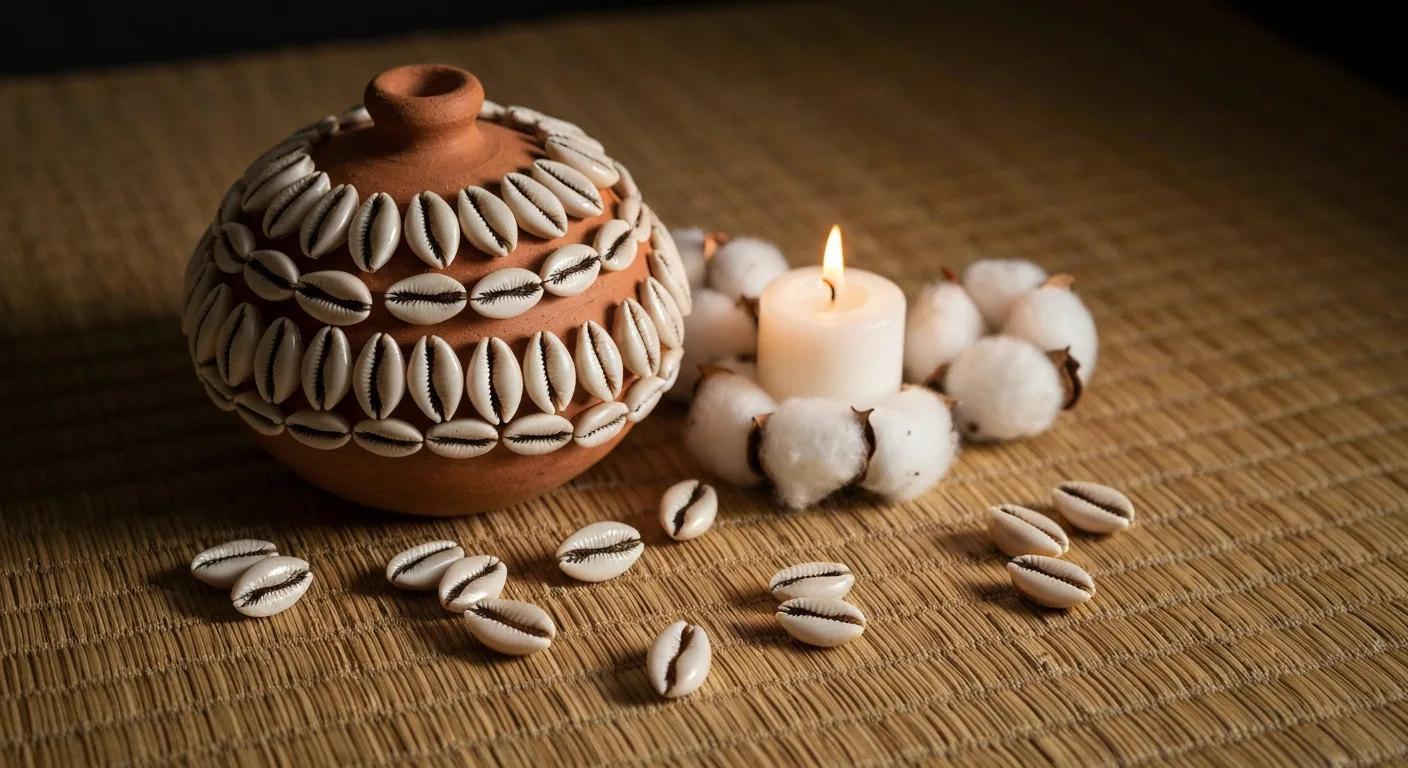
This care is materialized in the ibá de Ori, the consecrated foundation (assentamento) of the head, adorned with búzios, which gathers the interior and exterior representations. It is a serious foundation, settled inside the terreiro, under the guidance of the babalorixá or the ialorixá. It is not something to be done at home or on one's own.
The ritual dedicated to feeding the head is the bori, which means "to feed the Ori." It is through it that the head is strengthened, calmed, and balanced. The bori is a subject for its own article, but keep the central idea: without the head in order, nothing else settles well.
How to respect the sacred head
Respect for the sacred head translates into concrete gestures in the daily life of the povo de santo. Many are simple attitudes of reverence to the head:
- Do not hit the head of someone, nor your own, even as a joke.
- Cover the head in certain moments and obligations, a sign of protection and respect.
- Take care of what enters the head: avoid excesses that "heat up" and unbalance.
- Keep the truth: lying is pointed out as a quizila (prohibition) linked to the sacred head.
These cares are not superstition. They are the practical way to honor the seat of individuality and destiny. Whoever respects their own head respects the most intimate orixá they carry.
A reminder of ethics is needed, the same one that permeates all of Candomblé. Discovering which orixá rules your head is not done by birth date or an internet test. This is revealed in the cowrie-shell divination, inside a house of the orixás (casa de santo), with a zelador. The path is to seek a terreiro, not a website.
Ori and head orixá: they are not the same thing
A common confusion lives here. Ori is the sacred head, the personal and unique orixá of each person. Meanwhile, the head orixá (or front orixá) is which of the great orixás, Oxum (Oshun), Ogum (Ogun), Xangô (Shango) and the others, is the "owner" of that head.
A person has, at the same time, their Ori (which is only theirs) and their head orixá (which they share with many other filhos de santo of the same orixá). One does not replace the other: the head is the dwelling, and the front orixá is who rules it. To understand this second point, it is worth reading how to know which is your orixá.
Keeping this difference helps not to reduce the sacred head to "which orixá is mine." The sacred head is much bigger than that: it is your own individual existence, before Olodumaré and the world.
Frequently asked questions
What is Ori in Candomblé?
Ori is the sacred head of each person, understood as the individual orixá that guides your life and your destiny. The word comes from Yoruba and means "head," but the sense is spiritual: it is the seat of consciousness, of individuality, and of the divine spark received from Olodumaré.
What is the difference between ori inu and ori ode?
The ori ode is the exterior, physical head, the one that is seen and touched. The ori inu is the interior, spiritual, and invisible head, where the true essence of the being dwells. When Candomblé speaks of the head as sacred, it refers above all to the ori inu, the head from within.
Is Ori the same thing as bori?
No. The Ori is the sacred head, the personal orixá. The bori is the ritual dedicated to it, whose name means "to feed the Ori." One is the concept, the other is the ceremony that feeds and strengthens that head. The bori is performed in the terreiro, with a pai or mãe de santo.
Does the Ori define my destiny in a fixed way?
No, not in a rigid way. Tradition says that the head and the odu are chosen in Orun before birth, but destiny can be polished in life. Good character, correct conduct, and devotion help to strengthen the head and correct the course. The odu inclines, it does not force.
Is Ori the same thing as head orixá?
No. The sacred head is the personal and unique orixá of each person, your inner self before Olodumaré. The head orixá is whichever of the great orixás rules that person. Everyone has, at the same time, their Ori and their orixá de frente (lead orixá), revealed in the cowrie-shell reading.
Where to find items for candomblé
At Joia Mística Laroyê, you find devotion items for worship, always with respect to the foundation of your house:
- Búzios and games: for those who have a fixed path and guidance from a zelador
- Beads and bead necklaces: in the colors of the orixá of each filho de santo
- Candles and clay vessels: for altars and obligations conducted by the house
- Herbs and smoke-cleansing blends: for baths and cleansings linked to the balance of the head
- Statues and seats: for domestic devotion with responsibility
Visit our physical store in Extrema-MG or receive at home with delivery to all of Brazil. For everything involving your head and your orixá, always seek a terreiro and a trusted babalorixá or ialorixá. Talk to us via WhatsApp.
Sources to deepen your knowledge: the Ori (Yoruba) entry on Wikipedia and the article Understanding Ori, on the O Candomblé portal.
References
- Wikipedia: entry about Ori in Yoruba culture
- Candomblé (portal): article Understanding Ori