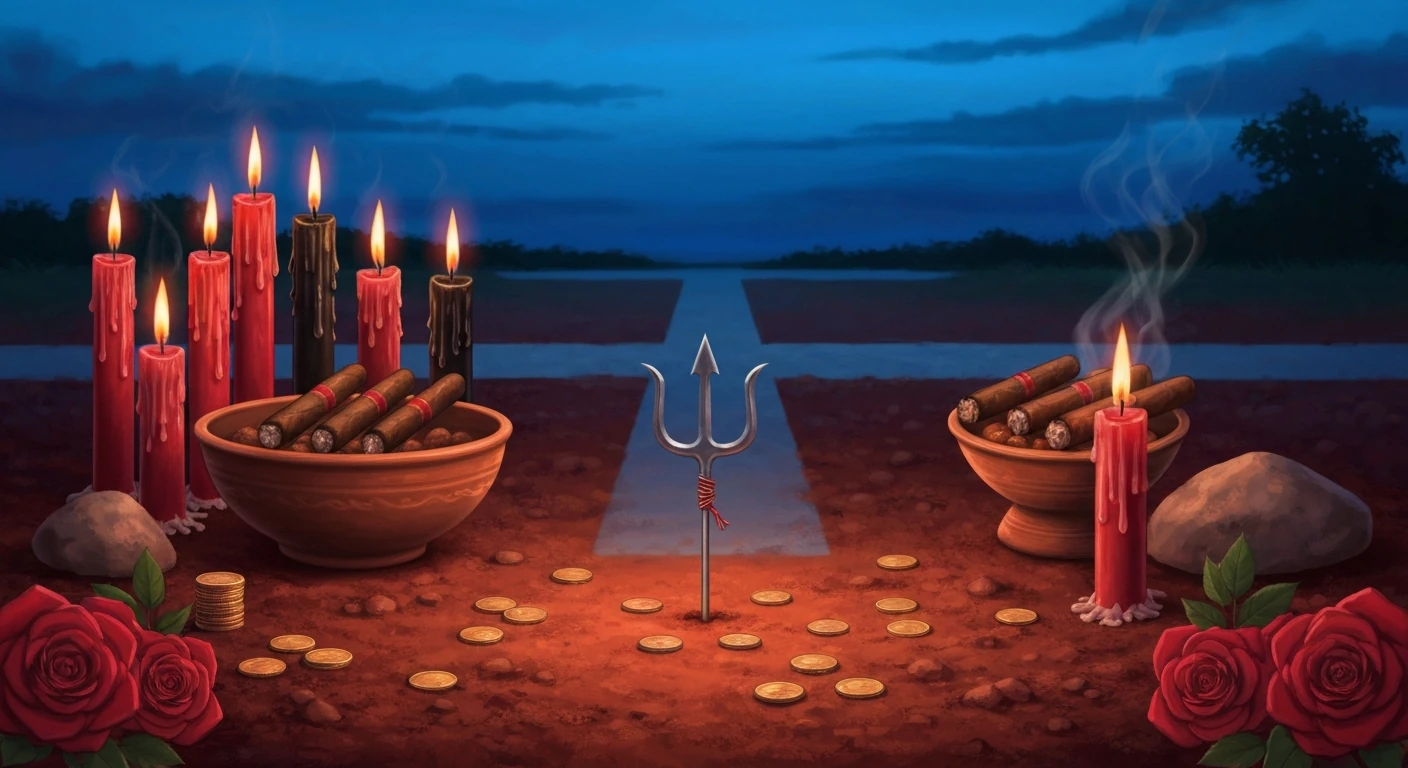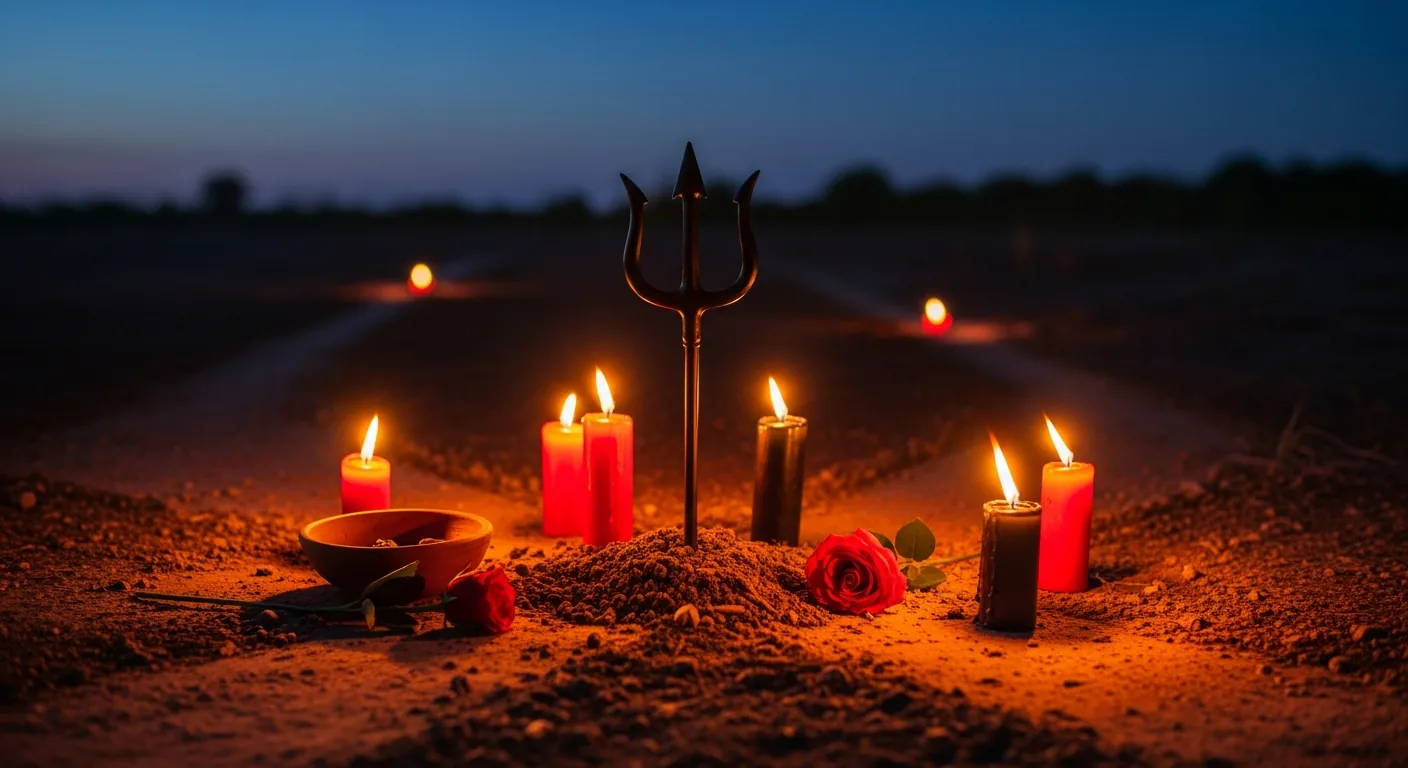
Everyone has passed through one. The crossroads is the common intersection at the corner, on the dirt road, at the neighborhood entrance. In Quimbanda, this same intersection is a place of ritual work, just as serious as the congá inside the terreiro.
What almost no one explains is that a crossroads is not just one thing. The shape of the intersection changes the reading. The ground beneath it changes as well. This guide shows the types, what tradition reads in each one, and how to behave when you arrive and when you leave.
What the crossroads is in the foundation
The crossroads is a point of passage. Two paths meet and form a place that is not quite one or the other: it is a border, it is transit, it is a decision. Anthropology calls this a liminal space, and the entry “Encruzilhada (Umbanda)” gathers this reading supported by Turner, Bastide, Birman, and Prandi.
In the practice of the terreiro, it functions as the house of Exu outside the house. Inside the terreiro, the povo da rua has the tronqueira, the consecrated foundation (assentamento) that stays at the entrance. Outside, the intersection plays this role. It is where one asks for permission, opens a path, discharges, and gives thanks.
The place is so structuring that it appears in the very names of the spirits. Exu Rei das Sete Encruzilhadas is not called that by chance. The Kingdom of the Crossroads is one of the seven kingdoms of Quimbanda, and it has its own peoples linked to each type of path.
It is worth saying what the crossroads is not. It is not a place of bad things, and the people who work there have no relation with the Christian devil. Reginaldo Prandi documents in “Exu, from messenger to the devil” that this association was a Christian theological category pasted from the outside onto a Yoruba messenger. It was not born within the religion. If you want to understand the spirit before the place, start with who is Exu.
The shapes: cross, T, chicken foot, and X
Here is the heart of the matter. The geometry of the crossing guides those who surrender to it. Before the table, an honest warning: this is not a unified national doctrine. These are predominant readings, and they vary from house to house and from region to region.
| Format | Popular name | Predominant reading | Consensus among sources |
|---|---|---|---|
| Cross, four points | male crossroads | Exus and Exus Mirins | High in the sources of the terreiro |
| T, one way dies into the other | female crossroads | Pombagiras | High, it is the most stable of all |
| Y, three ways opening | chicken foot | Linked to triple feminine figures, today used for Pombagira in many houses | Medium |
| X, oblique cross | mixed crossroads | Receives both Exu and Pombagira | Low, appears little |
| Open cross and closed cross | variation of the same crossroads | No stable definition between the houses | Low, treat as local foundation |
The only point that can be stated with firmeza is the T. The association between the T crossroads and the Pombagiras is repeated in independent sources and is the most consistent of the set. The rest requires the question that no article can replace: how does your house read this?
Regarding the terms male and female, an important note. They describe a symbolic polarity of the crossroads, not the gender of who delivers or who receives the request. Confusing this creates nonsense.
Before deciding on the format, ask at your house. The foundation of your terreiro always counts for more than the table of any site, including this one. Here you find the general map, not the license to work alone.
The ground changes the ritual work: street, road, forest, and Calunga
The second axis is the environment. An asphalt crossroads in the middle of the city and a dirt crossroads inside the woods do not ask for the same thing.
- From the street, on asphalt: the most common and the most accessible. Linked to the povo da rua and to guardians like Exu Tranca Ruas. It serves for opening paths in daily life, work, business, and urban life.
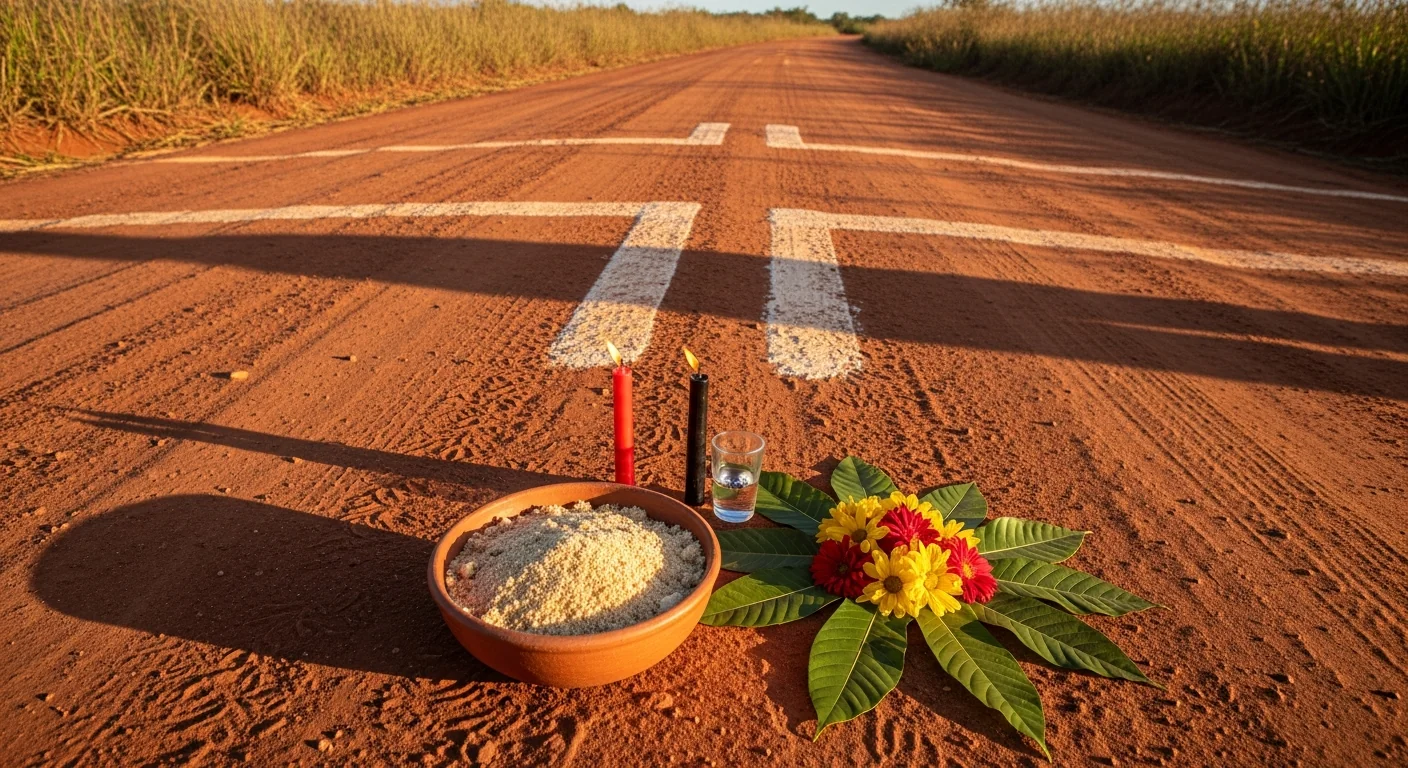
- From the road or dirt: linked to travel, change, and big decisions. It is the preferred choice for those who want peace to arrange the delivery calmly, away from the movement.
- From the forest: the crossroads finds the strength of the woods, and the reading pulls toward cleansing and removal of weight. Here comes the most serious warning of the entire article: a lit candle in dry forest is a real fire risk. Many houses already instruct to deliver without fire in these places.
- From the cemetery, at the gate of Calunga Pequena: passage between matter and spirit, linked to the line of the souls. It has a license protocol and requires the guidance of a leader. It is not a place for the reader to resolve alone.
- Cross of Souls (Cruzeiro das Almas): many people call it a crossroads, but it is another point. The cross is a place of intercession and passage, with its own foundation.
Regarding days, terreiro sources mention Monday and Friday more for the povo da rua, and Friday night appears frequently for Pombagira. There is no national consensus on the time, and no academic source validates a fixed hour. The idea that everything happens at midnight comes more from cinema than from the terreiro.
Crossroads label: how to arrive and how to leave
What to do in the place matters as much as choosing the place. This guide is the most widespread custom, and it does not replace the guidance of your house.
- Choose a remote and clean crossroads. Nothing obstructing the road, sidewalk, or garage entrance. Respect for the collective space is also a foundation.
- Ask for permission from the Exu of the place before arranging anything. Arriving and arranging without saying anything is a lack of manners toward those who are already there.
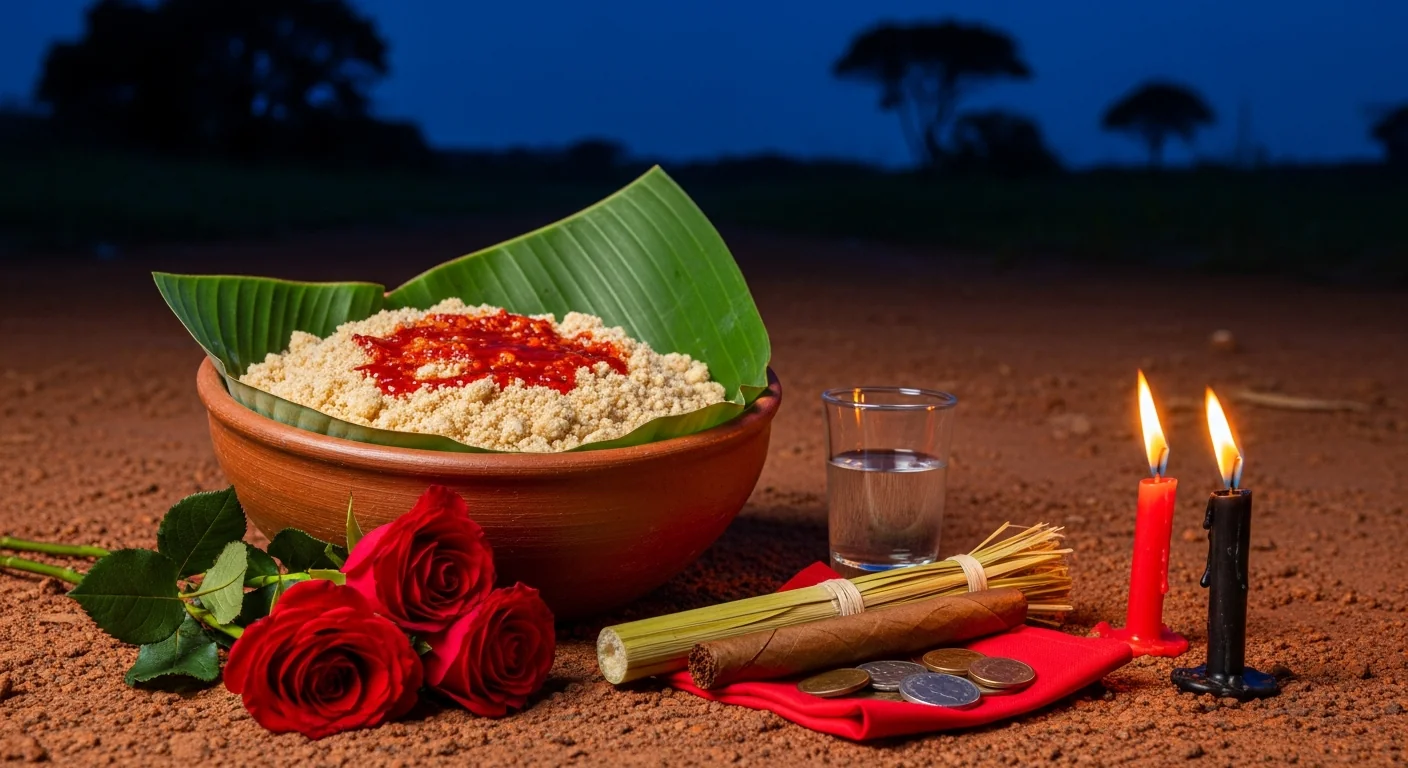
- Arrange the delivery calmly and say what you came to ask for, out loud or in thought. What is taken varies by spirit, and this is detailed in offering for Exu.
- Leave without looking back. It is an old custom and widely practiced, although not every house requires it.
- Collect what is not biodegradable later. Glass, plastic, pottery, cans, packaging, and candle base. Food, flour, and natural flowers, time takes care of.
This last point is not a trend from outside to inside. It is a debate that has already been running inside the terreiros. Researcher Giovanna Capponi documents in Sacred Waste the adaptations in progress: castor bean leaf instead of the alguidar, removal of packaging and staples, natural flower instead of artificial. In a report by Tribuna de Minas, leaders from Juiz de Fora defend the use of biodegradable material instead of pottery. They remind that elements of nature are the foundation of the religion itself.
And when there is no crossroads nearby?
Those who live in buildings, in gated communities, or in cities without dirt crossroads always run into this doubt. The short answer: the place helps, but it is not the foundation.
What sustains the delivery is the bond with the spirit, the permission of the house, and the intention of the one who delivers. Many houses solve this in three ways:
- Delivery made at the terreiro, at the tronqueira, with the leader conducting.
- Common urban crossroads, chosen with common sense, during a time of low traffic.
- Firmeza at home, with a candle and assentamento, when going out is not possible.
None of these options are a lesser plan B. They are recognized paths, and the house is what says which one serves your case.
Frequently asked questions
Can you take money or a drink that is in an offering?
Sources diverge, and there is no single answer. One reading says the street is public space, another says you do not touch what was delivered. Outside of the spiritual discussion, simple ethics remain: that belongs to someone and was left with a purpose. Touching what belongs to another is a lack of respect, and that argument is enough.
I stepped on a despacho by accident, now what?
Calm down, nothing serious happened. Stepping without intention does not attract punishment or burden you with anything. If you feel uncomfortable, a ritual bath with coarse salt or herbs for descarrego will resolve the discomfort. What is actually recommended is not to kick, not to overturn, and not to take anything away.
Which crossroads belongs to Pombagira?
The most widespread and consistent reading points to the crossroads in T, the one where one road ends in another. It is called female in this foundation. Even so, it is worth confirming with your house, because the typology varies and not every terreiro works with this division.
Do you need a Pai or Mãe de santo to deliver at the crossroads?
For simple path deliveries, many people do it alone after talking with their house. For cemetery works, closed forest works, or those linked to heavy demands, the standard guidance is to seek a leader. He conducts, asks for the correct licenses, and avoids foundation errors.
Where to buy items for your delivery
At Joia Mística Laroyê, you find what is used in the ritual work of the povo da rua:
- Red and black candles: the most used colors for Exu and Pombagira
- Cigars and cigarettes: for the spirits that receive tobacco leaf
- Alguidares and clay dishes: the traditional support of the delivery
- Farofa, dendê and firmeza items: the base of most offerings
- Ritual bead necklaces (guias) and statues of the povo da rua: for firmeza at home
Visit our shop in Extrema, Minas Gerais or contact us on WhatsApp with delivery to all of Brazil.
To go deeper, it is worth reading the academic article “O enigma da quimbanda”, by Emerson Giumbelli and Leonardo Almeida, published in the USP Anthropology Journal.
References
- Wikipedia: crossroads (Umbanda) entry
- Reginaldo Prandi: “Exu, from messenger to the devil”, an article about the construction of the association of Exu with the Christian devil
- Giovanna Capponi, SciELO: "Sacred residues", on biodegradable adaptations in terreiro offerings
- Tribuna de Minas: report on the disposal of offerings in public spaces
- Emerson Giumbelli and Leonardo Almeida, USP Anthropology Journal (SciELO): "The enigma of Quimbanda"