Fear lives at the gate. Those attending Umbanda for the first time usually stop before entering, imagining they will make a mistake in front of everyone. The truth is simpler: no one is looking at you, and the house is used to receiving people who have never come before.
This guide accompanies the visitor from the moment of dressing to the farewell. What to bring, how to behave in the gira, what to ask during the consultation, and what changes from house to house. What the gira itself is, with the types and the ritual, is explained in another article.
Before leaving home: clothing, resguardo (ritual abstinence), and what to bring
The most common dress code is white or light-colored clothing, long pants, and a long-sleeved shirt. White connects to Oxalá (Obatala) and uniformizes the assistance, which is the name for the public who will watch and consult.
Many houses ask to avoid black and red in the giras de direita, because these colors are reserved for another line. This varies, so ask beforehand if you can.
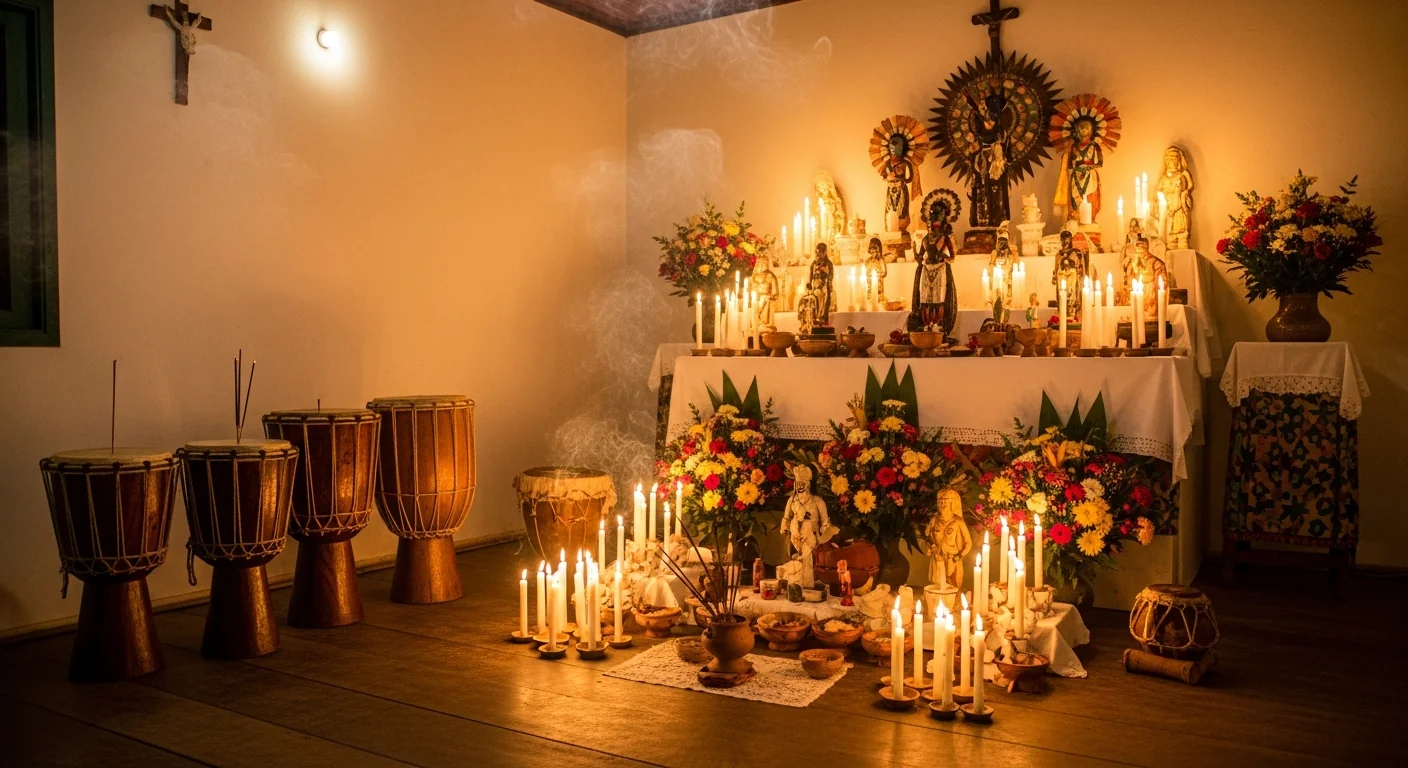
Bring easy-to-remove footwear. A large part of the terreiros ask that the person enter barefoot in the congá space, which is the house altar.
What is worth bringing:
- Document and small change, for the contribution box, if the house has one
- Water, because the gira usually lasts more than two hours
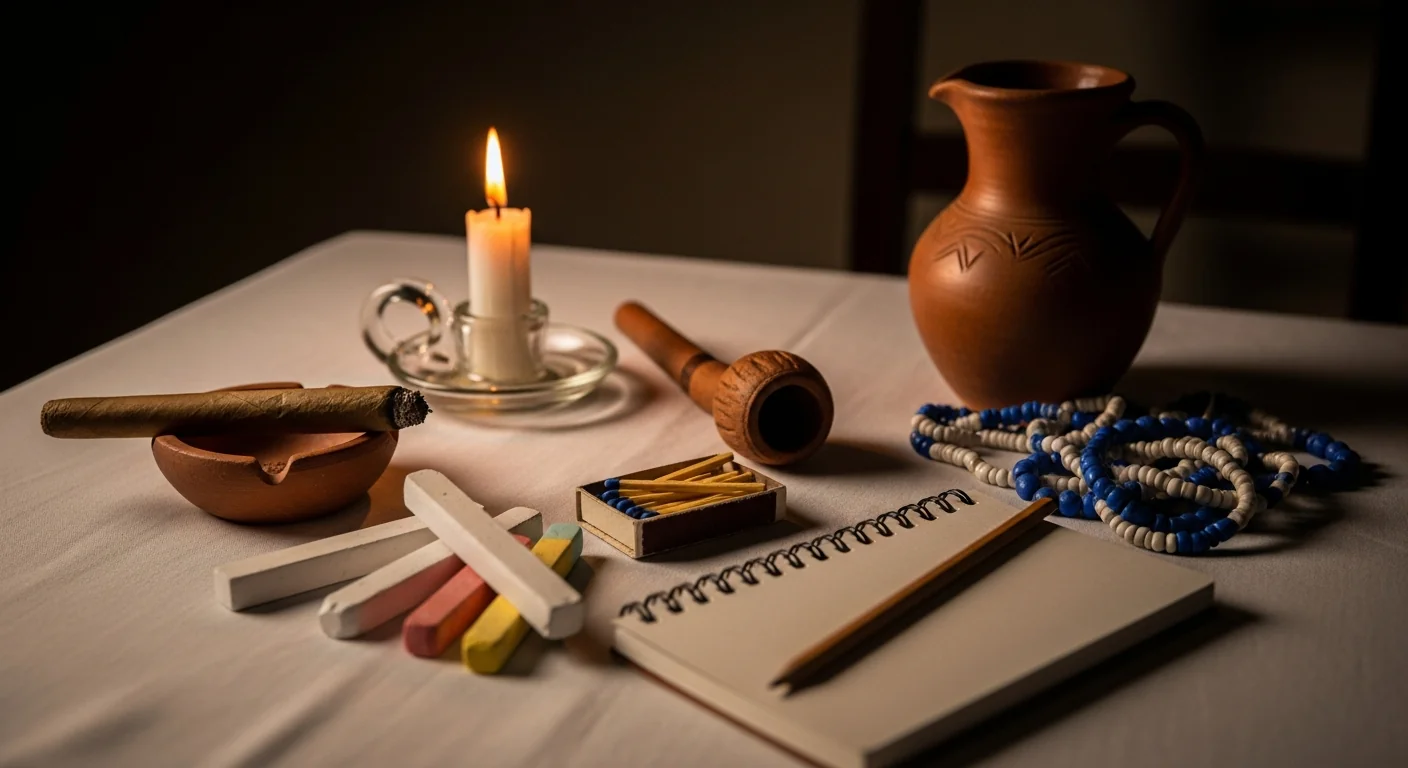
- Paper and pen to write down the guidance the spirit gives. In the moment, the person forgets
- Shawl or light coat if you come straight from work in short clothes
What not to bring: pets, drinks for personal consumption, professional cameras and a pre-assembled offering without prior arrangement.
About the resguardo: tradition asks for twenty four hours without alcohol, red meat and sexual relations before the gira. terreiro Pai Maneco records this practice and the honest caveat that there is no absolute consensus among the houses. This obrigação is for the mediumistic body. For those who only go to watch, it is common sense, not an entry condition.
The arrival: tronqueira, password and smoke cleansing (defumação)
Arrive before the opening time. Entering in the middle of the gira interrupts the ritual work and embarrasses everyone, including you.
Right at the entrance there is usually a small house, generally on the left. It is the tronqueira, where the guardians of the house are settled. Pass with respect and in silence. You do not need to make any gesture if you do not know which one it is.
The sequence varies by house, and the correct thing is to ask, not to deduce:
- Sign the attendance book
- Take the consultation ticket (senha), when the house uses tickets
- Pass through the smoke cleansing (defumação) at the entrance, which cleanses those who arrive
- Sit on the side of the audience
The person who organizes the line and serves the spirit during the consultation is the cambone. They are the right person to clear up any operational questions upon arrival.
Ask. A serious house is not bothered by questions from someone who just arrived. If someone gets annoyed because you do not know how things work, the problem is not yours.
During the gira: where to sit, cell phone, and silence
Sit next to the assistance and remain silent during the opening, the sung pontos (sacred songs), and the calling of the entities.
Cell phone turned off or on silent, put away. Photos and videos only with authorization from the house. The leader has the right to prohibit image recording inside the worship, as in any temple.
Do not light a candle or touch the congá on your own. If you want to offer something, notify someone from the house.
If you feel chills, crying, or dizziness, breathe and stay seated. This does not mean that you are a medium. Who evaluates mediumship is the leader, with time and guidance, as explained in the text about mediumship development in umbanda.
The consultation: what to ask and what not to ask
You will talk with an incorporated entity: preto-velho, caboclo, or another line, depending on the day's gira. The overview of who they are is in spirit guides of Umbanda.
Wait for the spirit or the cambone to start the conversation. State your problem objectively, the way it is. Treat them with respect, without intimacy and without nicknames.
What not to do, according to the orientations for visitors of terreiro Pai Maneco:
- Arriving and asking "tell me what you have to tell me". It sounds like a test, and a serious house rejects it
- Test the spirit with a question whose answer you already know
- Ask for a prediction of death, an accident, or confirmation of betrayal. A serious house does not pass this type of message
- Ask for ritual work against someone
- Demand a deadline and guarantee
- Consult two spirits on the same night
The consultation is for advice, not lottery divination, and it does not solve the problem for you. If the subject is health, no serious house will tell you to stop medication or replace medical treatment. The conversation with a preto-velho leans more toward life advice than toward the oracle.
Photo, menstruation, and children: what varies from house to house
Umbanda does not have a central authority. Each terreiro has its own foundation, and that is why so many questions end in "it depends on the house." Three concrete examples.
Photo and video. Some places allow cell phone recording for personal use and prohibit it in specific giras. The National Sanctuary of Umbanda publishes its regulations, with professional filming only upon prior authorization. Other houses do not allow anything.
Menstruation. There is no single rule. Researcher Lucas Medeiros mapped four different readings on menstrual blood in Afro-Brazilian houses, from ancestral power to the idea of impurity, the latter being of Christian influence. Some houses ask that the menstruating woman does not work in the chain. The audience is rarely affected by this. Ask the house.
Child. Some receive them, others ask that small children stay out during certain giras. Notify before showing up with one.
Money: contribution is not a fee
The consultation with the spirit has no price. Charity is the declared ethical standard of Umbanda, and the sociologist Lísias Negrão documented how this morality became established in the religion in research with dozens of São Paulo terreiros.
What is legitimate:
- Contribution box: free value, to maintain the house. Those who cannot contribute should not feel guilty
- Material donation: candle, ribbon, cigar, ritual supplies
- Entry fee for large events: structure ticket, something different from the price of a consultation
What triggers an alert: price per service, high value requested on the spot with urgency, and the phrase "if it is not done today, it gets worse."
How to recognize a serious house
You have judgment, even without knowing any foundation.
Good signs:
- Does not charge for the consultation nor conditions service on payment
- Has an identifiable leader, a defined schedule, and someone who explains the operation to those who arrive
- Answers a beginner's question without getting irritated
- Does not promise results, deadlines, or exclusivity
- Does not diagnose diseases and does not tell anyone to stop medication
Warning signs:
- Promise of guaranteed love binding ritual (amarração) or healing
- Pressure for rapid initiation or for a paid body closing
- Family isolation, prohibition of going out, harassment of any kind
A terreiro is not a dangerous place. It is a place of worship, like any other. What exists, as in every religion, is people who use others' faith to sell promises.
If you want to understand the religion before choosing where to go, start with the overview of what is Umbanda.
Frequently asked questions
How to dress to go to an Umbanda terreiro?
White or light tones, long pants, long-sleeved shirt, no low-cut necklines and no transparency. Easy to remove footwear, because many houses ask that the person enter barefoot in the congá space. Black and red are usually avoided in right-side giras, but this varies by house.
Do I need to be an Umbanda practitioner to go to a gira?
No. Attendance is open to anyone who wants to watch and consult, without requirements for religion, baptism, or conversion. No one will ask you to change your faith, make a promise, or participate in the ritual. Just respect the worship and the guidance of the house.
What cannot be done before a gira?
Tradition asks for twenty four hours without alcohol, red meat, and sexual relations. This abstinence is an obrigação of the house's mediumistic body. For those who are only watching, it works as a common sense recommendation, and no serious house bars a visitor because of this.
Can a menstruating woman go to the terreiro?
It depends on the house. Some ask that the menstruating woman does not work in the chain on that day, others do not make any restriction. Those who go only as observers are rarely reached by this guidance. The right question is for the house you are going to visit.
Can you take photos at the umbanda terreiro?
Only with authorization. Some houses allow cell phones for personal use and prohibit them in specific giras, others do not allow any recording. Professional filming requires prior authorization. The safe standard is to arrive with your cell phone put away and ask before anything.
Where to buy the material for your first gira
At Joia Mística Laroyê, you find the basics for those starting to attend:
- White clothes and headscarf: cotton skirt, pants, and shirt for gira
- Bead necklaces: assembled or in loose beads for the house to consecrate
- White candles: individual and seven day candles, for your altar at home
- Incense burners and ritual bath herbs: for preparation before the gira
- Statues of pretos-velhos and caboclos: for the first corner of faith at home
Stop by the shop, at Rua Benedito Zingari, 460, Bela Vista, in Extrema-MG, or message on WhatsApp with delivery to all of Brazil.
One last word. No one enters a terreiro knowing everything, and the house does not expect that from you. Arrive with clean clothes, a closed mouth, and an open ear. The rest is learned by going.
References
- Lísias Nogueira Negrão: research on the ethics of charity in Umbanda and the tension between gratuity and remuneration, Tempo Social v. 5 (USP, 1993)
- Lucas Gomes de Medeiros: study on gender and taboos in Afro-Amerindian religions, with the four readings on menstruation, Religião e Sociedade v. 44 (2024)
- Terreiro de Umbanda Pai Maneco: guidelines for visitors, with the etiquette of the password and the consultation
- Terreiro de Umbanda Pai Maneco: feeding during the precept, with the caveat that there is no consensus among the houses
- Santuário Nacional da Umbanda: frequently asked questions with the rules for photos, filming, and visiting