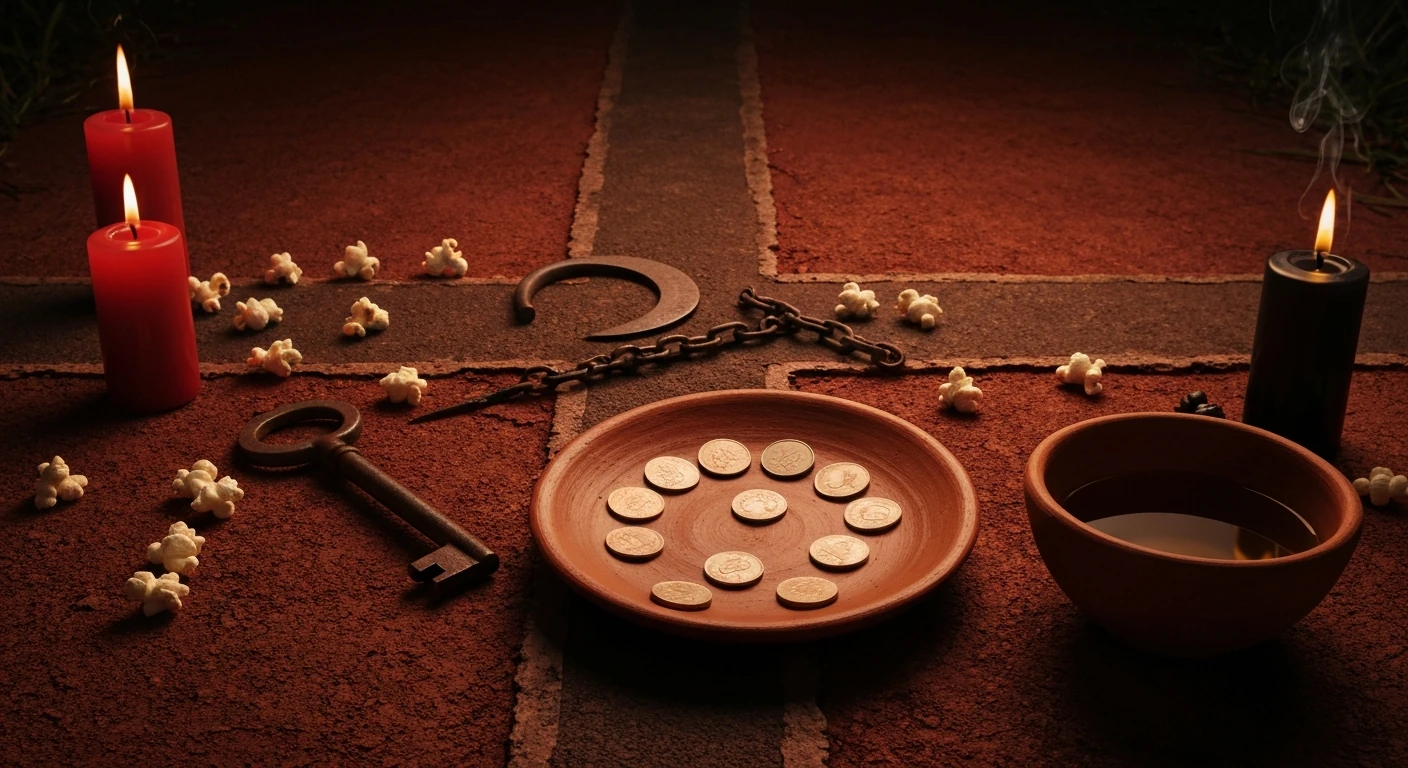
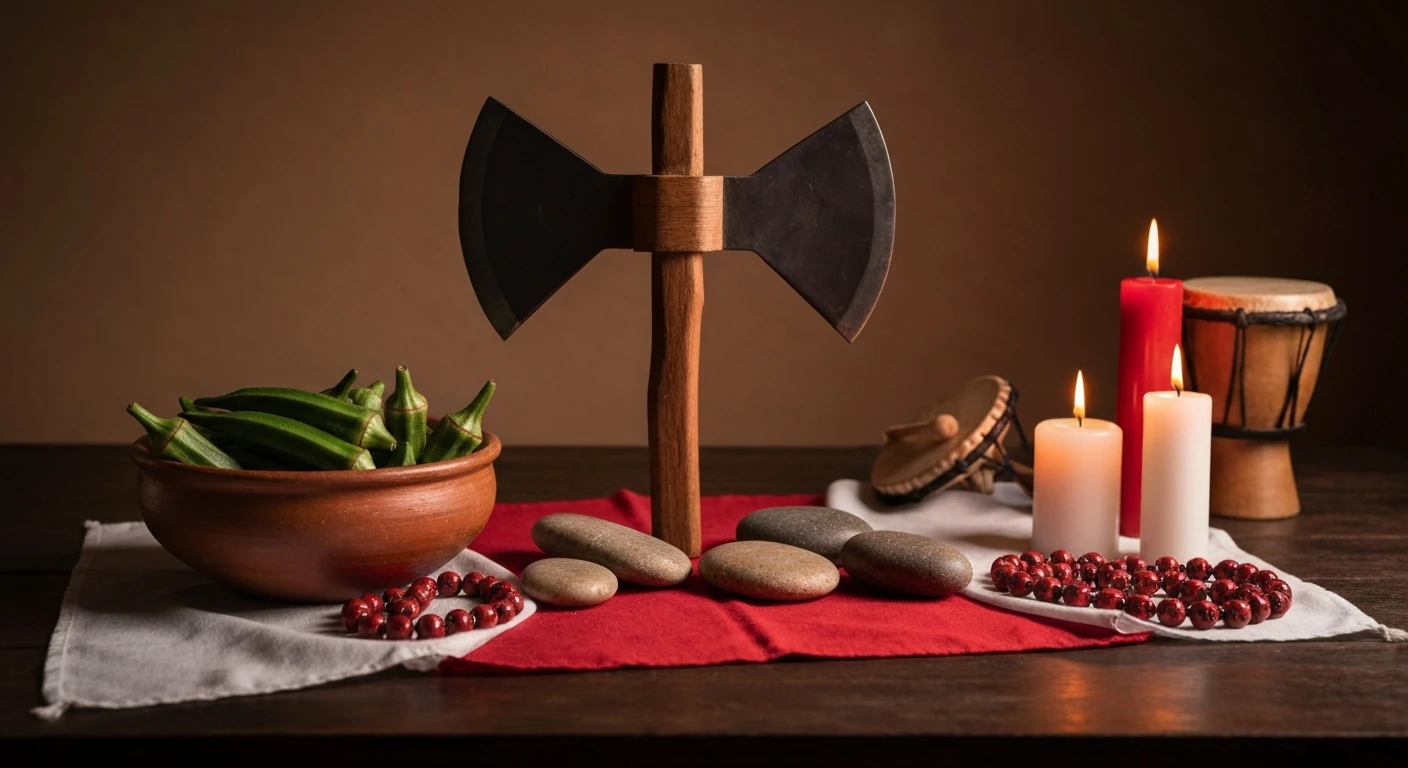
After Bará opens the paths, it is the warrior's turn to enter. In Ogum no Batuque we find the orixá of iron and struggle, the second to be called in the order of axé and one of the pillars of any house of religion in Rio Grande do Sul. Without his foundation, not even the knife that cuts in the obligations would have strength.
This guide explains who the warrior is within the tradition of the gaúcho Batuque: his domain, the position he occupies in the axé, the paths cultivated in the South, the colors, the day, the greeting, and the syncretism with Saint George. As always, the final word on the foundation belongs to your house and your babalorixá or ialorixá.
The warrior of iron and owner of the knife
Ogum is the warrior orixá, lord of iron and of all metals forged from it. He is the owner of the work tools, of the roads, and of the demands, and for this reason he always walks with the sword in hand. Where there is a struggle to be won, work to be done, or a path to be opened by force, there is his energy.
In the batuque, this domain has a concrete ritual weight. He is the owner of the obé, the sacred knife. Every babalorixá and every ialorixá needs to have his consecrated foundation (assentamento) in the house, because without him the axé of the cut in the obligations is not used. This is why, even being the second to be called, the warrior is present in everything the house does: without his iron, the axé does not work.
Ogunhê, my Pai! The greeting echoes strongly in the houses of batuque and in the streets, especially when the South celebrates Saint George.
The second orixá of the order of axé
In Batuque, the orixás are called in a sequence, the order of axé, which goes from the first to the last in each festival. Bará opens, as the owner of the paths and communication, and immediately after comes the warrior, who guarantees the strength for what was opened. In the Ijexá nation, for example, the entrance follows Bará, Ogum, Oiá, Xangô (Shango), Odé, Otim, Ossanha, Obá, Xapanã, Oxum (Oshun), Iemanjá (Yemoja) and Oxalá (Obatala). Sources that document the gaúcho batuque describe this sequence with small variations by nation.
This hierarchy is of spiritual age. The orixá of iron is among the new orixás, the group that goes from Bará to Obá, before the old orixás, who are Oxum, Iemanjá and Oxalá. The sequence changes from nation to nation, but the opening pair, Bará and the warrior, is a constant: first the path is opened, then the strength is sent. To see all of them together, it is worth knowing the orixás of batuque.
The passages of Ogum in Batuque
In batuque, the same orixá manifests in different passages (also called qualities), each with its own foundation. The most well-known passages of the warrior in Rio Grande do Sul are:
- Ogum Avagã: settled next to Bará Lodê, with the otás outside the temple, in his own home. It is a passage very linked to Monday.
- Ogum Onirê (or Onira): the king of the city of Irê, one of the most revered passages.
- Ogum Adiolá: the one who accompanies the water orixás, walking alongside Oxum, Iemanjá and Oxalá.
- Olobedé: a fourth passage cited in houses of the Cabinda nation.
Each passage has its own assentamentos, chants, and precepts, which vary from house to house and from nation to nation. Therefore, these are the most cited, and not a closed list: your house is who says which passage rules your head and how it is cared for.
Colors, day, and greeting
Knowing the profile of the orixá helps the filho de santo to honor him in daily life. In the Batuque, it is usually like this:
- Colors: red and green (green and white in the Mejê passage; some old priests also used navy blue in the threads).
- Day of the week: Thursday (Monday for the Avagã passage).
- Greeting: "Ogunhê!", also heard as "Patacori Ogum", with the meaning of crowned head.
- Offerings: popcorn, roasted corn, potatoes roasted in dendê (in numbers of three or seven) and the potato opeté.
It is worth remembering that an offering has a foundation and is done with guidance. The list above shows the taste of the orixá, but the way, the quantity, and the right moment are taught by the house. He is an orixá of strength and justice, not a guaranteed result amulet: he opens the fight, but the journey is each person's own.
Ogum and Saint George: the syncretism of the South
As in much of Brazil, in Rio Grande do Sul the warrior was syncretized with Saint George, the saint mounted on a horse, who faces the dragon with the spear. The image of the saint who defeats evil through courage immediately spoke to the orixá of iron and of the fight.
This syncretism was born as a survival strategy: during slavery and the repression of African religions, associating the orixá with a Catholic saint allowed for continued worship under another name. It is important to understand that orixá and saint are not the same entity in their origins; syncretism is a historical bridge, not an equality. Even today, April 23rd brings together devotion to the saint and greetings of "Ogunhê!" through the streets of the South.
How each tradition worships the warrior
The orixá of iron is revered in various Afro-Brazilian traditions, but each has its own way. In batuque, he appears in the passages and in the order of axé that we saw here. In Candomblé, he is the orixá of iron worshipped in Yoruba, lord of the obé and the opening of paths by force. In Umbanda, he heads a line of ritual work, with falanges and caboclos who act in the giras.
If you want the general profile of the orixá, beyond batuque, see who is Ogum. And, as all this force also passes through the leaves, it is worth knowing the peregum, the leaf of Ogum, used in baths and for strengthening. The important thing is not to treat batuque, Candomblé, and Umbanda as synonyms: they are distinct paths that, each in its own way, revere the same warrior.
Frequently asked questions
Who is Ogum in batuque?
He is the warrior orixá, lord of iron, of metals, of tools, and of the roads. In the batuque of Rio Grande do Sul, he is the second orixá called in the order of axé, right after Bará, and the owner of the obé (the knife) used in the obligations. Without his assentamento, the house does not use the axé of the cut.
What are the passages of Ogum?
The most cited in Batuque are Ogum Avagã (settled next to Bará Lodê), Ogum Onirê (king of Irê), Ogum Adiolá (who accompanies the water orixás) and Olobedé, cited in the Cabinda nation. Each passage has its foundations, and the list varies according to the nation and the house.
What is the day of Ogum?
The warrior's day in Batuque is Thursday. The Avagã passage, however, is usually associated with Monday. It was on the Thursday of January 1st that many houses greeted Ogum as ruling orixá of 2026 in Batuque. In addition to the days of the week, April 23rd marks the feast of Saint George, the saint syncretized with the orixá, widely celebrated in Rio Grande do Sul.
With whom is Ogum syncretized?
In Rio Grande do Sul and in much of Brazil, the orixá is syncretized with Saint George, the warrior saint. The syncretism was a historical strategy of resistance during slavery. It is worth remembering that orixá and saint have distinct origins: the association is a cultural bridge, not an equivalence.
What are the colors of Ogum?
The colors in Batuque are red and green. In the Mejê passage, green and white are used, and some old priests included navy blue in the bead necklaces. In the Cabinda nation, the beads usually alternate a grass-green and a blood-red.
Where to find items of the warrior orixá
At Joia Mística Laroyê, you find what you need to honor the warrior in your home:
- Bead necklaces and guias: in red and green colors
- Statues of Ogum and Saint George: for the altar and the settlements
- Ritual candles: red and green, to set the intention
- Metal tools and swords: for the consecrated foundation (assentamento)
- Strength herbs: peregum, snake plant (espada de São Jorge), and others, for baths
Visit our physical store in Extrema, Minas Gerais and we ship to all of Brazil. For guidance on the correct use of each item, talk to us via WhatsApp.
References
- Historiando Axé: article about the gaúcho Batuque and the order of axé by nation
- Wikipedia: entry about Batuque as an Afro-Brazilian religion