The malandros in Umbanda form an entire line of spirits, and Zé Pelintra is just its most well-known name. The figure came from the streetwise rogue of the early 20th century, whom Umbanda began to worship between the 1930s and 1960s.
This guide shows where the malandro comes from and where the line is located in each house. It also brings the names recorded by sources, the clothing, the colors, the drink, and the greeting.
Who are the malandros in Umbanda
The malandro was first a social type in the first decades of the 20th century, and later became a spirit through the practice of Umbanda and Catimbó. Researcher Pedro Guimarães Pimentel published the study in the Mneme journal, from UFRN. He shows that the malandro lived between vagrancy and profession, such as that of samba dancers. And vagrancy was a crime by the laws of the time.
The razor and capoeira are part of this historical portrait. In the 1920s and 1930s, they were forms of survival for those living on the margins, and the malandro was one of the greatest representatives of this group.
For Mario Teixeira de Sá Júnior, bringing Baianos and malandros into the pantheon was a way for Umbanda to sacralize the marginalized human. And it helped alleviate the stigma that fell upon the exus.
The malandragem that the Brazilian people inherited from the black man was "an indispensable condition to survive the hostilities of discrimination and racism."
Pai Rodney, in CartaCapital
Researcher Rodrigo de Sousa da Silva, in an article from UFAC, goes in the same direction: in Umbanda, the malandragem of Zé Pelintra speaks of the spirit's proximity to man.
The malandro of Lapa and the master of Jurema
Two readings coexist. In the umbandas of Rio, the malandro is the man of Lapa, of the hill, of the bar and the cabaret, and these are the spaces that appear in the sung pontos (sacred songs).
In the northeastern catimbó, Seu Zé is mestre juremeiro. There the image is different: feet on the ground, white shirt and pants, straw hat and a red scarf around the neck. Jurema is a tradition specific to the Northeast, with its Masters and Mistresses, and the site has a page about it in Jurema sagrada.
If the Zé of the catimbó and the one of the carioca malandragem are the same, the tradition itself does not know. His complete profile is in Zé Pelintra.
Where the line stays in each house
The line of the malandros has no single place. Field research records different arrangements, each in a house:
| How the house organizes | What was recorded |
|---|---|
| Together with the exus | The malandros are worshiped in the falange of exu, as a subtype with specificities |
| Own gira | The malandro gained a specific gira, separate from the exus, with other "Zés" |
| Without a line | Zé Pelintra is the only malandro and commands the ritual work of the pombagiras |
| Near the baianos | Zé has easy access to the baiano gira and sometimes manifests as a baiano |
| At the door | Through the relationship with Exu, he protects farm gates, gates, and tronqueiras |
Therefore, the question "is a malandro an Exu?" does not have a one-word answer. The encyclopedia records that Zé Pelintra incorporates in an exu gira without being from that line. The manual of the Mata Virgem Spiritualist Society says that malandros are not exus, but work within their line. And in one of the houses studied, they are treated as a subtype of exu. Who defines it is your house. To understand Exu, see who is Exu.
The neighborhood with the baianos is also real. In a four-year observation in terreiros in Curitiba, Zé Pelintra circulated between the left and the right and sometimes came as a baiano. The line of the baianos is in baianos in umbanda.
Names of malandros and malandras
Among the malandros, the names that appear in more than one source are Zé Pelintra, Malandrinho, Zé do Coco, Zé Pretinho, Camisa Preta, and Camisa Listrada. Each house knows others, and they are usually popular and double names.
The line also has malandras. The most common name starts with Maria and gains a second name, such as Maria Navalha. They usually wear red and use flowers in their hair and on their clothes.
In the Zé Pelintra sanctuary in Lapa, researcher Carlos Eduardo Santos Maia recorded statues of Maria Navalha and of Maria do Cais. According to the informant, Maria Navalha is more linked to Lapa and Maria do Cais has northeastern influence. The philosopher Rafael Haddock-Lobo calls Maria Navalha a "pombagira malandra carioca." For the feminine line of the left, see who is Pombagira.
Clothing, colors, drink, and greeting
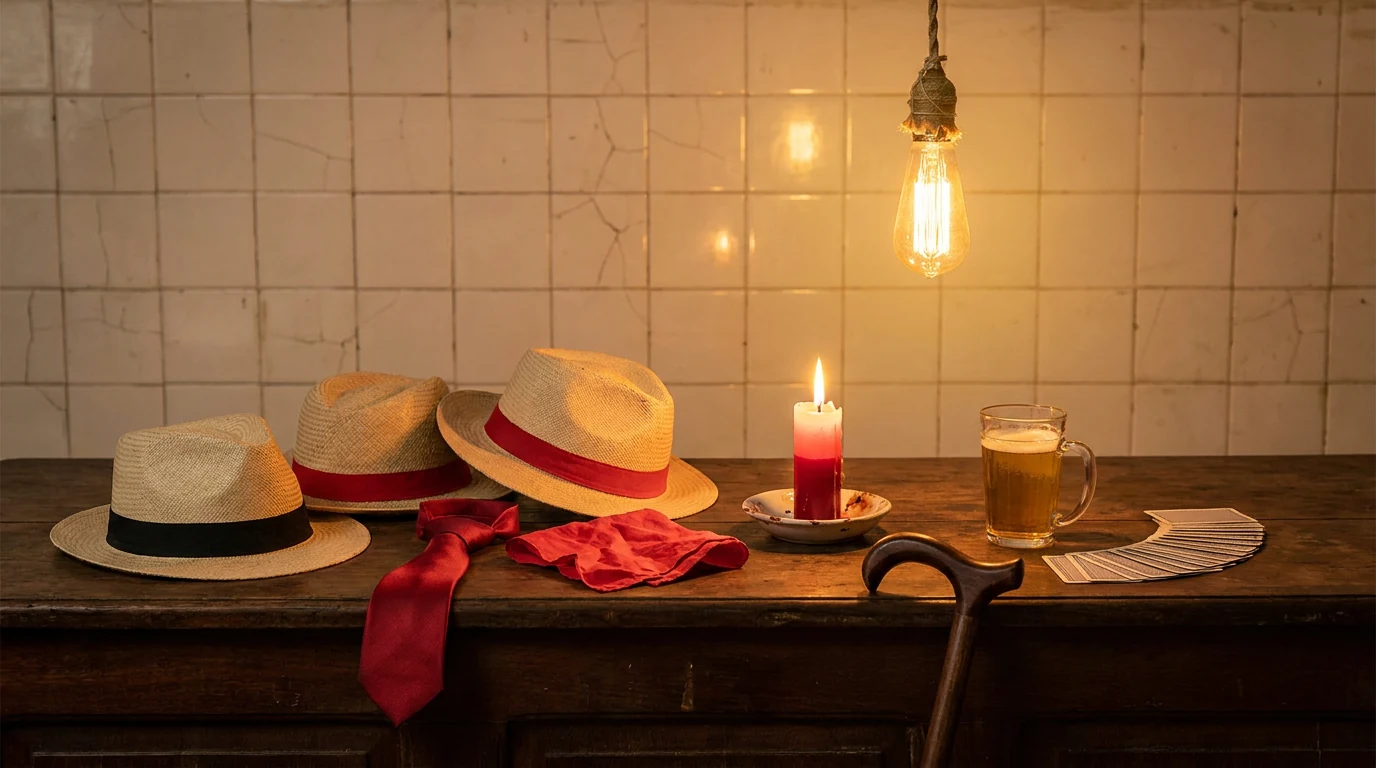
The most well-known outfit is that of the carioca malandro: white suit, silk shirt, bicolor shoes, Panama hat, and red tie. Another common image is a striped shirt over white pants.
Colors: white and red | Objects: hat, red tie, cane, deck of cards, red scarf | Greeting: "Hail the malandragem!"
The drink with the most records is beer. In the terreiro that Silva analyzed, Zé Pelintra drinks beer and smokes cigarettes. In the bars of Rio, his image stays on an improvised altar, with a red candle or lamp and, almost always, a glass of beer. Mata Virgem records houses that also serve cachaça, batida, or cognac. The drink and the tobacco leaf are an offering defined by the spirit and by the house, and they remain in the rite.
In Rio de Janeiro, Municipal Law 7.549/2022 created Zé Pelintra Day on July 7. The Rio Chamber news records that the date serves those who suffer religious intolerance, racism, and xenophobia. Some houses use October 28.
Where to offer and what not to ask
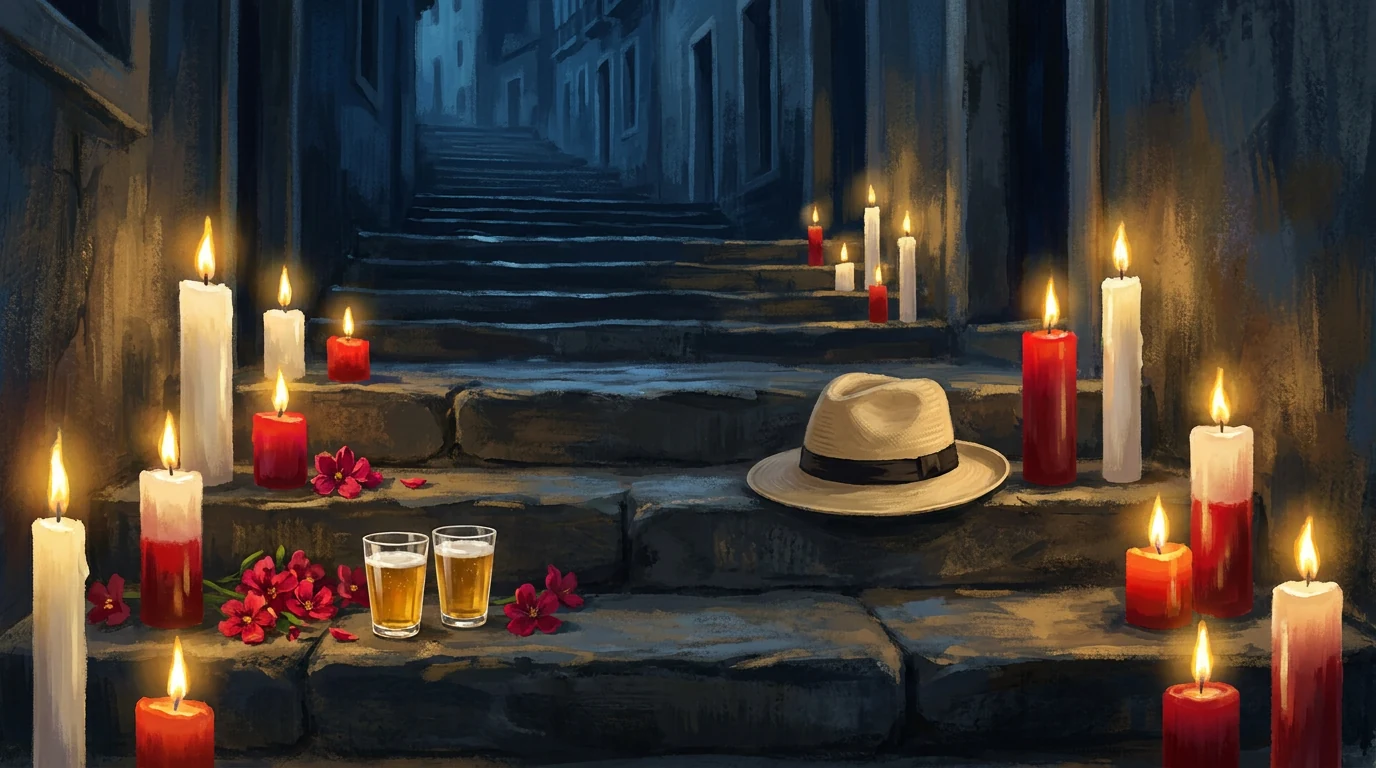
The malandro is from the street. In the pontos cantados, his spaces are the bar, the street, the morro, and the cabaret. In the Lapa sanctuary, the candles are almost all white, with some red and bicolor ones, next to beers and cigarettes.
Promises to win at gambling, unlock money, or bring someone back have no place here, and no serious spirit sells this.
Within Umbanda itself, there are those who reject the malandro who arrives dancing samba and deny him the place of spirit guide. Maia records this criticism as one of the positions in dispute. Each house follows its own fundamento.
Frequently asked questions
Is Malandro an Exu?
It depends on the house. There are terreiros that worship the malandros along with the exus as a subtype, and there are houses that give them their own gira. The encyclopedia records that Zé Pelintra incorporates in an exu gira without being from that line.
Is the malandro on the right or the left?
He moves between the two. In a four-year study in terreiros in Curitiba, Zé Pelintra appeared on both the left and the right. In catimbó, the mestre juremeiro can also be on one side or the other. The position in the gira is the house's decision.
What does the malandro like to drink?
Beer is the drink with the most records, both in terreiro and in the Lapa sanctuary. Some houses also serve cachaça, batida, or cognac. The offering is defined by the spirit and by the leader, and it is not improvised.
Is Maria Navalha a pombagira?
She is described as a carioca malandra pombagira, and the classification joins both things. In Umbanda, the malandras are the female correspondent of the line, and Maria Navalha is the most cited example.
Where to buy items for the malandro line
At Joia Mística Laroyê you find what your house uses for the malandragem:
- Statues of Zé Pelintra, in a white suit, red tie, and panama hat
- Bicolor red and white candles and white candles, stick and seven day types
- White and red bead necklaces, in the colors of the line
- Panama hats, ties, and red scarves
Stop by the shop, at Rua Benedito Zingari, 460, Bela Vista, in Extrema-MG, or message on WhatsApp with delivery to all of Brazil.
References
- Pedro Guimarães Pimentel: the sacralization of the malandro, Mneme, UFRN, 2011
- Rodrigo de Sousa da Silva: Zé Pelintra, Umbanda, and the malandro, UFAC, 2020
- Janderson Bax Carneiro: Zé Pelintra and the resignifications of the malandro, dissertation, PUC-Rio, 2012
- Carlos Eduardo Santos Maia: Hail, Seu Zé! Hail, Malandragem! Hail, Lapa!, Latitude, UFAL, 2022
- Mario Teixeira de Sá Júnior: Baianos and malandros, Interletras, 2006
- Rio Municipal Chamber: Zé Pelintra Day Law, 2022
- Pai Rodney: Malandro, master, and protector, CartaCapital, 2018