In every house of Candomblé, there is a door that almost no one crosses. Behind it is the peji, the room where the consecrated foundations (assentamentos) of the house's orixás reside. It is there that the axé of the roça is fixed, and that is why access is reserved.
The name varies depending on who is speaking. Ilê orixá, "house of the orixá," is the Yoruba form. Quarto de santo is the common form in Portuguese. And pepelê designates the stepped structure, made of wood or masonry, where the consecrated foundations (assentamentos) are arranged.
What is the peji and why is it reserved
The peji is a space for guarding, not for display. It houses the objects that sustain the relationship between each person and their orixá, and this relationship is not public.
The restriction is not about suspense. It is the same logic of religious organization that reserves the sacristy of a church or the liturgical storage of any tradition. The house is responsible for what enters and what leaves.
It is worth separating two things that are often confused. The assentamento is the object. The peji is the room that guards the objects. One article speaks of the thing, the other speaks of the place.
Who says what can and cannot be done inside the peji is the pai or mãe de santo of the house. No internet text occupies this place.
What stays inside the peji
The public inventory of the peji is well known, even though the internal composition of each igbá is a foundation reserved for the initiated.
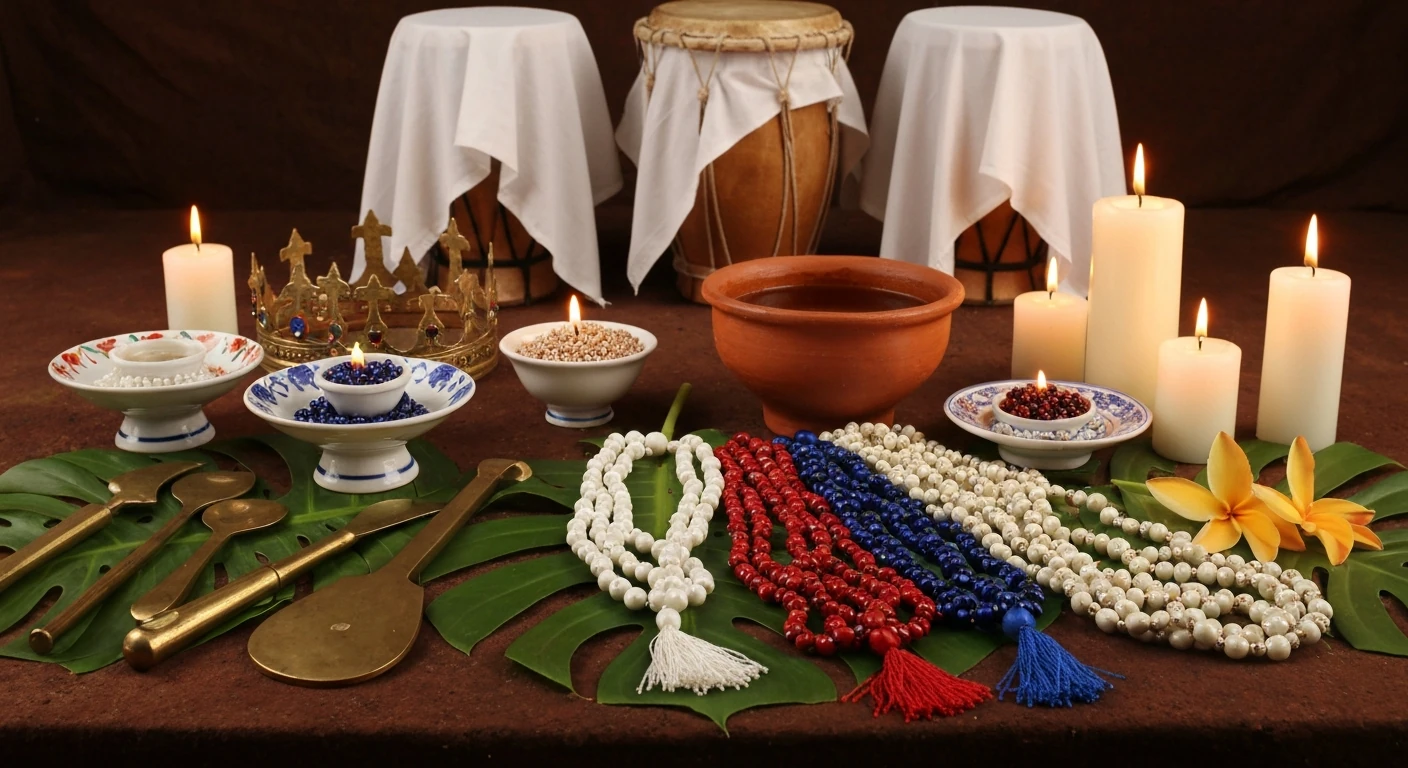
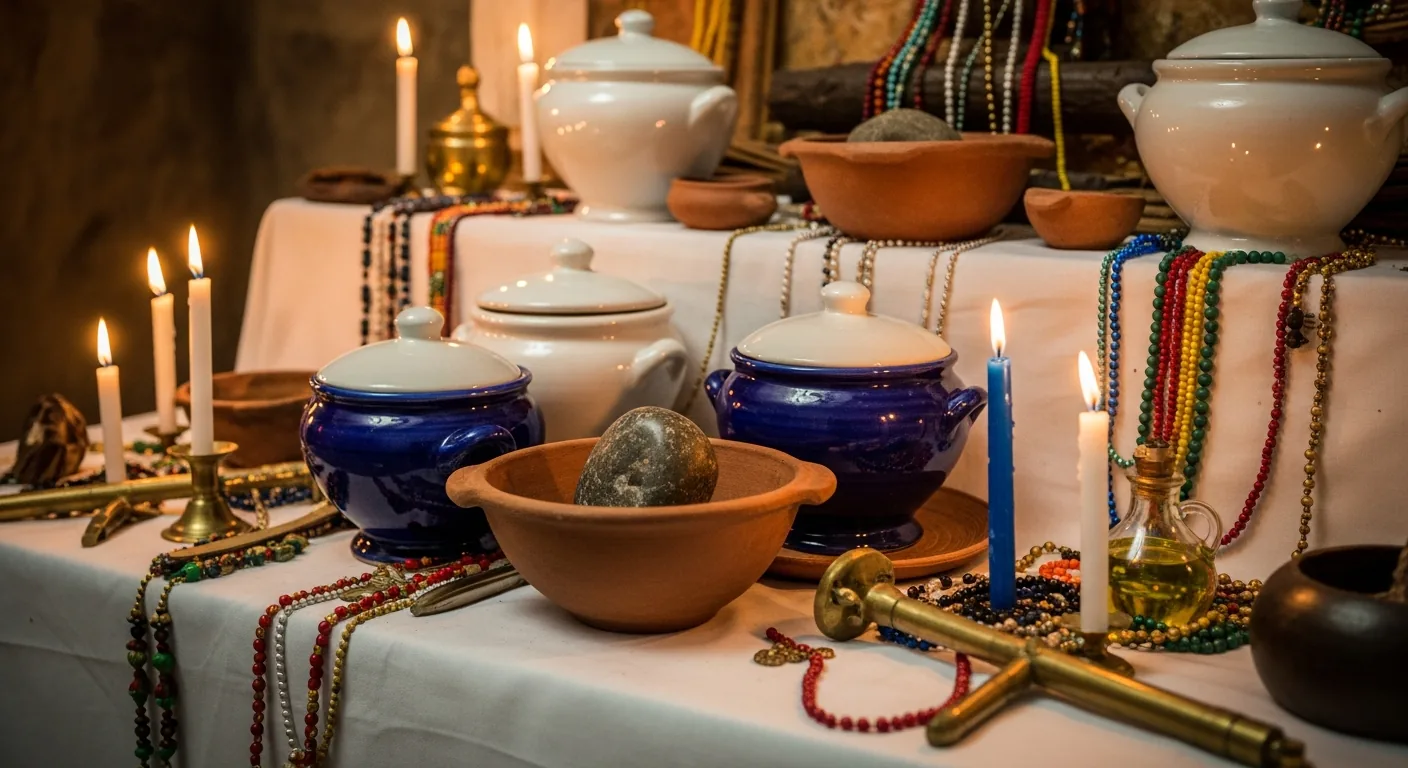
- Igbá orixá: the set that fixes the axé of the orixá, assembled and fed throughout the obligations.
- Otá: the stone of the consecrated foundation (assentamento), kept in the core. It is not a symbol of the orixá, it is his presence in mineral form.
- Orixá tableware: soup bowls, water jars, and quartinhas with water, in the colors of each orixá.
- Tools: metal pieces that materialize the function of each one, such as the oxé of Xangô (Shango), the ofá of Oxóssi (Oshosi), and the abebé of Oxum (Oshun). The complete list is in tools of the orixás.
- Orixá foods: served in bowls in front of the consecrated foundations (assentamentos), on the proper days.
The anthropologist Lucas Marques described this material universe in an article published in the magazine Religião e Sociedade. His conclusion is direct: the consecrated foundation (assentamento) is the dwelling of the orixá and the orixá himself materialized, and not a representation of him. It is this fixed axé that the peji guards.
Internal peji and external peji
Not every peji is a closed room. The architecture of the roça follows the nature of each orixá.
The internal peji is the room inside the ilê, the proper orixá room. It is where the consecrated foundations (assentamentos) of most of the house's orixás are kept.
The external peji appears in a masonry house or at the foot of a tree. Exu (Eshu) usually stays at the entrance of the land. Ossaim (Osanyin) stays with the leaves. And Iroko has its own tree as a dwelling, which dispenses with any room.
This distribution is not decoration. It follows the foundation of each orixá and changes from house to house.
Who cares for the peji and who can enter
The position responsible for the space is the pejigã, from the fon Kpεjígán, "lord who cares for the sacred altar". In Jeje houses, the pejigã is the first ogã of the house, with recognized authority in matters of axé. The other positions appear in positions and hierarchy in Candomblé.
Entry follows seniority. Abiã, iaô and ebomi have different levels of access, and each house defines its own rule. Visitors do not enter. Researchers also do not, unless there is express authorization from the leader.
Space: peji, ilê orixá or quarto de santo | Guard: assentamentos of the orixás | Zelador: pejigã | Access: children of the house, by seniority
Peji, roncó, barracão and congá: what is each space
A good part of the confusion about the peji comes from wrong comparisons. This table separates the four spaces that are most mixed:
| Space | Tradition | What is it | Who enters |
|---|---|---|---|
| Peji | Candomblé | Room of the settlements of the orixás | Children of the house, by seniority |
| Roncó | Candomblé | Seclusion room of the initiate in the initiation | Only the initiate and those who conduct the ritual |
| Barracão | Candomblé | Hall for public festivities, xirê, and atabaques | Public, on festival days |
| Congá | Umbanda | Altar visible in the gira hall | Public, with handling by the mediums |
The roncó, of the fon hounko, is located near the peji and is confused with it all the time. They are distinct things. The roncó is the seclusion room of the iaô during the feitura, and it does not house the house's assentamentos. The research by Camargo, Scorsolini-Comin, and Santos, published in the Psicologia e Sociedade magazine, describes this seclusion of about 21 days. The path of those who pass through it is in what is iaô.
The congá belongs to Umbanda and follows a different logic. It is visible by nature, gathers statues, bead necklaces, candles, and flowers in the hall, and the public sees it during the gira. Those who want to understand that other space can read how to set up an umbanda altar.
An honest record: umbanda houses of the omolokô line also call their own altar peji. It is a current use of those houses, and not an error to be corrected from the outside.
How the space changes in each nation
Candomblé is not a single block, and the vocabulary of the peji changes according to the nation. The differences are detailed in candomblé nations.
- Ketu: Yoruba vocabulary. Peji, ilê orixá, and pepelê, with the assentamento called igbá orixá.
- Jeje: fon root, which sustains the most cited etymology of the word. The position of pejigã is markedly jeje.
- Angola: Bantu vocabulary. The rooms appear as inzo, "house", and the deities are the inquices, from the Kimbundu nkisi, "receptacle".
A necessary caveat about the angola nation. Many houses use "peji" in daily life due to circulation between nations, but there is no single standardized Bantu term equivalent that applies to all of them. The tradition is oral, and the name varies from house to house.
Where does the word peji come from
The etymology has two readings, and neither of them is a closed consensus.
The first derives the term from the fon kpeji, or from the yoruba pẹpẹ, "shelf" or "altar", added to le, "firm". This is the reading recorded in the Peji entry on Wikipedia, which relies on a fon-French dictionary and bibliography in the area.
The second derives from the yoruba pèje, "banquet", by the idea of the food served to the orixá. It is the reading that predominates in general Portuguese dictionaries.
Both make sense within what the peji is. A place where the orixá settles and also eats.
Frequently asked questions
What is peji in Candomblé?
It is the sacred space where the assentamentos of the orixás of a candomblé house are kept. It also receives the names ilê orixá and quarto de santo. When the reference is the stepped furniture where the assentamentos are arranged, the term used is pepelê.
What is inside the peji?
The igbás of the orixás, with the otá at the core, plus the ritual tableware, water jars, soup tureens, alguidares, and the metal tools of each orixá. The ritual foods are served in bowls in front of the shrines (assentamentos). The internal composition of each igbá is a house foundation.
Who can enter the peji?
The children of the house, according to their seniority level. Abiã, iaô, and ebomi have different access levels, and each terreiro defines its own rule. Visitors and researchers do not enter without express authorization from the leader. The restriction protects the foundation, it does not hide mystery.
What is the difference between peji and congá?
The peji is the internal and reserved room of the Candomblé, where the assentamentos are located. The congá is the visible altar of the Umbanda, set up in the hall where the public gira takes place. They are distinct traditions, with their own liturgy and organization.
Can I have a peji at home?
An assentamento is not set up on one's own. It is done by someone who has the foundation for it, inside the house and under the guidance of the leader. Those who are not yet initiated can maintain a space of devotion with candles, flowers, and water, always with the guidance of those who care for your orixá.
Where to buy orixá pottery and peji items
At Joia Mística Laroyê, you find pieces with provenance for your worship and for the maintenance of the house:
- Clay quartinhas and moringas: for the water of the assentamentos
- Sopeiras and alguidares: pottery in the colors of each orixá
- Metal tools: oxé, ofá, abebé, xaxará, and other pieces
- Candles, dendê oil, and honey: items of current use in the house
- Fresh and dried herbs: for baths and ritual cleansing of the space
Visit our physical store in Extrema-MG or contact us on WhatsApp with shipping to all of Brazil.
References
- Marques, L. (2018), Religion and Society, SciELO: Making orixás, on the mode of existence of things in Candomblé
- Camargo, Scorsolini-Comin and Santos (2018), Psychology and Society, SciELO: The initiation of the orixá, paths of mediums in initiation in Candomblé
- Free Encyclopedia Wikipedia: Peji entry, etymology, synonyms and access restriction