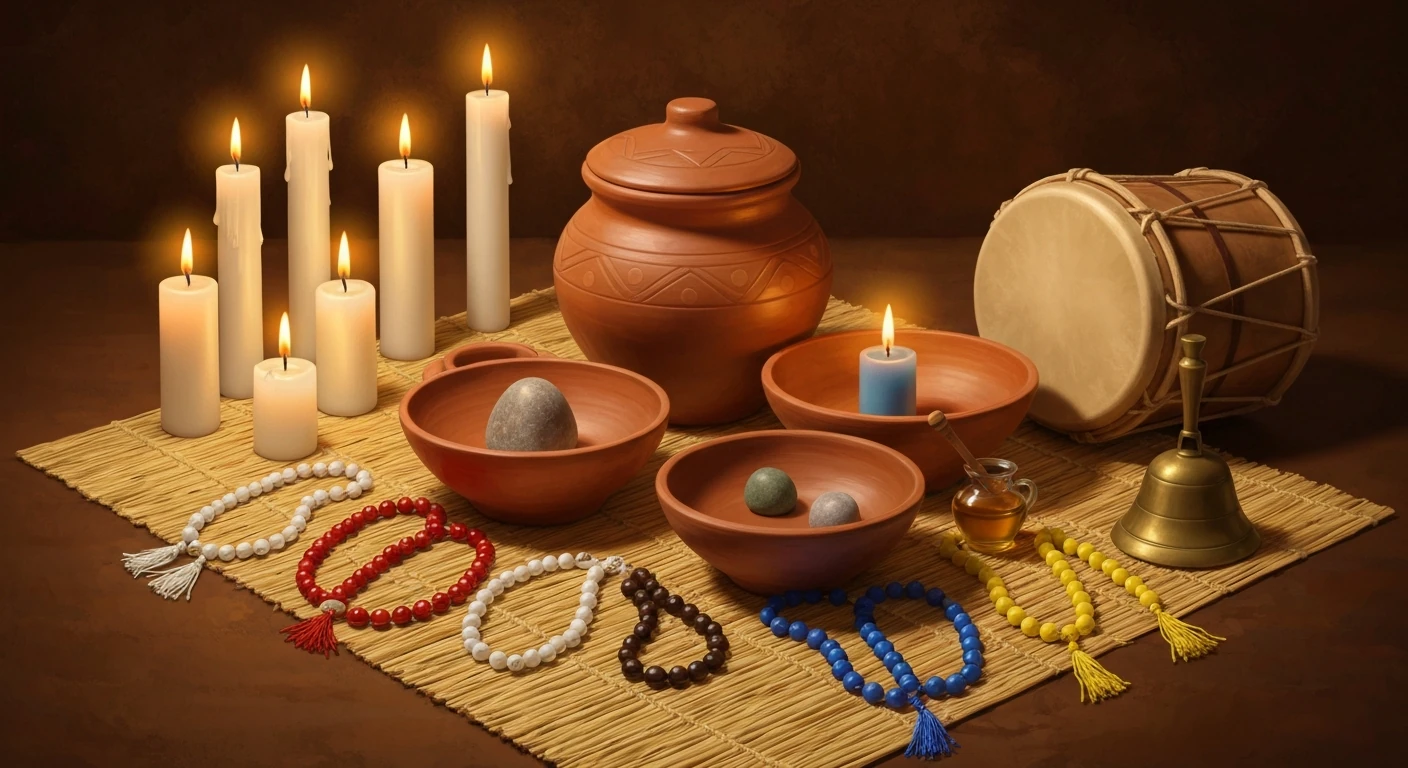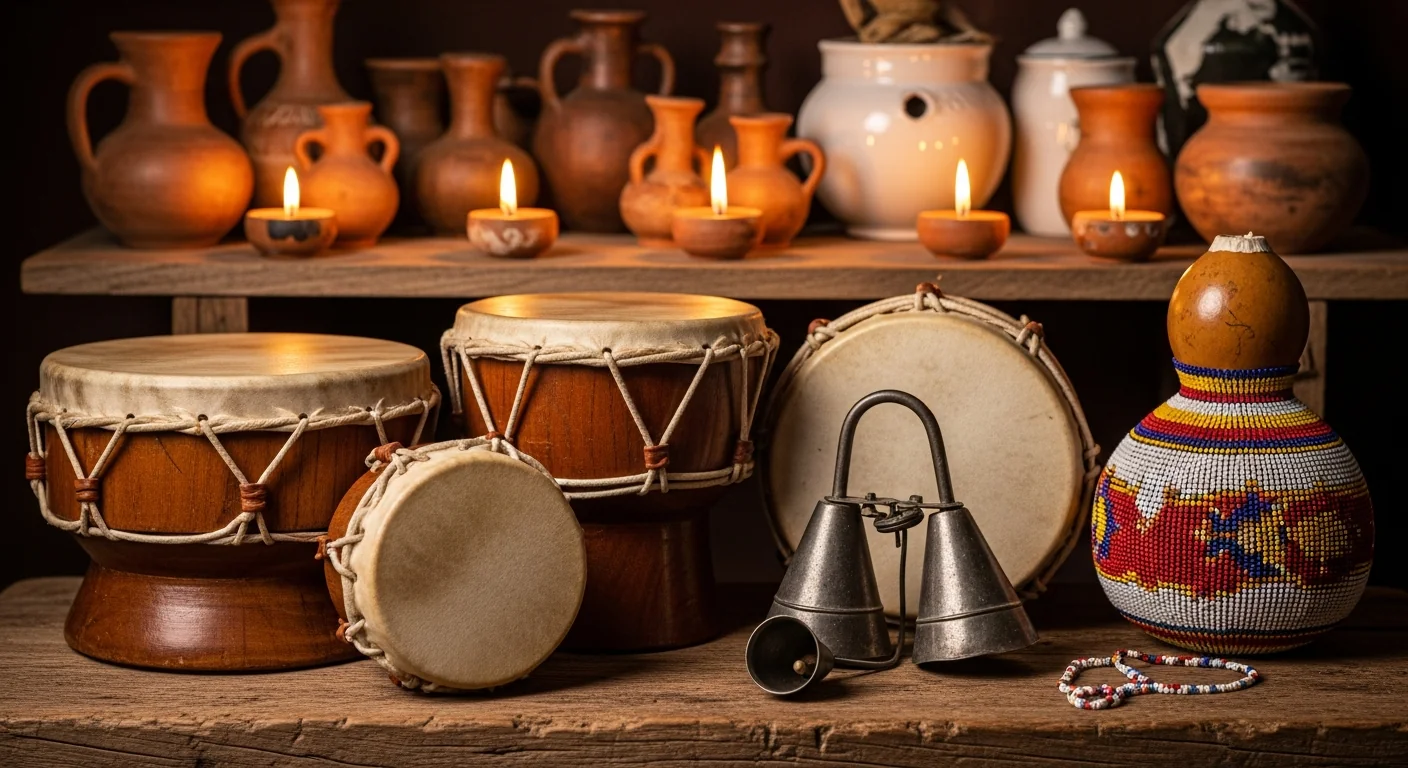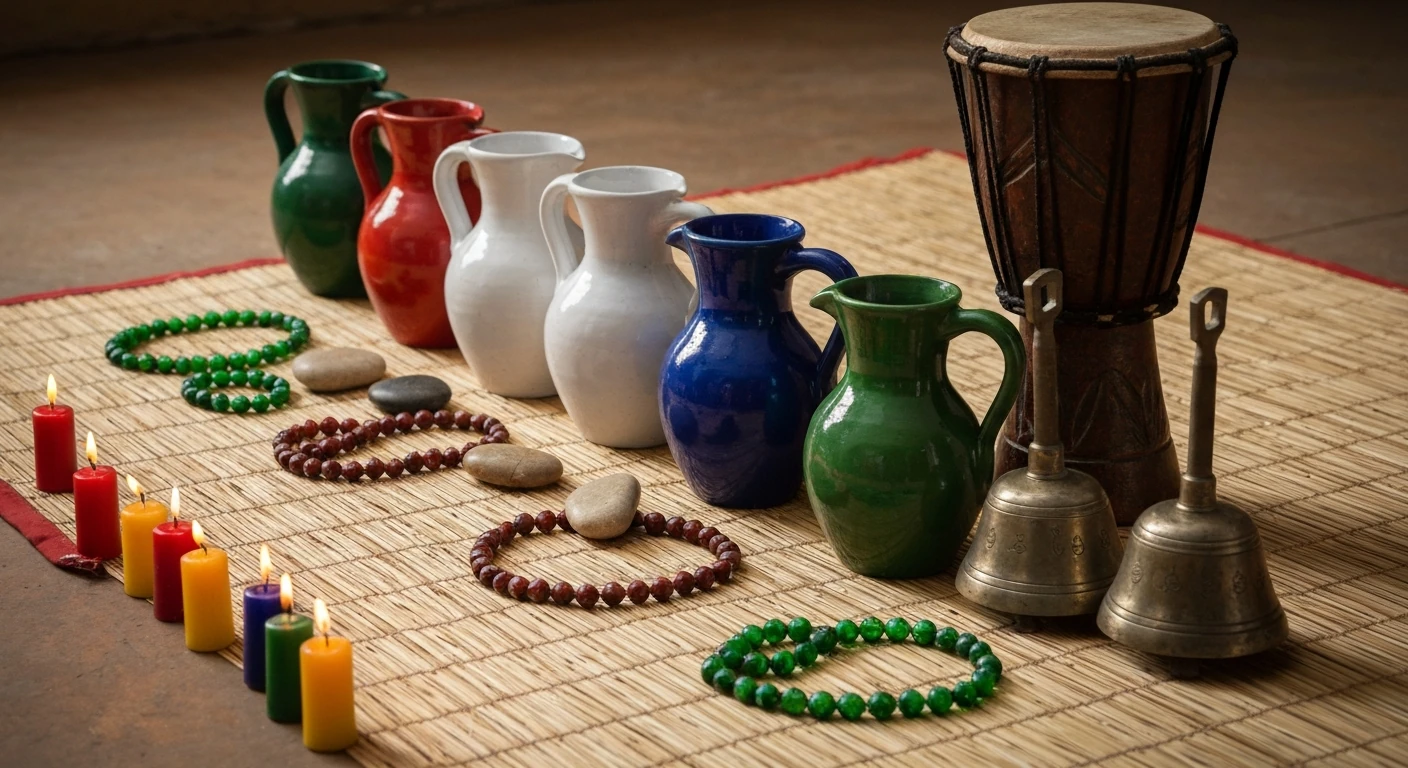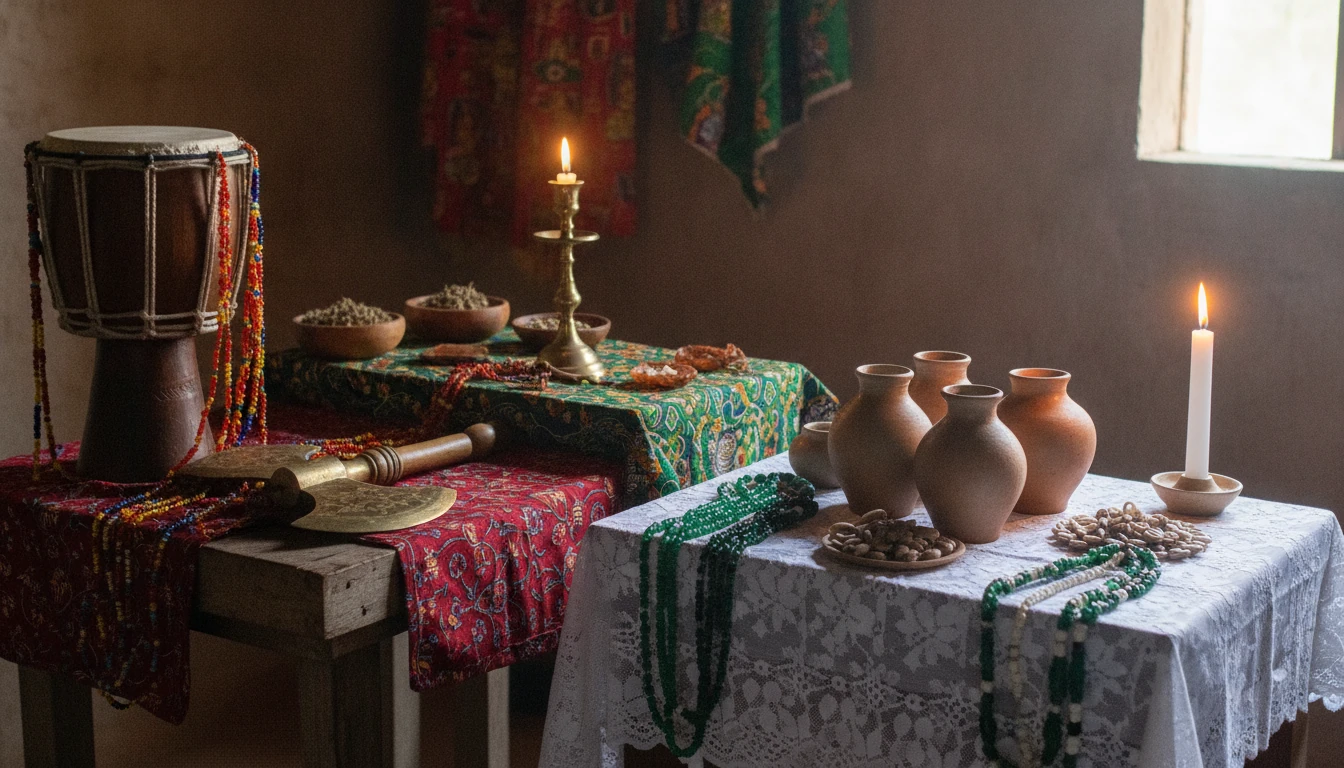
Batuque and Candomblé are two orixá religions, daughters of the same Africa and the same diaspora, but they are not the same thing. Each one was born in a corner of Brazil, with their own nations, specific names for the orixás, and a liturgy with its own style.
This guide places the two side by side: where they come from, how they organize themselves, why the orixás change names, and what separates the rite in the gaúcho barracão from the rite in the baiano terreiro. Without hierarchy, without "better" or "worse," just difference with respect.
Batuque and Candomblé: the same root, different paths
Before the differences, the common root. Both traditions worship the orixás, the Yoruba and other African deities brought to Brazil by enslaved people. Both work with axé, offering, initiation, cowrie-shell divination (jogo de búzios), and drum festivals. Both preserved the African faith by stitching memory into hostile land.
The difference is in formation. Candomblé was structured in Bahia at the beginning of the 19th century, and from there it spread across the country. Batuque formed in the far south, in Rio Grande do Sul, in the same century, with its own identity that also reached Uruguay and Argentina. Same seed, two climates, two plants.
Where each tradition comes from
Geography explains a good part of the distance between the two.
- Candomblé: is born in Salvador and the Recôncavo Baiano at the beginning of the 19th century, from the Yoruba, Jeje, and Bantu Africans. Today it exists all over Brazil.
- Batuque: is born in Porto Alegre and in Rio Grande do Sul throughout the 19th century, also called Nação or Religião de Xangô (Shango). It is the afro-gaúcho matrix, strong in the South and the Plata region.
Batuque developed its own drum beats, prayer orders, and a calendar specific to the South. To understand the foundation of this tradition, the article what is Batuque provides the complete overview.
The nations of each one
Neither Candomblé nor Batuque are a single block. Each one is divided into nations, which are the African roots and the way of worship inherited from each people.
In Candomblé, the best known nations are ketu (of Yoruba tradition), jeje (of Fon tradition) and angola (of Bantu tradition). Each one has its own liturgical language, chants, and foundations, something that also appears in the hierarchy and positions of Candomblé.
In Batuque, the nations are Oyó (Nagô), Jeje, Ijexá, Cabinda and Nagô, formed in the South with their own beats and orders. The distinction of each one is detailed in the nations of Batuque. Note: the names of the nations do not coincide between the two religions, even when the word repeats, such as "jeje", because the historical path was different.
Why the names of the orixás change
Those who come from Candomblé and visit a batuque find the names strange. They are the same orixás, with different spellings and emphases.
- Bará in batuque corresponds to the function of Exu (Eshu), the guardian of the paths and the first to be greeted, as explained in the profile of Bará in Batuque.
- Oiá is the lady of the winds and of the eguns, close to the Iansã (Oya) of Candomblé.
- Xapanã is responsible for health and for illness, an energy that in Bahia appears as Obaluaê or Omolu (Omulu).
- Odé and Otim are the hunting pair of the forest.
It is no coincidence that batuque is called the Religion of Xangô: the orixá of justice holds a central place in the Gaúcho tradition, as shown in Xangô in Batuque. The complete list and the order in which the orixás are worshiped are in the orixás of Batuque.
Differences in liturgy and ritual
Both religions have initiation, sacralize the head (the ori), and work with the trance of the orixá, but the vocabulary and the rite have their own distinct marks.
A significant difference lies in the way the presence of the orixá is named. In batuque, people speak of "occupying the orixá", and not simply "incorporating," a unique way of saying that the orixá takes the filho de santo. The drum toques, the order of the prayers, and the structure of the festival also follow the Gaúcho matrix, distinct from the Baiano xirê.
Much, however, is similar. Both religions use the jogo de búzios to consult the orixás and read the path of the seeker. Both perform initiation, with recolhimento, obligations, and care for the head of the initiate. Both maintain the secret of fundamento, that which only those with a function in the house learn, and which does not become an internet recipe. The liturgy changes in the details, in the language of the chant, and in the drum toque, but the logic of axé is recognizable from one barracão to another.
Vocabulary requires care: in batuque, the positions and the structure of the house have names specific to the Gaúcho tradition, and generalizing Baiano terms can sound like erasing that identity. When visiting a house, ask how that nation names things.
Difference is not a distance of value. Each house keeps the axé in its own way, and respect for the root of each one is what sustains the living tradition.
Batuque and Candomblé side by side
| Aspect | Batuque | Candomblé |
|---|---|---|
| Where it was formed | Rio Grande do Sul (19th century) | Bahia (19th century) |
| Other names | Nation, Religion of Xangô | Candomblé |
| Nations | Oyó, Jeje, Ijexá, Cabinda, Nagô | Ketu, Jeje, Angola |
| Guardian of the paths | Bará | Exu |
| Reach | South of Brazil, Uruguay, Argentina | All of Brazil |
| Trance | occupying oneself with the orixá | "to incorporate”, xirê |
The table summarizes, but does not replace the experience: each terreiro has its own foundation, and the best path to understand is to attend with respect.
Frequently asked questions
What is the difference between batuque and candomblé?
Both worship the orixás, but they formed in different regions: Candomblé in Bahia and batuque in Rio Grande do Sul, each in the 19th century. The nations, the names of some orixás, the drum beats, and part of the ritual vocabulary change, although the African base is shared.
Is batuque the same as Candomblé from the South?
No. Although people sometimes call it that for convenience, batuque has its own identity, with nations (Oyó, Jeje, Ijexá, Cabinda, Nagô) and Gaúcho liturgy. It dialogues with Candomblé and the Pernambuco xangô, but it is not a branch of either.
Why is batuque called the Religion of Xangô?
Because Xangô, the orixá of justice, occupies a central place in the Afro-Gaúcho tradition. The popular name "Religion of Xangô" reinforces this importance, in the same way that "Nação" is used to refer to batuque in Rio Grande do Sul.
Are the orixás the same in both?
In essence, yes, with different names and emphases. Bará in batuque fulfills the function of Exu, Oiá is close to Iansã, and Xapanã responds for the energy of Obaluaê. They are the same African archetypes read by distinct traditions.
Which religion came first?
Both consolidated in the 19th century, Candomblé in Bahia and batuque in Rio Grande do Sul. It is not a case of one having generated the other: they are parallel developments of the same African matrix in different regions of Brazil.
Where to find orixá items for both traditions
Whether in batuque or Candomblé, the worship requires items of fundamento. At Joia Mística Laroyê you find:
- Statues and tools of the orixás: for batuque and Candomblé
- Bead necklaces and guias: in the colors of each orixá
- Candles and quartinhas: pieces for liturgical use
- Dried and fresh herbs: for baths, amaci, and smoke cleansing (defumação)
- Cowrie shells (búzios) and game items: for those who have a function in the house
Visit our physical store in Extrema, Minas Gerais or buy via WhatsApp with delivery to all of Brazil. Talk to us via WhatsApp and Joice will provide guidance according to your nation.
References
- Wikipedia: Candomblé
- Wikipedia: Batuque (religion)