The souls line is, in most of today's Umbanda, the line of the pretos-velhos: the spirits who arrive at the gira greeted with “Adorei as almas” and who work, preferably, on Monday. However, the name does not mean the same thing in every terreiro.
In 1933 it designated another line. In some houses, it also covers exus and pombagiras from the cemetery. And the question about who rules receives more than one answer, all with records.
What is the souls line in Umbanda
It is the line that Umbanda links to the souls of the dead, with the pretos-velhos at the front. The leader of a terreiro in Ribeirão Preto (SP), heard by the research by Rafael de Nuzzi Dias at USP, summarized it like this: every spirit in Umbanda is a soul, “but the pretos-velhos are like those who lead, the conductors of the souls”.
Who works: pretos-velhos, and in some houses exus and pombagiras “of the Souls” | Day: Monday | Greeting: Adorei as almas | Most cited regency: Oxalá and Omulu (Obaluaê), depending on the house | Registered candles: white, and white and black
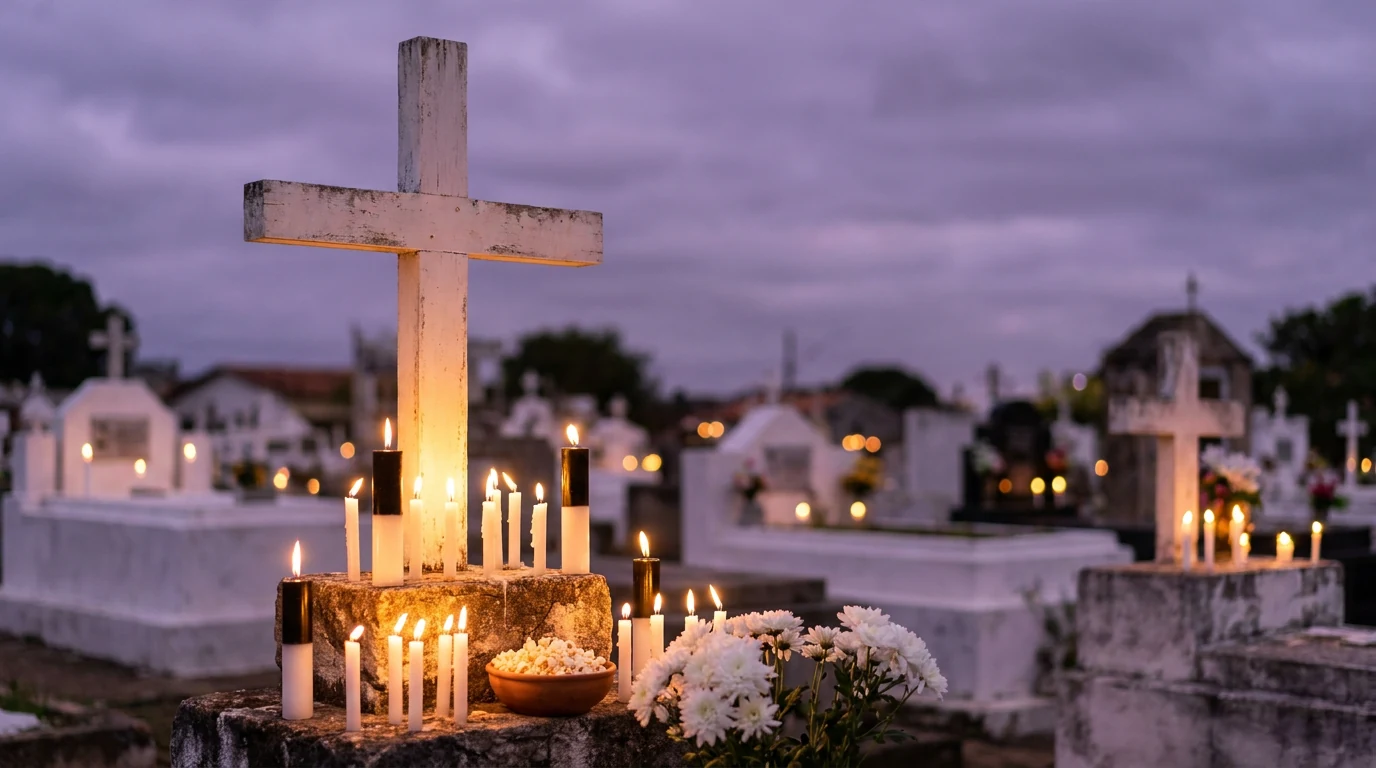
Monday is not an invention of the terreiro. In popular Catholicism, it was already the day of the souls. A research by UFRN in Ceará records the worship of the blessed souls on this day, “in churches, but equally at home”. Umbanda inherited the day and placed its own dead in it. For this reason, the line gains so much weight on All Souls' Day in Umbanda, which in 2026 falls on a Monday.
This text deals with the line from the inside. The entire list, with the position of the souls line among the others, is in 7 lines of Umbanda.
How the meaning changed: in 1933, it was the line of Santo
One of the first books published about Umbanda already brought the name, but with another meaning. In Spiritism, Magic and the Seven Lines of Umbanda, from 1933, Leal de Souza lists the seven lines: Oxalá, Ogum (Ogun), Oxóssi (Oshosi), Xangô (Shango), Iansã (Oya), Iemanjá (Yemoja) and a seventh.
“The seventh is the line of Santo, also called the Line of Souls.” And, shortly after: “The line of santo is transversal, and maintains its unity through the others.” (Leal de Souza, 1933, p. 52)
Three things from this text sound strange to those who are from gira today:
- It was not the line of pretos-velhos. Leal de Souza puts the pretos in another place. The line of Oxalá, he writes, “has the devotion of the spirits of pretos from all regions”.
- It was made of mediums, the “pais de mesa”. They are mediums of “cabeça cruzada”, who assumed the lifelong commitment of lending their body to a specific spirit.
- It made a bridge with the left. The workers of this line, “caboclos or negros”, came from what the author calls the Black Line. They had the mission to seek “the suspension of hostilities” with the old companions of the crossroads.
Therefore, the book says, those who came from the Line of Santo used, in addition to the colors of the line in which they worked, “the black, of Exu (Eshu)”. The reading that dominates today, the line of souls equal to pretos-velhos, came later. Neither of the two is wrong: they are different moments of the same religion.
On the right: the pretos-velhos, conductors of the souls
Today, when someone speaks of the line of souls, they almost always speak of the pretos-velhos. In the terreiro studied by USP, the leader describes the line as a school: “it is a school that prepares the spirits for them to enter the law of Umbanda”.
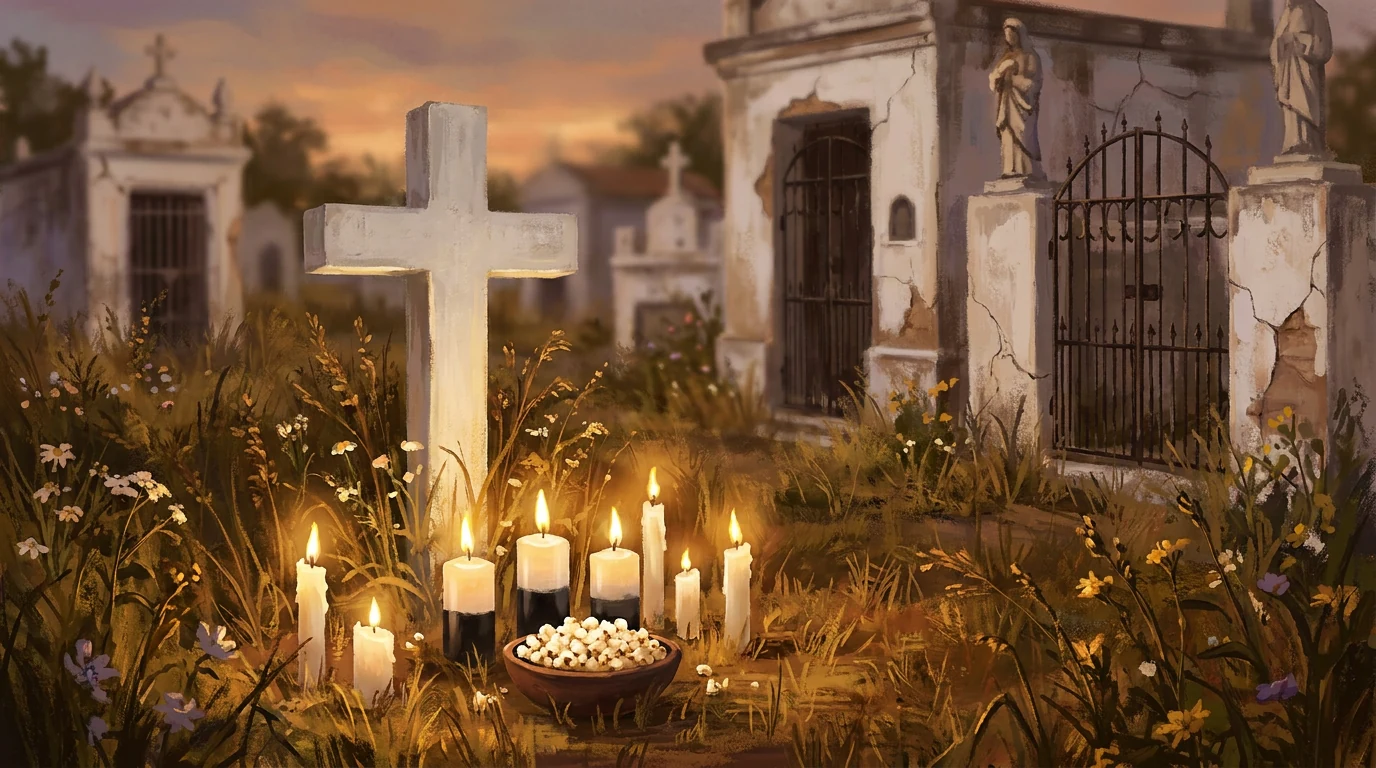
Inside it, according to the same house, there are smaller chains: "the chain of thirteen souls, the chain of seven souls." It is the chain of thirteen souls that works directly there with the pretos-velhos. A word of caution: this is the foundation of a house in Ribeirão Preto, not a map of the entire Umbanda.
The historian Lourival Andrade Júnior, in a study presented to ANPUH, analyzed sung chants (pontos cantados) and drawn symbols (pontos riscados). He records that the pretos-velhos descend "mainly" under Oxalá and Omulu. But they can come in the vibration of any orixá (orisha), with the exception of Exu and Ibeji.
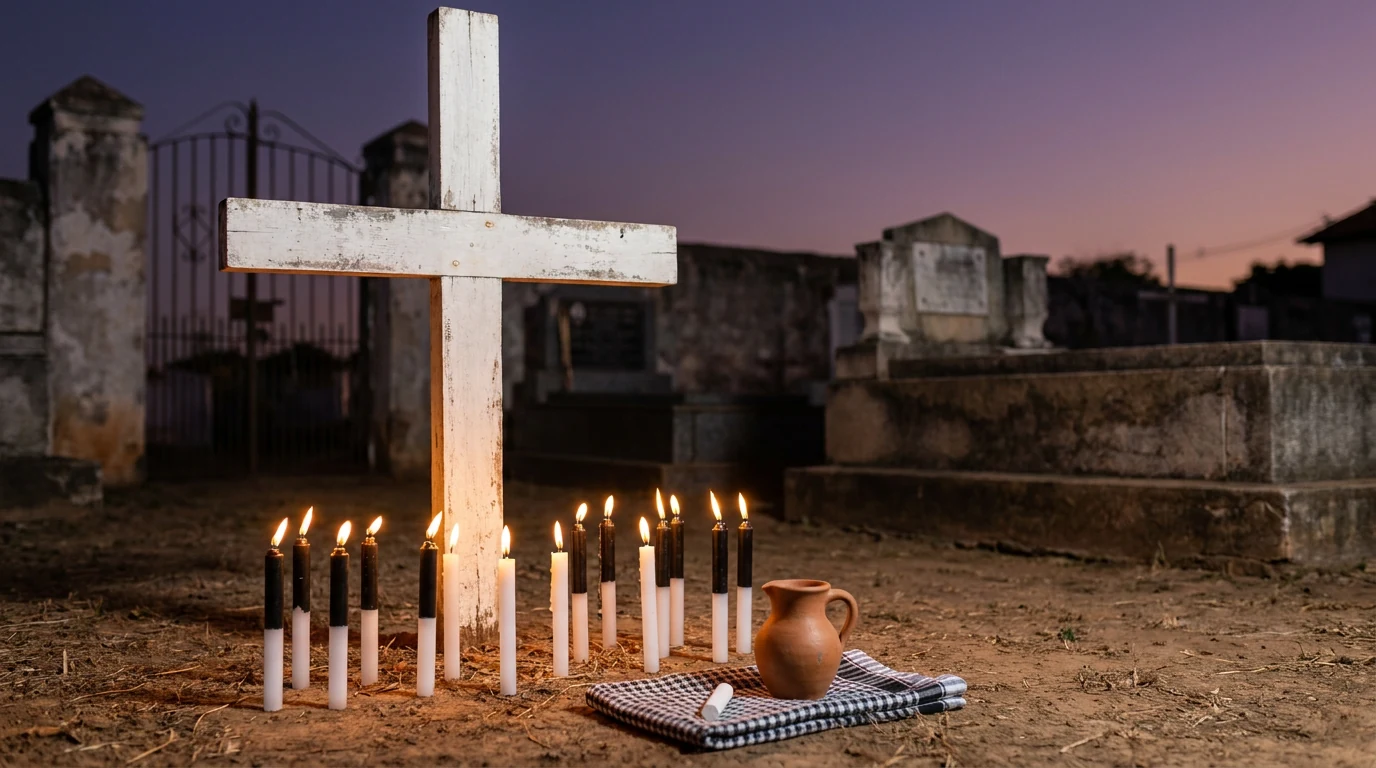
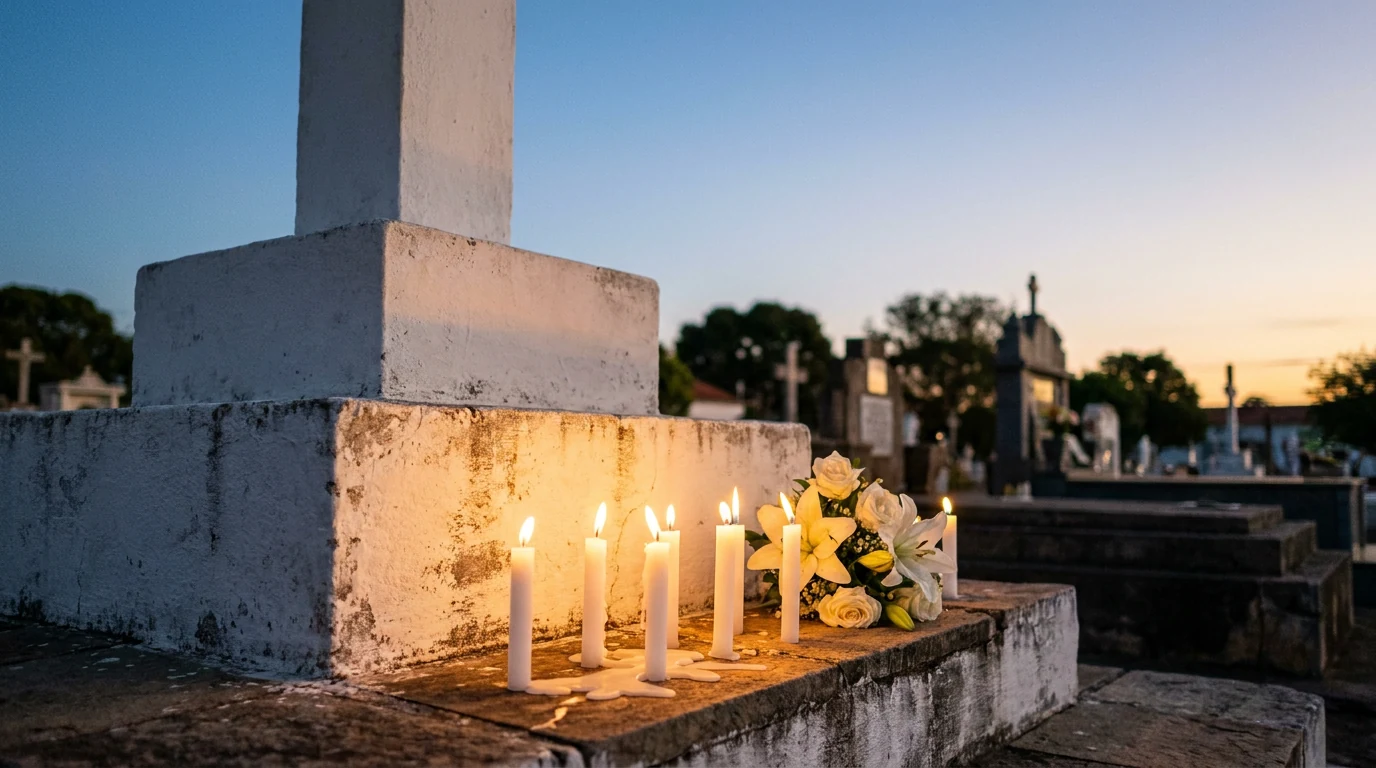
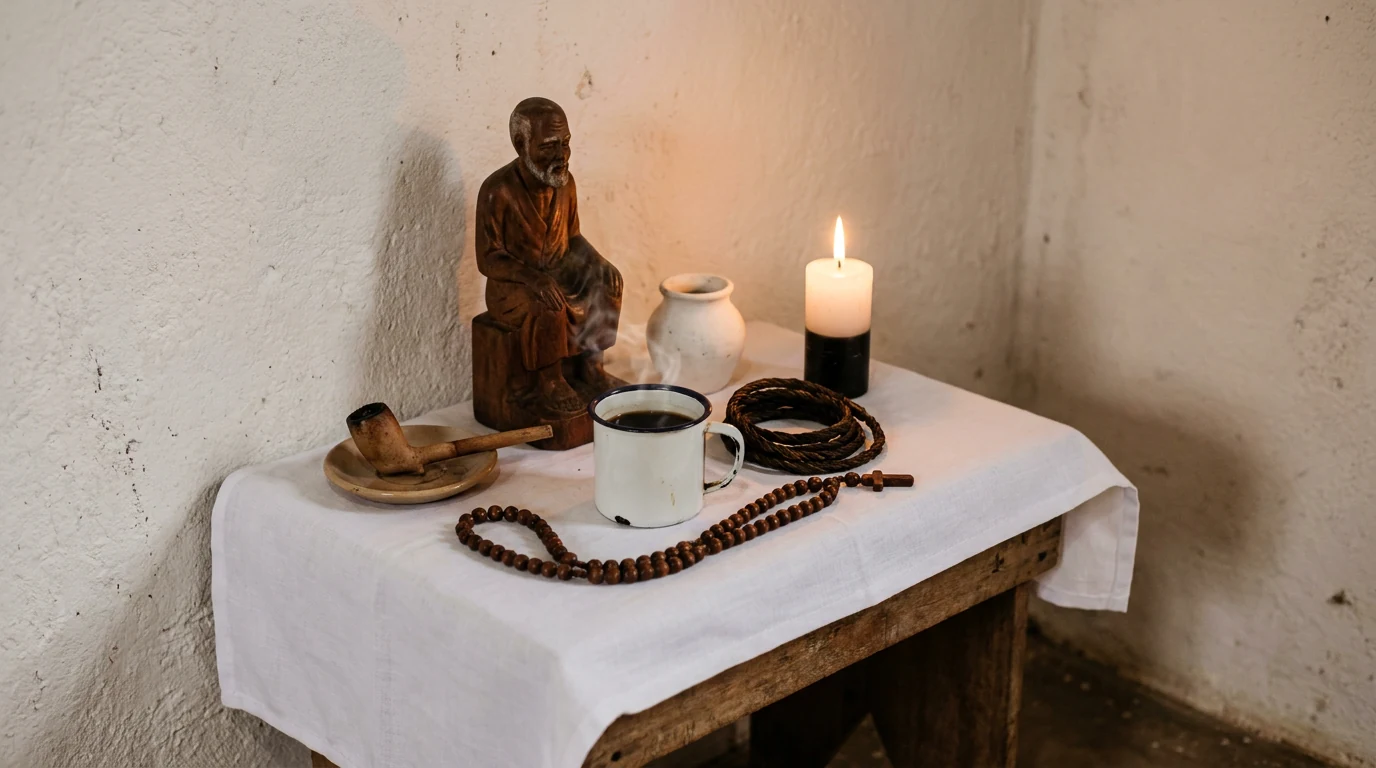
In the cemetery of Vitória (ES), research by Barbara Thompson (UFBA) saw umbandistas offering white and black candles to the pretos-velhos at the Cross of Souls (Cruzeiro das Almas). In the gira, the offering usually passes through pipe, tobacco leaf and coffee, and each item has its reason. The details are in what preto velho likes to receive. The beads and the colors are in the article about the preto velho bead necklace.
On the left: exus and pombagiras of the Souls
In some houses, the line of souls also has a left side. The research conducted in Vitória shows the two readings side by side. Barbara Thompson noted that "some interviewees define that the pretos velhos are the spirits that compose the line of souls." Another interviewee used the term for the "cemetery line," composed "of Exus and pretos velhos," and cited Exu Caveira and Mulambo das Almas.
In the same cemetery, Ogum Megê appears as belonging to the line of souls. It is another sign that there it is not just the line of the pretos-velhos. The author issues a warning that applies to the entire article: "umbandistas are not a homogeneous mass."
The surname also says something. In a house in Bocaiuva (MG), Tranca-Rua das Almas and Maria Padilha das Almas receive food in the cemetery. The name indicates where the ritual work is done with the spirit. In a house in Curitiba, "Exu das Almas" is not even a single Exu: it is a title given to more than one. This has its own article in Exu das Almas.
A note on names. Quimbanda is its own cult, with Exus and Pombagiras at the center of the house, and not a piece of Umbanda. When an Umbanda house puts exus in the souls line, it speaks of the left of it, within Umbanda. If the preto velho is also Exu, the research answers in preto velho is Exu.
Who rules the souls line
In many houses, Omulu (or Obaluaê). In others, Oxalá. And there are those who answer with both. The open sources for this article give four different records:
| Source | Where | What it records |
|---|---|---|
| Leal de Souza, 1933 | Rio de Janeiro | orixá line, transversal; pretos in the Oxalá line |
| Andrade Júnior, ANPUH, 2013 | sung chants and drawn pontos riscados | pretos-velhos descend mainly under Oxalá and Omulu |
| Nuzzi Dias, USP, 2011 | a terreiro in Ribeirão Preto | Monday of the pretos-velhos, the souls, and Obaluaê; there is "a line of pretos-velhos of Obaluaê" |
| Thompson, UFBA, 2019 | Vitória cemetery | pretos velhos are ruled by Obaluaê-omulu, an orixá who organizes the passage |
In other words: saying "Omulu is the regent of the line of souls" is correct for many houses, but it is not a rule of Umbanda. The 1933 book does not even mention Omulu among the seven lines.
The connection with Obaluaê makes sense because of who he is: the lord of the earth, of disease, and of healing, who in Vitória is honored on November 2 and has Monday as his day. The complete profile of the orixá is in who is Obaluaê (Omulu), and in which line each coding places him, with whom descends in his gira, is in Omolu in umbanda.
"Adorei as almas": what the greeting says
"Adorei as almas" is the greeting of the pretos-velhos. Nuzzi Dias explains in a note that every category of spirit in umbanda has a brief greeting: "okê caboclo" for the caboclos, "laroiê exu" for the exus. And completes: "The expression used to greet the pretos-velhos is 'adorei as almas'".
Andrade Júnior gives the long version, which says, according to him, "the multiplicity of the worship and its references":
"Hail Jesus Christ and Our Lady... Hail the Orixás... Saravá the Preto Velho... Adorei as almas." (Andrade Júnior, ANPUH, 2013, greeting that the author records as being uttered in the majority of terreiros de umbanda in Brazil)
In a single phrase, Catholicism, the orixás, the preto-velho, and the souls fit. It is the line of souls itself in miniature: the Catholic heritage of the cult of the dead and black ancestry in the same place.
And the spelling? In Google's autocomplete, the doubt appears between "adorei" and "adorê as almas". Both consulted searches write "Adorei as almas", and no open source for this article explains the form "adorê" or the origin of the word. If in your house it is sung in another way, the house's form is valid.
Why the souls line changes from house to house
Umbanda does not have an authority that fixes the lines for all terreiros. Each codification organized the lines in one way, and each house inherited from one of them, or from several. Vitória's research cites branches such as Omolokô, Kardecist, and esoteric, and says that from them "different perspectives arise".
In practice, three questions change answer depending on the terreiro:
- Who enters the line: only the pretos-velhos, or also exus and pombagiras from the cemetery.
- Who rules: Omulu, Oxalá, both, or a response specific to the house.
- Where the ritual work is done: in the congá, in the house of the souls of the terreiro, or at the cross of the cemetery.
The correct answer for you is that of your terreiro. If the doubt is about your own line, talk to the leader. If you want a clue before the conversation, the discover your spirit test helps organize the question.
What is done with a candle on All Souls' Day Monday, at home and at the cross, is in light a candle for the souls.
Frequently asked questions
Who works in the souls line?
In most houses, the pretos-velhos, called by the leader of a terreiro in Ribeirão Preto the conductors of the souls. In part of Umbanda, the name also covers exus and pombagiras who work in the cemetery, such as Exu Caveira and Mulambo das Almas, cited in a research in Vitória. The exact composition is the foundation of each house.
Which orixá rules the souls line?
In many houses, Omulu, also called Obaluaê. Others place the pretos-velhos under Oxalá, and a study of pontos cantados (sacred songs) records the two as the most common. In the 1933 book by Leal de Souza, the Line of Souls was the line of Santo, and no orixá appears as its regent.
Is Exu part of the line of souls?
It depends on the house. In Vitória, some of the Umbandistas interviewed used the line of souls for the cemetery line, with exus and pretos-velhos together. Others said the line is only of the pretos-velhos. The pretos-velhos, in turn, do not descend into the vibration of Exu, according to the historian Lourival Andrade Júnior. The exceptions described by the research are in preto velho is Exu.
What is the day of the line of souls?
Monday. In popular Catholicism, it was already the day of the blessed souls, and Umbanda inherited the date for the pretos-velhos. In a terreiro studied by USP, Monday brings together pretos-velhos, souls, exus, and Obaluaê. In 2026, All Souls' Day, November 2, falls exactly on a Monday.
Did your house request white candle, black and white candle, preto-velho statue, pipe, tobacco leaf or bead necklace for the gira of souls? Joia Mística Laroyê, in Extrema, Minas Gerais, ships to all of Brazil. Just call on WhatsApp.
References
- Leal de Souza. Spiritism, Magic and the Seven Lines of Umbanda, Rio de Janeiro, 1933, cap. XVIII. PDF at Instituto Mata Verde
- ANDRADE JÚNIOR, Lourival. Proceedings of the XXVII National History Symposium, ANPUH, 2013. “I adored the souls”: umbanda, preto-velho and slavery
- DIAS, Rafael de Nuzzi. Master's dissertation, USP Ribeirão Preto, 2011. Ancestral chains: the pretos-velhos of the Rosary
- THOMPSON, Barbara (UFBA). Proceedings of the IV Seminar of Social Sciences PGCS-UFES, 2019. At the gates, tombstones and crosses of the souls
- MAIA, Michelle Ferreira. Mneme, UFRN, v. 11, n. 29, 2011. Between the request and the received