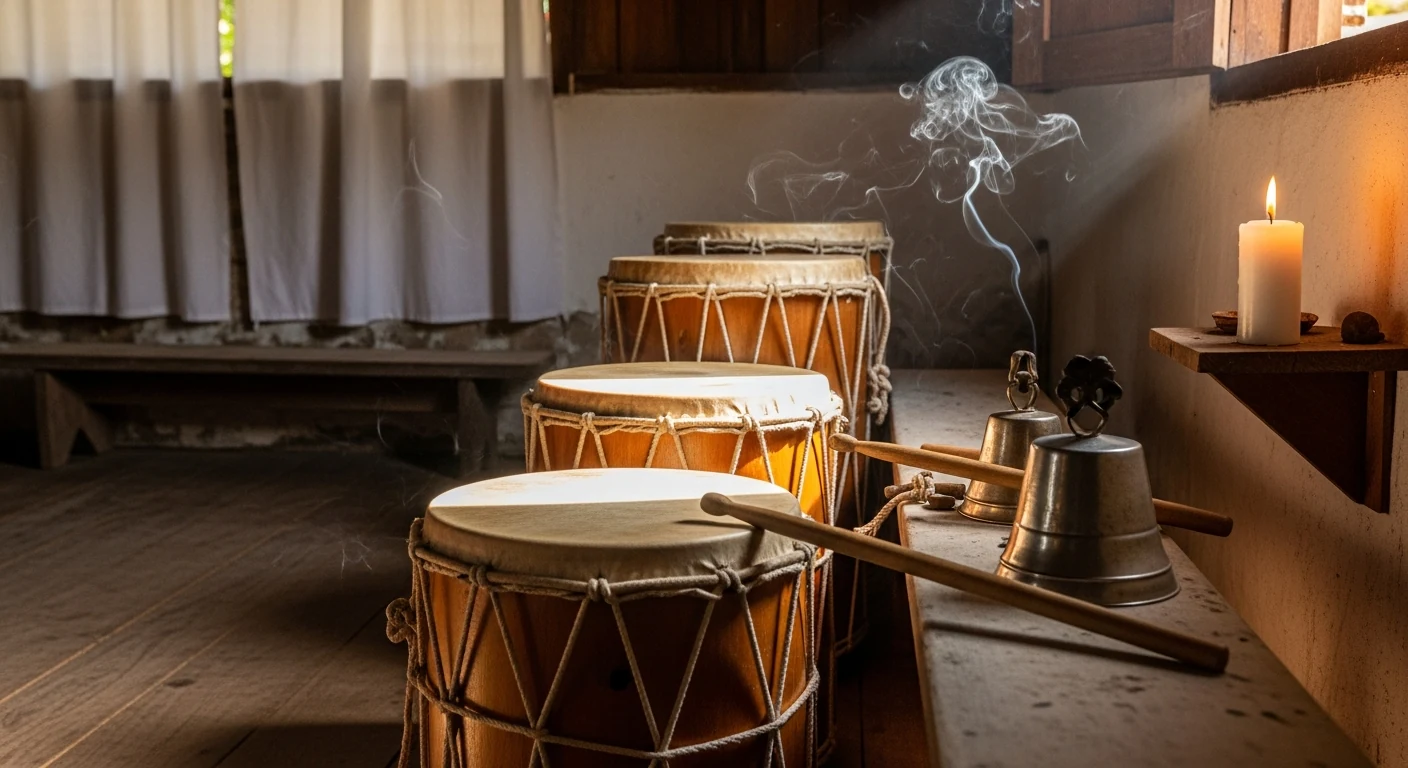
When the atabaque begins to beat and the entire terreiro raises its voice, something changes in the air. It is the ponto cantado, the sacred song that opens the gira de umbanda and calls the spirit guides to work. More than music, it is prayer in the form of song, a prayer that moves energies and sustains the ritual work from beginning to end.
In this guide, you will understand what pontos cantados (sacred songs) are, what each type is for, what the difference is between them and the ponto riscado, and why no gira happens without them.
What are pontos cantados (sacred songs)
The pontos cantados are the ritual chants of Umbanda. They are melodized prayers that greet the orixás (orishas), call the spirits, firm the chain, and direct each stage of the gira. Each line of ritual work and each spirit guide has its own repertoire, transmitted from terreiro to terreiro, often only from mouth to ear.
They are not entertainment music. The ponto cantado is a spiritual tool: it permeates the environment with certain energies and cleanses others, elevating the vibration of those who sing and those who watch. That is why it is said that, in Umbanda, to sing is to pray twice.
The chant unites the chain. When everyone intones the same ponto, the mediums, the cambones, and the audience vibrate together in a single intention. This union is part of the fundamento: the right ponto, sung with faith, firms the ritual work and calls the force of the spirit that will descend.
A large part of this repertoire was born from oral tradition. The pontos were composed and memorized, passed down from generation to generation within the terreiros, and therefore the same song may have small variations in lyrics from house to house. Many carry the heritage of African chants and Brazilian popular religiosity, which makes the pontos cantados a living heritage, recognized even in the country's cultural records. Learning a ponto is receiving a piece of this memory.
Ponto cantado (sung ponto) and ponto riscado: what is the difference
Here lies a common confusion. Ponto cantado (sung ponto) and ponto riscado (drawn ponto) are different things, even though the names are similar.
- Ponto cantado: is the sacred song, made with the voice and sustained by the curimba. It sounds in the air and moves the energy through sound.
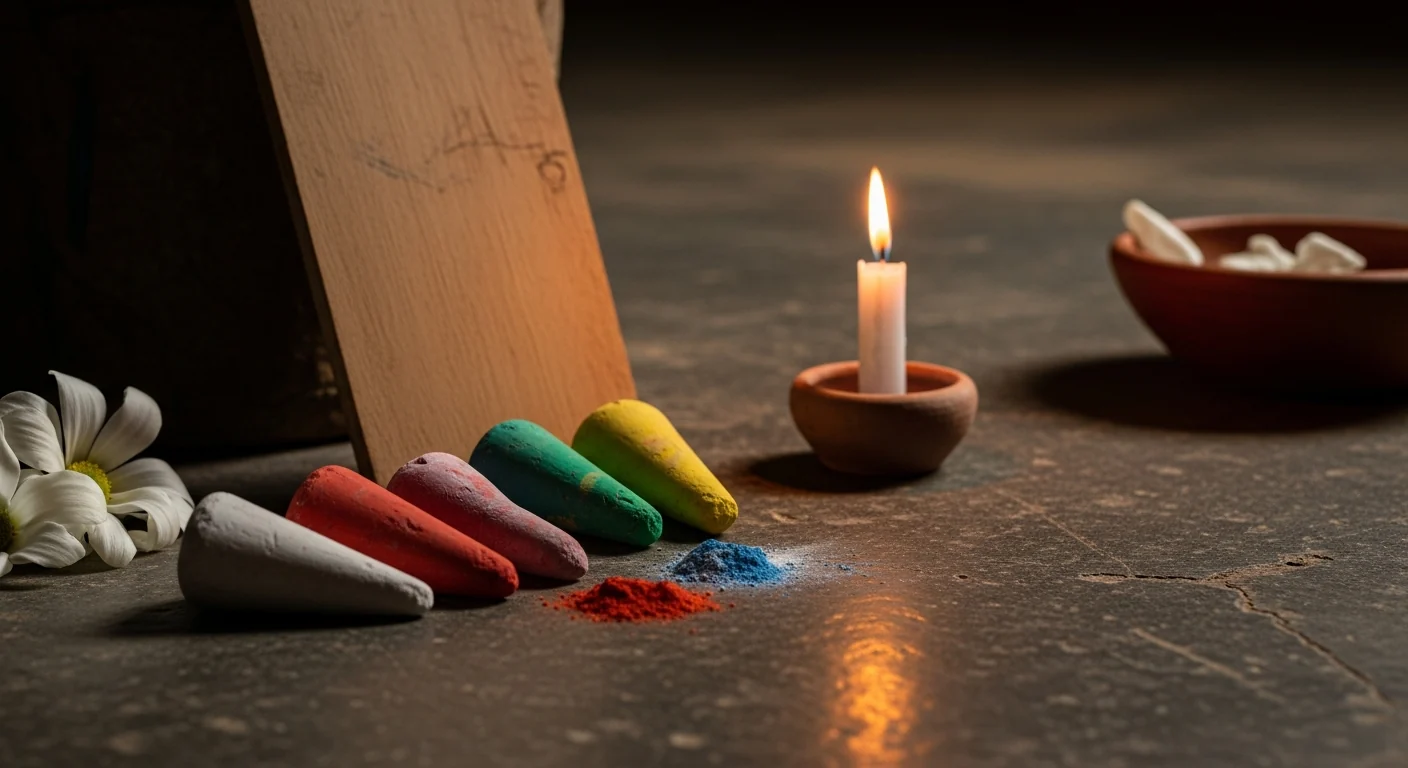
- Ponto riscado: is the drawing traced on the ground or on the board with the pemba, the sacred chalk. It works as the signature and seal of the spirit, a symbol that firms its presence.
One is heard, the other is seen. The two complete each other in the same ritual work: the spirit can draw its ponto riscado to identify itself and, at the same time, have its sung ponto sung by the corrente. To understand the drawing in detail, see our guide on ponto riscado in Umbanda.
The curimba: who conducts the pontos
No ponto cantado (sacred song) sustains itself alone. Who conducts it is the curimba, the group of mediums responsible for the music of the terreiro. It gathers the ogãs or curimbeiros, who play the atabaque and instruments, and the singers, who lead the voice for the chain to follow.
The toque of the atabaque is not an ornament. The rhythm marks the vibration of each line and sustains the spirit incorporation. A caboclo ponto asks for a firm and marked toque; a preto-velho ponto asks for a slower and more heartfelt pace. To know this ritual work from the inside, see the guide about the curimba in Umbanda.
The faith that sings is one more prayer. The ponto does not need a beautiful voice, it needs clean intention. Sing with respect, and the strength comes.
Types of sung pontos (sacred songs)
Each moment of the gira asks for a type of sung chant. Knowing this logic helps the medium to understand what is happening in each stage of the ritual work.
- Opening or permission ponto: a sacred song that starts the gira, asks permission and protection from the orixás and the congá, the altar of the terreiro. There are houses that open with the Hino da Umbanda, which was born as a ponto.
- Ponto de defumação (sacred song): accompanies the smoke cleansing that purifies the space, the mediums, and the congregation before the ritual work begins.
- Ponto de saudação ao congá (congá greeting sacred song): reveres the altar and the forces that govern the house.
- Ponto de chamada (calling sacred song): invites the spirit or the line to approach and incorporate into the mediums.
- Ponto de firmeza or sustenance (sacred song): keeps the energy firm and elevated during the entire ritual.
- Ponto of ascension or farewell: directs the exit of the entities at the end of the gira, with gratitude.
- Ponto (sacred song) for descarrego and fluidification: cleanses dense energies and charges the ritual work elements, such as water and herbs.
Besides these, each spirit guide has their pontos de fundamento, which tell the history and the field of action of the spirit. A ponto can say where the caboclo comes from, what the preto-velho works on, or what the joy of the child is.
Pontos (sacred songs) by line of work
In Umbanda, each guide line has its own way of singing. The ponto changes in melody, rhythm, and imagery depending on who arrives.
- Caboclos: firm pontos, linked to the forest, the waterfalls, and the arrows. See more about caboclos in umbanda.
- Pretos-velhos: slower and more heartfelt pontos (sacred songs), that speak of senzala, rosary, and wisdom. What research reads in these verses is in ponto de preto velho, and who they are, in pretos-velhos in umbanda.
- Ogum (Ogun): warrior pontos, with sword, flag, and patrol. The book of pontos from Tenda Espírita Nossa Senhora da Piedade, the house of Zélio de Moraes, brings 67 pontos of Ogum. The one of the seven swords ("I have Seven Swords to defend me") also appears in three houses researched by Pedro Nogueira (UFJF), with a different ending in each one. The pontos of Ogum, where they come from, and the riscado are in ponto de Ogum.
- Xangô (Shango): pontos of the quarry, of stone, and of the axe. The same TENSP book brings 32 pontos of Xangô, and the first one begins like this: "Pedra rolou Xangô / Lá na pedreira". The pontos of Xangô, what they sing, and the riscado are in ponto de Xangô, and the orixá, in who is Xangô.
- Oxum (Oshun): pontos of the waterfall, the river, the lily, and the mother. In the same TENSP book, the Oxum section has a single ponto, which begins with "Eu vi mamãe Oxum da Cachoeira". The versions of this ponto and those that have an author are in ponto de Oxum, and the orixá, in who is Oxum.
- Children (erês): joyful and simple pontos, full of sweetness.
- Exus and pombagiras: crossroads pontos (sacred songs), intoned in the specific gira of these entities.
- Baianos, boiadeiros, sailors, and Romani: each people with its own rhythm, from the coco baiano to the toada of the boiadeiro. The pontos of the Romani in Umbanda speak of the moon, violin, and the road.
To understand how these lines are organized, it is worth reading about the 7 lines of Umbanda and the panorama of the spirit guides of Umbanda.
How to learn and sing with respect
The ponto cantado (sacred song) is learned through coexistence. By attending the gira, the medium records the melodies, the names, and the fundamentals of each song. There is no shortcut: it is the time at the house that teaches.
Some precautions help maintain respect. Sing with the chain, without standing out out of vanity, because the ponto (sacred song) belongs to the house, not the soloist. Avoid recording the ritual work without the authorization of the leader, since many pontos hold fundamentos. And remember that the strength is not in the tuning, but in the faith with which it is sung. For those starting mediumship development, learning the pontos is part of the path.
Frequently asked questions
What is the difference between ponto cantado and ponto riscado?
The ponto cantado is the sacred song, made with the voice and sustained by the curimba, which moves the energy through sound. The ponto riscado is the drawing traced with the pemba, the sacred chalk, and functions as the signature of the entity. One is heard, the other is seen, and the two complete each other in the ritual work.
What are the pontos cantados (sacred songs) for in Umbanda?
They serve to open and close the gira, greet the orixás, call the spirits, set the chain, fumigate the space, and direct the energies. More than music, they are sung prayers that elevate the vibration and sustain all the spiritual ritual work, from the beginning to the farewell of the spirits.
What is a ponto de firmeza and a ponto de subida?
The ponto de firmeza (firmness song) keeps the energy elevated and stable during the ritual work, sustaining the flow and the spirit incorporation. The ponto de subida (ascent song), also called the farewell, is sung at the end of the gira to guide the departure of the spirits with respect and gratitude, closing the cycle of the work.
Do I need to know how to sing to work in Umbanda?
No. Umbanda values intention, not a beautiful voice. The important thing is to sing with faith and follow the flow. With time in the house, the medium naturally learns the melodies and the foundations of each ponto, absorbing the repertoire through coexistence with the gira.
Can I sing Umbanda pontos (sacred songs) at home?
Yes, with respect. Singing pontos (sacred songs) at home, when lighting a candle or saying a prayer, is a way to maintain the connection and study the repertoire. What requires the terreiro and the guidance of the leader is the gira work itself, with spirit incorporation and consultations.
Where to find items for your gira
If you work in Umbanda and want to prepare your house of faith, at Joia Mística Laroyê you will find:
- Atabaques and instruments: for the curimba to lead the pontos
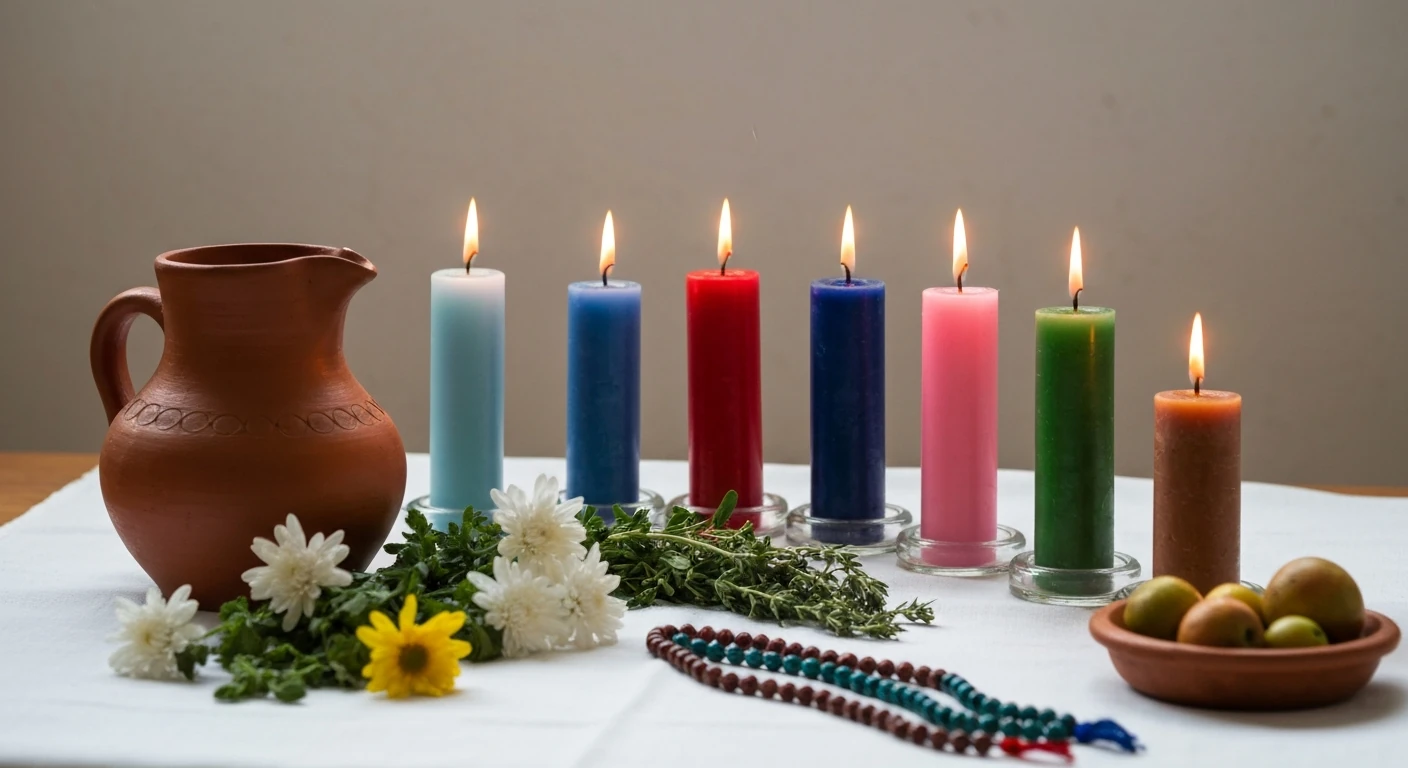
- Colored candles: to set the line of each spirit guide
- Incense burners and herbs: for the smoke cleansing and spiritual cleansing points
- Colored pembas: for the pontos riscados that accompany the pontos cantados
- Bead necklaces and white clothing: to compose your axé with respect
Also check out our guide on how to set up an Umbanda altar. Visit our shop in Extrema, Minas Gerais or contact us on WhatsApp with delivery to all of Brazil.
Sources: Pontos cantados (Wikipedia) and Pontos Cantados (Diário de Umbanda).
References
- Wikipedia: Pontos cantados, encyclopedic entry about the ritual chant
- Diário de Umbanda: Pontos Cantados, article about the theme in the religion
- Tenda Espírita Nossa Senhora da Piedade: Book of Chanted Points
- Nogueira, dissertation (UFJF, 2014): The intra-religious dialogue in Umbanda