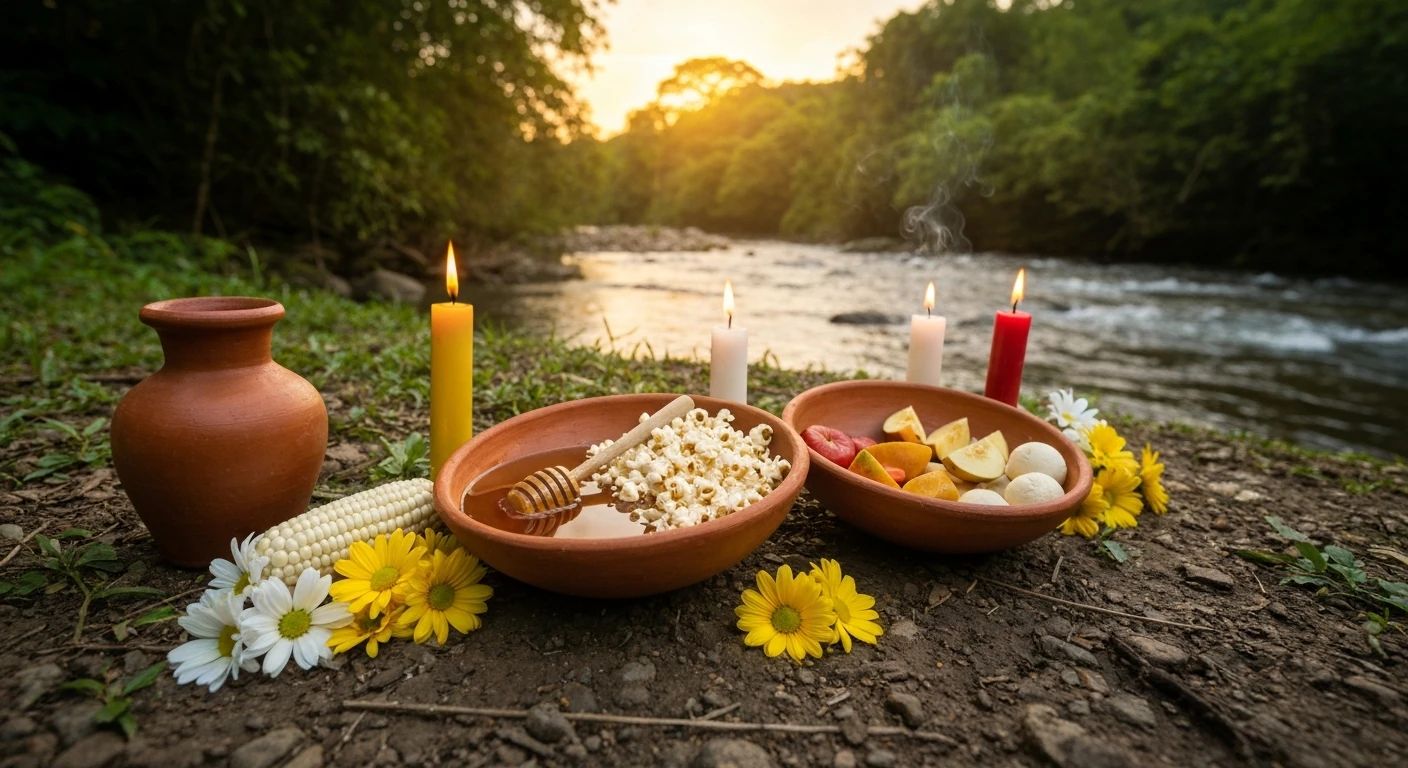
Setting up a offering for Iansã is simpler than it seems, and the most common error is not in what is missing, but in what is extra. Two things never enter her favor, and both appear in lists circulating on the internet.
This guide shows what to bring, how to set it up, where to deliver it, and what to leave out. It also separates the domestic offering, which any devotee can do, from the food of the orixá of Candomblé, which is terreiro liturgy.
What Iansã receives in an offering
The offering to Oyá is made of light, colorful things with a strong scent. She is the lady of the wind and the lightning, and the offering follows this temperament.
- Red-skinned fruits: mango, apple, pitanga, and grape are the most cited. Field fruits are always pleasing.
- Flowers: palms and red or white roses, preferably picked or bought on the day.
- Drink: white champagne, sweet white wine, or anise, mint, or cherry liqueur.
- Candles: red, white, or pink, her colors. The number nine appears in the greeting and is the most used.
- Acaçá: the white corn dough that every orixá receives, explained in what is acaçá.
Wednesday is the day of Iansã, as shown in the list of days of the week of the orixás. The feast date is December 4, because of the syncretism with Saint Barbara, which was a historical survival strategy of the cult, and not an equivalence between the two figures.
About cachaça: it appears in some lists, but it is a firm element of Exu (Eshu) and Ogum (Ogun) in most houses. In doubt, stick to white and sweet drinks.
Iansã's dish: acarajé, abará, and amalá
The acarajé is Oyá's signature food, and here is a detail that almost no site mentions. IPHAN registered the Ofício das Baianas de Acarajé in the Book of Knowledge in 2005. In the official record of the asset, it is written that the fritter is offered to Xangô and Oiá without filling.
In other words: the street-side acarajé, with vatapá, shrimp, and salad, is street food. The votive one is the pure fritter, fried in dendê. The name comes from the Yoruba àkàrà, ball of fire, added to je, to eat, according to the entry about acarajé.
Two other dishes come from the same black-eyed peas dough. The abará is steamed inside a banana leaf instead of being fried. The ekuru dispenses with dendê and appears linked to the cult of the ancestors.
The votive acarajé does not have filling. What fills the fritter on the street stall is commerce, and what pleases in the ritual is the simple dough in dendê.
Iansã also receives amalá, the okra dish cut with onion, dried shrimp, and dendê, served in a gamela lined with acaçá. She shares this dish with Xangô, Obá (Oba), and Ibeji. The complete recipe is in amalá de Xangô and is not repeated here.
Where to deliver the offering of Iansã
The wind is the owner of the place. Therefore, the delivery points for Iansã are open, high, or ventilated.
- Open field or meadow: the most consensual location among the houses. Where the wind runs free.
- Bamboo grove: a classic point of strength for her, frequently cited in Umbanda.
- Quarry: accepted, especially when the offering is shared with Xangô.
- Waterfall edge, over the rocks: appears in some houses as a variation.
If you do not have access to any of these places, set up the offering at home, on a red or white cloth, in a clean corner. Leave it for up to three days and discard it with respect, returning the fruits to the earth when you can.
An important correction: a street crossroads is not a point of Iansã. The T-junction belongs to Exu and to Pombagira, as the blog explains in offering for Exu. Lists that tell you to leave an offering for Oyá at a corner are mixing territories.
The pillar of the series, with the general rules that apply to any orixá, is in how to make an offering to the orixás.
How to set up the offering step by step
- Choose the day. Wednesday is her day, but gratitude has no closed calendar.
- Separate a clean dish or basket. A clay vessel, wicker basket, or white plate works well.
- Line it with banana leaf or cloth. The base prevents direct contact with the ground.
- Arrange the whole and washed fruits. Cut only what needs to be cut.
- Add the flowers and the drink in a glass or quartinha, next to the plate.
- Light the candles and firm up the intention with your own words, out loud or in your thoughts.
- Hail the Orixá. The greeting is Eparrei Oyá, also recorded as Epahey Oyá.
- Leave without looking back and take any plastic packaging with you.
Offering is a gesture of devotion and preparation of the field, not a negotiation. It does not buy a result nor force an orixá to do anything.
To choose the right color and size, it is worth reading how to use ritual candles.
What is never offered to Iansã
Here is the heart of the article. Two quizilas of Iansã are firm in almost every house of tradition, and both arise from the same cycle of myths.
- Pumpkin: pursued, Iansã hid in a pumpkin patch and saved herself. In gratitude, she swore never to eat pumpkin again.
- Lamb: in the myth, the animal denounced her hiding place. Since then it is refused, and the precept extends to wool in the clothes of a filho de santo.
- Stingray: quizila recorded in several houses, less widespread than the previous two.
The concept behind this is explained in quizilas in candomblé. Quizila is a precept and respect for the myth, not a threat of punishment.
And the pumpkin sweet that appears in so many lists of Iansã? It does exist, circulates a lot in popular umbandista material, and clashes with the quizila of ketu. Faced with such a contradiction, the safe guidance is simple: do not offer.
A contrast that almost no one explains: okra is not a quizila of Iansã, but of Ogum, as stated in offering for Ogum. She receives okra in the amalá without any problem.
A devotee's favor and a santo's food are not the same thing
This distinction separates those who understood from those who only copied a list.
The domestic offering, more common in Umbanda, is the gift that the devotee prepares with their own hands. Fruits, flowers, drinks, candles and, if desired, a pre-bought acarajé. There is no sacrifice, foundation chant or assentamento.
The comida de santo of the Candomblé ketu nation is something else. It is the house liturgy, prescribed by the babalorixá or the ialorixá, often after the jogo de búzios that defines the appropriate ebó. An ethnoarchaeological study published by the Imprensa da Universidade de Coimbra mapped the ingredients that structure the kitchen of the ketu terreiros in Salvador. Iansã concentrates three of them: dendê, okra and feijão fradinho.
Each nation has its path, as shown in the article about the nações do candomblé. In the Candomblé angola nation, the nearby energy appears as the inquice Matamba, with its own liturgy and chants, and not as a translated Iansã. In the Gaúcho batuque, she is Oiá, mistress of the roof, the theme of Oiá no batuque.
There is also Oyá Igbalé, the quality linked to the eguns, the ancestors. Tradition tells that Iansã is the only female deity who travels in this universe. This is house foundation, conducted by an initiated priest, and never a domestic practice. No devotee should set up an offering in a cemetery on their own.
Frequently asked questions
What is Iansã's favorite drink?
The most cited are white champagne, sweet white wine and anise, mint or cherry liqueurs. Some houses accept white beer. Cachaça usually belongs to Exu and Ogum, so avoid offering it to Oyá without guidance from your terreiro.
What is Iansã's day?
Wednesday is her day in most Brazilian houses. The annual festival falls on December 4, the date of syncretism with Saint Barbara. But an offering of gratitude can be made on any day, with respect and preparation.
Where to leave the offering for Iansã?
Open field, meadow, bamboo grove, or quarry. The wind needs to circulate in the location. Those who do not have access to these places can consecrate the offering at home, on a red or white cloth, removing it in up to three days.
How many candles are lit for Iansã?
Nine is the number most associated with her, present in the greeting Oyá mesan orun. A single candle also works when the gesture is simple and sincere. What matters is the right color, red, white, or pink, and the firm intention.
Why does Iansã not eat pumpkin?
Because the myth tells that she hid in a pumpkin patch while being pursued and saved herself. In gratitude to the plant that protected her, she swore never to eat pumpkin again. Those who are children of Oyá usually follow the same precept at the table.
Where to buy items for the offering of Iansã
At Joia Mística Laroyê, you find what you need to set up the offering:
- Candles in the colors of Iansã: red, white, and pink, in various sizes
- Quartinhas and clay alguidares: for the drink and for the offering dish
- Dendê, dried shrimp, and white cornmeal: for acarajé, amalá, and acaçá
- Bead necklaces and beads in her colors: red, coral, and white
- Herbs and incense: to clear the environment before consecrating the offering
Visit our shop in Extrema, Minas Gerais or buy via WhatsApp with delivery to all of Brazil.
To check colors, quizilas, and syncretism of the orixá, the Iansã entry on Wikipedia gathers the basics with sources.
References
- IPHAN: record of the Ofício das Baianas de Acarajé, registered in the Book of Knowledge in 2005
- University of Coimbra Press: ethnoarchaeological study on the food of the orixás in Ketu terreiros in Salvador
- Wikipedia: Iansã entry, with colors, quizilas, and syncretism
- Wikipedia: Acarajé entry, with the origin of the term àkàrà