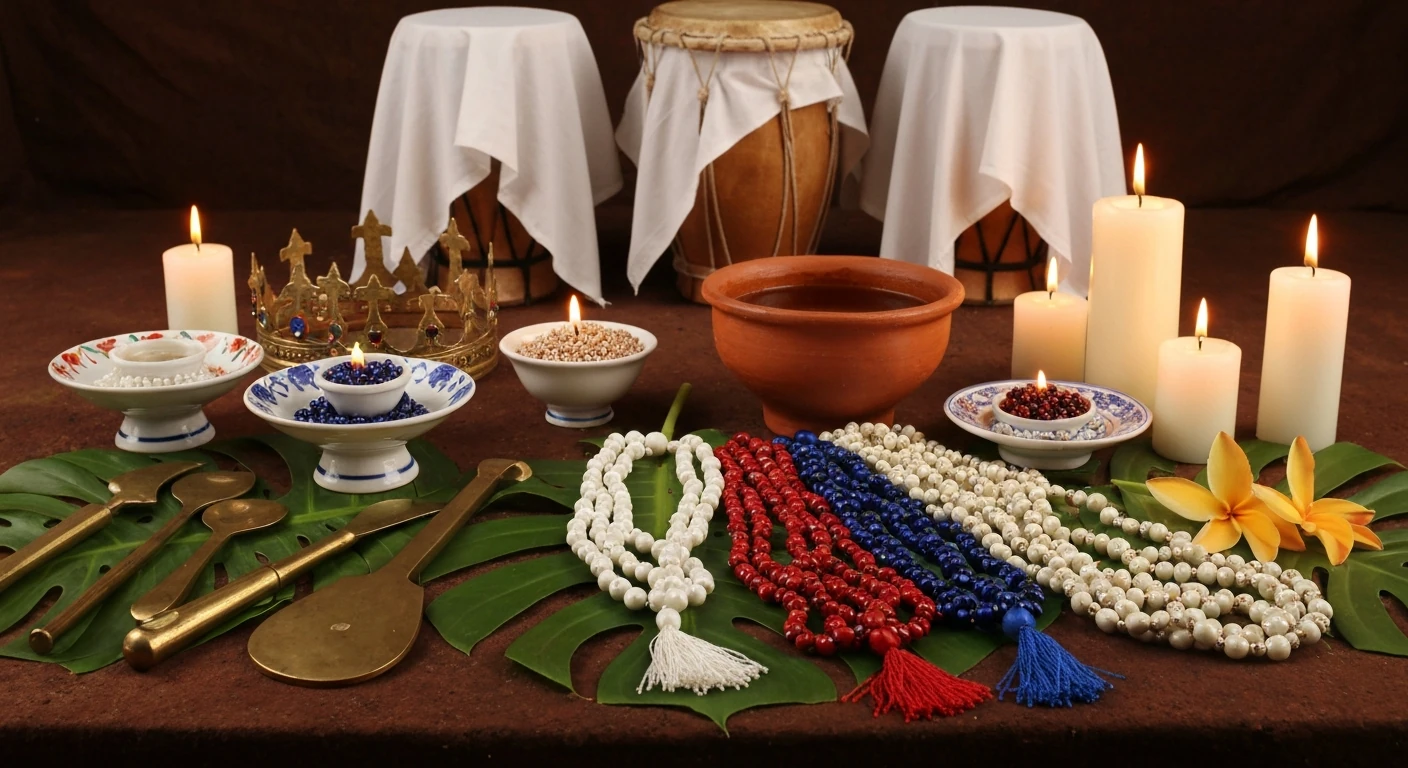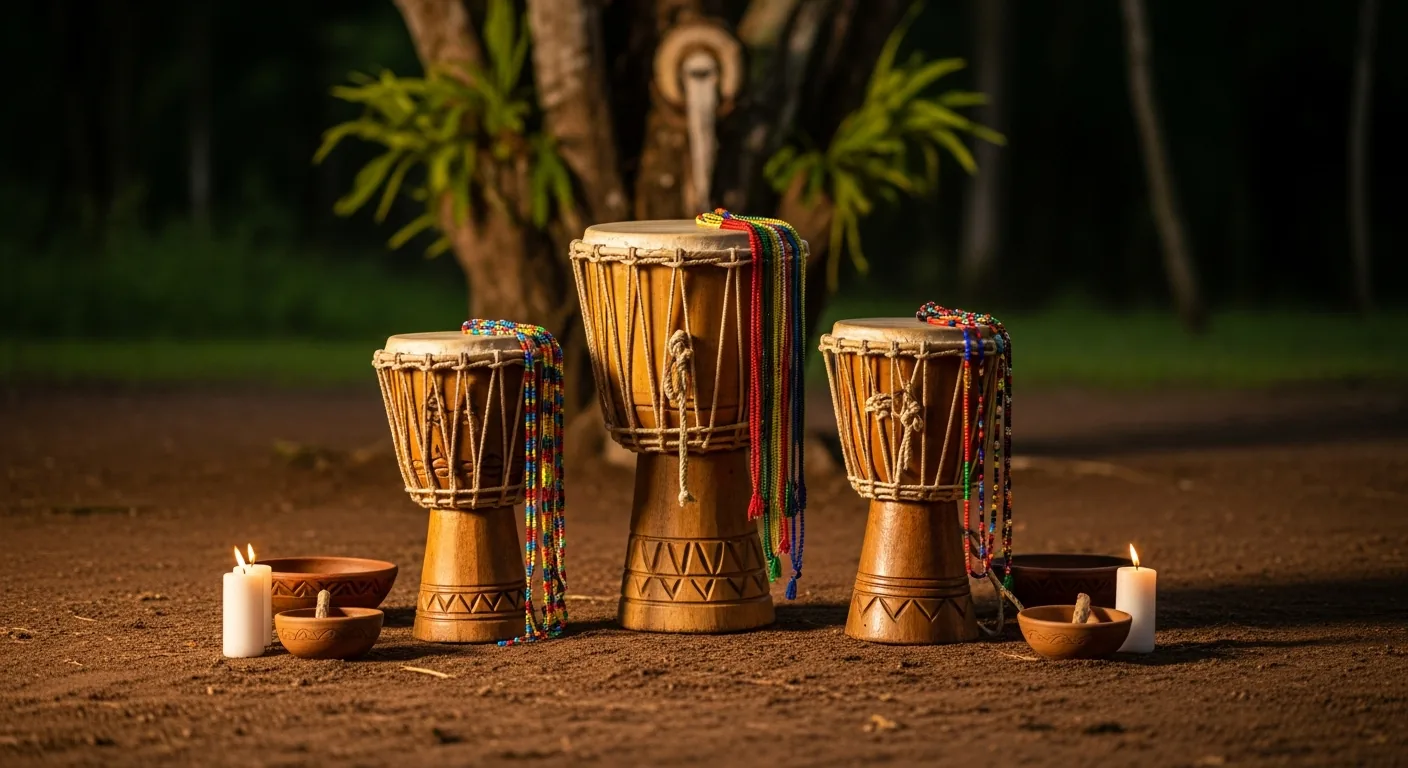
In Candomblé de Angola, it is by singing that the sacred is called. The zuelas, also called muimbus, are the chants of this nation: the chants in Bantu mother tongues (Kimbundu and Kikongo) with which the community greets, praises, and moves the inquices, the deities worshipped in the Angola-Congo tradition.
This guide explains what zuelas are, why the Angola nation has its own language and rhythms, and how the chants are organized inquice by inquice, from Aluvaiá, who opens the paths, to Lemba, the great peace. At the end, a playlist gathers the chants for you to listen to and follow. It is explanatory and respectful content: here, the what it is and the why are explained, not the how to do it, because the foundation belongs to the terreiro.
What are the zuelas (muimbus)
“Muimbu” means song, chant, in the Bantu language; “zuelar” is to speak, converse, intone. In the practice of the Angola terreiros, both words name the same thing: the ritual chants that lead the entire liturgy. Nothing happens in silence: every moment of the festival, every inquice, every gesture has its chant.
The zuelas are not “background music”: they are sung prayer. It is through them that the community asks for permission, greets the spirit, tells the deeds of the inquices, and sustains the axé of the circle. Many bring words in Kimbundu and Kikongo mixed with Portuguese, the fruit of centuries of Afro-Brazilian history, and it is precisely for this reason that the lyrics and meaning of each one deserve care to be correctly recorded.
Why the Angola nation has its own language and rhythms
Candomblé is not just one religion: it is a set of nations, each with its African origin, its liturgical language, and its way of worship. The Ketu nation (and the Nagô) comes from the Yoruba peoples and worships the orixás, in the Yoruba language. The Angola nation comes from the Bantu peoples, from regions of present-day Angola and Congo, and worships the inquices (from the term nkisi, plural minkisi), in the Bantu language.
Therefore, those who know the chants of Ketu will find other names, another sonority, and other toques (the rhythms played on the atabaques) here. The deities, however, keep correspondences between the nations: the same sacred principle appears as an orixá in Ketu and as an inquice in Angola. Understanding these correspondences helps a lot those who are arriving.
Inquices and orixás: correspondence table
The table below brings together the main inquices of the Angola nation, the orixá that each one usually corresponds to in the Ketu nation, and its domain. These are the most widespread equivalencies, remembering that they vary from house to house.
| Inquice (Angola nation) | Corresponds to (Ketu) | Dominion |
|---|---|---|
| Aluvaiá (Pambu Njila) | Exu (Eshu) | Paths, communication, passages |
| Nkosi (Mukumbi) | Ogum (Ogun) | War, iron, strength |
| Mutalambo, Kabila, Gongobira | Oxóssi (Oshosi) | Hunting, forests, abundance |
| Katendê | Ossain | Leaves, herbs, healing |
| Nzazi (Loango) | Xangô (Shango) | Lightning, thunder, justice |
| Matamba (Bamburucema) | Iansã (Oyá) | Winds, storms, eguns |
| Dandalunda, Kisimbi | Oxum (Oshun) / Iemanjá (Yemoja) | Fresh waters, fertility |
| Kaviungo (Nsumbu) | Obaluaê / Omolu (Omulu) | Earth, disease and healing |
| Angorô (Hongolo) | Oxumaré (Oshumare) | Rainbow, serpent, renewal |
| Tempo (Kitembo) | Iroko (varia) | Time, weather, seasons |
| Lemba (Lembarenganga) | Oxalá (Obatala) | Creation, peace, serenity |
The inquices and the zuelas, in the order of the circle
The Angola party follows a ritual order, which begins with the owner of the paths and goes through the inquices one by one. The chants in the playlist follow, for the most part, this same sequence. Below, the main inquices, their approximate correspondence with the Ketu orixás and some of the zuelas that appear in the collection.
Aluvaiá (Pambu Njila): the owner of the paths
As in every house of Candomblé, everything begins with him. Aluvaiá, also greeted as Pambu Njila ("crossroads", "mouth of the paths"), is the messenger inquice, lord of the passages, corresponding to Exu in the Ketu nation. It is he who opens the circle and carries the requests. Zuelas such as Njila, Pambu Njila and Zuelas de Aluvaiá greet him right at the beginning.
Nkosi (Mukumbi): the force and the iron
Nkosi, also linked to Mukumbi, is the inquice of war, of iron and of opening paths by force, corresponding to Ogum. He comes right after Aluvaiá, sustaining the front of the circle. He appears in Zuelas de Nkosi and Hoximukumbi.
Mutalambo, Kabila and Gongobira: the hunt and the abundance
The hunter inquice, lord of the forests and of abundance, corresponding to Oxóssi, is worshipped under various names and qualities: Mutalambo, Kabila, Gongobira, Mukongo. He is one of the most sung in the collection, in zuelas such as Mutalambo, Kabila, Gongobila and Zuelas de Mukongo.
Katendê: the leaves and the healing
Katendê is the lord of the leaves and the knowledge of herbs, without whom no obrigação is fulfilled, corresponding to Ossain. His strong presence in the collection (Zuelas de Katende, Kisaba Katende) recalls the central place of sacred phytotherapy in Candomblé.
Nzazi (Loango): the thunder and justice
Nzazi, also linked to Loango, is the inquice of lightning and thunder, justice and fire, corresponding to Xangô. Chanted in Zuelas de Nzazi, Nzazi Nabulê and Luango, luango zazi.
Matamba (Bamburucema): the winds and the storms
Matamba, also called Bamburucema, is the feminine inquice of winds, storms and eguns, corresponding to Iansã (Oyá). Warrior and lady of the spirits, she appears in many zuelas: Zuelas de Matamba, Oia Matamba ê, Bamburucema Nvulu.
Dandalunda and Kisimbi: the fresh waters
Dandalunda and Kisimbi are the inquices of fresh waters, fertility, beauty and motherhood, corresponding to Oxum and, in some houses, to Iemanjá. The very rhythm Samba Angola is associated with them. They are in Ndandalunda, Dandalunda and Zuelas de Ndandalunda.
Kaviungo (Nsumbu): the earth, health and disease
Kaviungo (or Kavungo), linked to Nsumbu, is the inquice of earth, diseases and healing, corresponding to Obaluaê / Omolu. A severe and highly respected lord, he is greeted in Zuelas de Nsumbu and Kavungo.
Angorô (Hongolo): the rainbow and the serpent
Angorô, also Hongolo, is the serpent inquice, linked to the rainbow, rain, and renewal, corresponding to Oxumaré. Zuelas de Angoro, Hongolo, and Angoro da La Djina are chanted.
Tempo (Kitembo): time and the seasons
Tempo, or Kitembo, is the inquice of time, climate, and seasons, often represented by the sacred tree planted in the center of the terreiro. It appears in Zuelas de Kitembo and Tempo (Angola).
Lemba (Nzambi): peace and creation
At the top of everything is Lemba (Lembarenganga), the inquice of creation, peace, and serenity, corresponding to Oxalá. Linked to Nzambi, the name of the supreme God in the Bantu worldview, it closes the circle in zuelas as Lemba, Zuelas de Lemba, and Ô Zambi Apongo munã.
Listen to the zuelas playlist
The playlist below gathers the Candomblé de Angola chants in the order of the circle, from Aluvaiá to Lemba. Use it to listen, study, and recognize each inquice by its muimbus.
Lyrics and meanings, with care
The zuelas mix kimbundu, kikongo, and Portuguese, and each terreiro keeps its variations. Therefore, we are recording lyrics and meanings track by track, with calm and revision, instead of publishing rushed transcriptions that would put wrong words in sacred chants. As each chant is checked, its lyrics and translation enter right here, in this guide.
The correspondences between inquices and orixás described here are the most widespread, but they vary from house to house and from root to root. Each terreiro has its tradition, and the final word is always that of your zelador or zeladora de santo.
Frequently asked questions
What are zuelas in Candomblé de Angola?
These are the ritual chants of the Angola nation, also called muimbus. Sung in Bantu languages (Kimbundu and Kikongo) mixed with Portuguese, they greet, praise, and move the inquices throughout the entire ceremony. They are sung prayer, not background music.
What is the difference between nkisi and orixá?
They are the same sacred principle in different nations. Inquice (from the Kimbundu nkisi) is the deity worshipped in the Angola nation, of Bantu root; orixá is how the same force is called in the Ketu nation, of Yoruba root. Therefore, Aluvaiá corresponds to Exu, Nkosi to Ogum, Dandalunda to Oxum, and so on.
What does "muimbu" mean?
Muimbu means song, music, in the Bantu language. In the practice of Angola terreiros, it is synonymous with zuela: the ritual chant intoned for the inquices.
In what language are the zuelas sung?
In Kimbundu and Kikongo, Bantu languages brought from Angola and Congo, often mixed with Portuguese. Therefore, the transcription of the lyrics and the translation require care and knowledge of the roots.
Is Candomblé de Angola the same as Umbanda?
No. Candomblé de Angola is a nation of Candomblé, an initiatory religion of worship to the inquices, of Bantu origin. Umbanda is a distinct Brazilian religion, which was born in the 20th century and has a different structure. Understand better in our comparison between Umbanda and Candomblé.
For your devotion
At Joia Mística Laroyê you find candles, bead necklaces, images, herbs, and the items for the worship of inquices and orixás. See also the chants of Candomblé Ketu, with lyrics and meaning, and speak with us via WhatsApp for whatever you need on your journey.