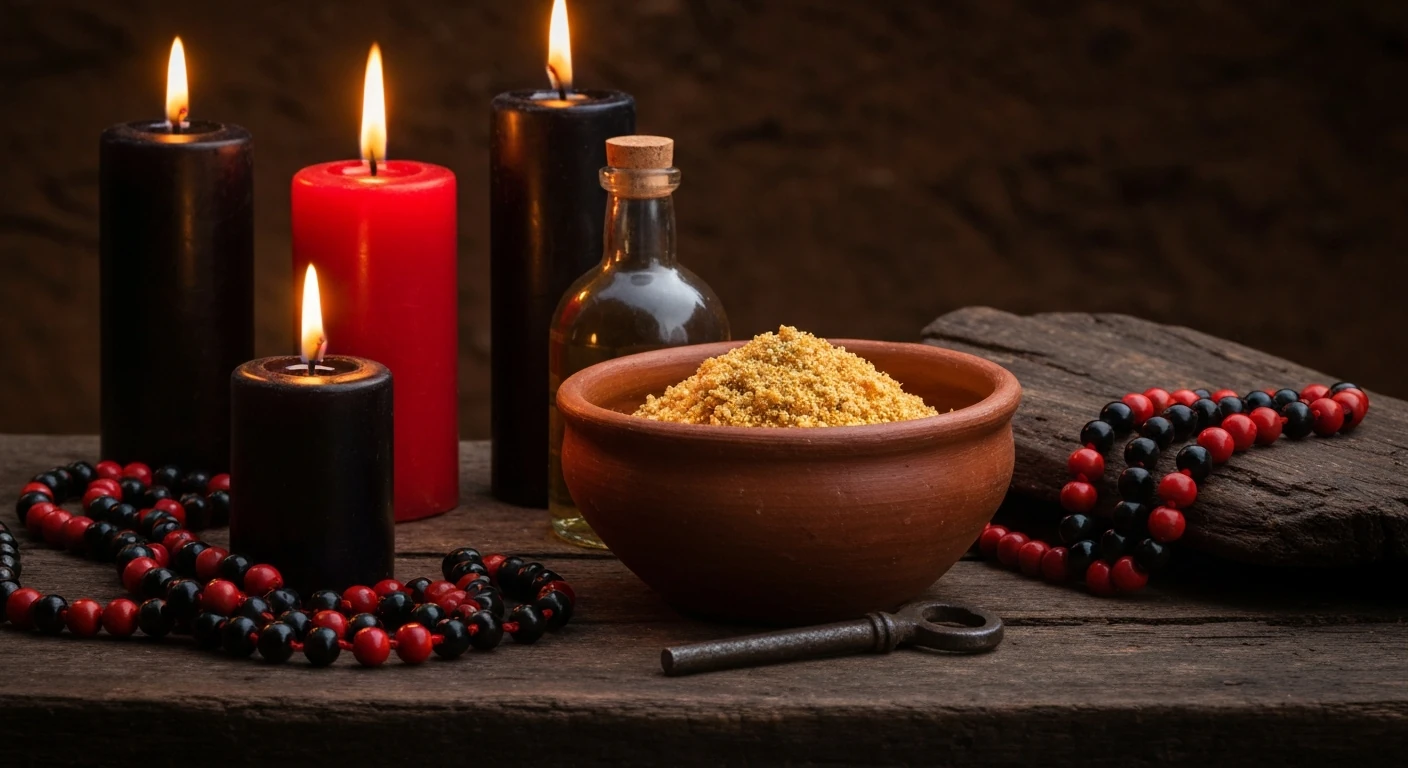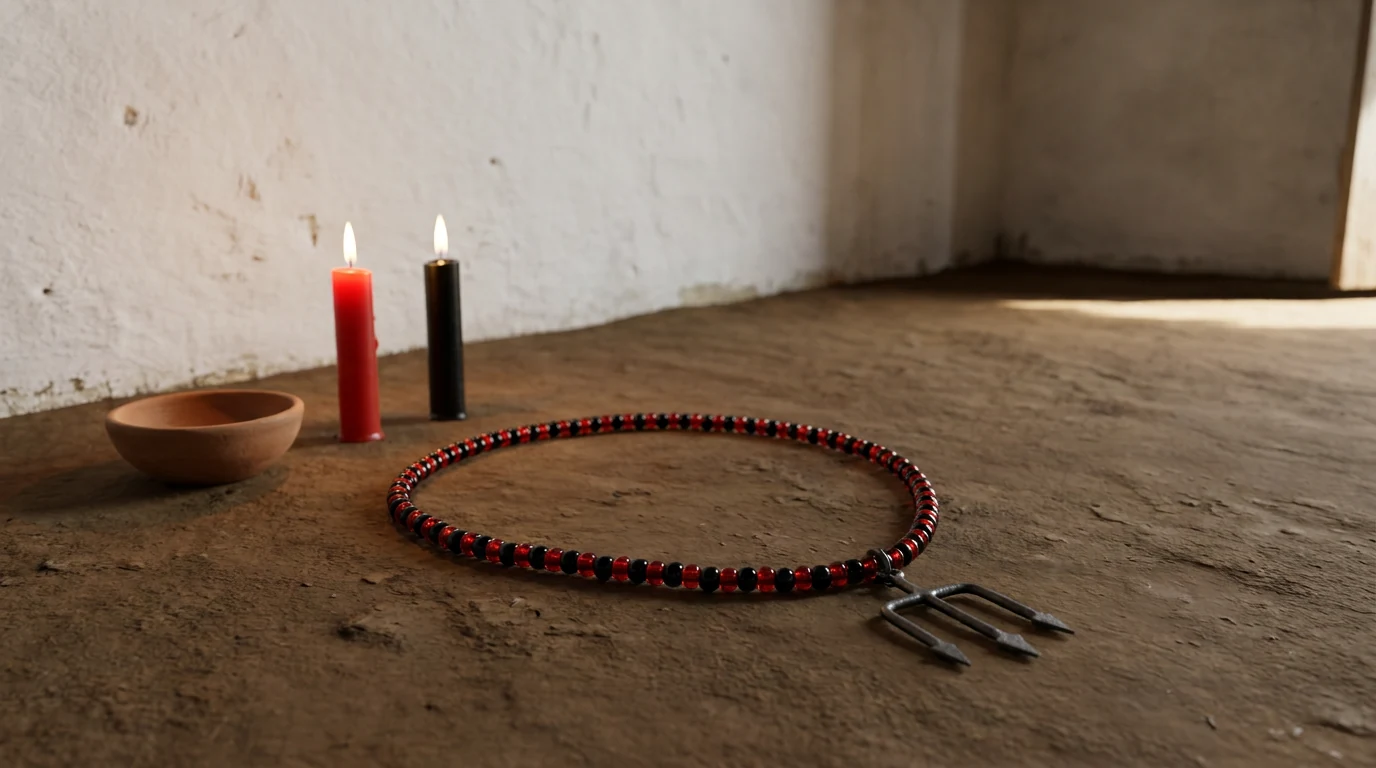
The Exu bead necklace is, in most houses, a necklace of alternating black and red beads. This is the case in Umbanda and in Ketu nation Candomblé, which also records blue and black [D1, D2]. Some houses use black and white or black and gray, and the correct color is that of your house.
The name serves for two pieces: the bead necklace of the orixá Exu and the bead necklace of the guardian Exu.
What is the color of the Exu bead necklace
The most recorded color is black with red, in alternating beads. Reginaldo Prandi put this combination in the attributes table of Ketu Candomblé published in Horizontes Antropológicos. The thesis by Patrícia Ricardo de Souza, defended at USP in 2007, compares Ketu and Umbanda side by side.
| Tradition | Color of Exu beads |
|---|---|
| Candomblé queto | red and black, or blue and black, alternating |
| Umbanda | red and black, alternating |
| Tambor de Mina | Elegbara: black and red, with markers in the same colors |
| Xambá (Pernambuco) | white and black |
| Other houses in Pernambuco | black with red or with gray |
The priests diverge. In the thesis of Luciano Lima Souza, from UESB, one speaks of black and red with a tone of indigo, and another, of black and white.
To see the color of another orixá's bead necklace next to that of Exu, use the tool which bead necklace to use.
Orixá bead necklace and guardian bead necklace: two pieces
The Exu bead necklace can be of two different Exus, and the difference begins in the theology. In Candomblé, Exu is an orixá. In Umbanda, the exus are understood as spirits of deceased people who work in the left line, with the pombagiras and the young exus. The history of the two layers is in who is Exu.
In Umbanda, the word "guia" names the necklace and also the spirit. Each bead necklace corresponds to an orixá or to a spirit.
An ialorixá heard in the UESB thesis separates the two pieces even in color:
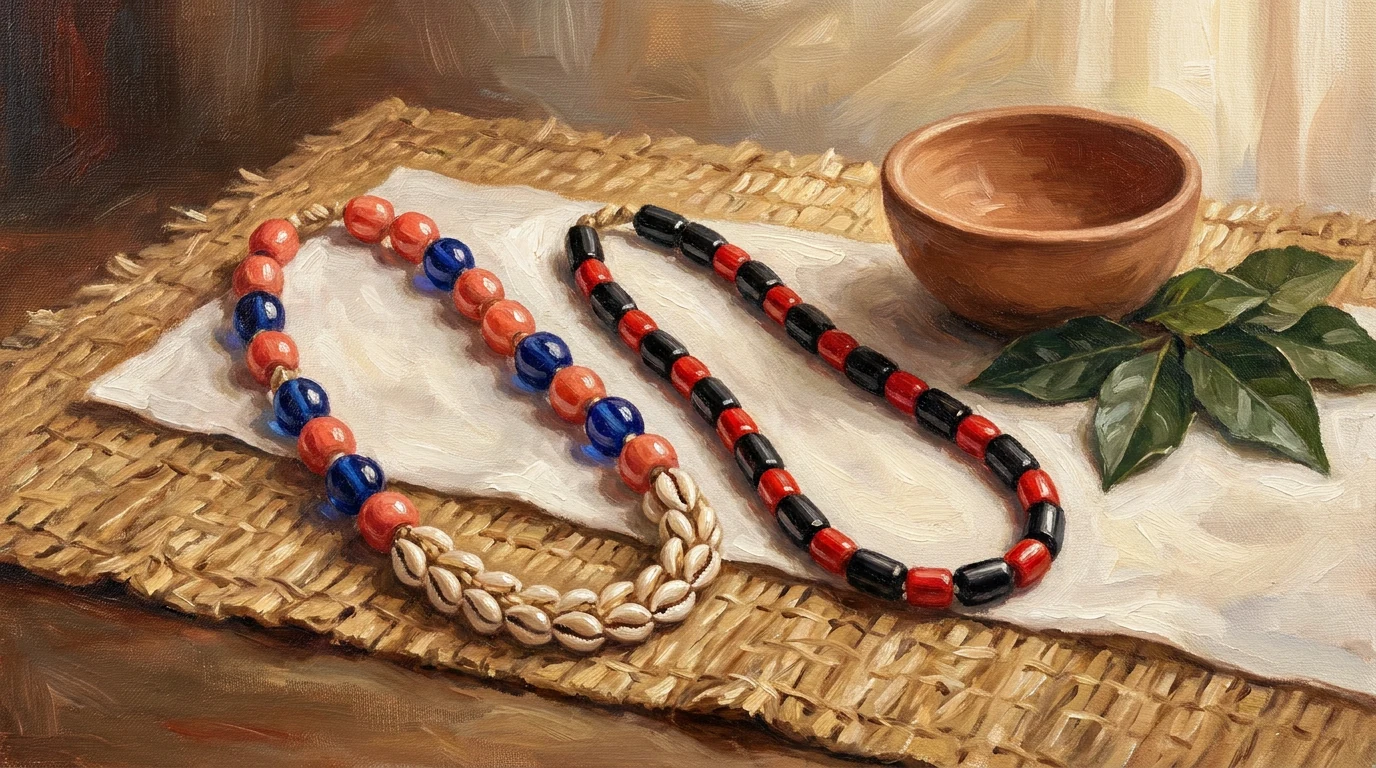
“A lot of coral and blue is used in the Exu/Orixá bead necklace and the Exu/mavambo one is red and black”
Mãe Luizinha, from Axé Batistini, in the UESB thesis
She calls the Exu "that people receive" mavambo. It is the record of a house. But it shows that those who are on the inside separate the two pieces.
The Exu bead necklace in Candomblé
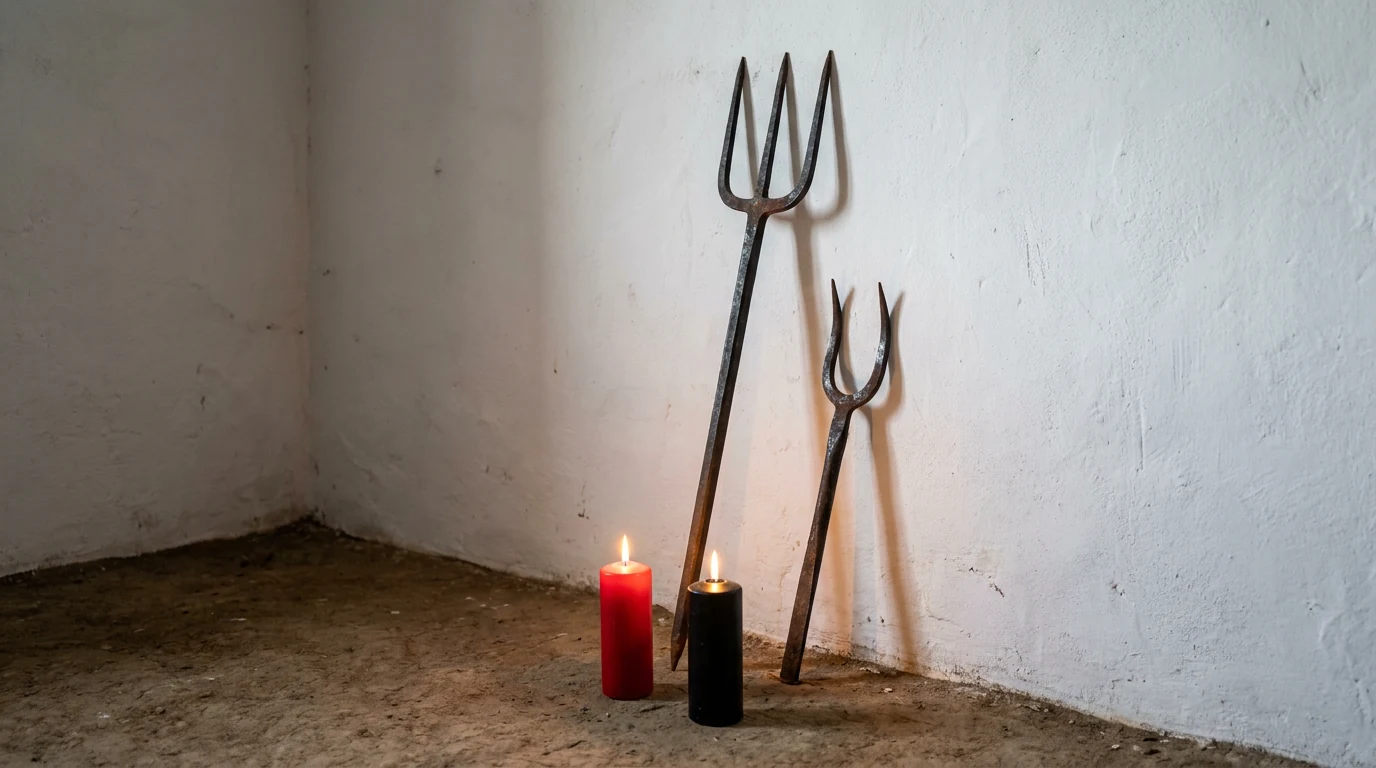
In Candomblé, the bead necklace has the Yoruba name ilequê, and that of Exu follows the nation of the house. In Ketu, Prandi's table gives the alternating beads and records the assentamento of the orixá: "buried laterite and iron forks in a clay alguidar". The symbols of Exu, by the same source, are "a phallic club and iron tridents", and the others are in symbols of Exu.
Two items appear in the UESB thesis statements:
- Brajá: open cowrie shells necklace, braided into one another. Few orixás use it, and two priests in the research place Exu between them.
- Quelê: in one house, the quelê of Exu and the one of Omolu (Omulu) are of seven threads, and those of the other orixás, of five. The ialorixá herself warns that she does not know if it is like this in all houses.
In the Tambor de Mina, the vodun corresponding to Exu is Elegbara, with long rosaries of small beads. How many threads and in what order is the foundation of the house.
Materials and pendants of the guardian ritual bead necklace
In Umbanda, the Exu bead necklace (guia) is made of beads, and the material varies. In one house, every medium who enters the corrente first assembles two bead necklaces: one of Oxalá (Obatala), transparent or milky, and one of Exu, black and red, of a single thread and with faceted crystals.
The lines request specific elements. One Umbanda practitioner records that caboclos ask for feathers and teeth, and that exus ask for tridents. The trident became an emblem of Exu due to the Christian reading: the USP thesis says that Exu, "once associated with the Christian devil, gained a trident in addition to horns and a tail." The opposite reading, which sees Exu's horns in Africa since the 19th century, is in Exu's trident.
In the shop, the red and black seed appears sold as "of Exu." The terreiro record regarding the goat's eye places the seed with the baianos, not with the exus. Ready ritual bead necklaces, beads, and trident pendants are bought in the shop. What goes into your ritual bead necklace, the house decides.
Exu Caveira ritual bead necklace
The Exu Caveira ritual bead necklace does not have a color source. Black and red and black and white circulate. What is recorded is the skull pendant.
Alice Costa Macedo's thesis, from USP in Ribeirão Preto, studied a house of Umbanda. There, the pai de santo uses a small skull hanging on his Exu bead necklace in the gira de esquerda. It is the symbol of Exu Sete Covas, who works in the cemetery. "This small skull I use used to have seven skulls before," he said; today it is just one.
In the same house, João Caveira is the "exu of the calunga line, the line of souls," and guards the cemetery gate. The cemetery joins the two: the skull of Sete Covas and the gatekeeper João Caveira [D9, D10]. The pai de santo also explains why the exu works in black: "black shows which line he comes from."
The entire falange is in Exu Caveira, and the line is in line of souls in Umbanda.
Does the bead necklace change from one Exu to another?
It changes, but not by default. No serious source gives the color of the bead necklace of Tiriri, Tranca Rua, or Marabô. In Umbanda, the falanges of Exu have the name of the place where they work, such as Encruzilhada, Porteira, Cemitério, Caveira, and Lodo. In the house studied by USP, the skull pendant came from that place, the cemetery.
The house defines the bead necklace of each guardian. The profiles are in names of Exu, with files of Exu Tiriri, Exu Tranca Ruas, and Exu Mirim. The Pombagira bead necklace is another piece, also defined by the house, and the spirit is in who is Pombagira.
Who crosses and who can use the Exu bead necklace
A ready-made purchased bead necklace is not yet a working bead necklace (guia de trabalho). The rite is missing. In Umbanda, every bead necklace is closed and crossed by the head of the terreiro: the pai or mãe de santo, or the chief spirit guides of the house. Without this, it is "just another necklace." Pais and mães de santo from Pernambuco say the same to Revista Continente: a thread without consecration only has value as an ornament.
Who can use it depends on the type of bead necklace:
- Protection bead necklace given by a spirit: in Umbanda, no one needs to be a devotee to receive a bead necklace.
- Exu ritual bead necklace: belongs to the house medium and passes through the leader [D12, D14].
- Bead necklace of the orixá Exu: follows the rule of the Candomblé house and the nation.
If you have doubts about the bead necklace your house requested, Joice helps check the material via WhatsApp.
In an Umbanda house, the Exu bead necklace goes on the wrist and does not go over the medium's head. It is a house rule. Ask your house.
Washing the bead necklace and what to do when it breaks are in bead necklace in Umbanda.
Frequently asked questions
Who can wear an Exu bead necklace?
In Umbanda, no one needs to be a devotee to receive a protection bead necklace from a spirit. The Exu ritual bead necklace belongs to the house medium and passes through the leader. In Candomblé, the Exu bead necklace follows the rule of the house and the nation. If in doubt, ask your Pai or Mãe de santo.
Can an Exu bead necklace be all black?
The most registered combination is alternating black and red. There are houses with black and white, like the xambás of Pernambuco, and with black and gray. An all-black bead necklace depends on the house and the spirit. Black, in a house studied by USP, marks the left line from where the Exu comes.
Can an Exu bead necklace be worn with the one for Oxalá?
In an Umbanda house, yes: they are the medium's first two bead necklaces: the one for Oxalá, transparent or milky, and the one for Exu, black and red. The way to wear both follows the rule of your house.
What does the skull on the Exu bead necklace mean?
In a house of Umbanda researched by USP, the small skull hanging on the Exu bead necklace is the symbol of Exu Sete Covas, who works in the cemetery. The pai de santo uses it in the gira de esquerda. It is not a rule for all houses.
Can you cross the Exu bead necklace (guia) at home?
No. The person who closes and crosses the bead necklace is the head of the terreiro or the chief spirit guide of the house. Without this rite, the bead necklace is only worth as an ornament, say the pais and mães de santo heard by Revista Continente. Take the purchased bead necklace to your house and follow the leader.
References
- Reginaldo Prandi: Deuses africanos no Brasil contemporâneo, Horizontes Antropológicos, 1995
- Patrícia Ricardo de Souza: Axós and ilequês, doctoral thesis, USP, 2007
- Luciano Lima Souza: The sacred necklaces of memory, doctoral thesis, UESB, 2019
- Alice Costa Macedo: Crossroads of interpretation in Umbanda, doctoral thesis, USP, 2015
- Vagner Gonçalves da Silva: Exu do Brasil, Revista de Antropologia, 2012
- Juliana Carvalho and José Francisco Bairrão: Umbanda and Quimbanda, Psicologia USP, 2019
- Revista Continente: Threads and beads, 2013
- Casa de Caridade Gauisa: Bead necklace (fio de contas) in Umbanda, 2022
- Site Diário de Umbanda: bead necklace (fio de contas)
- Douglas Rainho: Guias and bead necklaces (fios de conta) in Umbanda, 2015