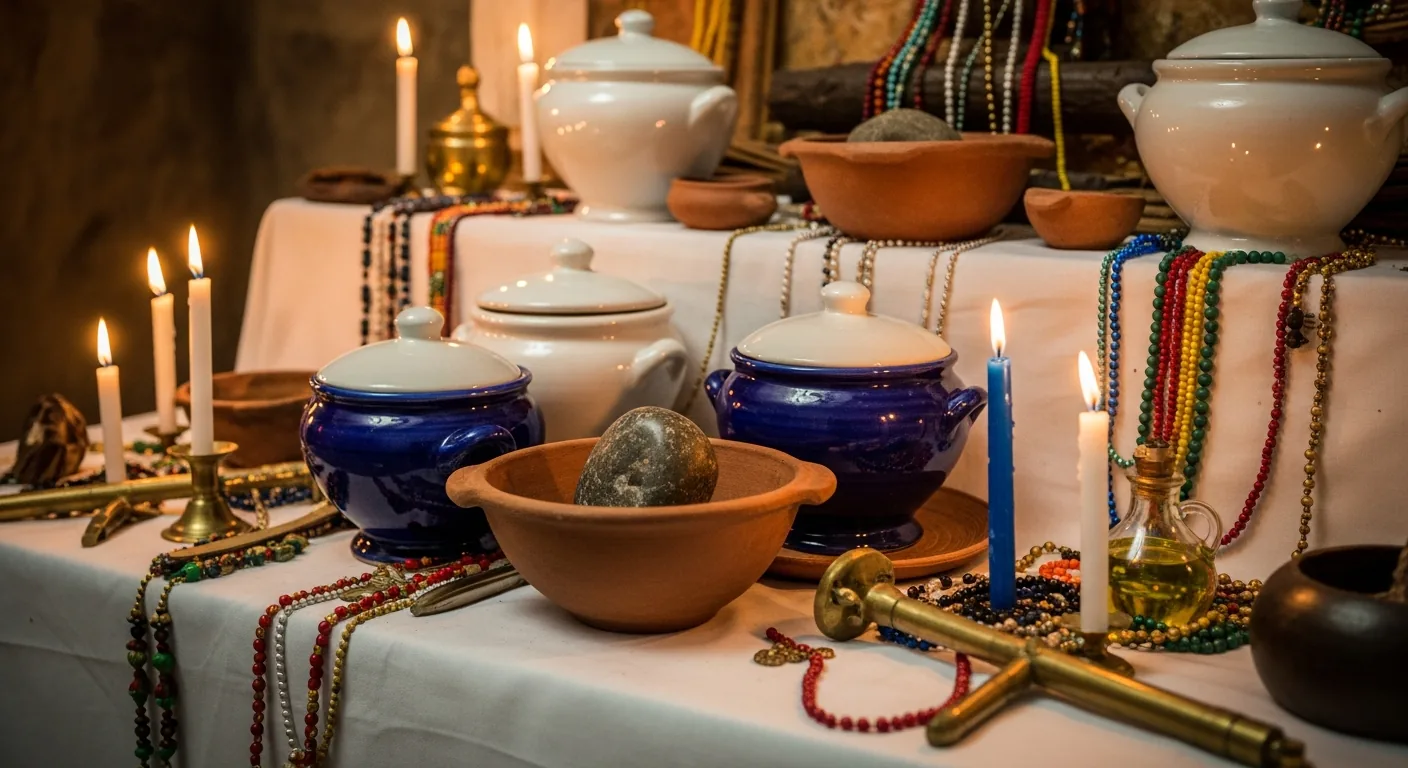
Anyone entering a terreiro for the first time immediately notices a small clay pot with water, quietly sitting next to the assentamento or at the house's entrance. This simple container is the quartinha, and it holds much more foundation than it appears. The water that lives inside is life, it is axé in motion, and caring for it is a daily gesture of faith.
This guide explains what the quartinha is, what it is used for, what goes inside, the difference between clay and pottery versions, how to change the water step by step, and why this container always requires the foundation of your house.
What is the quartinha
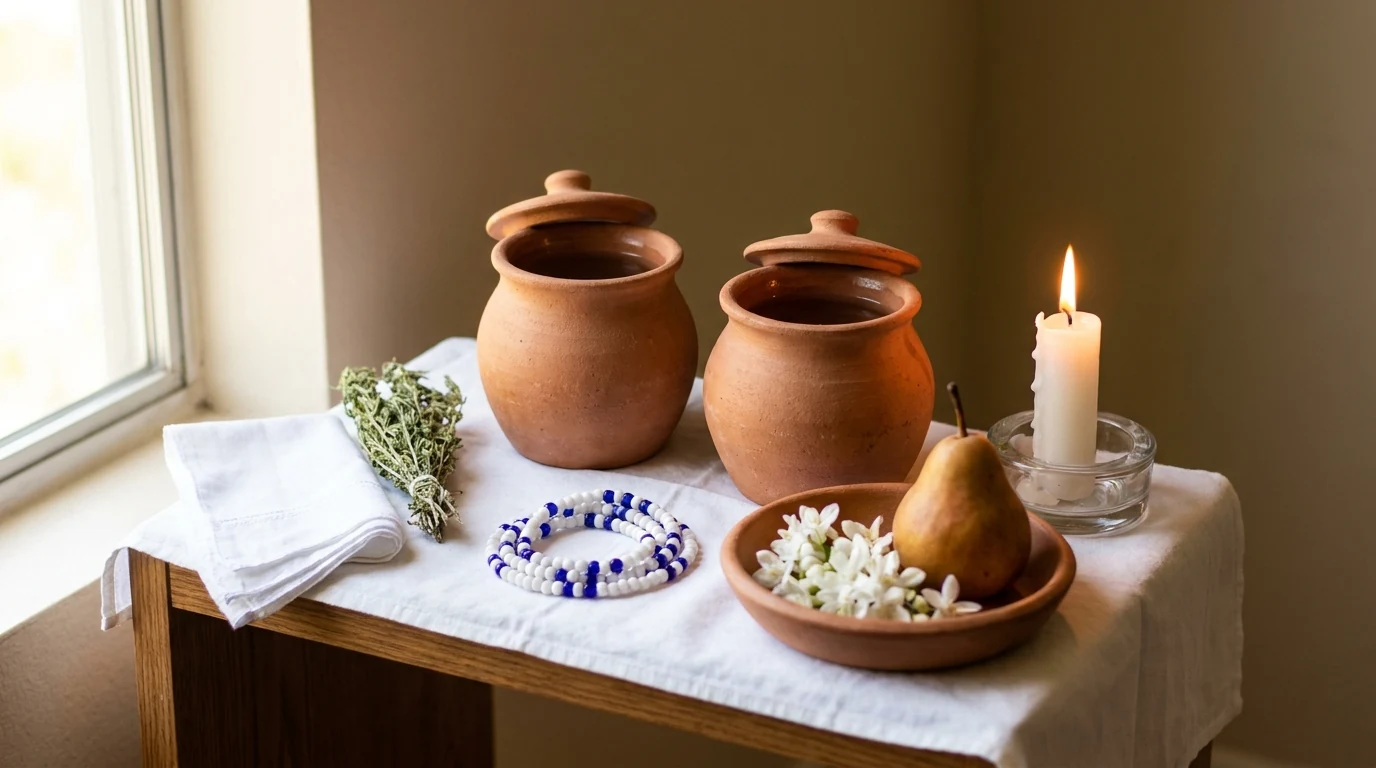
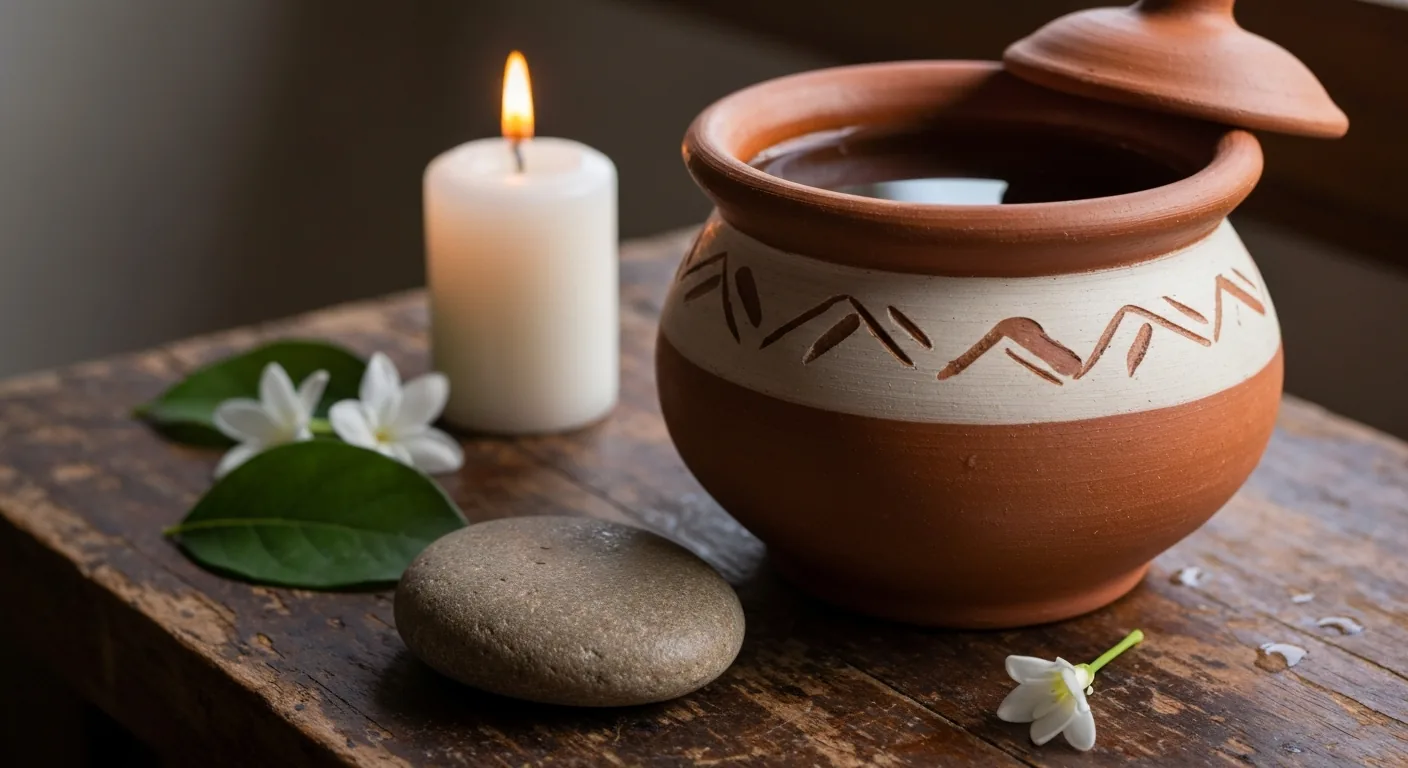
The quartinha is a small clay or pottery pot, almost always with a lid, used in Umbanda and Candomblé to keep water consecrated to the orixá. The capacity usually stays between 250 ml and half a liter. It stays next to the spirit's assentamento, firming the living presence of the water there.
The name comes from "quarta", an old measure of liquid. Over time, the diminutive began to name this sacred little jar that became a symbol of the terreiros. It is not a decoration or a common vase: it is a piece of foundation, consecrated with axé.
The container appears in various moments of religious life. It integrates the assentamento de santo, marks the entrance of the house as a sacred space, and accompanies the altar of those who worship the orixás at home. Where there is water firmada with faith, it is usually nearby.
What is the quartinha used for
The quartinha serves to firmar and renew the axé through water. Water is the first element of life, the one that cleanses, calms, and transmits energy. Kept in clay and changed with faith, it maintains the connection between the filho de santo and the force of the orixá.
In the terreiro, the container has very concrete functions. Among the main ones are:
- To consecrate the assentamento: the water composes the foundation of the orixá, alongside the otá and the other elements.
- To mark the sacred space: a water jar at the portal or at the entrance signals that it is a place of worship and respect.
- To renew energy: each water change symbolizes a new breath of the divinity and of the devotee themselves.
- To calm the environment: the water absorbs and dissolves the heavy charges that circulate in the house.
Many people also place a glass of water next to the guardian angel candle, following the same logic. The water receives and unravels the dense energy, which is why it can never dry out or stay still for too long.
The quartinha renews the axé and calms the house, but it is not a quick fix. Changing the water is a gesture of faith and care, not a formula that solves everything alone. What sustains the foundation is constancy and respect, not haste.
What goes inside the quartinha
The main element is water, called omin in houses of Yoruba tradition. It is what carries the meaning of life and renewal. Whenever possible, clean water is used, and many houses prefer spring, rain, or mine water, as it is water in motion.
In Candomblé, the assentamento piece accompanies the otá, the stone that is the consecrated dwelling of the orixá. Water and stone work together: the stone settles the force, the water keeps it alive. This set is part of a larger foundation, consecrated by a pai or mãe de santo, and varies according to the Candomblé nation.
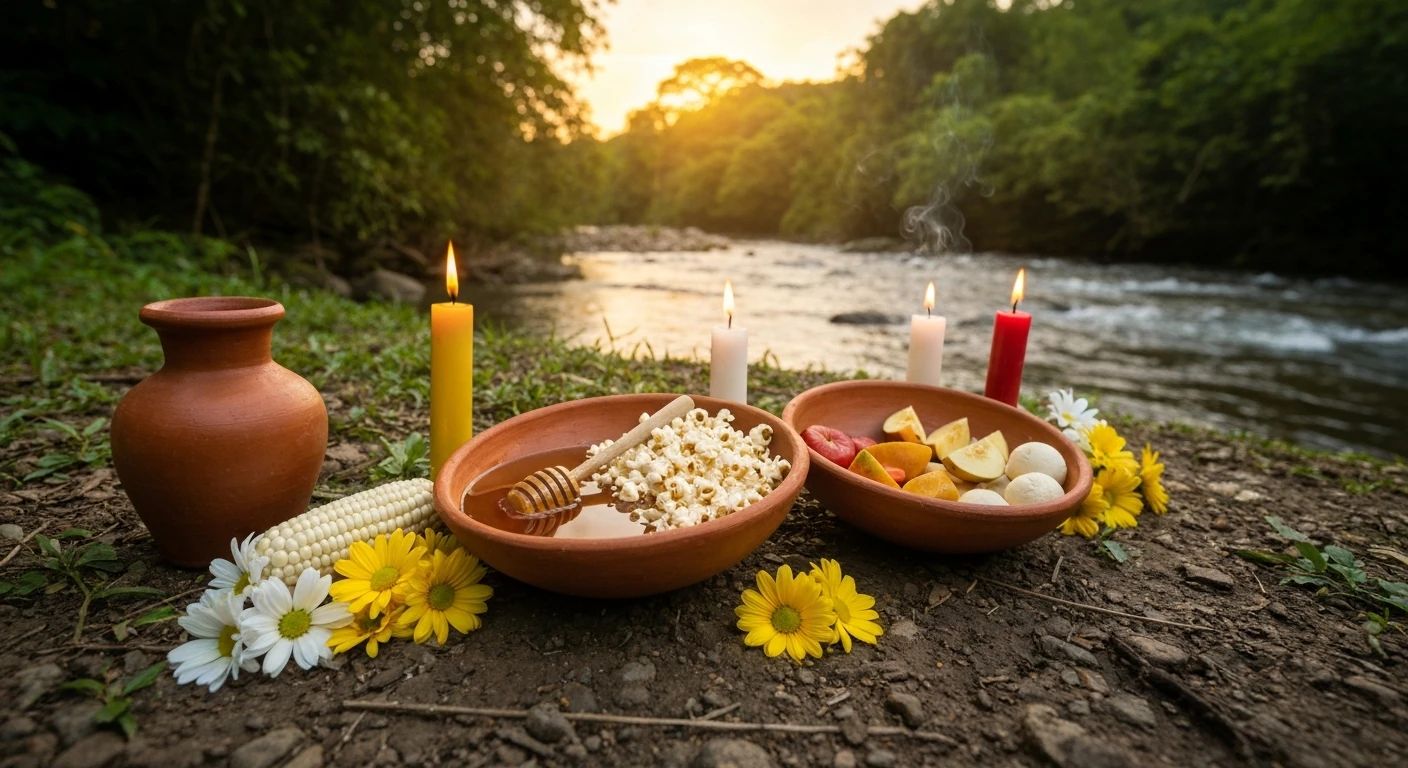
Some spirits receive, in addition to water, a specific drink of fundamento, such as marafo for the povo de rua or wines and other offerings according to the orixá. This depends entirely on the guidance of the house. The safe rule for those who are starting is simple: pure water, and nothing else without the leader's command.
Clay or ceramic quartinha
The choice of material has fundamento, it is not just aesthetics. The clay piece is the most traditional. Clay breathes: the water evaporates slowly through the pores, and this evaporation is read as the breathing of the orixá. Therefore, the water level lowers on its own over time, a sign that the energy is circulating.
The ceramic or porcelain model is also used, often painted in the colors of the orixá. It retains water better and is pleasing in more delicate altars, such as those of Oxum and the iabás. Each house has its preference, and the most important thing is for the piece to be firmada with axé.
There is also a common distinction linked to the gender of the spirit. In many houses, male orixás receive the clay piece without a handle, while females receive ceramic or clay with a handle. It is not a universal law: it is custom, and the fundamento of your house is always the final word.
Material: clay (more traditional) or painted ceramic | Capacity: 250 ml to 500 ml | Use: consecrated water next to the assentamento | Change: every 7 days, on average
How to change the water in the quartinha
Changing the water is the most frequent care with the quartinha, generally done every seven days. The gesture is simple, but full of fundamento, and asks for presence and respect. As taught by the Templo de Umbanda Tia Conceição, the change renews the energy worn out during the week and the water must never dry out.
A respectful step by step for care at home:
- Firm the intention with a greeting to the orixá, asking for permission before handling the container.
- Remove the old water calmly. Many houses instruct to return this water to the earth or to a plant, not to the drain.
- Wash the piece only with clean water, without soap or any product, so as not to remove the settled axé.
- Put in the new water until almost full, leaving space for the clay to breathe.
- Light a candle, make your request and thank the orixá for the week that passed.
Many houses perform a special renewal at the turn of the year, changing the water of all pieces at once. It is a closing of a cycle, a way to enter the new year with renewed axé.
Simple greeting when changing the water: "May this new water bring health, peace and firmeza to this house and to all of its inhabitants. Axé." Speak from the heart, in the way of your faith, without needing to memorize anything.
Care and why the quartinha asks for fundamento
The quartinha of assentamento is personal and non-transferable. It carries the vibration of the owner, which is why it is not lent, not given for another person to use, and not allowed for anyone to handle. It is almost an extension of your connection with the orixá, and deserves this care.
Some precautions help keep the fundamento firm. The water should never dry out completely, a sign of neglect toward the axé. The piece is not for drinking or any other domestic use. And, if it cracks or breaks, the correct thing to do is seek the house to know the correct ritual destiny, never simply throwing it in the trash.
Here comes the most important point. To set a quartinha for an assentamento is a serious foundation, and foundation is done with Pai or Mãe de santo. This guide explains the meaning and care of the piece, but it does not replace the consecration done in the house. Setting up a simple altar at home with water set in faith is a beautiful beginning. The complete assentamento, with otá and obligations, is the territory of those who have axé to lead.
Frequently asked questions
What is a quartinha with water?
The quartinha with water is a clay or ceramic jar that holds water consecrated to the orixá, set next to the assentamento. The water represents life and axé, and it is changed regularly. This vessel is one of the most present symbols in terreiros of Umbanda and Candomblé.
What goes inside the quartinha?
The main thing is the water, called omin. In Candomblé, the assentamento piece accompanies the otá, the foundation stone of the orixá. Some spirits receive their own drink, such as marafo, but only according to the orientation of the house. For those starting out, clean water is the safest.
What is the purpose of the quartinha in Umbanda and Candomblé?
It serves to set and renew the axé through water, compose the orixá's assentamento, and mark the space as sacred. The water absorbs and dissolves dense energies from the environment. Changing it with faith is a gesture of renewal, not a promise of guaranteed results.
How often do you change the water in the quartinha?
The traditional change is every seven days. When changing, the old water is removed, clean water is placed, and a candle is lit with a prayer request and gratitude. Many houses still renew the water of all pieces at the turn of the year, closing the cycle and starting the new one with renewed axé.
What is the difference between a clay quartinha and a ceramic one?
The clay one is the most traditional and breathes: the water evaporates slowly through the pores, which symbolizes the breathing of the orixá. The ceramic one retains water better and is usually painted in the colors of the spirit. Both serve, and the choice follows the foundation and the custom of your house.
Where to find quartinhas and ceramic items for orixá
At Joia Mística Laroyê, you find the orixá's ceramic ware (louça de santo), set up with respect for the foundation of your house:
- Clay quartinhas: in the traditional format, with and without a handle, for each orixá
- Ceramic quartinhas: painted in the colors of the spirits, for altars and iabás
- Alguidares and ceramic items for assentamento: to compose the foundation with the orientation of the house
- Ritual candles: in the correct colors to light during the water change
- Statues and bead necklaces: to set the altar and the devotion at home
Visit our physical store in Extrema-MG or receive it at home with delivery to all of Brazil. To know which quartinha matches your orixá and how to consecrate it safely, seek the leader of your house and speak with us via WhatsApp.
References
- Templo de Umbanda Tia Conceição: informative bulletin about the quartinha change