For many people, pretos-velhos are the first memory when speaking of Umbanda: the image of the elder sitting on a stump, pipe in hand, the gentle voice calling you "my son" and seeming to already know what hurts before you speak. They form one of the most beloved lines of work of the terreiros, spirits of African elders who lived through slavery and return to support, advise, and heal with the serenity of those who have already crossed all pain.
This guide shows who the pretos-velhos are, where this ancestral force comes from, what their symbols are, the most well-known spirits, and how they work in the gira of Umbanda.
Who are the pretos-velhos
Pretos-velhos are a working line of Umbanda, and not orixás (orishas). They are spirits who present themselves under the archetype of the enslaved Black elder, the one who aged in the senzala, knew the trunk and the captivity, and even so kept faith, patience, and charity in their chest. When they incorporate, they bring the hunched posture, the slow speech, and the affectionate treatment of someone who treats each person like a son or grandson.
It is important to clear up a common misconception: the preto-velho is not a "backward" spirit nor a "sufferer" trapped in the past. The Umbandist tradition understands them as a spirit of great evolution who chooses the humble form of the old man to teach by example. Humility here is wisdom, not weakness. They master the use of herbs, undo ritual work, bless, clear, and, above all, listen.
To situate this line within the whole of the religion, it is worth reading the overview on what is Umbanda and the general guide on the spirit guides of Umbanda.
The origin of the pretos-velhos in black ancestry
The origin of the pretos-velhos is Brazilian and is born directly from the resistance of the enslaved black people. In the time of slavery, Africans torn from their lands and their orixás found in the slave quarters a way to keep the memory of the ancestors alive. The elders, who managed to grow old despite everything, became guardians of this wisdom, counselors of the slave quarters, healers, and prayer leaders.
When Umbanda structures itself in Brazil at the beginning of the 20th century, these elders return as spirit guides. They carry the pain of slavery, but not the hatred: they return preaching forgiveness, charity, and faith, which were precisely the weapons with which they survived. Therefore, the preto-velho is also a form of reverence to the ancestors, a recognition that Brazilian spirituality has African roots and was forged in the struggle of enslaved people.
The Day of the Pretos-Velhos is May 13, the date of the signing of the Golden Law, in 1888. The date is discussed: there are those who propose November 20, and the debate is in preto velho day. The Wikipedia entry on the preto-velho gathers the history of this line and its references.
The symbols of the preto-velho
Recognizing a preto-velho is also recognizing their objects. Each symbol carries a meaning linked to ancestry and spiritual ritual work.
- Pipe (pito): the smoke from the tobacco leaf smokes the environment and the person, cleaning dense energies during the consultation
- Stump (small stool): the preto-velho works seated, a sign of one who has time, calm, and listening, never haste
- Tercinho (small rosary) or rosary: marks faith and prayer, also a heritage of popular Catholicism lived in the slave quarters
- Walking stick: firmeza and support, the support of one who has walked a lot
- Pemba: the sacred chalk used to draw pontos riscados and consecrate ritual work
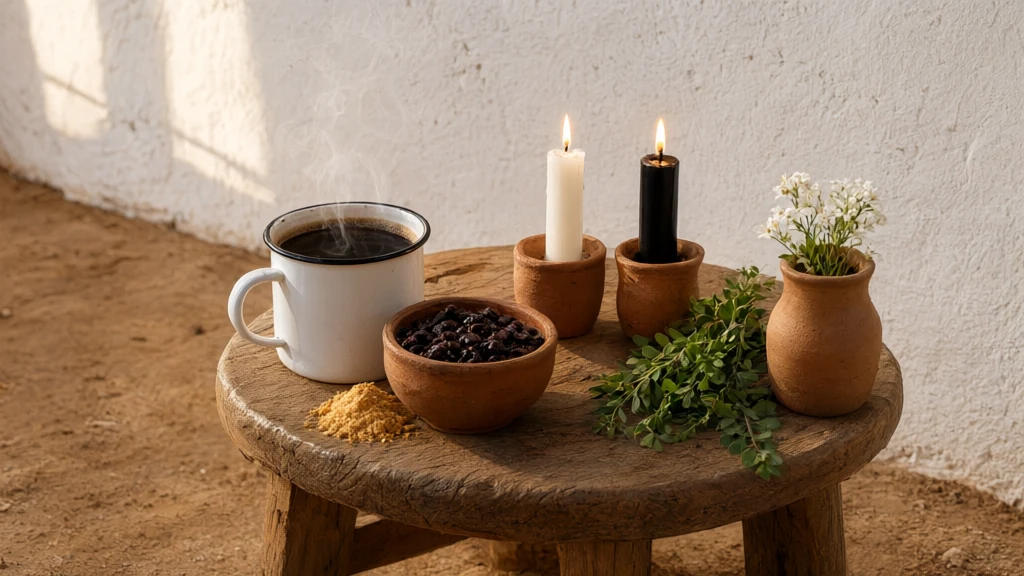
- Coffee, rue and tobacco leaf: simple elements of offering and blessing, from the humble daily life of the elder
Adorei as almas! It is the greeting of the pretos-velhos. Researcher Lourival Andrade Júnior also records the long form, spoken in most terreiros, which ends in "Saravá o Preto Velho... Adorei as almas". More about the chant and greeting in ponto de preto velho.
Rue, always present in the hands of the preto-velho, is one of the herbs most used in blessings. To learn about its uses, see the guide on arruda, erva de Ogum e Exu.
The Almas line and the regency of the pretos-velhos
In the organization of Umbanda, the pretos-velhos act mainly in the so-called linha das Almas, the vibration linked to ancestry, seclusion, and the passage between worlds. This line is usually associated with the orixá Omulu (Obaluaê), lord of the earth, of healing, and of the mysteries of death and rebirth. In some houses, it is also said that the pretos-velhos work under the greater vibration of Oxalá, due to the connection with peace and charity.
Each house has its own organization, and the lines can vary from terreiro to terreiro. What remains is the meaning: the preto-velho is the serene bridge with the ancestors. To understand the orixá who rules this vibration of healing and ancestry, read about who is Obaluaê (Omulu).
It is worth remembering that this arrangement is from Umbanda. In Candomblé, the worship of ancestors takes another form, with the eguns and own foundations by nation. They are distinct traditions, as shown by the comparison between the diferença entre umbanda e candomblé.
Most well-known pretos-velhos
The pretos-velhos present themselves with names that evoke the senzala and family affection. The spellings vary from house to house. According to Andrade Júnior, the names usually combine a Catholic saint's name and a designation of place or characteristic, such as Pai Joaquim de Angola, Pai João de Aruanda, Vovó Maria Conga, Pai André do Cruzeiro, Vovó Maria Bahiana, Tia Maria Calunga and Vovô Zé da Pemba. Pai Benedito de Aruanda is the spiritual patron of the National Sanctuary of Umbanda.
The research cited by the blog does not provide the biography of any of these names, and what the internet attributes to each one (herbs, healing, ritual work) circulates without a source. What Pai, Vovó and Tio say, the "de Angola" and the "de Aruanda" are in preto velho names.
How the preto-velho works in the gira
In the gira of pretos-velhos, the terreiro changes rhythm. The curimba leads the pontos cantados, slower and more contemplative, which call for the vibration of ancestry and help the mediums in spirit incorporation. The environment becomes one of recolhimento, conducive to listening.
When they incorporate, the pretos-velhos attend while seated on their stumps and do what they know best: advise. The preto-velho's attendance is known for the right word at the right time, the one that unlocks an old anguish. Besides the advice, they bless, perform smoke cleansing (defumação) with the pipe, indicate baths and herbs, draw pontos with the pemba and help to undo ritual work and alleviate the spiritual weight of those who arrive exhausted.
The smoke cleansing (defumação) almost always accompanies this cleaning work. To understand this practice, see how to do smoke cleansing for cleaning. The portal Diário de Umbanda details the actions of the pretos-velhos as guides of humility, serenity and patience.
Frequently asked questions
What is the day of the pretos-velhos?
The day of the pretos-velhos is May 13, the date of the signing of the Golden Law, which declared slavery extinct in Brazil in 1888. Many houses hold a party or gira for them on this day. There is a proposal to change the date to November 20, the day of Zumbi dos Palmares, registered in 2013 and without documented adoption. The complete debate is in preto velho day.
Is preto-velho Exu (Eshu)?
In general, no. In the most common classification of Umbanda, the preto-velho stays on the right line and Exu on the left, and research describes exceptions in a few houses. What the sources say is in preto velho is Exu.
Is preto-velho an orixá?
No. The preto-velho is a line of spirits of ritual work in Umbanda, not a deity. He acts under the vibration of orixás such as Omulu (Obaluaê) and Oxalá, but he is the spirit of an elder who lived on Earth, and not an orixá in itself.
What is the greeting of the pretos-velhos?
The greeting is “Adorei as almas!”. One study registers it as the brief greeting of the pretos-velhos, and the long form is in ponto de preto velho.
What does the preto-velho do in the gira?
In the gira, the preto-velho advises, blesses, performs smoke cleansing with the pipe, indicates herbs and baths, draws pontos with the pemba, and helps to discharge dense energies. The service is marked by patient listening and the word of comfort to those seeking relief.
Why does the preto-velho smoke a pipe?
The smoke from the pipe (pito) works as smoke cleansing (defumação): it cleans the environment and the energy of the person being served. The tobacco leaf, along with rue and coffee, is part of the simple and ancestral elements with which the preto-velho performs his blessings.
Where to buy items for pretos-velhos
At Joia Mística Laroyê, you find everything to honor the pretos-velhos with respect and devotion:
- Statues of pretos-velhos and pretas-velhas for your altar or congá
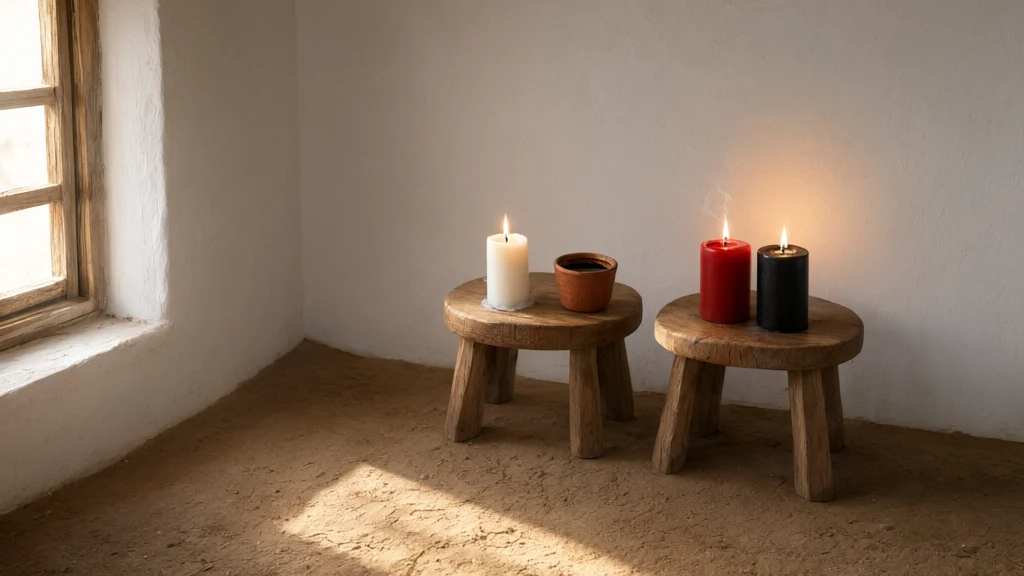
- White and black candles for the line of the souls and ancestrality ritual work
- Pipes, pemba and small rosaries used in consultations and blessings
- Herbs and incense such as rue and rolled tobacco leaf
- Bead necklaces and beads in white and black for devotion to the spirit guides
Visit our shop in Extrema-MG and we ship to all of Brazil. For guidance on the correct use of products and on how to reverence the pretos-velhos, talk to us via WhatsApp.
References
- Wikipedia: entry about the preto-velho in Umbanda
- Lourival Andrade Júnior, ANPUH, 2013: I worshiped the souls, Umbanda, preto-velho and slavery
- Diário de Umbanda: article about the actions of the pretos-velhos as spirit guides