Someone arriving at a gira for the first time notices the person in white standing next to the medium. They light the candle, light the cigar, write down the recipe, and call the next person in line. This is the cambone, and their position is much more demanding than it seems from the outside.
The cambone is the one who serves the incorporated spirit during the consultation. This guide shows what they do before, during, and after the gira, what they are forbidden from doing, and why secrecy is the heart of the role. At the end, it explains why they are not the Umbanda version of the ekedi or the ogã.
Who is the cambone in Umbanda
The cambone is the direct assistant of the medium who is incorporated during public consultations. They do not conduct the consultation and do not speak for the spirit. They serve, organize, and protect so that the ritual work happens.
The role is so structural that it even appears described in academic research. An ethnopsychological study was published in the journal Temas em Psicologia. The terreiro observed gathered about 20 mediums and 20 cambonos, defined there as "assistants to the mediums in rituals and in public consultations".
Keep that proportion in mind. In many houses, there is practically one cambone for every medium in the circle, because the consultation with spirit guides cannot be sustained alone.
Where the word cambone comes from
The term comes from the banto linguistic trunk, with a strong connection to Kimbundu. Houses point to forms such as kambondo, kambono, and kambundu, all revolving around the idea of assistant, servant, the one who accompanies. Terreiro Firmina do Rosário records these forms and reminds us that the word circulated in Afro-Brazilian cults even before Umbanda.
A fair caveat is necessary. General Portuguese dictionaries do not record the religious meaning of the word, and the exact etymology remains disputed. This happens because the terreiro vocabulary reached Portuguese through oral transmission, not through lexicographic records.
There is a strong clue of the shared root. In the Candomblé of the banto/angola nation, there is the position of ogã called Cambondo Quiçabá, responsible for the sacred leaves. Same linguistic root, another tradition, another position.
Regarding the spelling, there is no argument worth having. Cambone and cambono name the same function, and the choice varies from house to house. The feminine cambona also circulates.
What the cambone does in the gira
The ritual work begins before the first candle is lit.
Before the gira
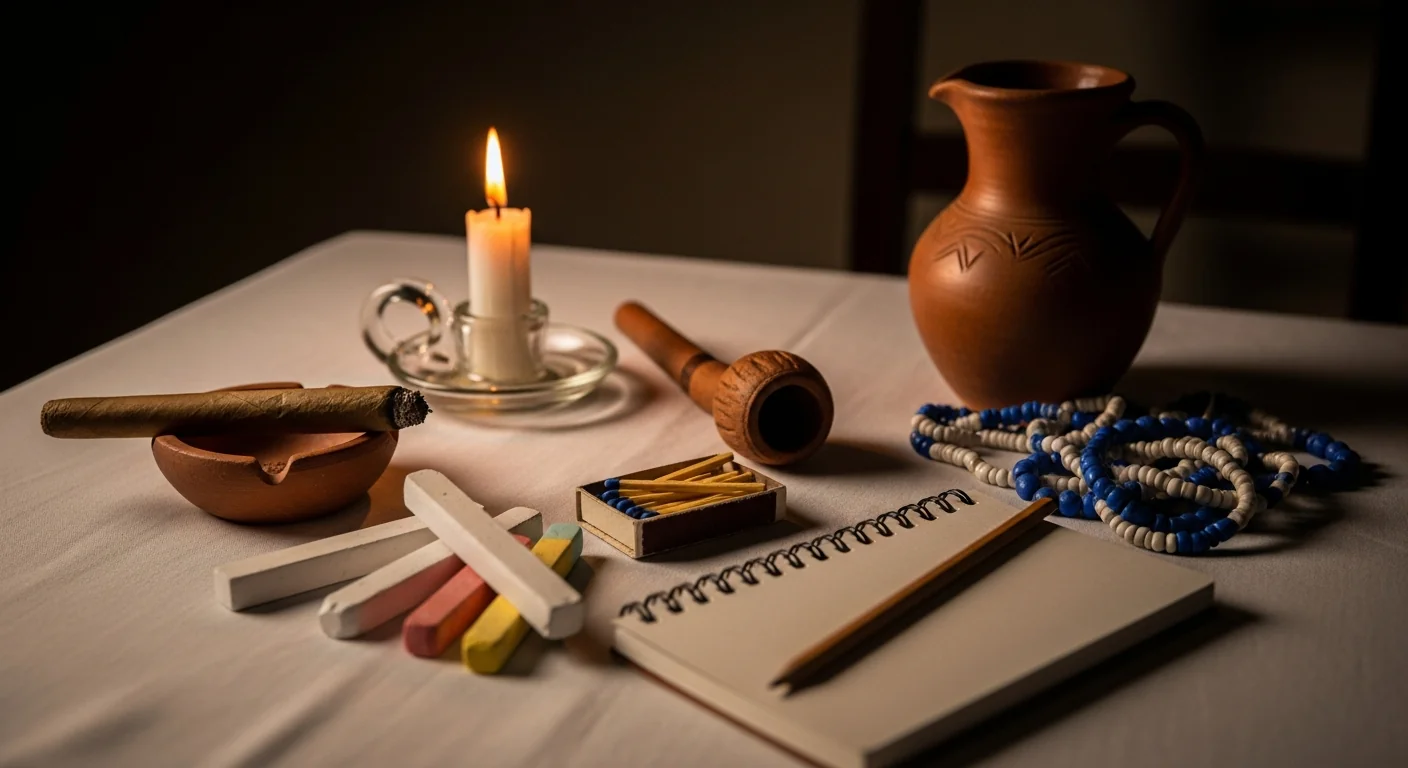
- Separates and takes to the place the material for each line: pemba, candles, matches, cigar or pipe, herbs, ritual drink
- Checks the service point: bench, towel, cup, ashtray, bead necklaces
- Leaves everything within reach, so as not to interrupt the ritual work later
During the gira
- Lights the candle and keeps the firmeza lit from beginning to end
- Serves the cigar or the pipe when the spirit asks, and the drink that the house authorizes for that line
- Translate the spirit's speech when the seeker does not understand
- Write down the recipe: ritual bath, herb, candle, delivery, return date
- Organize the line, call in order and manage the time of each consultation
- Care for the medium's body: avoid burns from embers and candles, support, prevent bumping
- Lift the ponto riscado when the spirit finishes, extinguishing the candle with the pressed wick
Cigar, pipe and drink here are ritual work tools of certain lines, served to the spirit and always within what the house authorizes. Preto-velho with the pipe and caboclo with the cigar are not smoking for pleasure.
After the gira
- Accompanies the disincorporation and supports the medium on the return
- Collect, clean and store the material
- Pass the noted instructions to the seeker or to the direction
What the cambone does not do
Here is the part that almost no one writes, and which separates the well-formed cambone from the cambone who hinders.
- Do not interpret on your own. Translating the speech is not giving an opinion, completing a sentence, or "explaining better" what the spirit guide meant.
- Do not choose who passes. No cutting in line for relatives or friends.
- Do not incorporate while serving, unless authorized by the spirit or the house leadership.
- Do not talk to the audience (assistência) during the consultation.
- Do not use the position to consult for yourself or to bring a third party's case to the entidade.
- Do not charge anything from the consultee and do not let them be charged.
- Do not promise results and do not spread gossip about someone else's consultation.
The heaviest item is the last one. The cambone hears about illness, debt, mourning, and betrayal from people they meet at the bakery the next day. None of that leaves the gira. The only exception is bringing to the house leadership anything that violates the rules of the terreiro.
Secrecy is not an etiquette rule, it is a foundation. Whoever serves in the consultation keeps the pain they heard, and it is this trust that makes the consultee return.
Cambonagem is a school
In many houses, cambonagem is a formative stage. Before rotating in the circle, the person learns the gira from the inside. They see the rhythm of the consultation, memorize the material of each line, and understand how the entity works. They also observe how the medium behaves upon entering and leaving the trance.
It is not a punishment or a waiting list. It is practice. Whoever went through cambonagem reaches mediumship development knowing where they step.
This also explains a detail: in many terreiros, the medium who is not incorporated in that gira is, in practice, working as a cambone. And it is worth separating two things that get confused: cambone is not curimba. One assists the consultation, the other sustains the singing and the atabaque.
Cambone, ekedi and ogã are not the same thing
This confusion appears a lot, and it mixes two distinct religions. Cambone is a position in umbanda. Ekedi and ogã are positions in candomblé, described here by the ketu nation, remembering that names and foundations change in jeje and angola.
| Criteria | Cambone (Umbanda) | Ekedi (Candomblé Ketu) | Ogã (Candomblé Ketu) |
|---|---|---|---|
| How to join | Invitation and trust from the house, without a fixed rite | Presented and then confirmed, with the obligation of roncó | Suspended by the orixá (orisha) and then confirmed in ritual |
| Does it enter a trance? | Usually a medium, but does not incorporate while serving | No | No |
| Gender | Open | Female role | Male role |
| Serves who | The incorporated spirit, in public service | The manifested orixá: dresses, wipes, leads | The house: atabaque, ritual sacrifice, assentamentos |
| Life tenure confirmed | Not necessarily | Yes | Yes |
The correct reading is of contrast, not of translation. There is no "ekedi of umbanda". For the details of the roles on the other side, the blog has its own guide about cargos no candomblé. The entry Equede also describes the confirmation and the care of the manifested orixá.
How someone becomes a cambone
There is no single rite or course. The path reported by the houses is simple and slow. The person attends the gira with constancy, approaches and talks with the leader about wanting to work. Then they enter as a son of the house, dress in white and begin to serve.
The rest is learned by serving, under the guidance of those who have been camboning for a long time. Each terreiro has its foundation, its rhythm and its requirements of conduct.
There is no step by step to do it alone. If you want to be a cambono, there is only one path: talk to the leader of your house. The conduct material published by the Terreiro de Umbanda do Pai Maneco gives a good measure of what is expected from someone who takes the position.
Frequently asked questions
Does the cambone need to incorporate a spirit?
No. While serving, the cambone remains conscious to light, note down, translate, and look after the medium. In most houses, they are a medium and participate in another gira, but this varies. There are terreiros where the function is occupied precisely by those who do not enter a trance.
Cambone or cambono: which is correct?
Both spellings are correct and name the same function. The choice varies from house to house, and neither is an error. The feminine cambona also appears in some terreiros. Discussing spelling is less important than learning the conduct of the position.
Is every cambone a medium?
In practice, in most houses yes, because cambonagem is usually a stage of development. But it is not a universal rule. There are terreiros where people without mediumship of incorporation take on the function due to trust, discipline, and availability to serve.
What is the difference between cambone and ogã in Umbanda?
Within Umbanda, the cambone assists with the service next to the incorporated medium. The ogã has a structural function in the house, linked to the atabaque, the herbs, and the support of the ritual. They are different positions, with different responsibilities, and a person can move from one to the other.
What can the cambone not do?
They cannot interpret the spirit's speech on their own, choose who passes in the consultation, talk to the audience during the service, charge any amount, promise results, or repeat outside the gira what they heard. The secrecy of the consultation is absolute.
Where to buy the cambone material
At Joia Mística Laroyê, you find what the function requires:
- White and colored candles: for firmeza and for the service of each line
- Cigar, pipe and tobacco leaf: to serve caboclos, pretos-velhos and baianos
- Pemba: white and colored, for the ponto riscado
- Bead necklaces (guias) and white clothing: the basics for those who work in the chain
- Quartinhas, towels and incense burners: to prepare and maintain the consultation space
Visit our shop in Extrema, Minas Gerais or contact us on WhatsApp with delivery to all of Brazil.
References
- Psychology Themes: ethnopsychological study on mediums and cambones in an umbanda terreiro
- Terreiro Firmina do Rosário: article on the Bantu origin and the spelling of the word cambone
- Wikipedia: entry on equede in candomblé
- Terreiro de Umbanda do Pai Maneco: conduct material on the role of the cambone