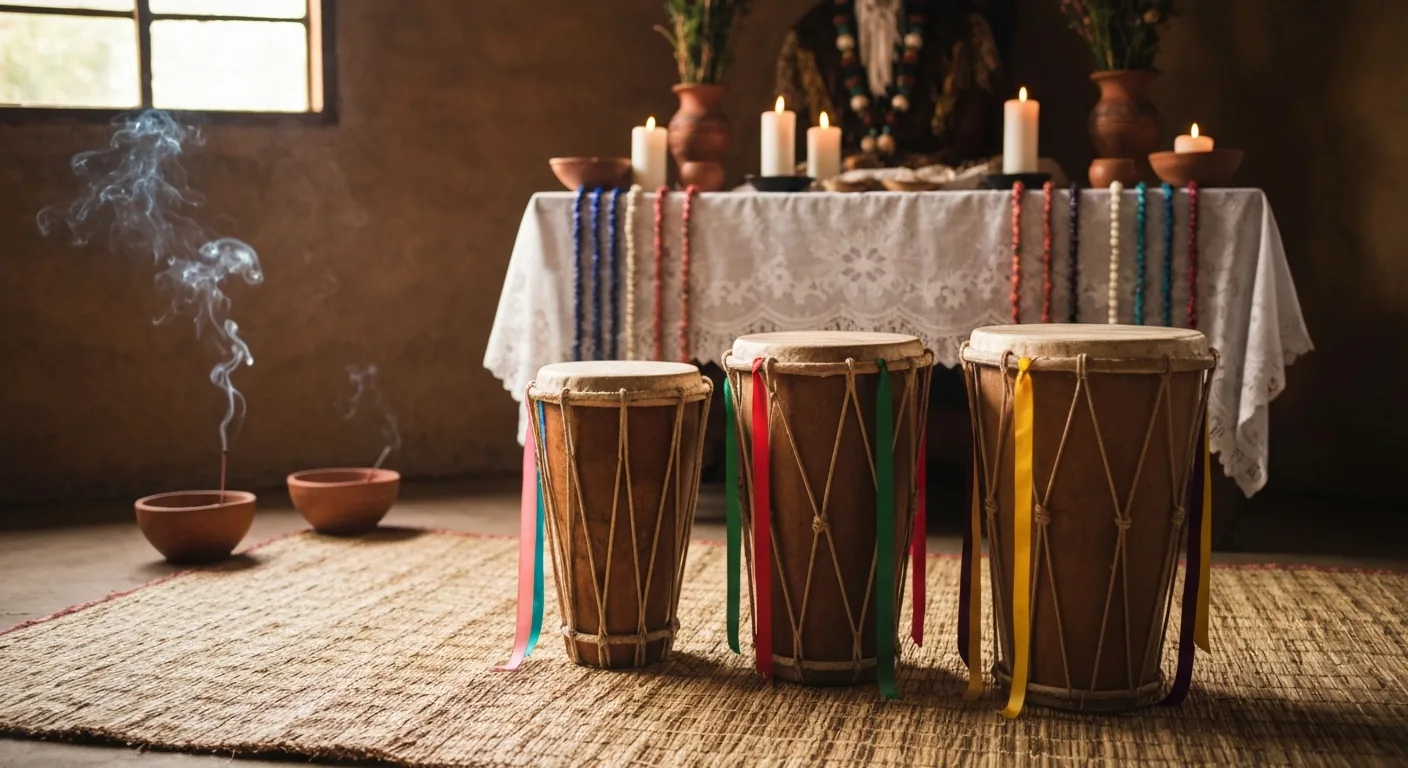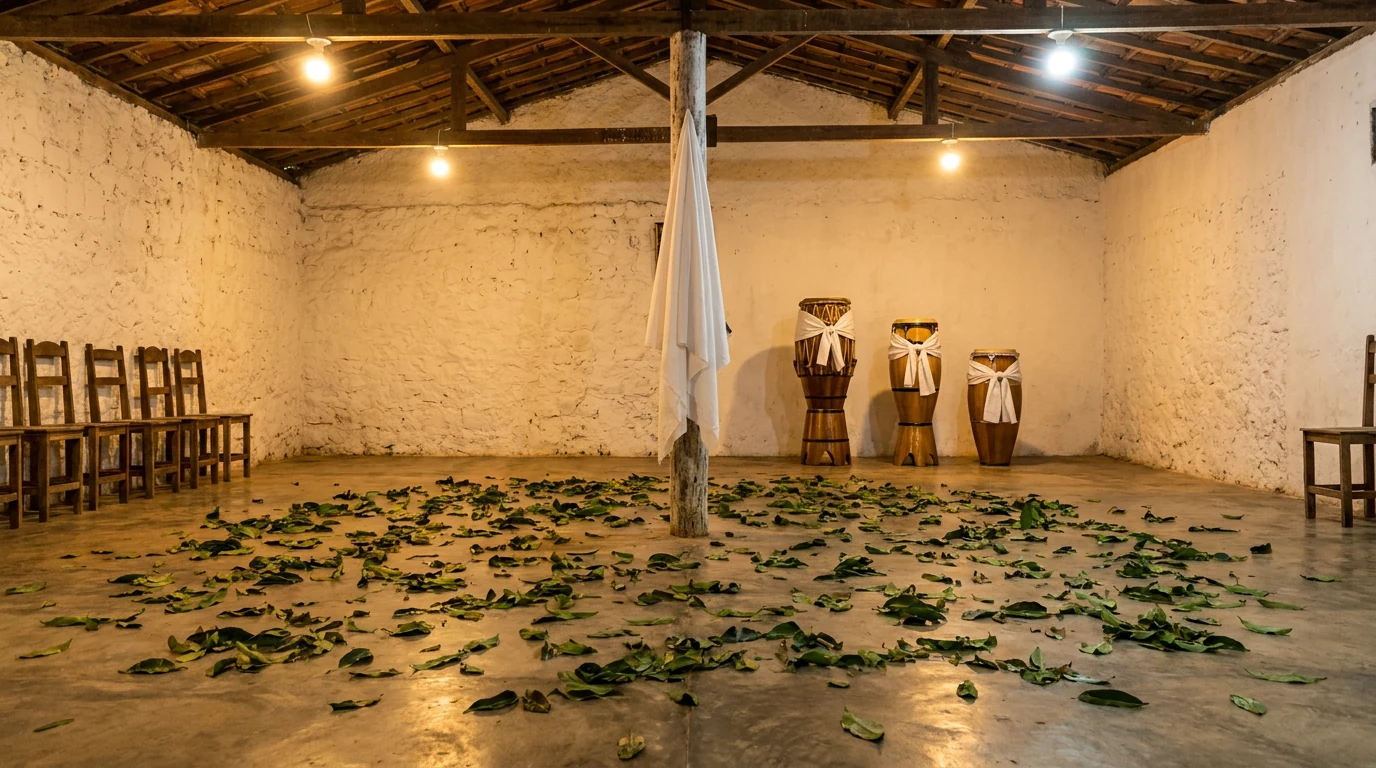
To dance the xirê in Candomblé ketu, the children of the house form a circle and spin counter-clockwise, following the order of the chants of each orixá. The body repeats gestures that tell the myths of each one. Those who teach the step are the elders of the house, whom the person observes and repeats.
How to dance the xirê
The xirê dance happens in two moments. In the first, the entire community dances consciously, in the circle, following the order of the xirê. In the second, those who enter a trance dance the chants of their own orixá.
In the circle, each filho de santo performs the general steps of each orixá. In the trance, the orixá dances their own history, with extra steps that researcher Naila Freitas calls "atos". Before and after the trance, all the filhos de santo dance to the sound of the atabaques.
The circle spins around the center of the barracão, where the ixé is located, the wooden column in which the foundations of the house are buried. What the xirê is as a rite, with the greetings, is in what is xirê.
There is no step count that applies to every house. The step follows the toque of the atabaque and is learned in the circle. In a ketu house in Goiânia, an abiã told that a filha de santo taught her the steps and what each one meant, and she "watched attentively and repeated". In a ketu terreiro in Sergipe, the children learned the same way: "Ogum dances like this".
How the festival begins and the order of the orixás
The filhos de santo enter the barracão in hierarchical order, to the sound of the entrance toque, which some houses call vamunha. At the entrance, one generally greets the door, the axé, and the pai or mãe de santo; in some houses, also the atabaques. The toques and who plays them are in atabaques of Candomblé.
In ketu houses like the one studied by Freitas, Exu (Eshu) is not played in the xirê. He has already been honored before, during the course of the festival day. In a ketu house in Uberlândia, from the lineage of the Casa de Oxumaré (Oshumare), everyone bows their heads to Ogum, who opens the ritual.
The order of the chants changes from house to house, especially in the middle. Two ketu sequences recorded:
- Lineage of the Casa de Oxumaré: Ogum, Oxóssi, Omolu (Omulu), Ossaim (Osanyin), Oxumaré, Nanã (Nana Buruku), Oxum, Obá, Ewá (Yewa), Oyá, Logunedé (Logun Ede), Ayrá, Iemanjá, Xangô (Shango) and Oxalá (Obatala).
- Bembé do Mercado, ketu and nagô: Ogum, Oxóssi, Ossaim, Oxumaré, Omolu, Iroko, Logunedé, Iansã (Oya), Obá, Ewá, Oxum, Nanã, Iemanjá, Xangô and Oxalá.
Oxalá closes the circle. In the nagô tradition of Recife, the babalorixá Albemar Araújo says that Oxalá closes and tells the orixás to turn toward the street door. Jeje and angola have their own rhythms. The differences between them are in candomblé nations.
Why does the circle turn counter-clockwise
The xirê circle turns counter-clockwise, and there is more than one explanation for this. The most cited is that of turning back in time. In a ketu house in Uberlândia, turning counter-clockwise is "as if the faithful went back in time, restoring contact with their Ancestors".
There is another reading recorded by IPHAN. Mãe Manuela, from Bembé do Mercado, in Santo Amaro (BA), links the direction to the sky and the Sun: the xirê "is danced in the direction of translation and meets the rotation of the Sun".
“The xirê is a conversation with the gods.”
Baba Geri, in the record of Bembé do Mercado at IPHAN
The direction is the same in both statements. The meaning that the house gives to it is explained by the pai or the mãe de santo.
What the body does for each orixá
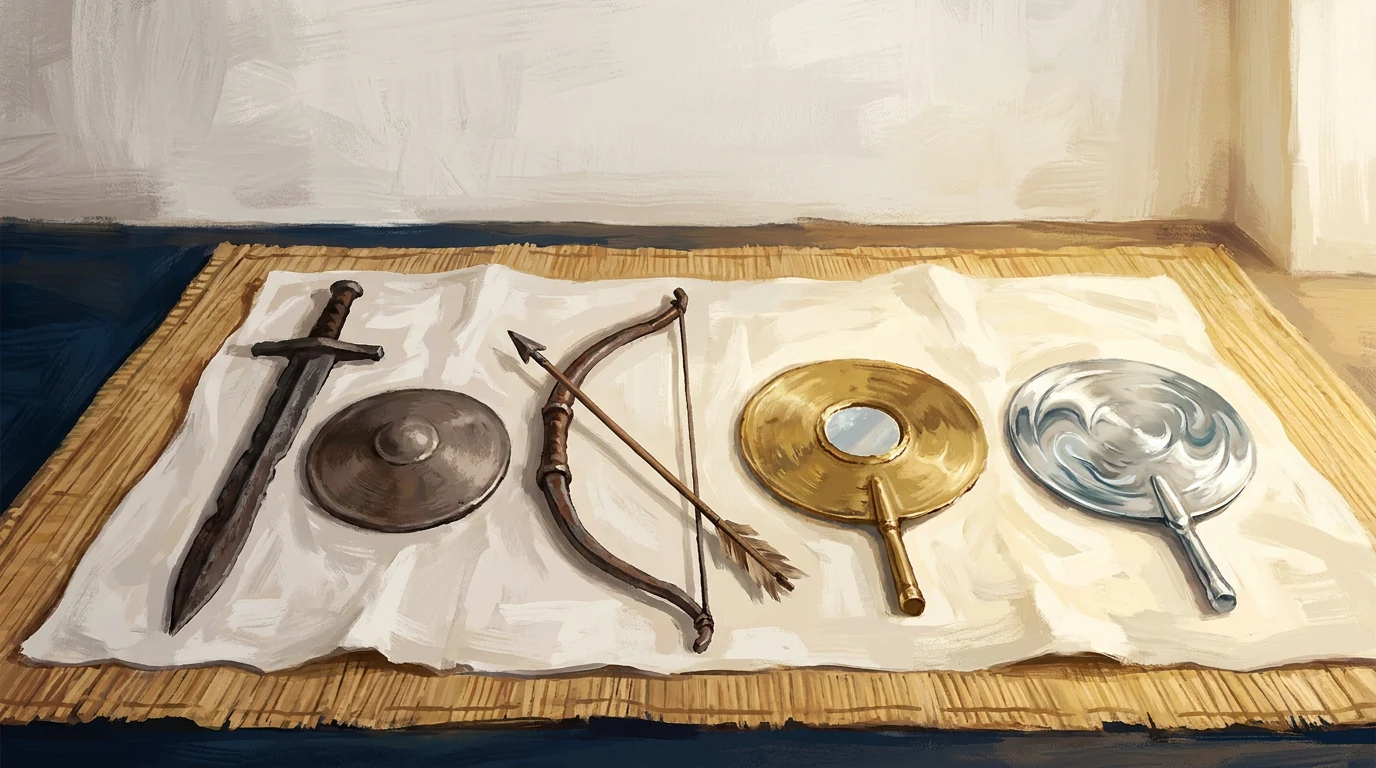
The gestures of the circle evoke the myths and qualities of each orixá. Source:
- Ogum cuts with the sword and prepares for war with the shield. The dance has harsh gestures, and the toque is more agitated.
- Oxóssi dances with the ofá, attentive to the hunt, "aiming and hitting his only arrow."
- Oxum dances like one bathing in the rivers and looking at themselves in the abebê, the mirror.
- Iemanjá holds the fan, and the iaôs imitate the waves, bending and raising the body.
- Oyá brings the wind and turns into a buffalo.
- Nanã, Oxumaré and Omolu, orixás of the earth, dance more bent toward the ground.
- Xangô has the toque of the alujá.
- Oxalá has a slow toque and dances "breaking the body, with slight flexion of the knees." In Recife, Oxaguiã dances with the sword, and Oxalufã comes bowed, leaning on the staff.
Trance is not a dance step. In the circle, the person performs the general steps that the house taught, and the rest is from the orixá.
Who dances, who plays, and who watches
The circle belongs to the children of the house, and each person's place follows the hierarchy, even when those on the outside do not notice. In general, the order goes from those with the most time of initiation to those who were initiated last. Each one has a role in the festival.
| Who | What is done at the party |
|---|---|
| Iaô, ebomi, ialorixá | dance the circle and can enter a trance |
| Abiã | participates in the party and has a place in the xirê line |
| Ekedi | does not enter a trance; accompanies and cares for the orixá |
| Ogã | does not enter a trance; ensures the order of the worship |
| Elders and guests | occupy the benches and chairs of honor |
The clothing follows the rank. In the daily life of the ketu terreiro, the clothing is white, the so-called roupa de ração, and in some moments the women wear the white pano da costa. The abiã receives a white bead necklace (fio de contas) and begins to wear white clothing. New initiates do not wear a bata. If your house requested roupa de ração or a white bead necklace (fio de contas) for the first party, the shop will check with you via WhatsApp.
During the party, the younger ones ask for the blessing from the elders. The correct gesture and speech are in how to ask for the blessing in candomblé. The positions of the house are in positions in candomblé.
Those from outside observe. If the house calls you to the circle, follow the person next to you; if in doubt, ask.
When the orixá arrives
Not every orixá comes. One can sing for an orixá, he may not come, and the circle continues to the next. In Bembé, after the sequence that praises from Exu to Oxalá, another sequence comes, "more or less about twenty songs," that calls the orixás.
When the orixá arrives, ogãs and ekedis ensure the order. The ekedi accompanies the orixá, wipes the sweat, dresses him, and dances beside him. Then he returns dressed with the clothes, the colors, the tools, and the ornaments, ready to dar rum. Rum is the name of the largest atabaque and also of the moment of the xirê dedicated to an orixá.
The orixá dances through the barracão and may embrace and greet those who are there. He communicates with gestures of embracing, touching, and even speaking, with those who dance and with those who watch. If he comes to you, receive him with respect and let the ekedi lead.
Frequently asked questions
Who can dance in the xirê circle?
The children of the house: iaôs, ebomis, and those who direct the terreiro, who can enter a trance. In ketu, the abiã, not yet initiated, also has a place in the xirê line. Each person's place follows the time of initiation. The visitor observes and only enters if the house calls.
Does every orixá come to every festival?
No. The trance does not happen in every chant: one can sing for an orixá, he may not come, and the circle passes to the next. In public street festivals, like the Mercado Bembé, there is no trance. What happens in each festival depends on the house and the orixá.
Can one learn the xirê dance from a video?
The xirê step is learned in the house, by watching and repeating the elders. Each house has its own way, and the order changes from one to another. The video shows the form, but those who teach the meaning of each gesture are those who dance beside you in the circle.
What to do when the orixá embraces you?
Receive with respect, without pulling and without prolonging. The orixá communicates by embracing, touching, and sometimes speaking with those in the barracão. The ekedi accompanies the orixá at all times, and she is the one who leads. Camera only with authorization from the house.
References
- IPHAN and UFRB: registration of the Bembé do Mercado, registration instruction, 2019
- Christiane Rocha Falcão: The age of the orixá, children, and ritual authority in Candomblé, Horizontes Antropológicos, 2021
- Raphael Felipe da Silva de Jesus: In the sway of the sea, the dance of Iemanjá, Em Sociedade, PUC Minas, 2022
- Naila Porcina de Souza Freitas: Steps for the Orixá, dance of the orixás, acts, and itans, TCC, UFG, 2021
- Fernando Cardoso Rezende Alves: Xirê, the ritual as performance, TCC, UFU, 2017
- José Roberto Lima Santos: The wardrobe of Candomblé, ABRACE, 2021
- Tatiana Maria Damasceno: Xirê, a corporal performance of restoration of vital energy, ABRACE
- Danielle Romani: Orixás, dance that enacts gestures of divinities, Revista Continente, 2012
- Adriano Azevedo: The Candomblé circle, an approach with Ancestry, Farol da Bahia, 2023