Gira de umbanda is the ritual session of the terreiro in which the chain of mediums sings the pontos, incorporates the spirit guides of a line, and attends the public, called assistance, with passe and consultation.
Duration: varies from house to house | Who can go: anyone, in the open gira | Clothing: light, preferably white | Cost: consultation in an open gira is not charged
Someone arriving from outside sees dance, clapping, and atabaque. Behind that, there is an order that repeats from terreiro to terreiro: opening, calling of the line, attendance, and closing.
What is gira in umbanda
In umbanda, gira is the main public ritual work of the terreiro: the meeting in which spirits of the same line, such as caboclos, pretos-velhos, or exus, manifest through spirit incorporation in the mediums to give passe and advice to those who seek it. It has a time to open, a defined sequence, and a time to close.
The word gira comes from quimbundo njila, a Bantu language, and carries the idea of path. It is the rite that gives body to the charity of umbanda: the attendance to the public happens within it.
The Wikipedia entry summarizes the most used classification: the gira can be festive, of work, or of training, and white is the most used color by the chain, with some houses admitting red and black in the works of the left. The word also names the development sessions, in which the spirits "giram" to facilitate the first spirit incorporation of new mediums.
Each house follows the foundation of its root, so no gira is identical to another. But the backbone of the ritual repeats in terreiros all over Brazil, and it is that we will walk through now.
How a gira works: the step by step
A gira has a clear beginning, middle, and end. The sequence below is the most common, with small variations from house to house.
- Opening and prayers: the leader opens the ritual work with prayers and the greeting to Oxalá and the orixás (orishas) of the house.
- Defumação: the environment and the people are smoke cleansed with herbs to clear dense energies before the work. It is the same principle as a smoke cleansing for cleaning.
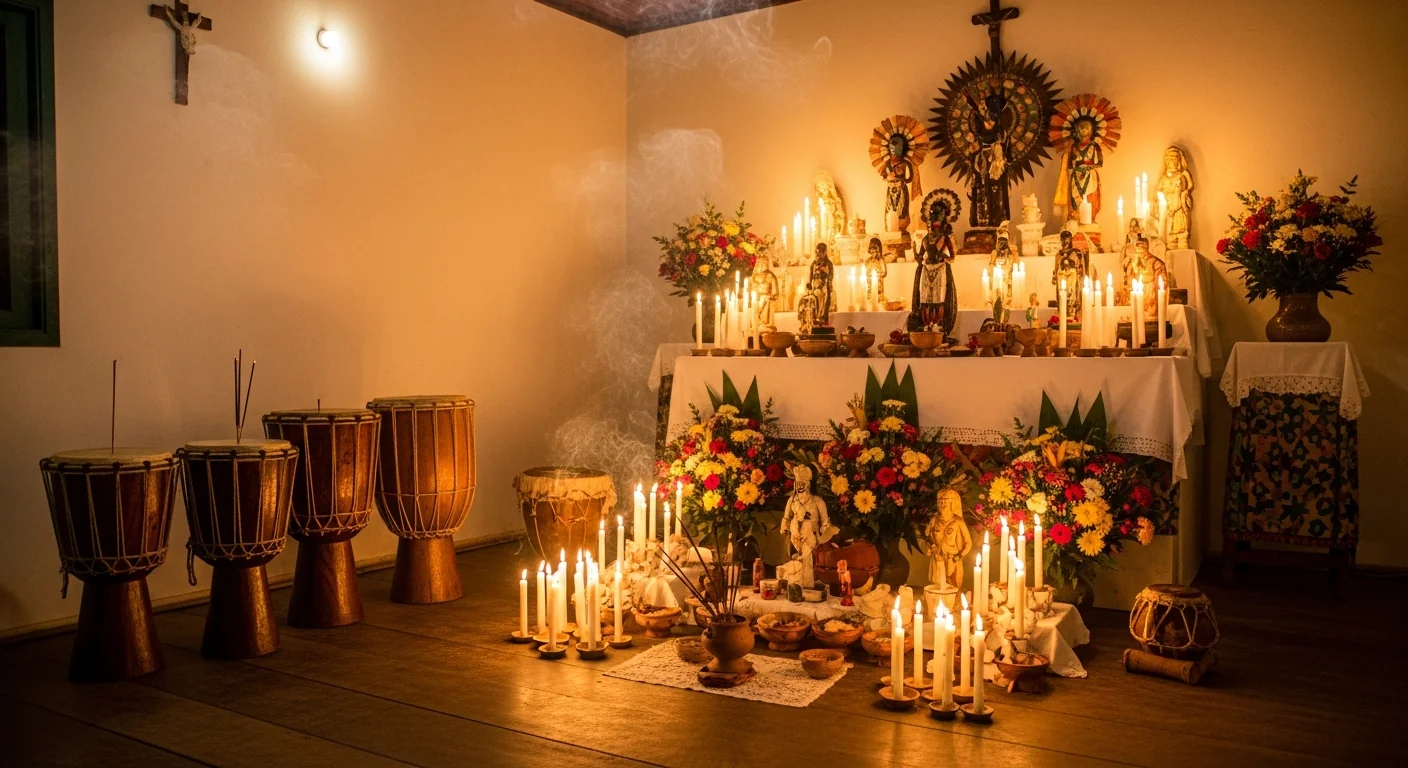
- Firmeza of the pontos (sacred chants): candles are lit and the congá, the house altar, where the statues and assentamentos are kept, is settled.
- Curimba and sung pontos: the curimba, the group of atabaque players, leads the sung pontos (sacred songs). The atabaque is a sacred instrument: it is what marks the rhythm and calls each line.
- Incorporação: to the sound of the chants (pontos), the spirits descend and incorporate into the prepared mediums.
- Attendance: the spirits attend to the assistance, giving passes, advice, and ritual work directions.
- Sacred songs (pontos) of ascent: at the end, the pontos of ascent are sung, and the spirits say goodbye and disincorporate.
The gira only happens because the chain exists. Mediums, cambonos, and curimba form a single spiritual body: each one in their post, no one alone. It is this union that sustains the work from beginning to end.
The cambono, it is worth saying, is the one who serves the incorporated spirit: lights the candle, lights the preto-velho cigar, organizes the line, translates what the assistance does not understand. Without a cambono, the spirit works without support.
Types of gira
Not every gira has the same purpose, and the names change from house to house. In general, the ritual works are divided into three large types.
- Work gira (or service gira): the best known. Assistance is received, and the spirits give passes, consultations, and referrals. It is the gira of charity par excellence.
- Festive gira: a celebration in honor of an orixá or a line, with a date on the house calendar. It has more singing, more joy, and offerings.
- Development gira: aimed at mediums in training, who learn to deal with spirit incorporation and to set their spirits. Mediumship is educated in these giras.
There is also an important division regarding the audience:
- Open gira: receives assistance, anyone can enter and be served.
- Closed gira: only the house chain participates, without an audience, for study, development, or internal ritual work.
The giras by work line
Each gira usually calls a specific line of spirits. Knowing the seven lines of Umbanda helps to understand which falange descends in each ritual work.
- Pretos-velhos gira: the pretos-velhos bring wisdom, patience, and counsel. It is the gira of listening and welcoming.
- Caboclos gira: the caboclos, linked to Oxóssi, bring strength, healing, and the energy of the forest. Firm and joyful giras.
- Ogum (Ogun) gira: linked to Ogum, it is the gira of opening paths, cutting demands, and protecting against what blocks life.
- Baianos, boiadeiros, and marinheiros gira: popular, direct, and hardworking spirits. The baianos and the boiadeiros resolve with frankness.
- Gira de erês: the erês, the child spirits, bring lightness, healing, and the energy of joy.
- Gira de esquerda: the Exus and the Pombagiras work the heaviest demands, protection, and the undoing of ritual work. A serious line misunderstood by prejudice, but of charity as legitimate as the others.
- Other common giras: Wikipedia also lists the giras of Romani spirits, of malandros, of marinheiros, and the healing gira, focused on spiritual treatment.
Each terreiro defines which giras it performs and with what frequency, always according to its foundation and the guidance of the leader.
First gira: what to expect as a visitor
Those who go to the first gira enter as assistência: they watch the ritual, receive the spiritual pass and, if they wish, talk with a spirit. You do not need to be an Umbandista or know the sacred songs (pontos). The etiquette changes from house to house, but the points below appear in the guidelines of terreiros and of those who study the religion.
| Doubt | What usually counts |
|---|---|
| What to wear | White or light clothing, suitable for a religious place. Avoid black and red, colors that are reserved for the giras of Exu (Eshu) and Pombagira |
| Upon arrival | Look for someone from the house, say it is your first time and ask where to sit. In many houses, you receive a ticket number for the consultation |
| Order of service | First the spiritual pass, in line; then the individual consultation, called by ticket number |
| During the consultation | Wait for the spirit or the cambono to start the conversation. If you have doubts about what they said, ask the cambono |
| Photo and video | Only with prior authorization. There are houses that forbid it entirely |
| Pay | Consultations are not charged. The contribution box is voluntary |
| Resguardo | Abstaining from alcohol, meat, and sex before the gira is a precept for mediums. For those who only watch, it is a recommendation, not a condition |
Sidnei Nogueira, in text for CartaCapital, advises arriving by looking for an ogã or an equede, introducing yourself as a visitor for the first time and, if possible, going by the recommendation of someone from the house, who already provides information about clothing, time, and behavior.
The Pai Maneco terreiro, in Curitiba, publishes guidelines for visitors: greet the tronqueira at the entrance, wait for the initiative of the spirit or the cambono, do not "test" the spirit by asking what they have to say and do not consult two spirits in the same gira. The order of the spiritual pass in a line and then the consultation appears in the field description by Nícolas Mastrocola Garcia, from UFSC, about caboclo giras in Florianópolis. In the terreiros he describes, the open gira is the house's free activity, and the bills are paid with the mediums' monthly fees and other contributions.
Regarding the resguardo, the same terreiro notes that the precepts of diet before the gira vary and that there is no consensus among the houses. What to bring, how to recognize a serious house, and what to ask during the consultation are in the guide for first time in Umbanda.
The open gira welcomes people of any faith or no faith. Respect for the space and attention to what the cambonos ask resolve almost all of the etiquette.
Frequently asked questions
What does gira mean in Umbanda?
Gira comes from the Kimbundu njila language, a Bantu language, and means path. In Umbanda, it is the ritual meeting where spirits from a line descend through spirit incorporation into the mediums to provide charity. It is the main public ritual work of the terreiro, with a well-defined opening, service, and closing.
What are the types of gira?
There are three main types: work gira (assistance service), festive gira (celebration of an orixá or line), and development gira (training of mediums). Regarding the public, the gira can be open, which receives anyone, or closed, only for the house's chain.
What happens in an Umbanda gira?
The house opens with prayers and smoke cleansing, the curimba sings the points of the day's line, and the spirits incorporate into the mediums. Next comes the service: spiritual pass in line and individual consultation, called by ticket number in many houses. At the end, the rising points close the ritual work and the spirits say goodbye.
What to wear to go to an Umbanda gira?
The ideal is white or light clothing, discreet and comfortable, suitable for a religious place. Avoid black and red, which many houses reserve for the giras of Exu and Pombagira, as well as low-cut and short clothes. If in doubt, ask the house you are going to visit beforehand.
Can I take photos or film the gira?
Only with prior authorization from the house. Photos and videos are not welcome without consultation, and there are terreiros that prohibit them entirely, because the hall is a sacred space and those who are incorporated or being served did not choose to appear. Ask a cambono or the leader before taking out your cell phone.
Do I need to be an Umbanda practitioner to participate in a gira?
No. The open gira welcomes people of any religion or no religion. You can watch, receive a spiritual pass, and talk with the spirits without any commitment. Just arrive with respect to the space and follow the instructions of the cambonos and the house director.
Where to find items for your gira
At Joia Mística Laroyê, you find what the chain and the assistance need to set the ritual work:
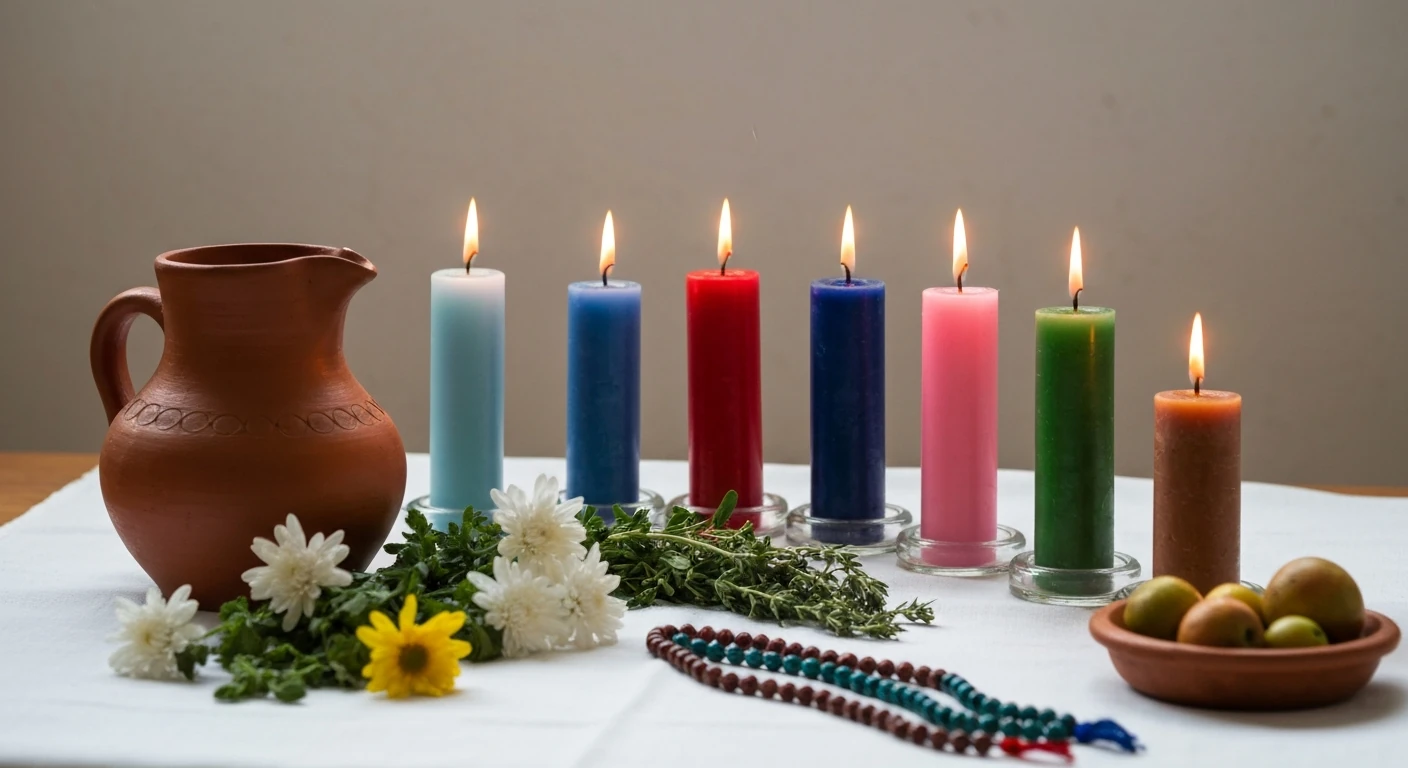
- Candles in the colors of the lines: white, and in the colors of each orixá to set the congá
- Herbs and incense: for the opening smoke cleansing (defumação) of the gira
- Bead necklaces and bead strands: in the colors of the spirits and the orixás
- Clothes and white cloths: for the chain and for those who visit the terreiro
- Statues and congá items: to set up and set the house altar
Visit our physical store in Extrema, Minas Gerais or receive at home with delivery to all of Brazil. To know what your house needs, talk to us via WhatsApp.
References
- Wikipedia: entry about the gira and the Quimbundo origin of the word
- Sidnei Nogueira: how to visit a terreiro for the first time, CartaCapital, 2023
- Terreiro de Umbanda Pai Maneco: guidelines for visitors, with the ticket number and the etiquette of the consultation
- Terreiro de Umbanda Pai Maneco: food during the precept, no consensus between the houses
- Nícolas Mastrocola Garcia: the field description of giras in Florianópolis, Social Anthropology, UFSC, 2023