



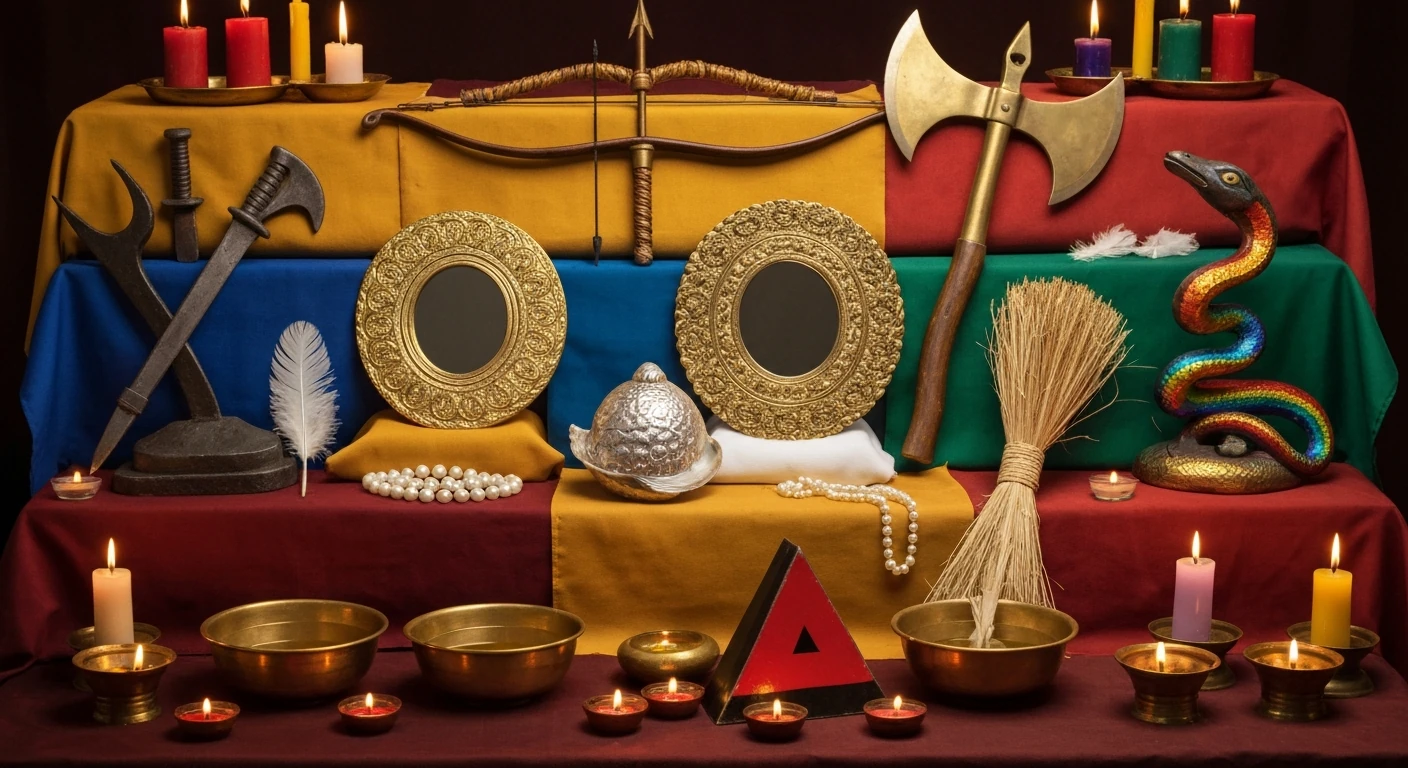
The Orixás are the deities worshipped in Afro-Brazilian religions, especially in Umbanda and Candomblé. Originating from the Yoruba culture of the region of the current West African coast, in Nigeria and Benin, the Orixás were brought to Brazil by enslaved peoples and took root here, creating a unique and deeply Brazilian spirituality.
More than "gods" in the Western sense, the Orixás are personified forces of nature. Each one governs an element, an energy, or an aspect of human life. They are not distant from their children: they are present, loving, and intervene directly in daily life.
How the Orixás arrived in Brazil
With the slave trade, between the 16th and 19th centuries, thousands of Africans were torn from their homes and brought to Brazil. Along with them came their knowledge, their languages, and their faith. To survive colonial oppression, the African Orixás were often associated with Catholic saints: this fusion gave rise to the religious syncretism that still exists today in some traditions.
But the faith resisted. And the Orixás remain alive in the terreiros, in the giras, in the offerings, and in the axé that pulses in every filho de santo.
The main Orixás and their domains
Exu (Eshu), the lord of the crossroads
Exu is the messenger between worlds, the guardian of the paths and the crossroads. Without him, no spiritual ritual work begins: he opens or closes the paths. Contrary to what prejudice claims, Exu is not the demon: he is a powerful Orixá, of intense energy, who acts with justice.
Colors: Black and red | Day: Monday | Element: Earth and crossroads
Ogum, the warrior of the forests
Orixá of war, iron, and work, Ogum opens paths with his sword. He is the protector of workers, travelers, and everyone who needs strength to overcome obstacles.
Colors: Blue and green (or just green in Umbanda) | Day: Tuesday | Element: Iron and forest
Oxóssi The hunter
Lord of the forests and hunting, Oxóssi brings abundance and prosperity. He is the Orixá of plenty, knowledge, and connection with nature.
Colors: Green and yellow | Day: Thursday | Element: Forests and hunting
Xangô The king of the quarries
Orixá of justice, thunder, and fire. Xangô is majestic, powerful, and just. He punishes liars and protects those who seek truth.
Colors: Red and white | Day: Wednesday | Element: Fire and stones
Iansã The queen of the winds
Iansã (or Oyá) is the Orixá of the winds, storms, and lightning. A warrior and passionate, she is the only one who has power over the spirits of the dead (éguns). She represents transformation and freedom.
Colors: Red and brown | Day: Wednesday | Element: Winds and storms
Oxum The queen of the fresh waters
Orixá of love, beauty, fertility, and fresh waters. Oxum is seductive, maternal, and a protector of pregnant women and children. She governs gold and wealth.
Colors: Yellow and gold | Day: Saturday | Element: Rivers and waterfalls
Iemanjá The mother of the waters
Queen of the sea, Iemanjá is the great mother of water, protector of fishermen and of all children. She represents universal motherhood, welcoming, and deep emotion.
Colors: Light blue and white | Day: Saturday | Element: Sea
Oxalá The father of creation
The oldest of the Orixás, Oxalá is the lord of creation, peace, and wisdom. He represents purity and elevated spirituality. In some myths, he was the one who created human beings.
Colors: White | Day: Friday | Element: Air and white
How to connect with the Orixás
Each Orixá has their pontos riscados, chants, preferred offerings, and sacred dates. Devotion is personal and respectful; it is not about magic, but about spiritual relationship.
Some forms of connection include:
- Ritual baths with herbs corresponding to the Orixá
- Candles in the colors of the Orixá, lit with intention and prayer
- Offerings in sacred places and days
- Participation in giras and rituals in terreiros
At Joia Mística Laroyê, you find statues, bead necklaces, candles, herbs, and all the items necessary to honor each Orixá with respect and devotion.
Difference between Orixás in Umbanda and Candomblé
Although they share the same African root, Umbanda and Candomblé worship the Orixás in distinct ways.
In Candomblé, the Orixás are preserved more faithfully to the yorùbá tradition, with rituals in nagô (yorùbá language), long initiations, and a rigorous ritual hierarchy.
In Umbanda, the Orixás manifest through spirits (Caboclos, Pretos-Velhos, Exus, Pombagiras) and the ritual is more accessible, with chants in Portuguese and strong Kardecist and Catholic influence.
Want to know more? Read our article about the difference between Umbanda and Candomblé.
Conclusion
The Orixás are not just mythological figures: they are living energies that walk with their children. Getting to know them with respect and openness is the first step for a deep and transformative spiritual journey.
If you want to start or deepen your practice, Joia Mística Laroyê is in Extrema-MG and can be reached via WhatsApp, with religious items for all nations and traditions.
Frequently asked questions
What are the orixás, after all?
They are the deities of the Yoruba people, worshipped in Brazil in Umbanda and Candomblé. Each one is responsible for a force of nature and a field of life: iron and the path, the forest, thunder, wind, the river, the sea, creation. They came with the enslaved Africans and took Brazilian root.
How many orixás are there?
The count varies according to tradition, and they speak of hundreds in Africa. In Brazil, the worship was organized around a smaller group, which is what appears in most terreiros: Exu, Ogum, Oxóssi, Xangô, Iansã, Oxum, Iemanjá, Obaluaê, Nanã (Nana Buruku), Oxumaré (Oshumare), Logunedé (Logun Ede) and Oxalá, with variations from house to house and from nation to nation.
Does everyone have a head orixá?
In the Candomblé tradition, yes, and the cowrie-shell divination determines which one is, performed by someone who has the foundation for it. Internet tests, including ours, are an entry point and a serious joke: they serve for you to know the archetypes, not to replace the divination in the house.
Is an orixá a Catholic saint?
No, and the correspondence that exists has a history. During colonial repression, Africans associated their orixás with saints to continue worshipping without being punished. The correspondence survived as syncretism, but orixá and saint are figures of different traditions, with their own worship, history, and foundation.
References
- Reginaldo Prandi: Mythology of the orixás, USP, the collection of itans that sustains much of what is known about each orixá in Brazil
- Pierre Verger Foundation: the work of Pierre Fatumbi Verger on the orixás in Africa and the New World
