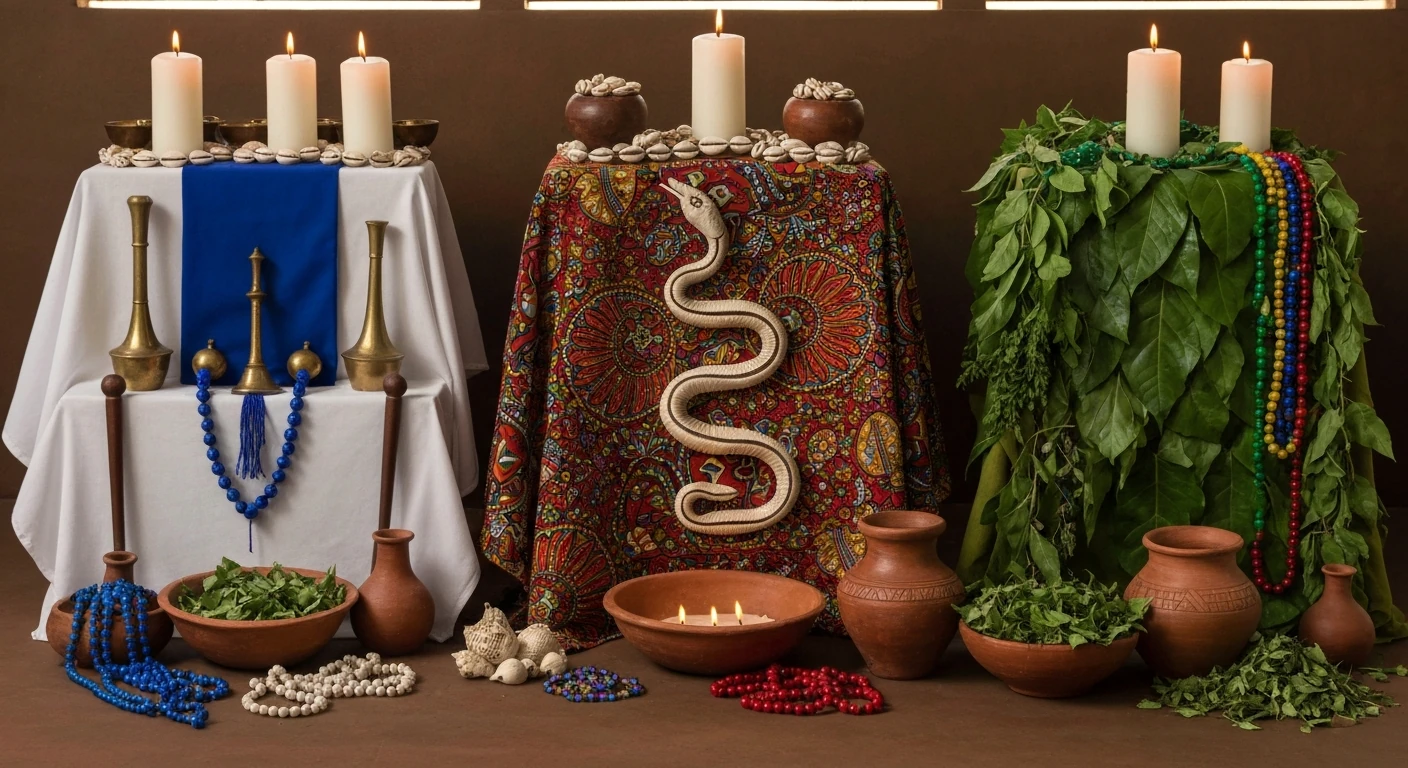
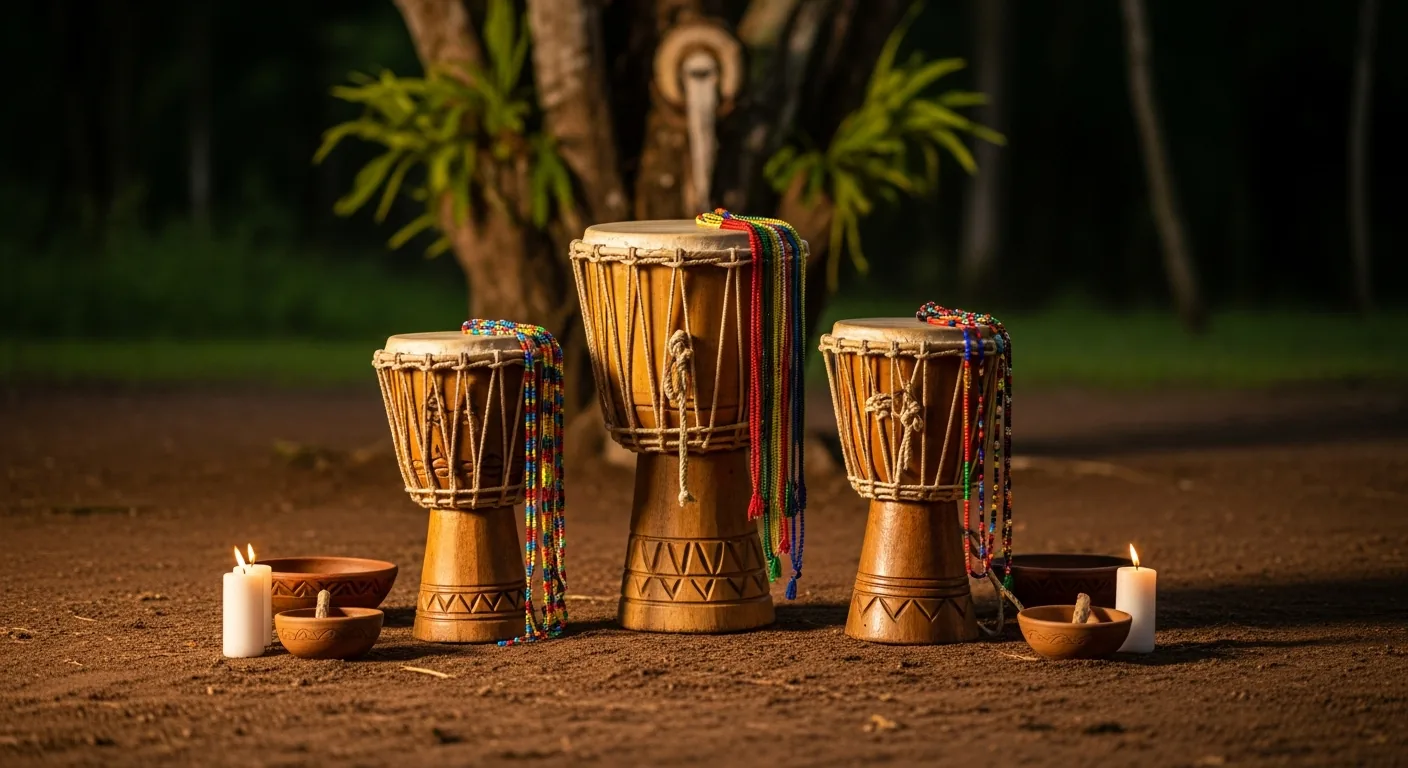
A nkise (also written as nkisi and Portuguese-ized as inquice) is the divinity worshipped in Candomblé de Angola, the Bantu nation. In this tradition, it occupies the same place that the orixá occupies in Ketu and the vodun in Jeje: it is the sacred force that the community greets, feeds, and moves in the roça. But the word carries a deeper history, and it is in it that the true meaning of the term resides.
This guide explains what an nkise is based on the origin of the word: what it meant in Central Africa, how it crossed the Atlantic, and why, in Brazil, it began to name the divinity itself. It is explanatory and respectful content that deals with what it is and the why, not the how to do it, because the foundation belongs to the terreiro.
What is an nkise in one sentence
In Candomblé de Angola, an nkise is a divinity: a force of nature and ancestry worshipped in the roça, under the supreme being Nzambi. Each nkise has its domain, its chants (the zuelas), its atabaque beats, and its foundations.
The difference in relation to Ketu is not just one of name. While the Yoruba orixá is frequently understood as a divinized ancestor who intercedes with the forces of nature, in the Bantu worldview, the nkise tends to be treated as the nature force itself. In an image that circulates among scholars and practitioners: the nkise is not the spirit that has power over the rain, it is the rain. This is a recurring reading, and it helps to feel the difference in perspective, but the houses vary in the way they explain it.
To situate the nkisi within the larger framework of Candomblé branches, it is worth reading the nations of Candomblé: Ketu, Jeje and Angola and what is Candomblé before.
Nkise, nkisi, inquice: the three spellings and the plural minkisi
The same word appears written in many ways, and this is absolutely normal. You will see nkise, nkisi, inquice, and even variants like enquice, equice and iquice. All say the same thing and are pronounced, in Portuguese, as "inquice".
The reason for the variety is historical: it is a word from the Bantu language (kimbundu and kikongo) that survived in the orality of the terreiros and was being written by ear over centuries. There is no "error" between one spelling and another; there is the form that each root and each house adopted. The important thing is to recognize that it refers to the same concept.
Singular: nkise / nkisi / inquice | Bantu plural: minkisi (also mikisi) | Portuguese plural: os inquices | Origin: kimbundu and kikongo
It is worth noting the correct plural: in Bantu, the plural of nkisi is minkisi, as recorded in the entry about the inquice. In current Portuguese, one also says "os inquices" or "os nkises", forms already adapted to Portuguese. This coexistence of spellings is part of the word's own history, which is the history of the resistance of these languages within Brazil. The same happens with the greetings of Candomblé de Angola, written in different ways depending on the terreiro.
In Africa: the nkisi as a receptacle of force
Here is the heart of the concept. In the worldview of the bakongo people and other Bantu peoples of Central Africa, nkisi means, above all, receptacle: a container that holds and anchors a spiritual force. The root of the word refers to the idea of a spirit from the world of the dead that accepted to be brought to the visible world and inhabit a material support.
This support could be a prepared object: a pot, a bag, a bundle of elements, or a sculpture. The best known are the figures of power called nkisi nkondi, wooden sculptures in which nails and blades are driven for every agreement, oath, or prayer request made before them. They were not decorations: they were receptacles activated by a ritual specialist, the nganga, to heal, protect, seal pacts, or deliver justice. The Museum of the Portuguese Language describes well this trajectory of the nkisi sculpture, from spiritual force to spiritual spirit.
A linguistic caution: for centuries, the European colonial gaze called these objects "fetishes." The term is inadequate and carries prejudice. As researchers like Wyatt MacGaffey show, nkisi has no exact translation in English or Portuguese, and reducing it to "fetish" erases its real meaning, which is to mediate relations between the world of the living, the world of the dead, and the sacred.
Keeping this in mind is essential to understand what came next: the word nkisi is born designating the place where a sacred force settles and acts. It is a concept of containment, of receptacle. And it is precisely this idea that will be transformed on the other side of the Atlantic.
In Brazil: when the receptacle became a divinity
Brought by the diaspora of slavery, the Bantu peoples reconstructed their cults on Brazilian soil, in the houses of Candomblé de Angola. In this crossing, the word nkisi underwent a re-signification: what in Africa primarily named the object-receptacle of a force came to name also (and mainly) the divinity itself being worshipped in Brazil.
It is to this displacement that academic literature calls the re-signification of the Bantu worldview in Candomblé. The Brazilian nkise is a spirit that, in general, never had a life on earth: it is, itself, the element of nature, the force that manifests in lightning, in water, in the forest, in the earth, in healing. The receptacle did not disappear from the concept; it became internalized. The nkise continues to be a force that settles and inhabits, linked to ancestry and worshipped under Nzambi, the supreme being and creator of the Bantu pantheon.
Supreme being: Nzambi (Nzambi Mpungu) | Divinities: minkisi / inquices | Liturgical languages: kimbundu and kikongo | Axis of worship: forces of nature and ancestry
That is why Candomblé de Angola is so marked by the connection with nature, with herbs, and with the worship of ancestors. The nkise is the living bridge between the community and these forces, and it is by chanting, in the Bantu language, that it is called. This sung repertoire has its own name: they are the zuelas, the chants of Candomblé de Angola.
Inquice and orixá: correspondence, not translation
It is common to find tables that "translate" each inquice into an orixá: this nkise "is" Ogum (Ogun), that one "is" Iansã (Oya), and so on. These correspondences exist, they are useful for those who are arriving and help to situate the person coming from Ketu or from Umbanda. But they have a limit that needs to be clear.
The correspondence is historical and didactic, never a theological translation. Inquice and orixá are not the same deity with two names: they are figures from distinct cosmologies, each with its own language, history, and foundations. The equivalence itself varies from house to house. Saying that an nkise "is" an orixá is an approximation to facilitate understanding, not an equality of essence.
Treating the nkise as "orixá with another name" erases the autonomy of the Bantu matrix, as if it were just a version of the Yoruba tradition. It is not. The Candomblé de Angola has its own worldview, language, and liturgy. Those who wish to see the most widespread equivalences, inquice by inquice, can find the complete table in our guide about the zuelas of Candomblé de Angola. Here, what matters is the concept: respect for two traditions, not the fusion of one into the other.
Some inquices, by way of example
To give concreteness to the concept, it is worth mentioning some nkises and their domains, remembering that names, spellings, and attributions vary between houses:
- Aluvaiá (also Bombojira): the nkise that opens the paths and moves communication, the first to be greeted.
- Nkosi: nkise linked to war, to iron, and to dirt roads.
- Dandalunda: nkise of waters, fertility, and beauty, affectionately called Mãe Dandá in many houses.
- Kavungo: nkise linked to the earth, skin diseases, healing, and the mystery of life and death.
There also appear Nzazi (of lightning and thunder), Matamba (of winds and spirits) and Lemba (of creation and peace), among many others. Each has its own chants, beats, and foundations, knowledge that belongs to the terreiro and is transmitted through the experience of the house.
What actually distinguishes one nkise from another is in the fundamentals, initiatic knowledge reserved for those who are of the house. No public text reveals these secrets, and it is prudent to be wary of those who promise to teach fundamentals over the internet. The final word is always that of your zelador or zeladora de santo.
Frequently asked questions
What is a nkise (nkisi/inquice)?
It is the divinity worshipped in the Candomblé de Angola, the nation of Bantu origin. The word comes from Kimbundu and Kikongo, where nkisi means "receptacle" of a sacred force. In Brazil, it came to name the force of nature and ancestry itself, worshipped under the supreme being Nzambi.
What is the difference between orixá and inquice?
They are deities from different cosmologies. The orixá belongs to the Yoruba tradition (Ketu nation) and is usually understood as a divinized ancestor; the inquice belongs to the Bantu matrix (Angola nation) and tends to be treated as the force of nature itself. The correspondence between them is didactic, never a translation of essence.
What does the word nkisi mean?
In the Bantu origin, nkisi designates a receptacle: the object or material support in which a spiritual force settles and acts, as in the power sculptures nkisi nkondi of Central Africa. From this sense of containment derived, in Brazil, the use of the word to name the divinity itself.
Who is Nzambi in the Candomblé de Angola?
Nzambi, also called Nzambi Mpungu, is the supreme being and creator of the Bantu pantheon. He is above the minkisi (inquices), which are the intermediate deities linked to the forces of nature and ancestry, closer to the daily life of the community.
Is inquice the same thing as orixá with another name?
No. Inquice and orixá belong to distinct traditions, languages, and cosmologies. There are historical correspondences between them, useful for those who are just arriving, but treating them as synonyms erases the autonomy of the banto matrix, which has its own worship and foundation.
Where to find items for your worship
At Joia Mística Laroyê, you find items that serve practitioners of Candomblé de Angola and the other nations:
- Bead necklaces and guias: in the colors of the deities
- Ritual candles: in various colors and purposes
- Herbs and sacred leaves: for baths, fumigations, and offerings, so central to the banto matrix
- Statues and pieces of devotion: for altar and assentamento
- Books on Candomblé and Afro-Brazilian traditions: to deepen your studies
Visit our physical store in Extrema, Minas Gerais or talk to us via WhatsApp and we ship all over Brazil. Our guidance is always to respect the foundations of your home and your terreiro.
References
- Wikipedia: entry about the inquice, with the record of the plural minkisi
- Museum of the Portuguese Language: the knowledge of nkisi sculpture, from spiritual force to spiritual entity