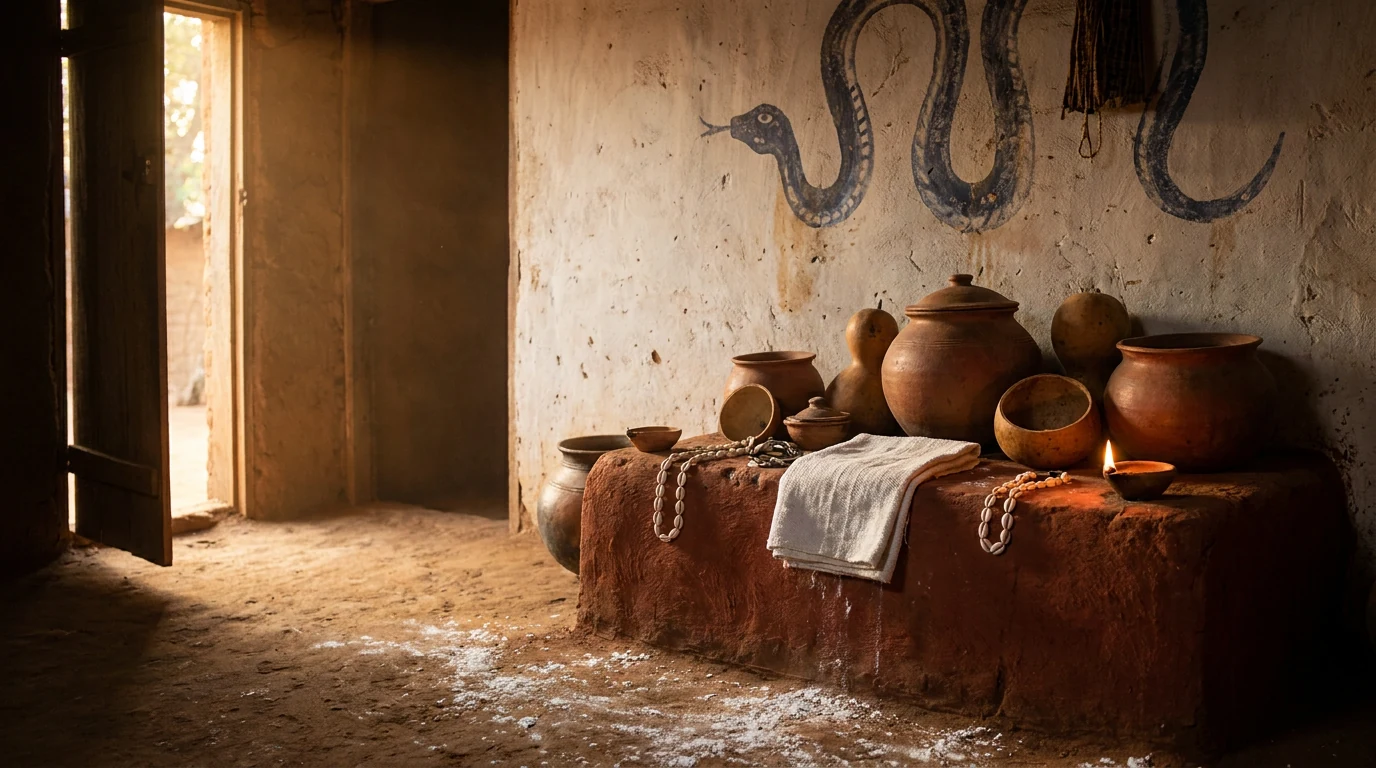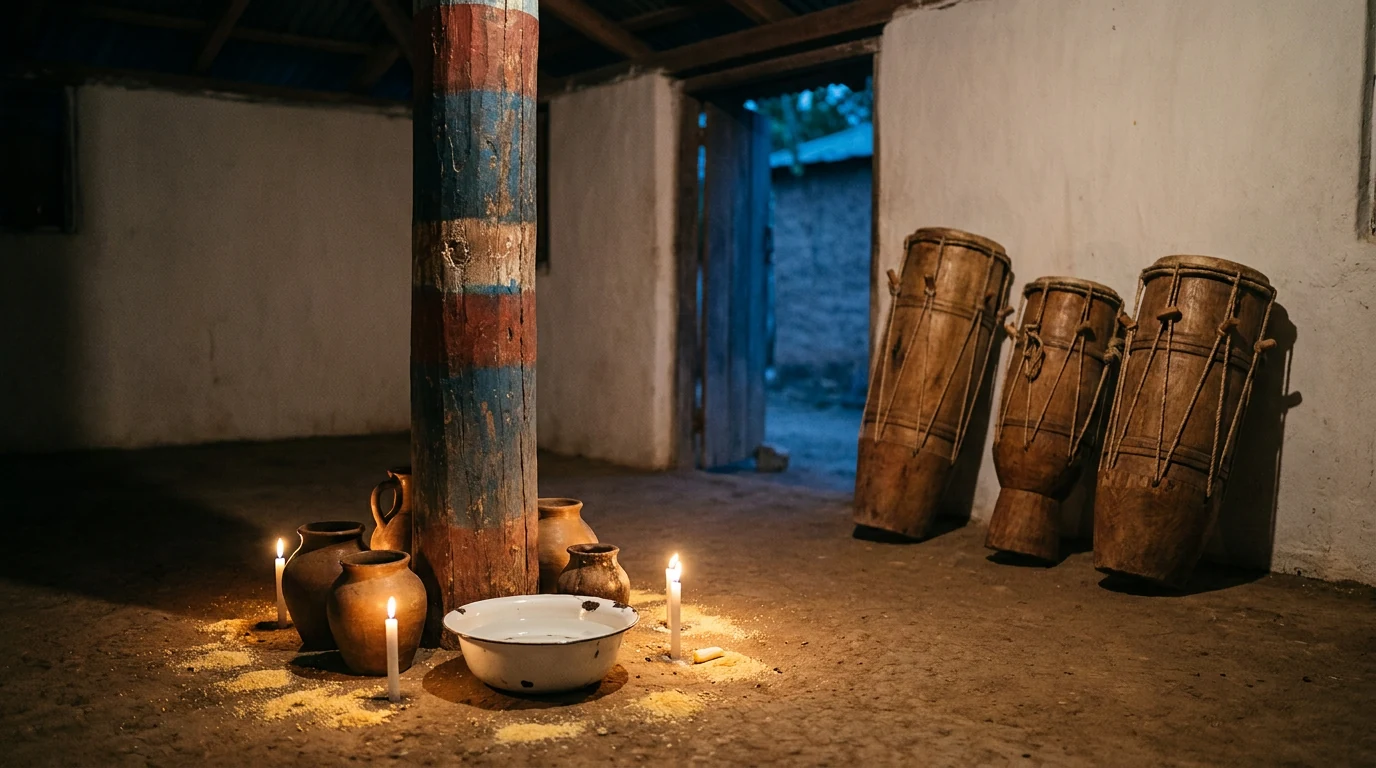
The voduns are the deities of the jeje nation, of the Fon and Ewe peoples of ancient Dahomey. The sociologist Reginaldo Prandi describes the voduns as forces of nature and divinized human ancestors. Those from a house of mina live with them as those from ketu live with the orixás.
Who are the voduns
These are the deities of the religion explained in what is Vodun, and they arrived here with the Jeje Africans. Around 1900, the doctor and researcher Nina Rodrigues already recorded that vodun is the Jeje word for deity, a synonym for the Nagô term orixá.
The supreme being to whom the voduns are subordinate appears under the name Avievodum, in the position that Olorum (Olodumare) holds for the Yoruba. The name varies according to the house and the source. Part of the bibliography records Mawu in this place.
In Bahia, the so-called kings of the Jeje nation are Bessém, of the Dan family, Sogbo, of the Hevioso family, and Azonzu, of the Sakpata family. Nanã (Nana Buruku) is the oldest female vodun and Loko is the vodun of the gameleira.
The vodun families of Maranhão
In the Casa das Minas, in São Luís, the voduns are organized into four families:
- Davice, the royal family of Abomé: Naé represents peace, Dadarrô the government, Sepazim is the empress, Doçu is a poet and player, Bedigá is the lawyer, and Zomadonu is the owner of the house
- Quevioçô, of the waters and the stars: Badé protects against lightning, Loco calms the storms, Liçá represents the sun, Averequete is the guiding star, Abé is the mermaid, Nanã represents the swamps
- Dambirá, of the earth: voduns that fight diseases and heal with roots and medicines, with Acóssi Sapatá at the head of the lineage
- Savaluno, which is the guest family, of voduns who are not Jeje and were welcomed by the Davice family
Some sources only count the first three, because the fourth is for those welcomed. It is not a contradiction, it is the house arrangement.
Vodum and orixá: relatives, not the same thing
The correspondence between the two pantheons is ancient. Sources treat it as an approximation. Nina Rodrigues listed Khêbiosô near Xangô (Shango), Legba near Elegbá, and Loko near Iroko. Prandi summarizes that, in most cases, there is some correspondence between voduns and orixás.
What the tradition does is approximate, not equate. Vodum, orixá, and inquice come from different peoples, with their own language, toque, and fundamento, and the comparison between the three matrices is in the nações do candomblé.
With the Catholic saint, the relationship is one of subordination, not identity: in Tambor de Mina, it is said that the vodum worships the saint. Averequete worships Saint Benedict, and Sobô is called alongside Saint Barbara, like Iansã (Oya).
What changes on the floor of the barracão
Here is what separates a casa de mina from a casa de ketu for those who watch:
- The manifestation: the vodum does not give the ilá (cry) and does not shout. Dances in a group, almost without individual prominence, speaks and leads chants
- The clothing: in the mina tradition, the vodum usually ties a towel, around the waist if female, on the torso if male. On a day of great celebration, they may dance in full ceremonial attire
- The age in the clothing: a new vodum wears the towel around the waist; an older vodum, tied below the shoulders
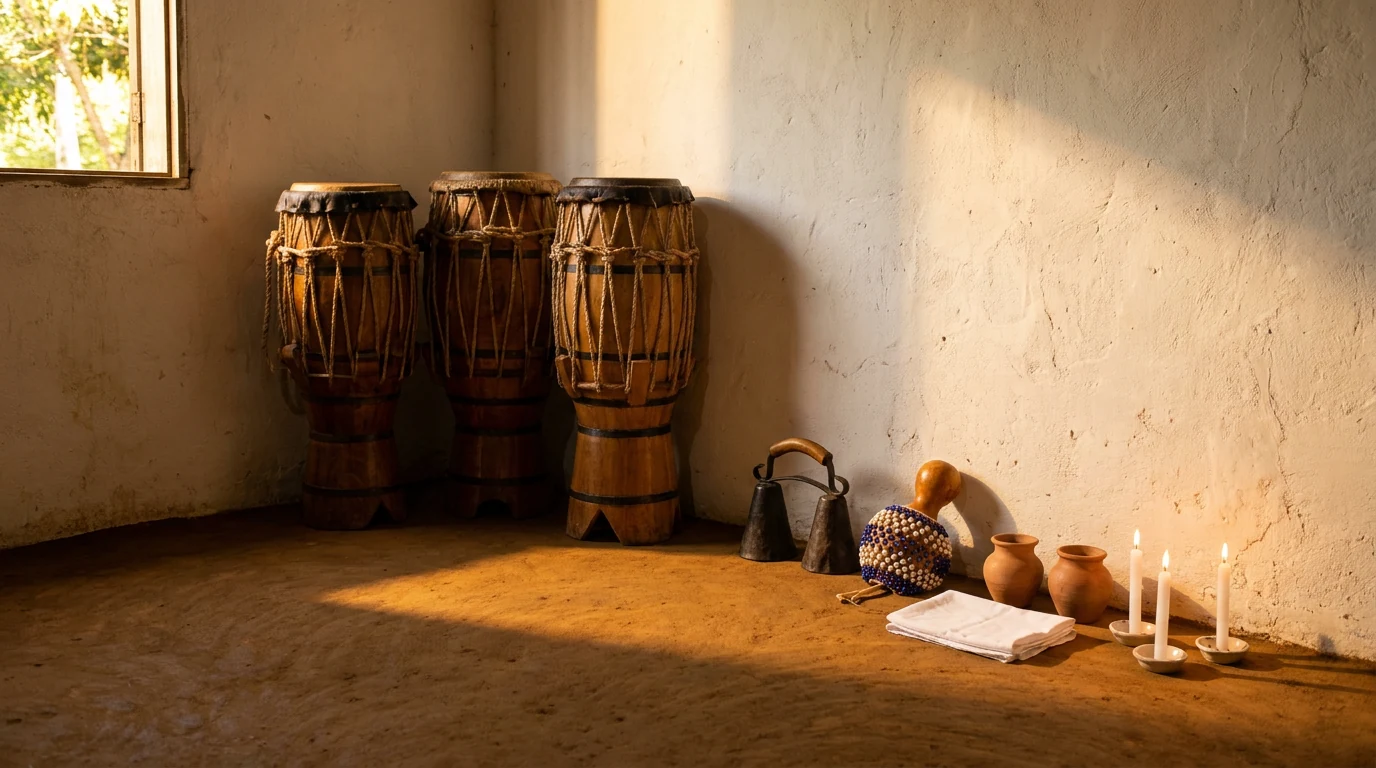
- The instruments: batás, gã, and xequerê mark the rhythm
- Who arrives first: the toqüéns, young voduns who are spirit guides and messengers and call the others
There is also a specific vocabulary. The treatment of the male vodum is tói and that of the female is nochê. The tobóssi are female child deities, daughters of the voduns. The Candomblé atabaque drums change name and rhythm depending on the nation.
Where vodum is worshipped in Brazil
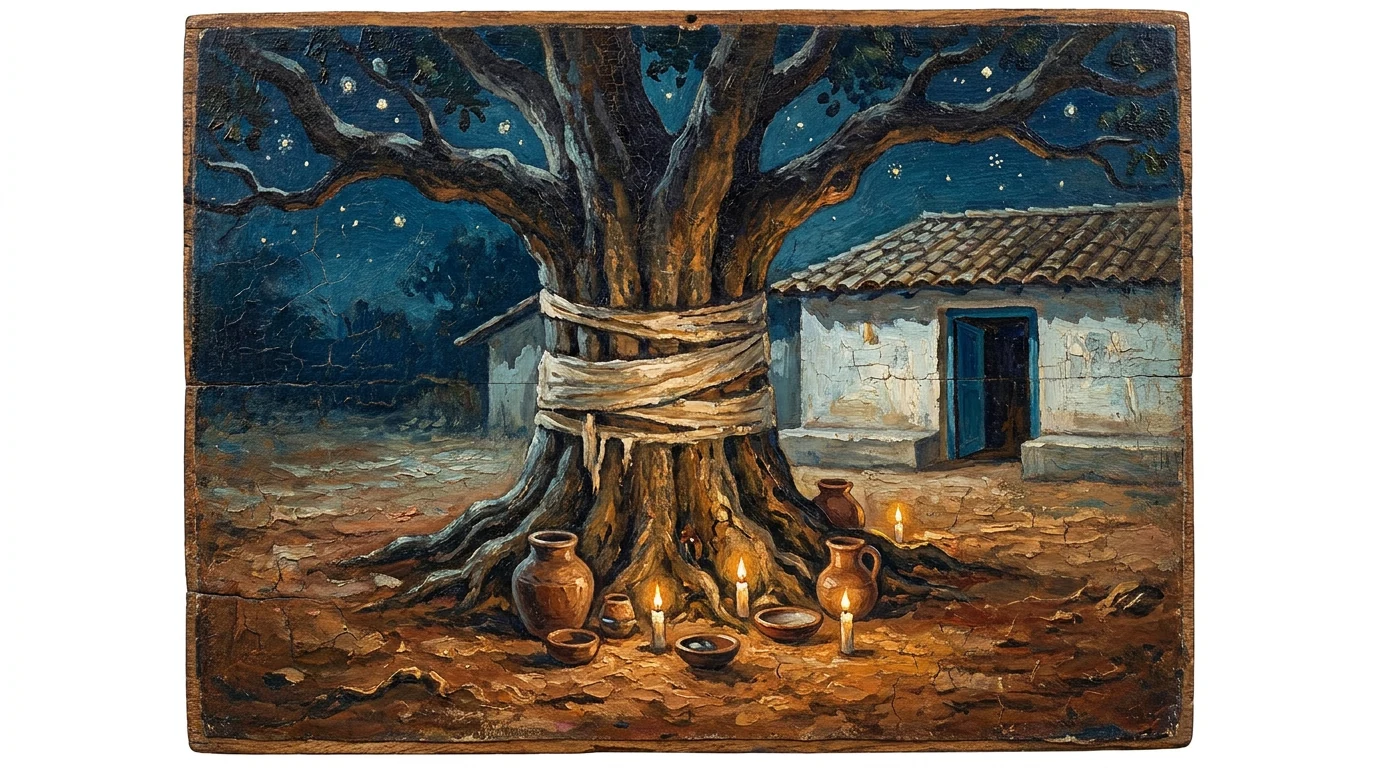
In Bahia, the jeje mahi nation has two studied and functioning houses. One is the Zôogodô Bogum Malê Hundô, in Salvador, known as Bogum. The other is the Zôogodô Bogum Malê Seja Hundê, in Cachoeira, the so-called Roça do Ventura. The occupation of the roça began in 1858, and the terreiro is listed as a heritage site by IPHAN. The heritage listing records the sacred trees of the site by the names of the voduns: Nana, Tiriri, Avequité, Zogbo, Bessém, Lokó, Badé, Aqué, Parara.
In Maranhão, the worship lives in the Tambor de Mina. The Casa das Minas, or Querebentã de Zomadonu, is the main reference for the worship of voduns in the country. It is the only mina-jeje terreiro in the state and is listed as a heritage site by IPHAN. The Casa de Nagô, founded around 1840, is of nagô matrix and was listed as a heritage site by the state of Maranhão in 1986. Its model is the most adopted by mina terreiros.
Jeje also appears in the South, among the nations of the gaúcho batuque, as the article about the nations of batuque tells.
The material for those who worship vodum is the same as Candomblé of any nation: quartinha, pottery, cloth, candle, dendê, and herbs, in the way the house commands. If in doubt about the list that the mãe or the pai de santo gave, you can check item by item via the shop's WhatsApp.
Frequently asked questions
What is a vodun?
It is the divinity of the jeje pantheon, of the fon and ewe peoples of ancient Dahomey. Prandi describes the voduns as forces of nature and divinized human ancestors. The word comes from fon and means spirit or divinity, with the sense that orixá has among the nagôs.
What is the difference between vodum and orixá?
They are divinities of different peoples. The vodum is jeje, the orixá is nagô, the inquice is angola. Sources record correspondences between them, but treat them as historical approximations, not as equalities.
Where is vodum worshipped in Brazil?
In Bahia, in the jeje mahi houses of Bogum, in Salvador, and of Roça do Ventura, in Cachoeira. In Maranhão, in Tambor de Mina, with Casa das Minas as the main reference. The jeje nation also appears in the Batuque of Rio Grande do Sul.
What is the color and day of each vodun?
It depends on the house. Open academic sources record the family, domain, and function of each vodun, but they do not establish a table of color, day, and food valid for everyone. The one who answers this is your house, not the internet.
References
- Reginaldo Prandi (USP): In the footsteps of the voduns, on the jeje pantheon in Brazil
- Afro-Ásia (UFBA): review of The Formation of Candomblé, by Luis Nicolau Parés
- Social Sciences and Religion: Mundicarmo Ferretti on the African nations in Tambor de Mina
- Salvador and Its Colors (UFBA): the voduns of Casa das Minas, with the ethnography of Sérgio Ferretti
- Federal University of Southern Bahia: thesis on terreiro peoples and the IPHAN listings
- Ipatrimônio: file of the terreiro Zogbodo Male Bogun Seja Unde, the Roça do Ventura
- Afro Digital Museum (UFMA): entry for Casa de Nagô, in São Luís