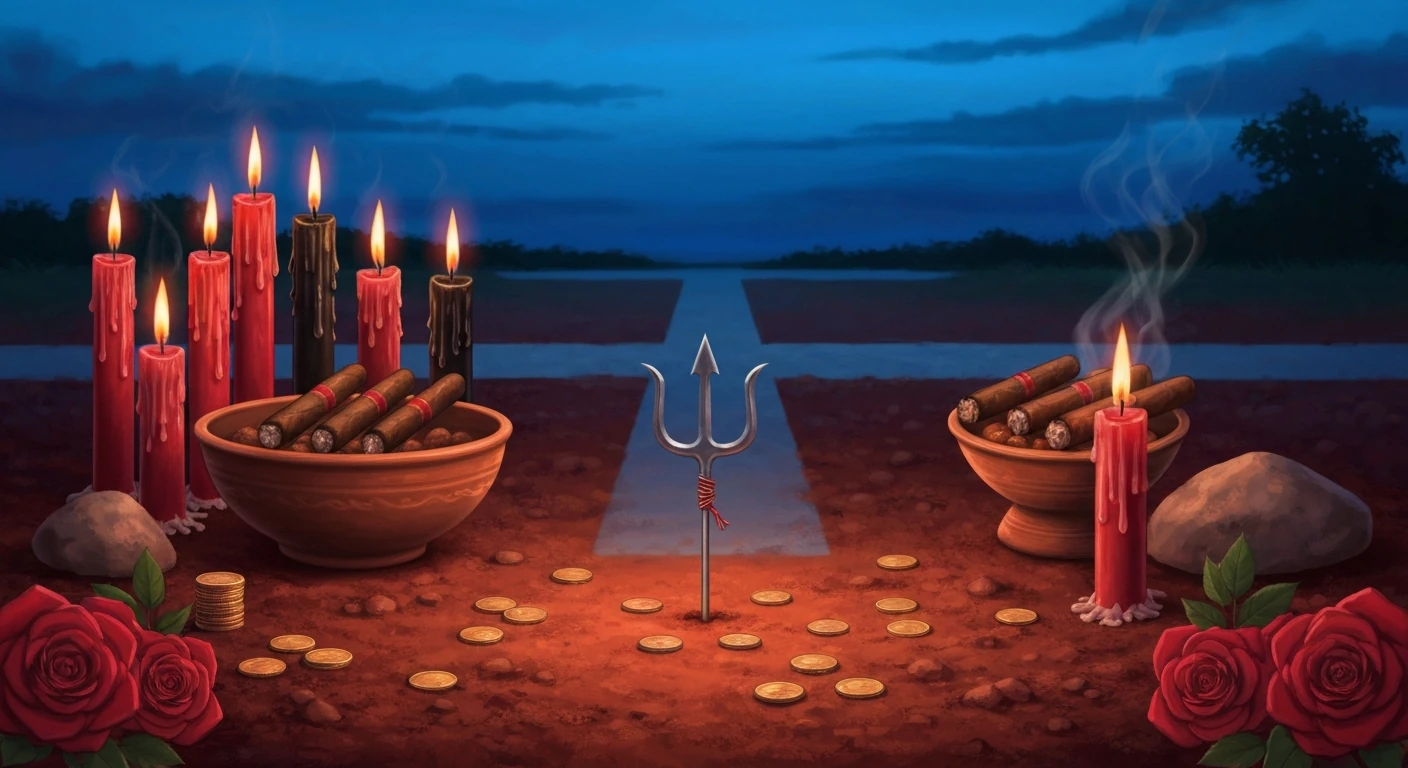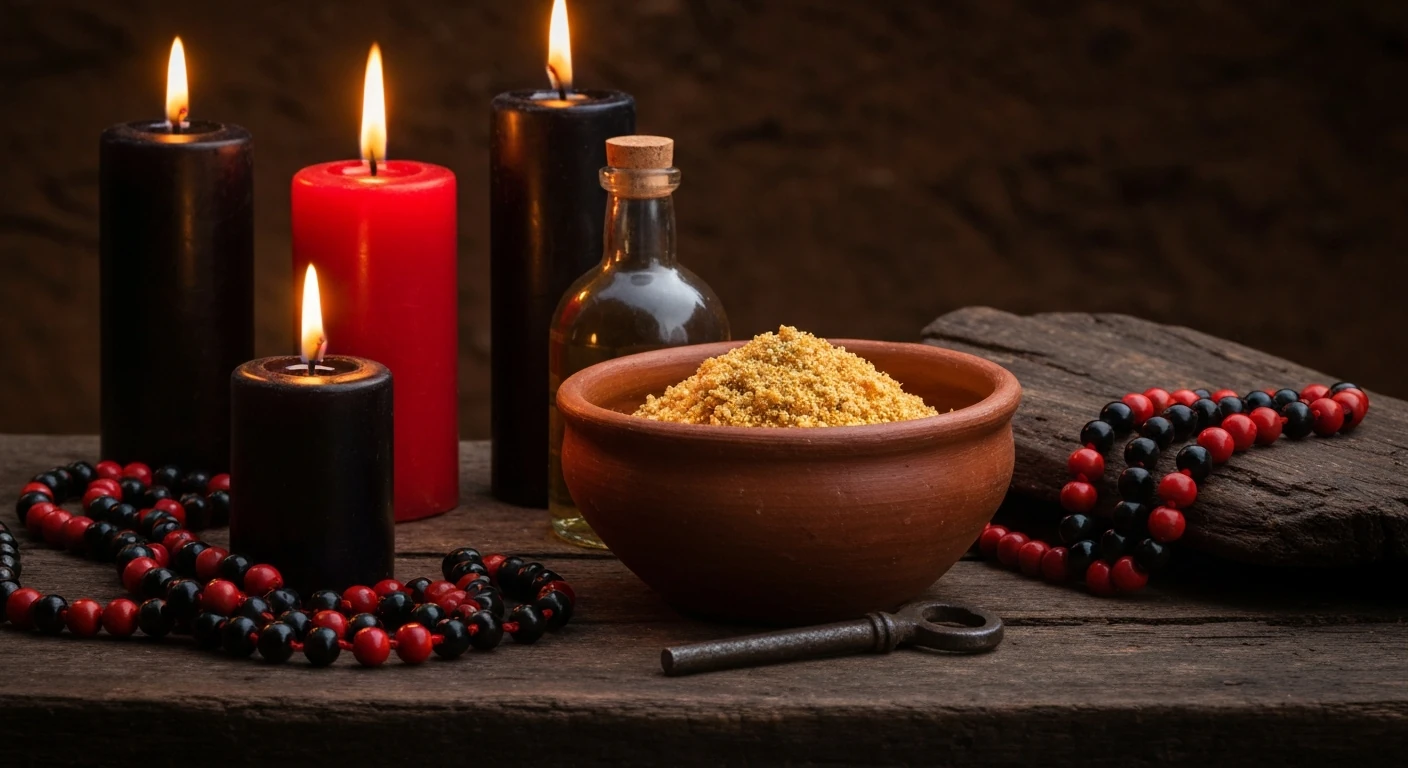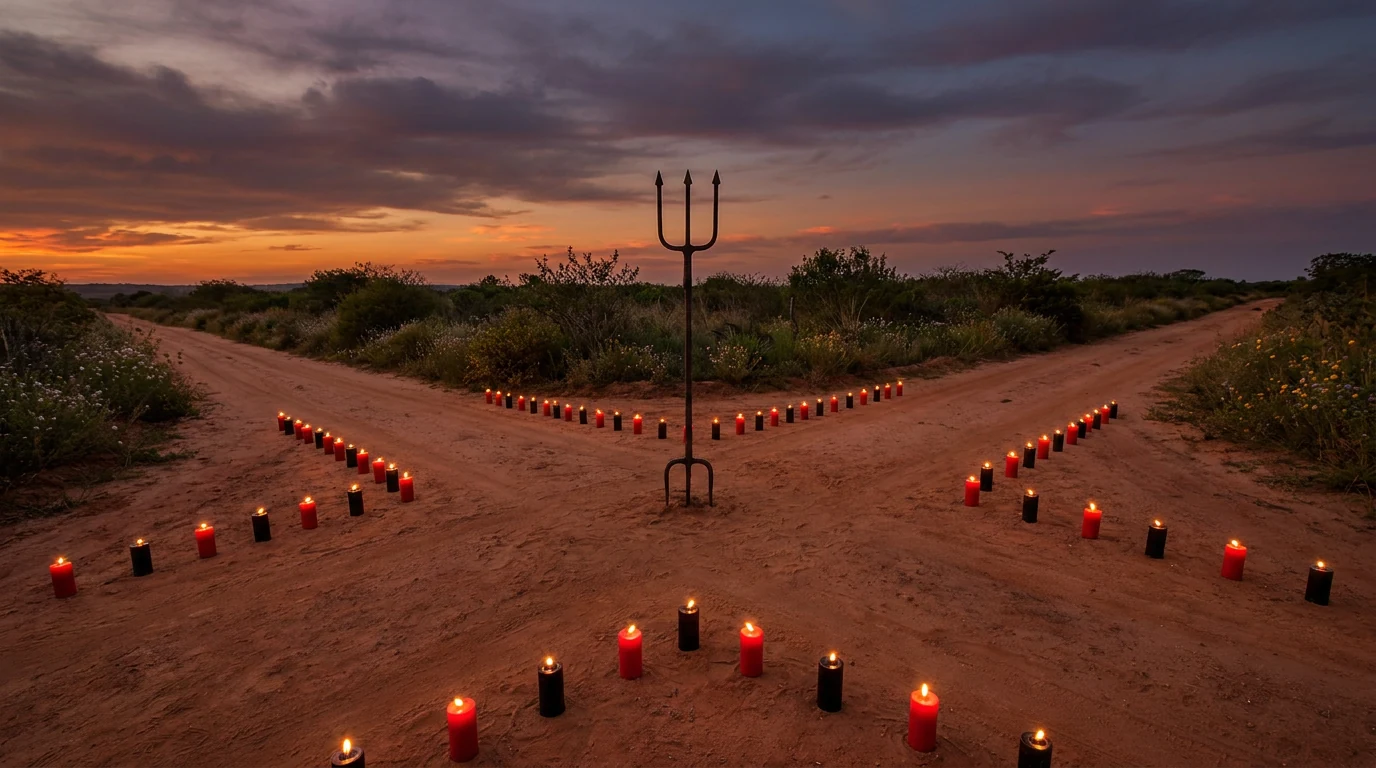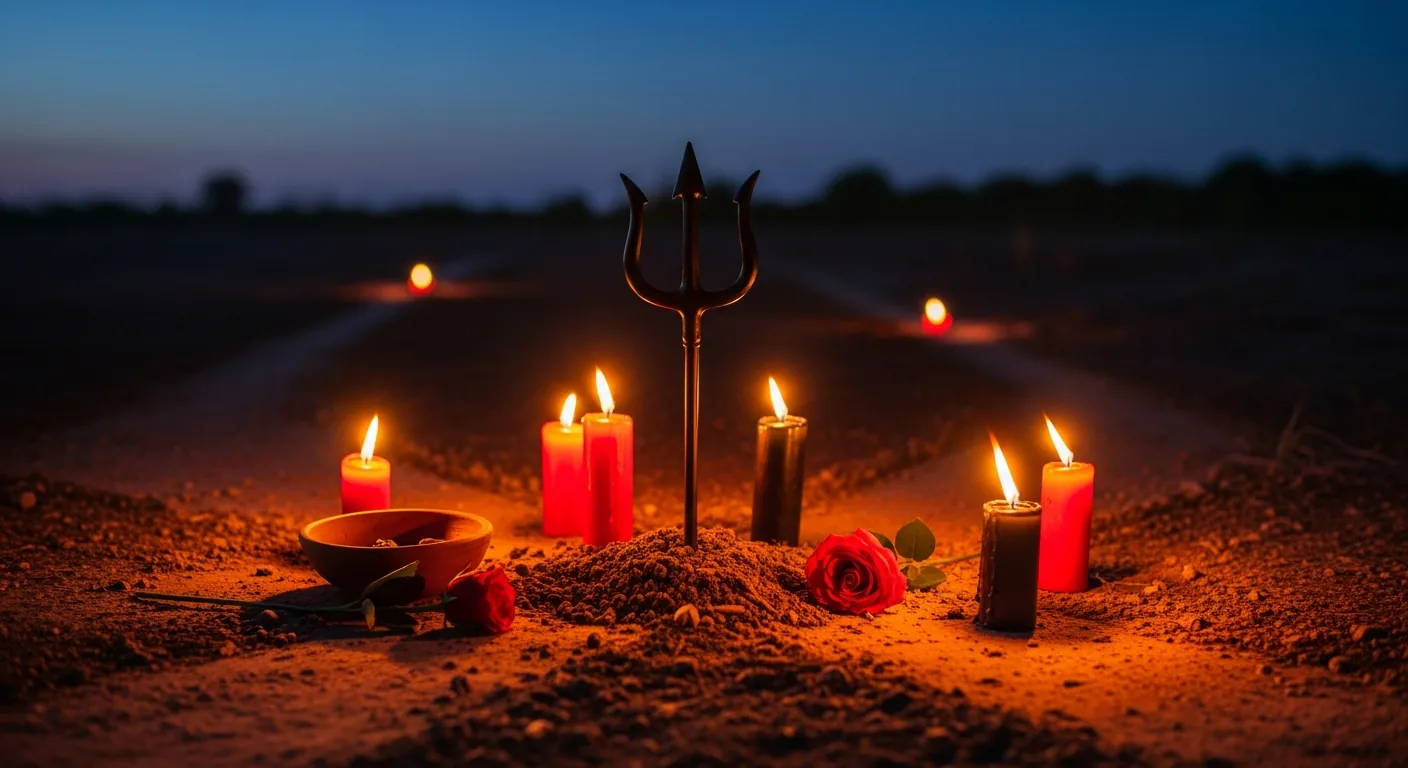
The kingdoms of Quimbanda are the way the tradition organizes its pantheon: each Exu and each Pombagira belongs to a kingdom, linked to a place and a type of work. Understanding this map is understanding the logic of Quimbanda, a serious Afro-Brazilian religion, and not the "black magic" that prejudice insisted on inventing.
This guide covers the seven kingdoms, one by one, explains the structure of the 63 peoples of Exu, who heads each kingdom and why the list changes from one house to another. It is an in-depth look at our guide what is Quimbanda.
What are the kingdoms of Quimbanda
In Quimbanda, the Exus and the Pombagiras, the so-called "povo da rua", do not work loosely. They organize themselves into kingdoms, a structure that tradition inherited from the tribal organizations of Bantu Africa, where there were kingdoms ruled by kings and queens.
Each kingdom corresponds to a spiritual territory and a type of action: the crossroads, the cemeteries, the forests, the beaches. It is not a geography of "good" and "bad" places, but of different functions. An Exu of the forest kingdom works the force of nature; an Exu of Calunga deals with ancestry and death. Each kingdom has its craft.
Laroyê, Exu! traditional greeting to Exu, the messenger who opens the paths. Before studying the kingdoms, it is worth remembering: Exu is not the Christian devil. He is a guardian, an agent of justice and movement.
The structure: 7 kingdoms, 9 peoples, 63 spiritual legions (falanges)
The most widespread organization of Quimbanda divides the pantheon into 7 kingdoms. Each kingdom is subdivided into 9 peoples (also called spiritual legions (falanges)), which results in 63 peoples of Exu. It is a layered structure, like a kingdom with its provinces and villages.
- The kingdom brings together the Exus of the same spiritual territory.
- The people (or spiritual legion (falange)) is a smaller group within the kingdom, with functional affinity.
- The leadership of each kingdom belongs to an Exu-King and a Pombagira-Queen, who command the Exus of that domain.
At the top of the entire hierarchy is the figure of the Exu Maioral, the king of all Exus. In many houses, he receives the syncretic name "Lucifer", a legacy of European demonology absorbed during colonization. This does not mean that Exu is the demon: it is merely a historical label, a Christian garment placed over an African spirit.
The seven kingdoms, one by one
The list below follows the most well-known model, also documented in study references as the wiki of Reinos de Exú na Quimbanda. The names of the cited entities vary between houses.
Reino das Encruzilhadas
It is the gateway of the ritual works. It governs the crossroads, the street intersections, the points where paths open and close. It is the kingdom of opening and movement, commanded by the Exu Rei das Sete Encruzilhadas. Among its most well-known entities is Exu Tranca-Ruas, guardian of the passages.
Reino do Cruzeiro
Linked to the cruzeiros of the streets and cemeteries, it is the kingdom of communication with the souls. It works on the intercession between the living and the dead, and is usually sought in matters of spiritual justice and accountability.
Reino das Matas
It governs the forests and places with trees, excluding the cemetery, which belongs to another kingdom. It is the kingdom of the raw force of nature, of herbs, and of the paths of the woods. The Exus from here have a connection with healing through nature and with protection.
Reino da Calunga (Cemitério)
The Calunga pequena is the cemetery. This kingdom deals with death, ancestry, and the souls that inhabit it. It is a territory of profound respect, not of terror. Here, spirits such as Exu Caveira and the Exu do Cemitério act, guardians of the border between life and death.
Reino das Almas
Connected to the souls and high places, such as ridges and hills, it is the realm of mediation with the spirits and of support for those who have departed. It works spiritual charity and guidance within the logic of Quimbanda.
Realm of the Lyre
It is the realm of urban life, of bohemianism, pleasure, and love. Its leaders are better known by syncretic names, and it is here that the most famous of the Pombagiras, Maria Padilha, reigns. It works issues of seduction, autonomy, and affective justice.
Realm of the Beach
Governs the beaches and the waters, salty or fresh, including the great Calunga, which is the sea. It is the realm of abundance, cleansing, and great crossings. The Exus and Pombagiras of the Beach work close to the meeting of land and water.
The leaders and the syncretic names
Each realm has its Exu-Rei and its Pombagira-Rainha. Many of these names reached us with a syncretic layer on top, inherited from colonization. This is the case of the realm of the Lyre, whose leaders appear as "Exu Lúcifer" and "Maria Padilha," when the proper names of Quimbanda would be Exu Rei das Sete Liras and Rainha das Marias.
This point deserves care. When a realm receives names like "Lúcifer" or "of Hell," it is a matter of syncretic heraldry, symbols absorbed from European demonology, and not a confession that Quimbanda worships evil. The Pombagiras and the Exus are spirits of work, justice, and protection. Reading their titles through the lens of Christian fear is precisely the error that the religion asks to undo.
Why do the realms vary between the houses
An attentive reader will find different lists out there, and that is normal. Quimbanda does not have a single catechism. The systematization into 7 kingdoms and 63 peoples is the most widespread, but it coexists with other currents, such as traditional gaúcha quimbanda and nagô quimbanda, each with its own emphases, names, and arrangements.
Therefore, understand this list as a reference map, not as dogma. What matters, in practice, is the oral tradition of your house and the guidance of your leader. As in every serious religion, there is no infallible formula or promise of guaranteed results here: there is faith, respect, and spiritual ritual work. Studying the kingdoms with seriousness is also a gesture of reparation in the face of centuries of religious racism.
Frequently asked questions
How many are the kingdoms of Quimbanda?
There are 7 kingdoms, in the most widespread model: Encruzilhadas, Cruzeiro, Matas, Calunga (Cemetery), Almas, Lira, and Praia. Each kingdom is divided into 9 peoples, or falanges, totaling 63 peoples of Exu. The names and the exact list vary between the houses and currents of Quimbanda.
What are the 63 peoples of Exu?
They are the 63 falanges that form the pantheon of Quimbanda: 7 kingdoms, each with 9 peoples. Each povo is a group of Exus with affinity of function and territory, subordinate to the leadership of their kingdom. It is a layered structure, inherited from the tribal organizations of Bantu Africa.
Who leads the kingdoms of quimbanda?
Each kingdom is commanded by an Exu-Rei and a Pombagira-Rainha. At the top of the entire hierarchy is the Exu Maioral, the king of all Exus, who in many houses receives the syncretic name of Lucifer, a colonial label that does not mean the Christian devil.
Are the kingdoms of quimbanda the same in all houses?
No. Quimbanda does not have a single catechism. The model of 7 kingdoms and 63 peoples is the most well known, but there are different currents, such as quimbanda gaúcha and nagô, with their own names and arrangements. The list should be read as a reference map, not as a universal rule.
Is the Exu of quimbanda the devil?
No. Exu is a messenger, guardian of the paths and an agent of justice. Names like "Lucifer" in certain kingdoms are syncretic labels inherited from European demonology during colonization, not an affirmation of worship of evil. Confusing Exu with the Christian devil is the prejudice that Quimbanda asks to undo.
Where to buy items for Quimbanda
At Joia Mística Laroyê, you find everything for the worship of Exu and Pombagira with respect and quality:
- Red and black candles the traditional colors of Exu, in various sizes
- Statues of Exu and pombagira altar pieces and firmas of the kingdoms
- Ritual cigars and cigarettes for offerings and firmezas
- Bead necklaces (guias) and necklaces in the colors of the spirits
- Herbs and incense for baths and environment cleansing
Also check out our page dedicated to Quimbanda and its traditions. Visit the shop in Extrema, Minas Gerais and we ship to all of Brazil.
References
- Wikipedia: entry about Quimbanda
- Deldebbio Wiki: Kingdoms of Exu in Quimbanda, study reference on the structure of the kingdoms