Anyone who wants to make an offering for Ogum usually gets stuck on two very concrete doubts: what to put in the alguidar and where to leave it afterwards. Both answers change depending on the house, and this guide shows the variations without inventing a single rule.
Ogum is the orixá of iron, of work, and of the paths that open by force. The offering to him is a gesture of gratitude and of bond, never an exchange with a delivery deadline. Here you will see what to offer, how to assemble the yam holder, where to deliver it safely, and what is quizila.
What to offer to Ogum
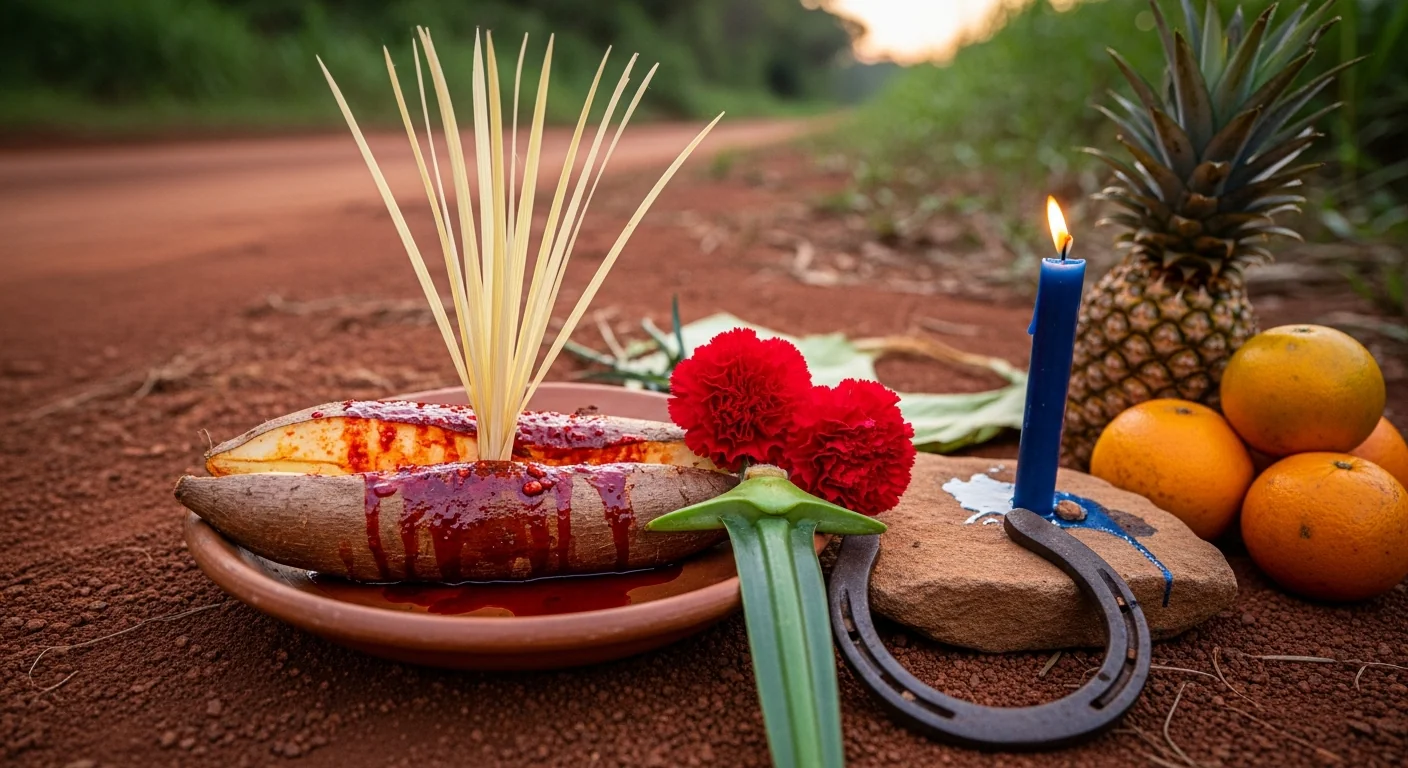
The center of the offering is the yam, roasted or boiled, drizzled with dendê oil. It is the most consensual item among the houses, as recorded by the portal O Candomblé.
Around it, the gifts that any devotee can bring are included:
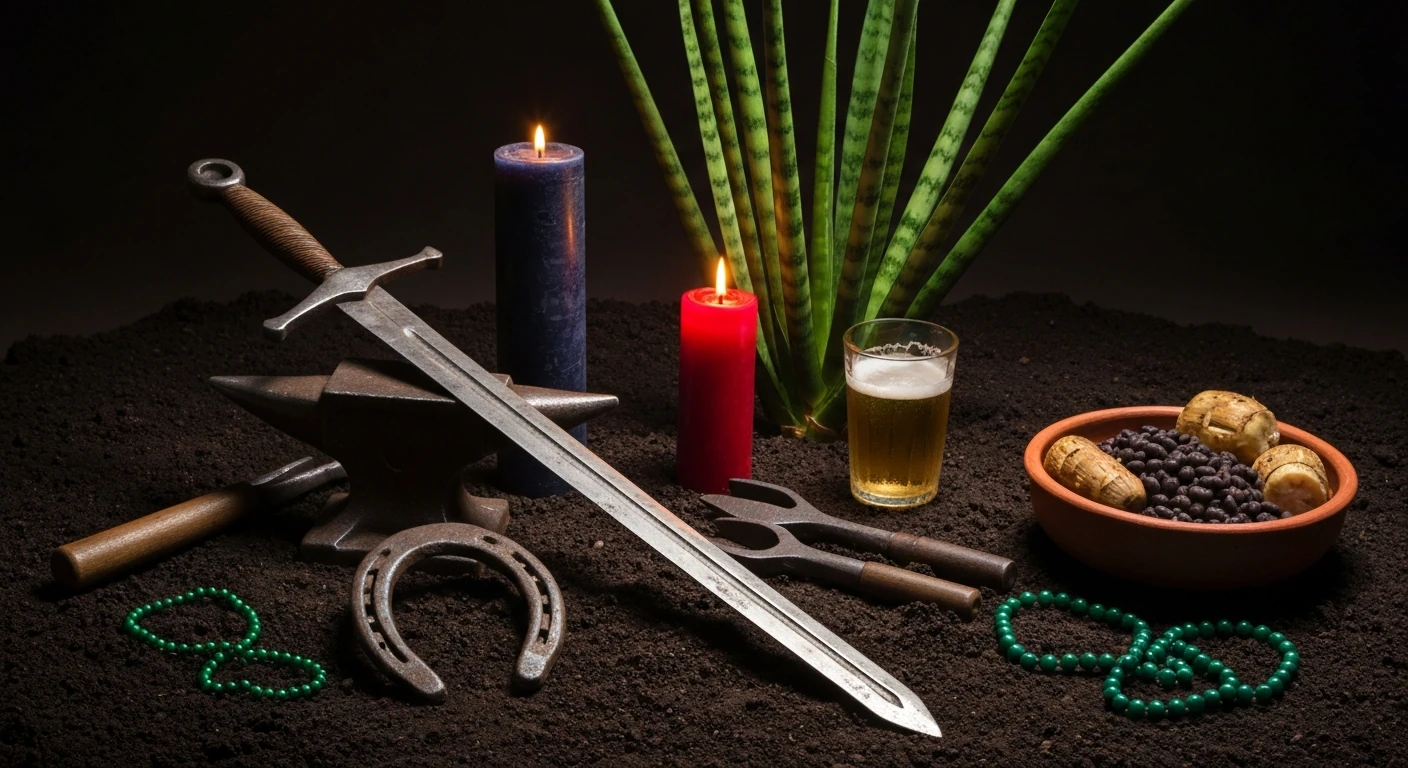
- Fruits: pineapple, orange, ruby grape, red guava, and watermelon
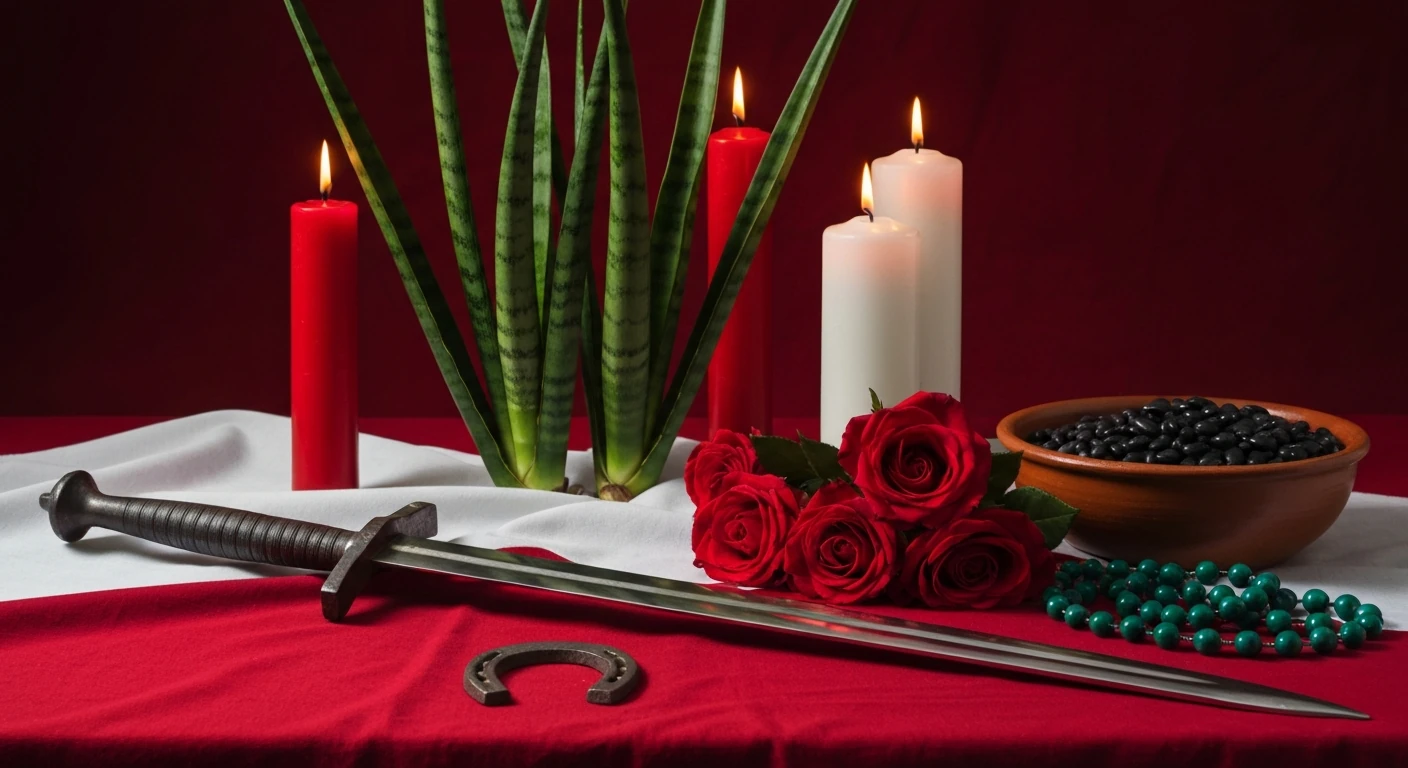
- Flowers: red carnations in first place, also palms
- Candles: dark blue, red, or white, depending on the house
- Herbs: snake plant, peregum, pepper tree, and dumb cane
- Iron objects: horseshoe, nail, or coin, always collected afterwards
- Clay alguidar or a straw tray as a base, never styrofoam or plastic
Regarding the color of the candle, be careful with ready-made rules from the internet. In ketu Candomblé, dark blue and green predominate. In Umbanda, red and white appear often due to the influence of Saint George. Ask your house before buying.
Flowers go without cellophane and without elastic. Fruit goes without plastic packaging. What you take must be able to stay there without becoming trash.
Food of the orixá and a devotee's gift are not the same thing
This separation avoids much frustration. The feijoada of Ogum, the ritual yam, and the fradinho bean farofa in dendê are food of the orixá. They are prepared with fundamento, inside the terreiro, under the guidance of those who hold a cargo.
The simple gift is something else, and it is legitimate. Those who are not initiated bring fruit, flowers, candles, water, or the yam with dendê assembled at home. This is not a lesser version of the offering, it is the correct way for those outside the liturgy.
| Umbanda | Candomblé ketu | |
|---|---|---|
| What is it called | Offering, gift, firmeza | Food of the orixá, obrigação |
| Who does it | Any devotee | Preparation with fundamento, in the terreiro |
| Where | Mata, estrada, trilho, campo | In the consecrated foundation (assentamento) of the orixá, in the peji |
It is worth noting a point: ebó is not synonymous with popular offering. Ebó is a specific rite, with its own formulation, and not every ebó is food. In the jeje nation the corresponding energy is Gu, and in angola it is Nkosi, each with its own liturgy. For the general overview, see how to make offering to the orixás.
Ogum's drink: beer, wine, or water
This is the most searched question about the theme, and the honest answer has three paths.
- White or light beer: is the one most associated with him in popular Umbanda. Some houses use the dark one.
- Red wine: appears in place of beer in some terreiros.
- Water: is always accepted, and is the choice of those who do not work with alcohol.
None of the three is the "right" one in absolute terms. Many houses simply do not use alcoholic beverages, and this does not weaken the offering.
During the delivery, the most common custom is to pour the drink on the ground or leave it in a cup. Never leave glass bottles in the woods or on the side of the road. Serve it and take the container back.
How to assemble the yam paliteiro
The so-called paliteiro de Ogum is the most traditional way to assemble the gift at home. The preparation is simple:
- Roast the yam in the oven or on the coals, until it becomes soft.
- Scrape the rind and cut the piece in half lengthwise.
- Place the two halves in a clay alguidar, with the cut side facing up.
- Drizzle with dendê oil generously.
- Stick the mariô sticks, the shredded leaf of the dendezeiro, along the yam.
- Light the candle nearby, on a firm surface, and say what you came to say.
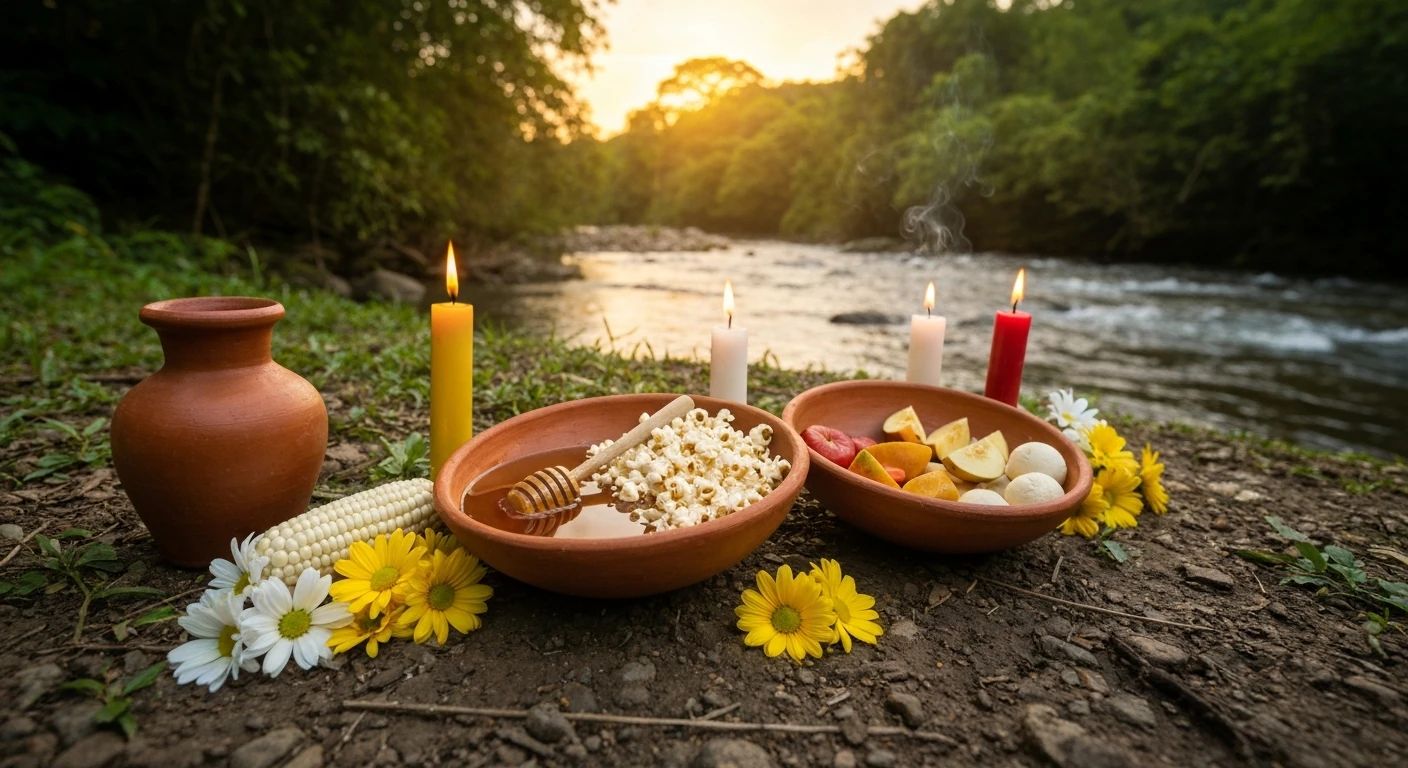
Some houses add honey to the yam. This is not an error: honey is a quizila of Oxóssi (Oshosi), not of Ogum, contrary to what many texts on the internet repeat. If in doubt, follow the orientation of your house.
Where to deliver the offering for Ogum
The most cited locations are the forest, the road (especially uphill), the road crossroads, the open field and the train line. The house gate, the slab, or the workshop of someone who works with iron also work.
In Umbanda, the location usually varies according to the quality of Ogum to whom the person is devoted. Ogum Beira-Mar receives at the beach, Ogum Rompe-Mato in the dense forest, Ogum Matinata in the flowery field. At the Saint Anthony cemetery, in Vitória (ES), the umbandistas heard by Barbara Thompson place Ogum Megê on the sidewalk and at the cross, because he "belongs to the line of the souls", and leave the gate with Ogum de Ronda, who "acts at the gate and cross and works assisting the exus". Who these falanges are, author by author, is in Ogum in Umbanda, and the orixá, in who is Ogum.
Three precautions that almost no guide gives:
- Train tracks are a restricted area by law and a dangerous location. Prefer the roadside, the field, or the firmeza at home. Do not enter the track.
- A lit candle in dry forest is a fire risk. Light it over stone, packed earth, or inside a container.
- Do not go alone to the road or the forest at night.
The National Sanctuary of Umbanda, in Santo André, maintains a dedicated space for offerings to Ogum and is a good example of a safe alternative for those who have nowhere to deliver.
What not to offer and what to do after
The most cited quizila (or ewó) of Ogum is okra. The reason is in a known itan: Xangô (Shango) scattered okra on a slope, Ogum's cavalry slipped, and Xangô took control of Oyó.
But quizila varies from house to house and from nation to nation, as discussed in the study on the use of food in Brazilian Candomblé, published in the IF-Sophia magazine of IFPR. The final word is always that of your pai or mãe de santo.
After the delivery, the most common custom asks that you stay until the candle goes out, when it is safe. Some houses instruct not to return to look at the offering, others ask that you return to clean.
What does not vary is the material care:
- Collect on the same day the bottle, cup, packaging, aluminum foil, and metal object.
- The food stays, because it is biodegradable.
- If the delivery was at home, keep the dish settled for as long as the house indicates (seven days is the most cited period) and then discard the food in the organic waste or bury it in the garden.
Ogum is the orixá who opens the path and shows opportunity, a reading that the sociologist Reginaldo Prandi develops in the book dedicated to him, published by Pallas. Offering is gratitude for this ritual work, not a payment.
Frequently asked questions
What to offer to Ogum at home?
Roasted yam drizzled with dendê in a clay alguidar, with mariô sticks and a candle nearby. Fruits, red cloves, and a glass of beer or water complete it. Leave it at the gate, on the slab, or at the point your house indicates.
What is Ogum's favorite drink?
White beer is the most associated with him in popular Umbanda. Some houses use black beer or red wine. Water is always accepted and is the correct choice for those who do not work with alcoholic beverages.
What is the quizila of Ogum?
The most cited is okra, because of the itan in which Xangô scatters okra on a slope and knocks down Ogum's cavalry. The scope of this prohibition varies by house and by nation, so confirm with your leader.
What is Ogum's day?
Tuesday is the day of the week dedicated to him. The big date is April 23, when the syncretism of the Southeast brings him close to Saint George. In Bahia, where Pierre Verger records Ogum syncretized with Saint Anthony, the date is June 13. The laws and dates of each region are in Ogum's day.
Can you offer honey to Ogum?
You can, and several houses drizzle his yam with honey. The idea that honey would be forbidden for Ogum comes from a confusion: honey is the quizila of Oxóssi. In case of doubt, follow the orientation of your house.
Where to buy the items for Ogum's offering
At Joia Mística Laroyê, you find what is necessary to assemble the gift:
- Clay alguidares: in various sizes, the traditional base
- Dendê oil: the marker of the food of the orixá
- Dark blue, red, and white candles: according to the orientation of your house
- Ogum herbs: snake plant, peregum, pepper tree, and dumb cane
- Statues and tools of Ogum: for the congá and the firmeza at home
Visit our shop in Extrema, Minas Gerais or contact us on WhatsApp with delivery to all of Brazil.
If you want to compare the format with another offering in the series, also see the offering for Oxum and the guide of the snake plant, Ogum plant.
References
- Candomblé: the food of the orixás, regarding yam as the central offering
- IF-Sophia Magazine (IFPR): study on the use of food in Brazilian Candomblé
- National Sanctuary of Umbanda: dedicated space for offerings to Ogum, in Santo André
- Pierre Verger: Orixás, Corrupio, 1981
- Geledés: launch of the book by Reginaldo Prandi about Ogum, the warrior orixá
- Barbara Thompson, IV PGCS UFES Seminar (2019): Umbanda rituals at Saint Anthony cemetery, in Vitória