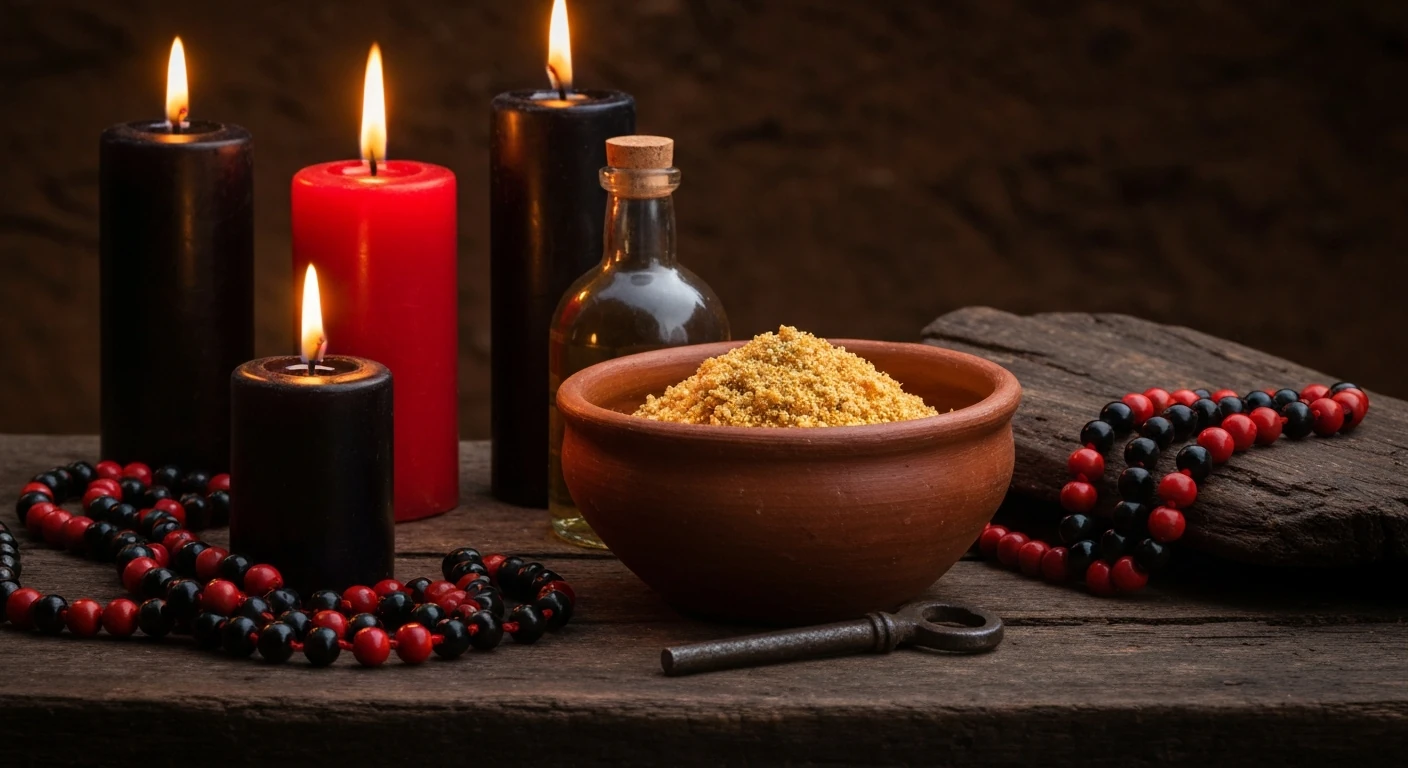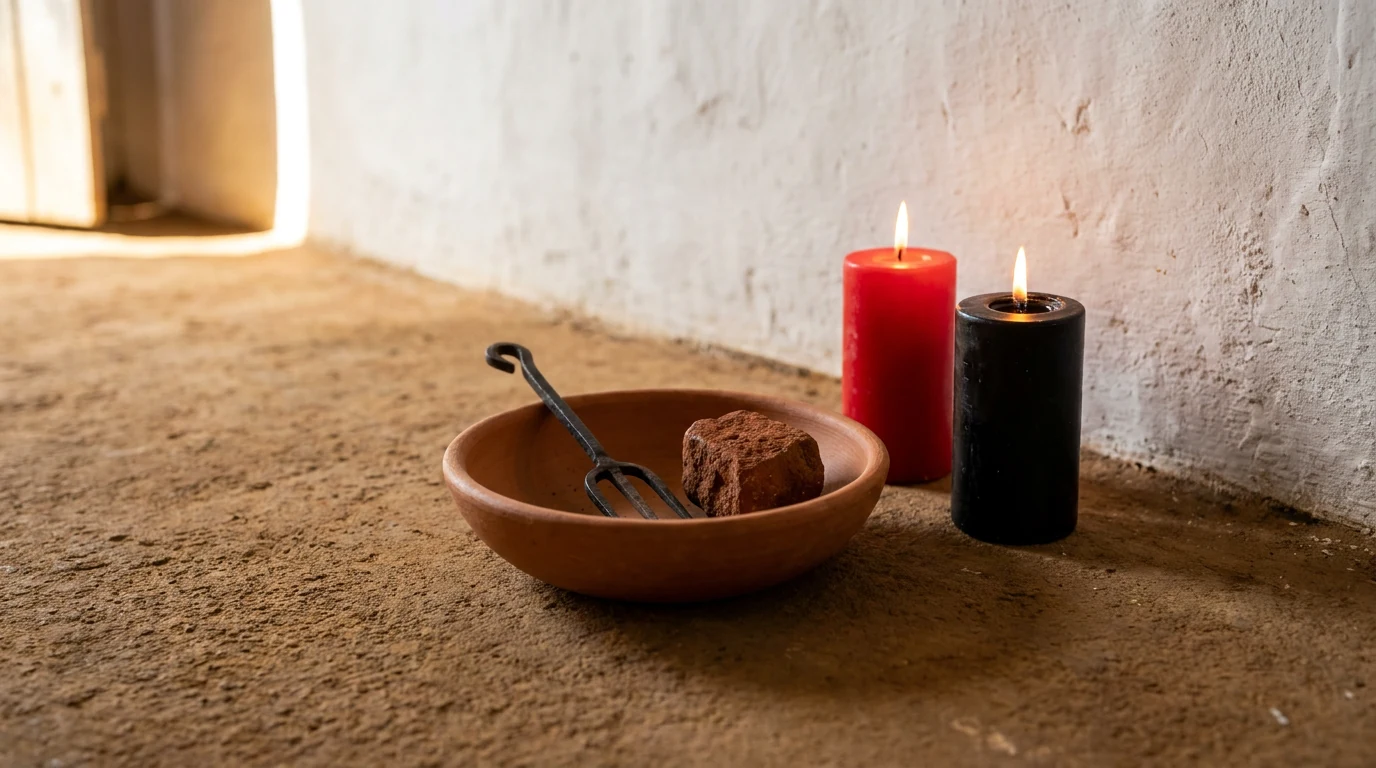
Son of Exu exists in Candomblé, but it is rare, and the rarity has a recorded cause. According to Reginaldo Prandi, whoever the cowrie-shell divination pointed out as a son of Exu ended up initiated for another orixá, especially Ogum Xoroquê. Regarding sons of Exu, the answer changes depending on the nation and the Exu being discussed.
Here there is no list of "characteristics." There is what research records, nation by nation, and where what is commonly said comes from. For the orixá itself, see who is Exu.
Does a son of Exu exist in Candomblé?
It exists. In Candomblé, each person is initiated for a head orixá. Prandi writes that, until shortly before 2001, "sons of Exu initiated for Exu were rare and notorious."
The sociologist Roger Bastide, in the 1950s, said he knew "at least one daughter of Exu" and had heard names of others: the number was small. Édson Carneiro recorded, in Bahia in 1948, a way of speaking: "one does not say that the person is a son of Exu, but that they have a carrego of Exu."
“There are already sons of Exu proud of their origin”
The phrase is from Prandi, and describes a recent movement. In terreiros that abandon syncretism with Catholicism, Exu begins to be treated as an orixá equal to the others.
A recent case appears in a report from the Jornal Correio, from Salvador, in 2023. In 2022, a 29-year-old iaô was consecrated to Exu in the terreiro Aganju, in Lauro de Freitas (BA). Pai Balbino de Xangô (Shango), pointed out by the newspaper as the greatest authority of current Candomblé, remembered "only three cases" of people made of Exu in Bahia. The newspaper also read the list of the mapping of the terreiros of Salvador, from 2006: of the 1,165 terreiros, four were of Exu. The number is from the newspaper. The initiate summarized: "it was Exu who chose me."
Son of Exu in each nation
The answer changes from house to house. The chart shows what each source records:
| Tradition | What the source says |
|---|---|
| Candomblé ketu (nagô) | exists, it is rare. The house used to start for another orixá [D1, D2] |
| Candomblé jeje | Legba, Aizan and Ogum Xoroquê "do not shave anyone's head" (do not initiate anyone) and do not manifest in human bodies |
| Candomblé angola-congo | Pambu Njila, also called Aluvaiá, is associated with Exu. There is no source on whether or not he is the head nkisi |
| Batuque (RS) | the Bará commonly occupies his children and acts as "owner of the head" |
In jeje, the writer is Vagner Gonçalves da Silva, about the jeje-mahi of Cachoeira (BA). He says that Legba is worshiped in most jeje houses, but is not "made" in human bodies [D12, D14].
In angola-congo, a dissertation from Unesp records that Pambu Njila (or Pambu Nzila) is "the protective deity of the temples and of the paths", associated with Exu. The formula "son of Pambu Nzila" appeared once in the field, said by a leader in a joking tone. There is no open source that says whether he is the head nkisi, and for this reason the text does not state it.
In batuque, the correct term is "Bará", and not "Exu". Researchers interviewed people "of Bará" in Rio Grande do Sul. The house Bará is distinguished from the "street bará", the latter with few initiates. The pair of head orixás in batuque is in orixá de frente and de junto, and the general overview, in what is batuque.
Having an Exu is not being a son of Exu
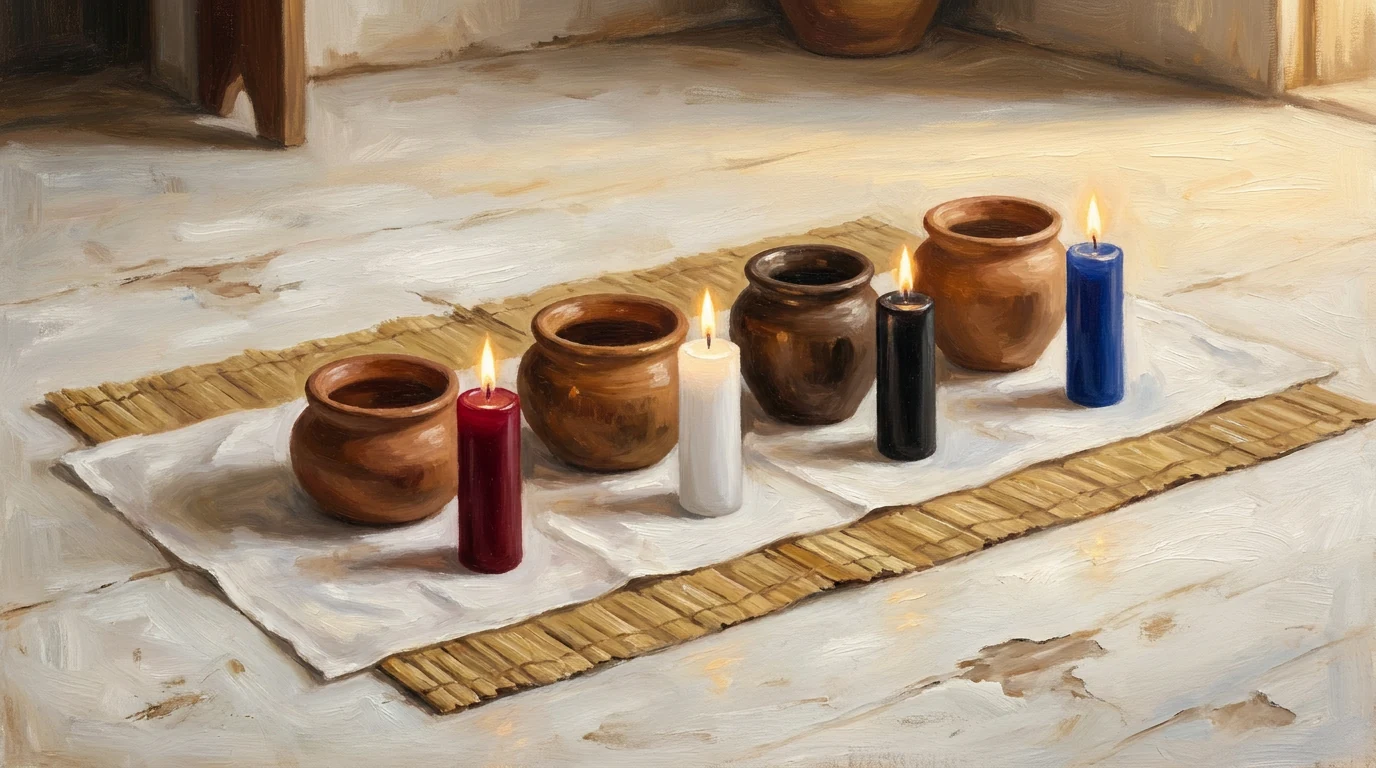
Much confusion comes from here. In Nagô Candomblé, every initiate receives their personal Exu, the Bara, along with the seat of the head orixá. Juana Elbein dos Santos describes that the novice receives two consecrated vessels: that of their orixá, "owner of their head," and that of their Bara. Prandi summarizes that every house, every street, and every person has their guardian.
Among the Fon it is similar: each person has a Legba who accompanies them from birth to death, and the "vodun owner of their head" is something else.
Almost every initiate has their Exu, and only a minority has them as a head orixá. Each person's Exu is in Exu assentamento.
A note on spelling: Bara is the personal Exu of Nagô Candomblé, in the spelling of Elbein dos Santos, and Bará is the orixá of Batuque.
What is said about those who are of Exu: the stereotype
What circulates about "the characteristics of the child of Exu" has a name in academia: orixá stereotype, a set of traits that devotees attribute to each orixá and their children. Prandi records what followers say about those consecrated to Exu, and the list includes intelligent, quick, and carnal people. He frames everything as belief: "devotees believe that men and women inherit many of the personality attributes of their orixás." And he reminds that no orixá is entirely good, nor entirely evil.
There are four reasons not to take the list as a diagnosis:
- No one tested. The only study with psychological tests that was found, in a ketu terreiro in Rio de Janeiro, had 15 people, and none were of Exu. The authors conclude that it would not be possible to establish correlations.
- The patterns do not close. The information from the pai de santo did not form a coherent pattern. Some daughters of certain orixás had been initiated (had their heads shaved) under the protection of others, considered more beneficial.
- Exu has many qualities. Bastide counted 21 subdivisions of Exu, more than Oxum (16), Omolu (14), and Xangô (12). A single trait for "the son of Exu" erases this diversity.
- The descriptions contradict each other. In a dissertation from PUC Goiás, the list of devotees' statements includes "Exu's people are disturbed" and, in the same passage, "does not hold a grudge."
The stereotype also hurt people. The same dissertation records that, with the expansion of candomblés in the 19th century, having Exu as a head orixá became misfortune for some leaders, with stigma and prejudice. Leaders even proposed changing the head orixá of Exu's son, claiming that Exu, being movement, would generate "restless" children.
Son of Exu Caveira is another layer
“Son of Exu Caveira”, “of Tiriri” or “of Capa Preta” is popular speech about the guardian of Umbanda and Quimbanda. The academic research consulted does not use the expression.
In Umbanda, exus are understood as spirits of deceased people. Being "of the left," say Carvalho and Bairrão, is not a property of certain types of spirit, but a mode of manifestation. In a house of Umbanda studied by USP, the preto-velho reads the head orixá of the filhos de santo by name and date of birth. He continues to be an orixá, such as Ogum or Iansã (Oya). The guardian is another relationship.
The Umbanda Sagrada branch says that there are no children of Exu, of pombagira, or of Exu Mirim. It is the position of one branch, and not of all Umbanda.
To know who each guardian is, see Exu Caveira, exu de guarda and nomes de Exu. The tool qual é o seu Exu shows affinities, for entertainment purposes.
How the house recognizes the head orixá
Who confirms the head orixá in Candomblé is the cowrie-shell divination of the house of the orixás (casa de santo), performed by the pai or the mãe de santo. Joice does not cast cowrie shells, and this text does not perform a head reading.
To think about the subject, see how to know which is my orixá and you can be a child of more than one orixá. The tool discover your orixá serves as a starting point, not as an answer.
Frequently asked questions
Does a son of Exu exist in Candomblé?
It exists, but it is rare. Prandi records that the initiates for Exu were "rare and notorious," and that today there are children of Exu who assume the origin. In Bahia, a 2023 newspaper cited an authority who remembered only three cases. What matters is the divination of your house.
Is it rare to be a child of Exu? Why?
Yes. According to Prandi, the divination indicated Exu and the house initiated for another orixá, especially Ogum Xoroquê. Bastide read the rarity as an effect of the stigma that fell upon Exu. Today, with desyncretization, this is changing.
What are the characteristics of the children of Exu?
What circulates is a stereotype of the devotees, not a diagnosis. Prandi records that the followers see them as intelligent, fast, and carnal. The only study with psychological tests found no correlation. No one is defined by the orixá.
Is it possible to be a child of Exu in Umbanda?
In Umbanda, Exu is a guardian, a spirit of a deceased person, and not a head orixá. One branch says there is no child of Exu. Many houses speak of "working with Exu," which is another relationship. Look for your house.
Can a child of Exu also be of another orixá?
In Candomblé, each person has a head orixá, and the divination can point to a juntó. Every Nagô initiate also receives their Bara, so almost everyone has a personal Exu. See the article about more than one orixá.
References
- Reginaldo Prandi: Exu, de mensageiro a diabo, Revista USP, 2001
- Reginaldo Prandi: Deuses africanos no Brasil contemporâneo, Horizontes Antropológicos, 1995
- Vagner Gonçalves da Silva: Legba in Brazil, Sociology & Anthropology, 2019
- Renato Botão: Beyond nagocracy, a dissertation, UNESP Marília, 2007
- Emerson Giumbelli and Leonardo de Almeida: The Enigma of Quimbanda, Anthropology Journal, 2021
- Monique Augras and Angela Correa: The object of desire, Brazilian Psychology Archives, 1979
- Denise Camargo: Laroyê, from the streets to the terreiro, Studium, 2005
- Juliana Carvalho and José Bairrão: Umbanda and quimbanda, Psicologia USP, 2019
- Oli Santos da Costa: Exu, the phallic orixá of Nagô-Yorubá mythology, dissertation, PUC Goiás, 2012
- Correio Newspaper: Why are there so few candomblés of Exu in Bahia?, 2023